
CYSTIC DISEASES OF THE KIDNEY 1 Types 1




- Slides: 54
CYSTIC DISEASES OF THE KIDNEY 1
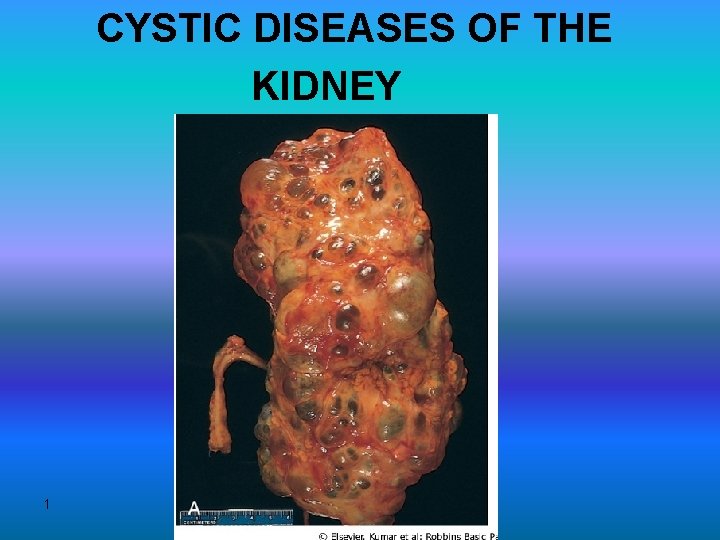
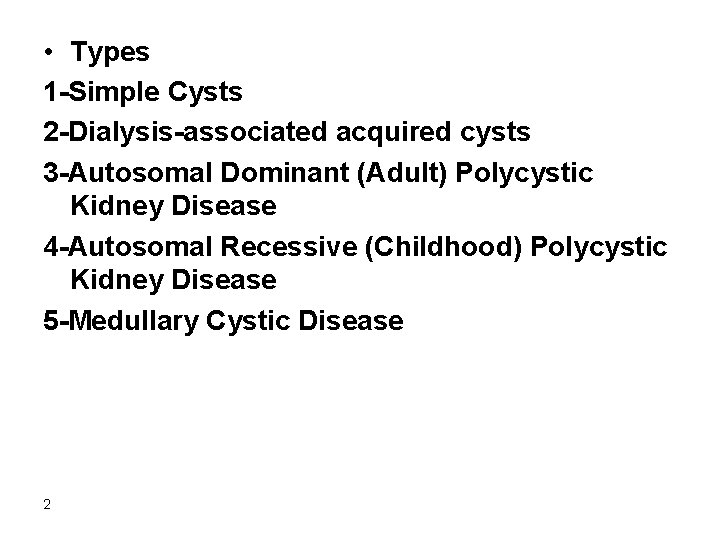
• Types 1 -Simple Cysts 2 -Dialysis-associated acquired cysts 3 -Autosomal Dominant (Adult) Polycystic Kidney Disease 4 -Autosomal Recessive (Childhood) Polycystic Kidney Disease 5 -Medullary Cystic Disease 2
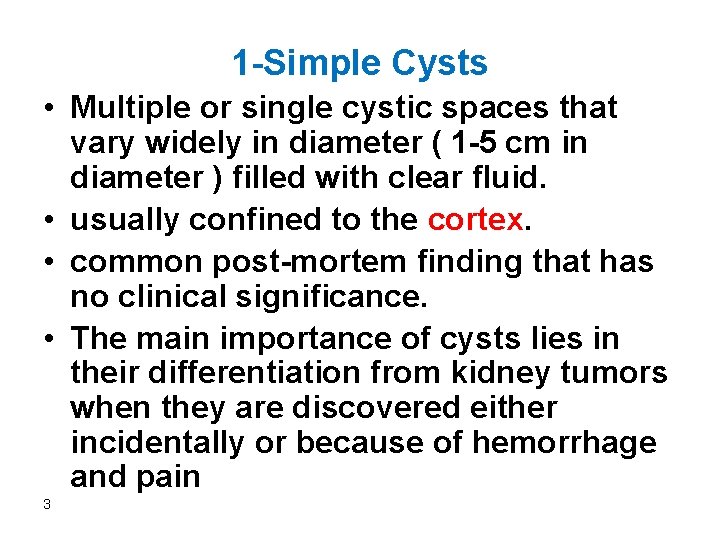
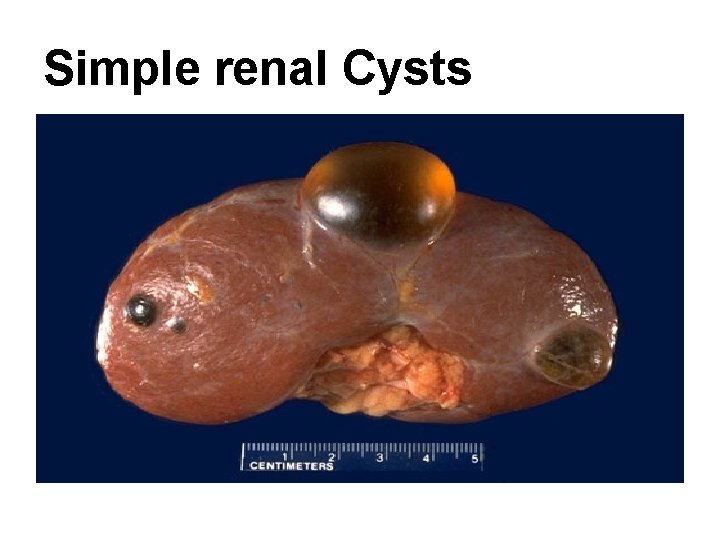
1 -Simple Cysts • Multiple or single cystic spaces that vary widely in diameter ( 1 -5 cm in diameter ) filled with clear fluid. • usually confined to the cortex. • common post-mortem finding that has no clinical significance. • The main importance of cysts lies in their differentiation from kidney tumors when they are discovered either incidentally or because of hemorrhage and pain 3
Simple renal Cysts
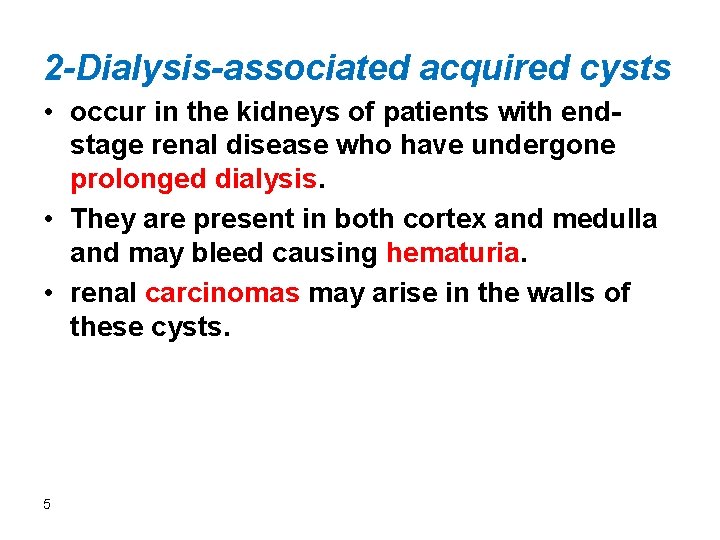
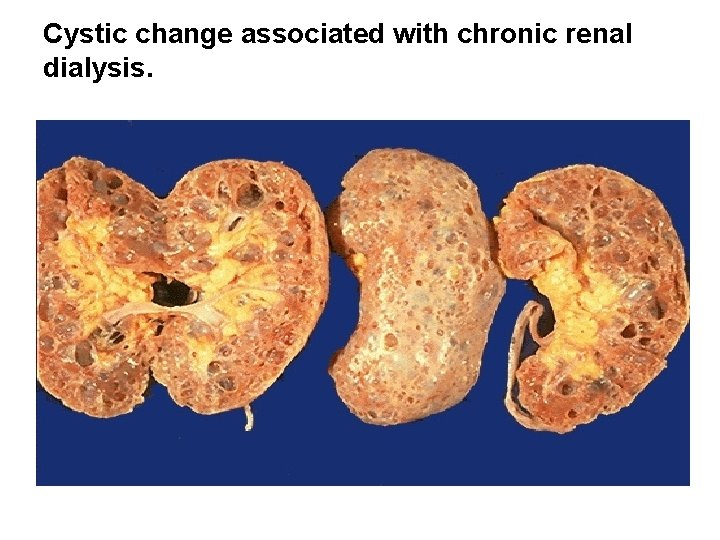
2 -Dialysis-associated acquired cysts • occur in the kidneys of patients with endstage renal disease who have undergone prolonged dialysis. • They are present in both cortex and medulla and may bleed causing hematuria. • renal carcinomas may arise in the walls of these cysts. 5
Cystic change associated with chronic renal dialysis.
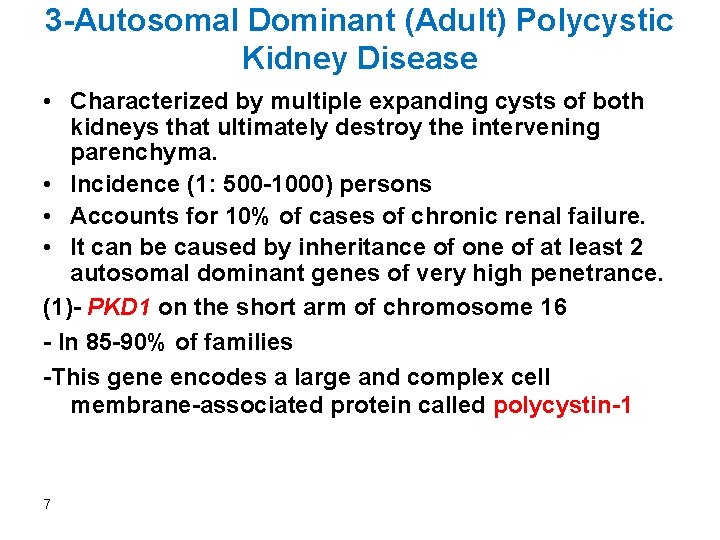
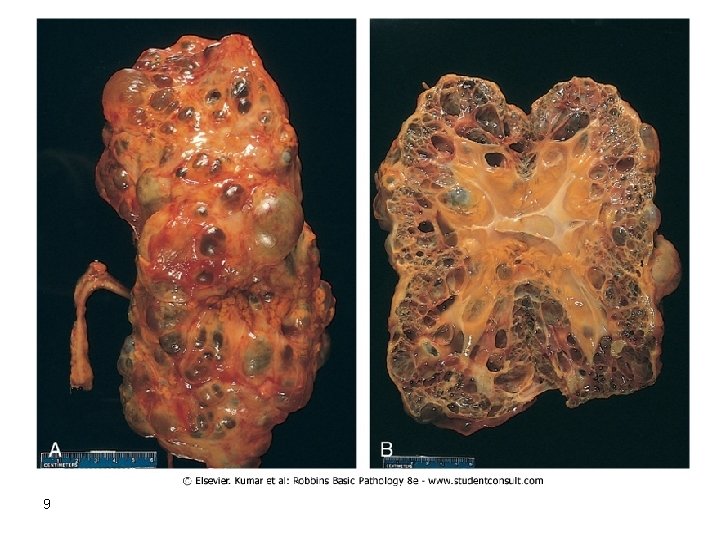
3 -Autosomal Dominant (Adult) Polycystic Kidney Disease • Characterized by multiple expanding cysts of both kidneys that ultimately destroy the intervening parenchyma. • Incidence (1: 500 -1000) persons • Accounts for 10% of cases of chronic renal failure. • It can be caused by inheritance of one of at least 2 autosomal dominant genes of very high penetrance. (1)- PKD 1 on the short arm of chromosome 16 - In 85 -90% of families -This gene encodes a large and complex cell membrane-associated protein called polycystin-1 7
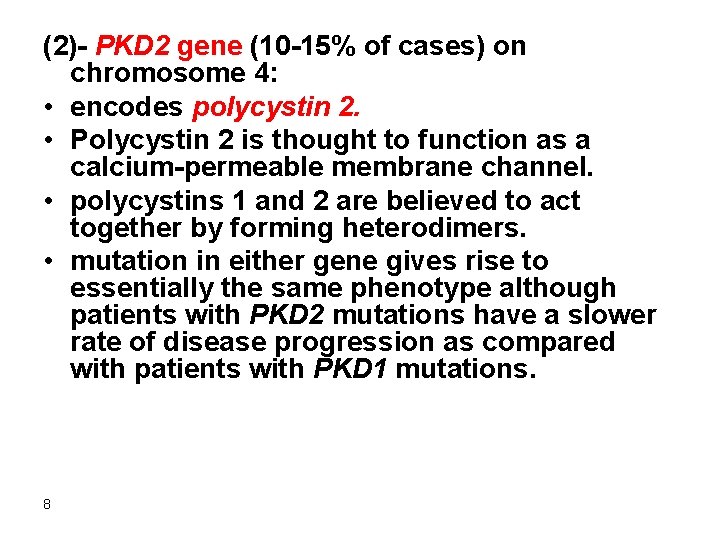
(2)- PKD 2 gene (10 -15% of cases) on chromosome 4: • encodes polycystin 2. • Polycystin 2 is thought to function as a calcium-permeable membrane channel. • polycystins 1 and 2 are believed to act together by forming heterodimers. • mutation in either gene gives rise to essentially the same phenotype although patients with PKD 2 mutations have a slower rate of disease progression as compared with patients with PKD 1 mutations. 8
9
• Clinical presentation • asymptomatic until the 4 th decade by which time the kidneys are quite large although small cysts start to develop in adolescence. • The most common presenting complaint is flank pain or a heavy dragging sensation. • Acute distention of a cyst either by intracystic hemorrhage or by obstruction may cause excruciating pain. • palpation of an abdominal mass. • Intermittent gross hematuria commonly occurs. • hemorrhage. 10
• Complications • 1 -hypertension (75% ). • 2 -urinary infection. • 3 -Saccular aneurysms of the circle of Willis are present in 10% to 30% of patients (subarachnoid hemorrhage ). • 4 -end-stage renal failure occurs at about age 50. 11
4 -Autosomal Recessive (Childhood) Polycystic Kidney Disease • autosomal recessive inheritance. • 1: 20, 000 live births. • Perinatal, neonatal, infantile, and juvenile subcategories have been defined, depending on time of presentation and the presence of associated hepatic lesions. • Mutations in PKHD 1 gene coding for a putative membrane receptor protein called fibrocystin, localized to chromosome 6 p. • Fibrocystin may be involved in the function of cilia in tubular epithelial cells. 12
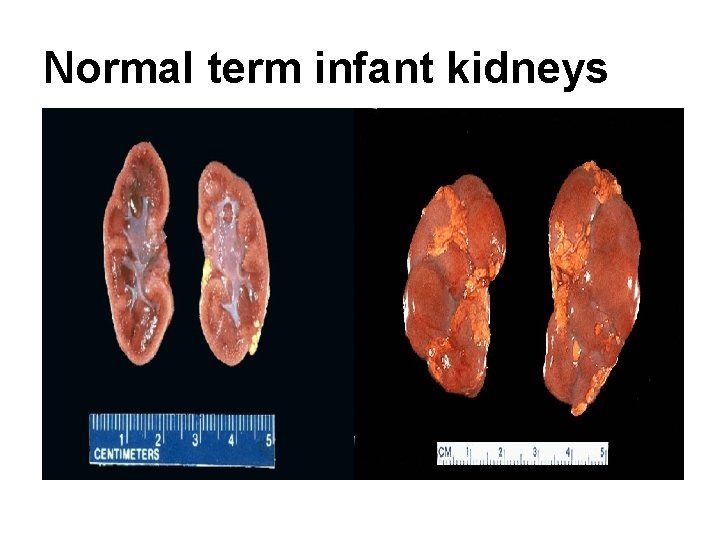
Normal term infant kidneys
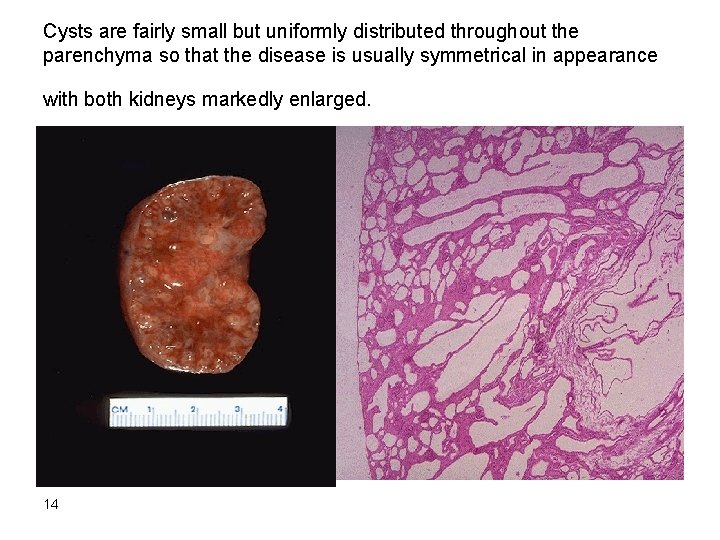
Cysts are fairly small but uniformly distributed throughout the parenchyma so that the disease is usually symmetrical in appearance with both kidneys markedly enlarged. 14
5 -Medullary Cystic Disease • There are 2 major types of medullary cystic disease: • 1 -medullary sponge kidney • a relatively common and usually innocuous condition. • 2 -nephronophthisis-medullary cystic disease complex • is almost always associated with renal dysfunction. • usually begins in childhood. • 4 variants of this disease complex are recognized on the basis of the time of onset: infantile; juvenile (most common); adolescent; adult 15
• Clinical features • polyuria and polydipsia a consequence of diminished tubular function. • Progression to end-stage renal disease ensues over a 5 -10 -year period. • The disease is difficult to diagnose, since there are no serologic markers and the cysts may be too small to be seen with radiologic imaging. • cysts may not be apparent on renal biopsy if the cortico-medullary junction is not well sampled. • A positive family history and unexplained chronic renal failure in young patients should lead to suspicion of medullary cystic disease. 16
URINARY OUTFLOW OBSTRUCTION 17
• Renal Stones (Urolithiasis) • Calculus formation at any level in the urinary collecting system. • Most common arise in the kidney. • (1%) of all autopsies. • Symptomatic urolithiasis is more common in men than in women. • Familial tendency toward stone formation 18
• Stones are unilateral in about 80% of patients. • Common sites of formation are renal pelvis and calyces and the bladder. • They tend to be small (average diameter 2 -3 mm) and may be smooth or jagged. • Progressive precipitation of salts leads to the development of branching structures known as staghorn calculi. • These massive stones are usually composed of magnesium ammonium phosphate. 19
• Pathogenesis • Renal stones are composed of: • 1 -calcium oxalate or calcium oxalate mixed with calcium phosphate(80%). • 2 -10% are composed of magnesium ammonium phosphate. • 3 -6%-9% are either uric acid or cystine stones • In all cases there is an organic matrix of mucoprotein that makes up about 2. 5% of the stone by weight. 20
• Causes of Renal Stones • 1 -increased urine concentration of the stone's constituents so that it exceeds their solubility in urine (supersaturation). • 50% of patients who develop calcium stones have hypercalciuria that is not associated with hypercalcemia. • Types of Hypercalciuria: • A. absorptive hypercalciuria. • B. renal hypercalciuria due to primary renal defect of calcium reabsorption. • In 5% to 10% of persons there is hypercalcemia and consequent hypercalciuria. 21
• 2 -The presence of a nidus • Urates provide a nidus for calcium deposition. • Desquamated epithelial cells •
• 3 -urine p. H • High urine p. H favors crystallization of calcium phosphate and stone formation. • Magnesium ammonium phosphate (struvite) stones almost always occur with a persistently alkaline urine due to UTIs. • Uric acid stones formed in acidic urine (under p. H 5. 5). • Cystine stones are more likely to form when the urine is relatively acidic. 23
• 4 -infections • The urea-splitting bacteria such as Proteus vulgaris and the staphylococci predispose the person to urolithiasis. 24
• 5 -lack of substances that normally inhibit mineral precipitation. • Inhibitors of crystal formation in urine include Tamm-Horsfall protein, osteopontin, pyrophosphate, mucopolysaccharides, diphosphonates, and a glycoprotein called nephrocalcin • No deficiency of any of these substances has been consistently demonstrated in individuals with urolithiasis. 25
Hydronephrosis 26
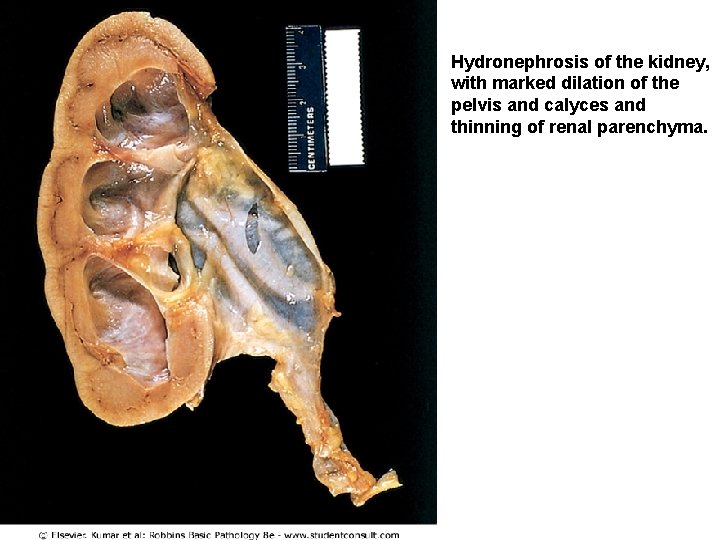
Hydronephrosis • Refers to dilation of the renal pelvis and calyces, with accompanying atrophy of the parenchyma. • The obstruction may be sudden or insidious and it may occur at any level of the urinary tract from the urethra to the renal pelvis. • The most common causes are as follows: 27
• 1 -Congenital: • • 28 Atresia of the urethra Valve formations in either ureter or urethra Aberrant renal artery compressing the ureter Renal ptosis with torsion or kinking of the ureter
• 2 -Acquired: • Foreign bodies: Calculi, necrotic apillae • Tumors: Benign prostatic hyperplasia, carcinoma of the prostate, bladder tumors (papilloma and carcinoma), contiguous malignant disease (retroperitoneal lymphoma, carcinoma of the cervix or uterus • Inflammation: Prostatitis, ureteritis, urethritis, retroperitoneal fibrosis • Neurogenic: Spinal cord damage with paralysis of the bladder • Normal pregnancy: Mild and reversible
Hydronephrosis of the kidney, with marked dilation of the pelvis and calyces and thinning of renal parenchyma. 30
DISEASES AFFECTING TUBULES AND INTERSTITIUM Dr. Nisreen Abu Shahin Assistant professor, consultant of Pathology University of Jordan 31
Tubulointerstitial Nephritis • • • 32 Causes : 1 - bacterial infection. 2 - drugs. 3 - metabolic disorders such as hypokalemia. 4 - physical injury such as irradiation. 5 - viral infections. 6 - immune reactions. TIN is divided into : 1 -acute 2 -chronic
Infectious : Acute Pyelonephritis • a common suppurative inflammation of the kidney and the renal pelvis. • bacterial infection. • important manifestation of (UTI) : 1 - lower UT (cystitis, prostatitis, urethritis). 2 - upper UT(pyelonephritis). 3 - both. 33
• Pathogenesis • The principal causative organisms are : 1 - Escherichia coli >is the most common. 2 - Proteus. 3 - Klebsiella. 4 - Enterobacter. 5 - Pseudomonas. 6 - Staphylococci and Streptococcus faecalis (uncommon). 34
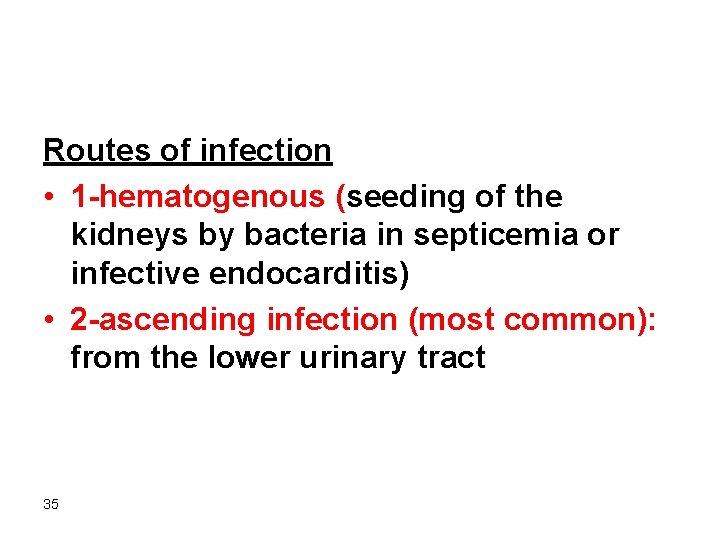
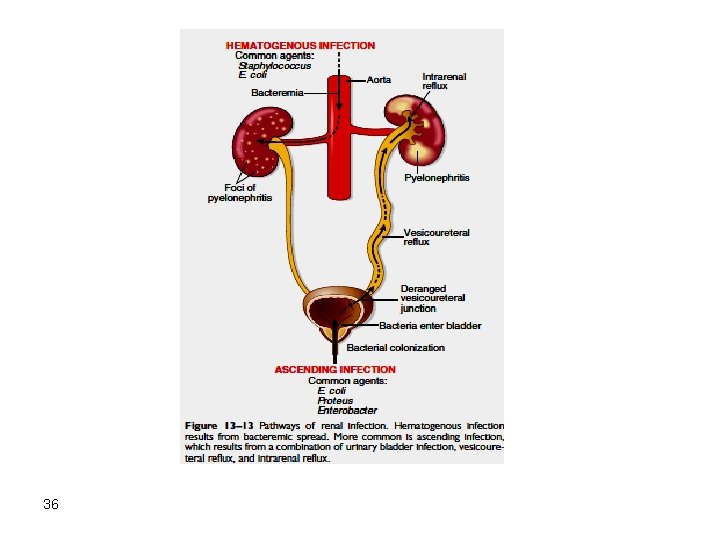
Routes of infection • 1 -hematogenous (seeding of the kidneys by bacteria in septicemia or infective endocarditis) • 2 -ascending infection (most common): from the lower urinary tract 35
36
• bladder urine is sterile and remains so as a result of: • 1 - the antimicrobial properties of the bladder mucosa. • 2 - the flushing action associated with periodic voiding of urine. • The first step is adhesion of bacteria to mucosal surfaces → colonization of the distal urethra → bladder by expansive growth of the colonies and by moving against the flow of urine. 37
• Predisposing factors • 1 -urethral instrumentation, including catheterization and cystoscopy • 2 -female sex because of the close proximity of the urethra to the rectum • 3 -trauma to the urethra • 4 -outflow obstruction or bladder dysfunction (benign prostatic hyperplasia; uterine prolapse; neurogenic bladder dysfunction 38
• 5 -Pregnancy. • 4% to 6% of pregnant women develop bacteriuria sometime during pregnancy and 20% -40% of these eventually develop UTI. • 6 -UTI is increased in diabetes because of the increased susceptibility to infection. • 7 -vesicoureteral reflux 39
Vesicoureteral reflux An incompetent vesicoureteral orifice allows the reflux of bladder urine into the ureters &allows bacteria to ascend the ureter into the pelvis. - present in 20% to 40% of young children with UTI 1 - congenital defect that results in incompetence of the ureterovesical valve. 2 -acquired in spinal cord injury and with neurogenic bladder dysfunction secondary to diabetes 40
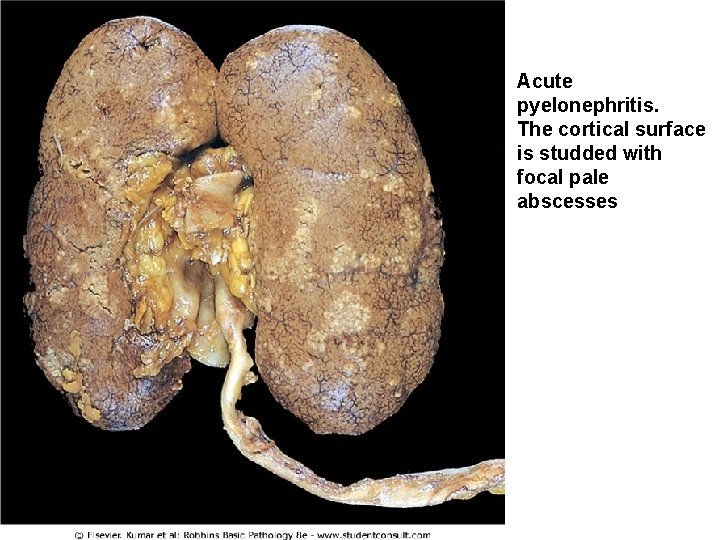
Acute pyelonephritis. The cortical surface is studded with focal pale abscesses 41
Drug-Induced Interstitial Nephritis • Two forms of TIN caused by drugs are : • 1 -Acute Drug-Induced Interstitial Nephritis • 2 -Analgesic Nephropathy • Acute TIN • 1 -most frequently occurs with synthetic penicillins (methicillin, ampicillin) • 2 - other synthetic antibiotics (rifampin), diuretics (thiazides) • 3 - nonsteroidal anti-inflammatory agents • 4 -other drugs (phenindione, cimetidine 42
• Pathogenesis • Many features of the disease suggest an immune mechanism. • Clinical evidence of hypersensitivity is not dose related. • Serum Ig. E levels are increased in some persons suggesting type I hypersensitivity. • The mononuclear or granulomatous infiltrate, together with positive skin tests to drugs, suggests a T cell-mediated (type IV) hypersensitivity reaction. 43
Morphology • the interstitium shows pronounced edema and infiltration by mononuclear cells, lymphocytes and macrophages. • Eosinophils and neutrophils may be present, often in large numbers. • With some drugs (e. g. , methicillin, thiazides, rifampin), interstitial non-necrotizing granulomas with giant cells may be seen. • The glomeruli are normal except in some cases caused by nonsteroidal anti-inflammatory agents. 44
Clinical course • The disease begins about 15 days (range 2 -40 days) after exposure to the drug. • It is characterized by fever, eosinophilia & rash in about 25% of persons, and renal abnormalities. • Renal findings include hematuria, minimal or no proteinuria, and leukocyturia (sometimes including eosinophils). 45
• A rising serum creatinine or acute renal failure with oliguria develops in about 50% of cases, particularly in older patients. • It is important to recognize druginduced renal failure, because withdrawal of the offending drug is followed by recovery although it may take several months for renal function 46 to return to normal
Analgesic Nephropathy: chronic drug-induced • Consumption large quantities of analgesics may cause chronic interstitial nephritis often associated with renal papillary necrosis. • ingestion of single types of analgesics or, most commonly people who develop this nephropathy consume mixtures containing some combination of phenacetin, aspirin, acetaminophen, caffeine, and codeine for long periods. • Aspirin and acetaminophen are common causes • While they can cause renal disease in apparently healthy individuals preexisting renal disease seems to be a necessary precursor to analgesic-induced renal failure 47
• Pathogenesis • not entirely clear. • Papillary necrosis is the initial event, and the interstitial nephritis in the overlying renal parenchyma is a secondary phenomenon. • covalent binding and oxidative damage Acetaminophen • inhibition of prostaglandin synthesis aspirin 48
• Morphology • The papillae show coagulative necrosis • dystrophic calcification may occur in the necrotic areas. • tubular atrophy, interstitial scarring, and inflammation. • The small vessels in the papillae and urinary tract submucosa exhibit characteristic PASpositive basement membrane thickening. 49
Clinical Course • Chronic renal failure, hypertension, and anemia. • The anemia results in part from damage to red cells by phenacetin metabolites. • A complication of analgesic abuse is the increased incidence of transitionalcell carcinoma of the renal pelvis or bladder in persons who survive the renal failure. 50
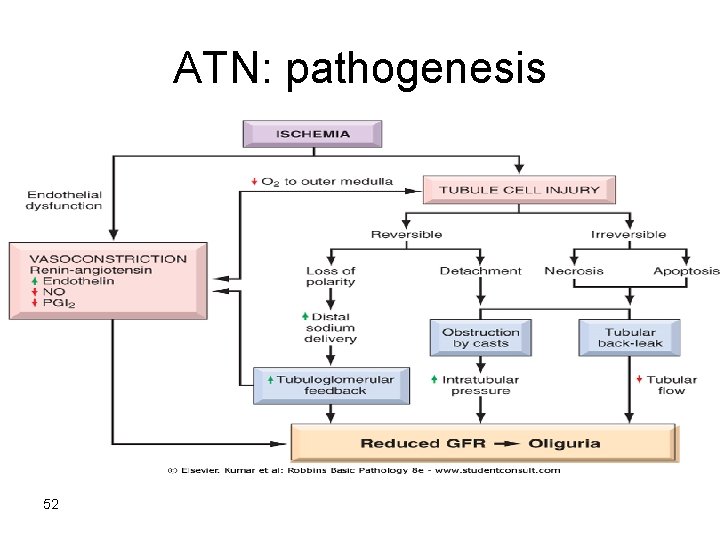
Acute Tubular Necrosis (ATN) • ATN is a clinicopathologic entity characterized morphologically by damaged tubular epithelial cells and clinically by acute suppression of renal function. • It is the most common cause of acute renal failure. • In acute renal failure, urine flow falls within 24 hours to less than 400 m. L/day (oliguria). 51
ATN: pathogenesis 52
• • • 53 ATN is a reversible renal lesion. predisposing clinical settings: Types: 1 - ischemic ATN : most common variant is associated with shock that result from either: 1 - severe trauma. 2 - acute pancreatitis. 3 - septicemia. 4 - mismatched blood transfusions and other hemolytic crises, as well as myoglobinuria.
• 2 - nephrotoxic ATN • poisons including heavy metals (e. g. , mercury) • organic solvents (e. g. , carbon tetrachloride) • drugs such as gentamicin and other antibiotics, and radiographic contrast agents. 54