
CYCLOCONVERTERS A cycloconverter directly converts ac power at

- Slides: 10
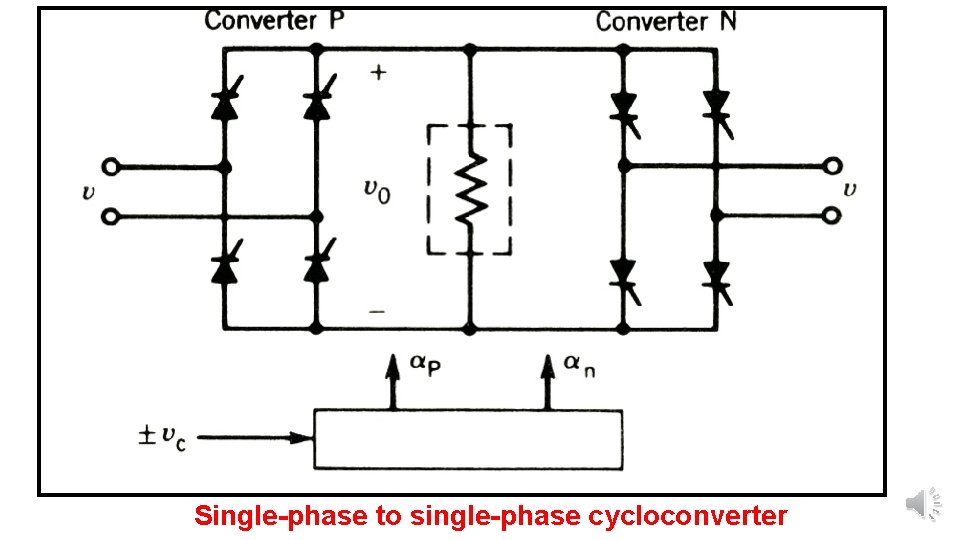
CYCLOCONVERTERS : A cycloconverter directly converts ac power at one input frequency to output power at a different (normally lower) frequency. SINGLE-PHASE TO SINGLE-PHASE CYCLOCONVERTER : Converters P and N are the positive and negative controlled rectifiers, respectively. If only converter P is operated, the output voltage is positive. If converter N is operated, the output voltage is negative.
Let the polarity of the control voltage Vc represent the polarity of the output voltage Vo and the amplitude of Vc represent the desired average output voltage. The frequency of Vc represents the fundamental output frequency of Vo. During the positive half-cycle of Vc converter P is fired, and during the negative half-cycle converter N is fired. Note that the fundamental output frequency is one-third the input frequency.
Single-phase to single-phase cycloconverter
Waveforms of single-phase cycloconverter
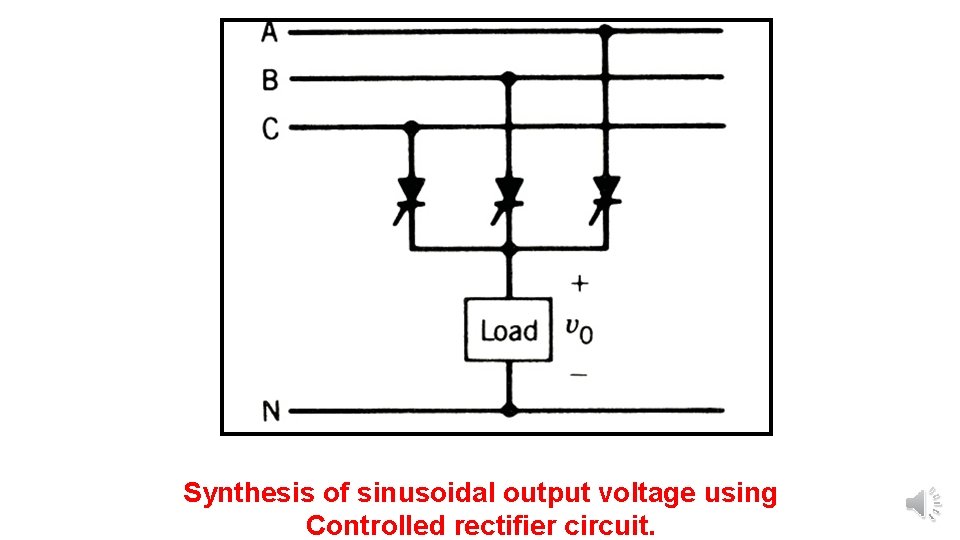
THREE-PHASE CYCLOCONVERTER § Many applications require sinusoidal ac voltage. § An essentially sinusoidal output voltage can be synthesized from three-phase input voltages by using three-phase controlled rectifiers. § The average output voltage of this controlled rectifier varies as the cosine of the firing angle. § The successive firing angles can be changed so that the average output voltage changes sinusoidally.
Synthesis of sinusoidal output voltage using Controlled rectifier circuit.
Output voltage synthesis
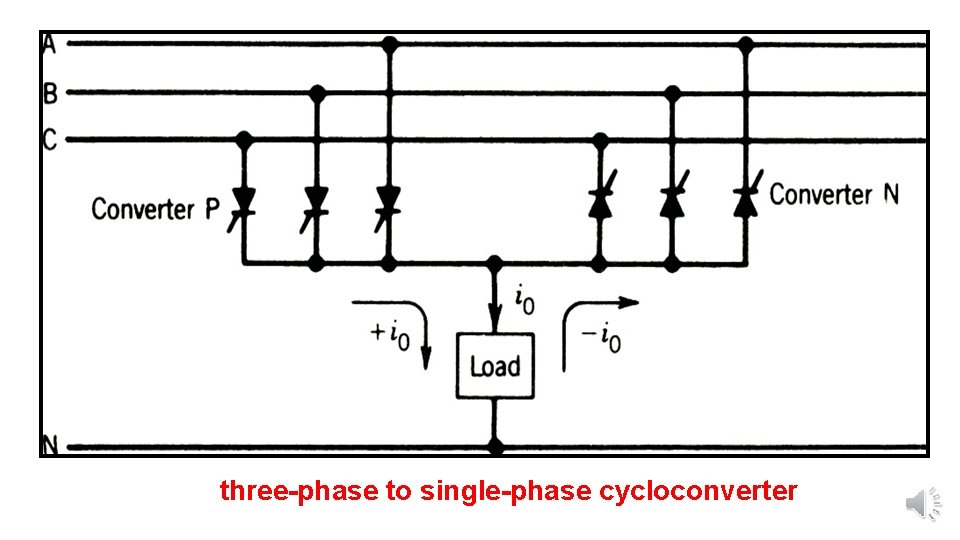
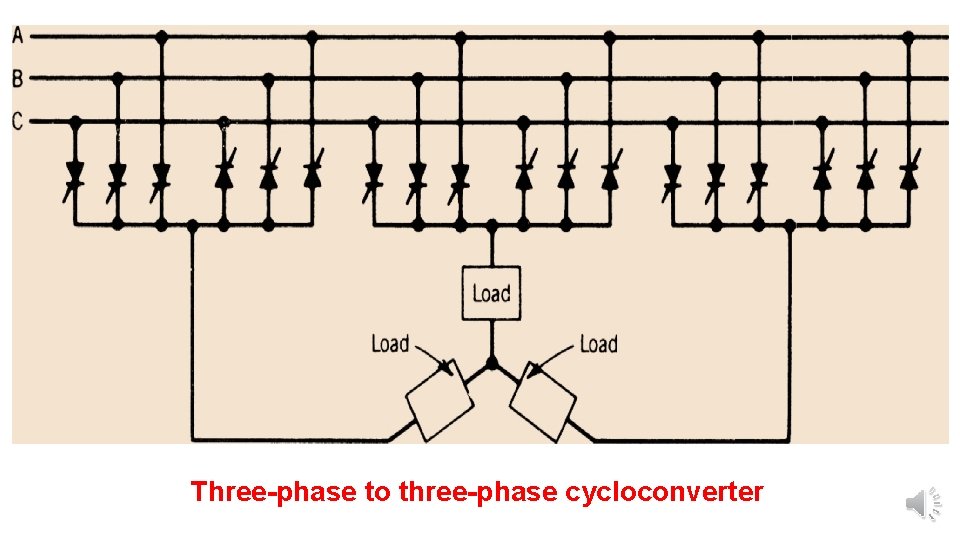
§ The three-phase to single-phase cycloconverter is shown in figure. The converter P conducts during the positive half-cycle and the converter N conducts during the negative half cycle of the cycloconverter output current io. § The three-phase to three-phase cycloconverter is shown also in the next figure.
three-phase to single-phase cycloconverter
Three-phase to three-phase cycloconverter