
Cycling of Matter the Climate System Biogeochemical Cycle
Cycling of Matter & the Climate System
Biogeochemical Cycle Ø The natural process of circulation of matter where matter and energy are exchanged between the abiotic and biotic environment and back… Ø Places where matter is stored for longer periods are called stores (also called reservoirs). Ø Human activities alter the natural cycle.
Carbon Cycle & Climate Change Ø Major stores of carbon on earth: l Marine sediments and sedimentary rock • Millions / billions of years l Oceans • 500 – 1000 years l Fossil fuels (coal, oil, gas) • Hundreds / millions of years l Vegetation, soil, organic matter • 5 – 25 years l Atmosphere • 50 – 500 years
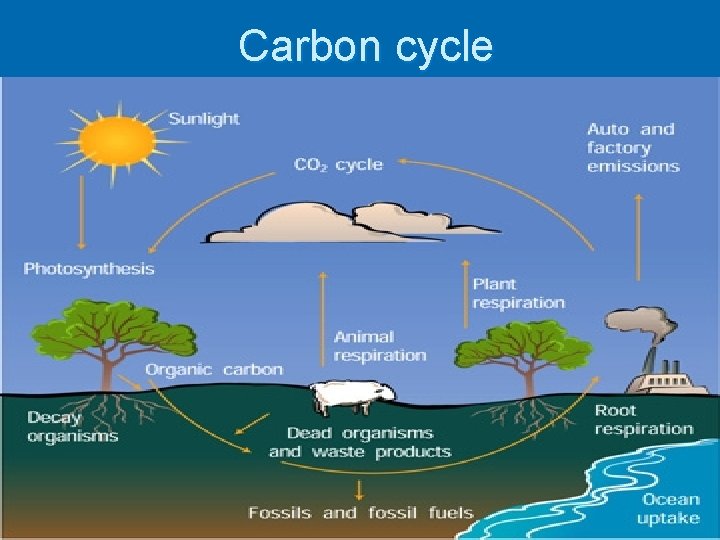
Carbon cycle
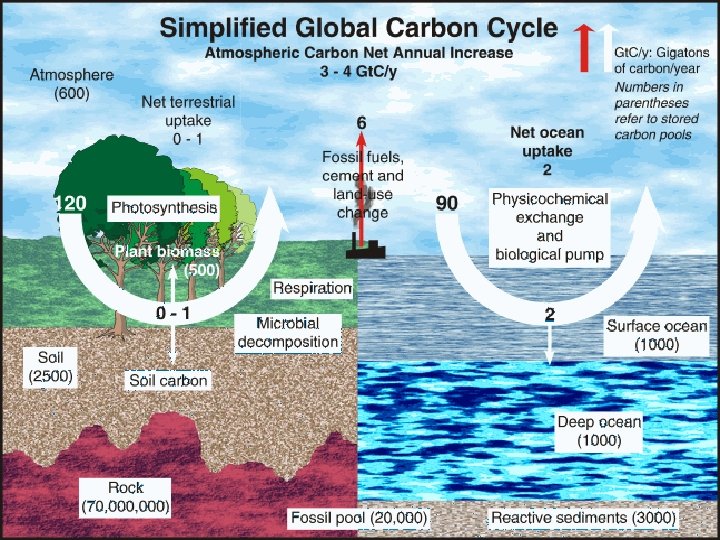
Global Carbon Budget Ø The relative amounts of carbon in different stores Ø An accounting of the exchanges (incomes and losses) of carbon between the stores of the carbon cycle
How Human Activities Affect the Carbon Cycle Ø By changing the relative amounts of carbon in each store and the length of time the carbon remains in each store (eg. burning fossil fuels) l l l Releases more carbon compounds in a shorter time Leads to a build-up in the atmosphere (negative feedback loop) Oceans absorb more CO 2 • This causes oceans to become warmer and more acidic, which then decreases their ability to absorb CO 2 (positive feedback loop)
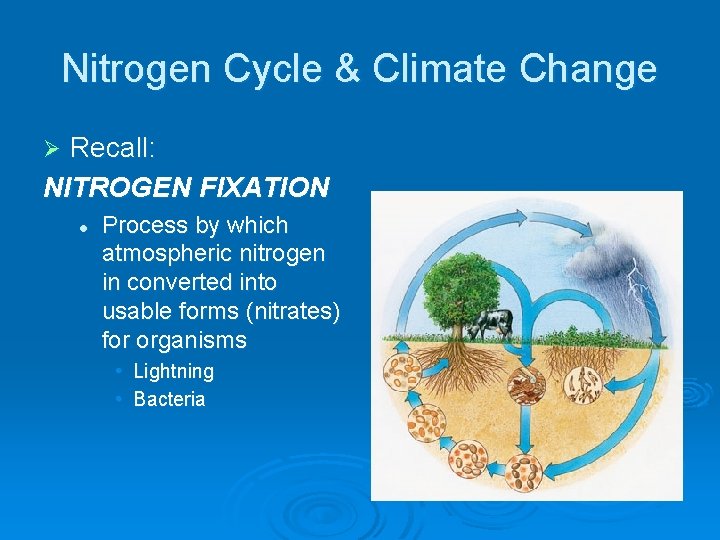
Nitrogen Cycle & Climate Change Recall: NITROGEN FIXATION Ø l Process by which atmospheric nitrogen in converted into usable forms (nitrates) for organisms • Lightning • Bacteria

How Humans Affect the Nitrogen Cycle

How Humans Affect the Nitrogen Cycle Ø Humans affect the nitrogen cycle through the addition of nitrogen to l the land (agriculture) • fertilizers l water (water pollution) • fertilizer runoff, algae, ocean “dead zones” l the atmosphere (air pollution) • ammonia (NH 3) creating smog, greenhouse gas nitrous oxide (N 2 O), etc…
Reducing the Effect of Nitrogen on Climate Change Ø Less fertilizer use Ø Precision farming l Satellites and GIS determine exact locations that require fertilizers WORK: p. 337 #1 -4, p. 340 #1 -8
- Slides: 11