
Cycling of Matter and Nutrient Cycles Water Cycle
- Slides: 11
Cycling of Matter and Nutrient Cycles
Water Cycle
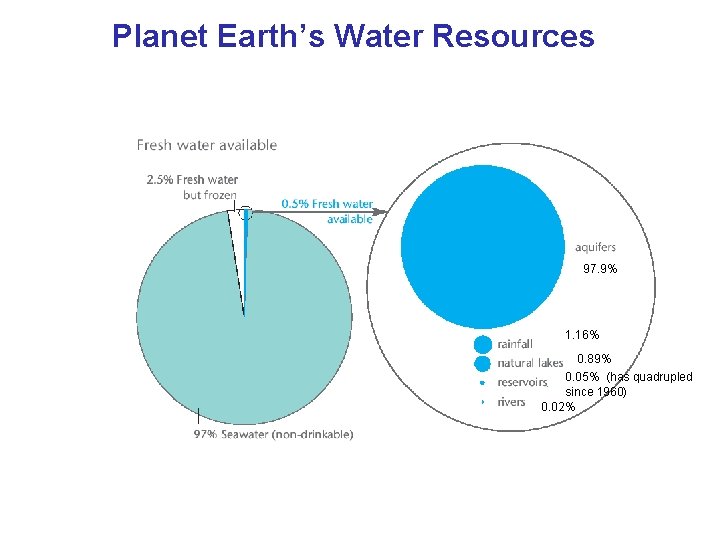
Planet Earth’s Water Resources 97. 9% 1. 16% 0. 89% 0. 05% (has quadrupled since 1960) 0. 02%
Carbon Cycle
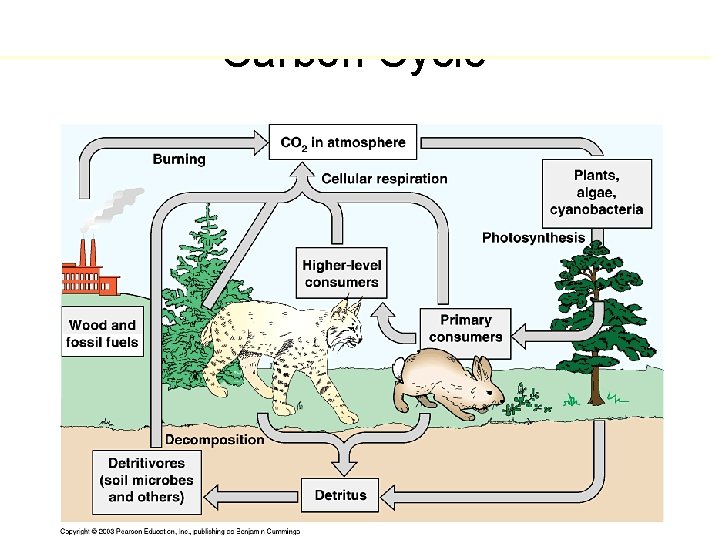
Carbon Cycle • Air contains carbon in the form of CO 2 • Plants use light to make sugars which contain carbon • Organisms break down sugar molecules for energy and release carbon as waste • Burning fossil fuels and woods release CO 2 • Organisms die and their carbon containing bodies decompose by bacteria and fungi and other decomposers. CO 2 is released. • Under certain conditions the remains of some dead organisms may gradually change into fossil fuels, gas, crude oil, coal (all rich in carbon)
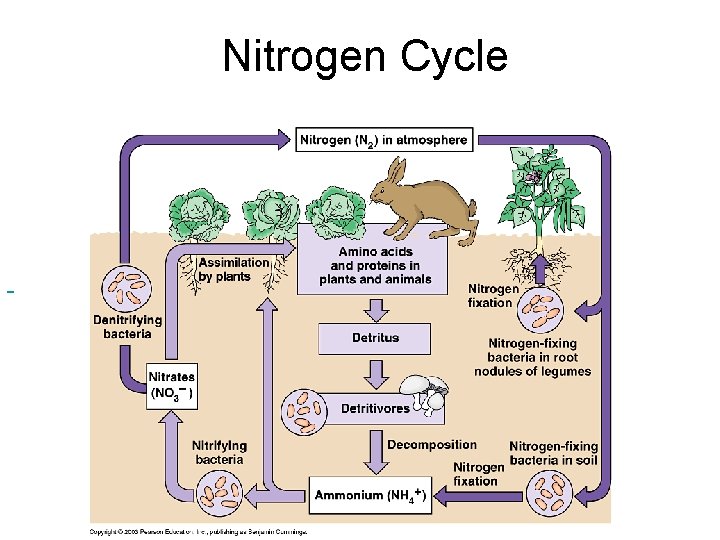
Nitrogen Cycle
Key Ideas: Earths atmosphere is 78% nitrogen (N 2) • Most organisms cannot use nitrogen in this format so it must be converted (fixated) • Terrestrial Fixation: • The soil contains bacteria that convert nitrogen to ammonium (NH 4). Other soil bacteria take this ammonia and convert it into nitrate where plants can then absorb it. Nitrogen is passed through the food chain from this point. • Aquatic Fixation: • Cyanobacteria convert nitrogen into ammonium which is absorbed by plants.
• Fixation by Lightning: • High electricity converts atmospheric nitrogen into nitrates (NO 3) • Humans convert nitrogen into ammonium and nitrates with high pressure and temperature to manufacture fertilizers • Different bacteria in land water also can convert nitrates back to nitrogen to be released into the atmosphere. • In sustainable ecosystems excess nitrogen is stored in rocks (lithosphere)
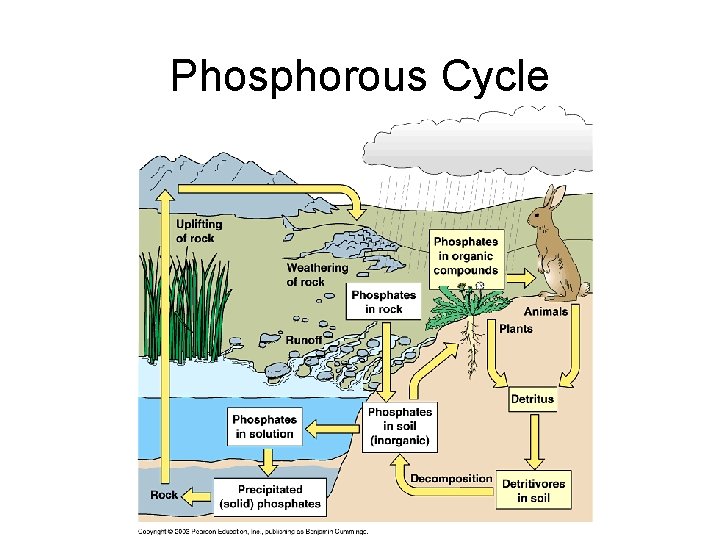
Phosphorous Cycle
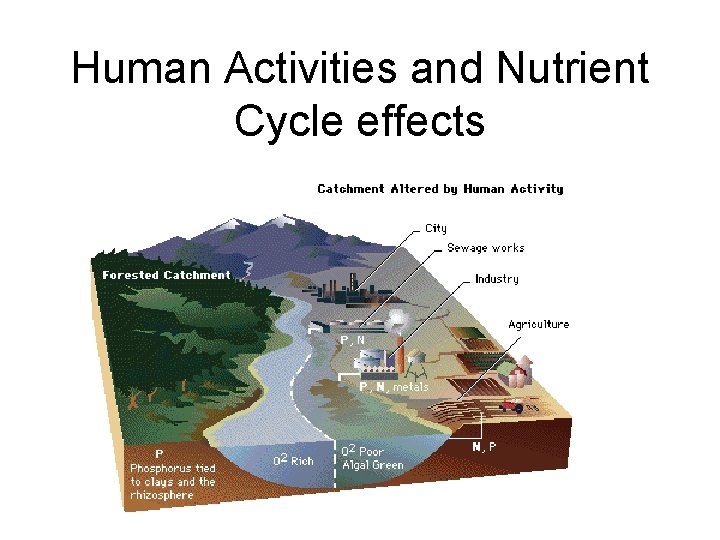
Human Activities and Nutrient Cycle effects
Fertilizers and the Phosphorus Cycle • Run off from fertilizers cause algal blooms blocks light for submerged plants, algae and other plants eventually die off, bacteria use oxygen during decomposition so oxygen levels get too low for fish to survive so they die off. • Eutrophication: A process in which nutrient levels in aquatic ecosystems increase leading to an increase in the populations of primary producers (algae)