
Cyclic Analysis of New Comen Engine P M
- Slides: 16
Cyclic Analysis of New Comen Engine P M V Subbarao Professor Mechanical Engineering Department Analysis of Process & Event to be Executed by A second generation PGS
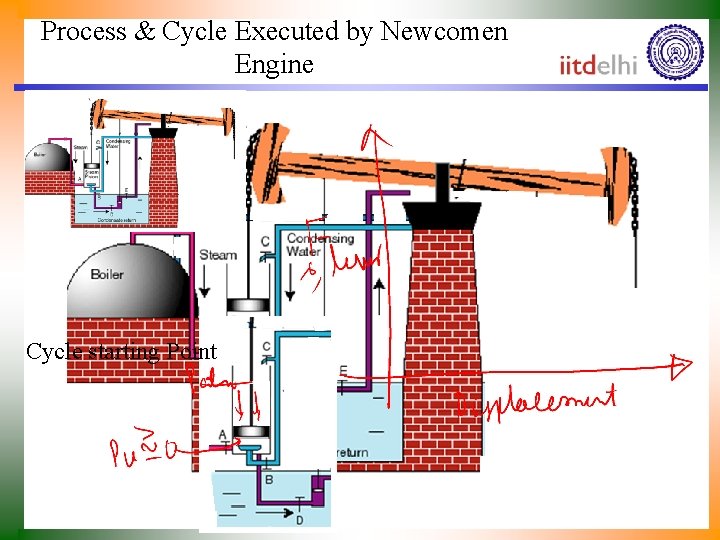
Newcomen Engine : First Step in Innovation thru Conservation • Newcomen created his vacuum inside a cylinder and used it to pull down a piston. • It was the first practical engine to use a piston in a cylinder. • He then used a lever to transfer the force to the pump shaft that went down the mine. • Casting the cylinders and getting the pistons to fit was pushing the limit of existing technology. • Newcomen deliberately made the piston marginally smaller than the cylinder and sealed the gap with a ring of wet leather or rope. • To avoid infringing Savery's patent Newcomen was forced to go into partnership with him.
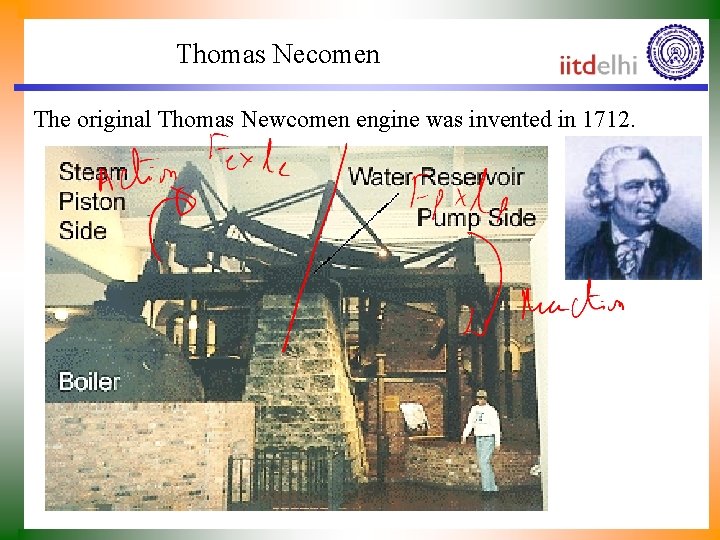
Thomas Necomen The original Thomas Newcomen engine was invented in 1712.
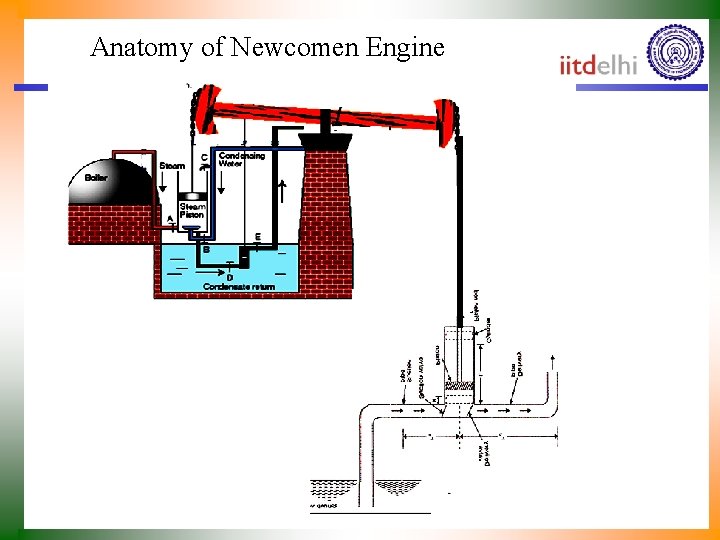
Anatomy of Newcomen Engine
Process & Cycle Executed by Newcomen Engine Cycle starting Point
Performance & Application of New. Comen Engine • The first Newcomen’s working engine was installed at a coalmine at Dudley Castle in Staffordshire in 1712. • It had a cylinder of 21 inches in diameter and nearly eight feet long, and it worked at twelve strokes a minute. • It raised ten gallons of water from a depth of 156 feet – approximately. • The engines were rugged and reliable and worked day and night, but were extremely inefficient. • Newcomen engines were very expensive but were nevertheless very successful. • By the time Newcomen died on 5 August 1729 there were at least one hundred of his engines in Britain and across Europe.
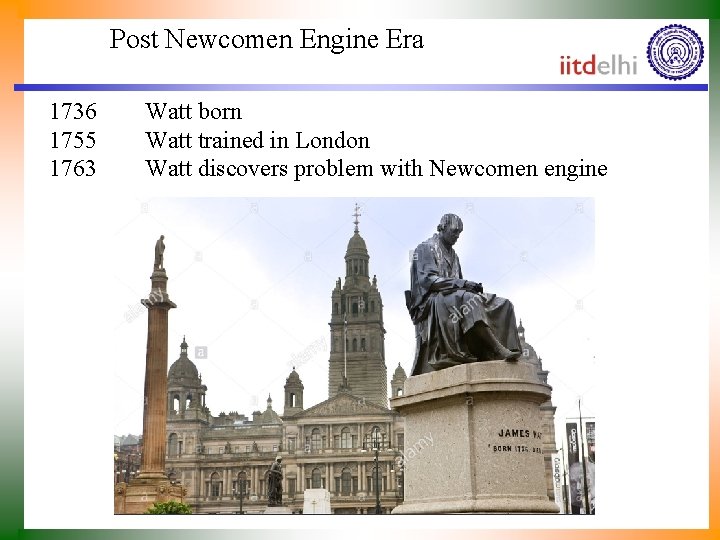
Post Newcomen Engine Era 1736 Watt born 1755 Watt trained in London 1763 Watt discovers problem with Newcomen engine
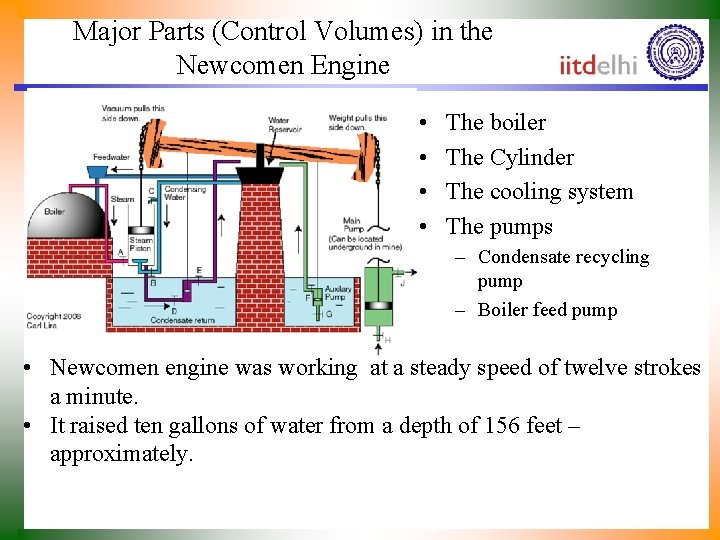
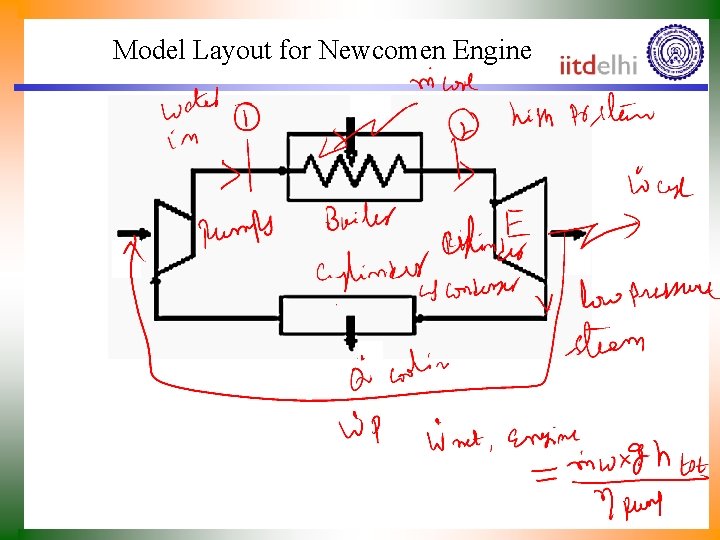
Major Parts (Control Volumes) in the Newcomen Engine • • The boiler The Cylinder The cooling system The pumps – Condensate recycling pump – Boiler feed pump • Newcomen engine was working at a steady speed of twelve strokes a minute. • It raised ten gallons of water from a depth of 156 feet – approximately.
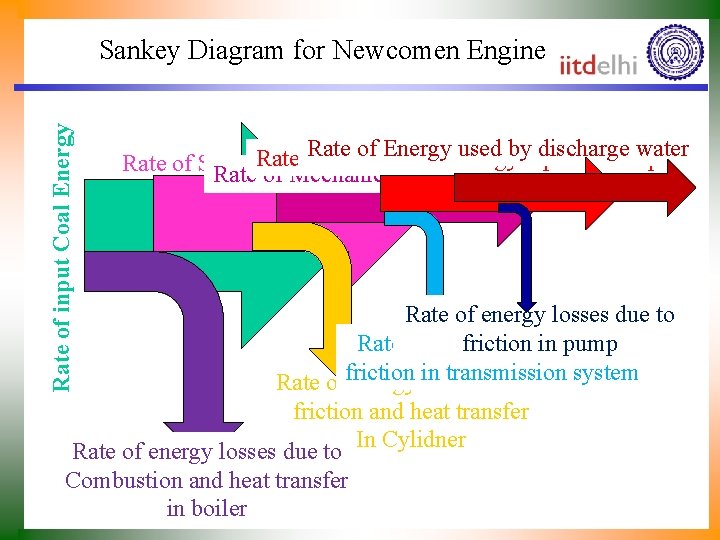
Rate of input Coal Energy Sankey Diagram for Newcomen Engine Rate of Energy used by discharge water Rate of Mechanical Energy input to Pump Rate of Steam Energy Rate of Mechanical Energy input to Lever Rate of energy losses due to friction in pump friction in transmission system Rate of energy losses due to friction and heat transfer Rate of energy losses due to In Cylidner Combustion and heat transfer in boiler
Model Layout for Newcomen Engine
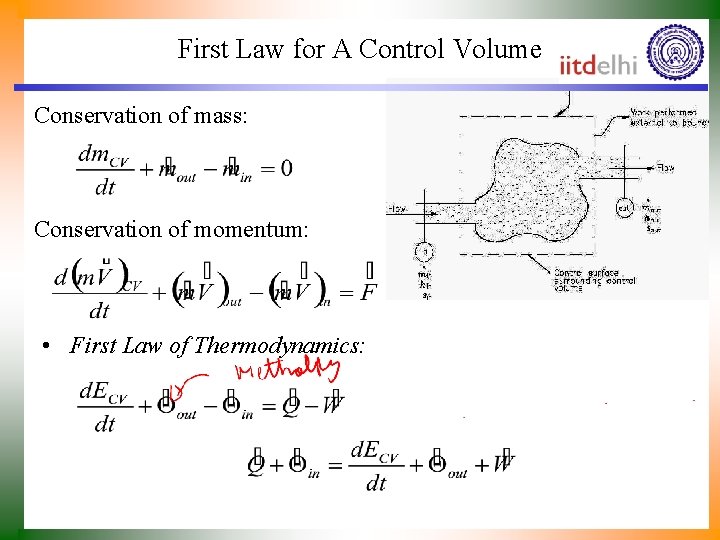
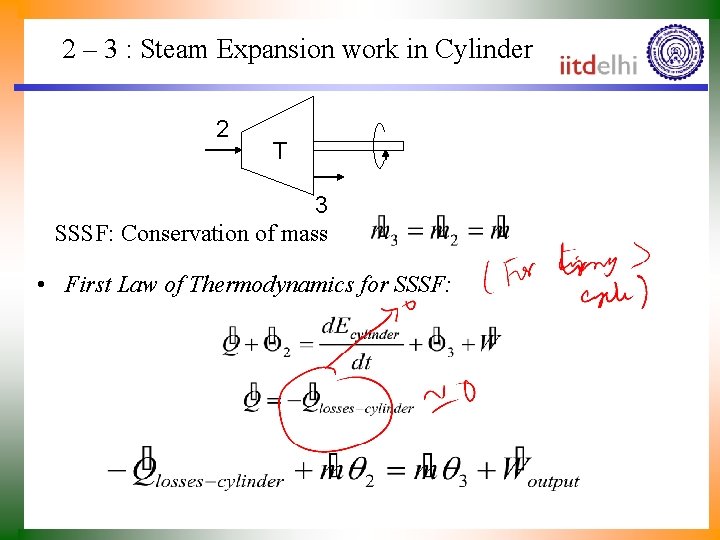
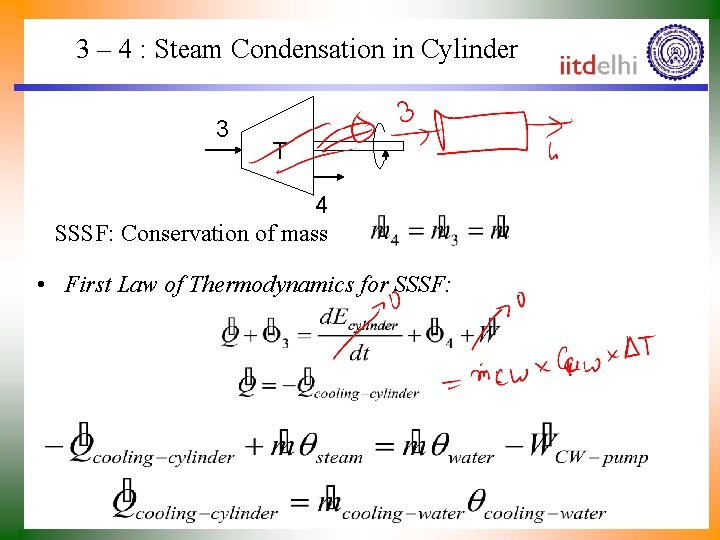
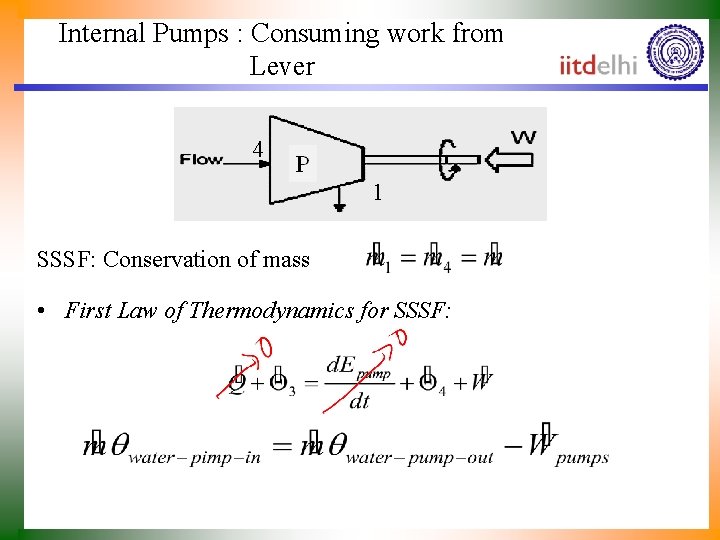
First Law for A Control Volume • Conservation of mass: • Conservation of momentum: • First Law of Thermodynamics:
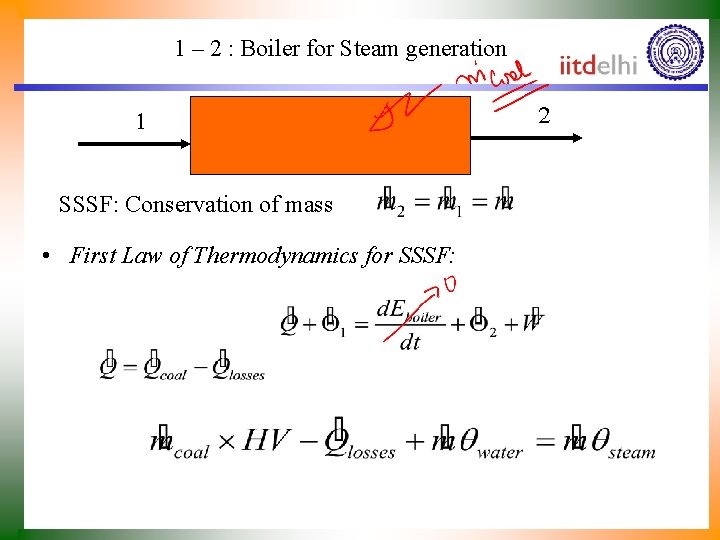
1 – 2 : Boiler for Steam generation 1 SSSF: Conservation of mass • First Law of Thermodynamics for SSSF: 2
2 – 3 : Steam Expansion work in Cylinder 2 T 3 SSSF: Conservation of mass • First Law of Thermodynamics for SSSF:
3 – 4 : Steam Condensation in Cylinder 3 T 4 SSSF: Conservation of mass • First Law of Thermodynamics for SSSF:
Internal Pumps : Consuming work from Lever 4 1 SSSF: Conservation of mass • First Law of Thermodynamics for SSSF:
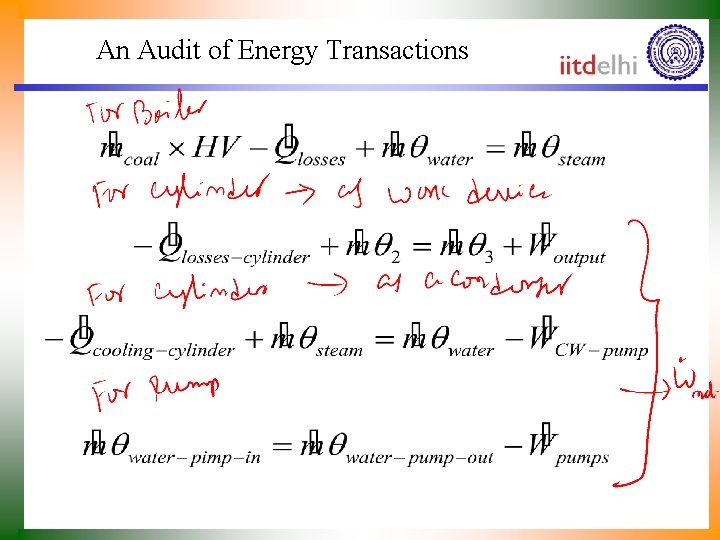
An Audit of Energy Transactions