
Cycles in the Ecosystem Energy Flow Through the
- Slides: 15
Cycles in the Ecosystem
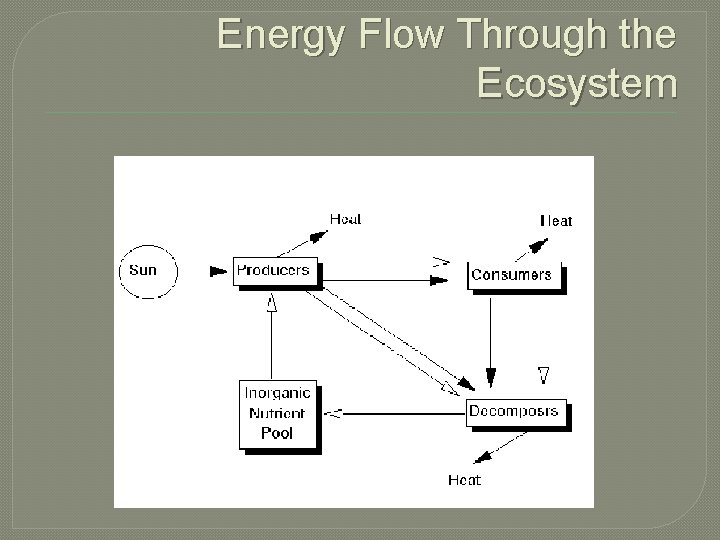
Energy Flow Through the Ecosystem
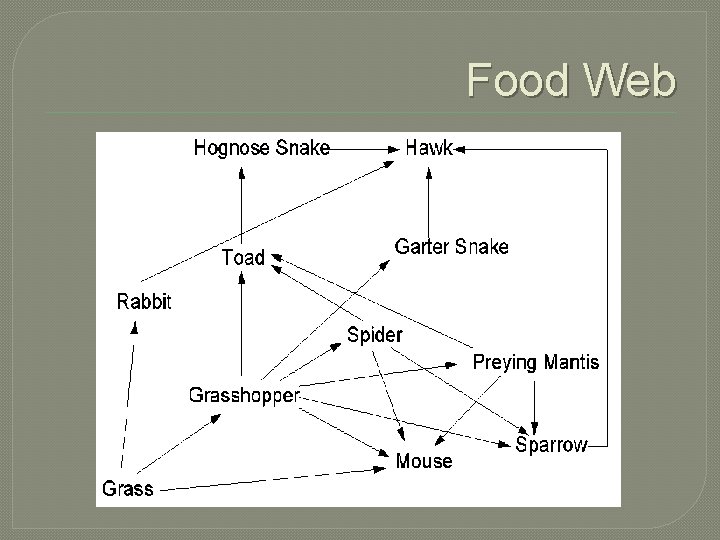
Food Web
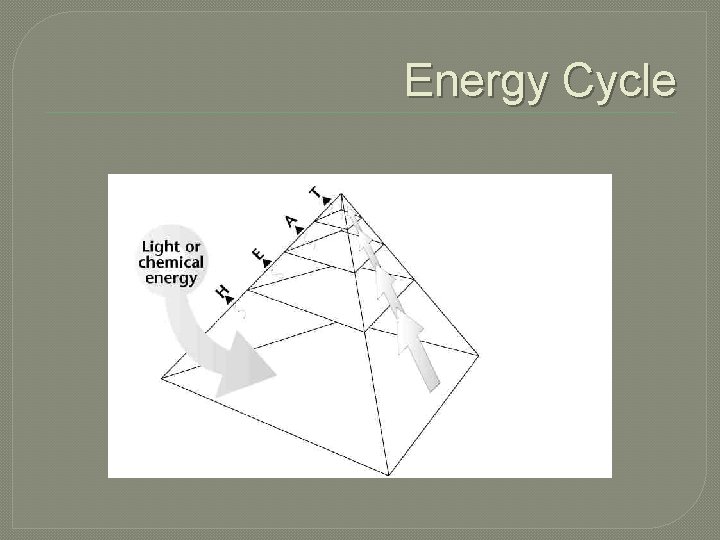
Energy Cycle
Energy and Nutrient Cycles � The ultimate source of energy (for most ecosystems) is the sun � The ultimate fate of energy in ecosystems is for it to be lost as heat. � Energy and nutrients are passed from organism to organism through the food chain as one organism eats another. � Decomposers remove the last energy from the remains of organisms. � Inorganic nutrients are cycled, energy is not.
Water Cycle
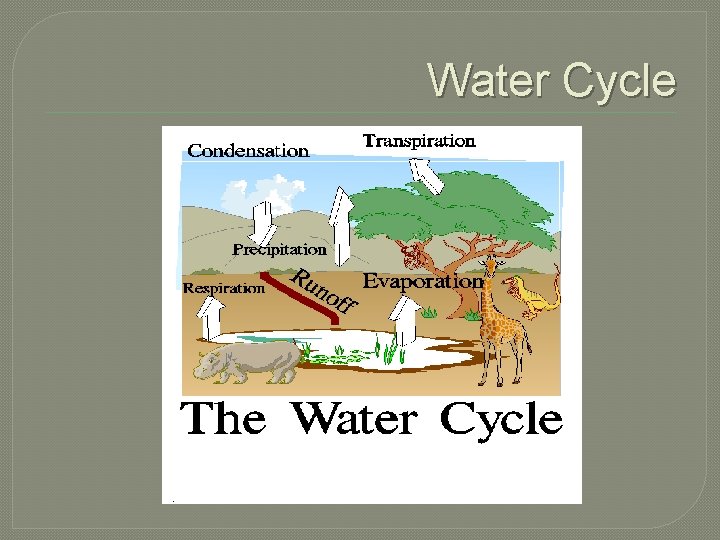
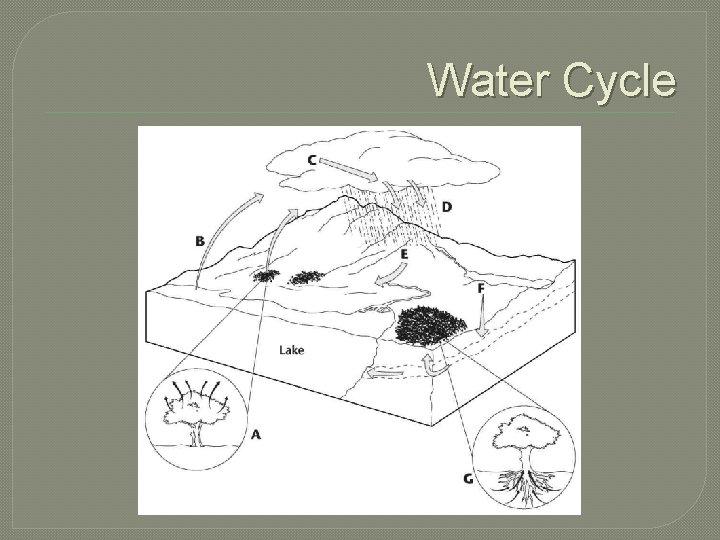
Water Cycle �Energy is supplied by the sun, which drives evaporation whether it be from ocean surfaces or from treetops. �The sun also provides the energy which drives the weather systems • Moves the water vapor (clouds) from one place to another (otherwise, it would only rain over the oceans).
Water Cycle �Precipitation occurs when water condenses from a gaseous state in the atmosphere and falls to earth. �Evaporation is the reverse process in which liquid water becomes gaseous.
Water Cycle �Once water condenses, gravity takes over and the water is pulled to the ground. • Gravity continues to operate, either pulling the water underground (groundwater) or across the surface (runoff). • In either event, gravity continues to pull water lower and lower until it reaches the oceans
Water Cycle
Carbon Cycle
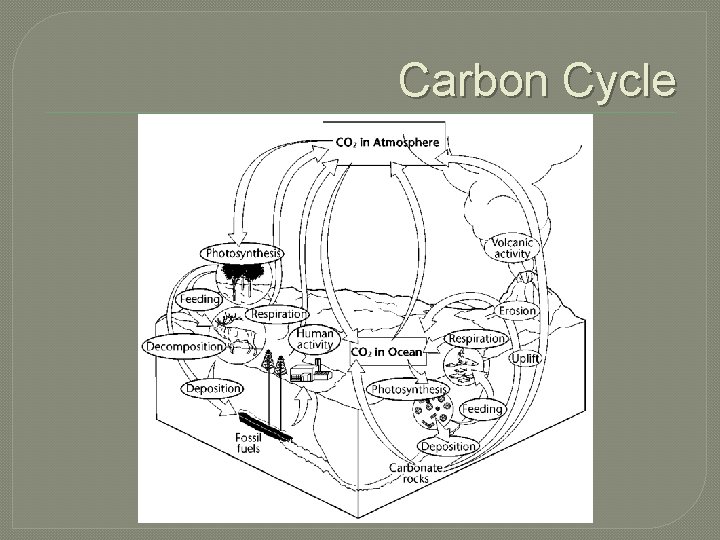
Carbon Cycle �The key events are the complementary reactions of respiration and photosynthesis. �Respiration takes carbohydrates and oxygen and combines them to produce carbon dioxide, water, and energy. �Photosynthesis takes carbon dioxide and water and produces carbohydrates and oxygen.
Carbon Cycle �The outputs of respiration are the inputs of photosynthesis, and the outputs of photosynthesis are the inputs of respiration. �The reactions are also complementary in the way they deal with energy.
Carbon Cycle �Photosynthesis takes energy from the sun and stores it in the carbon-carbon bonds of carbohydrates; respiration releases that energy. �Both plants and animals carry on respiration, but only plants (and other producers) can carry on photosynthesis.
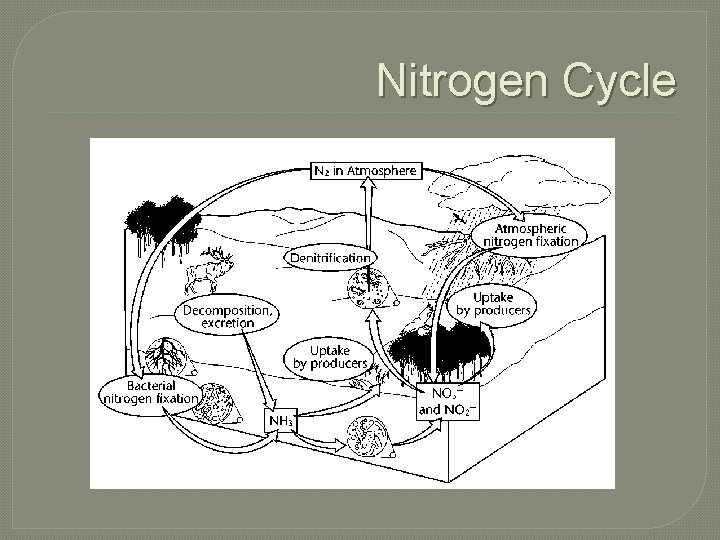
Nitrogen Cycle