
Cycle of Matter I Matter in Our Ecosystem
- Slides: 13
Cycle of Matter
I. Matter in Our Ecosystem • A. Energy is crucial to any ecosystem but living things need water, minerals and other compounds – 1. 95% of most organisms are composed of H, O, C, N. • B. Compounds need to be in a certain form so cells can take them up
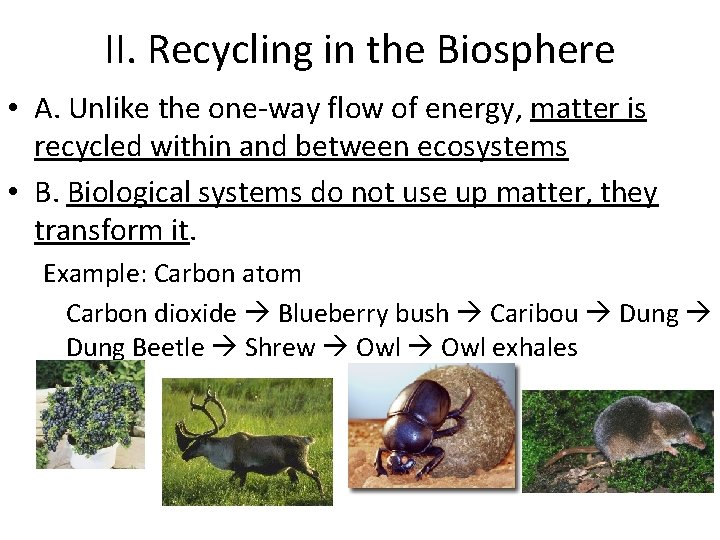
II. Recycling in the Biosphere • A. Unlike the one-way flow of energy, matter is recycled within and between ecosystems • B. Biological systems do not use up matter, they transform it. Example: Carbon atom Carbon dioxide Blueberry bush Caribou Dung Beetle Shrew Owl exhales
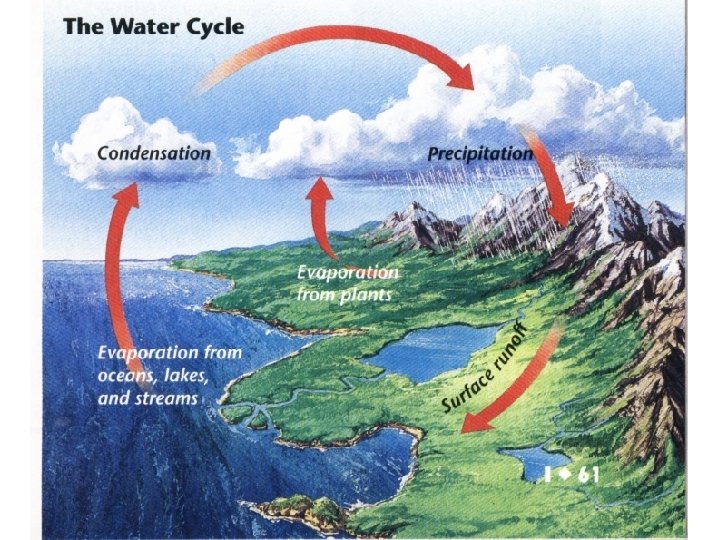
III. The Water Cycle • A. All living things require water to survive • B. Water moves along the ocean, atmosphere, and land. – 1. Evaporation – water changes from a liquid to atmospheric gas • a. Transpiration – water evaporation from leaves of plants – 2. Condensation – water vapor cooling back to a liquid
IV. Nutrient Cycles • A. All the chemical substances that an organism needs to sustain life are its nutrients. • B. Every organisms needs nutrients to build tissues and carry out essential life functions. • C. Like water, nutrients are passed between organisms and their environment through biogeochemical
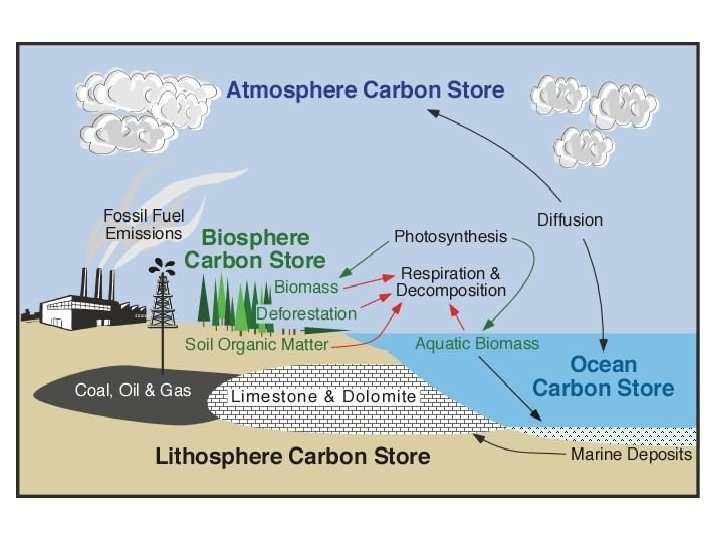
V. Carbon Cycle • A. Carbon key ingredient of living tissue • B. Carbon can be moved through an ecosystem several ways: – 1. Biological processes – photosynthesis, respiration, decomposition – 2. Geochemical processes – erosion, volcanic activity – 3. Biogeochemical processes – decomposition of organic matter and conversion to fossil fuels due to pressure – 4. Human activities – mining, burning forest, fossil fuels
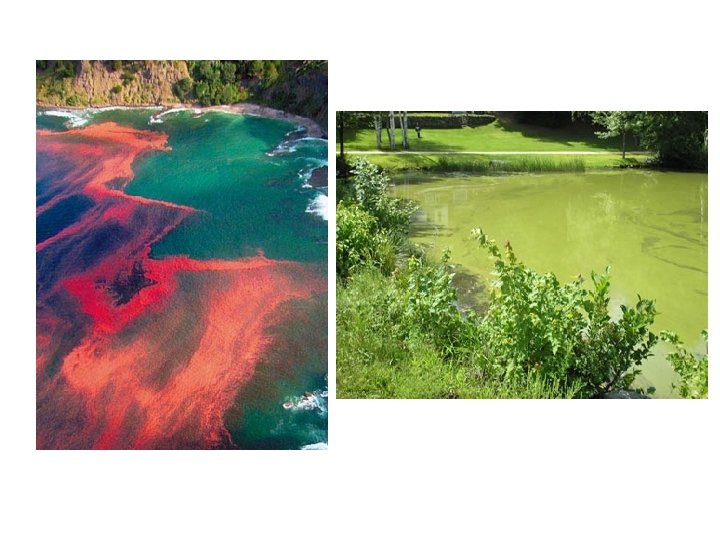
VI. Effects on the Ecosystem • A. An imbalance of these compounds along our planet creates negative effects throughout many ecosystems • B. Many nutrients can become scarce due to the slowing cycle which can decrease the productivity of an organisms, these are known as limiting nutrients
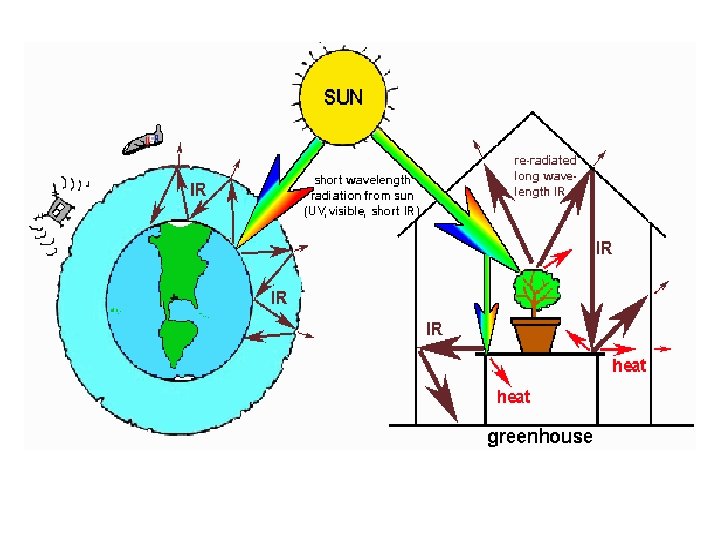
VII. Climate • A. Climate another abiotic factor is the average conditions (temp. & precipitation) in a particular region – 1. Shaped by: wind/ocean currents, latitude, trapping of heat in atm. • B. Carbon dioxide, methane, water vapor, and a few other atmospheric gases trap heat energy and maintain Earth’s temperature range, known as the greenhouse effect
IIX. Heat Transport • A. The heat is not evenly divided along Earth’s surface because of Earth’s tilt which gives rise to 3 main climate zones: – 1. Tropical – almost always warm – 2. Temperate – ranges from hot to cold along these regions – 3. Polar – cold regions • B. Earth’s winds and ocean currents interact to reduce the extremes of these 3 climate zones