
Cycad Aulacaspis Scale What is it Aulacaspis yasumatsui
- Slides: 31
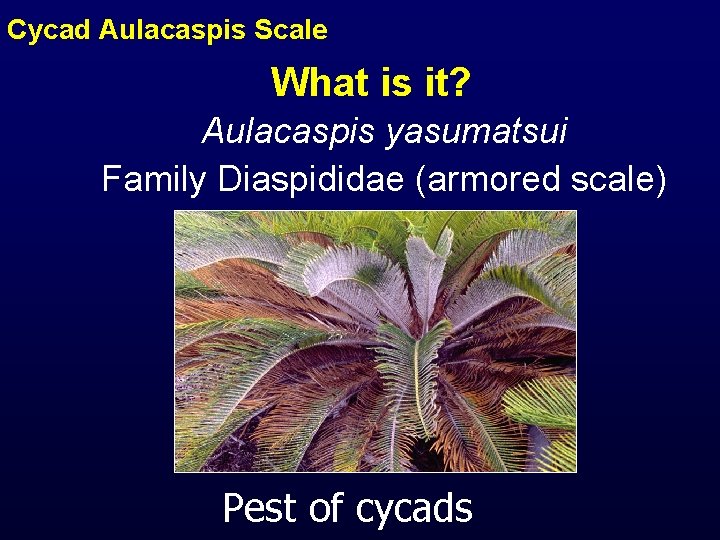
Cycad Aulacaspis Scale What is it? Aulacaspis yasumatsui Family Diaspididae (armored scale) Pest of cycads
Cycad Aulacaspis Scale Where is it from? • Originally described from Thailand • Found in Miami, Florida in 1996 • Spreading northward in Florida into Georgia • Very similar to a common scale in Florida – Magnolia white scale (Pseudaulacaspis cockerelli)
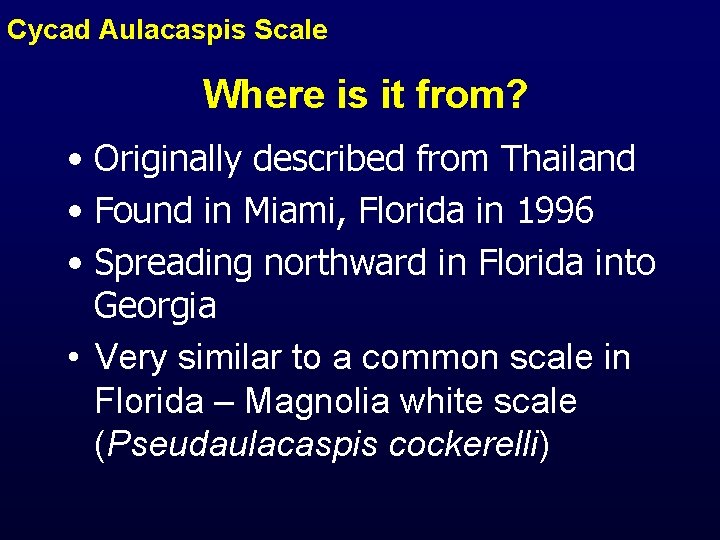
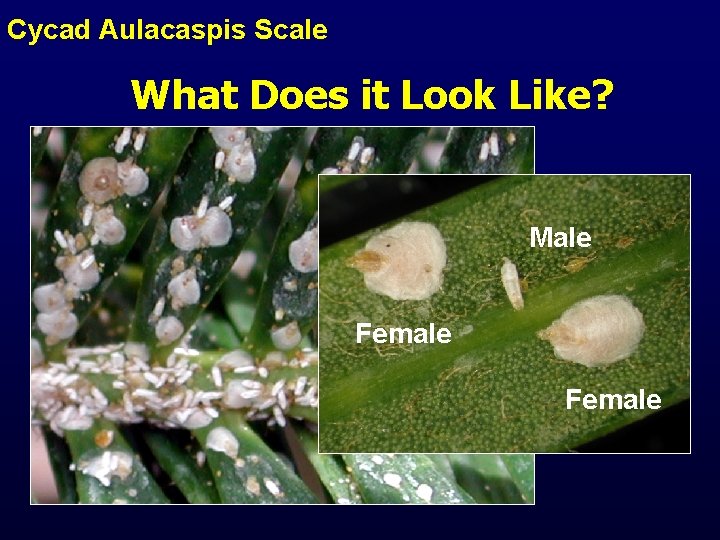
Cycad Aulacaspis Scale What Does it Look Like? Male Female
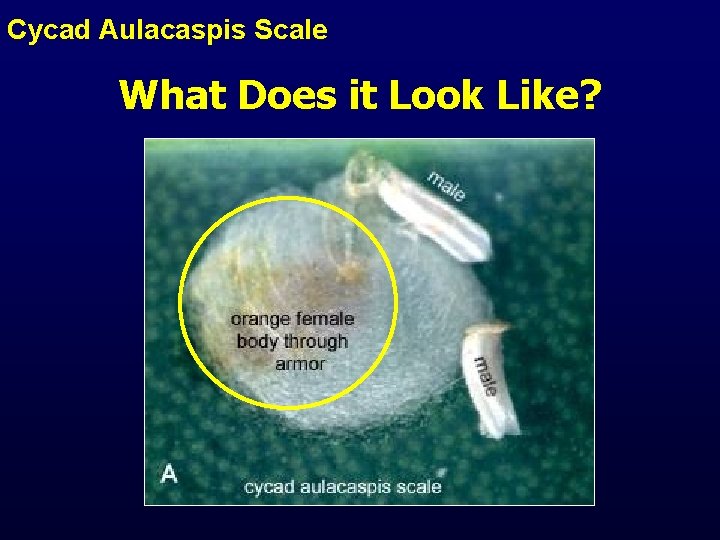
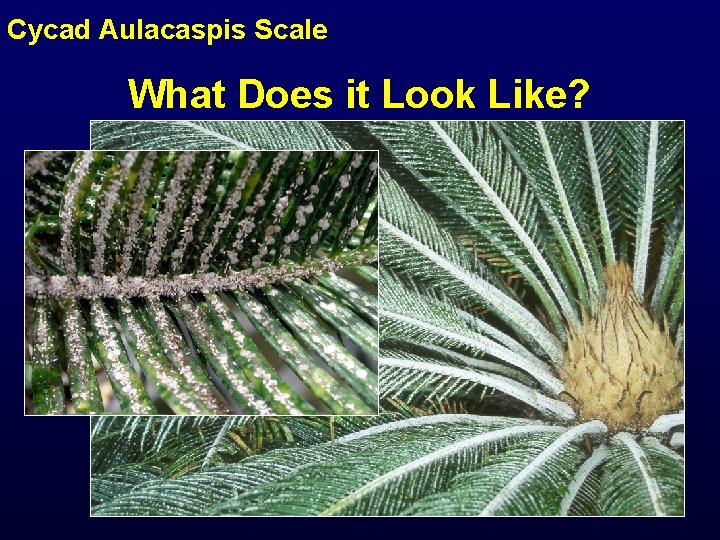
Cycad Aulacaspis Scale What Does it Look Like?
Cycad Aulacaspis Scale What Does it Look Like?
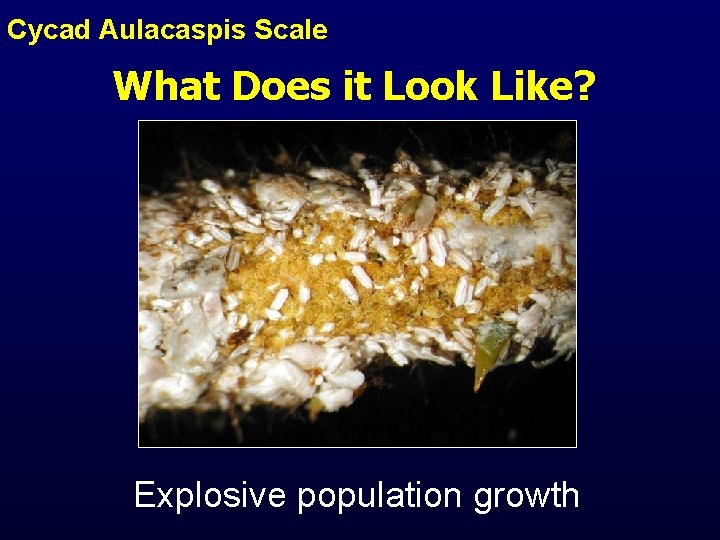
Cycad Aulacaspis Scale What Does it Look Like? Explosive population growth
Cycad Aulacaspis Scale Biology • • Life cycle – 28 days Females lay more than 100 eggs Egg hatch 8 -12 days Most females live approximately 1 month (as long as 75 days) • Infests the plant roots • Males do not feed
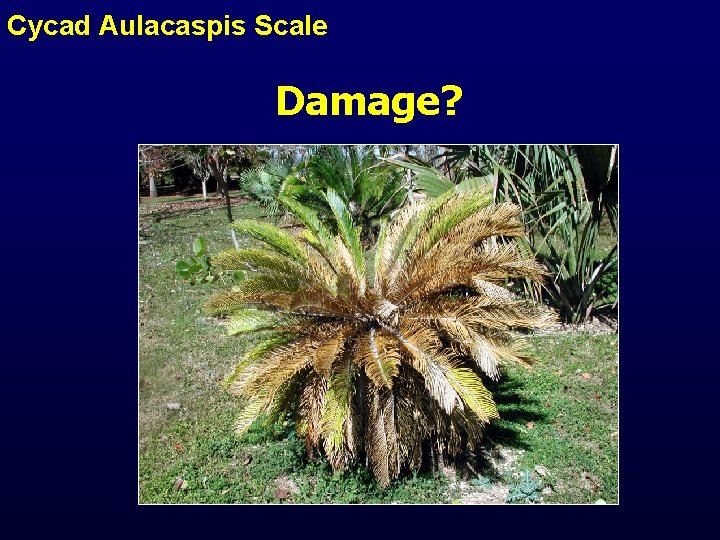
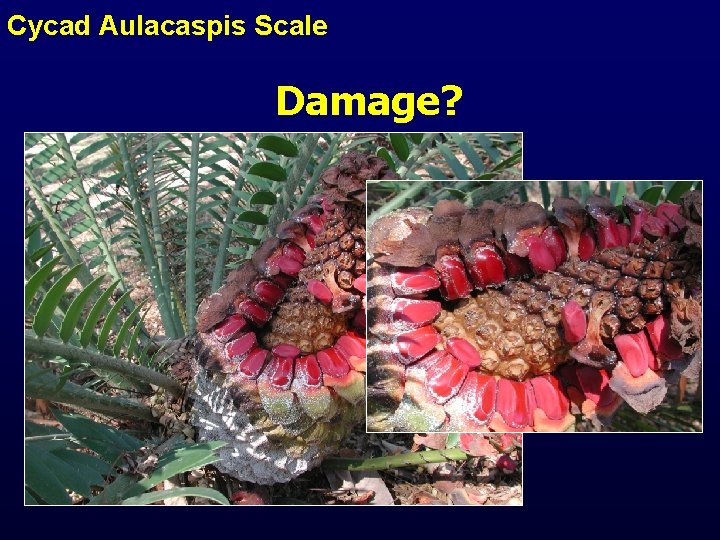
Cycad Aulacaspis Scale Damage? • Initially appears as chlorotic spots • Fronds eventually become brown and desiccated • Cycads become completely coated with a “white crust” • Potential for disease development • Ultimately plant death
Cycad Aulacaspis Scale Damage?
Cycad Aulacaspis Scale Damage?
Cycad Aulacaspis Scale What are the Host Plants? • Cycads • Preferred host is Cycas species (king and queen sago) • Observed on Dioon, Encephalartos, Microcycas and Stangeria
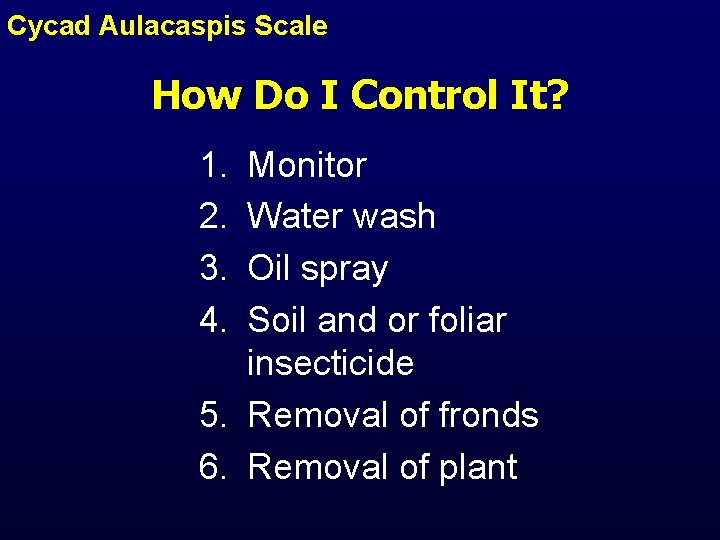
Cycad Aulacaspis Scale How Do I Control It? • Control is difficult • Long-term, continuous effort • Continuous re-infestation from crawlers from the roots • Inconsistent results • Introduction of natural enemies
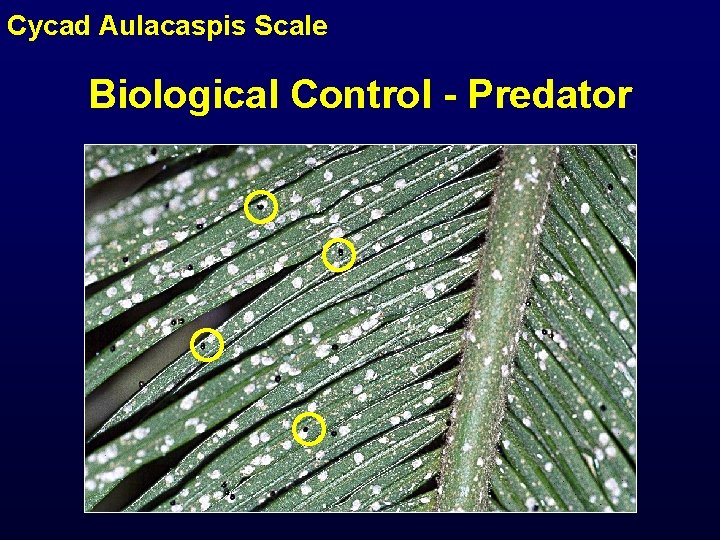
Cycad Aulacaspis Scale How Do I Control It? Biological Control Two natural enemies were imported from Thailand released in 1997 and 1998 • Coccobius fulvus – wasp parasitoid • Cybocephalus binotatus – beetle predator
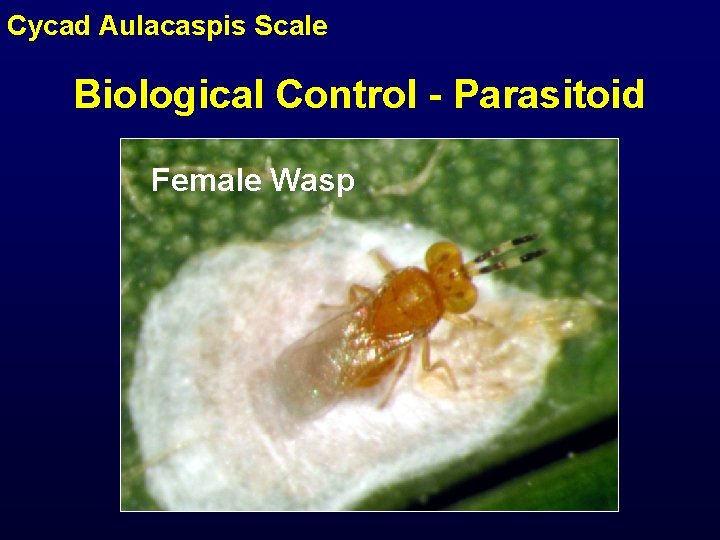
Cycad Aulacaspis Scale Biological Control - Parasitoid Female Wasp
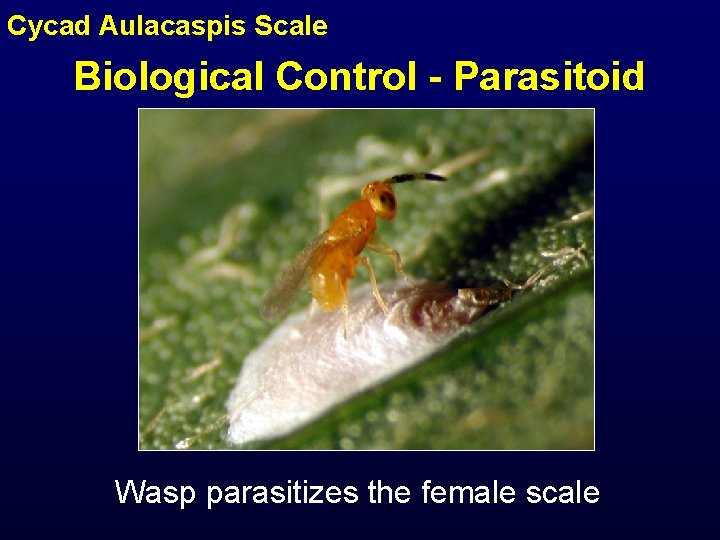
Cycad Aulacaspis Scale Biological Control - Parasitoid Wasp parasitizes the female scale
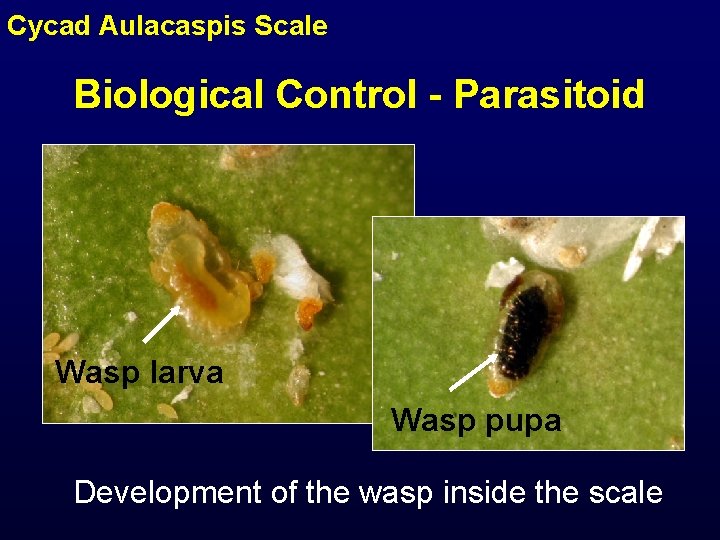
Cycad Aulacaspis Scale Biological Control - Parasitoid Wasp larva Wasp pupa Development of the wasp inside the scale
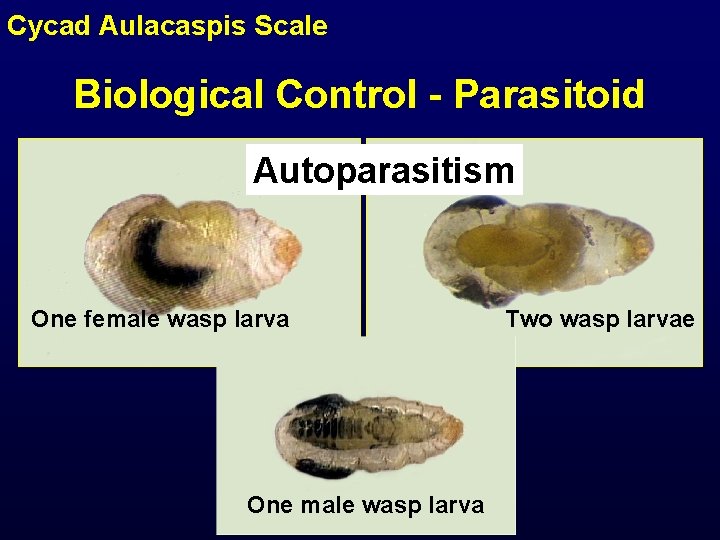
Cycad Aulacaspis Scale Biological Control - Parasitoid Autoparasitism One female wasp larva One male wasp larva Two wasp larvae
Cycad Aulacaspis Scale Biological Control - Parasitoid • Well established in southern Florida • Contributed to the control of this pest • Still have live cycads in southern Florida • Need additional control measures • When possible, use low-risk pesticides • On going efforts to release more parasites (regulatory agencies)
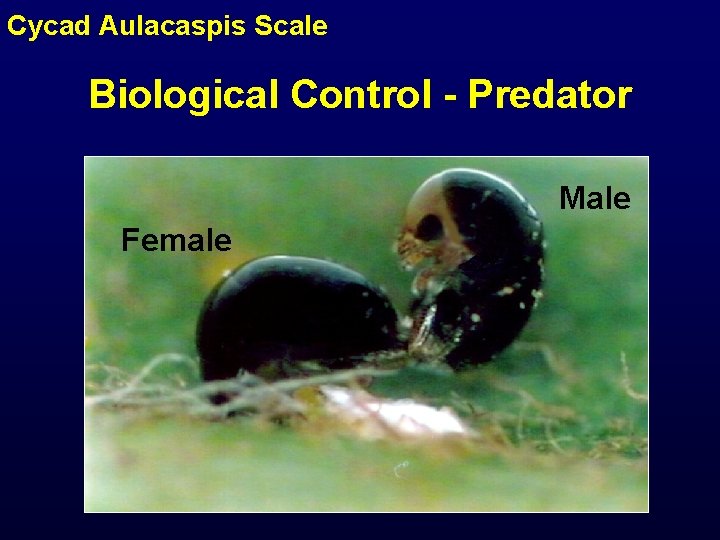
Cycad Aulacaspis Scale Biological Control - Predator Male Female
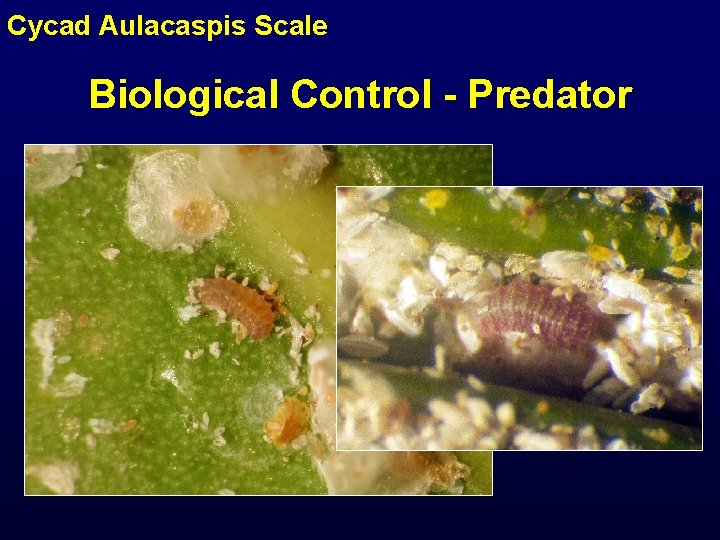
Cycad Aulacaspis Scale Biological Control - Predator
Cycad Aulacaspis Scale Biological Control - Predator
Cycad Aulacaspis Scale Biological Control - Predator • Well established in southern Florida • Probably not as good as the wasp parasitoid • Need additional control measures • When possible, use low-risk pesticides
Cycad Aulacaspis Scale How Do I Control It? Cultural Control • • Vigorous blast of water Removal of fronds Plant health Removal of plant
Cycad Aulacaspis Scale How Do I Control It? Oils and Pesticides • Spray coverage is essential • Repeat application • Foliar and soil application
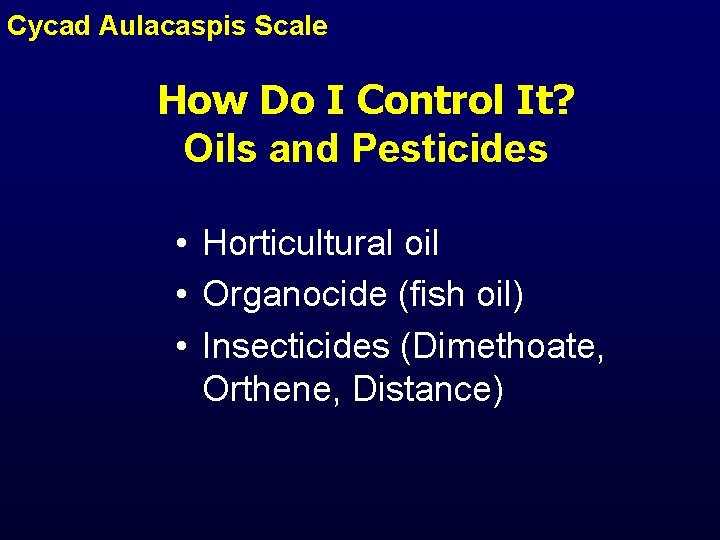
Cycad Aulacaspis Scale How Do I Control It? Oils and Pesticides • Horticultural oil • Organocide (fish oil) • Insecticides (Dimethoate, Orthene, Distance)
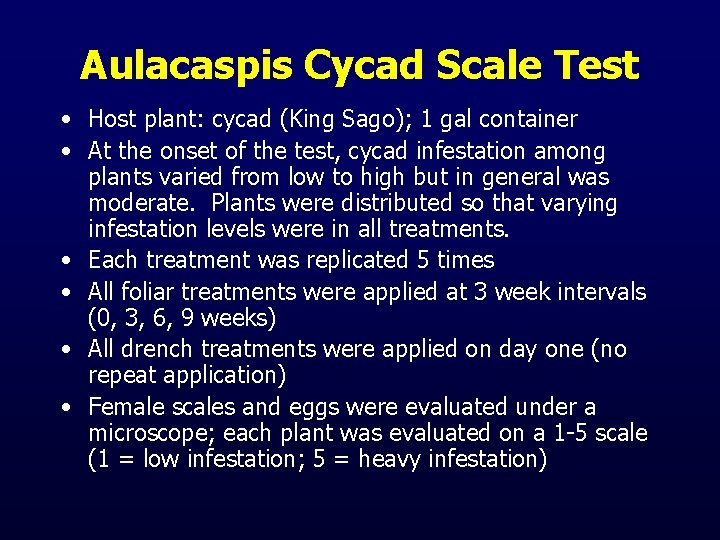
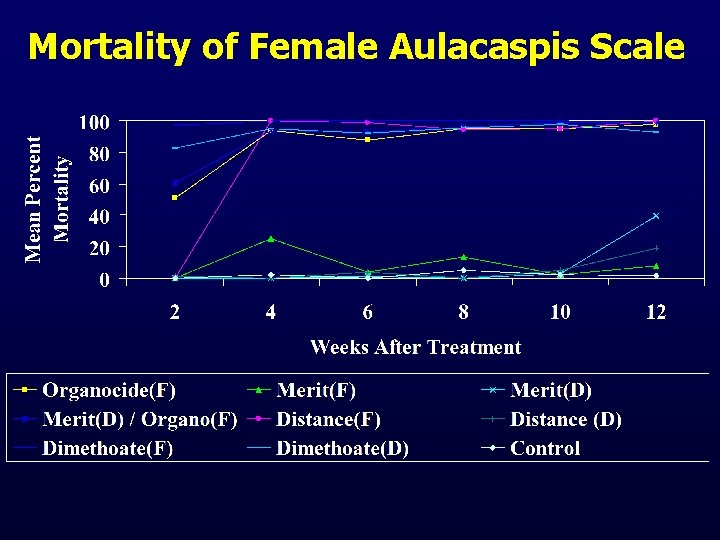
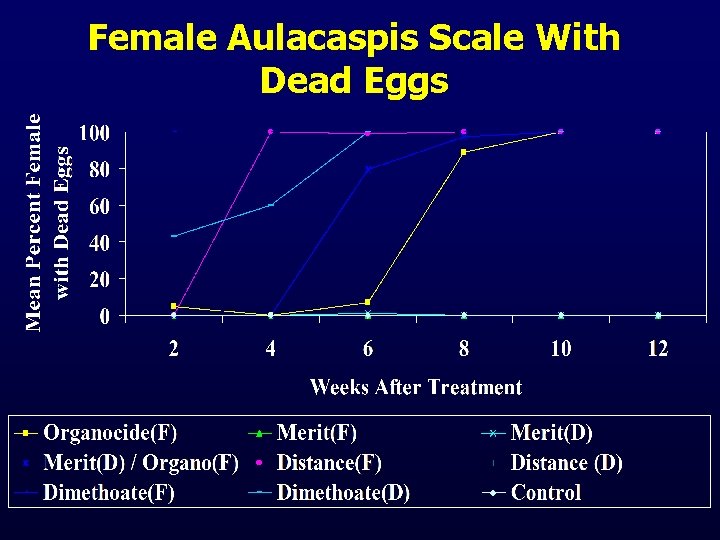
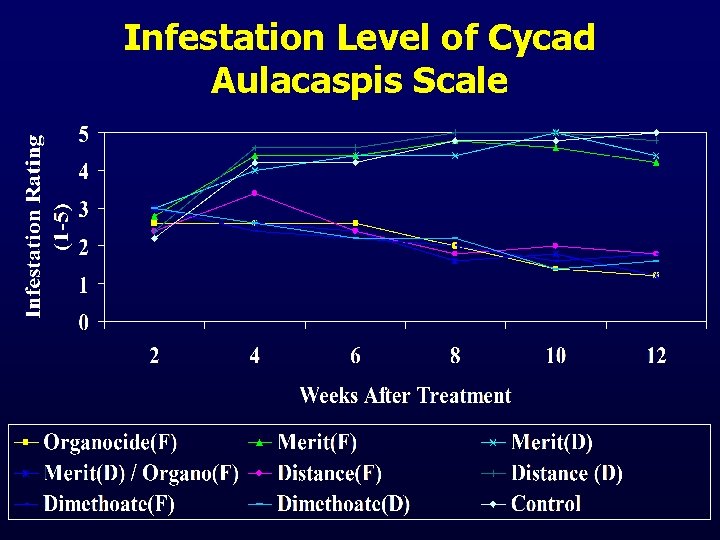
Aulacaspis Cycad Scale Test • Host plant: cycad (King Sago); 1 gal container • At the onset of the test, cycad infestation among plants varied from low to high but in general was moderate. Plants were distributed so that varying infestation levels were in all treatments. • Each treatment was replicated 5 times • All foliar treatments were applied at 3 week intervals (0, 3, 6, 9 weeks) • All drench treatments were applied on day one (no repeat application) • Female scales and eggs were evaluated under a microscope; each plant was evaluated on a 1 -5 scale (1 = low infestation; 5 = heavy infestation)
Mortality of Female Aulacaspis Scale
Female Aulacaspis Scale With Dead Eggs
Infestation Level of Cycad Aulacaspis Scale
Cycad Aulacaspis Scale How Do I Control It? 1. 2. 3. 4. Monitor Water wash Oil spray Soil and or foliar insecticide 5. Removal of fronds 6. Removal of plant
Catharine Mannion Research and Extension Specialist Ornamental Entomology University of Florida, IFAS Tropical Research and Education Center 18905 SW 280 th Street Homestead, FL 33031 305 -246 -7000 cmannion@ifas. ufl. edu