
Cybersecurity and Governance in SIG 2017 Trivandrum Kerala
Cybersecurity and Governance in. SIG 2017 – Trivandrum, Kerala, India Asha Hemrajani Member of the Board of Directors, ICANN 25 October 2017 | 1
Agenda I. III. IV. V. VI. The Cyber Threat Landscape Today ICANN and its Role DNSSEC Internet of Things (Io. T) KSK Rollover Extension of Multistakeholder Model | 2 | 2
The Cyber Threat Landscape | 3
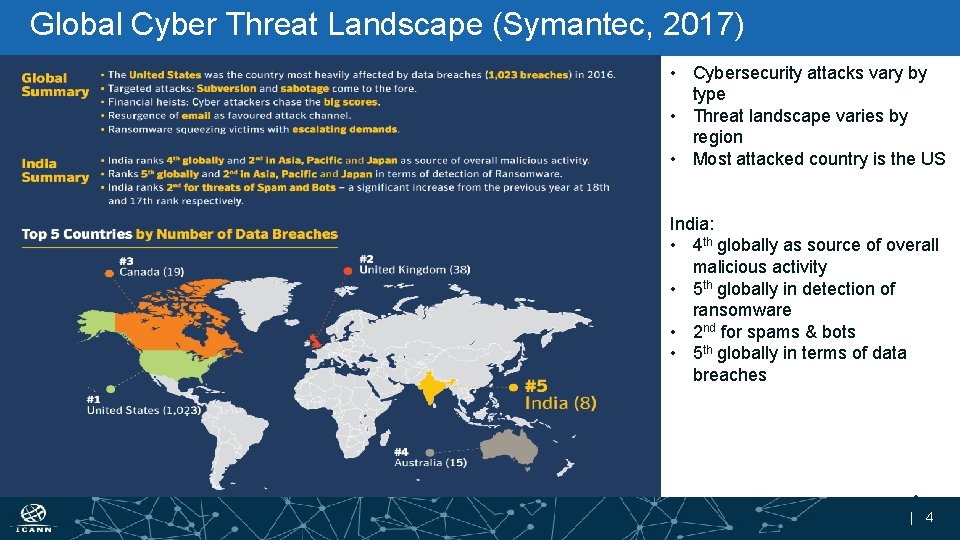
Global Cyber Threat Landscape (Symantec, 2017) • Cybersecurity attacks vary by type • Threat landscape varies by region • Most attacked country is the US India: • 4 th globally as source of overall malicious activity • 5 th globally in detection of ransomware • 2 nd for spams & bots • 5 th globally in terms of data breaches | 4 | 4
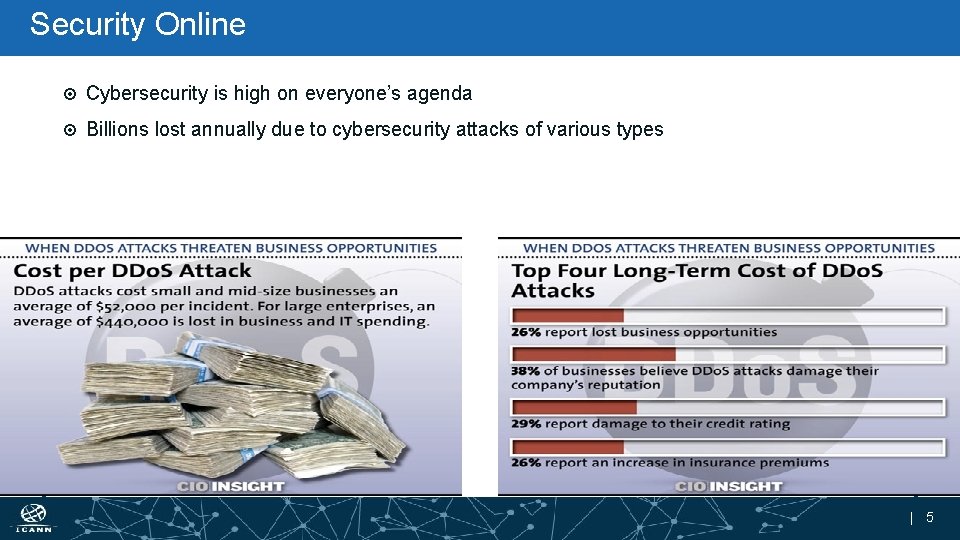
Security Online Cybersecurity is high on everyone’s agenda Billions lost annually due to cybersecurity attacks of various types | 5 | 5
ICANN and its Role | 6
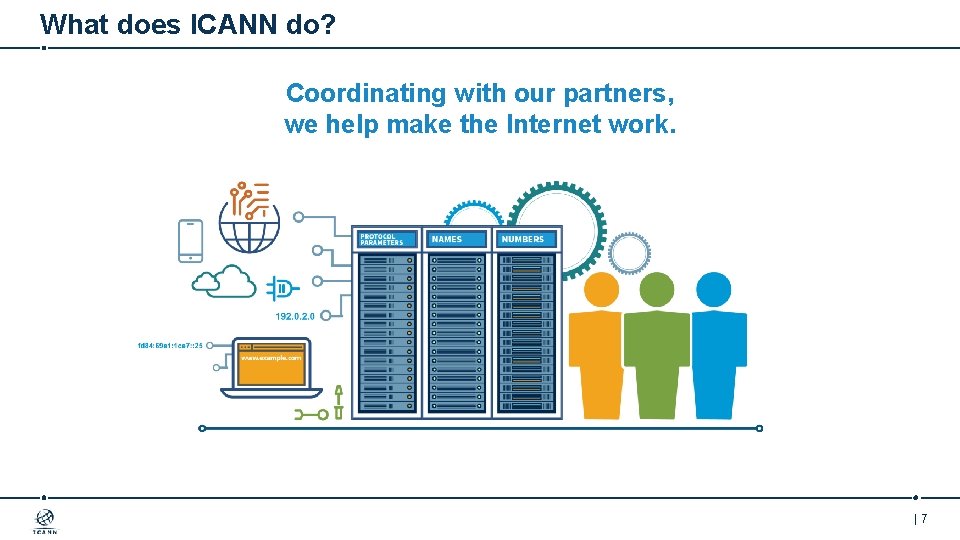
What does ICANN do? Coordinating with our partners, we help make the Internet work. | 7
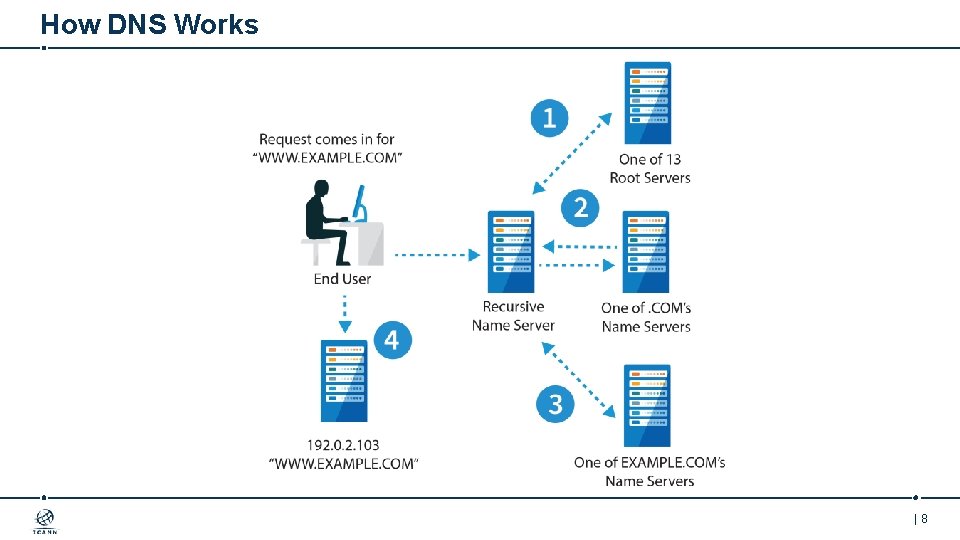
How DNS Works | 8
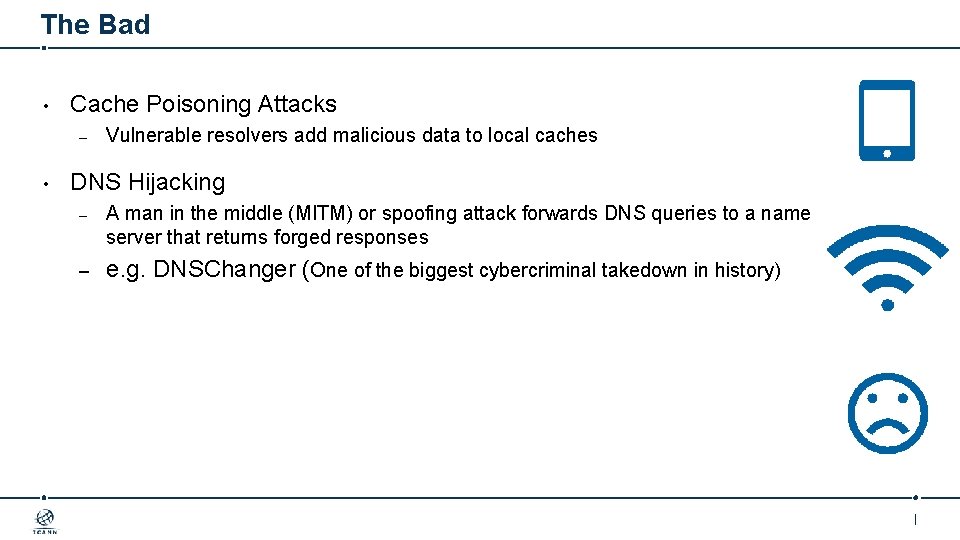
The Bad • Cache Poisoning Attacks – • Vulnerable resolvers add malicious data to local caches DNS Hijacking – A man in the middle (MITM) or spoofing attack forwards DNS queries to a name server that returns forged responses – e. g. DNSChanger (One of the biggest cybercriminal takedown in history) |
DNSSEC | 10
What is DNSSEC? DNSSEC = “DNS Security Extensions” DNSSEC is a protocol that is currently being deployed to secure the Domain Name System (DNS) DNSSEC adds security to the DNS by incorporating public key cryptography into the DNS hierarchy, resulting in a single, open, global Public Key Infrastructure (PKI) for domain names Result of over a decade of community based, open standards development | 11
What is DNSSEC? “DNS SECurity enhancements” (DNSSEC) improves the DNS by digitally signing DNS data. This provides: Data origin authentication Data integrity “I can be sure the data I’m looking for is not in the zone” A public/private key pair is created for each zone (e. g. , EXAMPLE. COM). “I know the data in the zone hasn’t been modified since it was signed” Proof of non-existence “I looked up DNS data and I verify which zone the data came from” The private key is kept secret The public key in published in the DNS Zone data is signed with the zone’s private key to produce digital signatures After a resolver (DNS client) looks up data in a signed zone, that data can be validated with the zone’s public key | 12
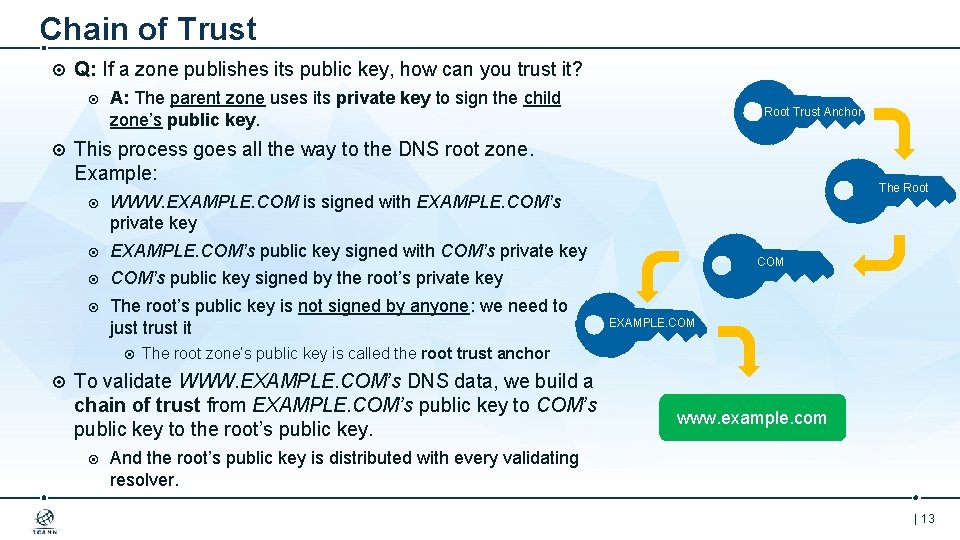
Chain of Trust Q: If a zone publishes its public key, how can you trust it? A: The parent zone uses its private key to sign the child zone’s public key. This process goes all the way to the DNS root zone. Example: WWW. EXAMPLE. COM is signed with EXAMPLE. COM’s private key EXAMPLE. COM’s public key signed with COM’s private key COM’s public key signed by the root’s private key The root’s public key is not signed by anyone: we need to just trust it Root Trust Anchor COM EXAMPLE. COM The root zone’s public key is called the root trust anchor To validate WWW. EXAMPLE. COM’s DNS data, we build a chain of trust from EXAMPLE. COM’s public key to the root’s public key. The Root www. example. com And the root’s public key is distributed with every validating resolver. | 13
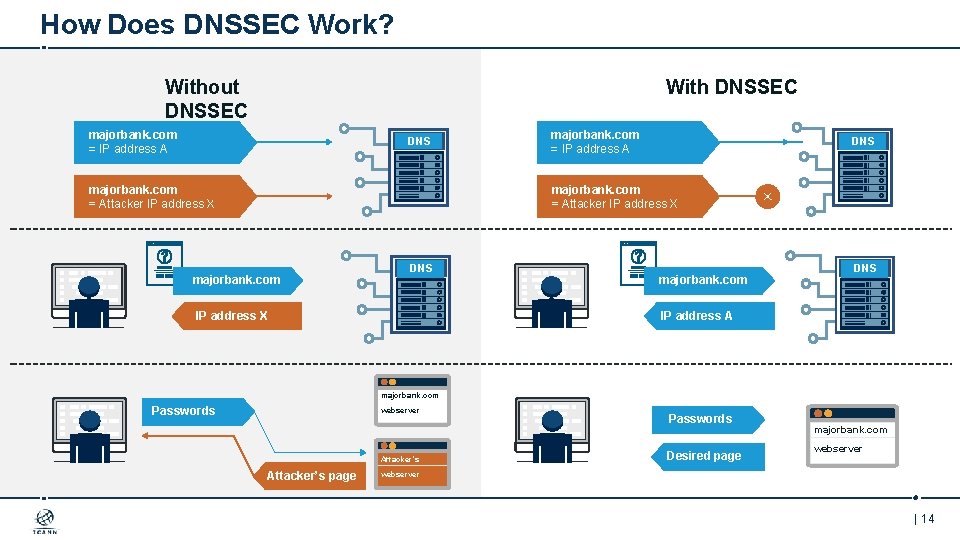
How Does DNSSEC Work? Without DNSSEC With DNSSEC majorbank. com = IP address A DNS majorbank. com = Attacker IP address X majorbank. com DNS IP address A majorbank. com Passwords webserver Attacker’s page Passwords Desired page majorbank. com webserver | 14
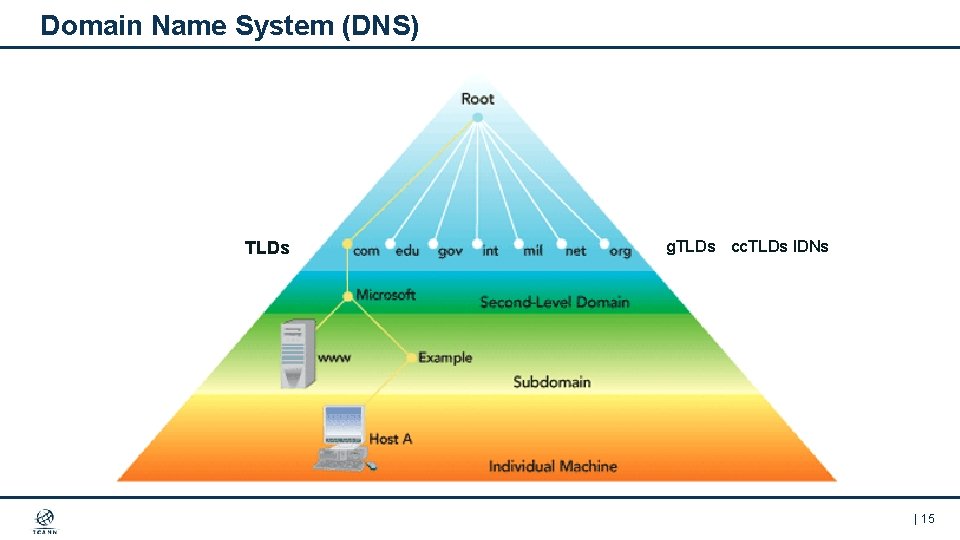
Domain Name System (DNS) TLDs g. TLDs cc. TLDs IDNs | 15
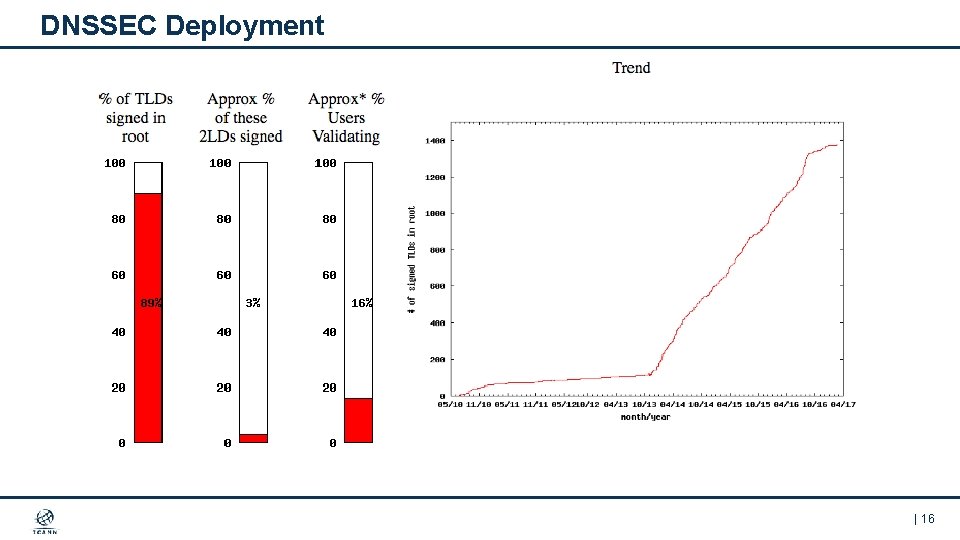
DNSSEC Deployment | 16
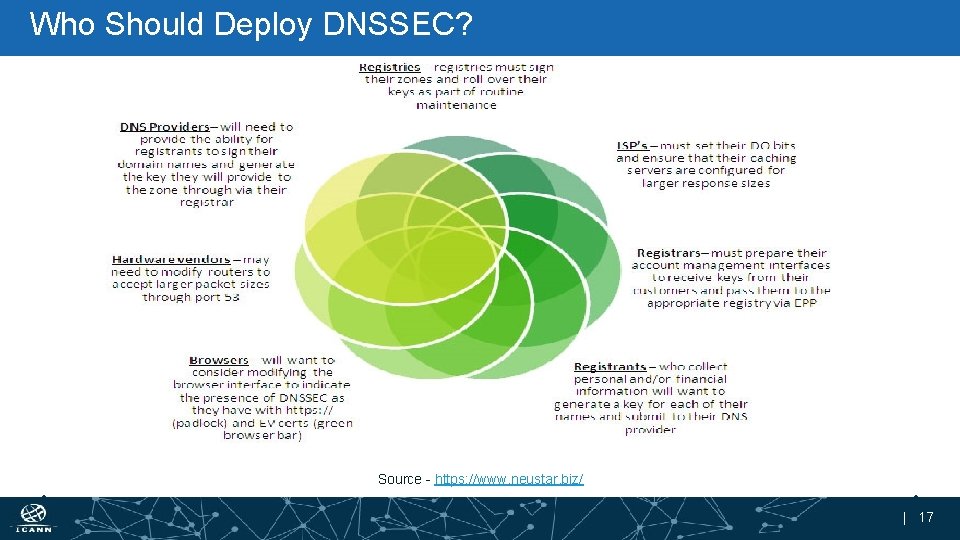
Who Should Deploy DNSSEC? Source - https: //www. neustar. biz/ | 17 | 17
Internet of Things | 18
What is the Internet of Things? Io. T (Internet of Things) is about connecting the next wave of devices to the Internet. • A universe of devices that may be present in all aspects of lifestyle, health, or society • These devices are locally and globally connected via Internet services | 19 | 19
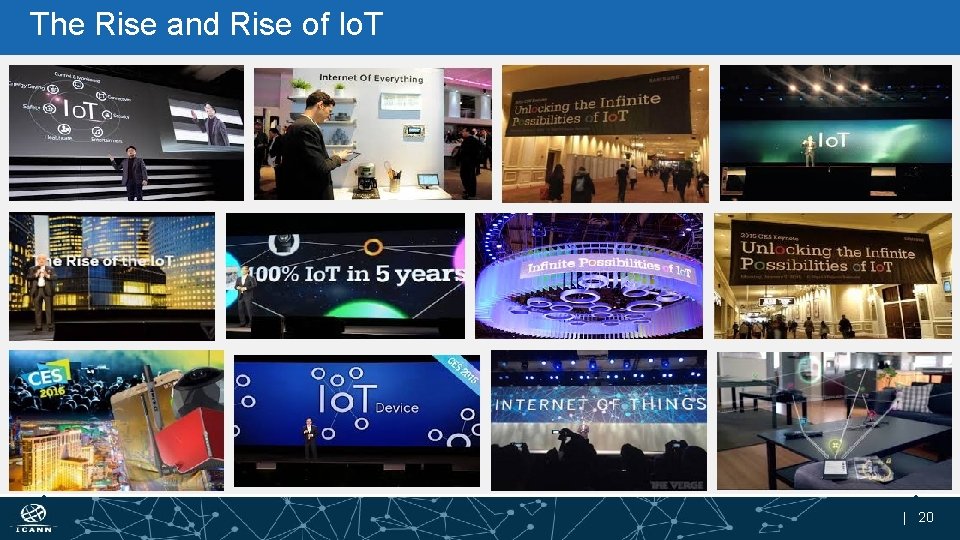
The Rise and Rise of Io. T | 20 | 20
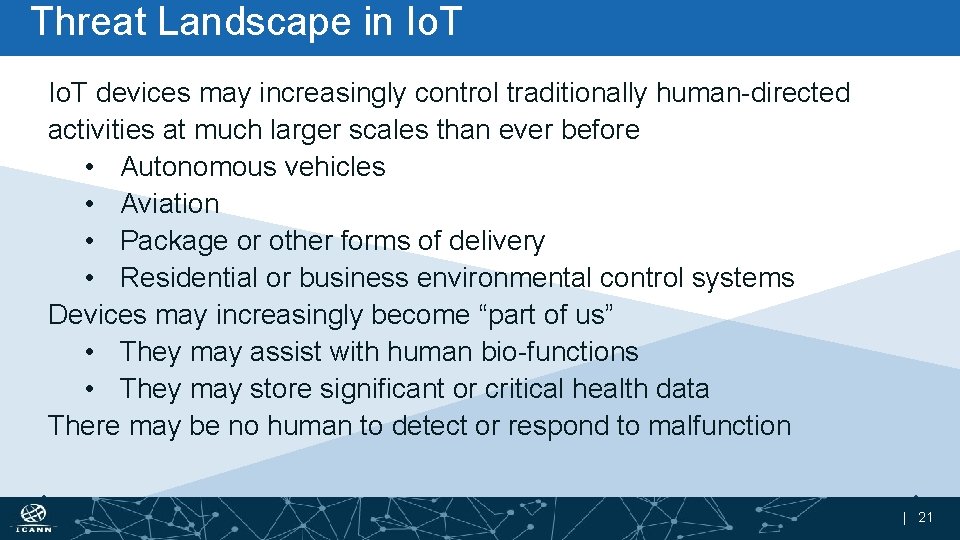
Threat Landscape in Io. T devices may increasingly control traditionally human-directed activities at much larger scales than ever before • Autonomous vehicles • Aviation • Package or other forms of delivery • Residential or business environmental control systems Devices may increasingly become “part of us” • They may assist with human bio-functions • They may store significant or critical health data There may be no human to detect or respond to malfunction | 21 | 21
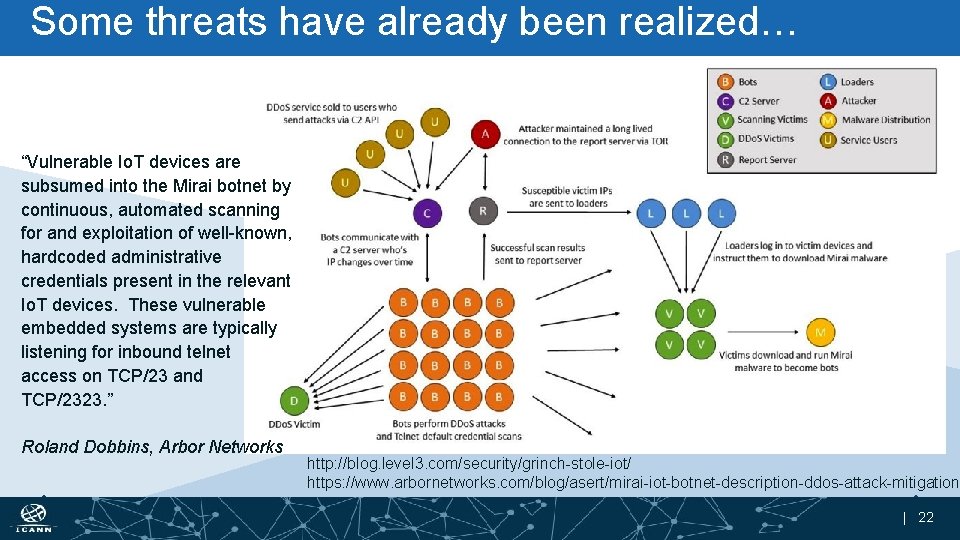
Some threats have already been realized… “Vulnerable Io. T devices are subsumed into the Mirai botnet by continuous, automated scanning for and exploitation of well-known, hardcoded administrative credentials present in the relevant Io. T devices. These vulnerable embedded systems are typically listening for inbound telnet access on TCP/23 and TCP/2323. ” Roland Dobbins, Arbor Networks http: //blog. level 3. com/security/grinch-stole-iot/ https: //www. arbornetworks. com/blog/asert/mirai-iot-botnet-description-ddos-attack-mitigation | 22 | 22
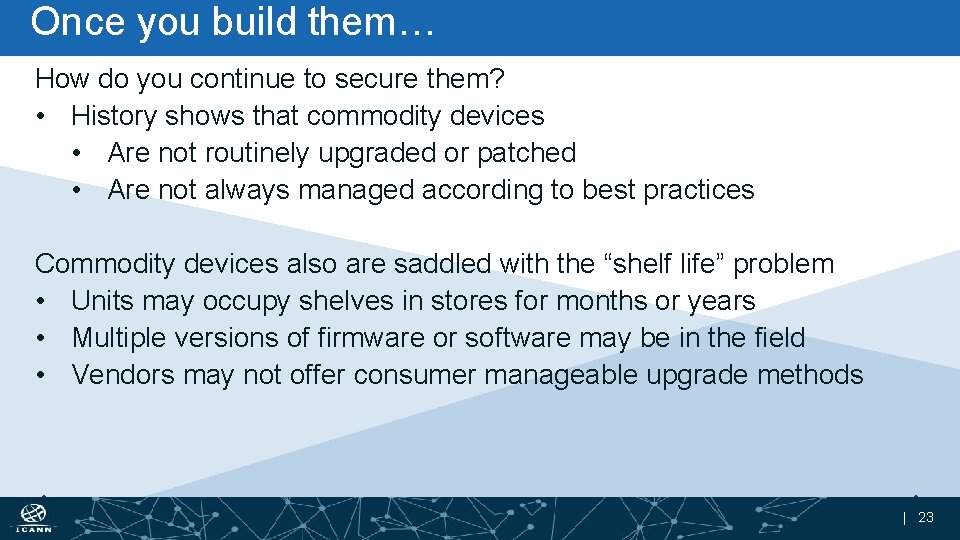
Once you build them… How do you continue to secure them? • History shows that commodity devices • Are not routinely upgraded or patched • Are not always managed according to best practices Commodity devices also are saddled with the “shelf life” problem • Units may occupy shelves in stores for months or years • Multiple versions of firmware or software may be in the field • Vendors may not offer consumer manageable upgrade methods | 23 | 23
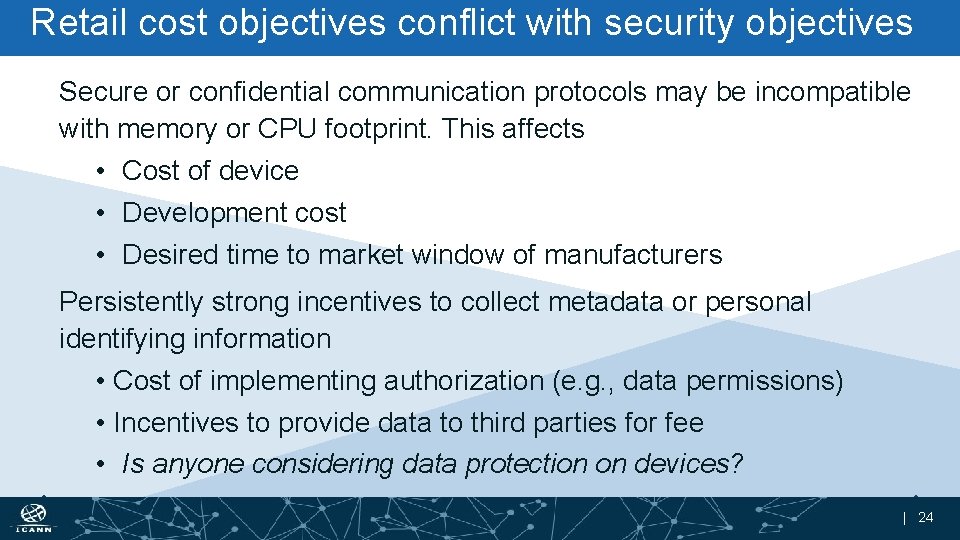
Retail cost objectives conflict with security objectives Secure or confidential communication protocols may be incompatible with memory or CPU footprint. This affects • Cost of device • Development cost • Desired time to market window of manufacturers Persistently strong incentives to collect metadata or personal identifying information • Cost of implementing authorization (e. g. , data permissions) • Incentives to provide data to third parties for fee • Is anyone considering data protection on devices? | 24 | 24
DNSSEC and Io. T Security is a well known missing piece for Io. T Many Io. T applications have physical world safety implications – human harm, disruption of critical infrastructure service delivery Can we use an existing infrastructure to enable a secure, global, cross-organizational, trans-national communication channel between devices? – Specifically, can we use DNSSEC for key distribution necessary to secure channels and then securely bootstrap application specific security mechanisms? | 25 | 25
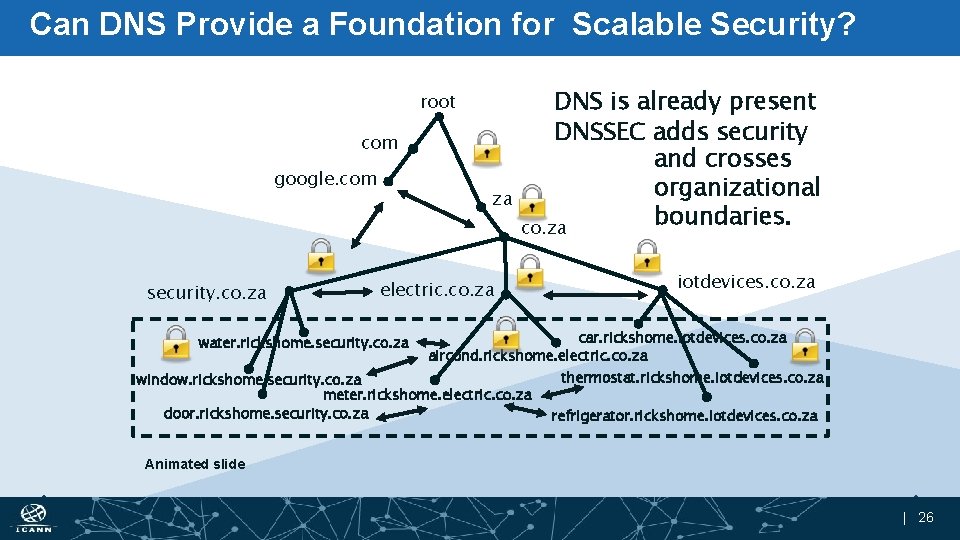
Can DNS Provide a Foundation for Scalable Security? root com google. com security. co. za za DNS is already present DNSSEC adds security and crosses organizational boundaries. co. za electric. co. za water. rickshome. security. co. za iotdevices. co. za car. rickshome. iotdevices. co. za aircond. rickshome. electric. co. za window. rickshome. security. co. za meter. rickshome. electric. co. za door. rickshome. security. co. za thermostat. rickshome. iotdevices. co. za refrigerator. rickshome. iotdevices. co. za Animated slide | 26 | 26
Root Zone Key-Signing Key (KSK) Rollover | 27
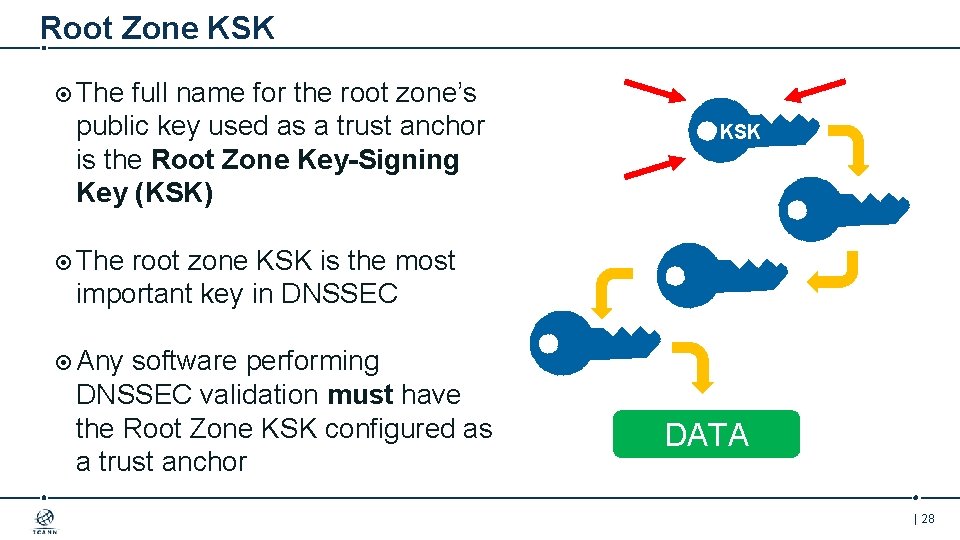
Root Zone KSK The full name for the root zone’s public key used as a trust anchor is the Root Zone Key-Signing Key (KSK) KSK The root zone KSK is the most important key in DNSSEC Any software performing DNSSEC validation must have the Root Zone KSK configured as a trust anchor DATA | 28
Root Zone KSK Rollover To date, there has been one Root Zone KSK Created when the root was first signed in 2010 A new KSK will be used ICANN is “rolling the Key” or changing the KSK Recursive resolvers performing DNSSEC validation need to be updated with the new key originally planned starting on 11 October 2017 Researchers at Verisign & ICANN analyzed root server traffic to determine how many resolvers have been updated with the new KSK In September, it was found that 5% of resolvers used by ISPs and network operators still have old root KSK configured. Hence decision to postpone the rollover. Continued data collection and consultation with the technical community Delay affords additional time for network operators and ISPs to be certain that their systems are ready for rollover. A carefully planned, multi-year process to ensure continued smooth operations of the global secured DNS | 29
Extension of MSM Model to Cybersecurity? | 30
Thank You! Asha Hemrajani asha. a. hemrajani@gmail. com | 31
- Slides: 31