
Cyanides SAFETY AND WASTE MANAGEMENT HCN producing materials
- Slides: 5
Cyanides SAFETY AND WASTE MANAGEMENT
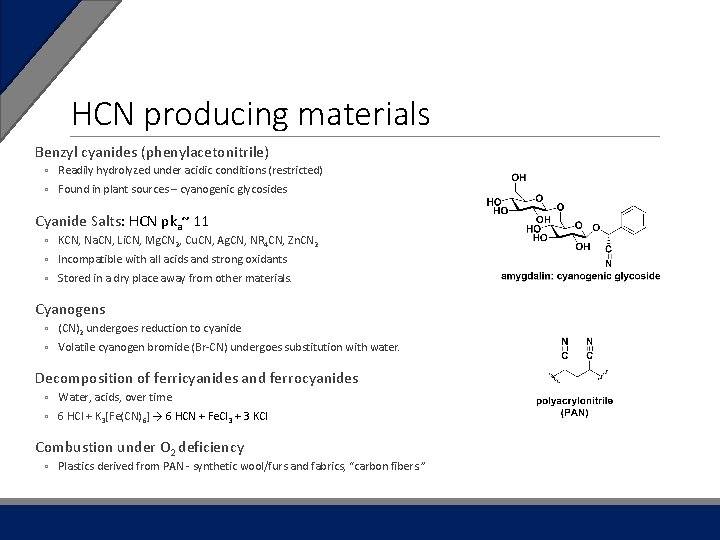
HCN producing materials Benzyl cyanides (phenylacetonitrile) ◦ Readily hydrolyzed under acidic conditions (restricted) ◦ Found in plant sources – cyanogenic glycosides Cyanide Salts: HCN pka~ 11 ◦ KCN, Na. CN, Li. CN, Mg. CN 2, Cu. CN, Ag. CN, NR 4 CN, Zn. CN 2 ◦ Incompatible with all acids and strong oxidants ◦ Stored in a dry place away from other materials. Cyanogens ◦ (CN)2 undergoes reduction to cyanide ◦ Volatile cyanogen bromide (Br-CN) undergoes substitution with water. Decomposition of ferricyanides and ferrocyanides ◦ Water, acids, over time ◦ 6 HCl + K 3[Fe(CN)6] → 6 HCN + Fe. Cl 3 + 3 KCl Combustion under O 2 deficiency ◦ Plastics derived from PAN - synthetic wool/furs and fabrics, “carbon fibers. ”
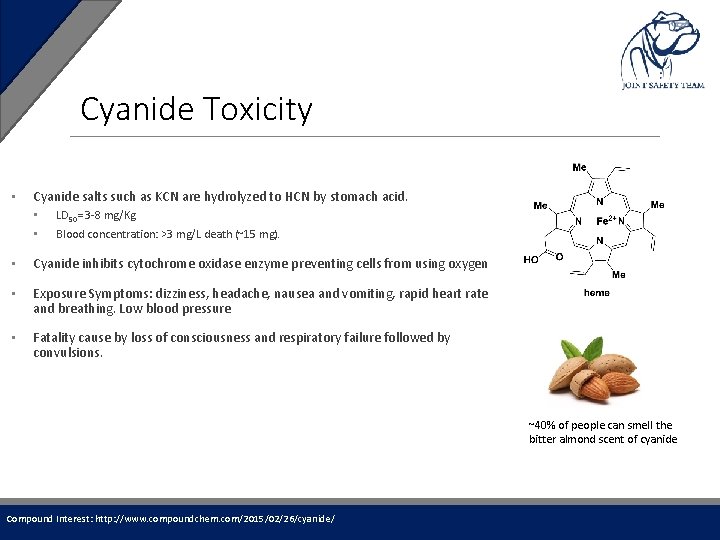
Cyanide Toxicity • Cyanide salts such as KCN are hydrolyzed to HCN by stomach acid. • LD 50= 3 -8 mg/Kg • Blood concentration: >3 mg/L death (~15 mg). • Cyanide inhibits cytochrome oxidase enzyme preventing cells from using oxygen • Exposure Symptoms: dizziness, headache, nausea and vomiting, rapid heart rate and breathing. Low blood pressure • Fatality cause by loss of consciousness and respiratory failure followed by convulsions. ~40% of people can smell the bitter almond scent of cyanide Compound Interest: http: //www. compoundchem. com/2015/02/26/cyanide/
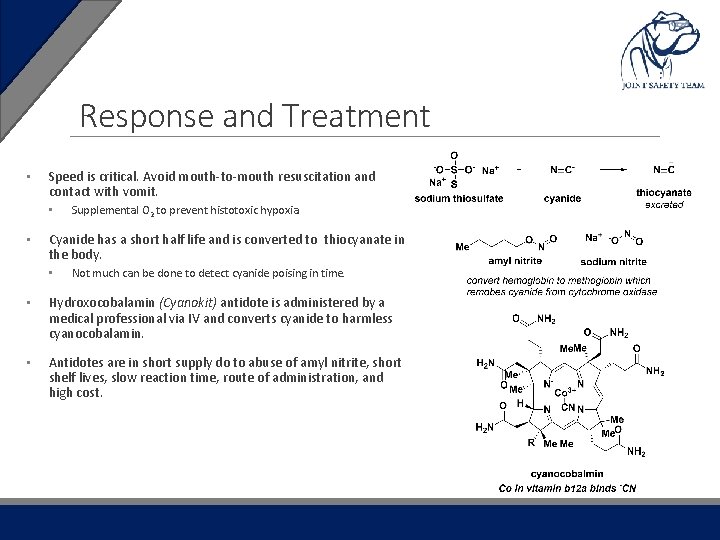
Response and Treatment • Speed is critical. Avoid mouth-to-mouth resuscitation and contact with vomit. • • Supplemental O 2 to prevent histotoxic hypoxia. Cyanide has a short half life and is converted to thiocyanate in the body. • Not much can be done to detect cyanide poising in time. • Hydroxocobalamin (Cyanokit) antidote is administered by a medical professional via IV and converts cyanide to harmless cyanocobalamin. • Antidotes are in short supply do to abuse of amyl nitrite, short shelf lives, slow reaction time, route of administration, and high cost.
Safe Handling, Cleanup, and Disposal • Transport cyanides in a secondary container • Use, weigh and workup exclusively in the hood • Wear a mask if massing solids outside the hood • Double glove when handling and change gloves after clean-up. • Workup reactions with a basic solution; p. H 10+ solution • Do not quench with acids, water/brine, concentration on the rotovap… etc. no matter what the procedure says. • Use basic dilute bleach (~10%) for cleaning contaminated materials and equipment. • KCN +Na. OCl KOCN +Na. Cl • Waste and empty reagent bottles must be disposed of separately as hazardous waste. • Leave for pick up – do not dispose with regular garbage or recycling • Collect all cyanides from cleaning, workup solutions and solid waste in a plastic bottle with a highly basic solution of KOH.