
CVS Lipoprotein metabolism Pt II Lect Bio 4
CVS Lipoprotein metabolism Pt. II Lect. Bio 4 ( 45 slides) L/O/G/O Dr. Eman Shaat Professor of Medical Biochemistry and Molecular Biology 1
CM metabolism • The dietary TGs are transferred to the nascent CM by MTP. • LPL isoenzymes are tissue specific: 1. adipose LPL: • On a mixed meal → hhh in insulin → hhh gene expression. 2. skeletal and cardiac muscle LPL: • Fasting (low insulin) → , , , in insulin → hhh gene expression. • CM is virtually catabolized after 12 hours of fast.
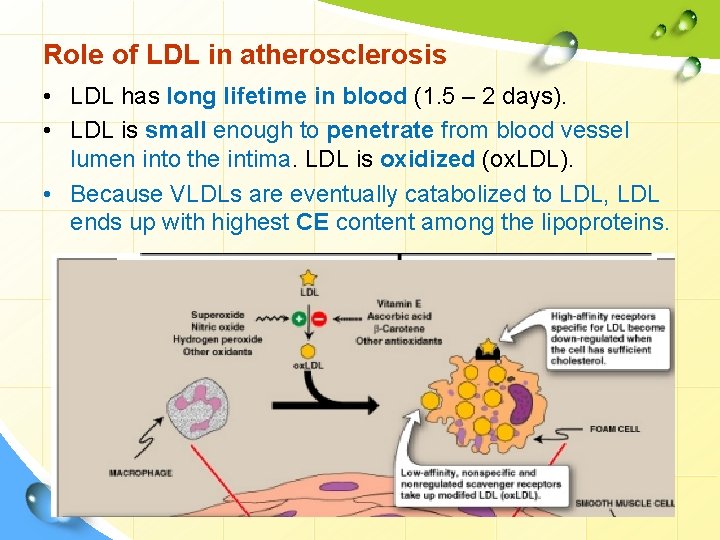
Role of LDL in atherosclerosis • LDL has long lifetime in blood (1. 5 – 2 days). • LDL is small enough to penetrate from blood vessel lumen into the intima. LDL is oxidized (ox. LDL). • Because VLDLs are eventually catabolized to LDL, LDL ends up with highest CE content among the lipoproteins.
High density lipoprotein (HDL) L/O/G/O
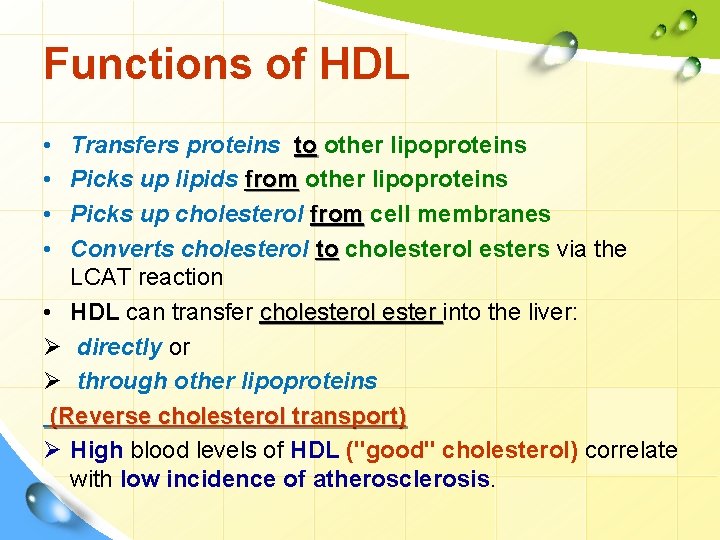
Functions of HDL • • Transfers proteins to other lipoproteins Picks up lipids from other lipoproteins Picks up cholesterol from cell membranes Converts cholesterol to cholesterol esters via the LCAT reaction • HDL can transfer cholesterol ester into the liver: Ø directly or Ø through other lipoproteins (Reverse cholesterol transport) Ø High blood levels of HDL ("good" cholesterol) correlate with low incidence of atherosclerosis.

Functions of HDL Function: • Transports C from peripheral tissues to liver (reverse C transport). Ø Only HDL can pick up cholesterol from peripheral tissues Ø Only the liver can degrade cholesterol • HDL acts as a circulating store for apo-C & E required in the metabolism of CM & VLDL.
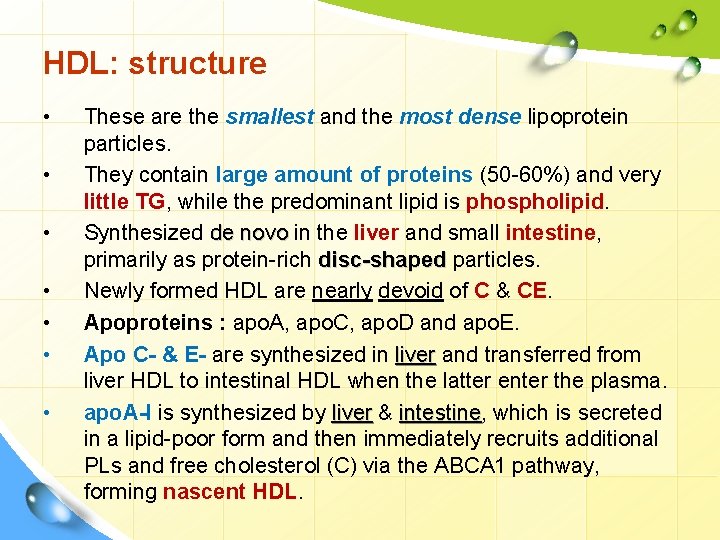
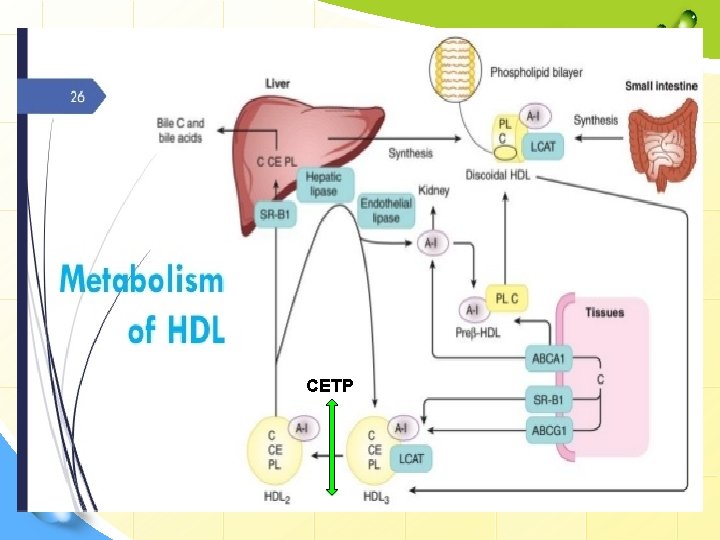
HDL: structure • • These are the smallest and the most dense lipoprotein particles. They contain large amount of proteins (50 -60%) and very little TG, while the predominant lipid is phospholipid. Synthesized de novo in the liver and small intestine, primarily as protein-rich disc-shaped particles. Newly formed HDL are nearly devoid of C & CE. Apoproteins : apo. A, apo. C, apo. D and apo. E. Apo C- & E- are synthesized in liver and transferred from liver HDL to intestinal HDL when the latter enter the plasma. apo. A-I is synthesized by liver & intestine, intestine which is secreted in a lipid-poor form and then immediately recruits additional PLs and free cholesterol (C) via the ABCA 1 pathway, forming nascent HDL.
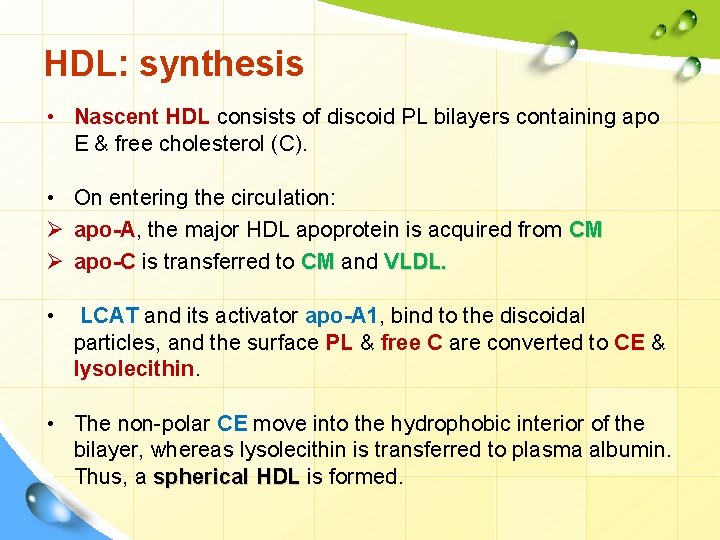
HDL: synthesis • Nascent HDL consists of discoid PL bilayers containing apo E & free cholesterol (C). • On entering the circulation: Ø apo-A, the major HDL apoprotein is acquired from CM Ø apo-C is transferred to CM and VLDL. • LCAT and its activator apo-A 1, bind to the discoidal particles, and the surface PL & free C are converted to CE & lysolecithin. • The non-polar CE move into the hydrophobic interior of the bilayer, whereas lysolecithin is transferred to plasma albumin. Thus, a spherical HDL is formed.
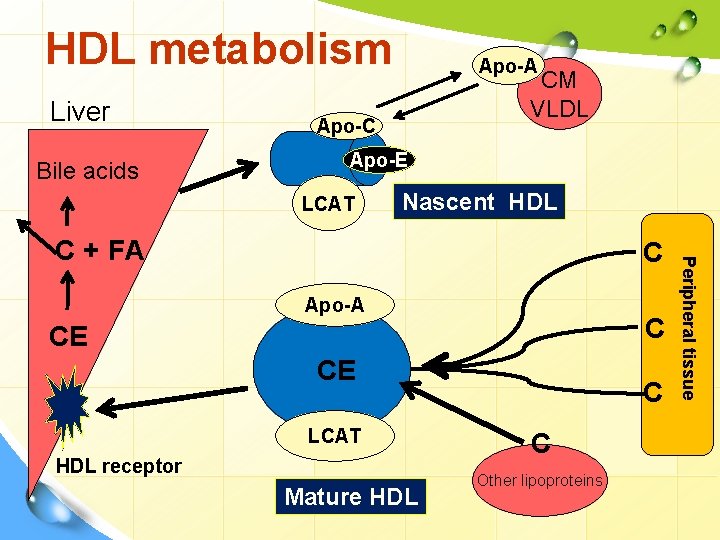
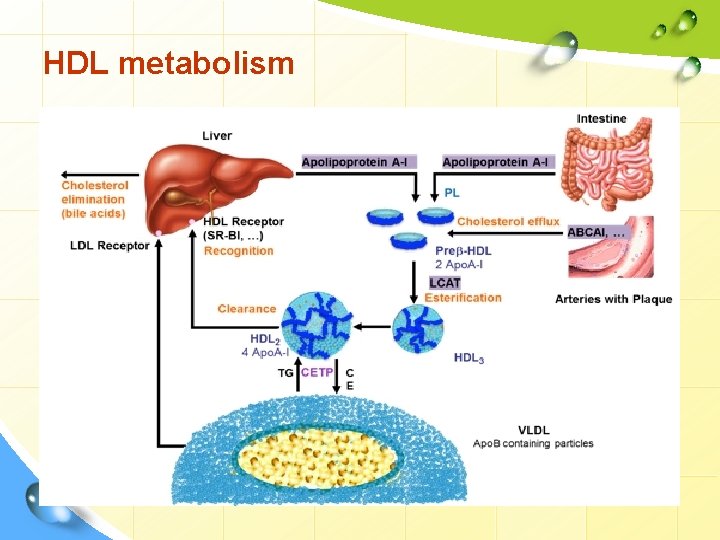
HDL metabolism Liver Bile acids Apo-A CM VLDL Apo-C Apo-E LCAT Nascent HDL C Apo-A C CE CE LCAT HDL receptor Mature HDL C C Other lipoproteins Peripheral tissue C + FA
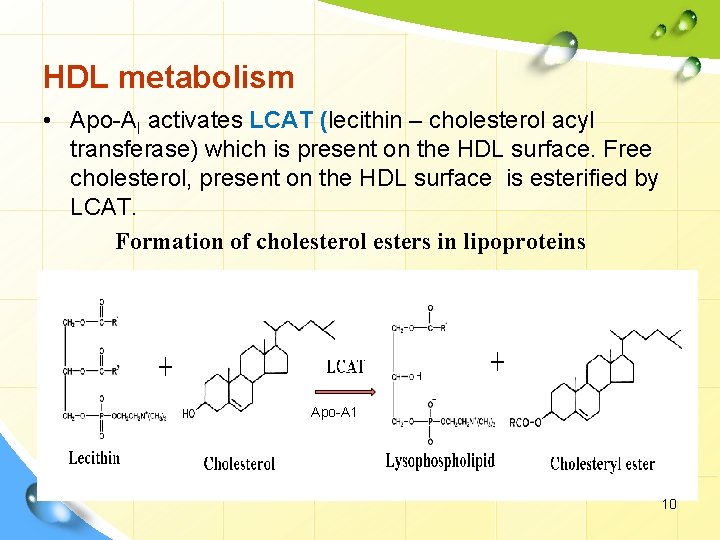
HDL metabolism • Apo-AI activates LCAT (lecithin – cholesterol acyl transferase) which is present on the HDL surface. Free cholesterol, present on the HDL surface is esterified by LCAT. Formation of cholesterol esters in lipoproteins Apo-A 1 10
CETP
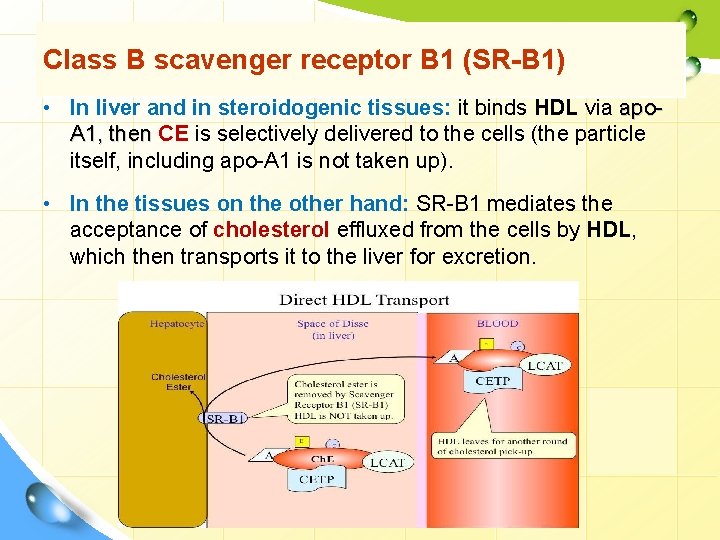
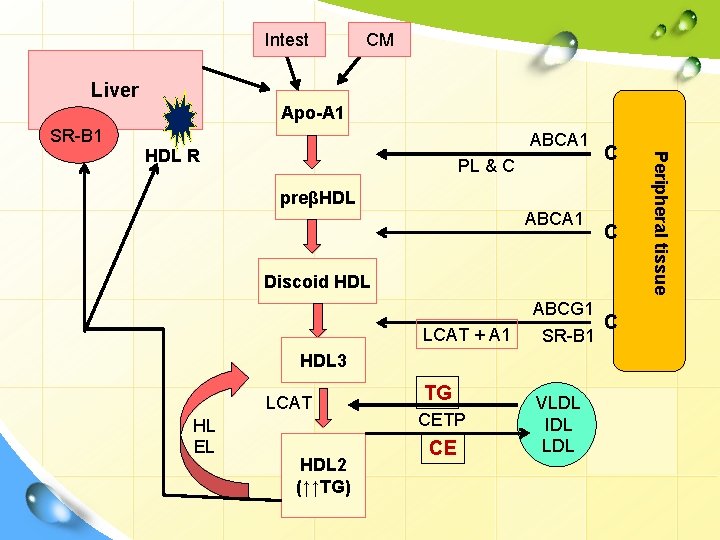
Class B scavenger receptor B 1 (SR-B 1) • In liver and in steroidogenic tissues: it binds HDL via apo. A 1, then CE is selectively delivered to the cells (the particle itself, including apo-A 1 is not taken up). • In the tissues on the other hand: SR-B 1 mediates the acceptance of cholesterol effluxed from the cells by HDL, which then transports it to the liver for excretion.
2 nd mechanism for reverse C transport ATP-binding cassette transporters • It involves the ATP-binding cassette transporters A 1 & G 1 (ABCA 1 & ABCG 1). • They are transporter proteins that couple hydrolysis of ATP to the binding of a substrate, enabling it to be transported across the membrane. • ABCG 1: transports C from cells to HDL • ABCA 1: preferentially promotes efflux to poorly lipidated particles such as preβ-HDL, -HDL which are then converted to discoidal HDL then to HDL 3 and finally to HDL 2.
HDL cycle: interchange of HDL 2 & HDL 3 v HDL 3 generated from discoidal HDL by the action of LCAT, accepts cholesterol from the tissues via SR-B 1 and C is then esterified by LCAT, increasing the size of particles to form the less dense HDL 2. v HDL 2 is formed due to the action of cholesterol ester transfer protein (CETP). Exchanges CE with CM & VLDL remnants; gets TG in return. By transferring CE out of HDL, product inhibition of CE on LCAT is eliminated allowing more cholesterol removal from peripheral tissues. When C efflux followed by esterification by LCAT is effective, HDL 2 will be high.
HDL cycle: interchange of HDL 2 & HDL 3 v HDL 3 is then reformed, either after selective delivery of CE to the liver via the SR-B 1 or by hydrolysis of HDL 2 PL & TG by hepatic lipase (its activity is increased by androgens and decreased by estrogens → higher conc. of plasma HDL 2 in women) and endothelial lipase v The HDL remnant is endocytosed by the liver for degradation in the lysosomes. v Free apo-A 1 is released by these processes and forms Preβ-HDL after associating with a minimum amount of PL & C. Surplus apo-A 1 is destroyed by kidney.
HDL metabolism
HDL: types • Pre-β-HDL (<5 nm): Hydrolyzed CM & VLDL donate PL & apo-A 1. This induces cholesterol efflux leading to discoidal HDL. • Discoidal HDL (nascent HDL): newly secreted HDL from intestine with additional C & PL. Contains Apo-A 1. Does not contain apo C or E; synthesized in liver & transferred to HDL. • HDL 3 (5 -10 nm): formed due to the action of LCAT. • HDL 2 (10 -20 nm): formed due to the action of cholesterol ester transfer protein (CETP). • CE transferred to CM & VLDL remnants is degraded to bile acids. • HDLc (HDL 1) (20 -25 nm): is found in blood of diet-induced hypercholesterolic animals. It is rich in C, and its sole apolipoprotein is apo-E
Intest CM Liver Apo-A 1 SR-B 1 ABCA 1 PL & C C preβHDL ABCA 1 C Discoid HDL LCAT + A 1 ABCG 1 C SR-B 1 HDL 3 LCAT HL EL HDL 2 (↑↑TG) TG CETP CE VLDL IDL LDL Peripheral tissue HDL R
Reverse Cholesterol Transport (RCT) • Excess cholesterol in peripheral cells, cells especially foam cells, is returned to the liver for degradation and excretion. • In the hepatocyte, CE → free cholesterol Ø excreted directly into the bile or Ø converted to bile acid and excreted into the bile. • HDL concentrations vary reciprocally with plasma TG concentrations & directly with LPL activity. • All plasma lipoproteins are interrelated components (complex process of plasma lipid transport)
![Lipoprotein (a) [Lp(a)] • Lp(a) When present, is attached to apo-B 100 by a](http://slidetodoc.com/presentation_image_h2/ac18f2288537a8b7476d857b08289371/image-20.jpg "Lipoprotein (a) [Lp(a)] • Lp(a) When present, is attached to apo-B 100 by a")
Lipoprotein (a) [Lp(a)] • Lp(a) When present, is attached to apo-B 100 by a disulfide bond. • in some normal population, there is no detectable level of Lp(a) in serum. High blood level is linked to susceptibility for heart attack at a younger age. • Lp(a) is similar in structure to plasminogen. So, it interferes with plasminogen activation and impairs fibrinolysis. This leads to thrombosis & MI. 20
Dyslipoproteinemia Causes I. Primary dyslipoproteinemia are probably genetically based. Primary causes: Ø Increase production. Ø Defective processing. Ø Defective cellular uptake. II. Secondary hyperlipidemia may result from: 1. Diseases such as diabetes, thyroid disease, renal disorders, liver disorders, Cushing's syndrome, obesity, alcohol consumption. 2. Drug-associated changes in lipid metabolism as Diuretics, beta blockers, estrogen, corticosteroids 21
Primary Dyslipoproteinemia • It can be subdivided into two major categories: 1. Hypolipoproteinemia. Ø Abeta-lipoproteinemia. Ø Familial alpha-lipoprotein deficiency (apo-A 1 deficiency &Tangier disease) 2. Hyperlipoproteinemia: Ø Ø Ø Ø Familial LPL deficiency (type I). Familial hypercholesterolemia (type IIa). Familial hyperlipoproteinemia ; broad beta; remnant disease (type III). Familial hypertriglyceridemia (type IV). Familial hyperalphalipoproteinemia. Hepatic lipase deficiency. Familial LCAT deficiency. Familial lipoprotein (a) excess. 22
I. Primary dyslipoproteinemia. 1. hypolipoproteinemia. Abeta lipoproteinemia Defect: • Abeta lipoproteinemia: due to mutations in the gene encoding microsomal transfer protein (MTP), a protein that transfers lipids to nascent chylomicrons and VLDL in the intestine and liver, respectively. • Familial hypobetalipoproteinemia: due to mutations in Apo B. missense mutations in Apo B causes reduce secretion and/or accelerate catabolism of LDL. life-long low LDL-C levels are a reason for substantial reduction in coronary heart disease • No CM, VLDL, LDL formation. Remarks Ø Rare autosomal recessive disease. Ø , , , blood TG. Ø hhh TG in liver & intestine. Ø Abetalipoproteinemia (Abeta- mainly not hypo-) usually presents in childhood with diarrhea and failure to thrive and is characterized clinically by fat malabsorption & nervous degeneration. they result from defects in the absorption and transport of fat-soluble vitamins, vitamins primarily vitamin E → physical & mental retardation.
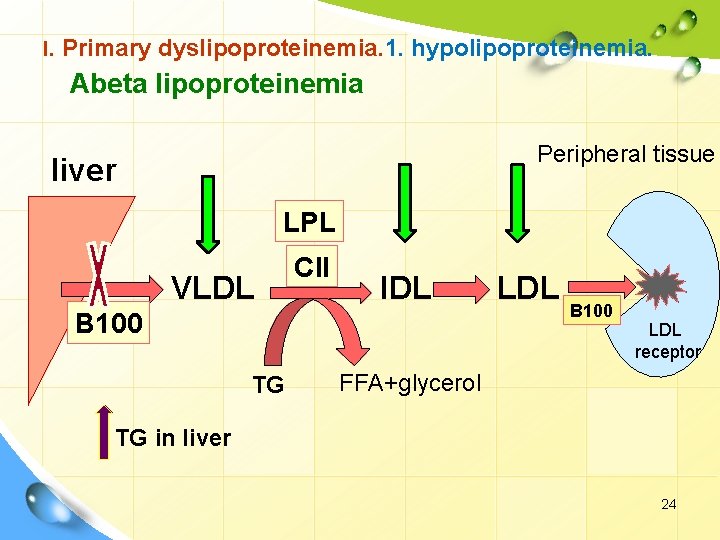
I. Primary dyslipoproteinemia. 1. hypolipoproteinemia. Abeta lipoproteinemia Peripheral tissue liver LPL VLDL CII IDL B 100 TG LDL B 100 LDL receptor FFA+glycerol TG in liver 24
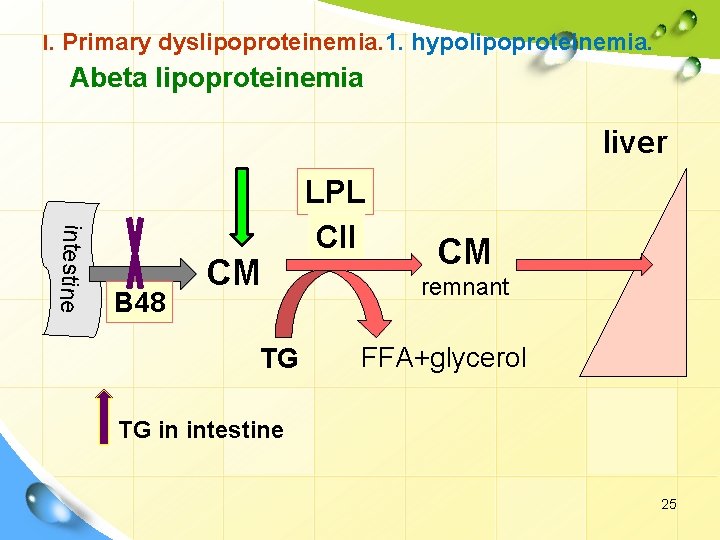
I. Primary dyslipoproteinemia. 1. hypolipoproteinemia. Abeta lipoproteinemia liver intestine B 48 CM TG LPL CII CM remnant FFA+glycerol TG in intestine 25
I. Primary dyslipoproteinemia. 1. hypolipoproteinemia: Familial Apo-A 1 deficiency Defect: due to mutations (as deletions) of the Apo-A 1 gene It leads to decrease apo-A 1 production. Result in premature atherosclerosis. Clinically: blurred vision due to cornial opacities. Xanthoma, premature CHD. Hearing loss secondary to amyloidosis. Diagnosis: Ø Low apo-A 1. Ø Low HDL. Ø Normal VLDL & LDL. Ø Normal TG. Ø Genetic testing. Differential diagnosis: Tangier dis. , LCAT def. , secondary causes. [apo-B/apo-A 1 ratio determines balance between atherogenic (LDL, …) and anti-atherogenic (HDL) particles]
I. Primarydyslipoproteinemia. 1. hypolipoproteinemi a: Familial alpha-lipoprotein deficiency: Tangier disease: Defect: • It is an autosomal recessive disease. • It is due to mutation in ABC-A 1 (eg. Deletion). 1. Leads to cholesterol accumulation within the cells → Results in premature atherosclerosis and increase risk for CHD. 2. It prevents the maturation of HDL (from nascent HDL to HDL-3). The nascent HDL is rapidly degraded → , , , HDL. 3. Apo E and Apo C-II transfer from HDL to CM and VLDL are also prevented → hhh CM and VLDL (hypertriacylglycerolemia)
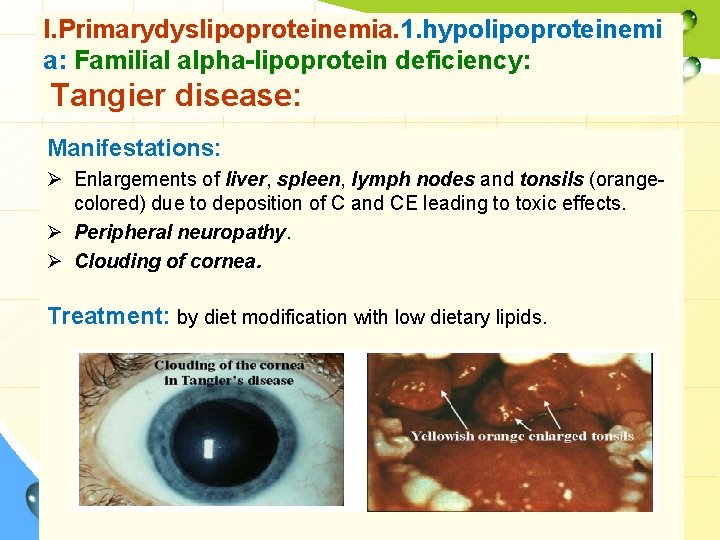
I. Primarydyslipoproteinemia. 1. hypolipoproteinemi a: Familial alpha-lipoprotein deficiency: Tangier disease: Manifestations: Ø Enlargements of liver, spleen, lymph nodes and tonsils (orangecolored) due to deposition of C and CE leading to toxic effects. Ø Peripheral neuropathy. Ø Clouding of cornea. Treatment: by diet modification with low dietary lipids.
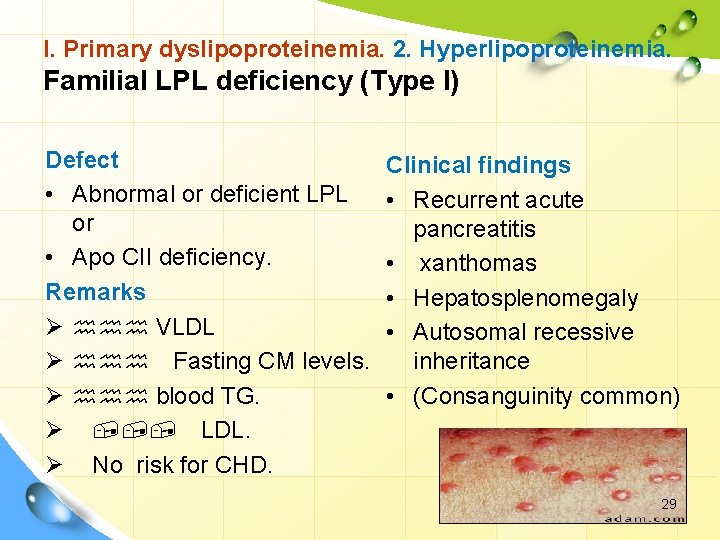
I. Primary dyslipoproteinemia. 2. Hyperlipoproteinemia. Familial LPL deficiency (Type I) Defect • Abnormal or deficient LPL or • Apo CII deficiency. Remarks Ø hhh VLDL Ø hhh Fasting CM levels. Ø hhh blood TG. Ø , , , LDL. Ø No risk for CHD. Clinical findings • Recurrent acute pancreatitis • xanthomas • Hepatosplenomegaly • Autosomal recessive inheritance • (Consanguinity common) 29
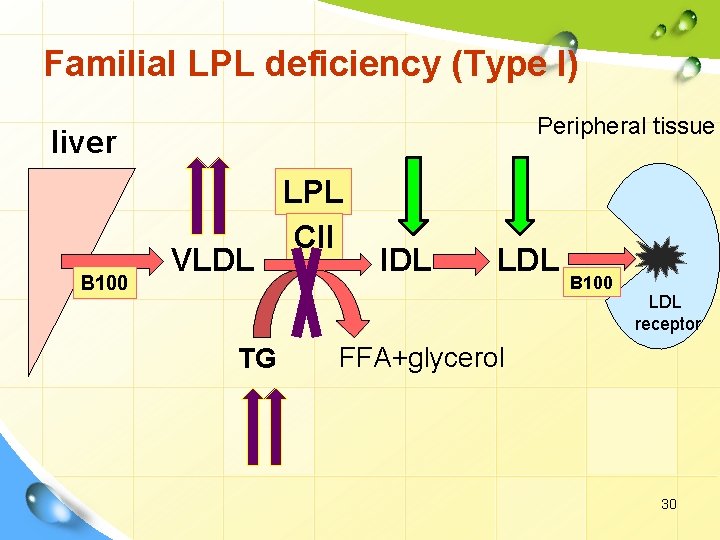
Familial LPL deficiency (Type I) Peripheral tissue liver B 100 VLDL TG LPL CII IDL LDL B 100 LDL receptor FFA+glycerol 30
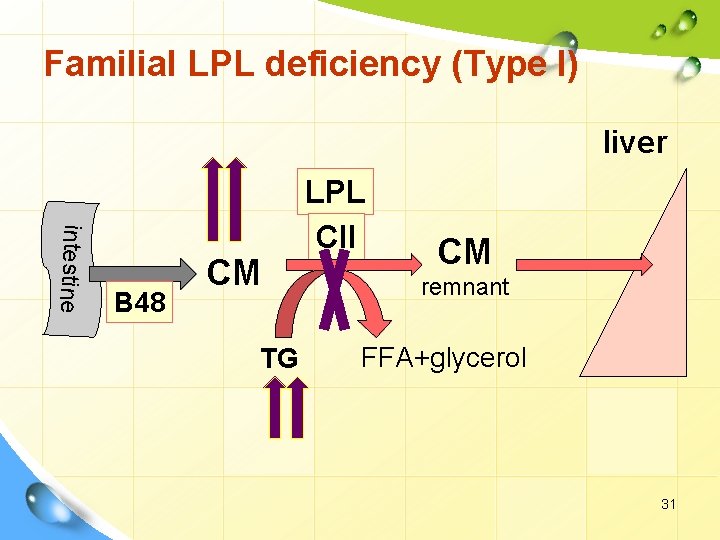
Familial LPL deficiency (Type I) liver intestine B 48 CM TG LPL CII CM remnant FFA+glycerol 31
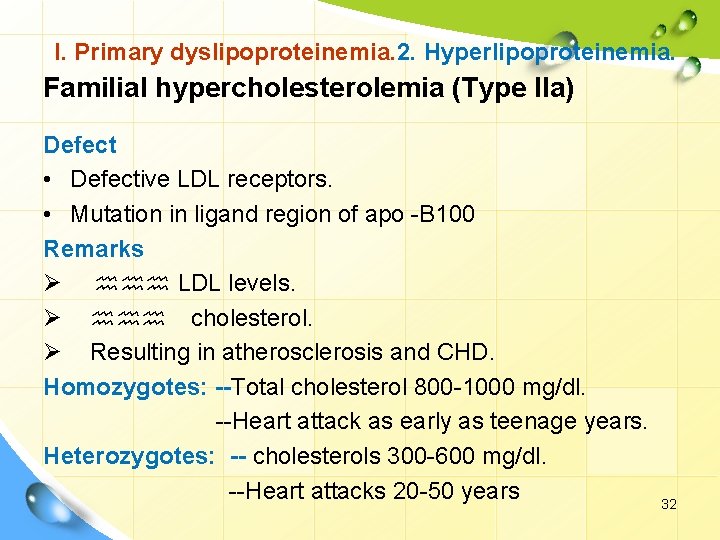
I. Primary dyslipoproteinemia. 2. Hyperlipoproteinemia. Familial hypercholesterolemia (Type IIa) Defect • Defective LDL receptors. • Mutation in ligand region of apo -B 100 Remarks Ø hhh LDL levels. Ø hhh cholesterol. Ø Resulting in atherosclerosis and CHD. Homozygotes: --Total cholesterol 800 -1000 mg/dl. --Heart attack as early as teenage years. Heterozygotes: -- cholesterols 300 -600 mg/dl. --Heart attacks 20 -50 years 32
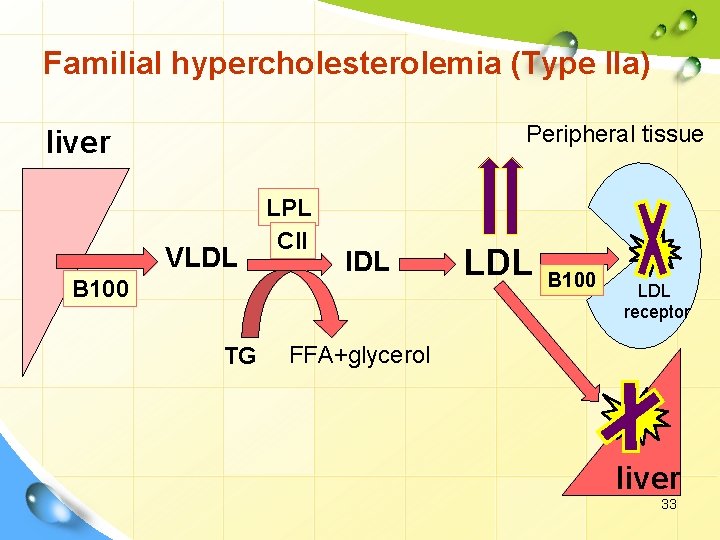
Familial hypercholesterolemia (Type IIa) Peripheral tissue liver VLDL B 100 TG LPL CII IDL LDL B 100 LDL receptor FFA+glycerol liver 33
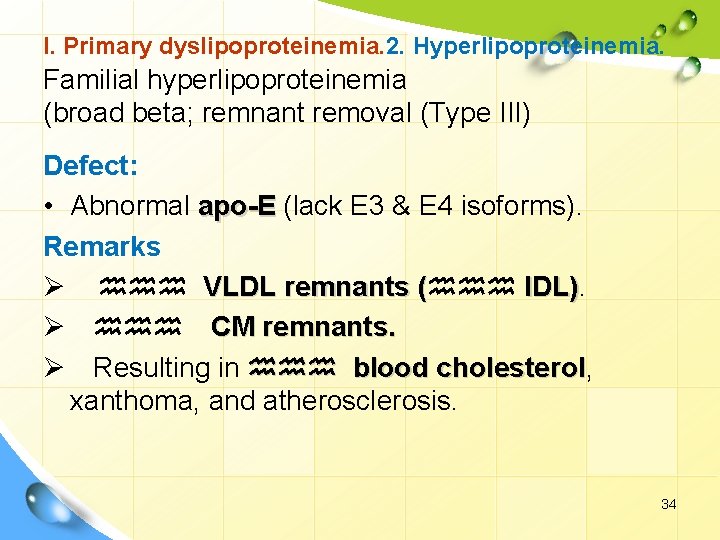
I. Primary dyslipoproteinemia. 2. Hyperlipoproteinemia. Familial hyperlipoproteinemia (broad beta; remnant removal (Type III) Defect: • Abnormal apo-E (lack E 3 & E 4 isoforms). Remarks Ø hhh VLDL remnants (hhh IDL). ( IDL) Ø hhh CM remnants. Ø Resulting in hhh blood cholesterol, cholesterol xanthoma, and atherosclerosis. 34
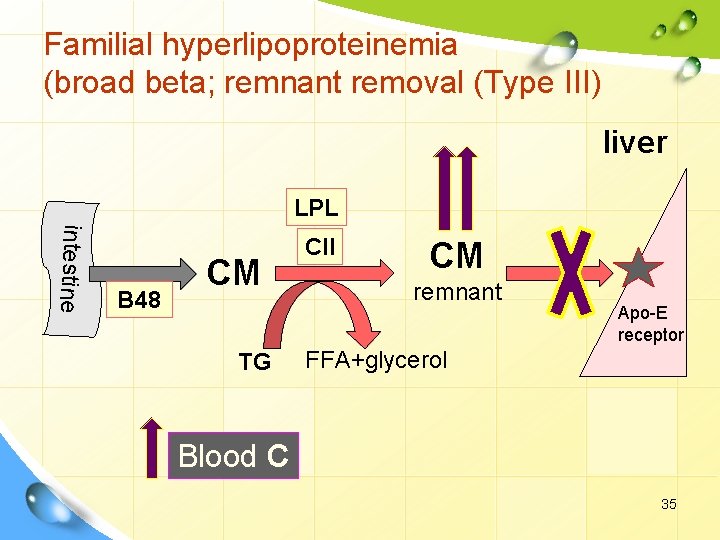
Familial hyperlipoproteinemia (broad beta; remnant removal (Type III) liver LPL intestine B 48 CM TG CII CM remnant Apo-E receptor FFA+glycerol Blood C 35
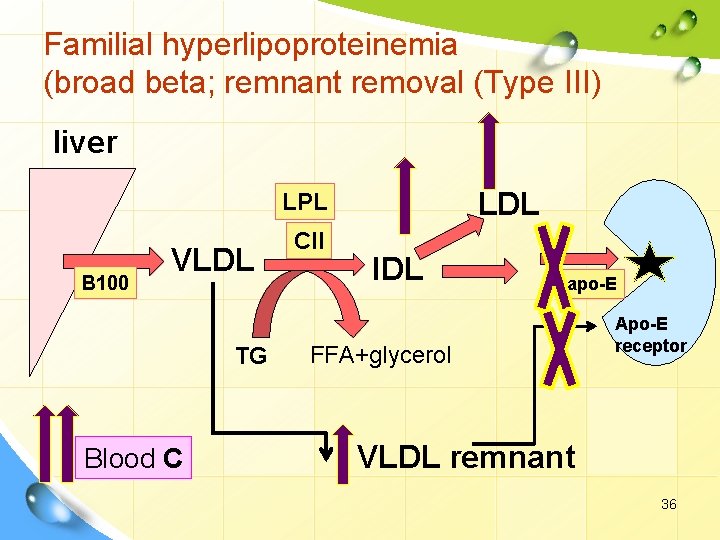
Familial hyperlipoproteinemia (broad beta; remnant removal (Type III) liver LDL LPL B 100 VLDL TG Blood C CII IDL apo-E FFA+glycerol Apo-E receptor VLDL remnant 36
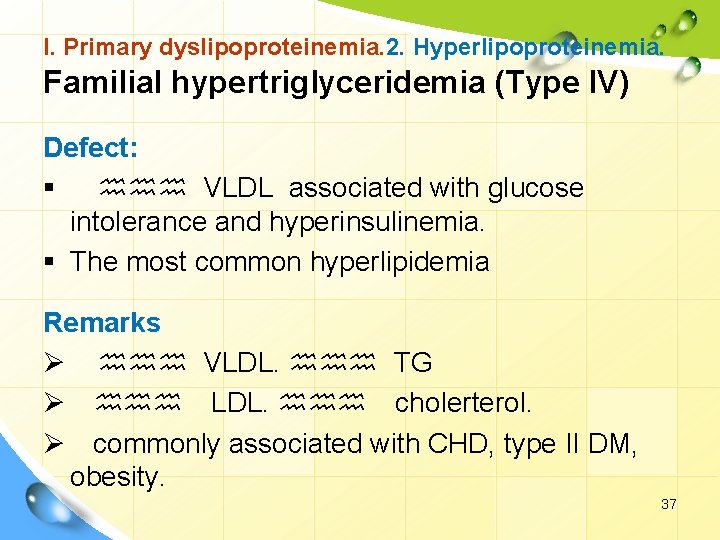
I. Primary dyslipoproteinemia. 2. Hyperlipoproteinemia. Familial hypertriglyceridemia (Type IV) Defect: § hhh VLDL associated with glucose intolerance and hyperinsulinemia. § The most common hyperlipidemia Remarks Ø hhh VLDL. hhh TG Ø hhh LDL. hhh cholerterol. Ø commonly associated with CHD, type II DM, obesity. 37
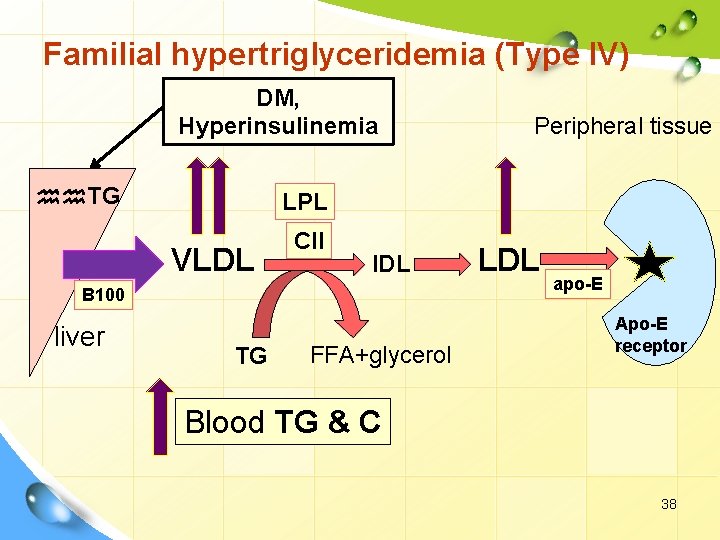
Familial hypertriglyceridemia (Type IV) DM, Hyperinsulinemia hh. TG LPL VLDL CII IDL B 100 liver Peripheral tissue TG FFA+glycerol LDL apo-E Apo-E receptor Blood TG & C 38
I. Primary dyslipoproteinemia. 2. Hyperlipoproteinemia. Familial lecithin: cholerterol acyltransferase (LCAT) deficiency Defect: • Absent LCAT leads to block in reverse cholersterol transport. • HDL remains as nascent disks…… can not take up cholesterol or esterifying it. Remarks Ø , , , cholesterol ester & lysolecithin. Ø Abnormal LDL (lipoprotein X) Ø Abnormal VLDL. 39
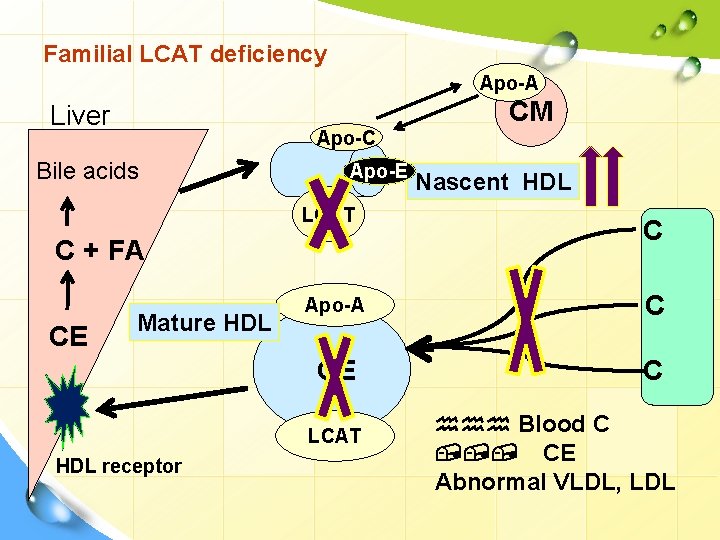
Familial LCAT deficiency Apo-A CM Liver Apo-C Bile acids Apo-E LCAT C + FA CE Mature HDL C Apo-A C CE C LCAT HDL receptor Nascent HDL hhh Blood C , , , CE Abnormal VLDL, LDL
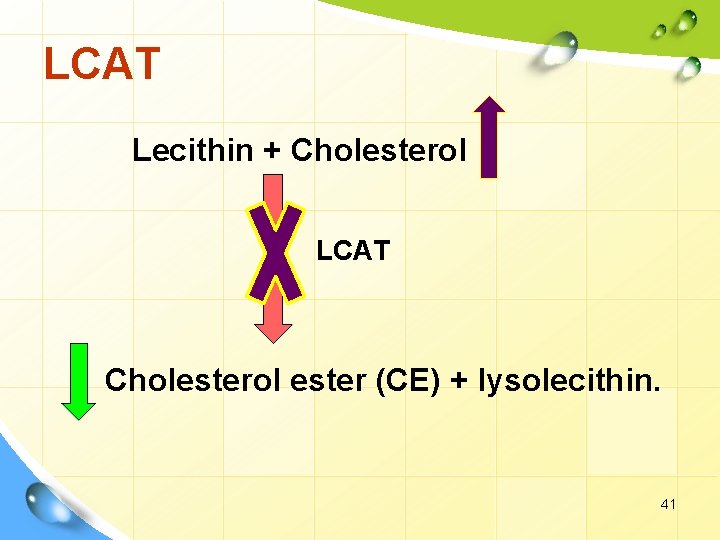
LCAT Lecithin + Cholesterol LCAT Cholesterol ester (CE) + lysolecithin. 41
I. Primary dyslipoproteinemia. 2. Hyperlipoproteinemia. Familial lipoprotein (a) excess Structure: • It consist of 1 mol LDL attached to 1 mol apo(a). Defect: • Excess apo(a). Remarks Ø patients have premature CHD and thrombosis due to inhibition of fibrinolysis. 42
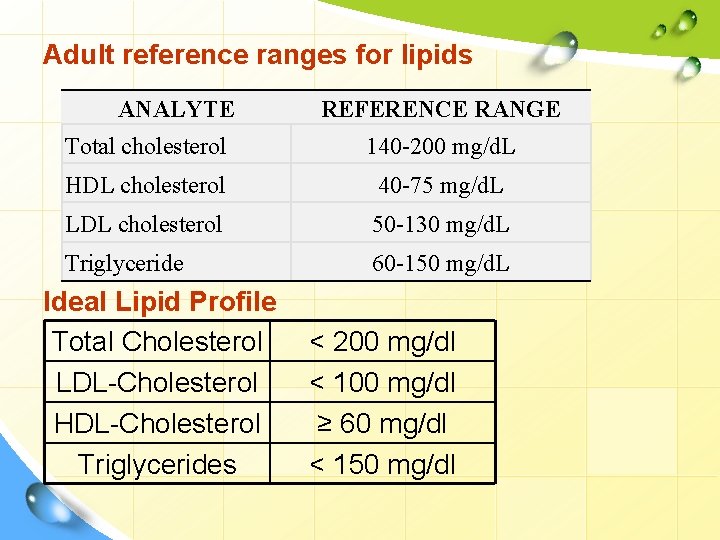
Adult reference ranges for lipids ANALYTE REFERENCE RANGE Total cholesterol 140 -200 mg/d. L HDL cholesterol 40 -75 mg/d. L LDL cholesterol 50 -130 mg/d. L Triglyceride 60 -150 mg/d. L Ideal Lipid Profile Total Cholesterol LDL-Cholesterol HDL-Cholesterol Triglycerides < 200 mg/dl < 100 mg/dl ≥ 60 mg/dl < 150 mg/dl
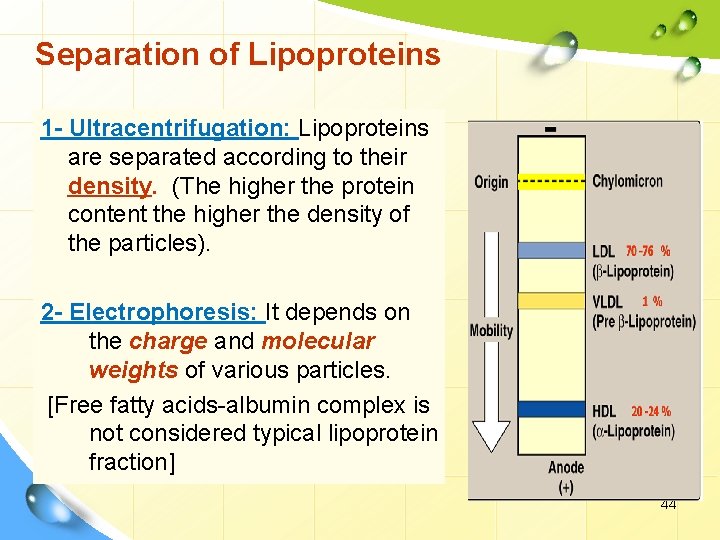
Separation of Lipoproteins 1 - Ultracentrifugation: Lipoproteins are separated according to their density. (The higher the protein content the higher the density of the particles). 2 - Electrophoresis: It depends on the charge and molecular weights of various particles. [Free fatty acids-albumin complex is not considered typical lipoprotein fraction] 44
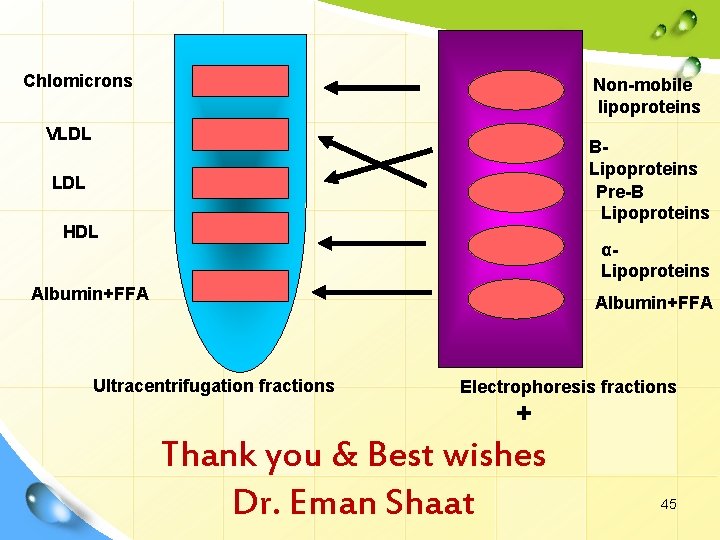
- Chlomicrons Non-mobile lipoproteins VLDL BLipoproteins Pre-B Lipoproteins LDL HDL αLipoproteins Albumin+FFA Ultracentrifugation fractions Electrophoresis fractions + Thank you & Best wishes Dr. Eman Shaat 45
- Slides: 45