
CVPR 2020 Poster Introduction Task action segmentation One

- Slides: 13
CVPR 2020 Poster
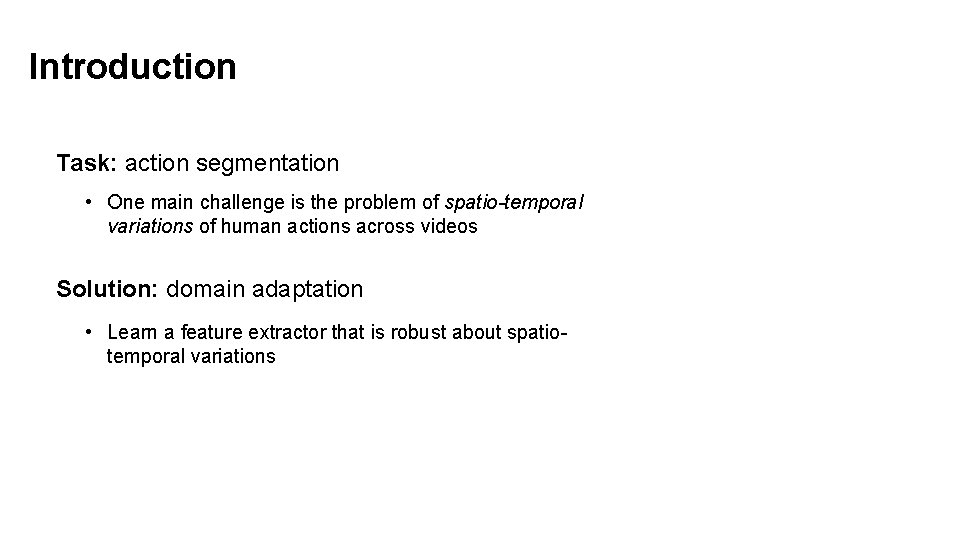
Introduction Task: action segmentation • One main challenge is the problem of spatio-temporal variations of human actions across videos Solution: domain adaptation • Learn a feature extractor that is robust about spatiotemporal variations
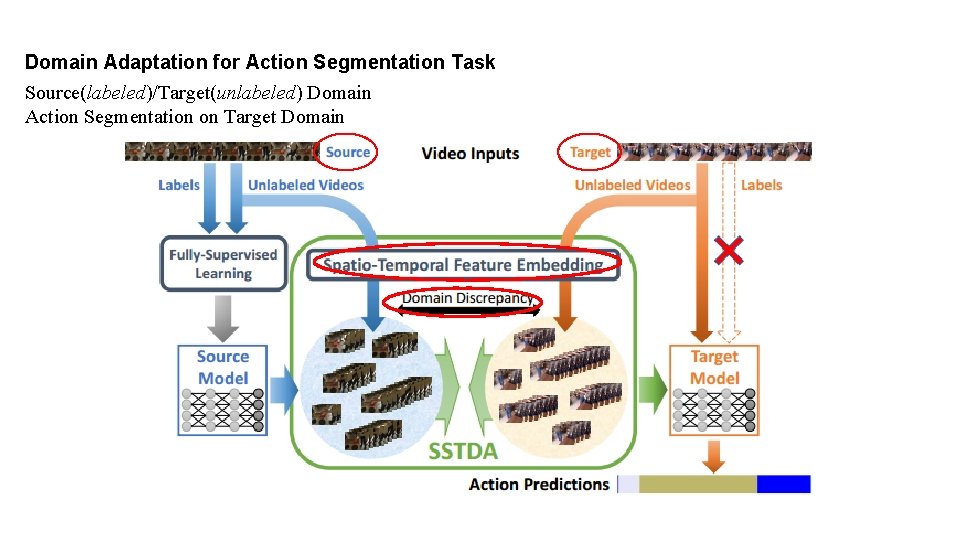
Domain Adaptation for Action Segmentation Task Source(labeled)/Target(unlabeled) Domain Action Segmentation on Target Domain
Introduction How to minimize domain discrepancy? • Reduce the distribution distance of the features between the two domains. (Lp、Cosine distance) • Adversarial-based: the domain discriminator and the feature extractor are optimized through minmax training.
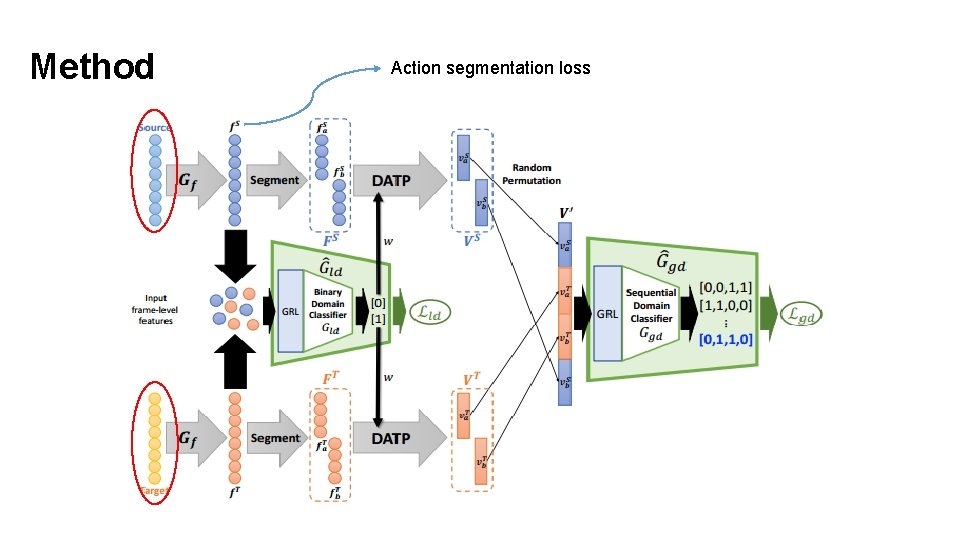
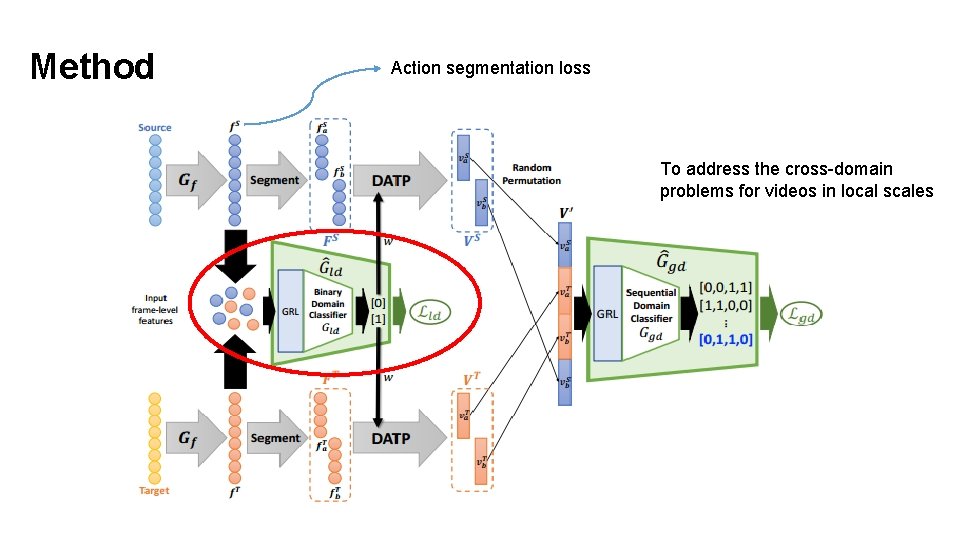
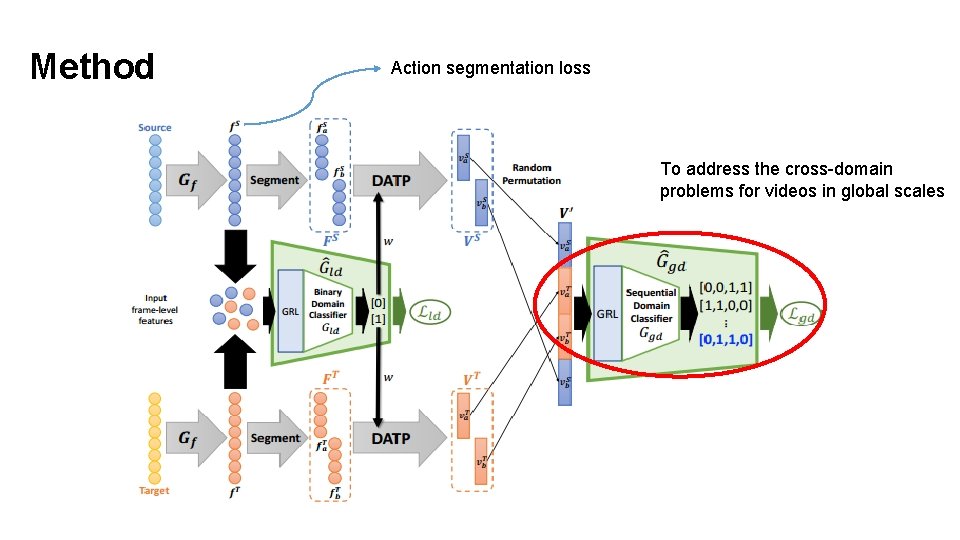
Method Action segmentation loss
Method Action segmentation loss To address the cross-domain problems for videos in local scales
Method Action segmentation loss To address the cross-domain problems for videos in global scales
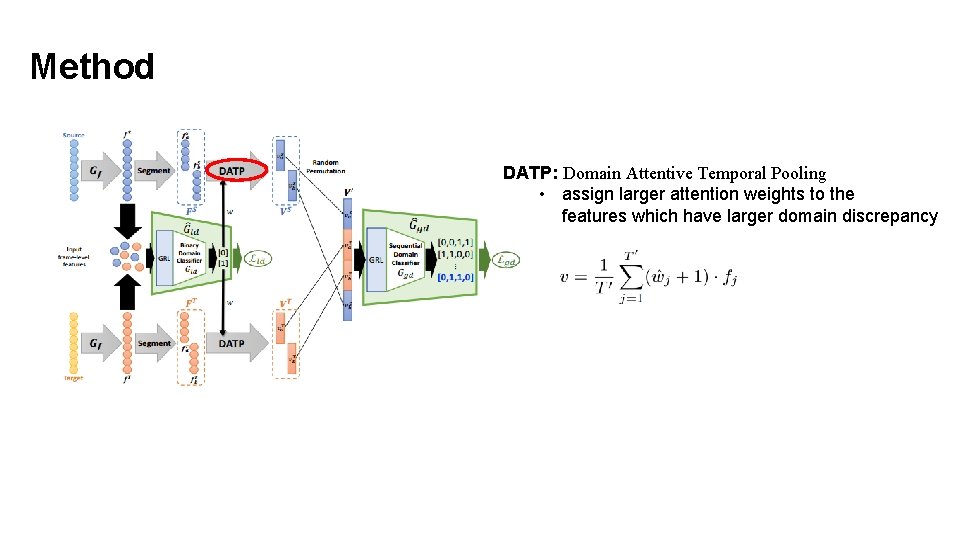
Method DATP: Domain Attentive Temporal Pooling • assign larger attention weights to the features which have larger domain discrepancy
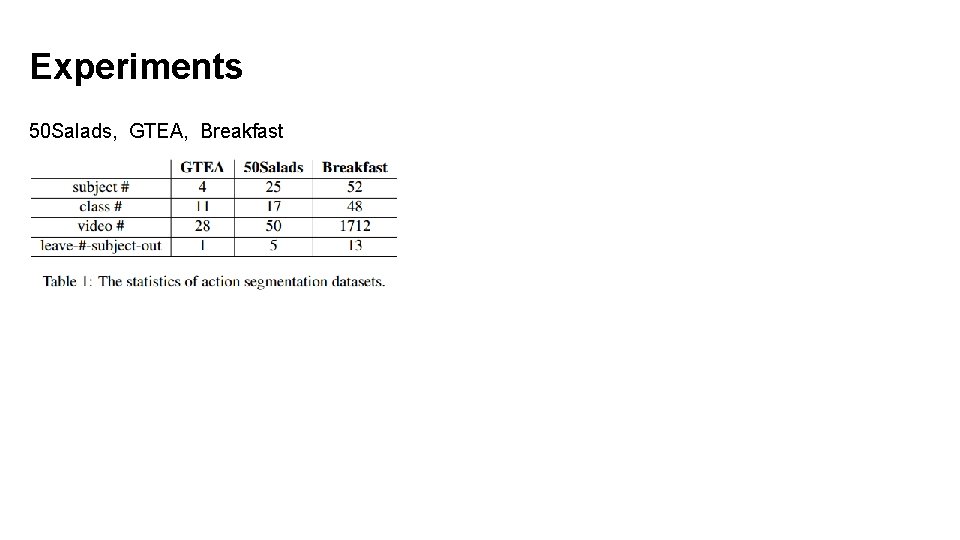
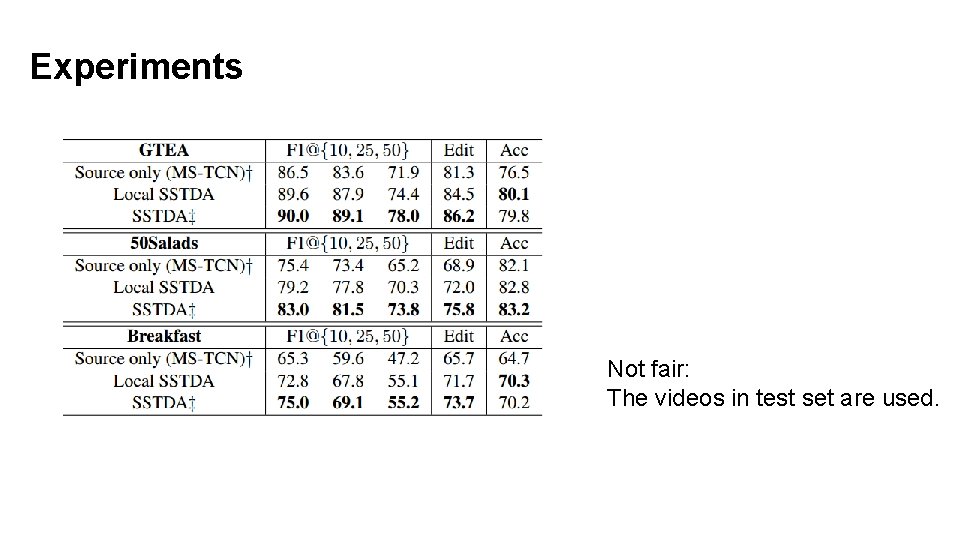
Experiments 50 Salads, GTEA, Breakfast
Experiments Not fair: The videos in test set are used.
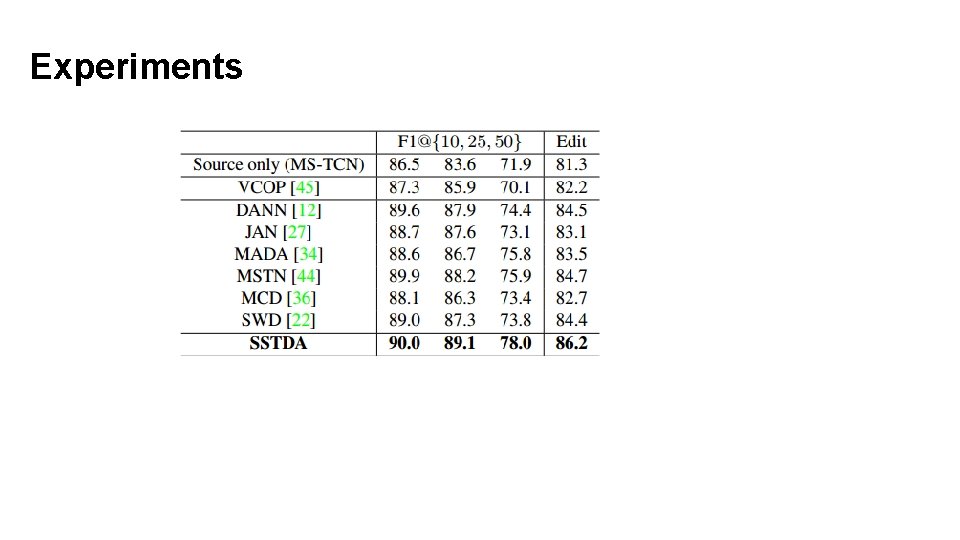
Experiments
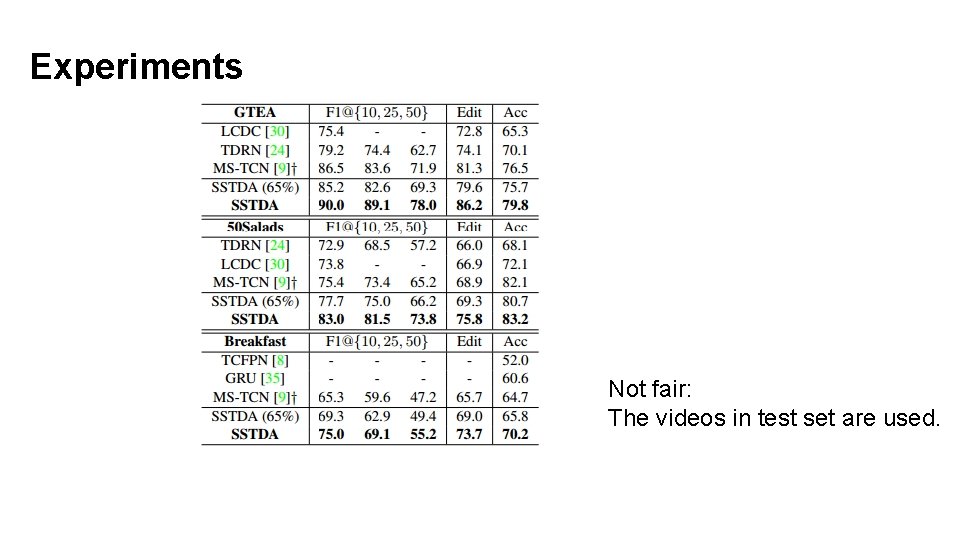
Experiments Not fair: The videos in test set are used.
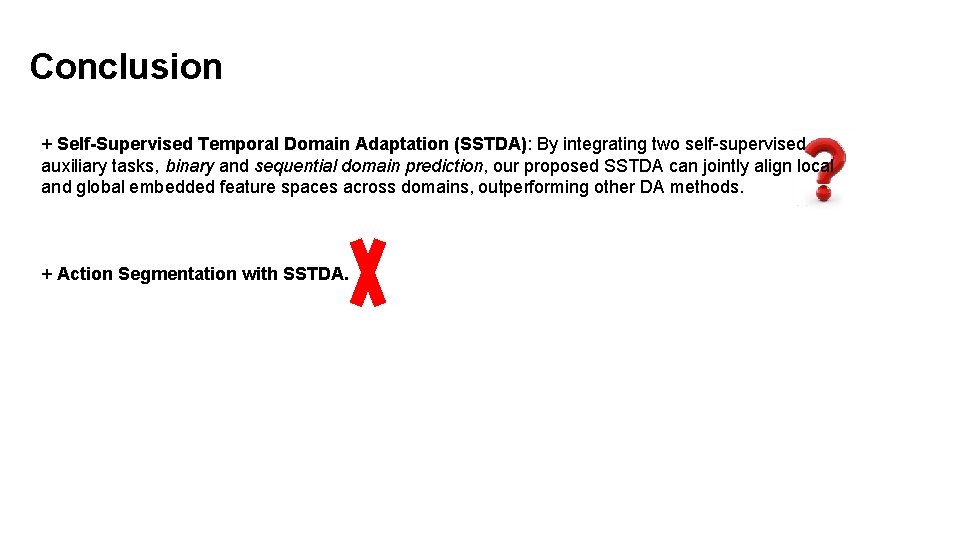
Conclusion + Self-Supervised Temporal Domain Adaptation (SSTDA): By integrating two self-supervised auxiliary tasks, binary and sequential domain prediction, our proposed SSTDA can jointly align local and global embedded feature spaces across domains, outperforming other DA methods. + Action Segmentation with SSTDA.