
CV Dr Suresh Kattera Singapore Director AsiaPacific Institute

- Slides: 22
CV - Dr. Suresh Kattera, Singapore • • • Director, Asia-Pacific Institute of Embryology-offers MSc in clinical embryology & pre-implantation genetics & 2 weeks training in embryology Scientific Director, Pearl-Singapore Fertility Centre & Research Institute More than 25 years of experience and has several achievements in the field of IVF; First in the world to show rescue ICSI can be performed after 6 hours (Human Reproduction Vol. 18, 2003). Reported the world’s first birth after enucleation of tripronuclear zygotes (removal of extra male pronucleus) (Human Reproduction Vol. 18, 2003) First to modify slow freezing method to show frozen embryos have higher success than fresh embryos (Fertil Steril, 2005; 84, 2005). Achieved first vitrification live birth in Singapore and in Asia in 2001 (IJS 91; 2006) Was a team member of the first ever ovarian tissue transplant performed in Singapore and probably in Asia (2011) Showed for the first time 4 types of pronuclear orientation in the zygotes (Human Reproduction Vol. 19, 2004) Scientific Director of Gleneagles Hospital IVF centre, Singapore -top centre in terms of success among the 10 centers from 1997 -August 2009 (Ministry of Health, Singapore Publication 2003) Manuscript reviewer for various journals including Human Reproduction, Reproductive Biology & Endocrinology. Hold IP for designing a device (SEP-D) to process semen
Blastocyst transfer for all-Are we there yet? Dr. Suresh Kattera Singapore Director, Asia Pacific Institute of Embryology Scientific Director, Pearl Singapore Fertility Centre & Research Institute September 22, 2017 AFRH, Abuja, Nigeria
Introduction Objective Singleton healthy baby • Selection of viable embryo • Identification of synchronized endometrium • First report of blastocyst pregnancy - Cohen et al 1985 • Constant increase in blastocyst stage transfer
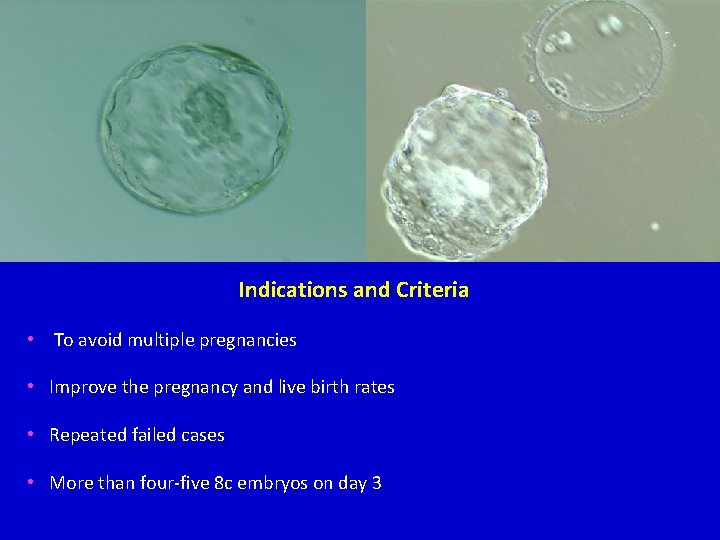
Indications and Criteria • To avoid multiple pregnancies • Improve the pregnancy and live birth rates • Repeated failed cases • More than four-five 8 c embryos on day 3
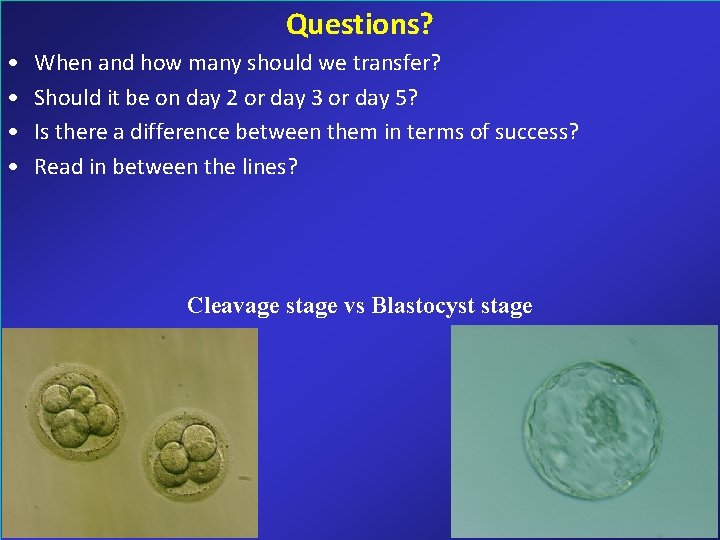
Questions? • • When and how many should we transfer? Should it be on day 2 or day 3 or day 5? Is there a difference between them in terms of success? Read in between the lines? Cleavage stage vs Blastocyst stage
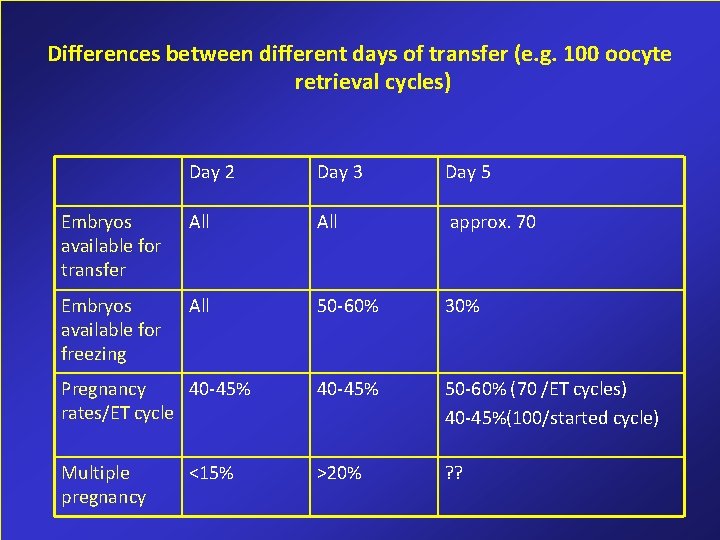
Differences between different days of transfer (e. g. 100 oocyte retrieval cycles) Day 2 Day 3 Day 5 Embryos available for transfer All approx. 70 Embryos available for freezing All 50 -60% 30% Pregnancy 40 -45% rates/ET cycle 40 -45% 50 -60% (70 /ET cycles) 40 -45%(100/started cycle) Multiple pregnancy >20% ? ? <15%
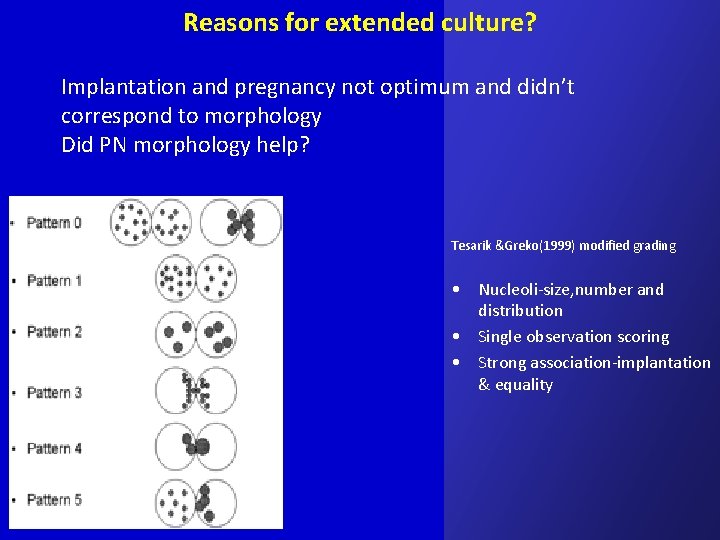
Reasons for extended culture? Implantation and pregnancy not optimum and didn’t correspond to morphology Did PN morphology help? Tesarik &Greko(1999) modified grading • Nucleoli-size, number and distribution • Single observation scoring • Strong association-implantation & equality
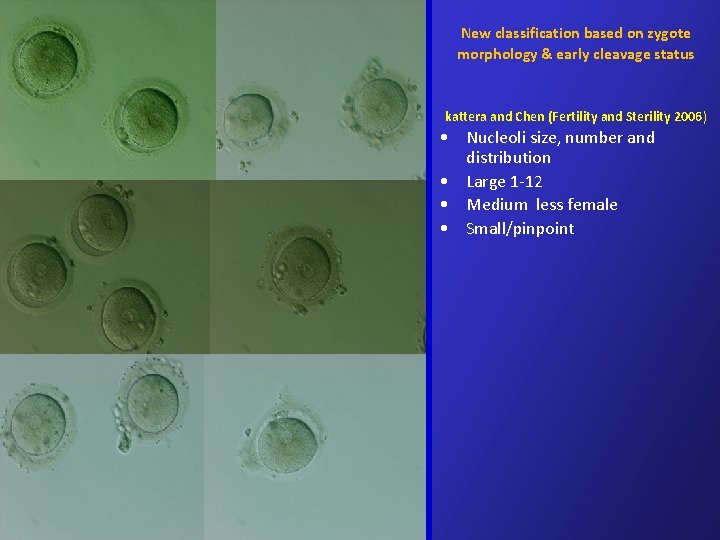
New classification based on zygote morphology & early cleavage status kattera and Chen (Fertility and Sterility 2006) • Nucleoli size, number and distribution • Large 1 -12 • Medium less female • Small/pinpoint
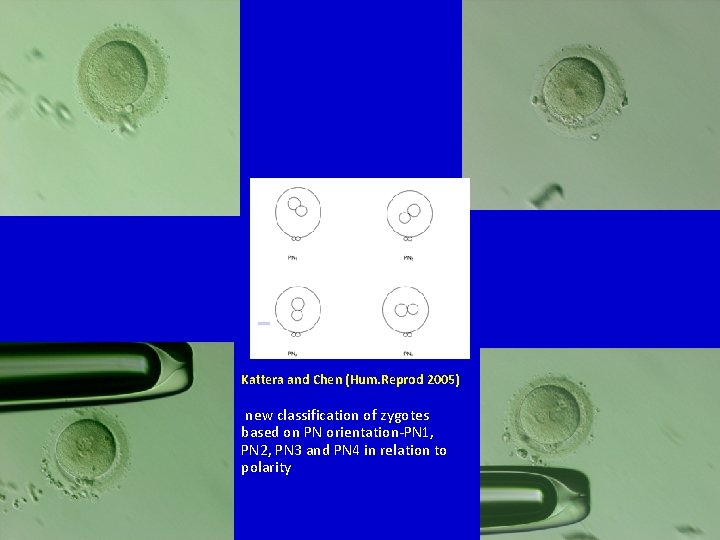
Kattera and Chen (Hum. Reprod 2005) new classification of zygotes based on PN orientation-PN 1, PN 2, PN 3 and PN 4 in relation to polarity
Other reasons? • • Minimizing exposure of embryos to hyper stimulated environment Synchronizing embryo and environment Optimal embryo selection with highest implantation potential Reducing uterine contractions
Reality check • Not all embryos become blastocysts • About 50% on an average in sequential medium • Some do not expand fully • Some do not have enough ICM • Some look unhealthy Why? 11
Culture system? • In vitro Culture system not optimum? Micro-environment/macroenvironment • It cannot provide all the nutrient requirements for some of the embryos • Some of these embryos develop further in vivo but not in vitro • Gamete quality
Ray of hope? Single step medium Main purpose-avoid ammonia accumulation Other benefits- accelerated growth 13
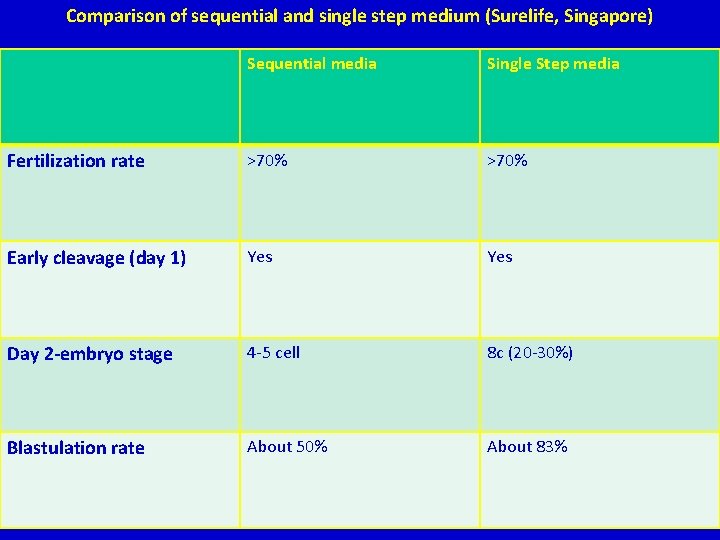
Comparison of sequential and single step medium (Surelife, Singapore) Sequential media Single Step media Fertilization rate >70% Early cleavage (day 1) Yes Day 2 -embryo stage 4 -5 cell 8 c (20 -30%) Blastulation rate About 50% About 83% 14
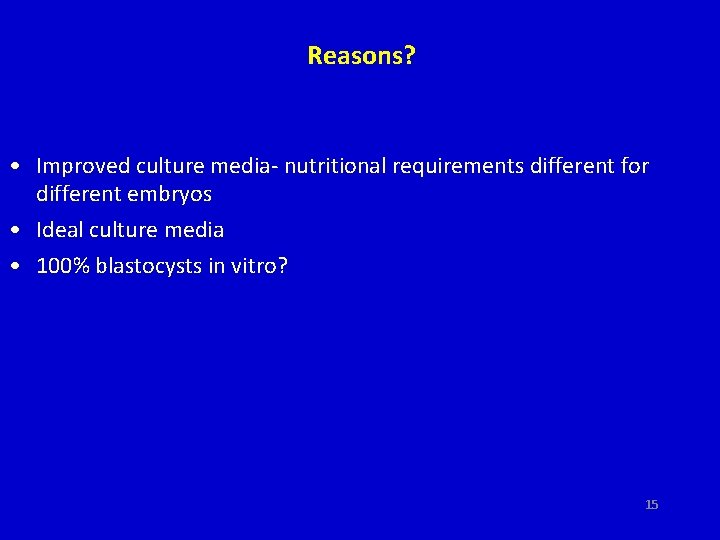
Reasons? • Improved culture media- nutritional requirements different for different embryos • Ideal culture media • 100% blastocysts in vitro? 15
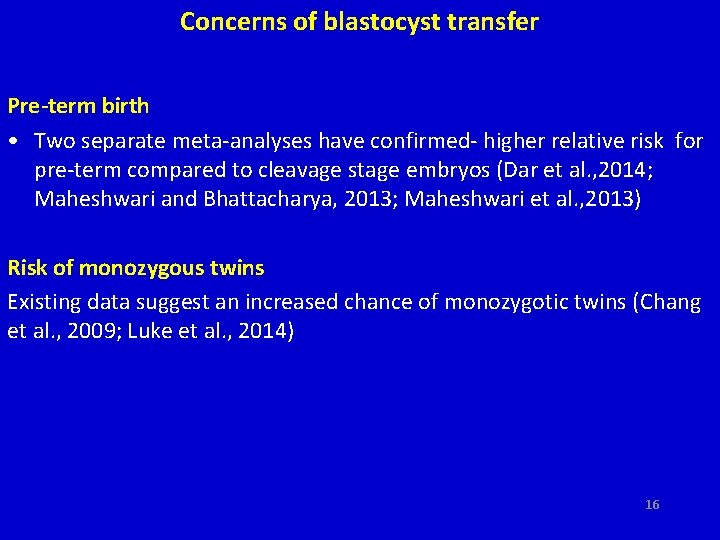
Concerns of blastocyst transfer Pre-term birth • Two separate meta-analyses have confirmed- higher relative risk for pre-term compared to cleavage stage embryos (Dar et al. , 2014; Maheshwari and Bhattacharya, 2013; Maheshwari et al. , 2013) Risk of monozygous twins Existing data suggest an increased chance of monozygotic twins (Chang et al. , 2009; Luke et al. , 2014) 16
Congenital anomalies A recent meta-analysis (Dar et al. , 2014)-congenital anomalies were significantly higher for babies born after embryo transfer at blastocyst stage compared with those born after embryo transfer at cleavage stage Epigenetic changes Effect of culture medium and culture environment on epigenetic reprogramming and development
Arguments in favour of Cleavage stage embryos transfer • Unaltered sex ratio and reduced congenital anomalies • Decreased pre-term delivery • Decreased monozygotic twins • Increased cumulative live birth rates
Strategies? • Previous criteria > 4 -5 embryos with 8 C considering 50 -60% blastulation rate on an average • Single step medium and blastulation rate 83% is encouraging-Should we attempt blastocyst transfer for all? • Re-adjustment- any patient with at least 2 x 8 c embryos in single step medium • Are we able to achieve 100% blastulation? -gamete quality major determinant
Strategies? • Transfer either on day 3 or day 5 - decide on a case by case basis by the embryologist • Consider Laboratory culture conditions -Yes • Freeze all and culture them to blastocyst stage and vitrify supernumerary embryos? -Yes • Consider safety issues-Yes
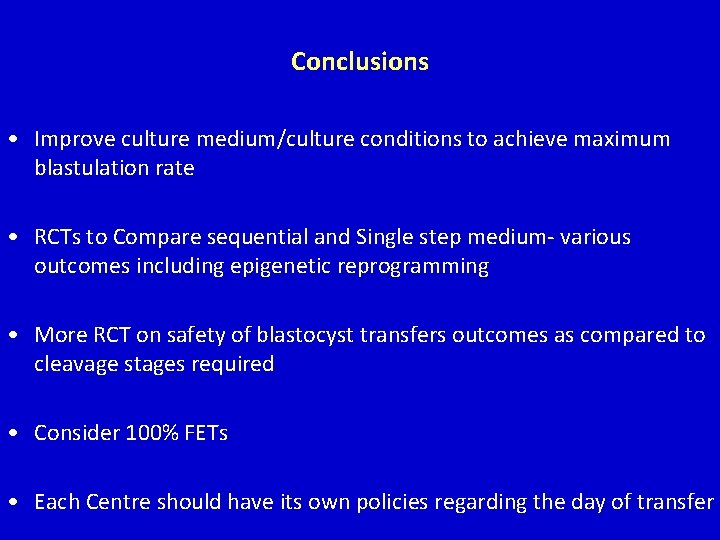
Conclusions • Improve culture medium/culture conditions to achieve maximum blastulation rate • RCTs to Compare sequential and Single step medium- various outcomes including epigenetic reprogramming • More RCT on safety of blastocyst transfers outcomes as compared to cleavage stages required • Consider 100% FETs • Each Centre should have its own policies regarding the day of transfer
Thank you… katteras@gmail. com