
Customs of the Japanese Lesson 7 World History
- Slides: 25
Customs of the Japanese Lesson #7 World History
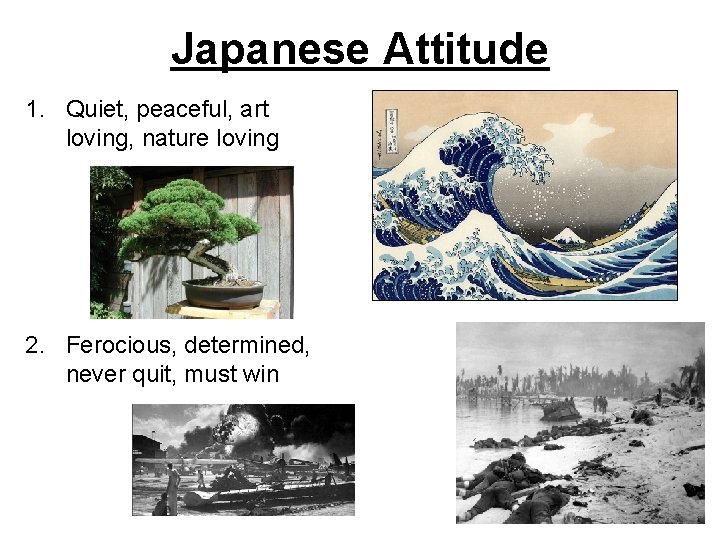
Japanese Attitude 1. Quiet, peaceful, art loving, nature loving 2. Ferocious, determined, never quit, must win
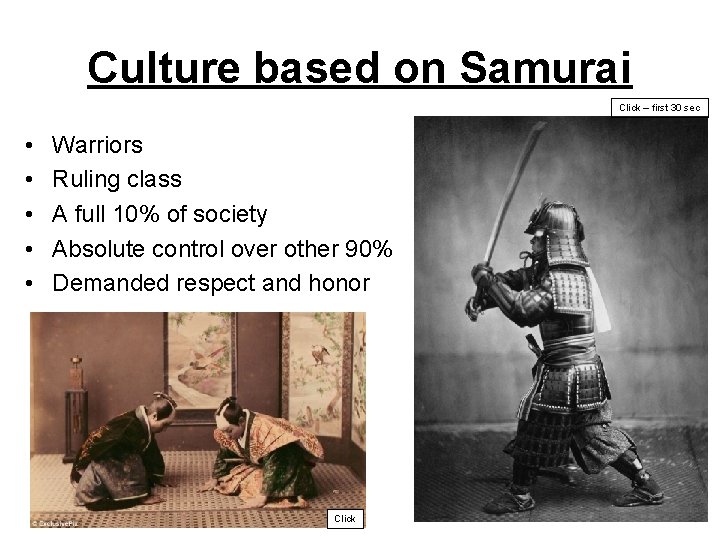
Culture based on Samurai Click – first 30 sec • • • Warriors Ruling class A full 10% of society Absolute control over other 90% Demanded respect and honor Click
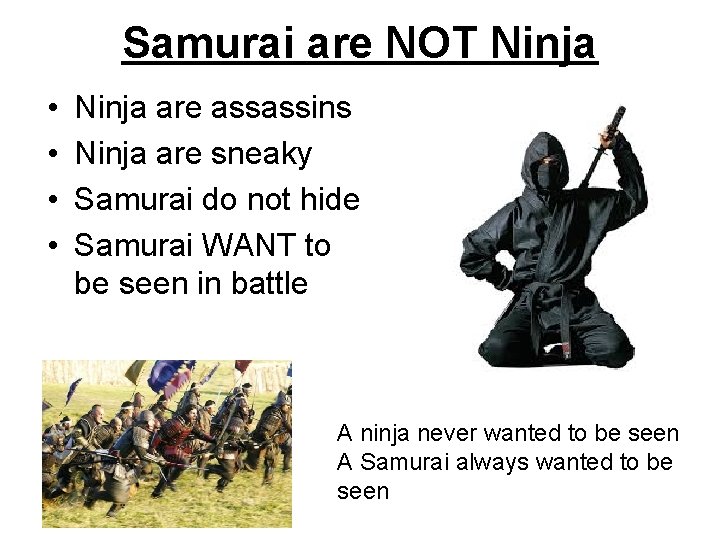
Samurai are NOT Ninja • • Ninja are assassins Ninja are sneaky Samurai do not hide Samurai WANT to be seen in battle A ninja never wanted to be seen A Samurai always wanted to be seen
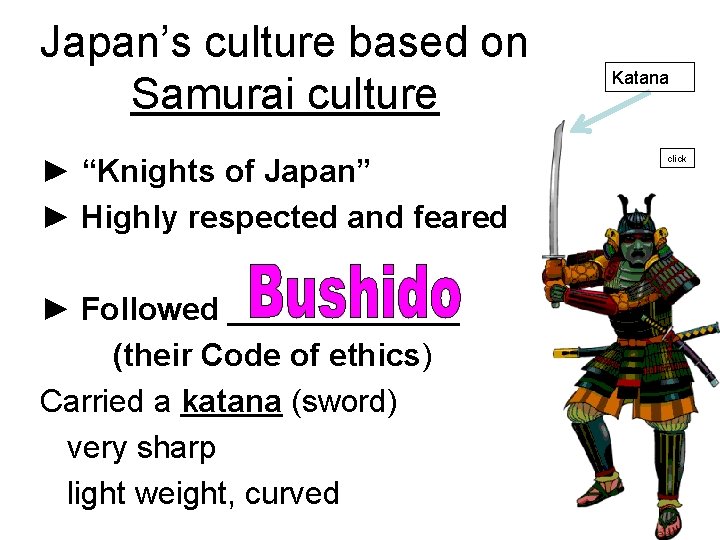
Japan’s culture based on Samurai culture ► “Knights of Japan” ► Highly respected and feared ► Followed _______ (their Code of ethics) Carried a katana (sword) very sharp light weight, curved Katana click
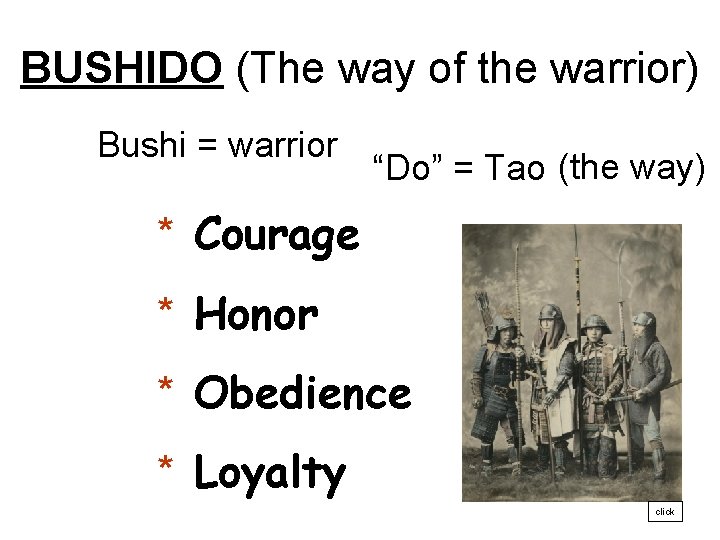
BUSHIDO (The way of the warrior) Bushi = warrior “Do” = Tao (the way) * Courage * Honor * Obedience * Loyalty click
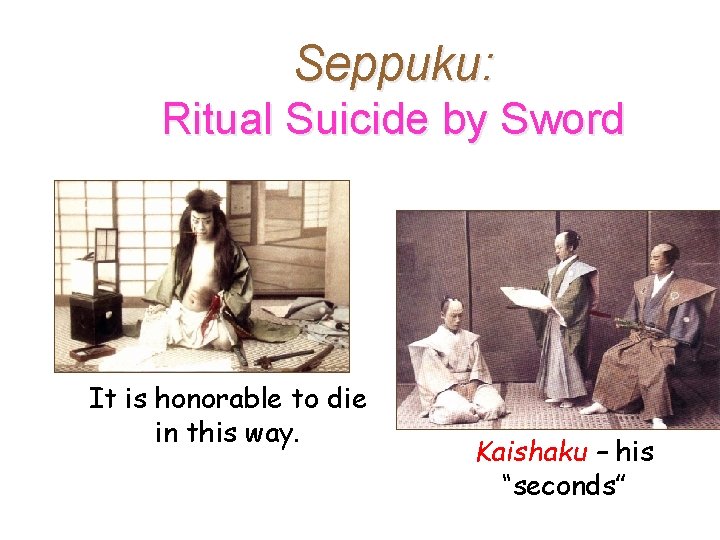
Seppuku: Ritual Suicide by Sword It is honorable to die in this way. Kaishaku – his “seconds”
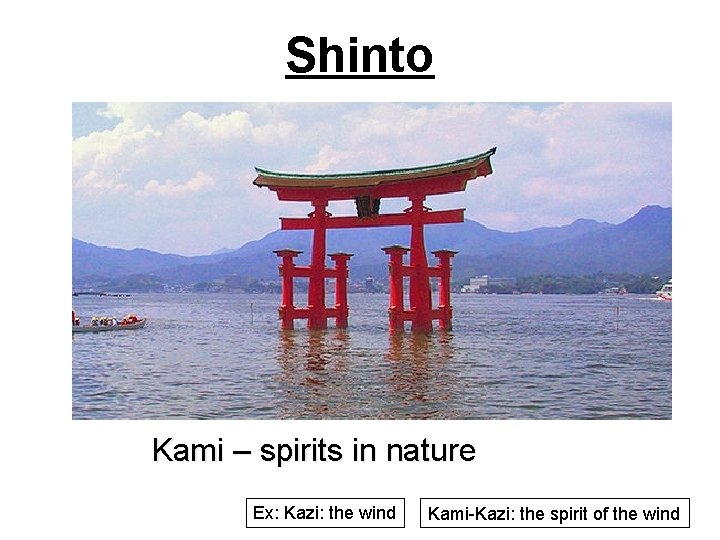
Shinto Kami – spirits in nature Ex: Kazi: the wind Kami-Kazi: the spirit of the wind
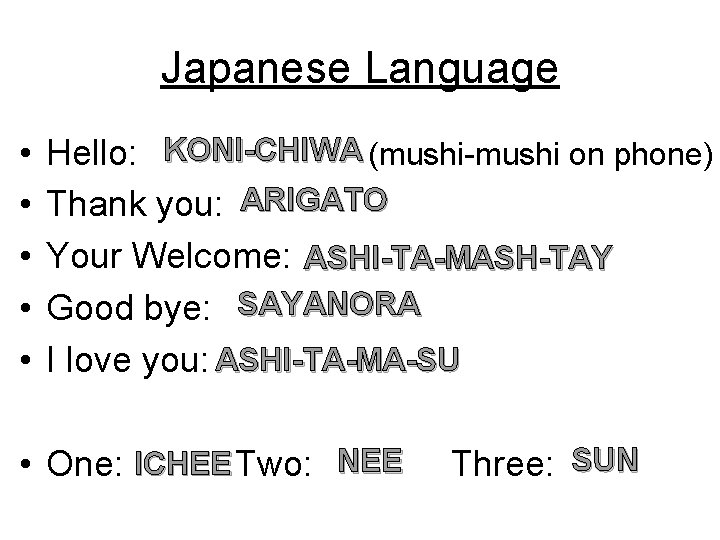
Japanese Language • • • Hello: KONI-CHIWA (mushi-mushi on phone) Thank you: ARIGATO Your Welcome: ASHI-TA-MASH-TAY Good bye: SAYANORA I love you: ASHI-TA-MA-SU • One: ICHEE Two: NEE Three: SUN
Verbal communication in Japan • Avoid directly saying NO • Slurp noodles • Never talk about unappetizing things at meals • Always show respect – Call adults ____ - san (ex: Jacoby-san; Hibbs-san)
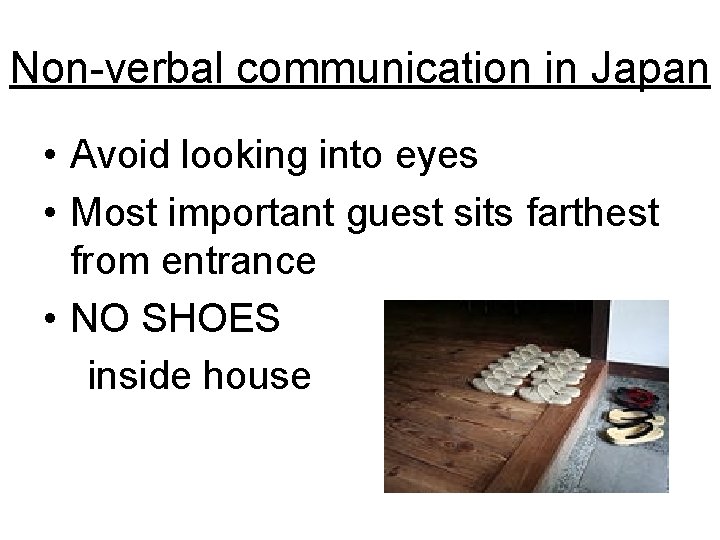
Non-verbal communication in Japan • Avoid looking into eyes • Most important guest sits farthest from entrance • NO SHOES inside house
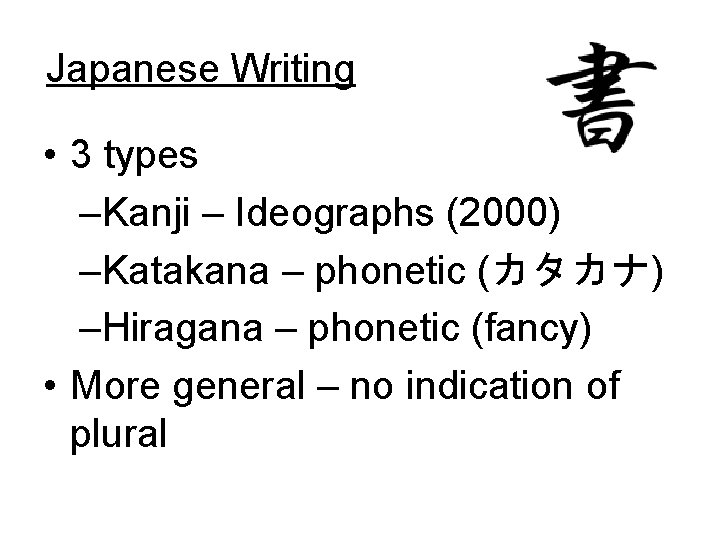
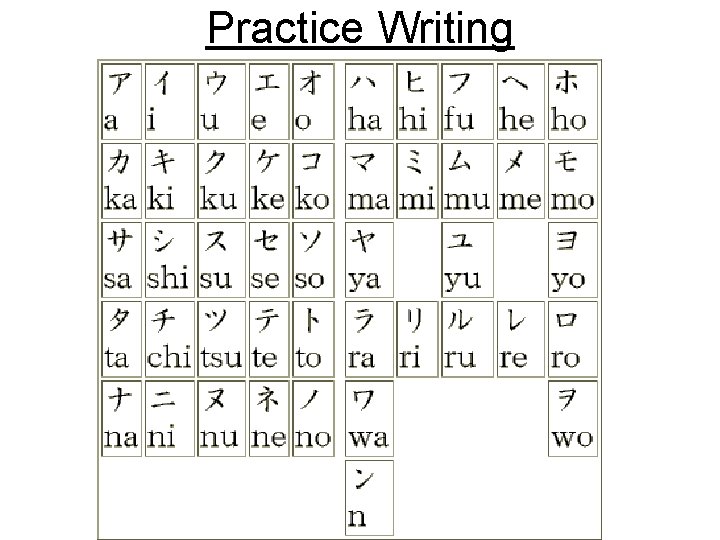
Japanese Writing • 3 types –Kanji – Ideographs (2000) –Katakana – phonetic (カタカナ) –Hiragana – phonetic (fancy) • More general – no indication of plural
Practice Writing
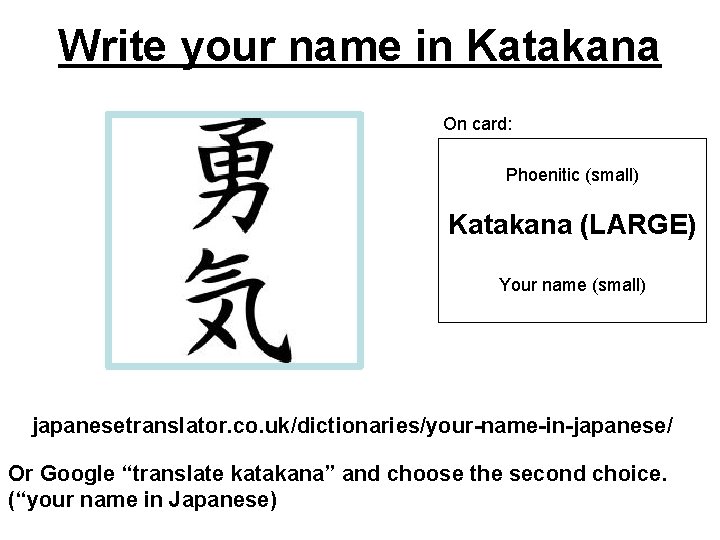
Write your name in Katakana On card: Phoenitic (small) Katakana (LARGE) Your name (small) japanesetranslator. co. uk/dictionaries/your-name-in-japanese/ Or Google “translate katakana” and choose the second choice. (“your name in Japanese)
Practice Writing
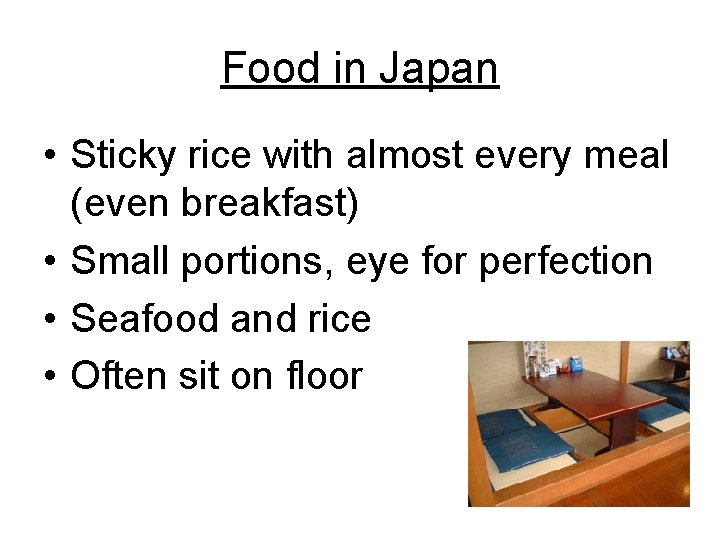
Food in Japan • Sticky rice with almost every meal (even breakfast) • Small portions, eye for perfection • Seafood and rice • Often sit on floor
Description of Eating (five sentences)
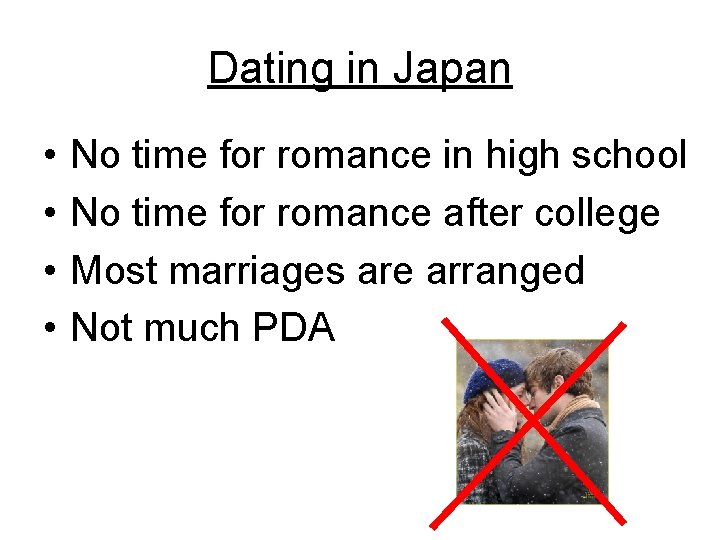
Dating in Japan • • No time for romance in high school No time for romance after college Most marriages are arranged Not much PDA
Description of Dating
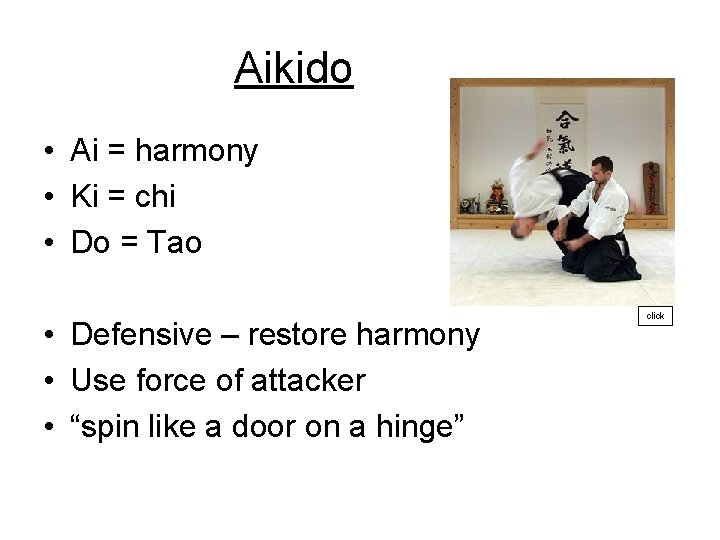
Aikido • Ai = harmony • Ki = chi • Do = Tao • Defensive – restore harmony • Use force of attacker • “spin like a door on a hinge” click
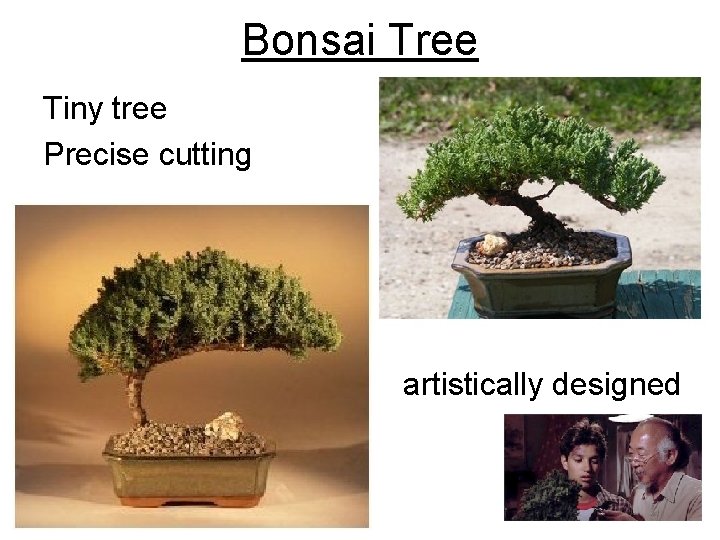
Bonsai Tree Tiny tree Precise cutting artistically designed
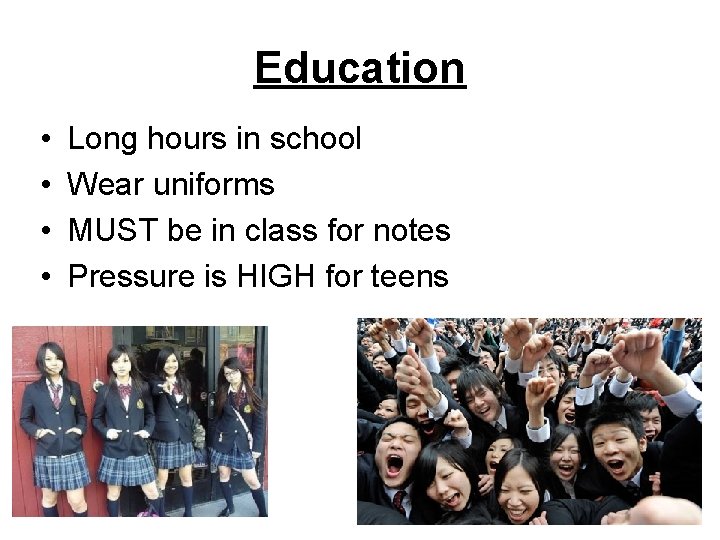
Education • • Long hours in school Wear uniforms MUST be in class for notes Pressure is HIGH for teens
Description of School in Japan
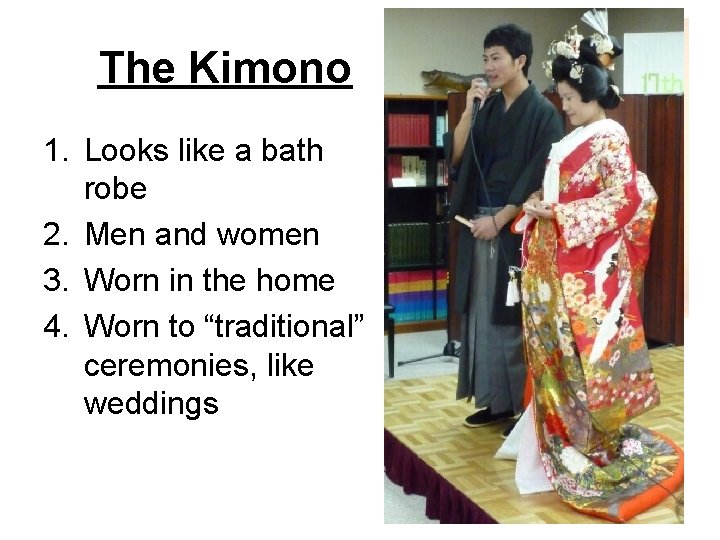
The Kimono 1. Looks like a bath robe 2. Men and women 3. Worn in the home 4. Worn to “traditional” ceremonies, like weddings
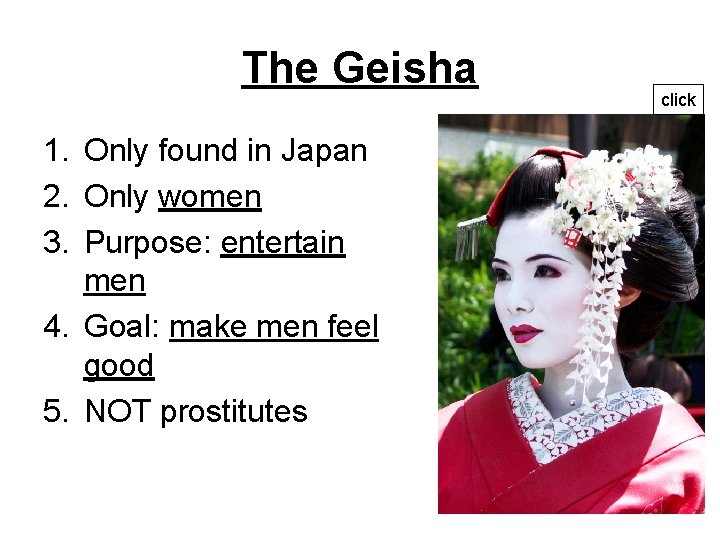
The Geisha 1. Only found in Japan 2. Only women 3. Purpose: entertain men 4. Goal: make men feel good 5. NOT prostitutes click