
CUSTOMS AND ITS ROLE IN PORT AND MARITIME
- Slides: 23
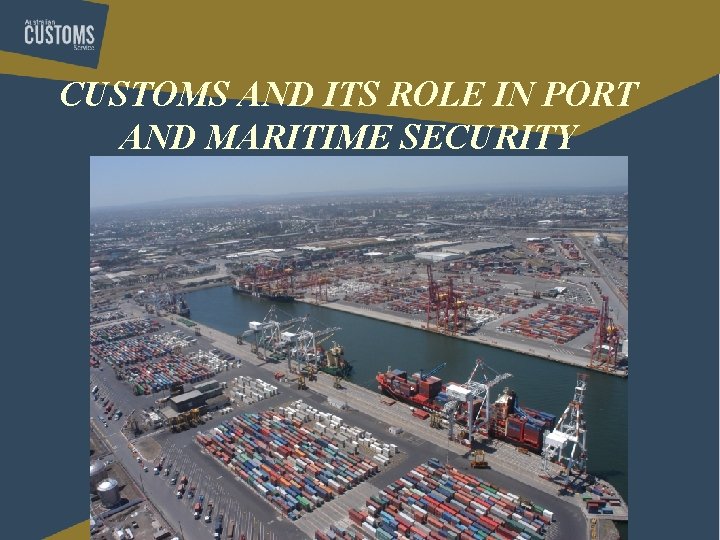
CUSTOMS AND ITS ROLE IN PORT AND MARITIME SECURITY
Customs Involvement in the Port and Maritime Environment Customs civil border protection role: §Department of Immigration, Multiculturalism and Indigenous Affairs (DIMIA) §Australian Quarantine Inspection Service (AQIS)
Customs Involvement in the Port and Maritime Environment Customs Maritime & Port Risk Management System §Aims to identify, regulate and control: – Vessels – Cargo – Crew members, ancillary infrastructure – Members of the related workforce § Customs employs: - A diverse range of methodologies - Technology
Customs Involvement in the Port and Maritime Environment Customs is primarily intelligence driven § Broad and diverse range of information sources § Partnerships § Apply intelligence to identify risks and weaknesses in controls
Customs Involvement in the Port and Maritime Environment Enforcement Operations - Examples: Containment of a suspect vessel and crew. Ship search, Responding to specific information about smuggling attempts Monitoring Operations - Examples: Full examination of discharged cargo from a particular vessel through the Container X-Ray Facility, Mobile patrols
Customs Involvement in the Port and Maritime Environment Information Collection Plans - Examples: – CCTV technology Improve security information flow / identify control weaknesses Examples: Inadequate physical control of cargo, ability to override cargo control computer systems
Customs Involvement in the Port and Maritime Environment Legislation § Shipping and crew activities § Reporting of cargo § Appointment of ports under the Customs Act for the discharge and shipment of cargo § Movement of cargo § Licensing of premises for the storage of cargo
Customs Involvement in the Port and Maritime Environment § Legislation places responsibility on all parties involved in the logistic chain to comply. § Customs monitors compliance and responds
Implications & Potential for Australia of the United States Customs Service (USCS) & APEC Initiatives
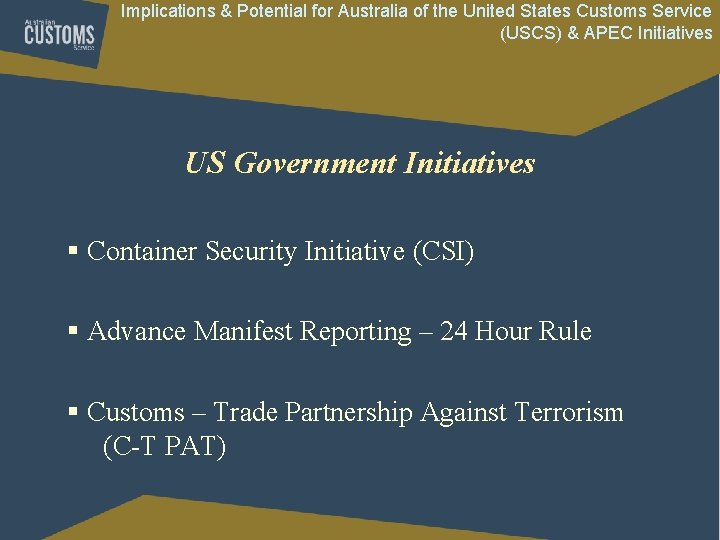
Implications & Potential for Australia of the United States Customs Service (USCS) & APEC Initiatives US Government Initiatives § Container Security Initiative (CSI) § Advance Manifest Reporting – 24 Hour Rule § Customs – Trade Partnership Against Terrorism (C-T PAT)
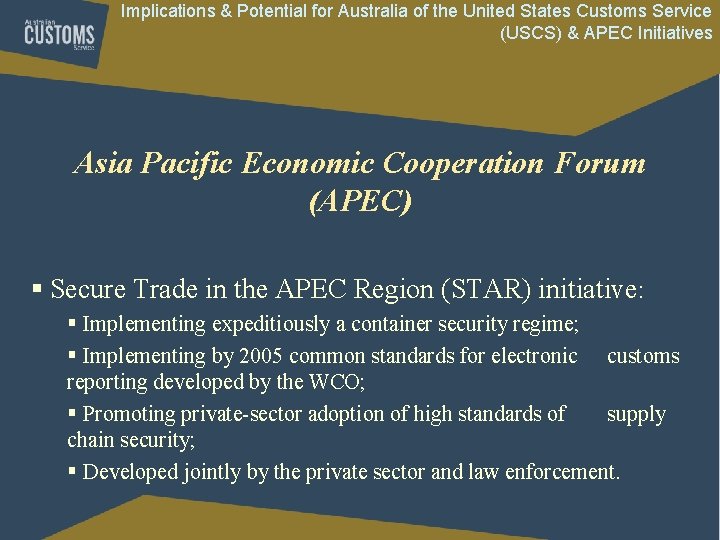
Implications & Potential for Australia of the United States Customs Service (USCS) & APEC Initiatives Asia Pacific Economic Cooperation Forum (APEC) § Secure Trade in the APEC Region (STAR) initiative: § Implementing expeditiously a container security regime; § Implementing by 2005 common standards for electronic customs reporting developed by the WCO; § Promoting private-sector adoption of high standards of supply chain security; § Developed jointly by the private sector and law enforcement.
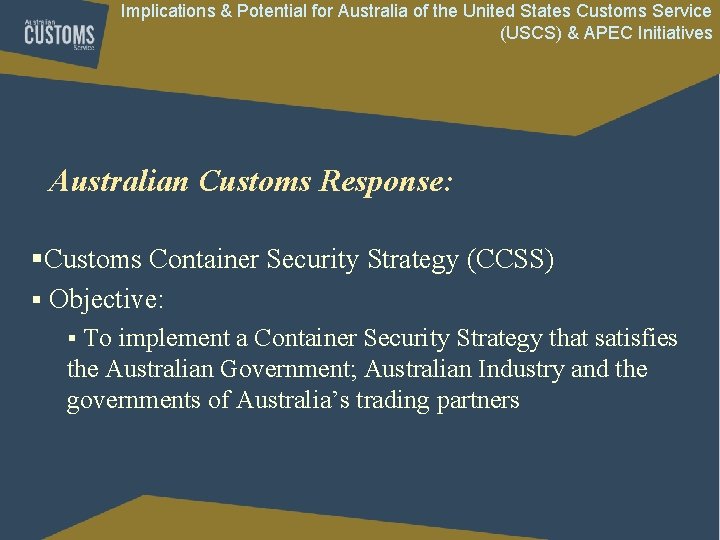
Implications & Potential for Australia of the United States Customs Service (USCS) & APEC Initiatives Australian Customs Response: §Customs Container Security Strategy (CCSS) § Objective: To implement a Container Security Strategy that satisfies the Australian Government; Australian Industry and the governments of Australia’s trading partners §
Implications & Potential for Australia of the United States Customs Service (USCS) & APEC Initiatives Outcomes of CCSS: §Provide an assurance to: § Australian stakeholders; § Foreign governments; § Customs Services. §Containers and contents, exported from Australia: §Do not represent a threat; §Do not contain prohibited imports or exports. §Reciprocal assurances.
Implications & Potential for Australia of the United States Customs Service (USCS) & APEC Initiatives Strategy: § Understanding Australia’s export trade § Early receipt of information § Exchanging information § Agreement with overseas Customs administrations to respond § A comprehensive compliance assurance strategy § Customs Accredited Client Program for Exporters § Partnerships
Implications & Potential for Australia of the United States Customs Service (USCS) & APEC Initiatives Strategy (cont. ): § New declaring, reporting and clearance requirements of CMR §Mandatory electronic reporting of manifests; §Sanctions for late or inaccurate reporting; §Simplified reporting for accredited clients; §The capacity to examine goods for export § Use of electronic container seals and tracking technology § Feasibility of installing radiation detection portals
Implications & Potential for Australia of the United States Customs Service (USCS) & APEC Initiatives Container X-Ray Strategy: § Installation in three ports at present and a fourth by the end of 2003, covering the four largest ports § Anticipate ongoing increase in detection of prohibited and illicit goods and revenue evasion § 5% of loaded import containers
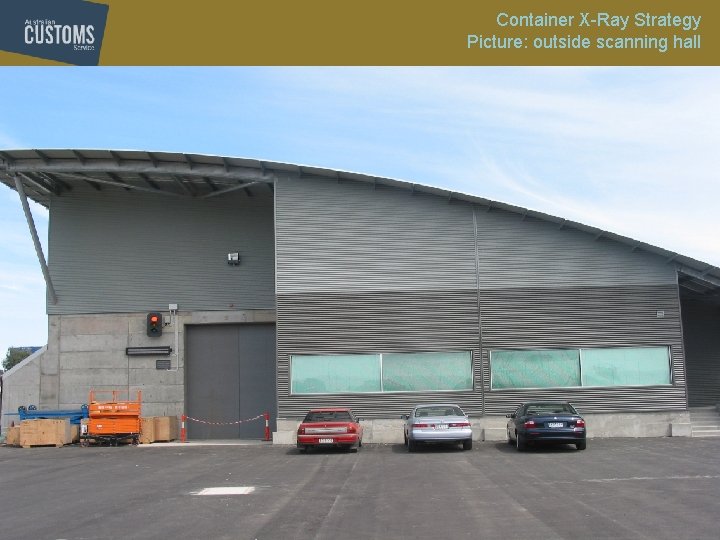
Container X-Ray Strategy Picture: outside scanning hall
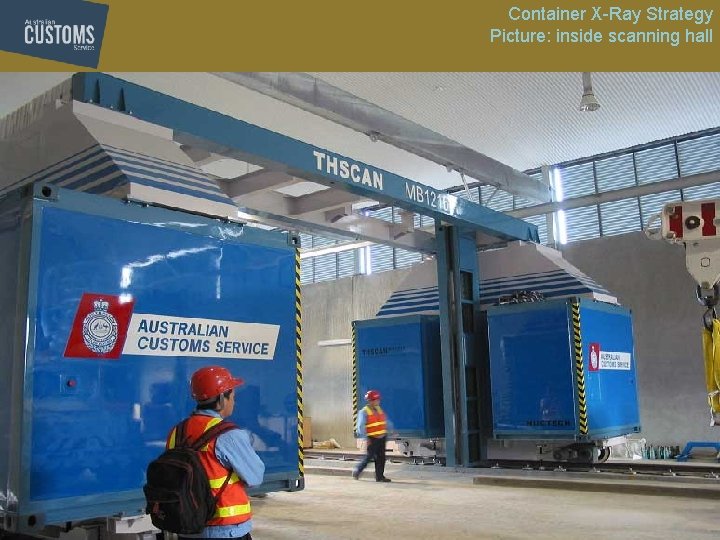
Container X-Ray Strategy Picture: inside scanning hall
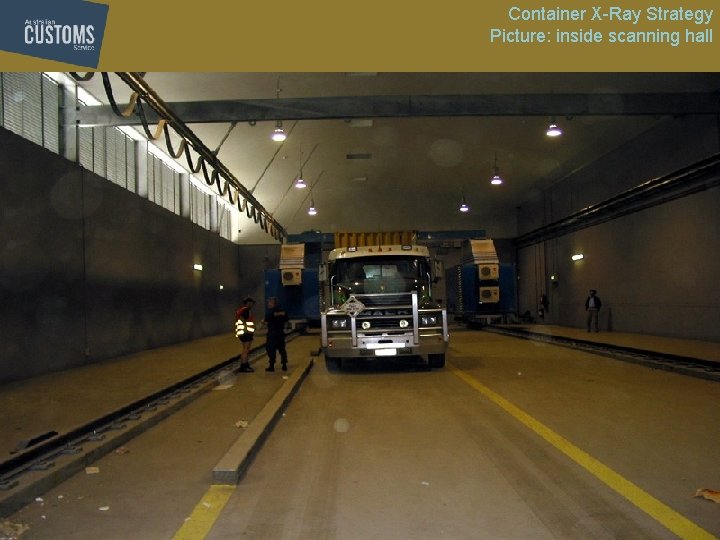
Container X-Ray Strategy Picture: inside scanning hall
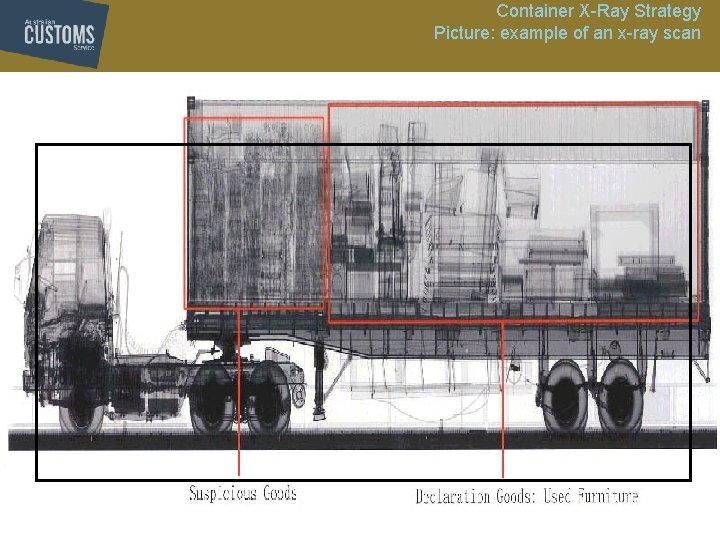
Container X-Ray Strategy Picture: example of an x-ray scan
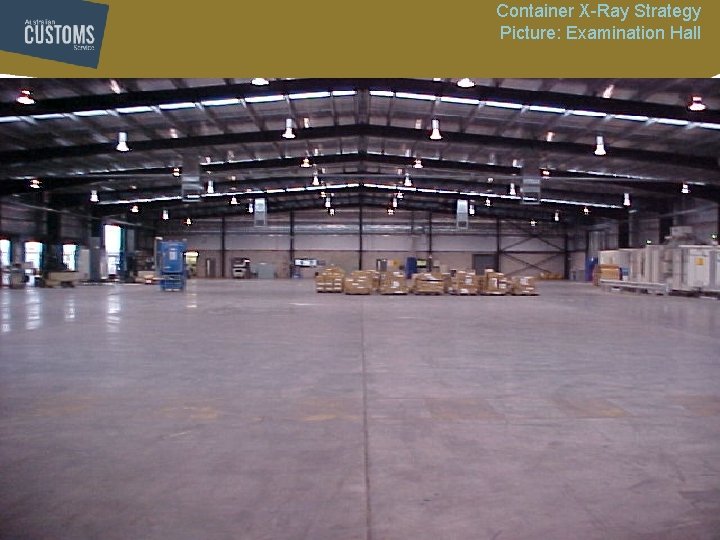
Container X-Ray Strategy Picture: Examination Hall
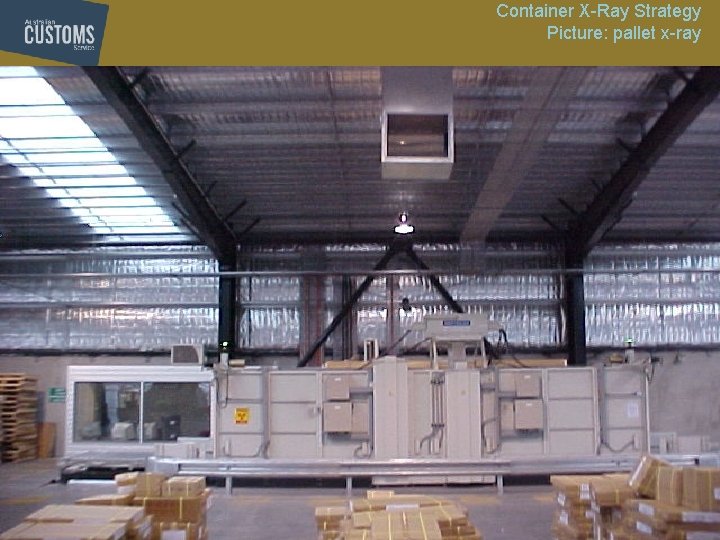
Container X-Ray Strategy Picture: pallet x-ray
Customs and the IMO recommendations International Ship and Port Security code (ISPS) • Approximately 300 port facilities in 70 ports, and 50 Australian flagged ships will be required to comply with the Code • Code provides powerful control measures –Refuse access to ports –Detail ships • Anticipated Customs will have an important monitoring role to ensure compliance with this new legislation.