
Customers 102 2018 Key Customer Markets u Consumer

- Slides: 28
Customers 10/2, 2018
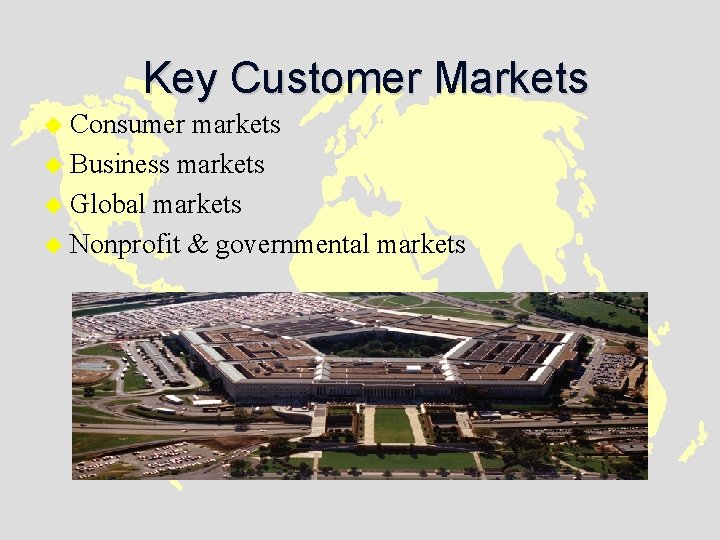
Key Customer Markets u Consumer markets u Business markets u Global markets u Nonprofit & governmental markets
Types of Customers u Organizational buyers purchase good and services for businesses, government agencies, and other institutions, such as hospitals and schools. u Consumers buy goods and services for their own use or for gifts to others
Customers u Customers – Current customers of a given product – Customers of competitors – Current noncustomers of the product category u Buyers – – – vs. Users Initiator Influencer Decider Purchaser User
An Understanding of Customers u Who buys and uses the product? u What customers buy and how they use it? u Where customers buy? u When customers buy? u How customers choose? u Why they prefer a product? u How they respond to marketing programs? u Will they buy it (again)?
Customer Value u u The customer’s perception of the total benefits to be derived from a product or service versus the total perceived costs of acquisition and ownership Customer typically have some implicit preconception about the “right” ratio of benefits to costs Having compared available alternatives, customers select the one that they think will give them best value Value is a relative concept; it is perceived relative to competitor offerings
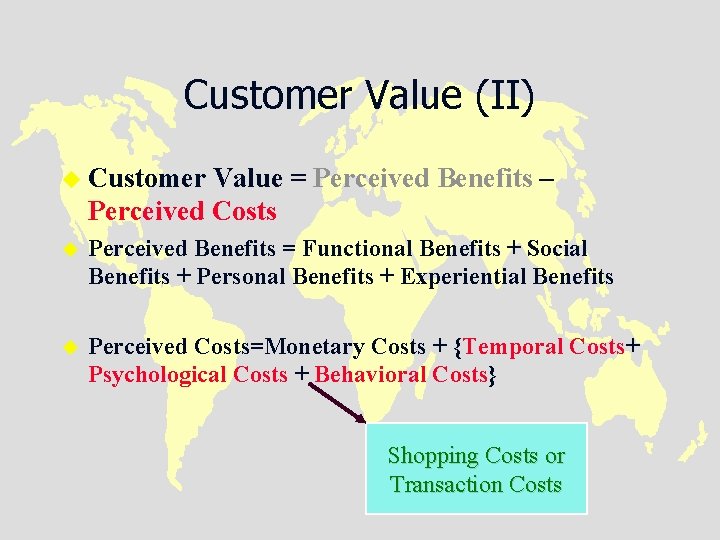
Customer Value (II) u Customer Value = Perceived Benefits – Perceived Costs u Perceived Benefits = Functional Benefits + Social Benefits + Personal Benefits + Experiential Benefits u Perceived Costs=Monetary Costs + {Temporal Costs+ Psychological Costs + Behavioral Costs} Shopping Costs or Transaction Costs
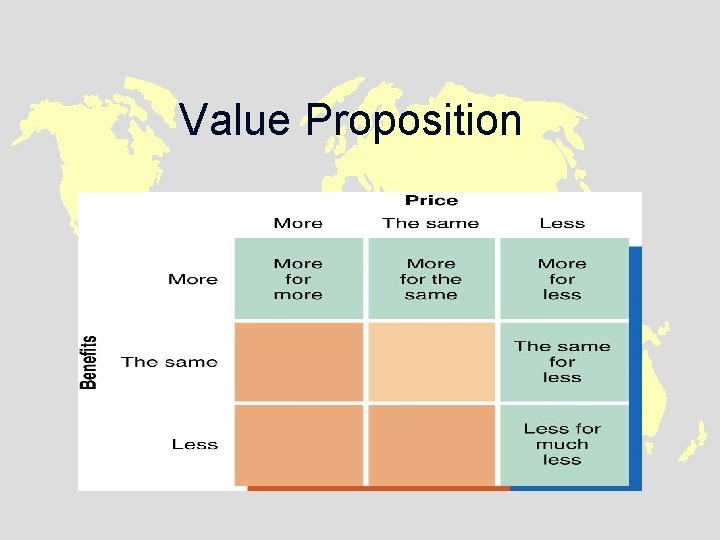
Value Proposition
Virgin Atlantic u u Virgin Atlantic created a new name—Upper Class—for a service with first class standards at business class prices The first airline to offer a limousine service, a check-in service in the parking area, and an unconventional passenger lounge
Virgin Atlantic’s Tailoring Service u u u One of the finest examples of its customer orientation was the tailoring service it offered for a time on its London to Hong Kong flight A tailor in Virgin’s business lounge at Heathrow would measure passengers waiting for their flight, then phoned the details to another tailor in Hong Kong, who would make up the outfit while the plane was in flight The Virgin Atlantic passenger would pick up a brand new, pressed, tailor-made suit on arrival in Hong Kong
A Competitive Perspective u u u Marketing books with the term “warfare” in title The traditional view of the marketing concept is a focus on the needs and wants of the customer Since the 1980, it has become increasingly clear that meeting customer needs is not enough for success What is critical to a product’s success is meeting customer needs better than a competitor can, often at a lower cost “The biggest enemy of good is better!”--Voltaire
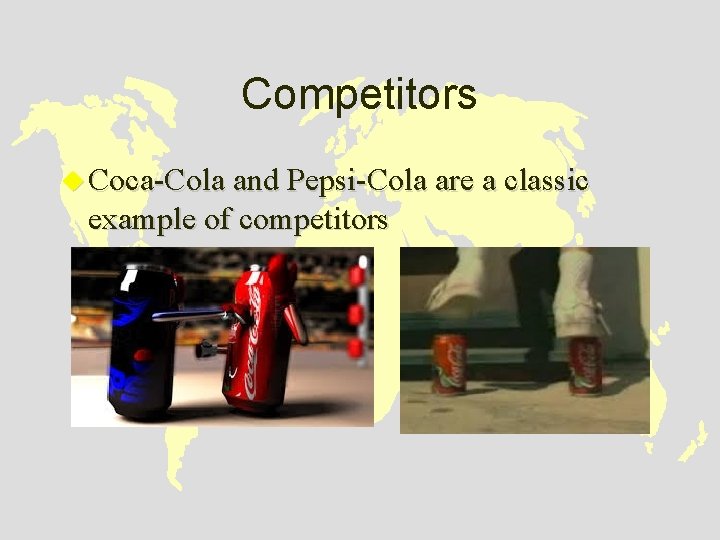
Competitors u Coca-Cola and Pepsi-Cola are a classic example of competitors
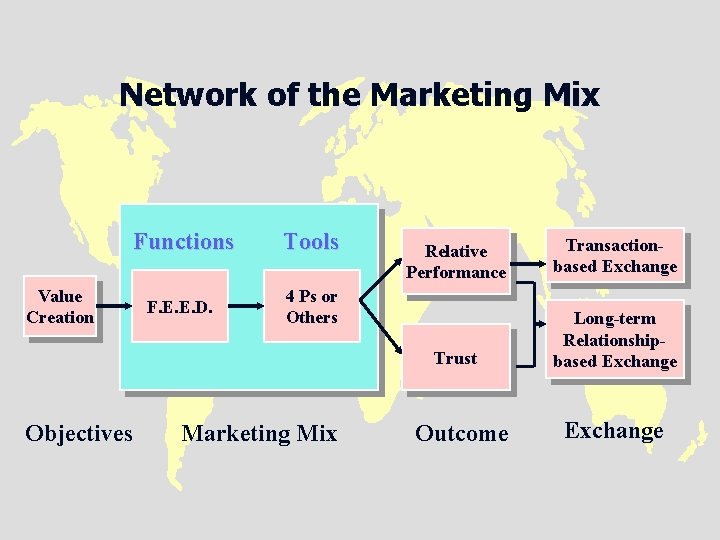
Network of the Marketing Mix Value Creation Objectives Functions Tools F. E. E. D. 4 Ps or Others Marketing Mix Relative Performance Transactionbased Exchange Trust Long-term Relationshipbased Exchange Outcome Exchange
FEED Values to Customers u Fulfilling Benefit Requirements u Establishing “Total” Acceptable Transaction Costs u Engaging in Product-Inherent Value Message Communication u Delivering Process-Inherent Transaction Facilitators
Value Creation and Delivery u Choose the Value u Provide the Value u Communicate the Value
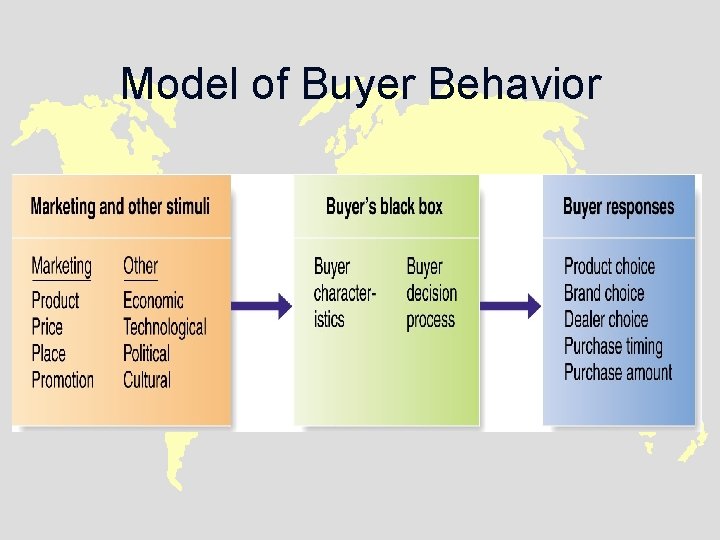
Consumer Buying Behavior u Refers to the buying behavior of people who buy goods and services for personal use. u These people make up the consumer market. u The central question for marketers is: – “How do consumers respond to various marketing efforts the company might use? ”
Model of Buyer Behavior
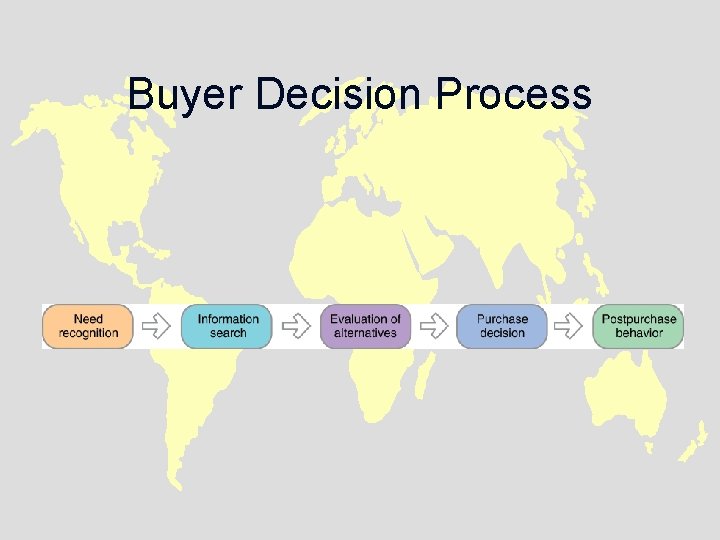
Buyer Decision Process
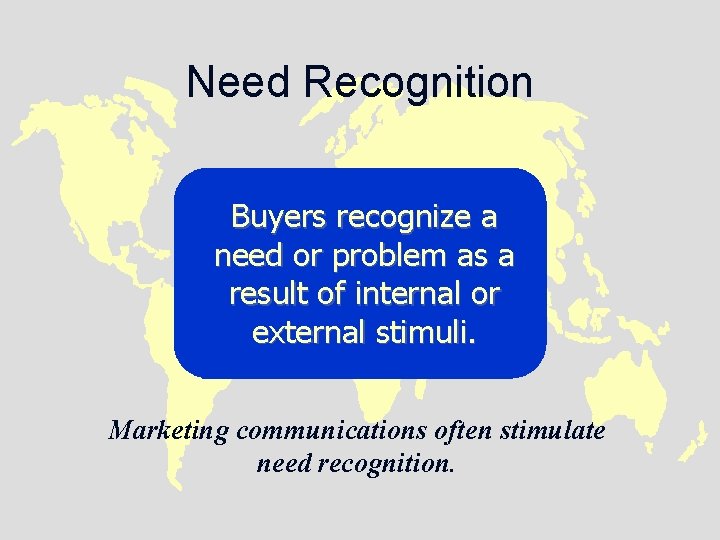
Need Recognition Buyers recognize a need or problem as a result of internal or external stimuli. Marketing communications often stimulate need recognition.
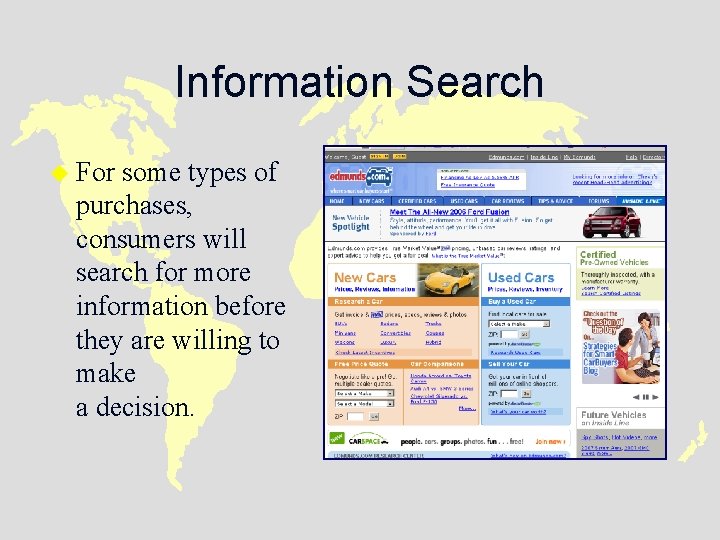
Information Search u For some types of purchases, consumers will search for more information before they are willing to make a decision.
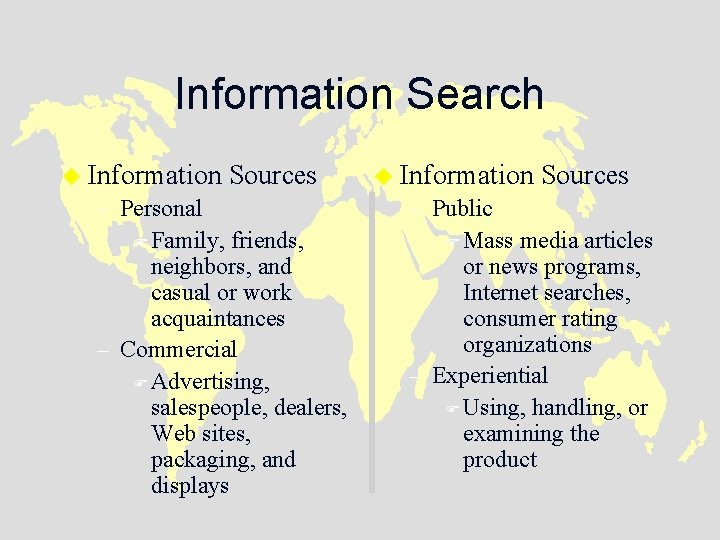
Information Search u Information Sources – Personal F Family, friends, neighbors, and casual or work acquaintances – Commercial F Advertising, salespeople, dealers, Web sites, packaging, and displays u Information Sources – Public F Mass media articles or news programs, Internet searches, consumer rating organizations – Experiential F Using, handling, or examining the product
Evaluation of Alternatives u Some decisions involve a careful, logical, and systematic evaluation by the consumer. u Other decisions – such as impulse buys – are made with virtually no thought at all. u Friends, consumers guides, or salespeople may or may not influence the decision. u Marketers must study how targeted consumers make evaluations, so they will be in a better position to influence evaluations.
Cognitive Dissonance u Cognitive Dissonance: after making a purchase, buyers often doubt whether they made the right decision. u Marketers can minimize dissonance by: – Reassuring consumers they made the right choice and minimizing the potential for product misuse (product literature and instructions). – Offering mechanisms for lodging complaints (1 -800 phone numbers, Web forms, etc. ). – Being responsive to problems and questions.
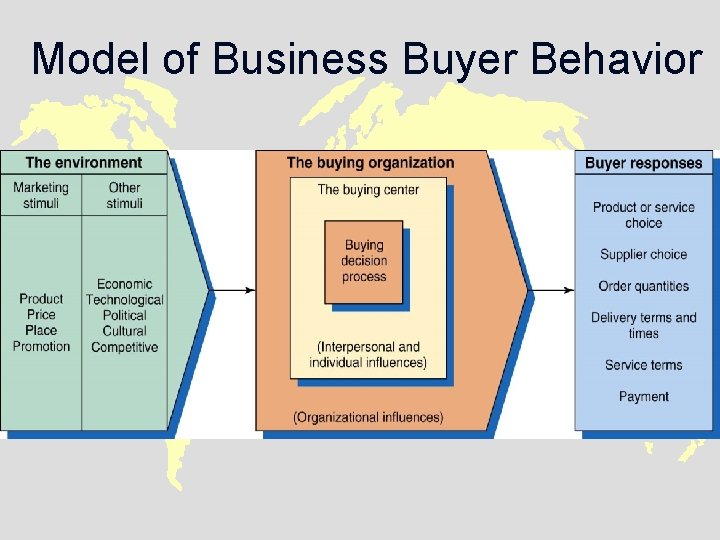
Model of Business Buyer Behavior
Business Markets & Business Buyer Behavior u The business market is vast and involves far more dollars and items than do consumer markets. u Business buyer behavior refers to the buying behavior of the organizations that buy goods and services for use in the production of other products and services that are sold, rented, or supplied to others.
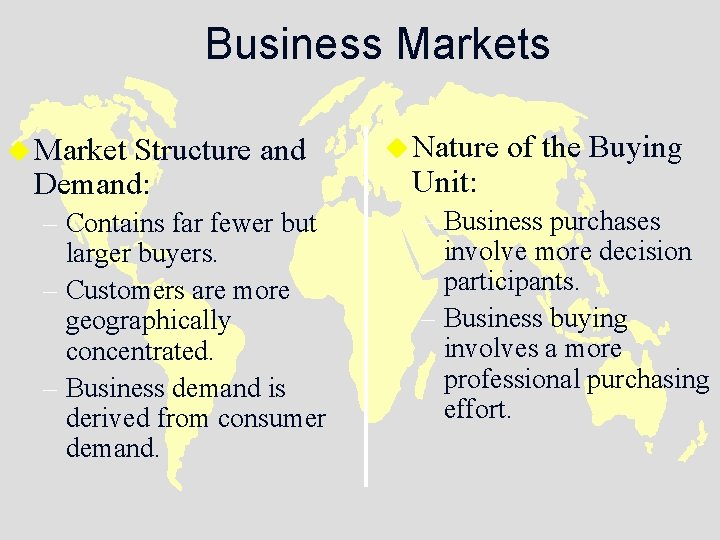
Business Markets u Market Structure and Demand: – Contains far fewer but larger buyers. – Customers are more geographically concentrated. – Business demand is derived from consumer demand. u Nature Unit: of the Buying – Business purchases involve more decision participants. – Business buying involves a more professional purchasing effort.
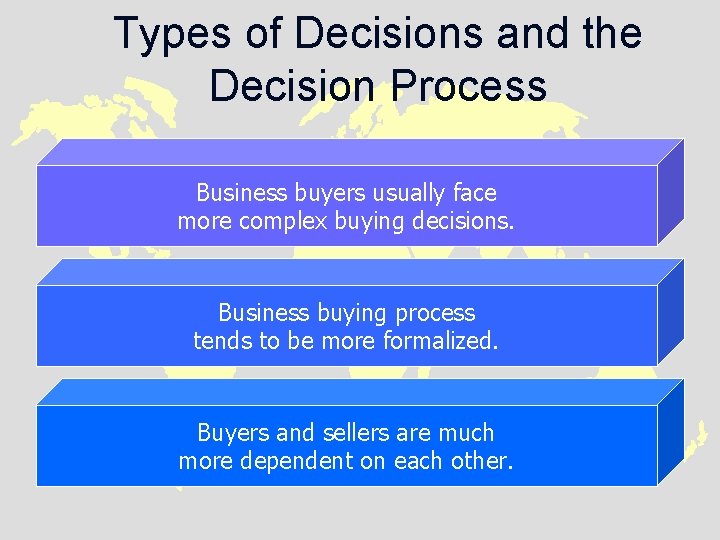
Types of Decisions and the Decision Process Business buyers usually face more complex buying decisions. Business buying process tends to be more formalized. Buyers and sellers are much more dependent on each other.
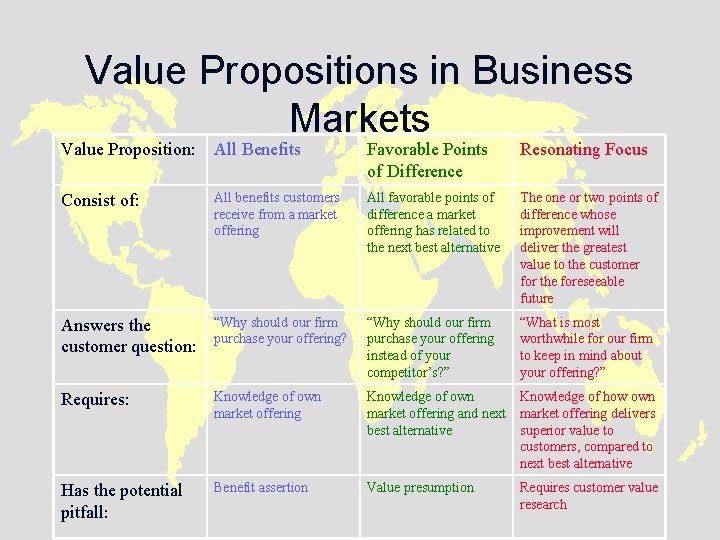
Value Propositions in Business Markets Value Proposition: All Benefits Favorable Points of Difference Resonating Focus Consist of: All benefits customers receive from a market offering All favorable points of difference a market offering has related to the next best alternative The one or two points of difference whose improvement will deliver the greatest value to the customer for the foreseeable future Answers the customer question: “Why should our firm purchase your offering? “Why should our firm purchase your offering instead of your competitor’s? ” “What is most worthwhile for our firm to keep in mind about your offering? ” Requires: Knowledge of own market offering and next best alternative Knowledge of how own market offering delivers superior value to customers, compared to next best alternative Has the potential pitfall: Benefit assertion Value presumption Requires customer value research