
Customer Due DiligenceCDD Know Your CustomerKYC 1 Concept
- Slides: 12
Customer Due Diligence(CDD) & Know Your Customer(KYC)
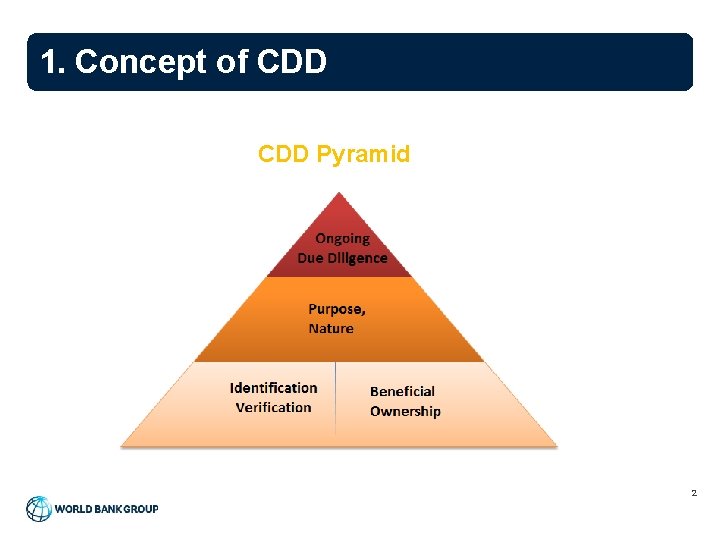
1. Concept of CDD Pyramid 2
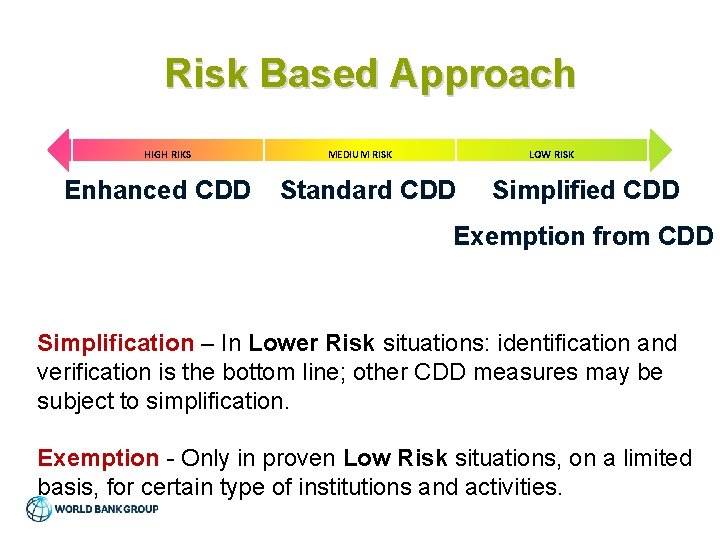
Risk Based Approach HIGH RIKS Enhanced CDD MEDIUM RISK LOW RISK Standard CDD Simplified CDD Exemption from CDD Simplification – In Lower Risk situations: identification and verification is the bottom line; other CDD measures may be subject to simplification. Exemption - Only in proven Low Risk situations, on a limited basis, for certain type of institutions and activities.
2. Recommendation 10 - CDD Anonymity prohibited Customer due diligence (CDD), including identifying and verifying the identity of customers, when: • Establishing business relations, • Carrying out occasional transactions (thresholds/wire transfers), • There is a suspicion of ML/FT, • The FI has doubts about the veracity or adequacy of previously obtained customer identification data. 4
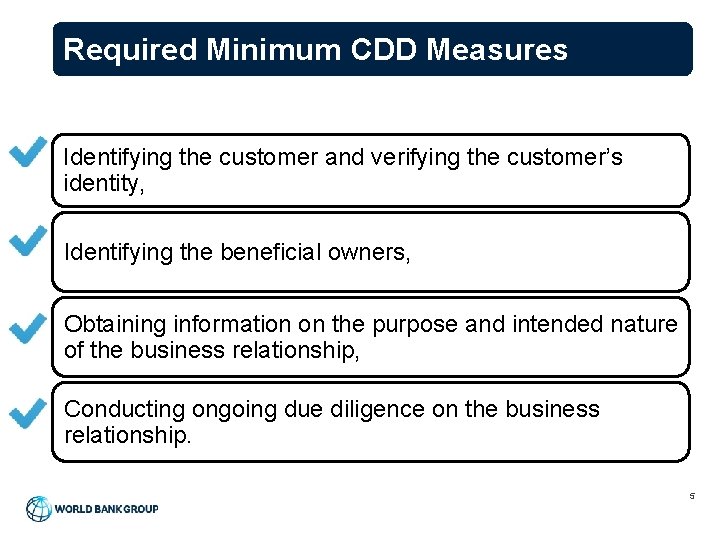
Required Minimum CDD Measures Identifying the customer and verifying the customer’s identity, Identifying the beneficial owners, Obtaining information on the purpose and intended nature of the business relationship, Conducting ongoing due diligence on the business relationship. 5
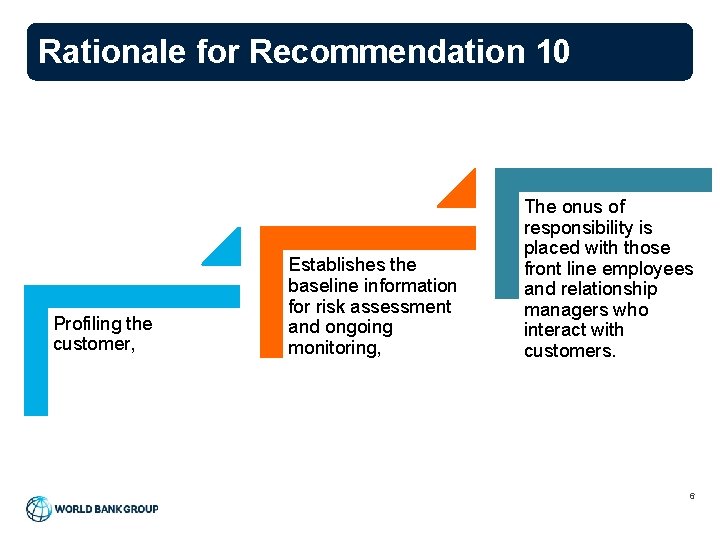
Rationale for Recommendation 10 Profiling the customer, Establishes the baseline information for risk assessment and ongoing monitoring, The onus of responsibility is placed with those front line employees and relationship managers who interact with customers. 6
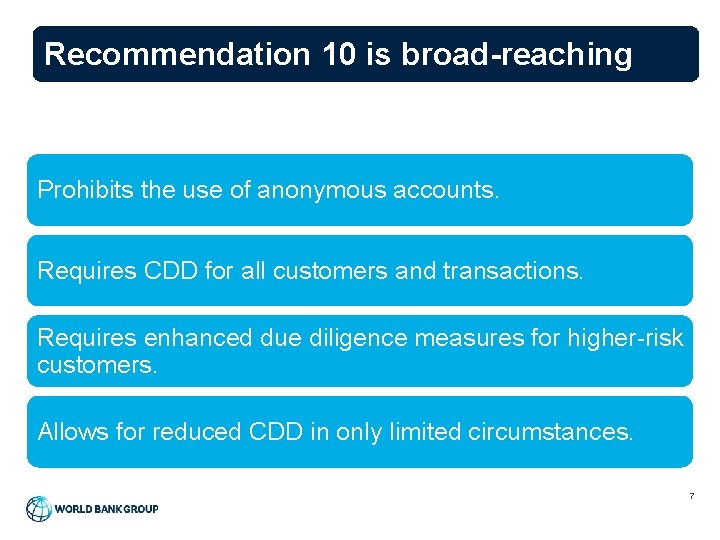
Recommendation 10 is broad-reaching Prohibits the use of anonymous accounts. Requires CDD for all customers and transactions. Requires enhanced due diligence measures for higher-risk customers. Allows for reduced CDD in only limited circumstances. 7
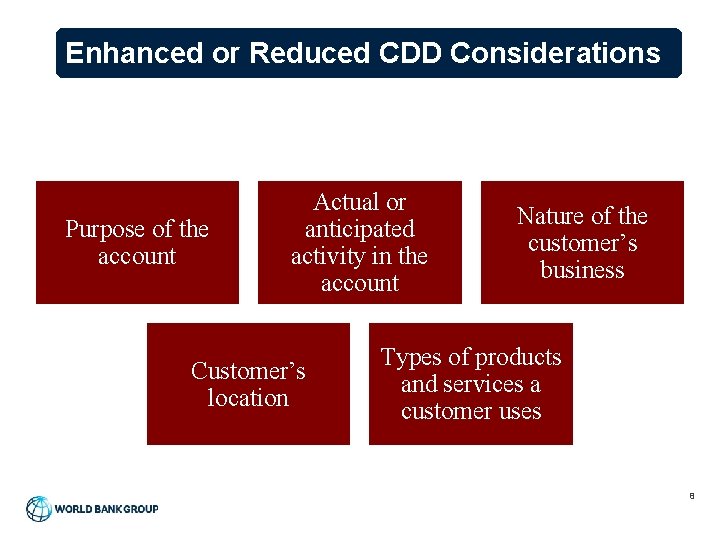
Enhanced or Reduced CDD Considerations Purpose of the account Actual or anticipated activity in the account Customer’s location Nature of the customer’s business Types of products and services a customer uses 8
CDD and Tipping off FATF Rec 21 “tipping off” is prohibited. But… if financial institution reasonably believes that performing the CDD process will tip off the customer or potential customer, it may choose not to pursue the CDD process and should file an STR to FIU. 9
On-going Monitoring of Accounts/ Transaction and Know Your Customer 1. Monitoring and Screening of Customers Ø Ongoing monitoring is an essential aspect of effective KYC procedures. 2. Intensified Monitoring for Higher Risk Accounts Ø Senior management knowledge on clients Ø policy and guidelines 3. Adopting Risk Based Approach Ø Geographical Factors Ø Customer Types Ø Product Type 10
Consolidated KYC Risk Management • The board of directors should be fully committed to an effective KYC program by establishing appropriate procedures and ensuring their effectiveness Ø A clear institution’s KYC policy in accordance with local supervisory practice Ø Allocation of relevant responsibilities Ø The channels for reporting suspicious transactions Ø Internal procedures for assessing the compliance Ø Ongoing employee-training program 11
Q&A