
Customer Buying Behavior Consumer Buying Behavior Business to
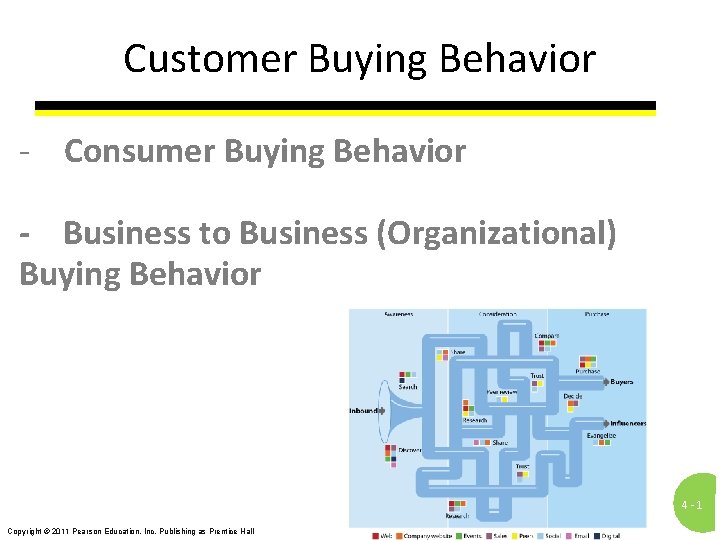
Customer Buying Behavior - Consumer Buying Behavior - Business to Business (Organizational) Buying Behavior 4 -1 Copyright © 2011 Pearson Education, Inc. Publishing as Prentice Hall
Chapter Outline • • • Interaction between buyer behaviour and sales process Consumer Markets and Consumer Buyer Behavior Model of Consumer Behavior Characteristics Affecting Consumer Behavior The Buyer Decision Process for New Products Business Markets and Business Buyer Behavior Business Markets Business Buyer Behavior The Business Buying Process E-Procurement 5 - 2 Copyright © 2011 Pearson Education, Inc. Publishing as Prentice Hall
Consumer Buying Behavior Copyright © 2011 Pearson Education, Inc. publishing as Prentice Hall 3

Understanding customers is vital for sales process • Understanding buyer behaviour is the key for a successful sales process • Major questions: – Who are they? – How do they buy? – What do they buy? – Where do they buy? – How much do they buy? 5 - 4 Copyright © 2011 Pearson Education, Inc. Publishing as Prentice Hall
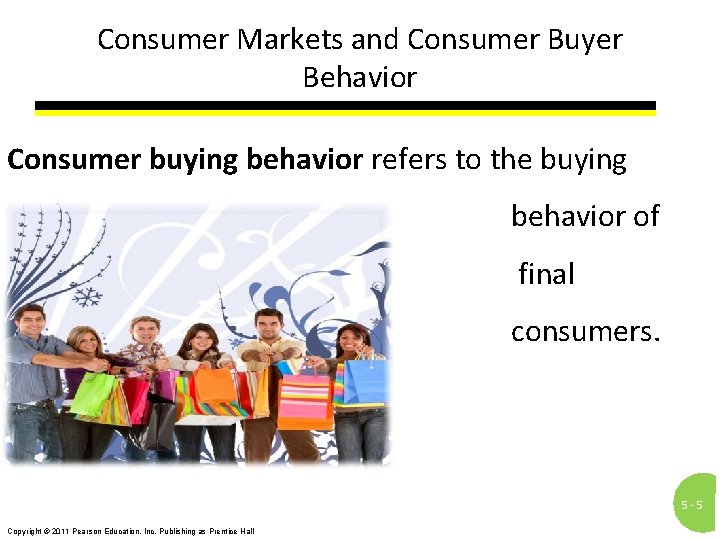
Consumer Markets and Consumer Buyer Behavior Consumer buying behavior refers to the buying behavior of final consumers. 5 -5 Copyright © 2011 Pearson Education, Inc. Publishing as Prentice Hall
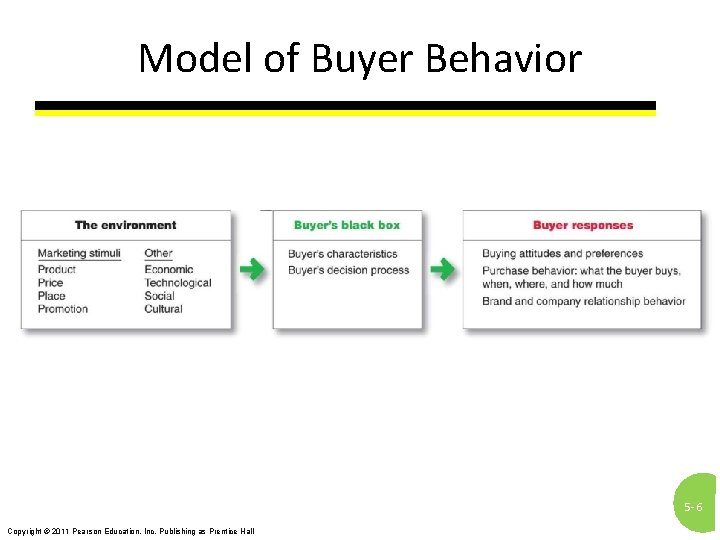
Model of Buyer Behavior 5 - 6 Copyright © 2011 Pearson Education, Inc. Publishing as Prentice Hall
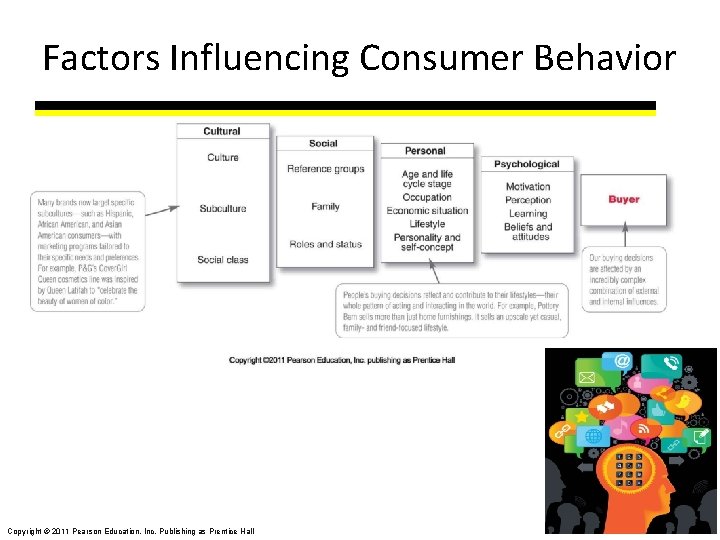
Factors Influencing Consumer Behavior 5 - 7 Copyright © 2011 Pearson Education, Inc. Publishing as Prentice Hall
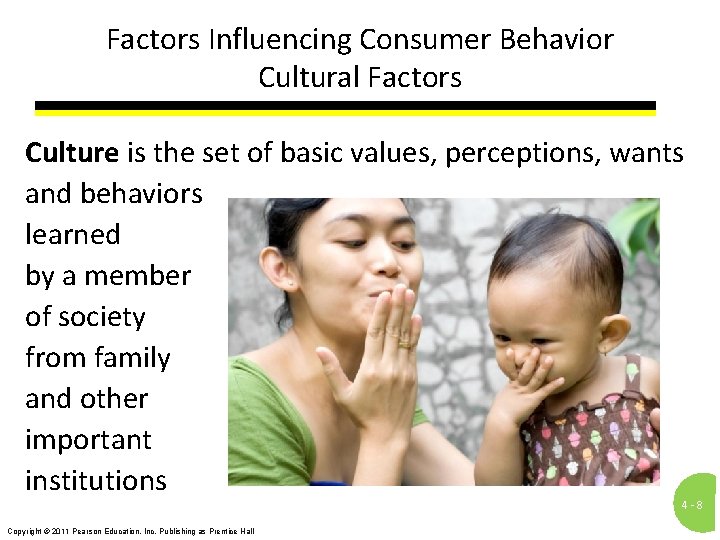
Factors Influencing Consumer Behavior Cultural Factors Culture is the set of basic values, perceptions, wants and behaviors learned by a member of society from family and other important institutions 4 -8 Copyright © 2011 Pearson Education, Inc. Publishing as Prentice Hall
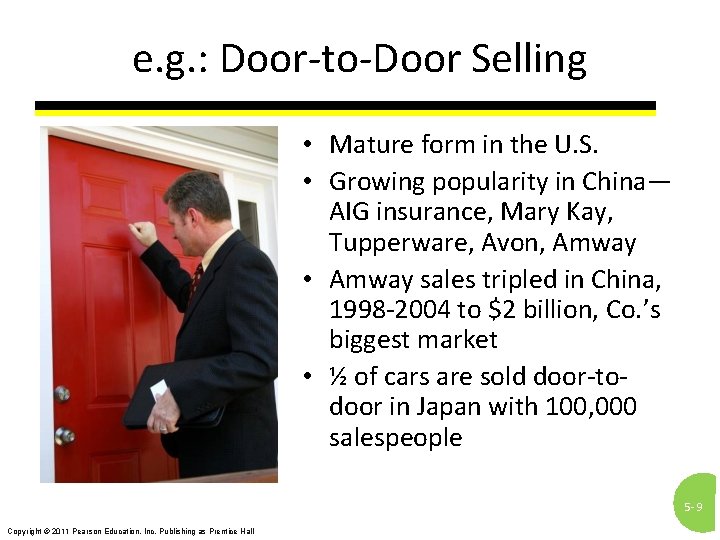
e. g. : Door-to-Door Selling • Mature form in the U. S. • Growing popularity in China— AIG insurance, Mary Kay, Tupperware, Avon, Amway • Amway sales tripled in China, 1998 -2004 to $2 billion, Co. ’s biggest market • ½ of cars are sold door-todoor in Japan with 100, 000 salespeople 5 - 9 Copyright © 2011 Pearson Education, Inc. Publishing as Prentice Hall
Discussion Question How has your culture influenced you as a consumer? including your religion, racial group, and geographic region? 5 - 10 Copyright © 2011 Pearson Education, Inc. Publishing as Prentice Hall
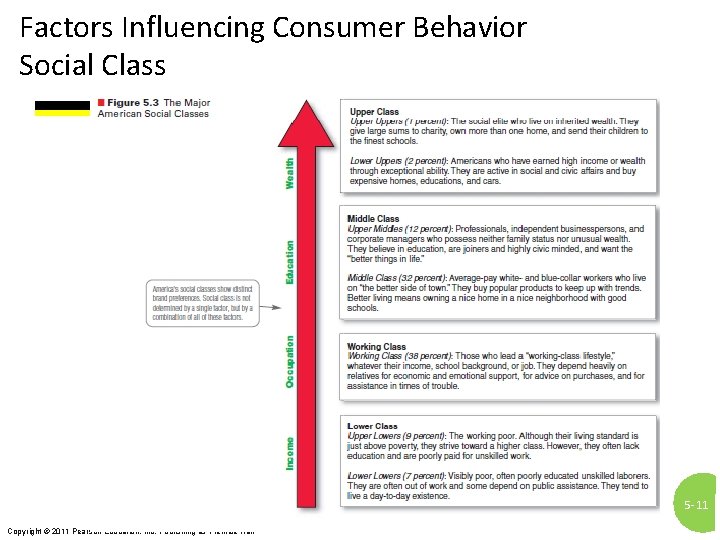
Factors Influencing Consumer Behavior Social Class 5 - 11 Copyright © 2011 Pearson Education, Inc. Publishing as Prentice Hall
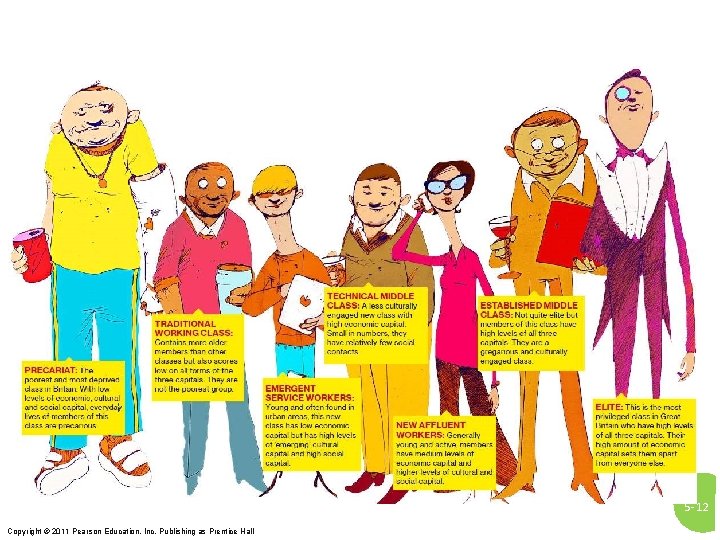
5 - 12 Copyright © 2011 Pearson Education, Inc. Publishing as Prentice Hall
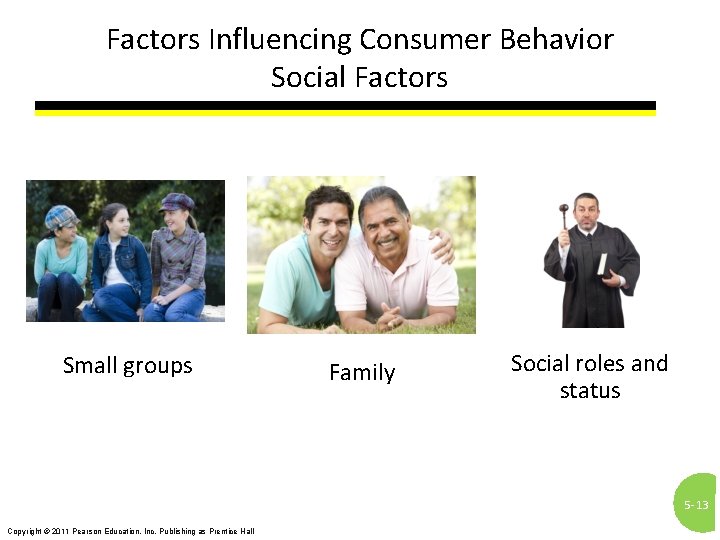
Factors Influencing Consumer Behavior Social Factors Small groups Family Social roles and status 5 - 13 Copyright © 2011 Pearson Education, Inc. Publishing as Prentice Hall
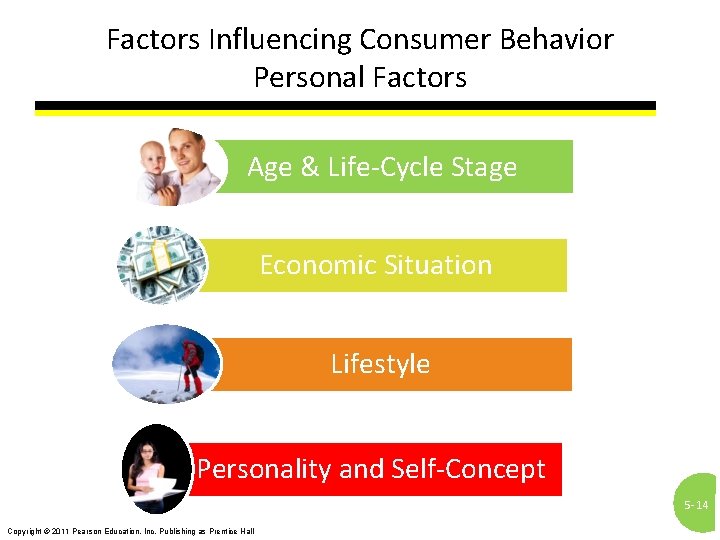
Factors Influencing Consumer Behavior Personal Factors Age & Life-Cycle Stage Economic Situation Lifestyle Personality and Self-Concept 5 - 14 Copyright © 2011 Pearson Education, Inc. Publishing as Prentice Hall

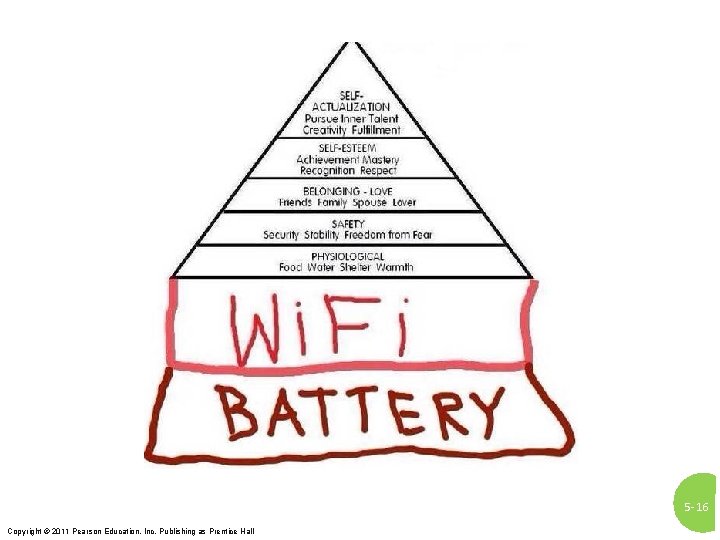
Factors Influencing Consumer Behavior Psychological Factors - Motivation A motive (or drive) is a need that is sufficiently pressing to direct the person to seek satisfaction of the need Copyright © 2011 Pearson Education, Inc. Publishing as Prentice Hall 4 - 15
5 - 16 Copyright © 2011 Pearson Education, Inc. Publishing as Prentice Hall
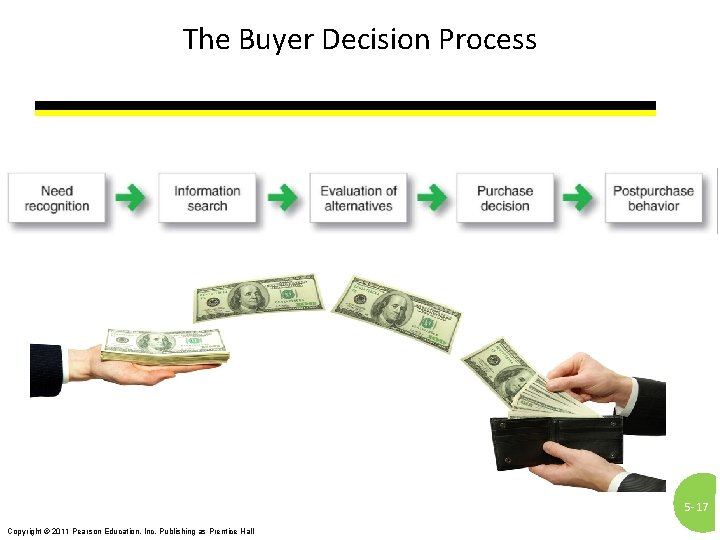
The Buyer Decision Process 5 - 17 Copyright © 2011 Pearson Education, Inc. Publishing as Prentice Hall
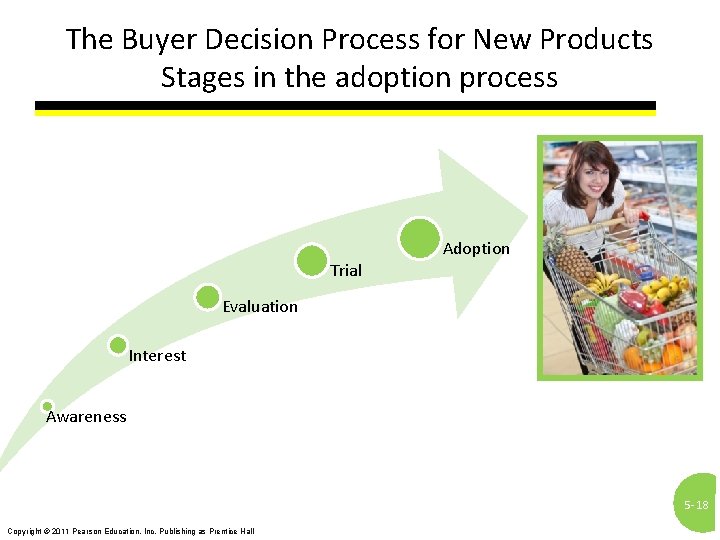
The Buyer Decision Process for New Products Stages in the adoption process Adoption Trial Evaluation Interest Awareness 5 - 18 Copyright © 2011 Pearson Education, Inc. Publishing as Prentice Hall
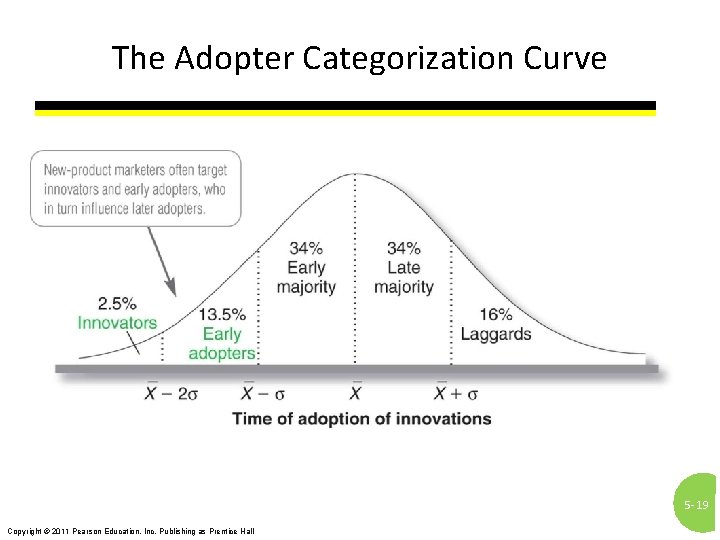
The Adopter Categorization Curve 5 - 19 Copyright © 2011 Pearson Education, Inc. Publishing as Prentice Hall
Organizational Buying and Buying Behavior Copyright © 2011 Pearson Education, Inc. publishing as Prentice Hall 20
B 2 B Transactions • A machinery company sells machine to a chemical company • A chemical company sells chemical raw materials to a food company • A petrolium company sells raw petrolium materails to a plastic company • A microchip company sells microchips to a computer manufacturer company • A packaging company sells packages to a laundry detergent producer 1 -21 Copyright © 2011 Pearson Education, Inc. Publishing as Prentice Hall Copyright © 2011 Pearson Education, Inc. , publishing as Prentice Hall 5 - 21
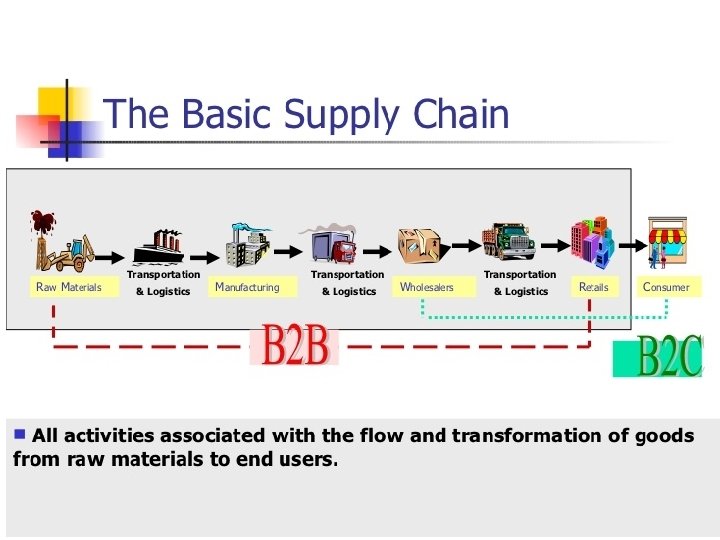
1 -22 Copyright © 2011 Pearson Education, Inc. Publishing as Prentice Hall Copyright © 2011 Pearson Education, Inc. , publishing as Prentice Hall 5 - 22
B 2 B Services • A logistics company sells logistics services to a construction company • An advertising agency creates advertising campaign for a food company • A consultancy company provides management consultancy for an energy company • A hotel chain makes an agreement with a textile company for their sales-persons business trips 1 -23 Copyright © 2011 Pearson Education, Inc. Publishing as Prentice Hall Copyright © 2011 Pearson Education, Inc. , publishing as Prentice Hall 5 - 23

Business Buyer Behavior Model 5 - 24 Copyright © 2011 Pearson Education, Inc. Publishing as Prentice Hall
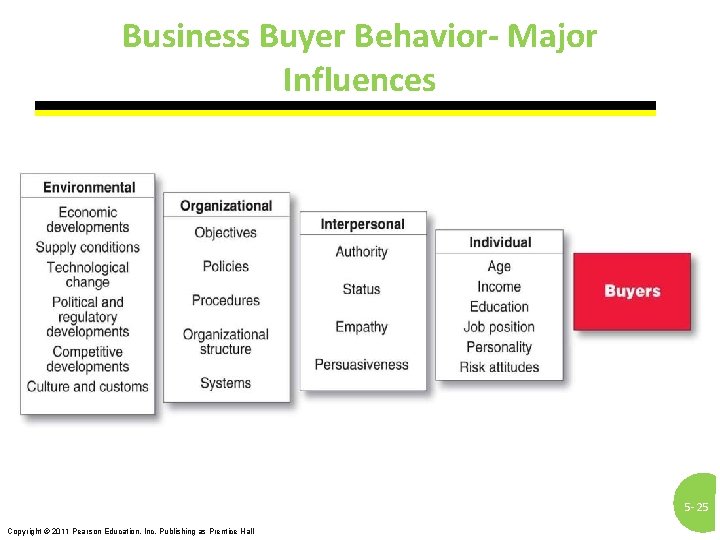
Business Buyer Behavior- Major Influences 5 - 25 Copyright © 2011 Pearson Education, Inc. Publishing as Prentice Hall
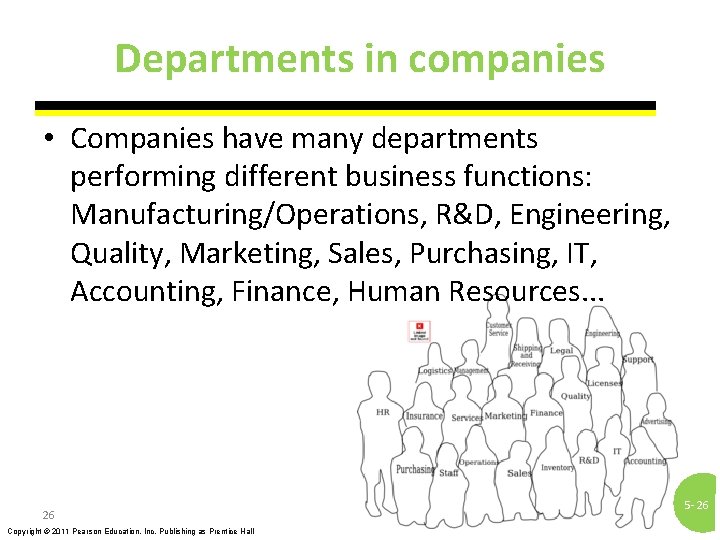
Departments in companies • Companies have many departments performing different business functions: Manufacturing/Operations, R&D, Engineering, Quality, Marketing, Sales, Purchasing, IT, Accounting, Finance, Human Resources. . . 26 Copyright © 2011 Pearson Education, Inc. Publishing as Prentice Hall 5 - 26

Buying Center • Decision making unit of buying situation • Several people involved from several departments 27 Copyright © 2011 Pearson Education, Inc. Publishing as Prentice Hall 5 - 27
Which departments will be involved? • A special, expensive computer software buying situation of company? • An expensive machinery buying for manufacturing process? • A human resources consultancy service • Car rental service of 200 cars for sales persons use • Buying of 10 Printers to be used in the offices of the company 28 Copyright © 2011 Pearson Education, Inc. Publishing as Prentice Hall 5 - 28

Roles in the Buying Center • • • Initiator (suggester) End User Infleuncer Gatekeeper Decision Maker Buyer 29 Copyright © 2011 Pearson Education, Inc. Publishing as Prentice Hall 5 - 29

Consumer Decision Process Need Recognition Information Search Evaluation of Alternatives Purchase Decision Post Purchase Behavior 30 Copyright © 2011 Pearson Education, Inc. Publishing as Prentice Hall 5 - 30

B 2 B Buying Decision Process 1. Problem recognition 2. General need description 3. Product Specification 4. Supplier/Source search 5. Proposal solicitation 6. Selection 7. Make the transaction routine 8. Evaluate performance 31 Copyright © 2011 Pearson Education, Inc. Publishing as Prentice Hall 5 - 31
Buying Decision Process: Definition Stage The first attempt at describing a solution Buying center participants assess problem and need to determine what is necessary to resolve/satisfy it The complexity of the solution and the number of organizational units to be involved (size of the buying center) is determined Successful suppliers are involved, often in the development of the Product Specification 32 Copyright © 2011 Pearson Education, Inc. Publishing as Prentice Hall 5 - 32
Buying Decision Process: Supplier Search Look in company files and trade directories, contact suppliers for information, solicit proposals from known sellers, examine websites, catalogs, and trade publications Conduct a value analysis - an evaluation of each component of a potential purchase; examine quality, design, materials, item reduction/deletion to save costs, etc. Conduct seller analysis - a formal and systematic evaluation of current and potential suppliers; focuses on price, quality, delivery service, availability and overall reliability 33 Copyright © 2011 Pearson Education, Inc. Publishing as Prentice Hall 5 - 33
Buying Decision Process: Supplier Selection An organization can decide to use several suppliers, called multiple sourcing. Multiple sourcing reduces the possibility of a shortage by strike, bankruptcy and other supplier related sourcing problems. An organization can decide to use one supplier, called sole sourcing. This is often discouraged unless only one supplier exists for the product; however it is fairly common because of the improved communication and stability between buyer and supplier. 34 Copyright © 2011 Pearson Education, Inc. Publishing as Prentice Hall 5 - 34
Buying Decision Process: Aggrement & routines After selecting a supplier, the buyer will negotiate the final order by listing The technical specifications, Agreed upon price, Quantities, Expected time of delivery, Return policies, Warranties and any other terms of negotiation. 35 Copyright © 2011 Pearson Education, Inc. Publishing as Prentice Hall 5 - 35
Buying Decision Process: Delivery Stage Meet the customer’s technical requirements Meet the customer’s delivery timing requirements Meet the customer’s special logistics and delivery requirements Meet the customer’s special service requirements Meet the agreement overall 36 Copyright © 2011 Pearson Education, Inc. Publishing as Prentice Hall 5 - 36
Buying Decision Process: Supplier Evaluation Stage Compare products with specs Compare services Compare the results with purchase agreement Evaluate overall buying process and supplier as a whole Evaluate the company’s buying process for this specific buying situation and make necessary modifications Results become feedback for other stages in future business purchasing decisions 37 Copyright © 2011 Pearson Education, Inc. Publishing as Prentice Hall 5 - 37

Buying Situations Three types of buying situations in B 2 B: 1. New Task 2. Modified Re-buy 3. Straight Re-buy 5 - 38 Copyright © 2011 Pearson Education, Inc. Publishing as Prentice Hall
Typical New Task Situation • A need not yet faced by Organization • New offering with new technology • Requires many sources of information and assistance • Utilizes complete buying process to investigate alternatives 39 Copyright © 2011 Pearson Education, Inc. Publishing as Prentice Hall 5 - 39
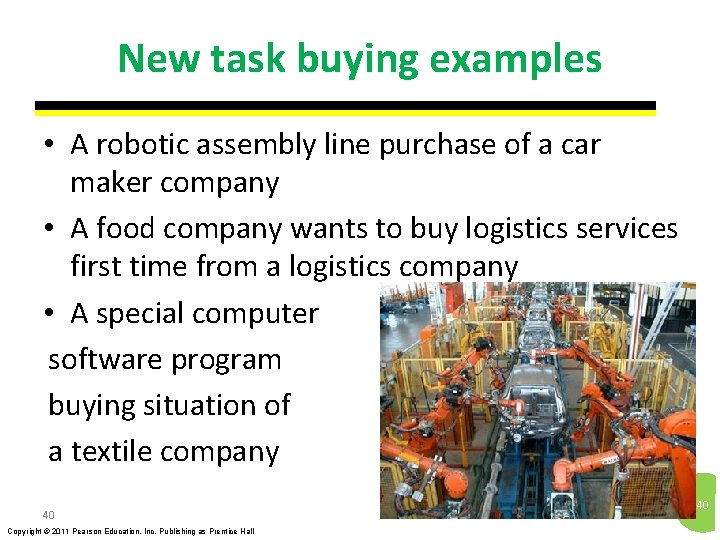
New task buying examples • A robotic assembly line purchase of a car maker company • A food company wants to buy logistics services first time from a logistics company • A special computer software program buying situation of a textile company 40 Copyright © 2011 Pearson Education, Inc. Publishing as Prentice Hall 5 - 40
Typical Re-Buy Situation • Modified Re-Buy – Situation from New-Task Situation – Limit exposure from competitive forces – e. g. Lap-top computers buying of Yasar University (or a company) • Straight Re-Buy – Buying situation that is routine – Established solutions – e. g. Paper buying of Yasar University (or a company) 41 Copyright © 2011 Pearson Education, Inc. Publishing as Prentice Hall 5 - 41
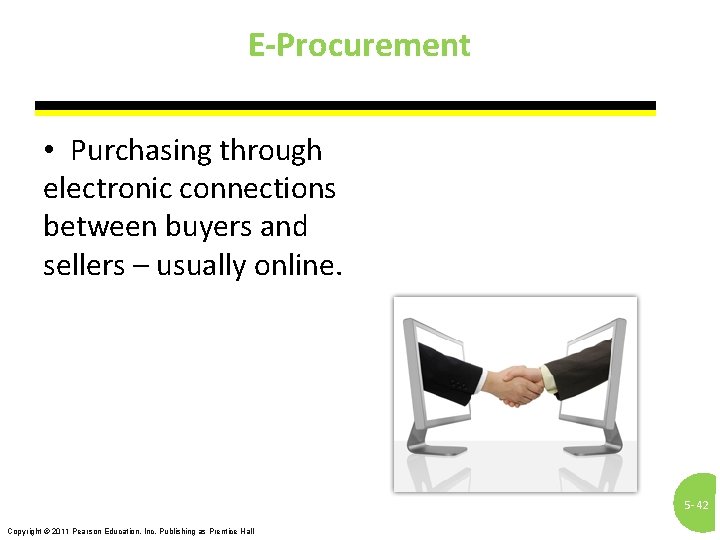
E-Procurement • Purchasing through electronic connections between buyers and sellers – usually online. 5 - 42 Copyright © 2011 Pearson Education, Inc. Publishing as Prentice Hall
All rights reserved. No part of this publication may be reproduced, stored in a retrieval system, or transmitted, in any form or by any means, electronic, mechanical, photocopying, recording, or otherwise, without the prior written permission. Copyright © 2009 Pearson Education, Inc. of the publisher. Printed in the United States of America. Copyright © 2009 Pearson Education, Inc. Publishing as Prentice Hall 1 -43 Copyright 2009 Pearson Education, Inc. Publishing as Prentice Hall Copyright © 2011 Pearson Education, Inc. Publishing as Prentice Hall 5 - 43
- Slides: 43