
Curves and Interpolation Dr Scott Schaefer 1 Smooth
- Slides: 61
Curves and Interpolation Dr. Scott Schaefer 1
Smooth Curves n How do we create smooth curves? 2
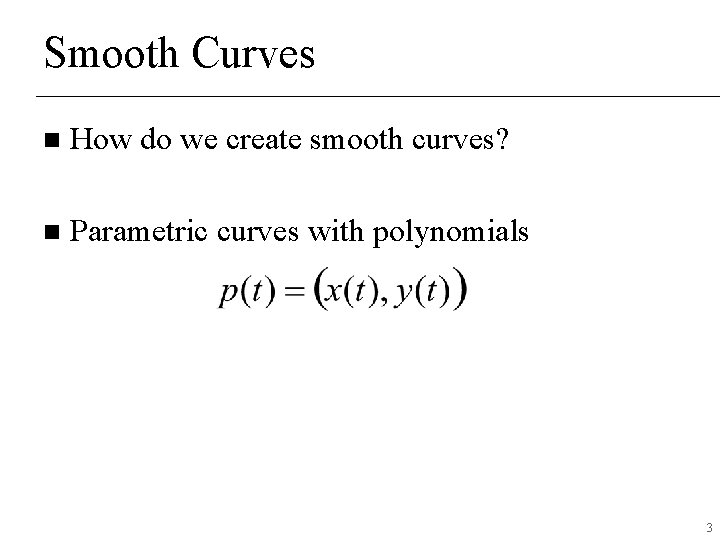
Smooth Curves n How do we create smooth curves? n Parametric curves with polynomials 3
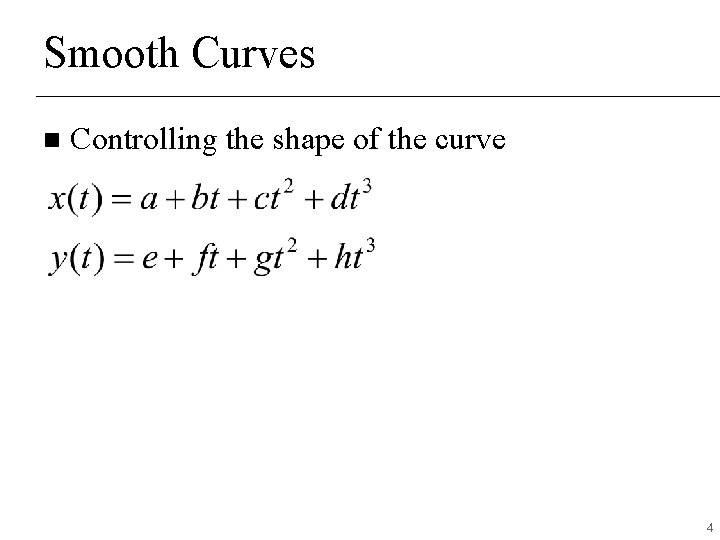
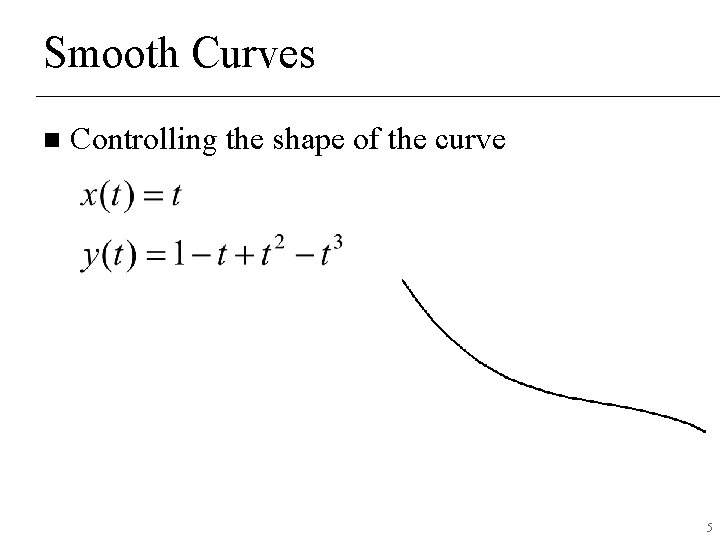
Smooth Curves n Controlling the shape of the curve 4
Smooth Curves n Controlling the shape of the curve 5
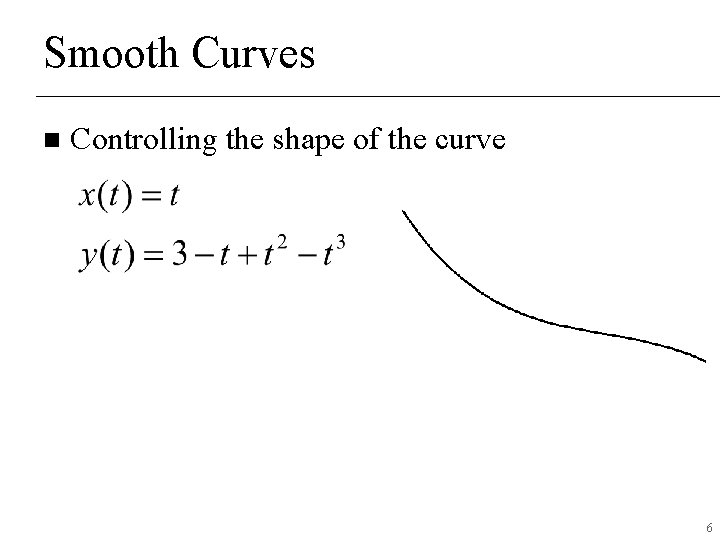
Smooth Curves n Controlling the shape of the curve 6
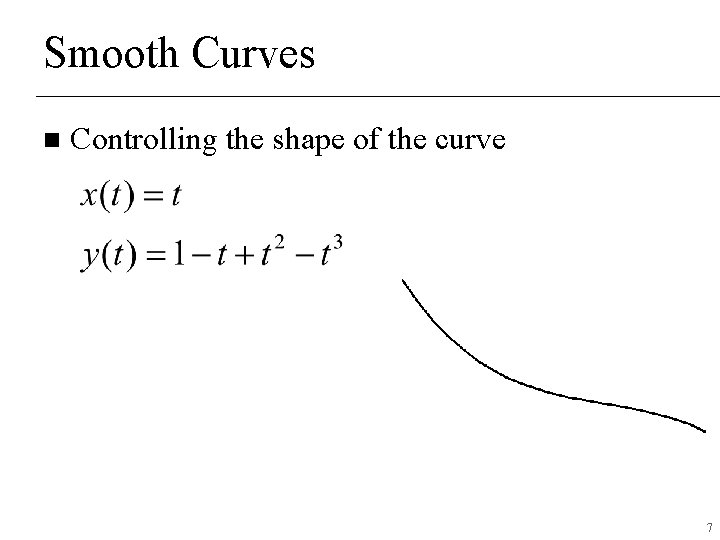
Smooth Curves n Controlling the shape of the curve 7
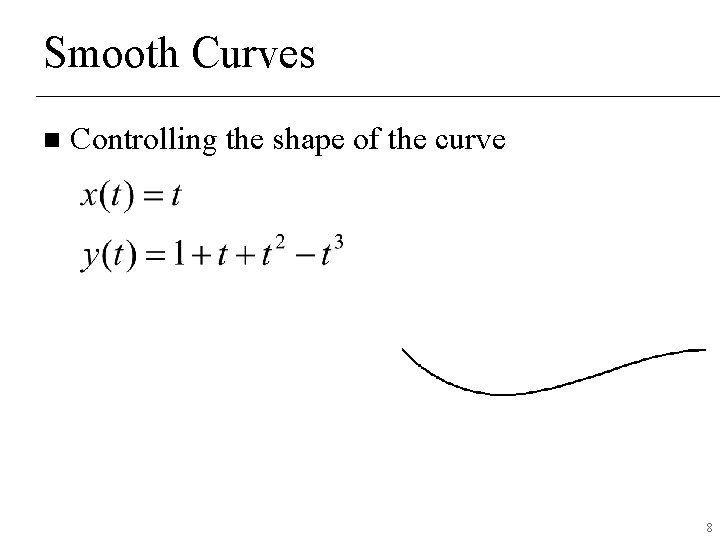
Smooth Curves n Controlling the shape of the curve 8
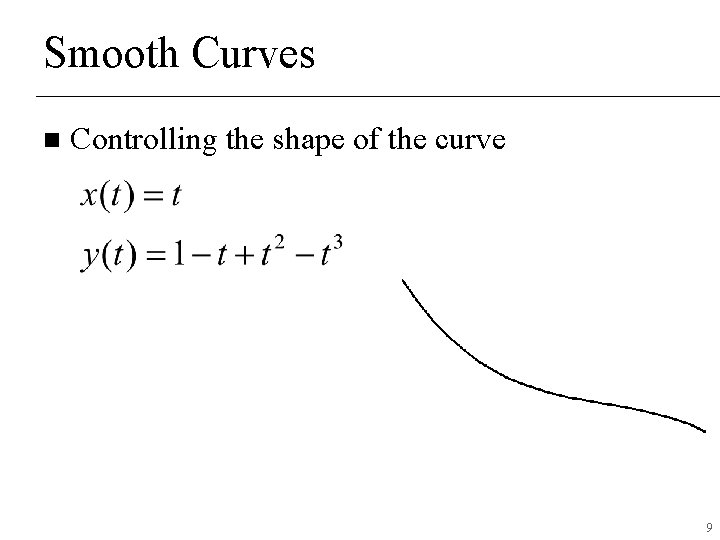
Smooth Curves n Controlling the shape of the curve 9
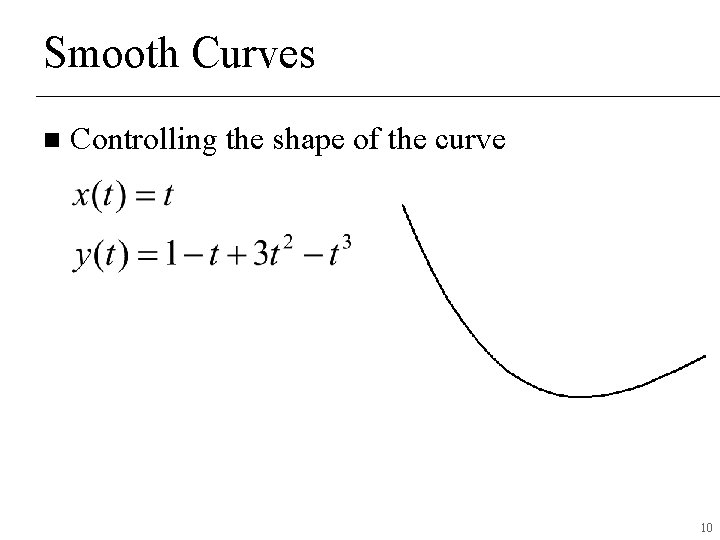
Smooth Curves n Controlling the shape of the curve 10
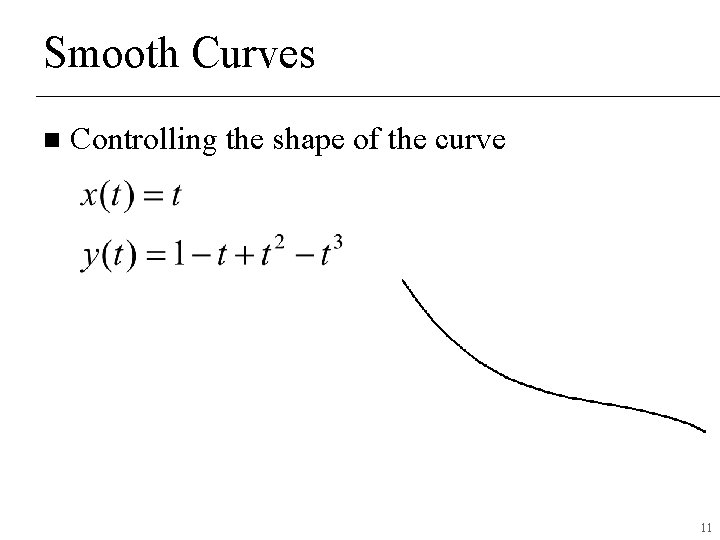
Smooth Curves n Controlling the shape of the curve 11
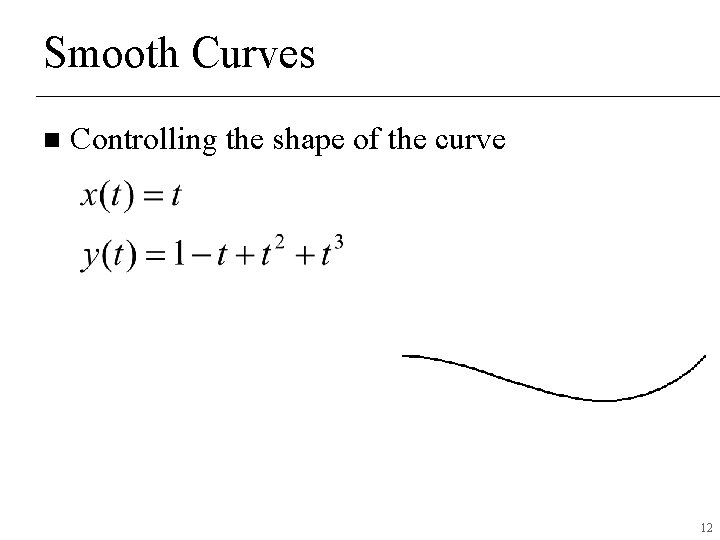
Smooth Curves n Controlling the shape of the curve 12
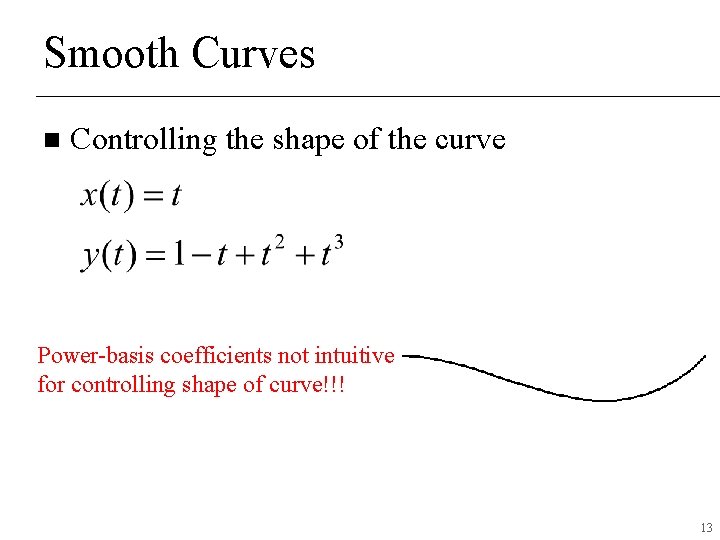
Smooth Curves n Controlling the shape of the curve Power-basis coefficients not intuitive for controlling shape of curve!!! 13
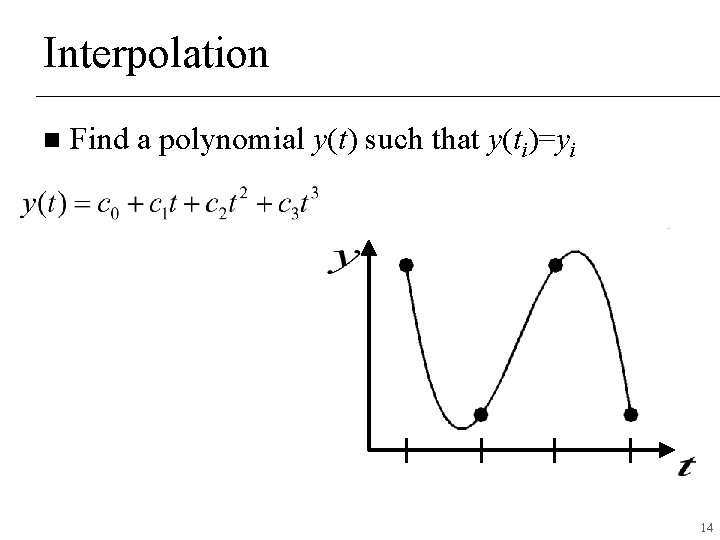
Interpolation n Find a polynomial y(t) such that y(ti)=yi 14
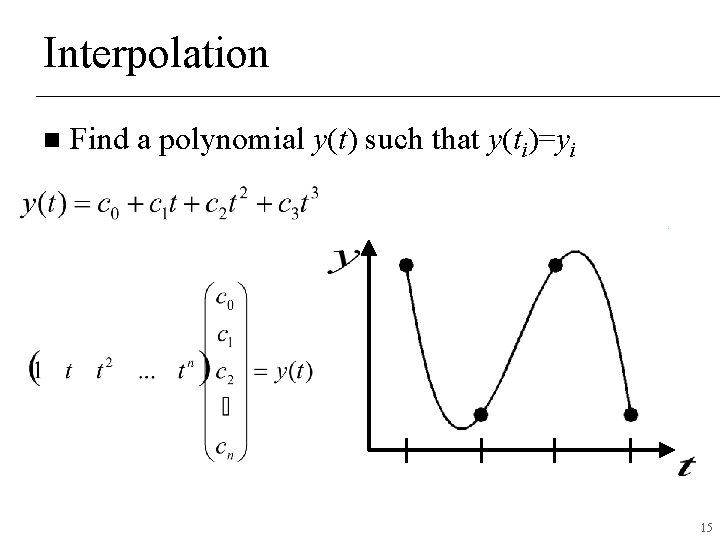
Interpolation n Find a polynomial y(t) such that y(ti)=yi 15
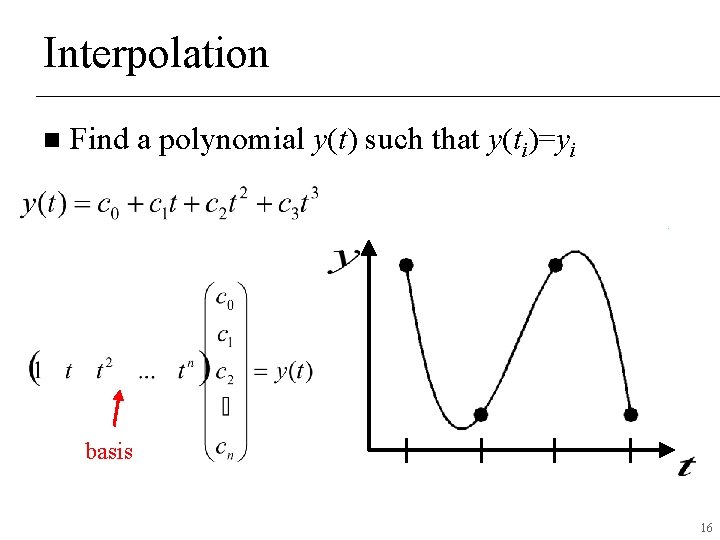
Interpolation n Find a polynomial y(t) such that y(ti)=yi basis 16
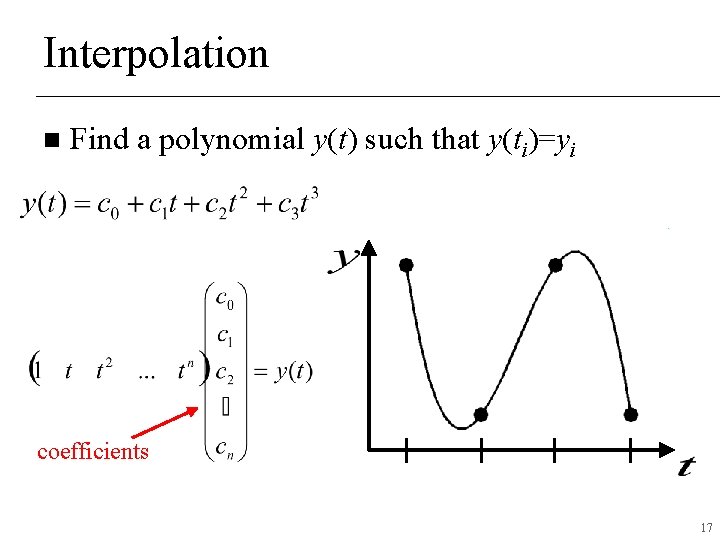
Interpolation n Find a polynomial y(t) such that y(ti)=yi coefficients 17
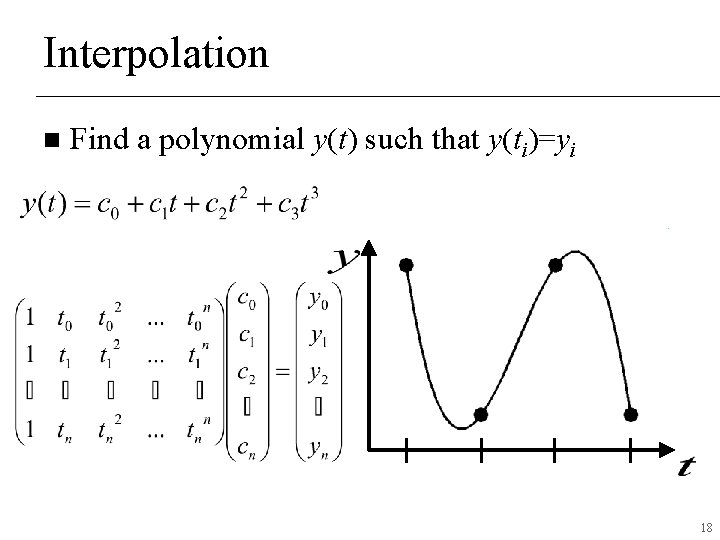
Interpolation n Find a polynomial y(t) such that y(ti)=yi 18
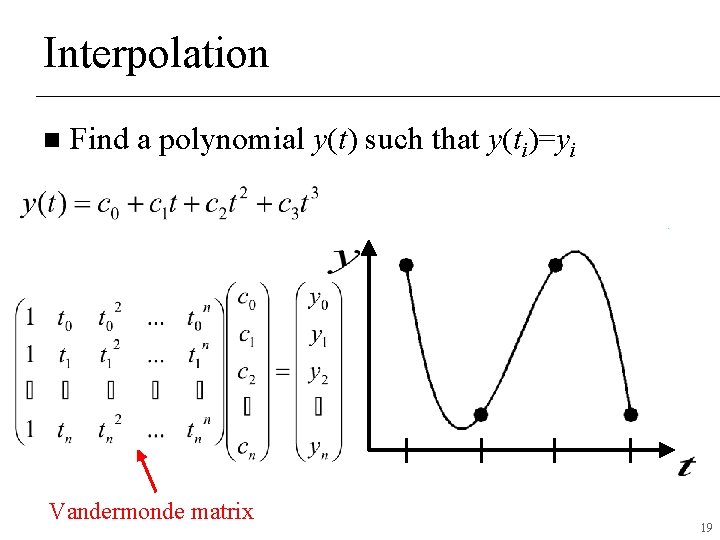
Interpolation n Find a polynomial y(t) such that y(ti)=yi Vandermonde matrix 19
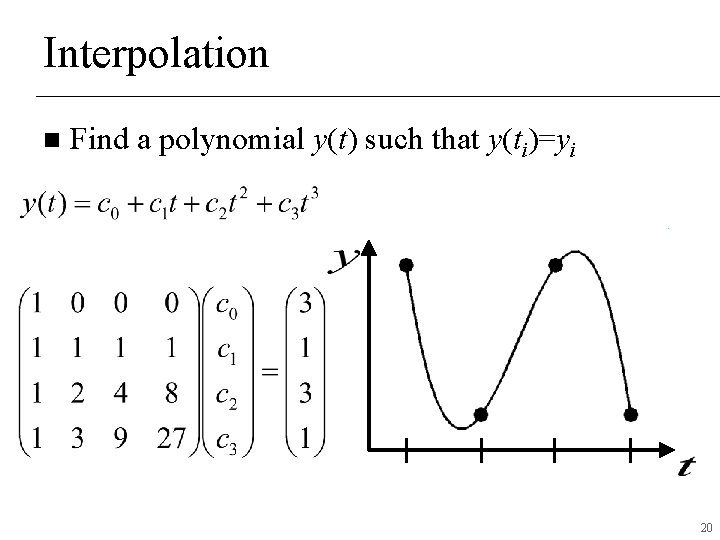
Interpolation n Find a polynomial y(t) such that y(ti)=yi 20
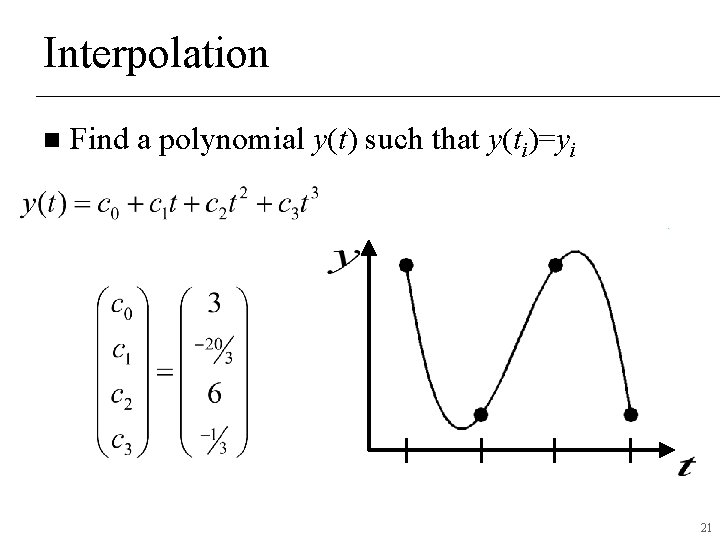
Interpolation n Find a polynomial y(t) such that y(ti)=yi 21
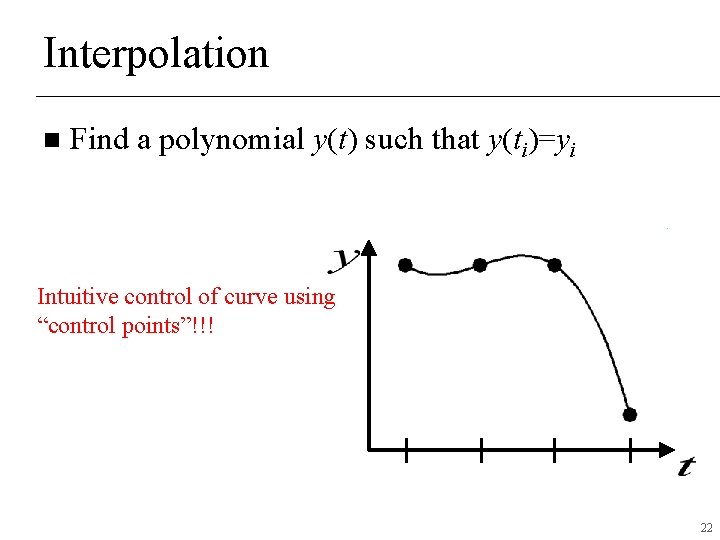
Interpolation n Find a polynomial y(t) such that y(ti)=yi Intuitive control of curve using “control points”!!! 22
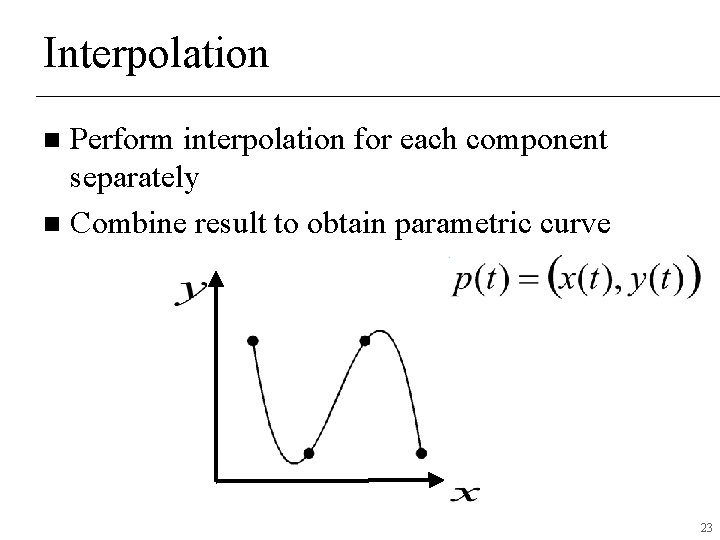
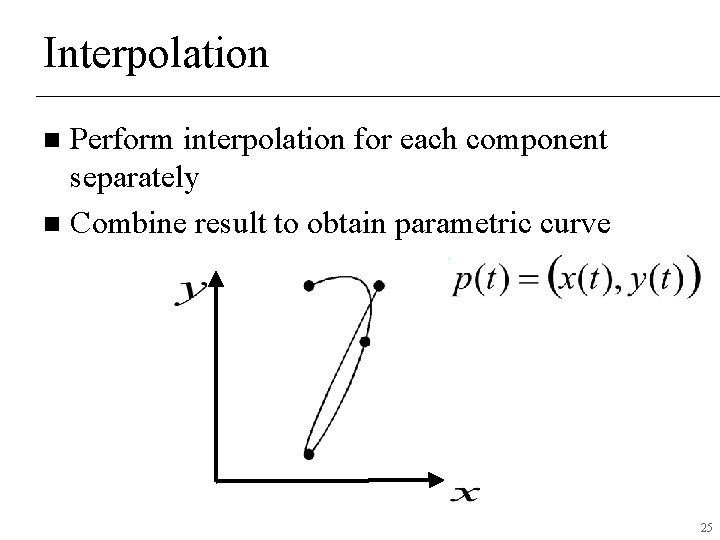
Interpolation Perform interpolation for each component separately n Combine result to obtain parametric curve n 23
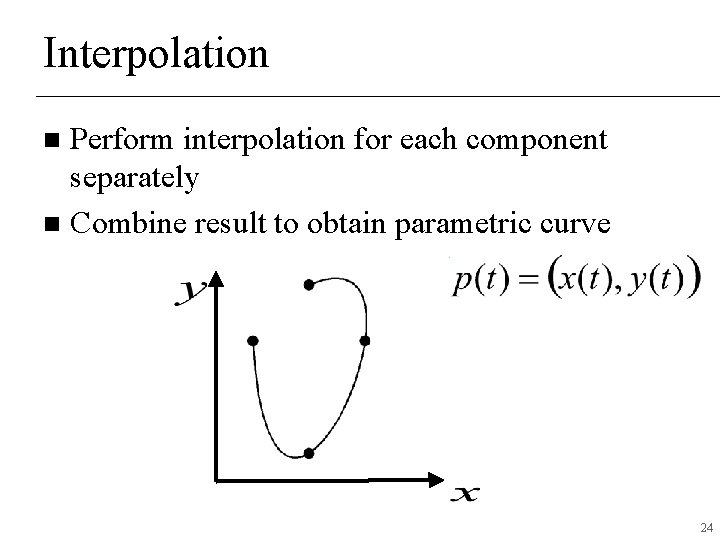
Interpolation Perform interpolation for each component separately n Combine result to obtain parametric curve n 24
Interpolation Perform interpolation for each component separately n Combine result to obtain parametric curve n 25
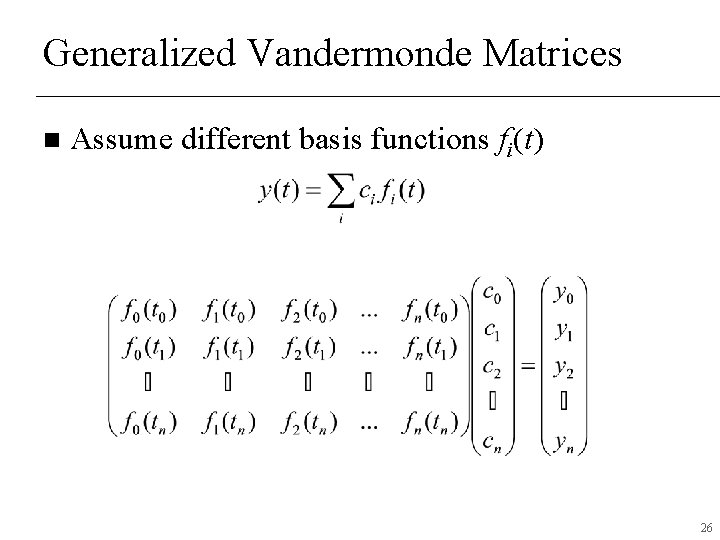
Generalized Vandermonde Matrices n Assume different basis functions fi(t) 26
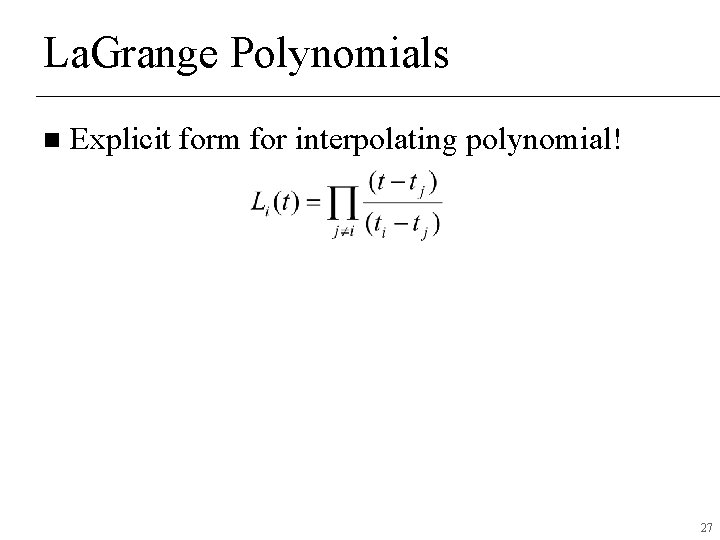
La. Grange Polynomials n Explicit form for interpolating polynomial! 27
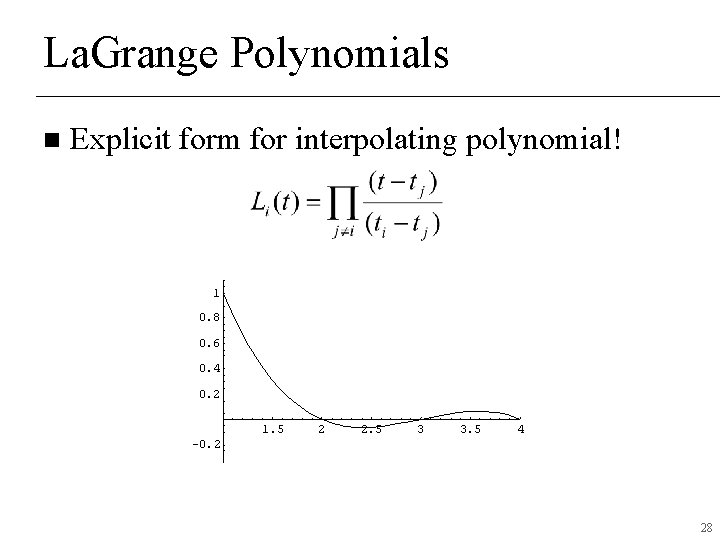
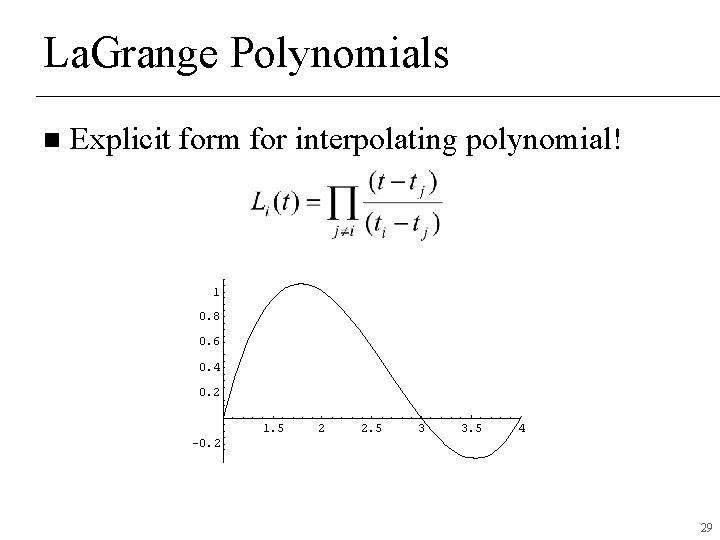
La. Grange Polynomials n Explicit form for interpolating polynomial! 1 0. 8 0. 6 0. 4 0. 2 1. 5 2 2. 5 3 3. 5 4 -0. 2 28
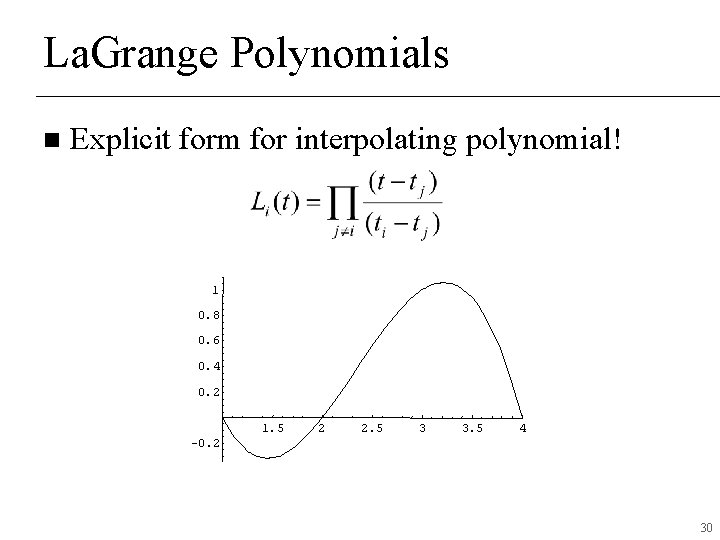
La. Grange Polynomials n Explicit form for interpolating polynomial! 1 0. 8 0. 6 0. 4 0. 2 1. 5 2 2. 5 3 3. 5 4 -0. 2 29
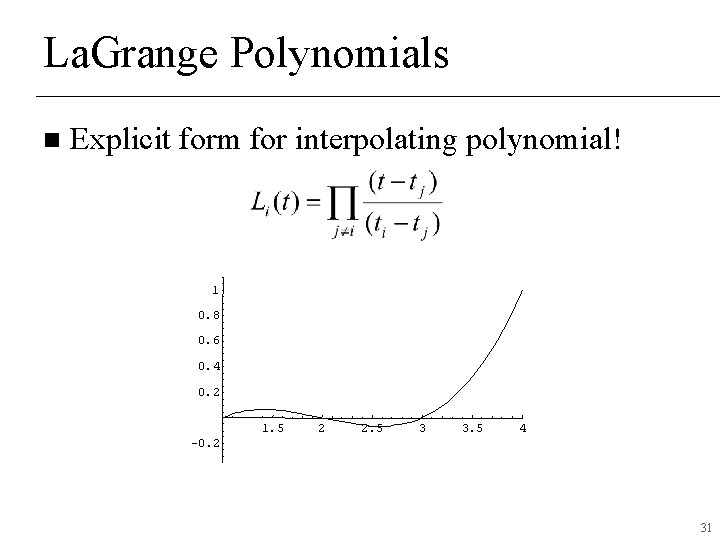
La. Grange Polynomials n Explicit form for interpolating polynomial! 1 0. 8 0. 6 0. 4 0. 2 1. 5 2 2. 5 3 3. 5 4 -0. 2 30
La. Grange Polynomials n Explicit form for interpolating polynomial! 1 0. 8 0. 6 0. 4 0. 2 1. 5 2 2. 5 3 3. 5 4 -0. 2 31
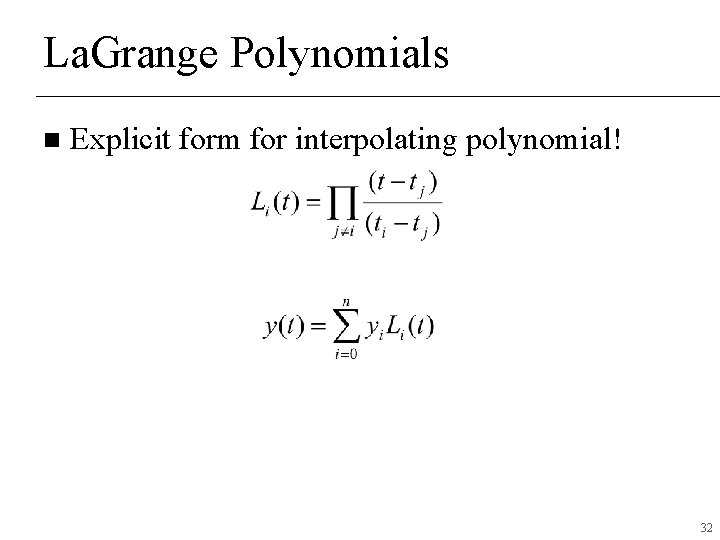
La. Grange Polynomials n Explicit form for interpolating polynomial! 32
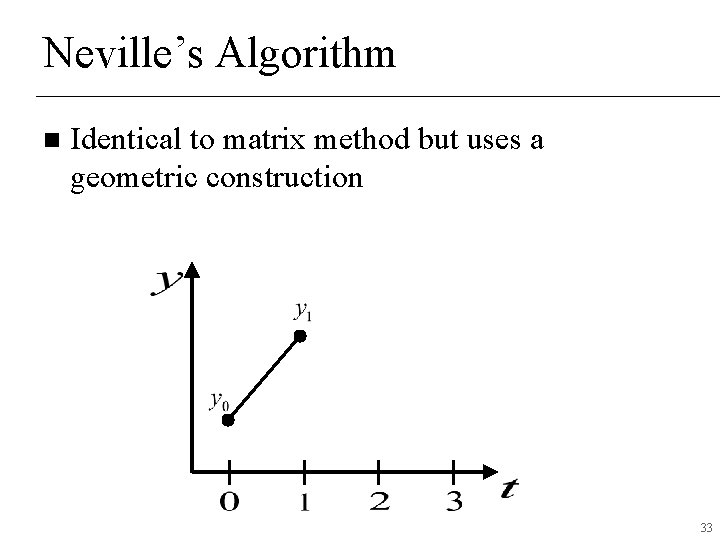
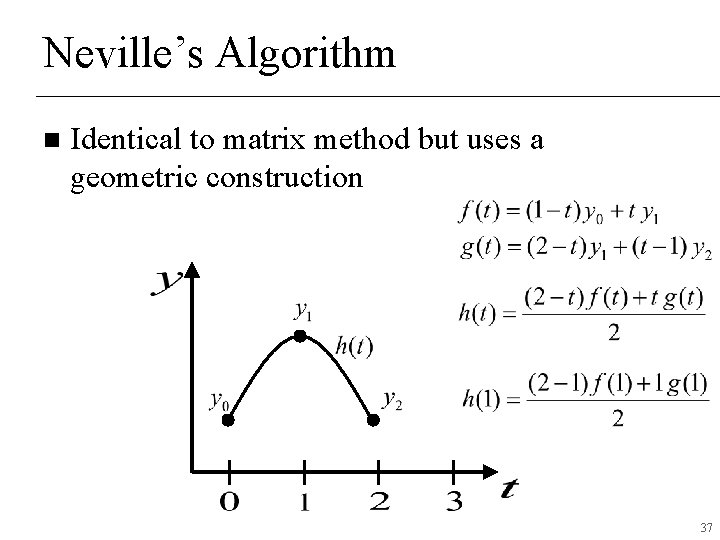
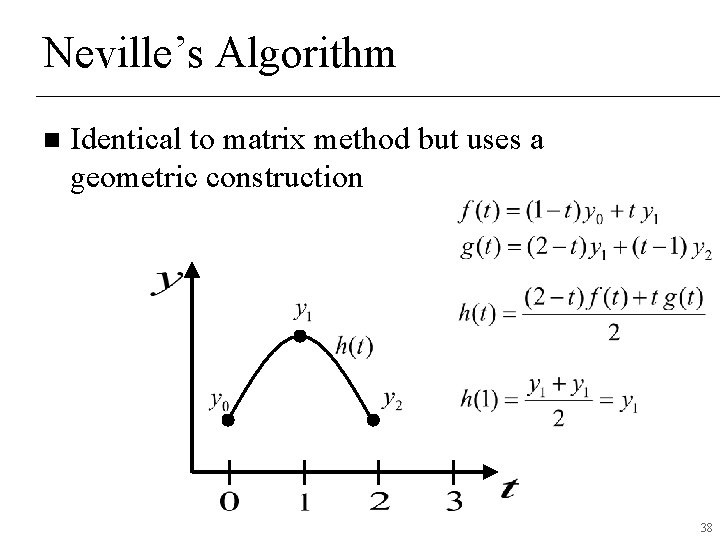
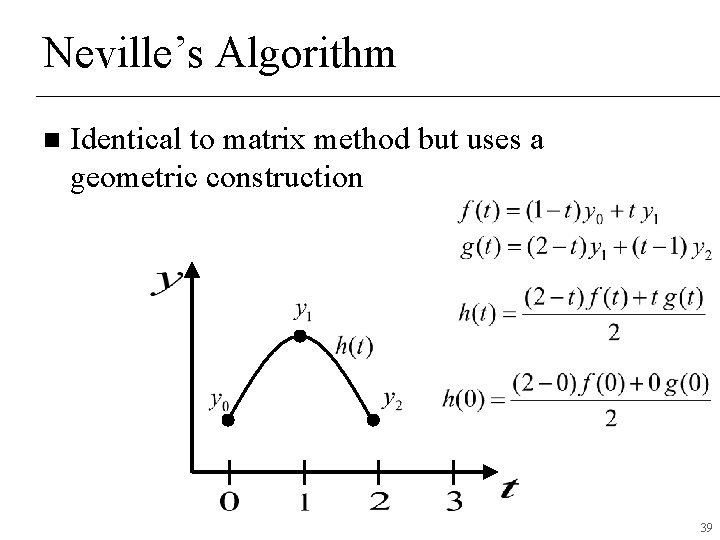
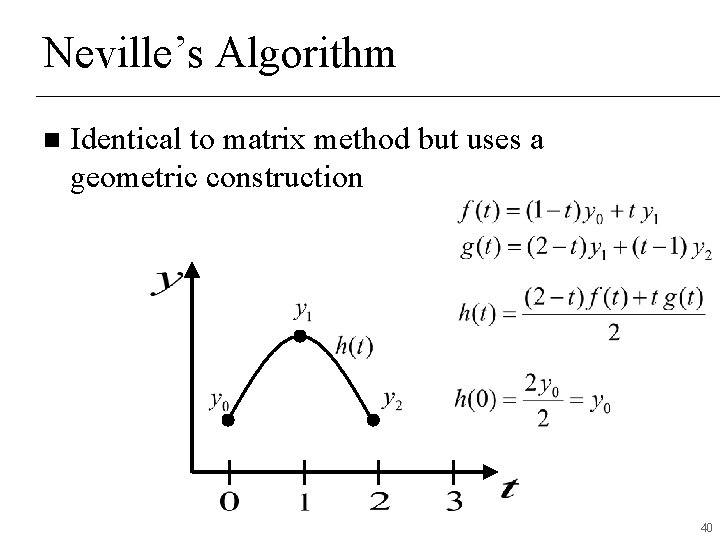
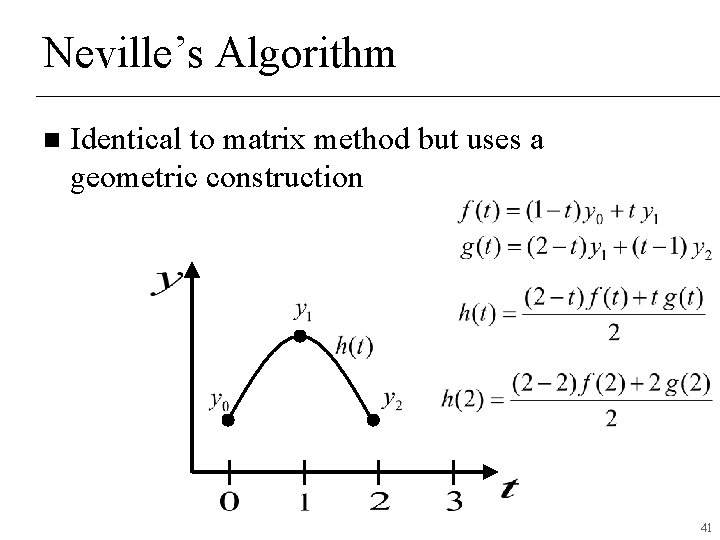
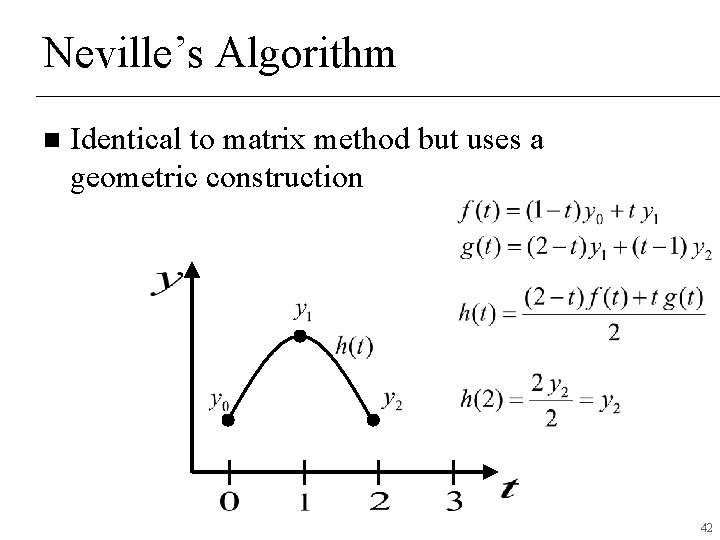
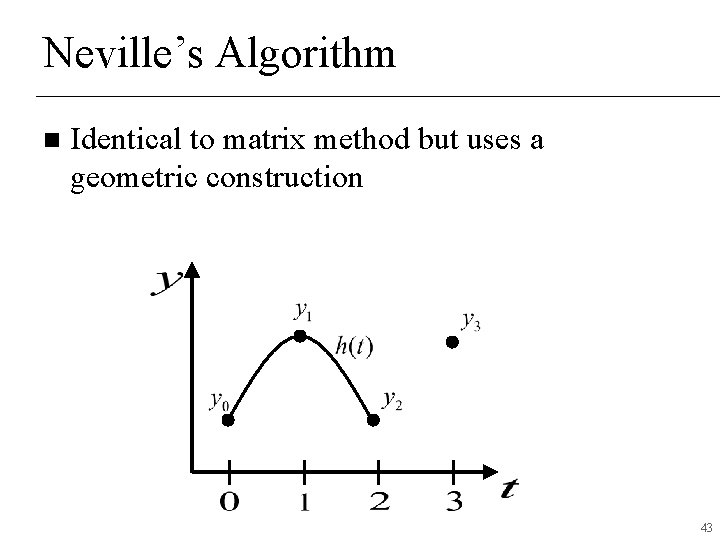
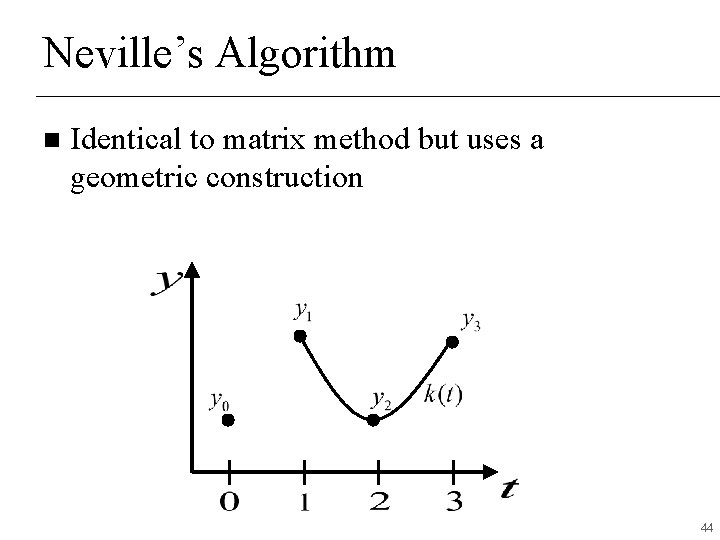
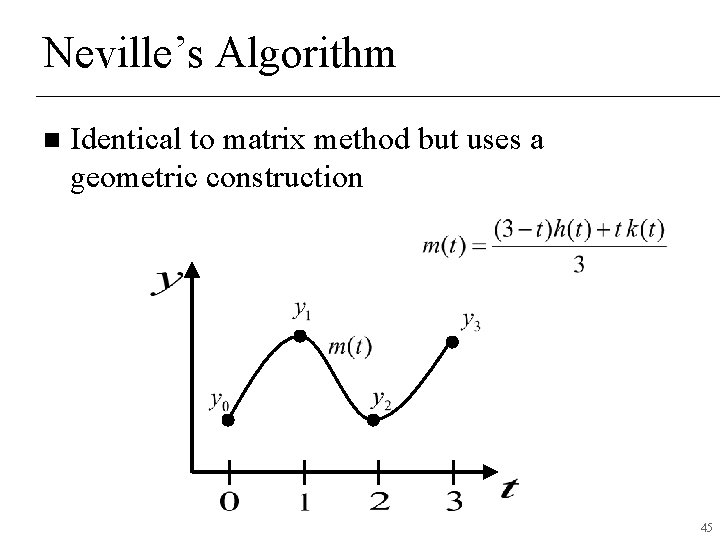
Neville’s Algorithm n Identical to matrix method but uses a geometric construction 33
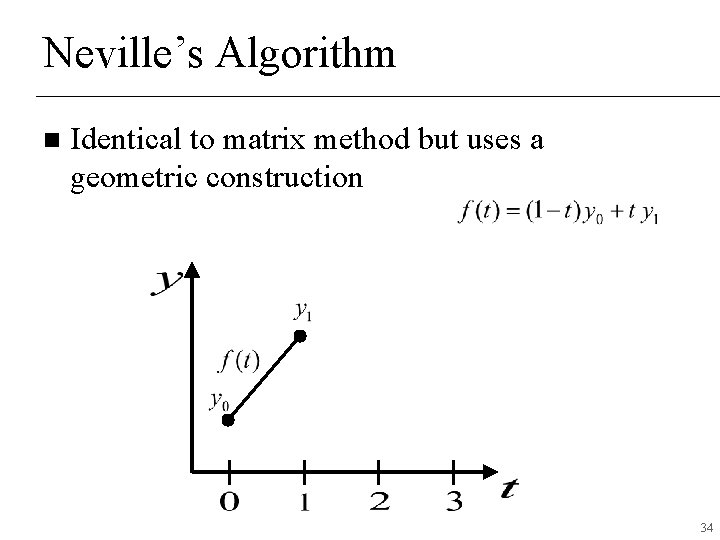
Neville’s Algorithm n Identical to matrix method but uses a geometric construction 34
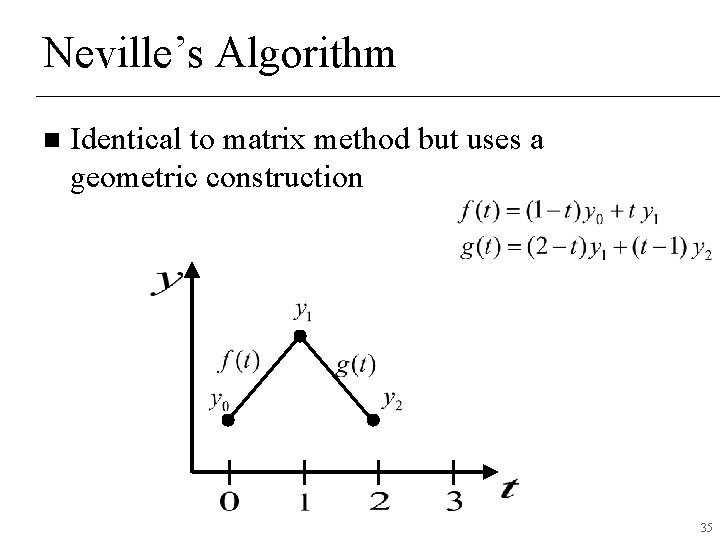
Neville’s Algorithm n Identical to matrix method but uses a geometric construction 35
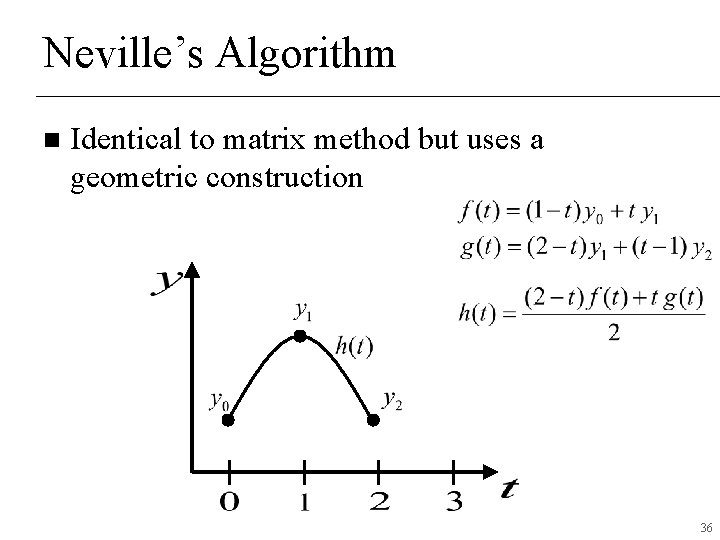
Neville’s Algorithm n Identical to matrix method but uses a geometric construction 36
Neville’s Algorithm n Identical to matrix method but uses a geometric construction 37
Neville’s Algorithm n Identical to matrix method but uses a geometric construction 38
Neville’s Algorithm n Identical to matrix method but uses a geometric construction 39
Neville’s Algorithm n Identical to matrix method but uses a geometric construction 40
Neville’s Algorithm n Identical to matrix method but uses a geometric construction 41
Neville’s Algorithm n Identical to matrix method but uses a geometric construction 42
Neville’s Algorithm n Identical to matrix method but uses a geometric construction 43
Neville’s Algorithm n Identical to matrix method but uses a geometric construction 44
Neville’s Algorithm n Identical to matrix method but uses a geometric construction 45
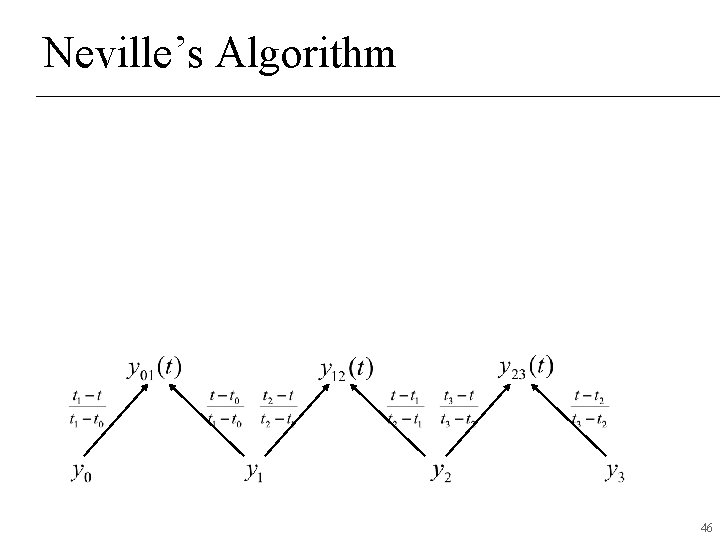
Neville’s Algorithm 46
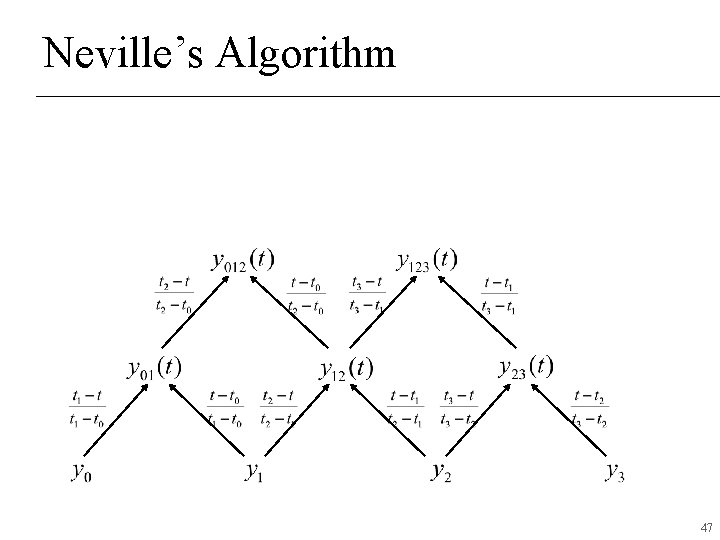
Neville’s Algorithm 47
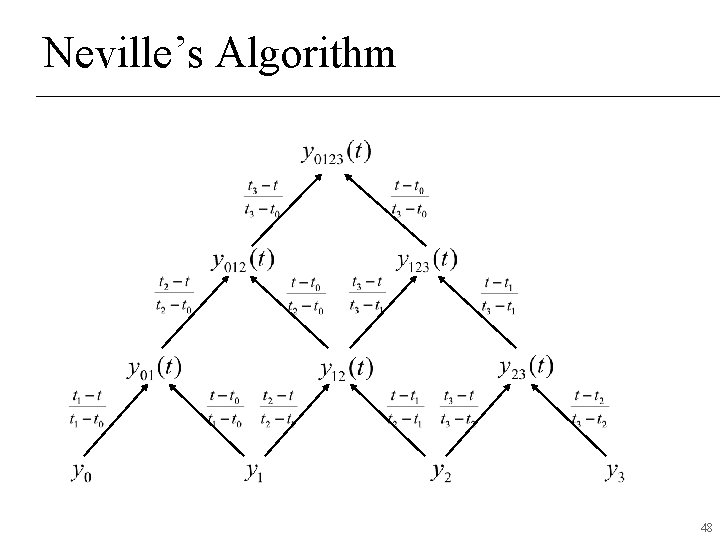
Neville’s Algorithm 48
Neville’s Algorithm n Claim: The polynomial produced by Neville’s algorithm is unique 49
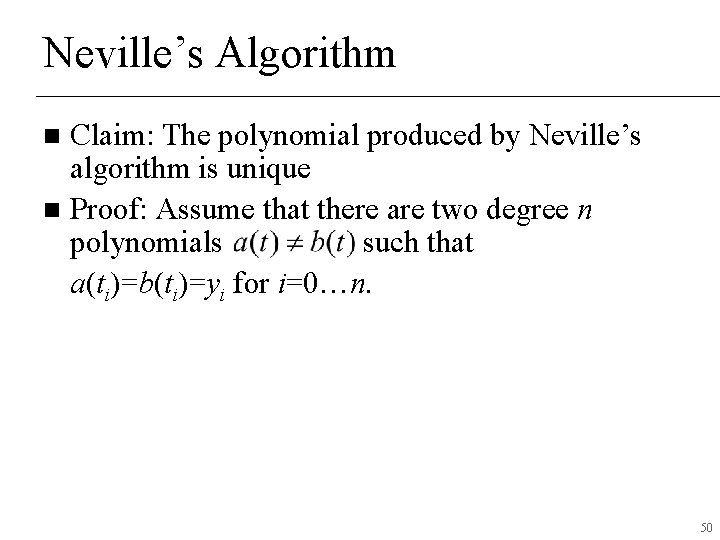
Neville’s Algorithm Claim: The polynomial produced by Neville’s algorithm is unique n Proof: Assume that there are two degree n polynomials such that a(ti)=b(ti)=yi for i=0…n. n 50
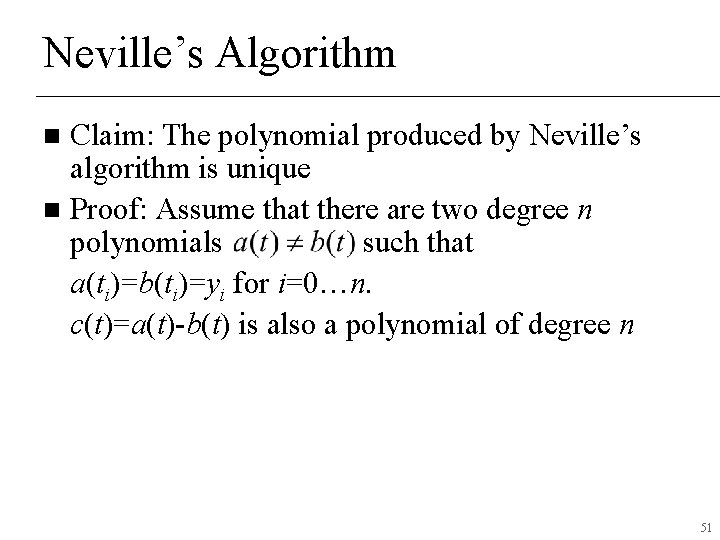
Neville’s Algorithm Claim: The polynomial produced by Neville’s algorithm is unique n Proof: Assume that there are two degree n polynomials such that a(ti)=b(ti)=yi for i=0…n. c(t)=a(t)-b(t) is also a polynomial of degree n n 51
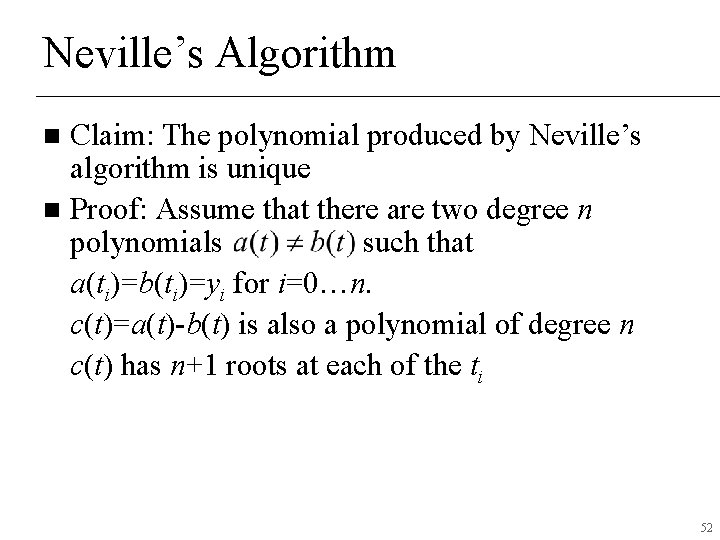
Neville’s Algorithm Claim: The polynomial produced by Neville’s algorithm is unique n Proof: Assume that there are two degree n polynomials such that a(ti)=b(ti)=yi for i=0…n. c(t)=a(t)-b(t) is also a polynomial of degree n c(t) has n+1 roots at each of the ti n 52
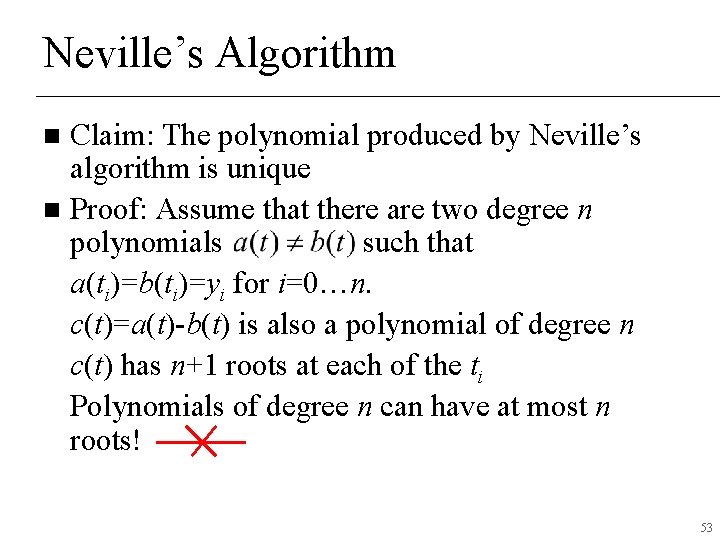
Neville’s Algorithm Claim: The polynomial produced by Neville’s algorithm is unique n Proof: Assume that there are two degree n polynomials such that a(ti)=b(ti)=yi for i=0…n. c(t)=a(t)-b(t) is also a polynomial of degree n c(t) has n+1 roots at each of the ti Polynomials of degree n can have at most n roots! n 53
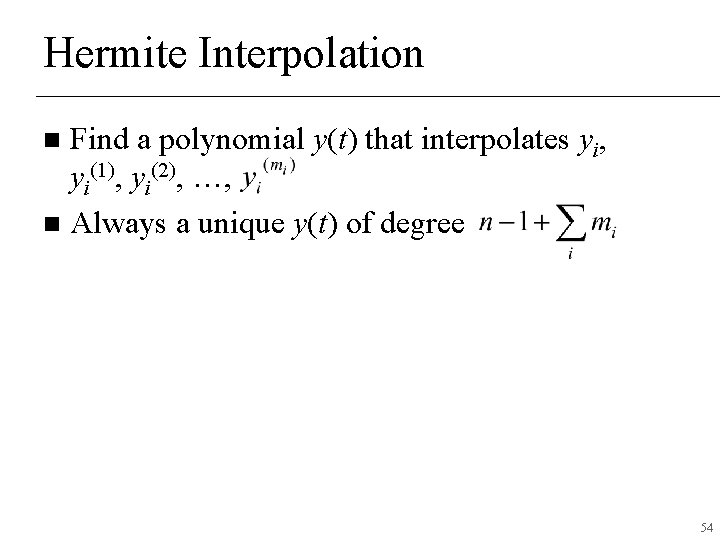
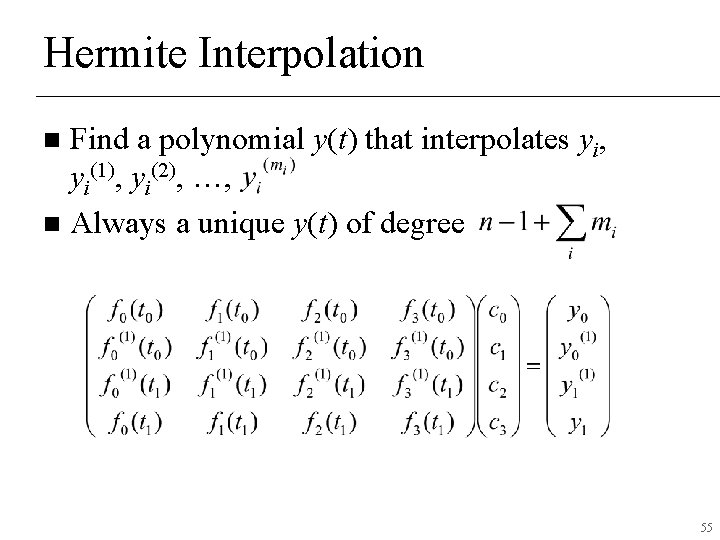
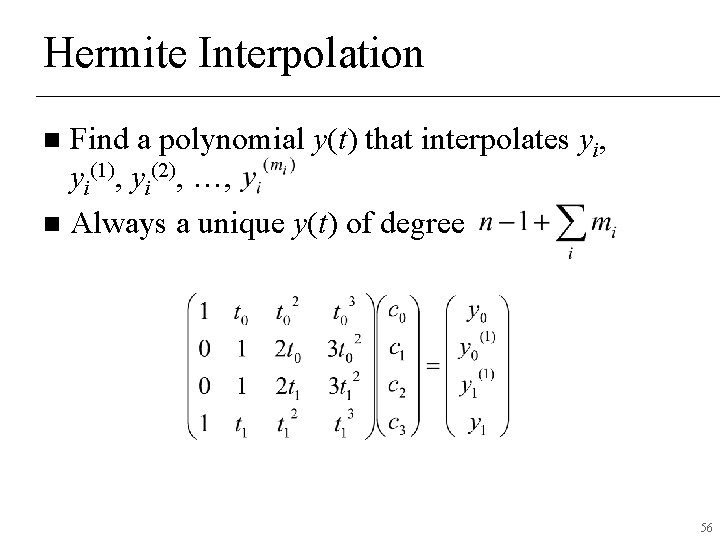
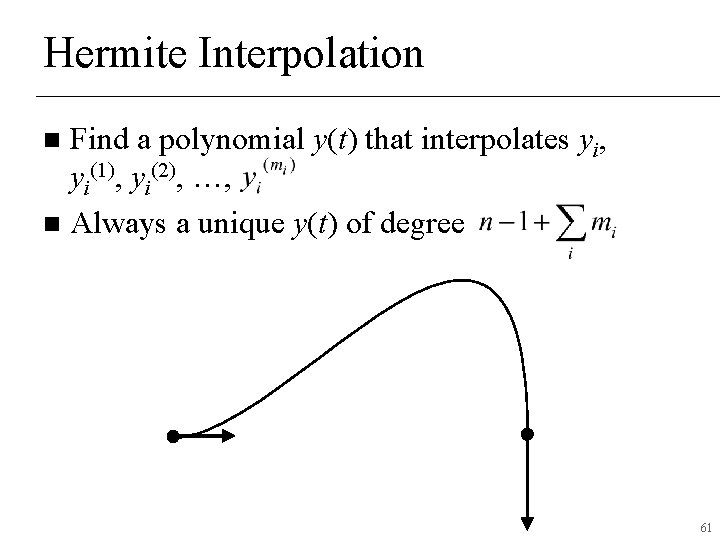
Hermite Interpolation Find a polynomial y(t) that interpolates yi, yi(1), yi(2), …, n Always a unique y(t) of degree n 54
Hermite Interpolation Find a polynomial y(t) that interpolates yi, yi(1), yi(2), …, n Always a unique y(t) of degree n 55
Hermite Interpolation Find a polynomial y(t) that interpolates yi, yi(1), yi(2), …, n Always a unique y(t) of degree n 56
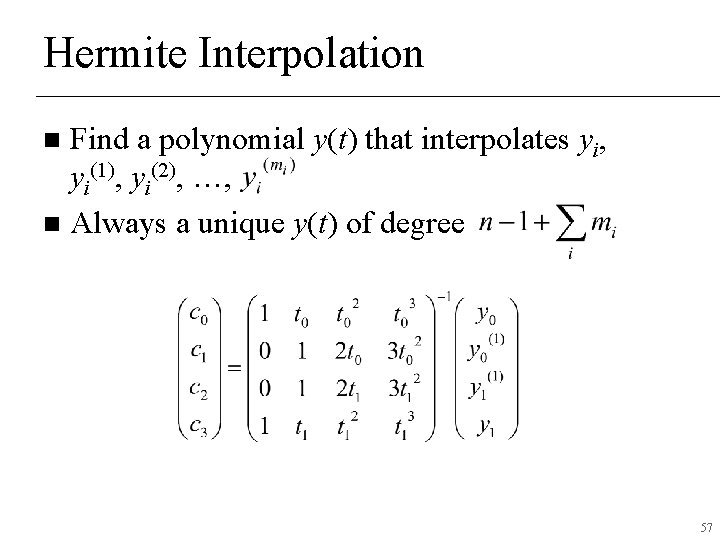
Hermite Interpolation Find a polynomial y(t) that interpolates yi, yi(1), yi(2), …, n Always a unique y(t) of degree n 57
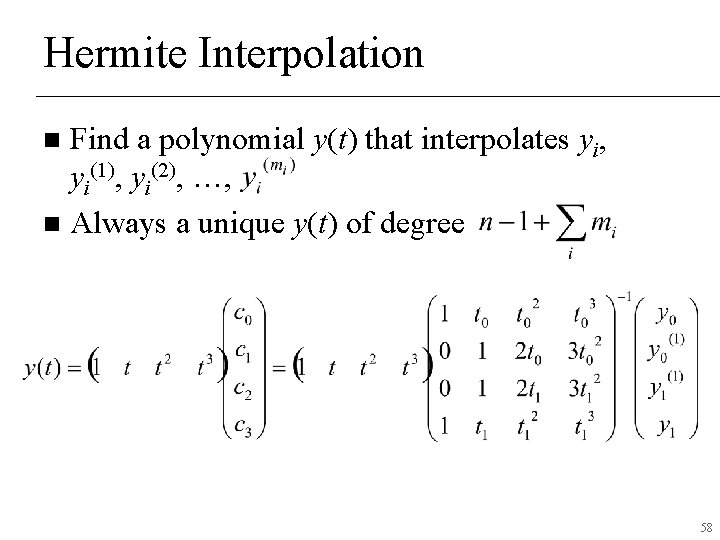
Hermite Interpolation Find a polynomial y(t) that interpolates yi, yi(1), yi(2), …, n Always a unique y(t) of degree n 58
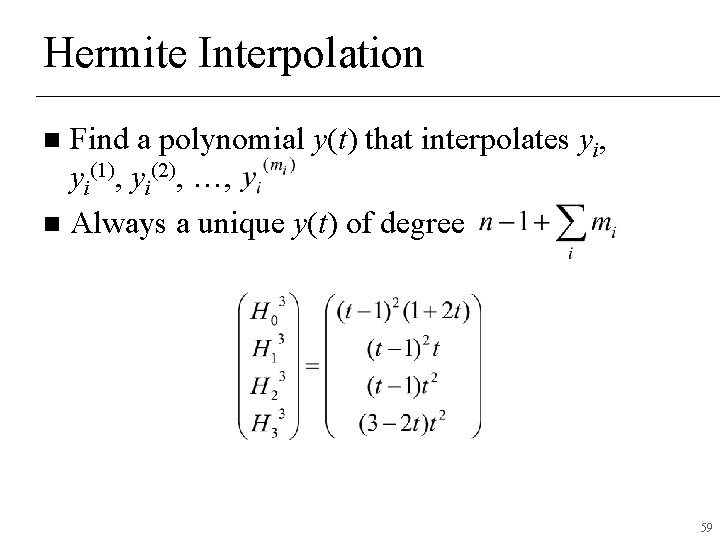
Hermite Interpolation Find a polynomial y(t) that interpolates yi, yi(1), yi(2), …, n Always a unique y(t) of degree n 59
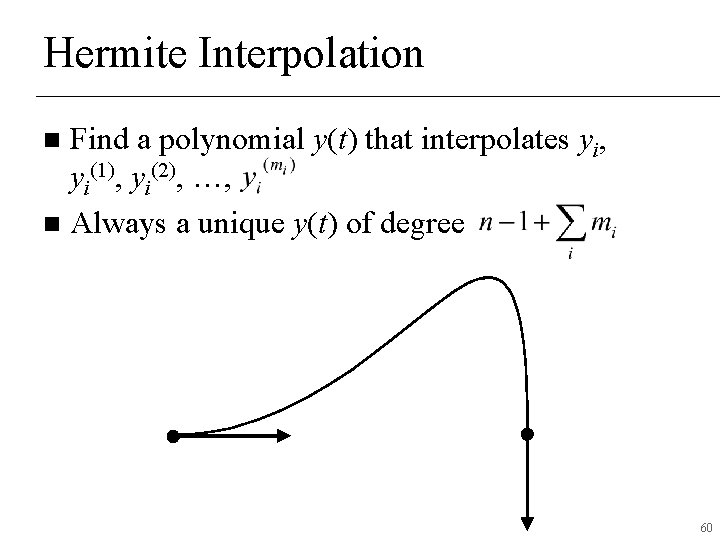
Hermite Interpolation Find a polynomial y(t) that interpolates yi, yi(1), yi(2), …, n Always a unique y(t) of degree n 60
Hermite Interpolation Find a polynomial y(t) that interpolates yi, yi(1), yi(2), …, n Always a unique y(t) of degree n 61