
Curriculum Revision Emergency Care Center Nurse Orientation Program



![References: All Quality and Safety Education for Nurses [QSEN]. (2014). Graduate KSAS. Retrieved from](https://slidetodoc.com/presentation_image_h2/0d12680a9983dc3842a8c5b829a64214/image-48.jpg "References: All Quality and Safety Education for Nurses [QSEN]. (2014). Graduate KSAS. Retrieved from")
- Slides: 48
Curriculum Revision Emergency Care Center Nurse Orientation Program Jonathon Rospierski, Chelsea Melrose, Aundrea Robinson-Burris, Denise Cooney Megan Greenway
Current Orientation Program Curriculum v Covenant Healthcare – Saginaw, Michigan v Non-Profit, level two adult and pediatric trauma center v Variety of nursing education and experience background v Emergency Care Center v 182 staff (including RNs, NCAs, HUCs, Pharmacists and Paramedics) v v v Total number of ER RNs: 92 (with 8 open positions) Orientation Curriculum v Phase 1 v Phase 2 v Phase 3 Duration of Nurse Orientation v New graduates (GNs/RNs): 16 weeks v RNs with ER experience: 8 -10 weeks v RNs with experience (not in the ER): 12 -14 weeks
Identified Areas for Growth v Partnering with Central Michigan University/ budget needs/Community resources- Saginaw Michigan. v Incorporating a variety of teaching styles and strategies vs current didactic dominate method v Adding mission and values of the organization (Covenant) in the curriculum v Design the orientation curriculum to incorporate the needs of the population and community v Consider the large population nursing staff who are new graduates as a possible reason for high turn-over rate/job satisfaction issues
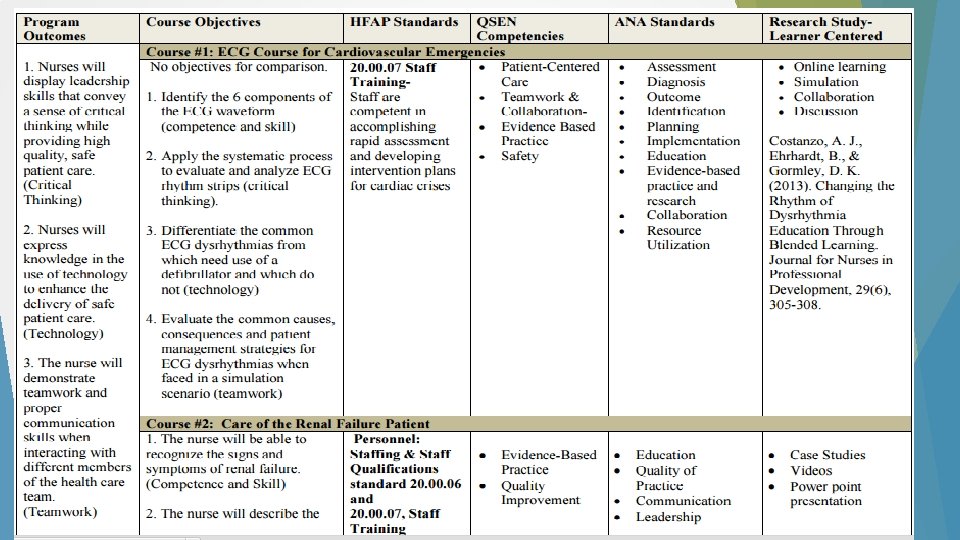
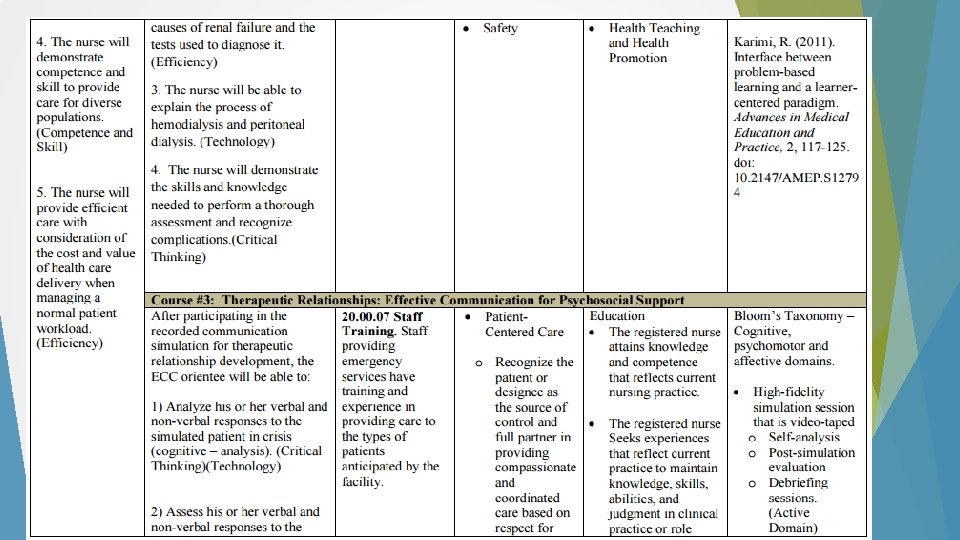
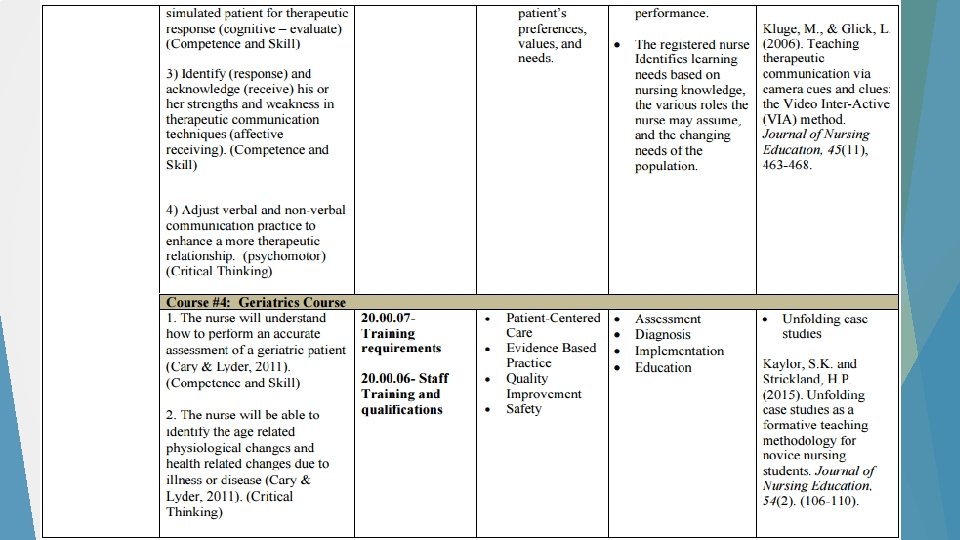
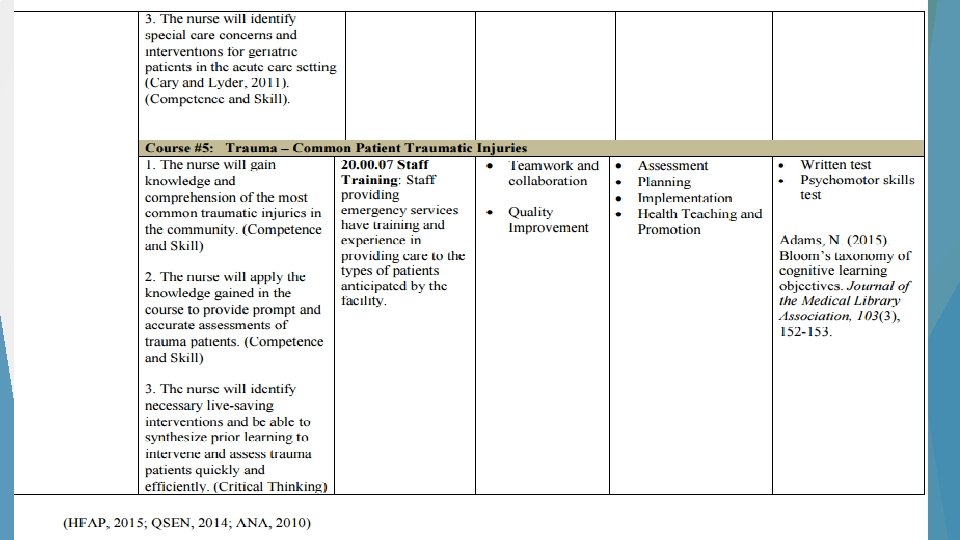
Covenant Health. Care Emergency Care Center Nursing Orientation Program Revision Grid
Orientation Course Revision EKG Training Course Jonathon Rospierski
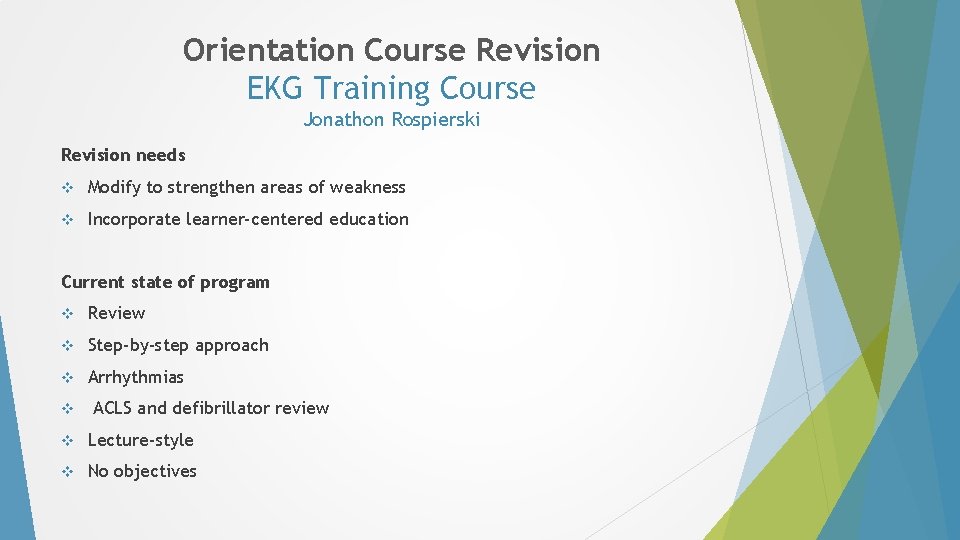
Orientation Course Revision EKG Training Course Jonathon Rospierski Revision needs v Modify to strengthen areas of weakness v Incorporate learner-centered education Current state of program v Review v Step-by-step approach v Arrhythmias v ACLS and defibrillator review v Lecture-style v No objectives
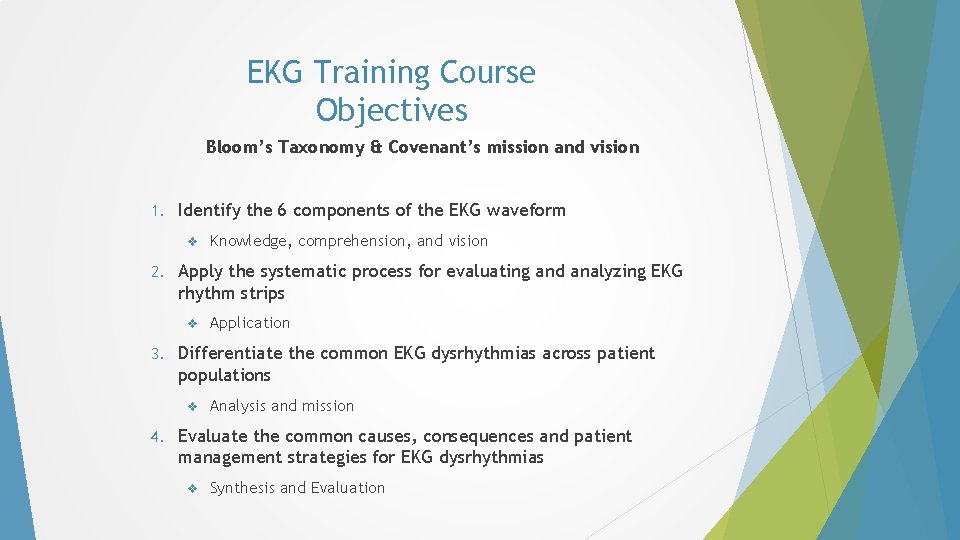
EKG Training Course Objectives Bloom’s Taxonomy & Covenant’s mission and vision 1. Identify the 6 components of the EKG waveform v 2. Apply the systematic process for evaluating and analyzing EKG rhythm strips v 3. Application Differentiate the common EKG dysrhythmias across patient populations v 4. Knowledge, comprehension, and vision Analysis and mission Evaluate the common causes, consequences and patient management strategies for EKG dysrhythmias v Synthesis and Evaluation
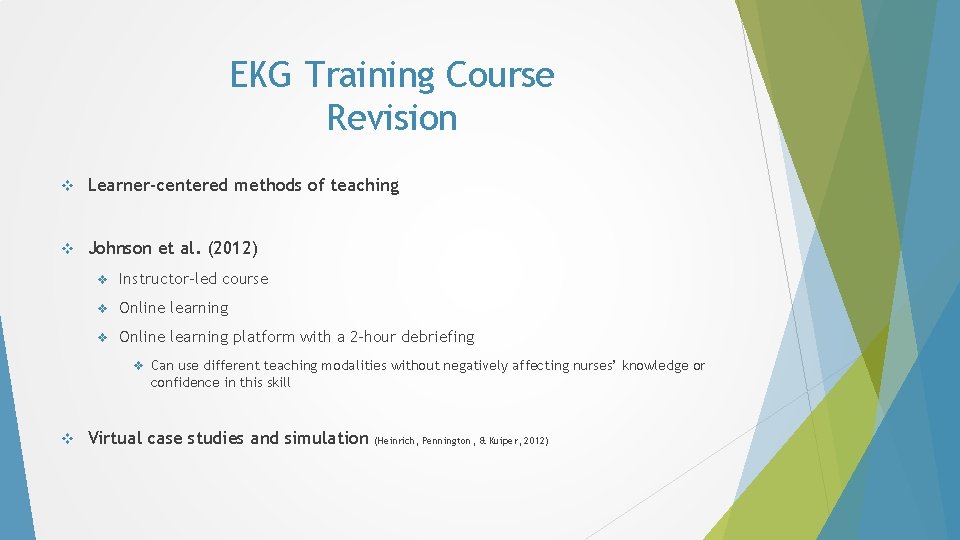
EKG Training Course Revision v Learner-centered methods of teaching v Johnson et al. (2012) v Instructor-led course v Online learning platform with a 2 -hour debriefing v Can use different teaching modalities without negatively affecting nurses’ knowledge or confidence in this skill v Virtual case studies and simulation (Heinrich, Pennington, & Kuiper, 2012)
EKG Training Course Revision Costanzo, Ehrhardt, & Gormley (2013) 1) Meet the needs of the learners 2) Provide a high-quality course v “flipped classroom” v Online learning v Classroom instruction, v Instructor-developed, self-led interactive lessons v Saving of 10– 12 hours v Quiz after all 9 modules
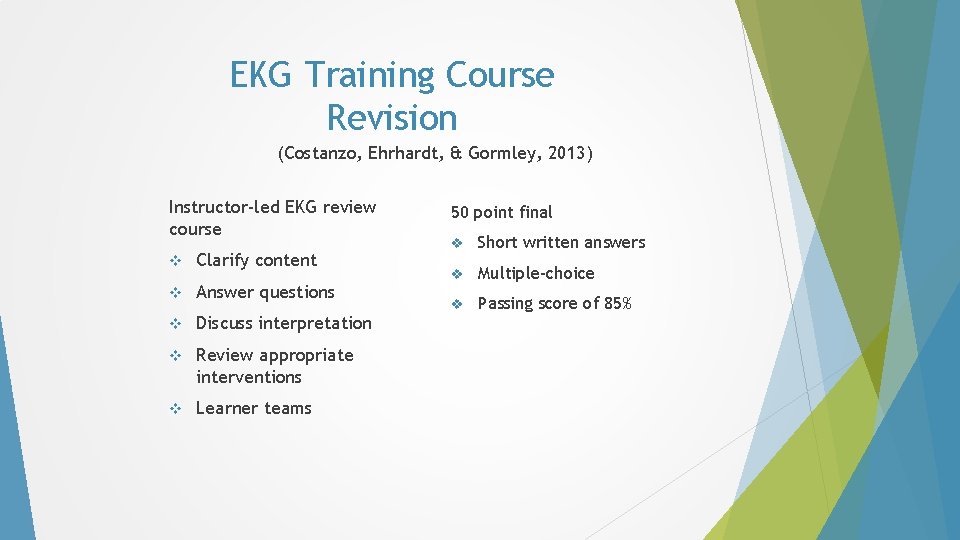
EKG Training Course Revision (Costanzo, Ehrhardt, & Gormley, 2013) Instructor-led EKG review course v Clarify content v Answer questions v Discuss interpretation v Review appropriate interventions v Learner teams 50 point final v Short written answers v Multiple-choice v Passing score of 85%
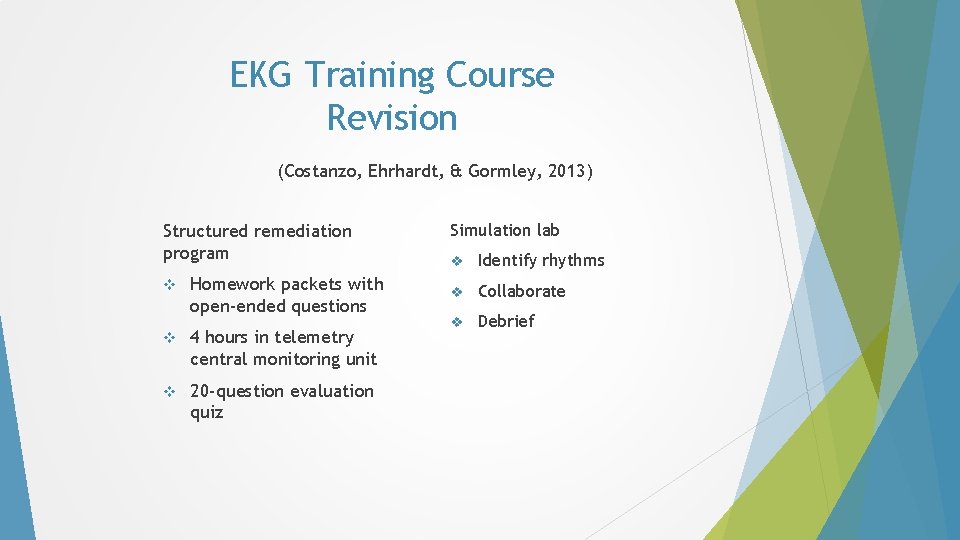
EKG Training Course Revision (Costanzo, Ehrhardt, & Gormley, 2013) Structured remediation program v Homework packets with open-ended questions v 4 hours in telemetry central monitoring unit v 20 -question evaluation quiz Simulation lab v Identify rhythms v Collaborate v Debrief
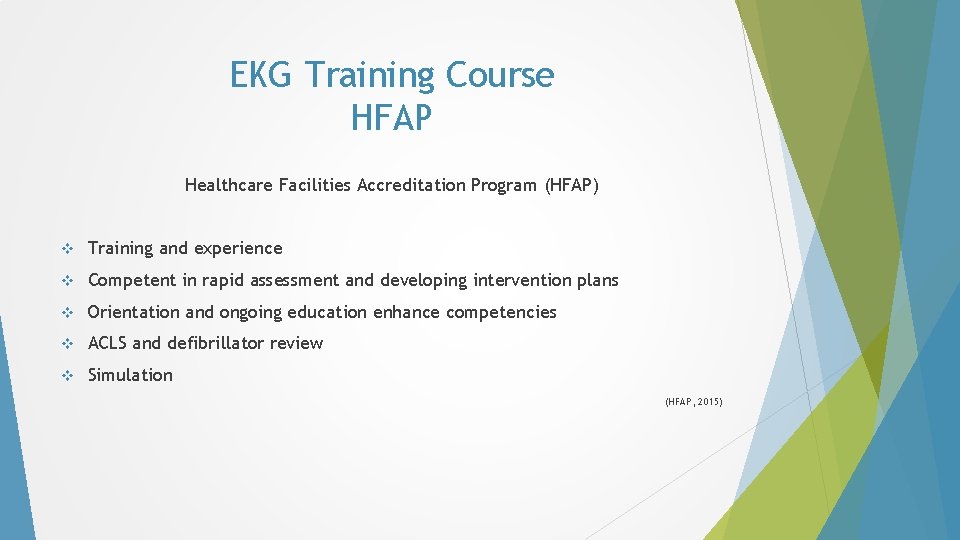
EKG Training Course HFAP Healthcare Facilities Accreditation Program (HFAP) v Training and experience v Competent in rapid assessment and developing intervention plans v Orientation and ongoing education enhance competencies v ACLS and defibrillator review v Simulation (HFAP, 2015)
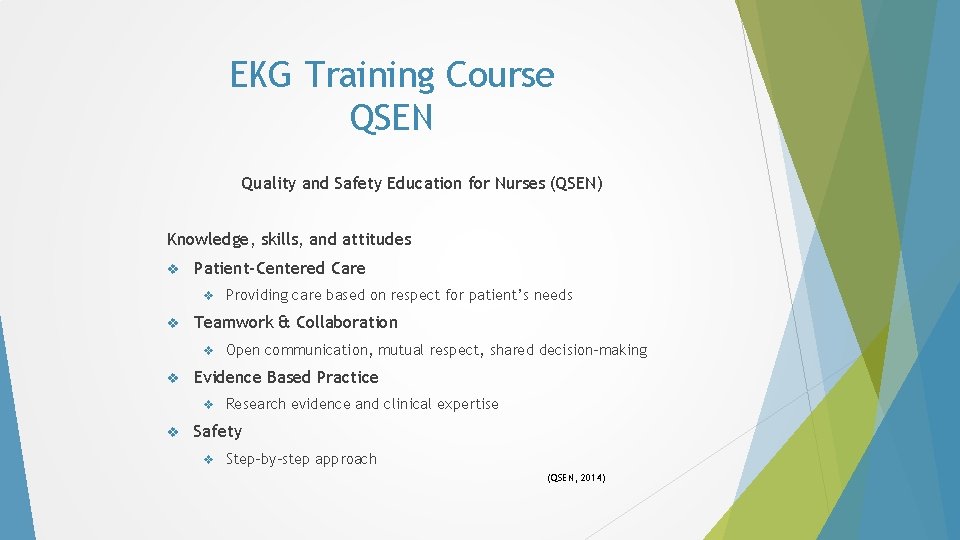
EKG Training Course QSEN Quality and Safety Education for Nurses (QSEN) Knowledge, skills, and attitudes v Patient-Centered Care v v Teamwork & Collaboration v v Open communication, mutual respect, shared decision-making Evidence Based Practice v v Providing care based on respect for patient’s needs Research evidence and clinical expertise Safety v Step-by-step approach (QSEN, 2014)
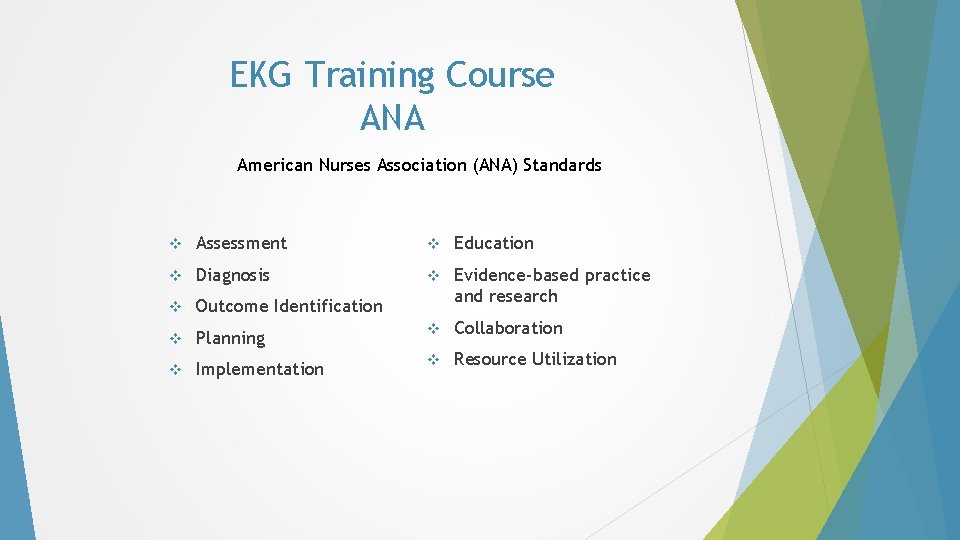
EKG Training Course ANA American Nurses Association (ANA) Standards v Assessment v Education v Diagnosis v v Outcome Identification Evidence-based practice and research v Planning v Collaboration v Implementation v Resource Utilization
Orientation Course Development Care of the Renal Failure Patient Denise Cooney
Orientation Course Development Care of the Renal Failure Patient Denise Cooney Objectives: v The nurse will be able to recognize the signs and symptoms of renal failure. v The nurse will describe the causes of renal failure and the tests used to diagnose it. v The nurse will be able to explain the process of hemodialysis and peritoneal dialysis v The nurse will demonstrate the skills and knowledge needed to perform a thorough assessment and recognize complications.
Care of the Renal Failure Patient Legal and Accreditation Standards (HFAP) v Personnel: Staffing & Staff Qualifications (20. 06) v Staff Training (20. 07) v Integration of National Standards to Ensure Quality & Safety (QSEN) v Evidence-Based Practice (EBP) v Quality Improvement (QI) v Safety
Care of the Renal Failure Patient Application of Professional Practice Standards (ANA) v v Standard 5 B: Health Teaching and Health Promotion 8: Education 10: Quality of Practice 11: Communication v Learner-Centered Theory v v v Case Studies Technology Teamwork
Orientation Course Revision Therapeutic Relationships: Effective Communication for Psychosocial Support Megan Greenway
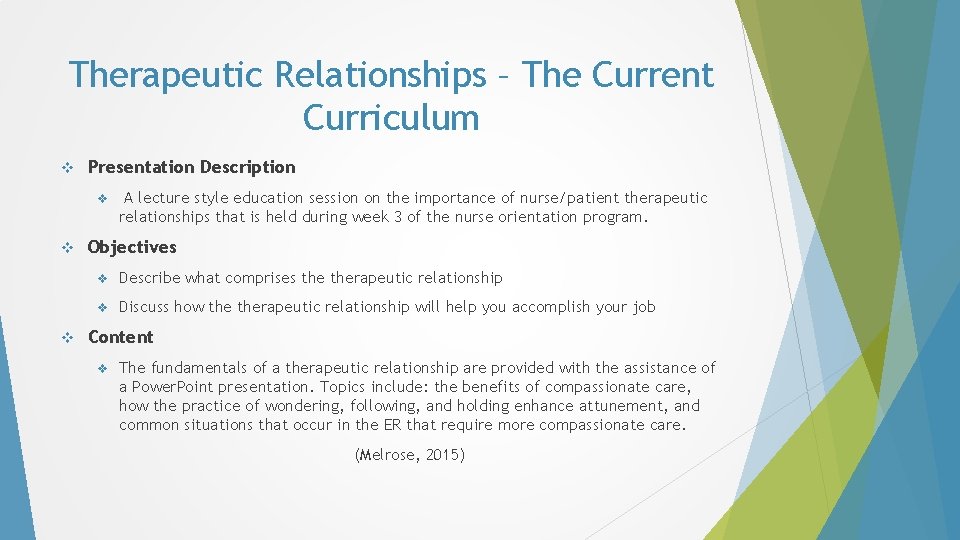
Therapeutic Relationships – The Current Curriculum v Presentation Description v v v A lecture style education session on the importance of nurse/patient therapeutic relationships that is held during week 3 of the nurse orientation program. Objectives v Describe what comprises therapeutic relationship v Discuss how therapeutic relationship will help you accomplish your job Content v The fundamentals of a therapeutic relationship are provided with the assistance of a Power. Point presentation. Topics include: the benefits of compassionate care, how the practice of wondering, following, and holding enhance attunement, and common situations that occur in the ER that require more compassionate care. (Melrose, 2015)
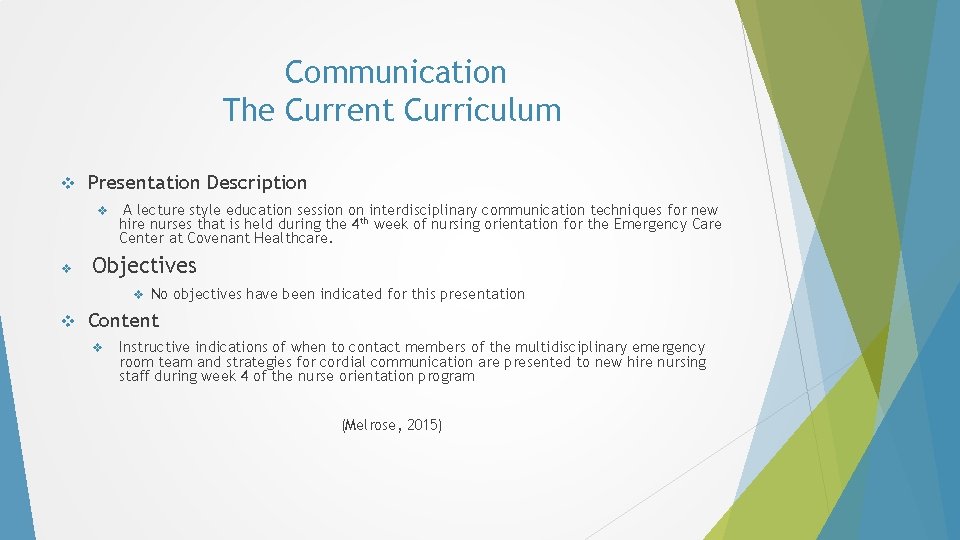
Communication The Current Curriculum v Presentation Description v v A lecture style education session on interdisciplinary communication techniques for new hire nurses that is held during the 4 th week of nursing orientation for the Emergency Care Center at Covenant Healthcare. Objectives v v No objectives have been indicated for this presentation Content v Instructive indications of when to contact members of the multidisciplinary emergency room team and strategies for cordial communication are presented to new hire nursing staff during week 4 of the nurse orientation program (Melrose, 2015)
The Course Revision: Therapeutic Relationships: Effective Communication for Psychosocial Support
Rationale for Course Revision Teaching therapeutic communication skills can be very challenging for the nurse educator (Hammer, Fox, & De. Coux Hampton, 2014). Results of a study indicated that teaching empathy is not effective. Empathy must come from within (Evans, Wilt, Alligood, & O’Neil, 1998). Communication training for nurses is essential and studies suggest that nurses often times lack the skills for therapeutic communication (Mullen & Kothe, 2010) Active communication training utilizing recorded simulations allows the participants to receive immediate peer feedback and self analysis by observing their own tactics and behaviors (Hammer, Fox, & De. Coux Hampton, 2014). Covenant Healthcare requires nurses to attend a full therapeutic relationship course (vs a presentation in orientation). Individuals typically attend this course between the first and second year of employment (C. Melrose, personal communication, December 1, 2015) Although a communication presented is given during orientation, the content focuses on interdisciplinary interactions and does not include proper communication techniques between providers and patients.
The Course Revision v Course Description v v A hands-on simulation based training course provided to new hire nurses during ECC orientation to assist in developing effective communication skills to enhance therapeutic relationship between the ECC nurse and the patient. Objectives v After participating in the recorded communication simulation for therapeutic relationship development, the ECC orientee will be able to: v 1) analyze his or her verbal and non-verbal responses to the simulated patient in crisis (cognitive – analysis). v 2) assess his or her verbal and non-verbal responses to the simulated patient for therapeutic response (cognitive – evaluate). v 3) identify (response) and acknowledge (receive) his or her strengths and weakness in therapeutic communication techniques (affective – receiving). v 4) adjust verbal and non-verbal communication practice to enhance a more therapeutic relationship (psychomotor). (Waller, n. d. )
The Course Revision v Content v Revision In addition to the Therapeutic relationship presentation currently given, orienteer will be required to participate in a weekly communication training utilizing a high fidelity simulation mannequin and hospital volunteers as actors. v Duration v v v 5 sessions - one-time per week. v 5 minute communication interaction with a variety of emotional scenarios v A 20 minute review and debriefing session Participants v New hire orientees in groups of two v Hosptial volunteers as the actors v ECC educator for additional feedback Course Evaluation v Pre and post simulation survey evaluations will be given to compare pretraining self communication skills vs post simulation training selfreflection.
Integration of HFAP Standard 20. 07 Staff Training v “Staff providing emergency services have training and experience in providing care to the types of patients anticipated by the facility” (Melrose, 2015, p. 20 -10). v Explanation: v Staff orientation schedules and ongoing education programs are designed to enhance documented competencies appropriate to the level of participation for each provider in the foci of care which is probable for the facility. v Staff competencies shall relate to: v #6 - Emotional support and intervention to persons in crises situations
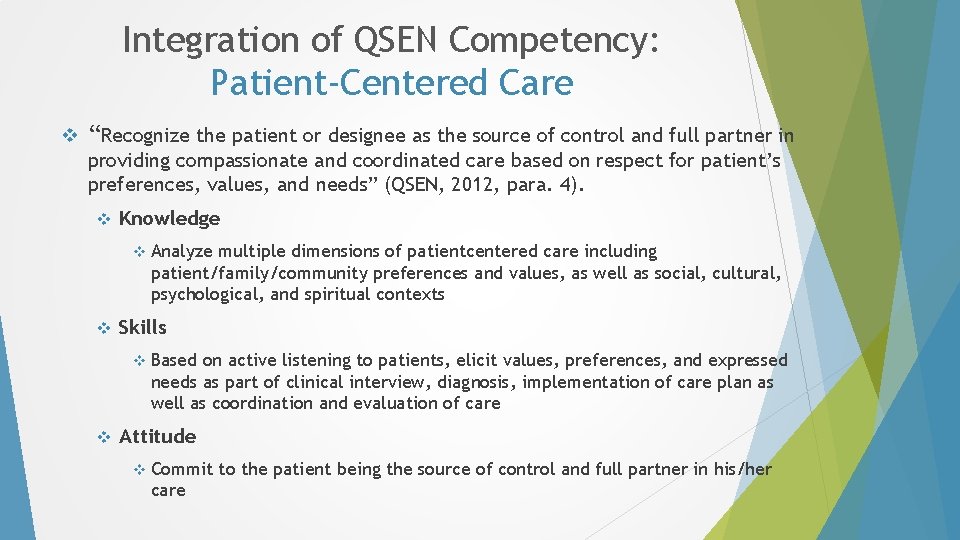
Integration of QSEN Competency: Patient-Centered Care v “Recognize the patient or designee as the source of control and full partner in providing compassionate and coordinated care based on respect for patient’s preferences, values, and needs” (QSEN, 2012, para. 4). v Knowledge v v Skills v v Analyze multiple dimensions of patientcentered care including patient/family/community preferences and values, as well as social, cultural, psychological, and spiritual contexts Based on active listening to patients, elicit values, preferences, and expressed needs as part of clinical interview, diagnosis, implementation of care plan as well as coordination and evaluation of care Attitude v Commit to the patient being the source of control and full partner in his/her care
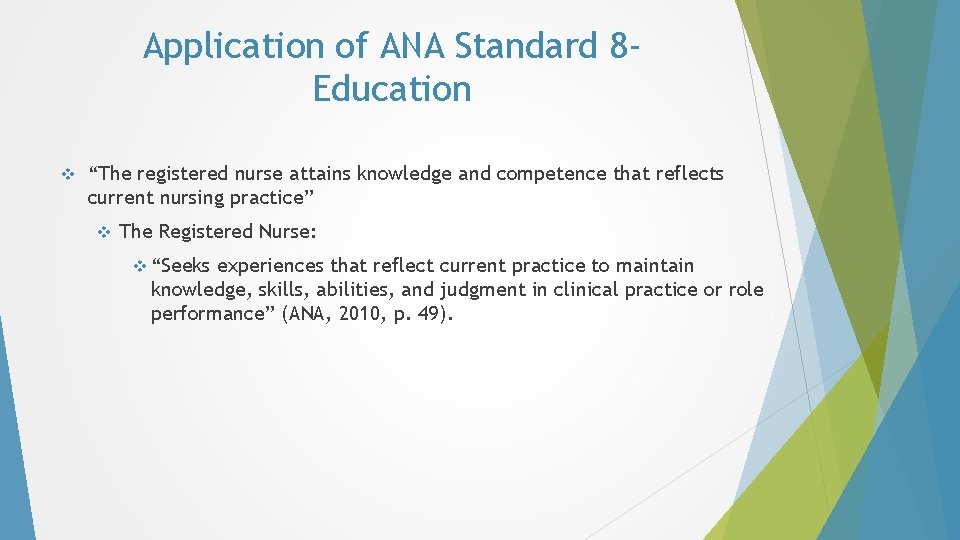
Application of ANA Standard 8 Education v “The registered nurse attains knowledge and competence that reflects current nursing practice” v The Registered Nurse: v “Seeks experiences that reflect current practice to maintain knowledge, skills, abilities, and judgment in clinical practice or role performance” (ANA, 2010, p. 49).
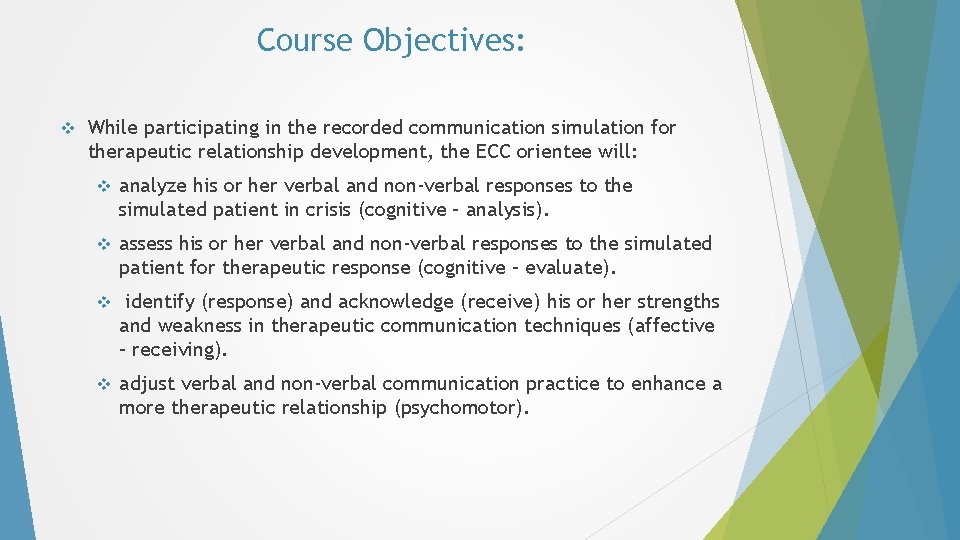
Course Objectives: v While participating in the recorded communication simulation for therapeutic relationship development, the ECC orientee will: v analyze his or her verbal and non-verbal responses to the simulated patient in crisis (cognitive – analysis). v assess his or her verbal and non-verbal responses to the simulated patient for therapeutic response (cognitive – evaluate). v identify (response) and acknowledge (receive) his or her strengths and weakness in therapeutic communication techniques (affective – receiving). v adjust verbal and non-verbal communication practice to enhance a more therapeutic relationship (psychomotor).
Orientation Course Development Care of the Geriatric Patient Aundrea Robinson-Burris
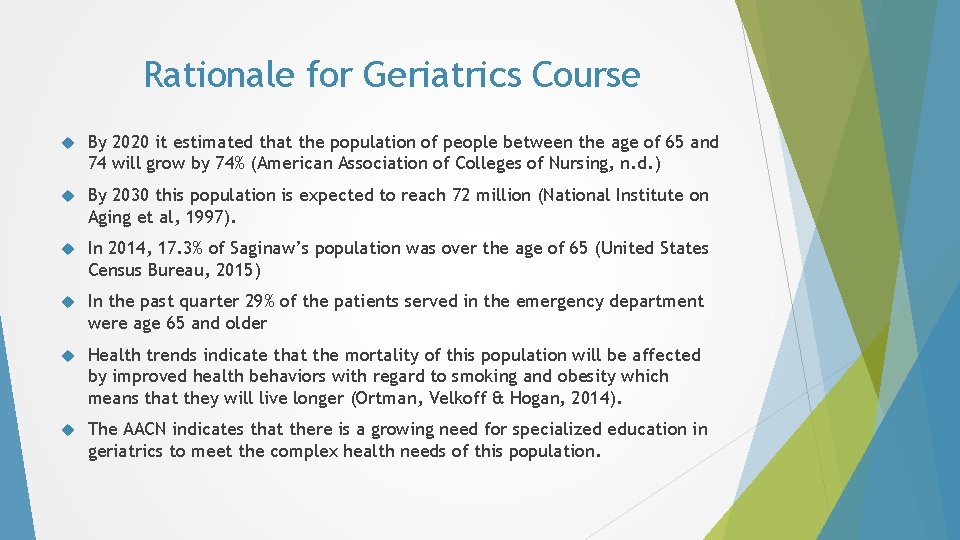
Rationale for Geriatrics Course By 2020 it estimated that the population of people between the age of 65 and 74 will grow by 74% (American Association of Colleges of Nursing, n. d. ) By 2030 this population is expected to reach 72 million (National Institute on Aging et al, 1997). In 2014, 17. 3% of Saginaw’s population was over the age of 65 (United States Census Bureau, 2015) In the past quarter 29% of the patients served in the emergency department were age 65 and older Health trends indicate that the mortality of this population will be affected by improved health behaviors with regard to smoking and obesity which means that they will live longer (Ortman, Velkoff & Hogan, 2014). The AACN indicates that there is a growing need for specialized education in geriatrics to meet the complex health needs of this population.
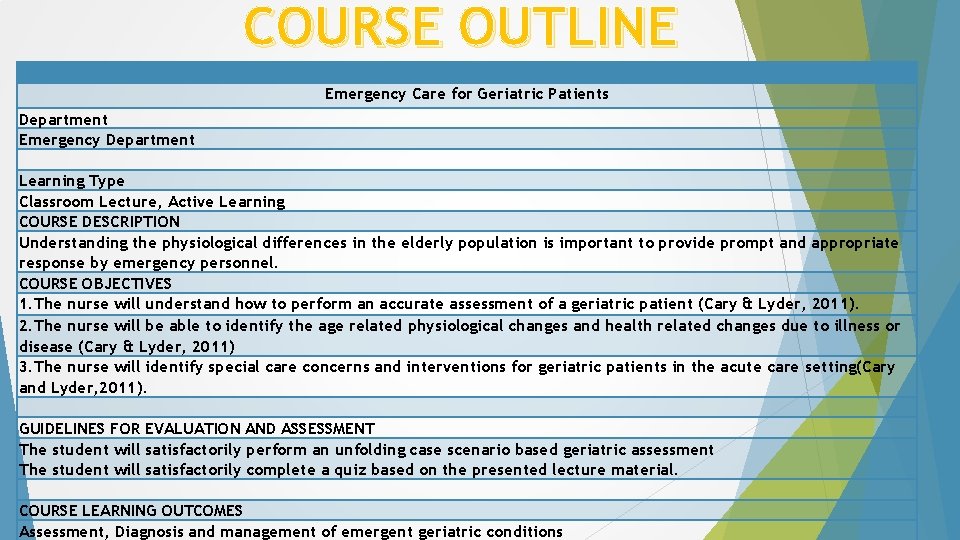
COURSE OUTLINE Emergency Care for Geriatric Patients Department Emergency Department Learning Type Classroom Lecture, Active Learning COURSE DESCRIPTION Understanding the physiological differences in the elderly population is important to provide prompt and appropriate response by emergency personnel. COURSE OBJECTIVES 1. The nurse will understand how to perform an accurate assessment of a geriatric patient (Cary & Lyder, 2011). 2. The nurse will be able to identify the age related physiological changes and health related changes due to illness or disease (Cary & Lyder, 2011) 3. The nurse will identify special care concerns and interventions for geriatric patients in the acute care setting(Cary and Lyder, 2011). GUIDELINES FOR EVALUATION AND ASSESSMENT The student will satisfactorily perform an unfolding case scenario based geriatric assessment The student will satisfactorily complete a quiz based on the presented lecture material. COURSE LEARNING OUTCOMES Assessment, Diagnosis and management of emergent geriatric conditions
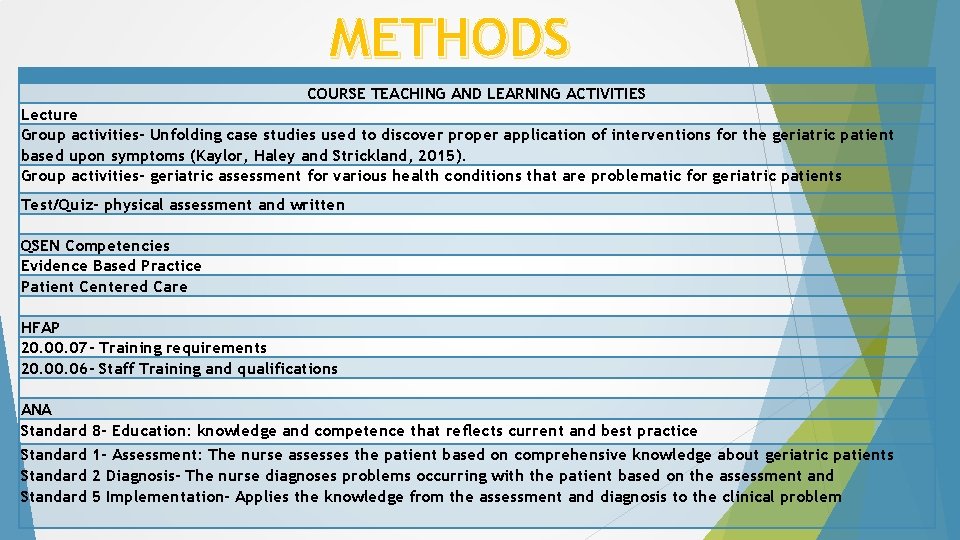
METHODS COURSE TEACHING AND LEARNING ACTIVITIES Lecture Group activities- Unfolding case studies used to discover proper application of interventions for the geriatric patient based upon symptoms (Kaylor, Haley and Strickland, 2015). Group activities- geriatric assessment for various health conditions that are problematic for geriatric patients Test/Quiz- physical assessment and written QSEN Competencies Evidence Based Practice Patient Centered Care HFAP 20. 07 - Training requirements 20. 06 - Staff Training and qualifications ANA Standard 8 - Education: knowledge and competence that reflects current and best practice Standard 1 - Assessment: The nurse assesses the patient based on comprehensive knowledge about geriatric patients Standard 2 Diagnosis- The nurse diagnoses problems occurring with the patient based on the assessment and Standard 5 Implementation- Applies the knowledge from the assessment and diagnosis to the clinical problem
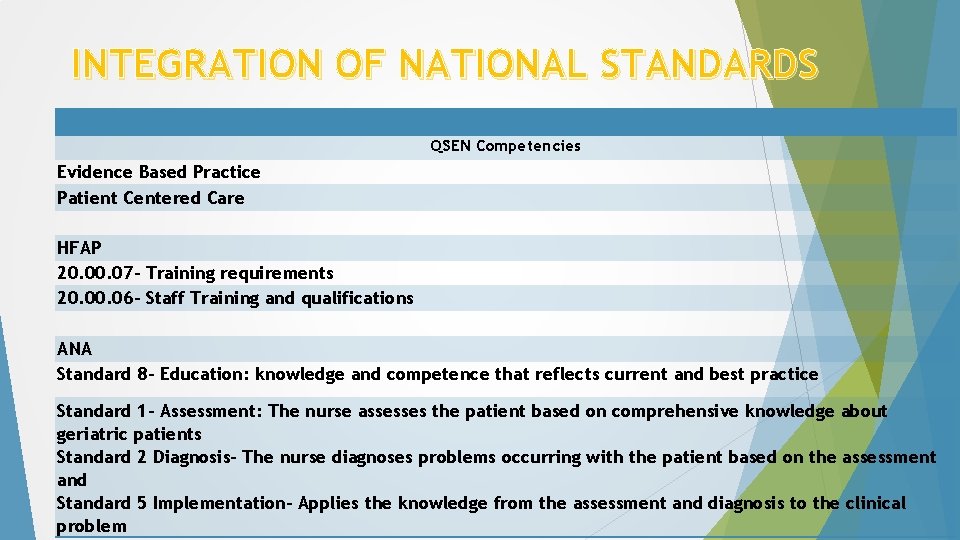
INTEGRATION OF NATIONAL STANDARDS QSEN Competencies Evidence Based Practice Patient Centered Care HFAP 20. 07 - Training requirements 20. 06 - Staff Training and qualifications ANA Standard 8 - Education: knowledge and competence that reflects current and best practice Standard 1 - Assessment: The nurse assesses the patient based on comprehensive knowledge about geriatric patients Standard 2 Diagnosis- The nurse diagnoses problems occurring with the patient based on the assessment and Standard 5 Implementation- Applies the knowledge from the assessment and diagnosis to the clinical problem
Orientation Course Revision Trauma – Common Patient Traumatic Injuries Chelsea Melrose
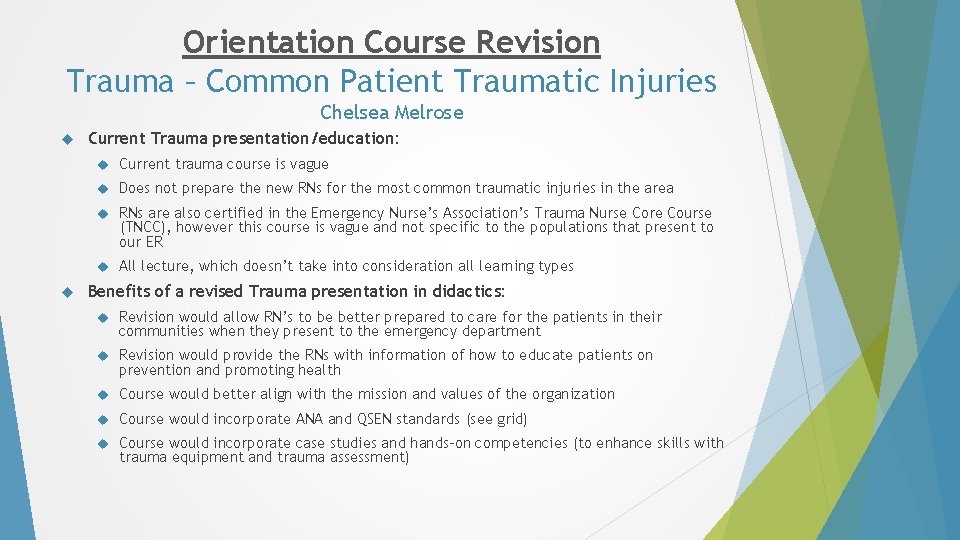
Orientation Course Revision Trauma – Common Patient Traumatic Injuries Chelsea Melrose Current Trauma presentation/education: Current trauma course is vague Does not prepare the new RNs for the most common traumatic injuries in the area RNs are also certified in the Emergency Nurse’s Association’s Trauma Nurse Core Course (TNCC), however this course is vague and not specific to the populations that present to our ER All lecture, which doesn’t take into consideration all learning types Benefits of a revised Trauma presentation in didactics: Revision would allow RN’s to be better prepared to care for the patients in their communities when they present to the emergency department Revision would provide the RNs with information of how to educate patients on prevention and promoting health Course would better align with the mission and values of the organization Course would incorporate ANA and QSEN standards (see grid) Course would incorporate case studies and hands-on competencies (to enhance skills with trauma equipment and trauma assessment)
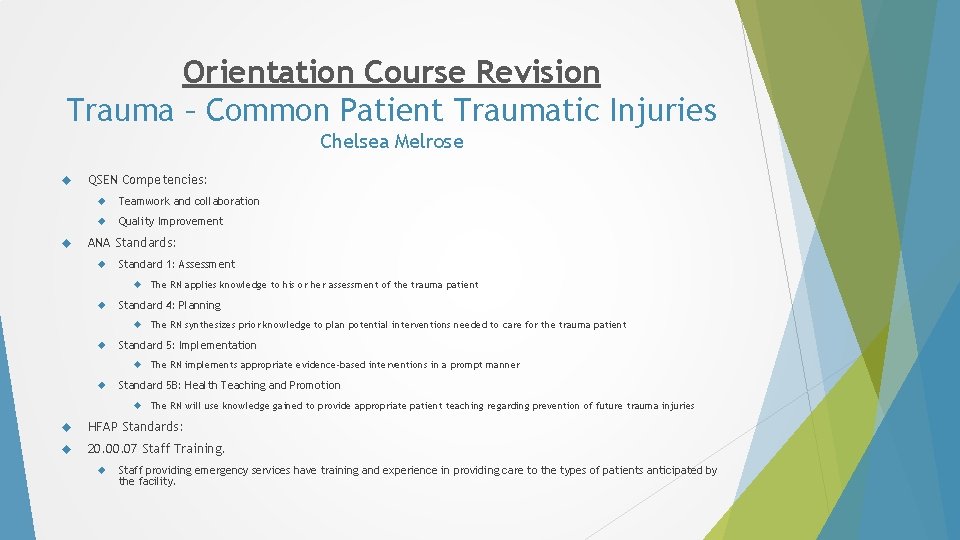
Orientation Course Revision Trauma – Common Patient Traumatic Injuries Chelsea Melrose QSEN Competencies: Teamwork and collaboration Quality Improvement ANA Standards: Standard 1: Assessment Standard 4: Planning The RN synthesizes prior knowledge to plan potential interventions needed to care for the trauma patient Standard 5: Implementation The RN applies knowledge to his or her assessment of the trauma patient The RN implements appropriate evidence-based interventions in a prompt manner Standard 5 B: Health Teaching and Promotion The RN will use knowledge gained to provide appropriate patient teaching regarding prevention of future trauma injuries HFAP Standards: 20. 07 Staff Training. Staff providing emergency services have training and experience in providing care to the types of patients anticipated by the facility.
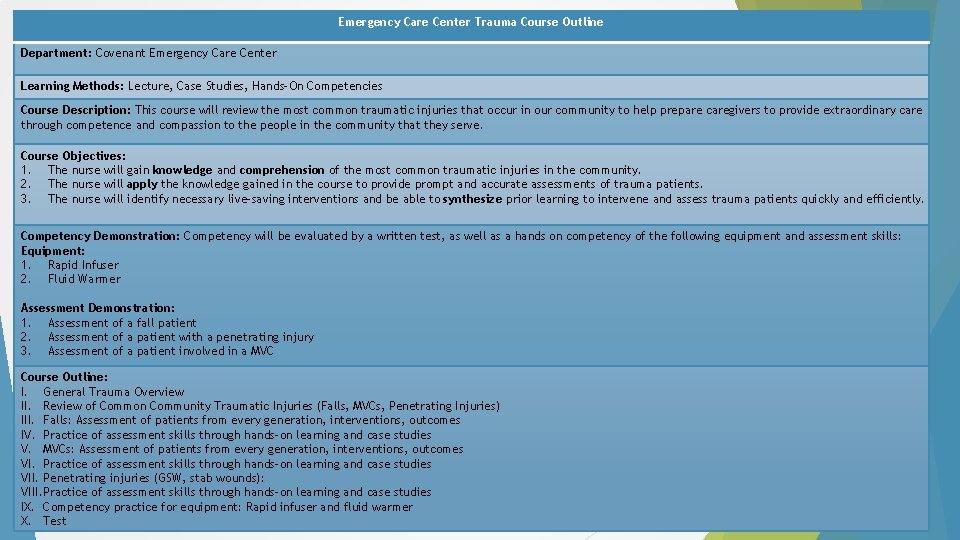
Emergency Care Center Trauma Course Outline Department: Covenant Emergency Care Center Learning Methods: Lecture, Case Studies, Hands-On Competencies Course Description: This course will review the most common traumatic injuries that occur in our community to help prepare caregivers to provide extraordinary care through competence and compassion to the people in the community that they serve. Course Objectives: 1. The nurse will gain knowledge and comprehension of the most common traumatic injuries in the community. 2. The nurse will apply the knowledge gained in the course to provide prompt and accurate assessments of trauma patients. 3. The nurse will identify necessary live-saving interventions and be able to synthesize prior learning to intervene and assess trauma patients quickly and efficiently. Competency Demonstration: Competency will be evaluated by a written test, as well as a hands on competency of the following equipment and assessment skills: Equipment: 1. Rapid Infuser 2. Fluid Warmer Assessment Demonstration: 1. Assessment of a fall patient 2. Assessment of a patient with a penetrating injury 3. Assessment of a patient involved in a MVC Course Outline: I. General Trauma Overview II. Review of Common Community Traumatic Injuries (Falls, MVCs, Penetrating Injuries) III. Falls: Assessment of patients from every generation, interventions, outcomes IV. Practice of assessment skills through hands-on learning and case studies V. MVCs: Assessment of patients from every generation, interventions, outcomes VI. Practice of assessment skills through hands-on learning and case studies VII. Penetrating injuries (GSW, stab wounds): VIII. Practice of assessment skills through hands-on learning and case studies IX. Competency practice for equipment: Rapid infuser and fluid warmer X. Test
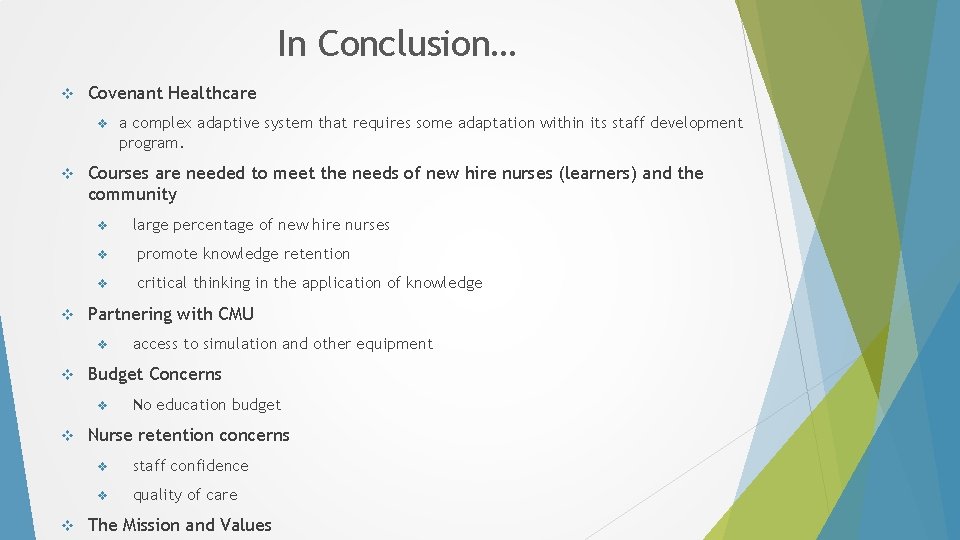
In Conclusion… v Covenant Healthcare v v Courses are needed to meet the needs of new hire nurses (learners) and the community v v promote knowledge retention v critical thinking in the application of knowledge Partnering with CMU v access to simulation and other equipment Budget Concerns v v large percentage of new hire nurses v v v a complex adaptive system that requires some adaptation within its staff development program. No education budget Nurse retention concerns v staff confidence v quality of care The Mission and Values
References: All v American Association of Colleges of Nursing. (n. d. ). AACN statement of support for geriatric nursing education. Retrieved from http: //www. aacn. nche. edu/geriatricnursing/Statement. Gero. pdf v American Nurses Association. (2010). Nursing: Scope and standards of practice (2 nd Ed. ). Silver Spring, MD: American Nurses Association. v American Nurses Association. (2010). Scope and Standards of Practice: Nursing (2 nd ed. ). Silver Spring, Maryland: Nursebooks. org. v Billings, D. M. , & Halstead, J. A. (2011). Teaching in nursing: A guide for faculty (4 th ed. ). St. Louis, MO: Elsevier Saunders. v Burns, P. , Harper Williams, S. , Ard, N. , Enright, C. , Poster, E. and Ransom, S. A. (2011). Academic partnerships to increase nursing education capacity: Centralized faculty resource and clinical placement centers. Journal of Professional Nursing, 27(6), 14 -19. v Brown, S. T. , Kirkpatrick, M. K. , Mangum, D. , & Avery, J. (2008). A review of narrative pedagogy strategies to transform traditional nursing education. The Journal of Nursing Education, 47(6), 283 -286. v Cary, M. and Lyder, C. H. http: //www. americannursetoday. com/geriatric-assessmentessential-skills-for-nurses/ (2011). Geriatric assessment: essential skills for nurses. American Nurse Today, 6(7). Retrieved from http: //www. americannursetoday. com/geriatric-assessment-essential-skills-for-nurses/
References: All Costanzo, A. J. , Ehrhardt, B. , & Gormley, D. K. (2013). Changing the Rhythm of Dysrhythmia Education Through Blended Learning. Journal for Nurses in Professional Development, 29(6), 305308. Evans, G. W. , Wilt, D. L. , Alligood, M. R. , & O’Neil, M. (1998). Empathy: A study of two types. Issues in Mental Health Nursing, 19(5), 453 -461. Retrieved from http: //illiad. ferris. edu/illiad. dll? Action=10&Form=75&Value=134170 Fahraeus, A. W. E. (2013). Book review: Learner-centered teaching: Five key changes to practice. Journal of the Scholarship of Teaching and Learning, 13(4), 1 -6. Hammer, M. , Fox, S. , & De. Coux Hampton, M. (2014). Use of a therapeutic communication simulation model in pre-licensure psychiatric mental health nursing: enhancing strengths and transforming challenges. Nursing and Health, 2(1), 1 -8. http: //dx. doi. org/ 10. 13189/nh. 2014. 020101 Healthcare Facilities Accreditation Program [HFAP]. (2015). HFAP emergency accreditation requirements for acute care hospitals. Chicago, IL : Healthcare Facilities Accreditation Program Heinrich, C. , Pennington, R. R. , & Kuiper, R. (2012). Virtual case studies in the classroom improve student knowledge. Clinical Simulation in Nursing, 8(8), e 353 -e 361. Johnson, K. , Robertson B. , Barrett, D. T. , Jarrell, N. M. , Donna Hunter, M. S. , & Mendoza, I. (2012). The effectiveness of nurses' ability to interpret basic electrocardiogram strips accurately using different learning modalities. The Journal of Continuing Education in Nursing, 43(2), 81.
Karimi, R. (2011). Interface between problem-based learning and a learner-centered paradigm. Advances in Medical Education and Practice, 2, 117 -125. doi: 10. 2147/AMEP. S 12794 Kaylor, S. K. and Strickland, H. P. (2015). Unfolding case studies as a formative teaching methodology for novice nursing students. Journal of Nursing Education, 54(2). (106 -110). Keating, S. B. (2014). Curriculum development and evaluation in nursing (3 rd ed. ). New York: Springer Publishing. Melrose, C. (2015, December 1). Communication ppt [Online forum comment]. Retrieved from https: //fsulearn. ferris. edu/webapps/blackboard/execute/group. File. Exchange? course_id= _18030_1&action=LIST&group_id=_26958_1 Melrose, C. (2015, December 1). Therapeutic relationships [Online Forum comment]. Retrieved from https: //fsulearn. ferris. edu/webapps/blackboard/execute/group. File. Exchange? course_id= _18030_1&action=LIST&group_id=_26958_1 Melrose, C. (2015, November 26 th). HFAP emergency services manual [Online forum comment]. Retrieved from https: //fsulearn. ferris. edu/webapps/blackboard/execute/group. File. Exchange? course_id= _18030_1&action=LIST&group_id=_26958_1
References: All Michigan Department of Community Health (MDCH). (2013). Selected chronic disease indicators, Saginaw county health department residents 2011 -2013. Retrieved from: http: //www. mdch. state. mi. us/pha/osr/chi/profiles/frame. asp Mullen, B. A. , & Kothe, E. J. (2010, May). Evaluating a nursing communication skills training course: The relationships between self-rated ability, satisfaction, and actual performance. Nurse Education in Practice, 10(), 374 -378. Retrieved from file: ///C: /Users/Owner/Downloads/4958. pdf National Institute on Aging, United States Department of Commerce, Economics and Statistics Administration & Bureau of the Census. (1997). Aging in the United States: Past present and future. Retrieved from https: //www. census. gov/population/international/files/97 agewc. pdf National Kidney Foundation (2013). About chronic kidney disease. Retrieved from http: //www. kidney. org/kidneydisease/aboutckd. cfm Nursing Solutions, Inc. (2015). 2015 National healthcare retention & RN staffing report. Retrieved from http: //www. nsinursingsolutions. com/Files/assets/library/retentioninstitute/National. Healthcare. RNRetention. Report 2015. pdf Ortman, J. M. , Velkoff, V. A. and Hogan, H. (2014). An aging nation: The older population in the United States. Retrieved from https: //www. census. gov/prod/2014 pubs/p 25 -1140. pdf
References: All Quality and Safety Education for Nurses [QSEN]. (2014). Graduate KSAS. Retrieved from http: //qsen. org/competencies/graduate-ksas/ Robert Wood Johnson Foundation. (2008). Emergency department nurse recruitment and retention. Retrieved from http: //www. rwjf. org/en/library/articles-andnews/2008/06/emergency-department-nurse-recruitment-and-retention. html Rush, K. L. , Adamack, M. , Gordon, J. , Lilly, M. and Janke, R. (2013). Best practices of formal new graduate nurse transition programs: An integrative review. International Journal of Nursing Studies, 50, (345 -356). The Joint Commission. (n. d. ). Health care at the crossroads: Strategies for addressing the evolving nursing crisis. Retrieved from http: //www. jointcommission. org/assets/1/18/health_care_at_the_crossroads. pdf United States Census Bureau. (2015). State and county quick facts. Retrieved from: http: //quickfacts. census. gov/qfd/states/26/26145. html Waller, K. V. (n. d. ). Writing instructional objectives. Retrieved from http: //www. naacls. org/docs/announcement/writing-objectives. pdf