
Curriculum How have we sequenced it Building curriculum
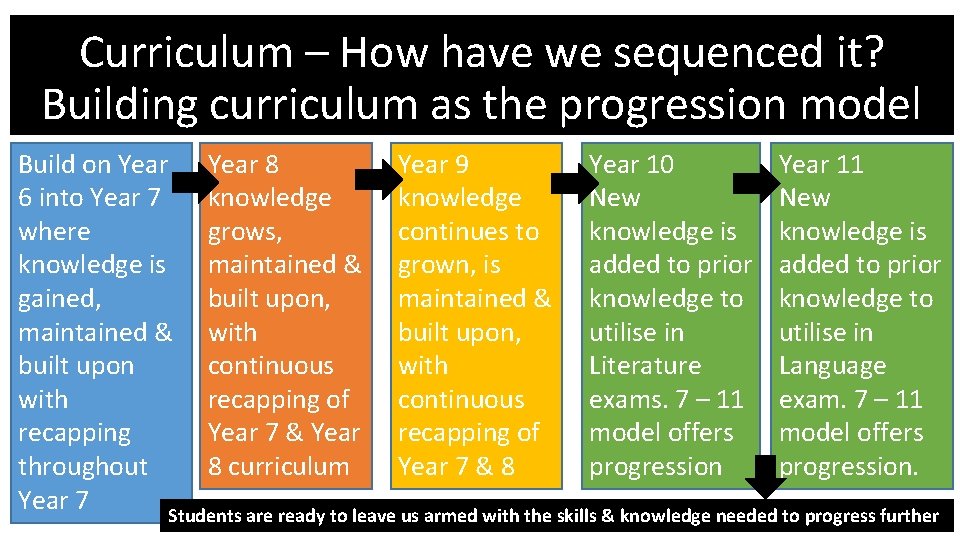
Curriculum – How have we sequenced it? Building curriculum as the progression model Year 11 Year 9 Year 10 Build on Year 8 New knowledge 6 into Year 7 continues to knowledge is grows, where added to prior knowledge is maintained & grown, is maintained & knowledge to built upon, gained, utilise in built upon, utilise in maintained & with Language with Literature continuous built upon continuous exams. 7 – 11 exam. 7 – 11 recapping of with model offers Year 7 & Year recapping of recapping progression. Year 7 & 8 progression 8 curriculum throughout Year 7 Students are ready to leave us armed with the skills & knowledge needed to progress further
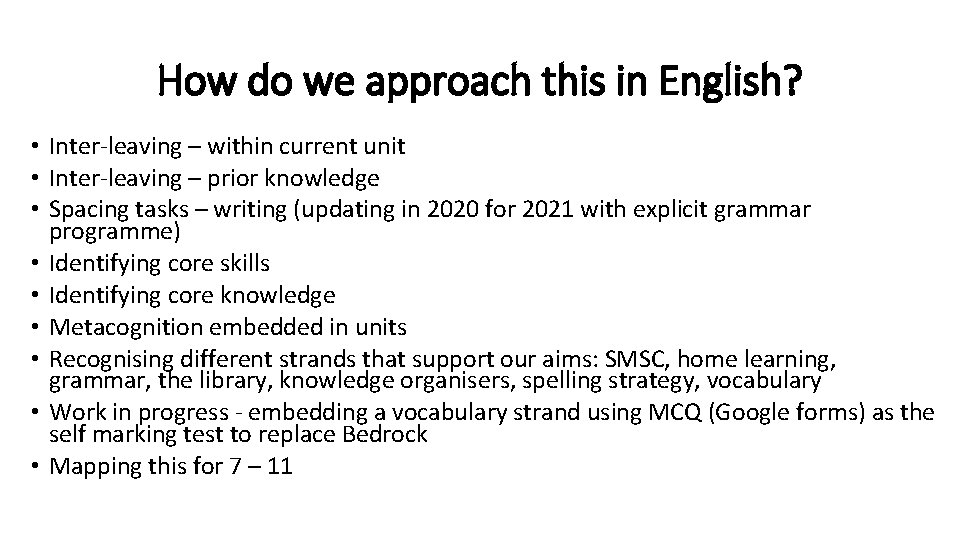
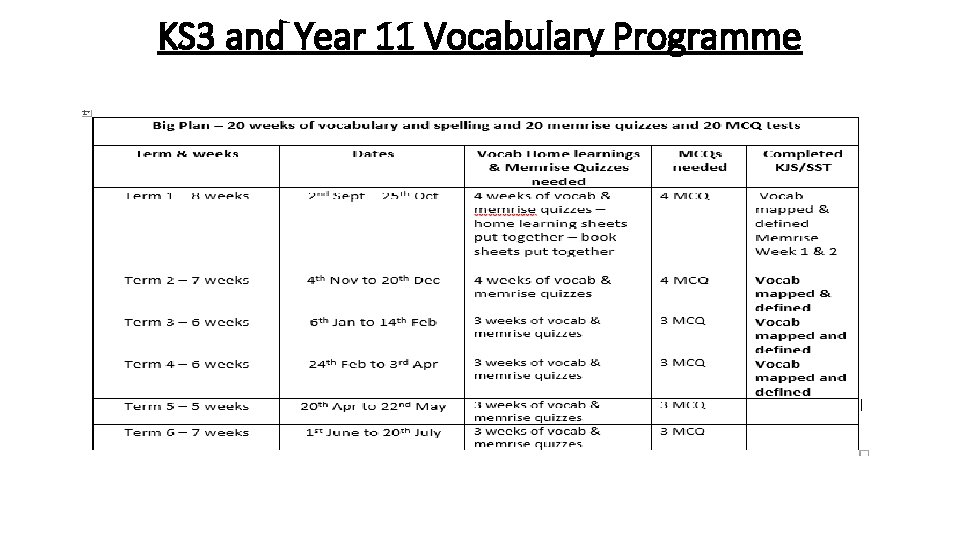
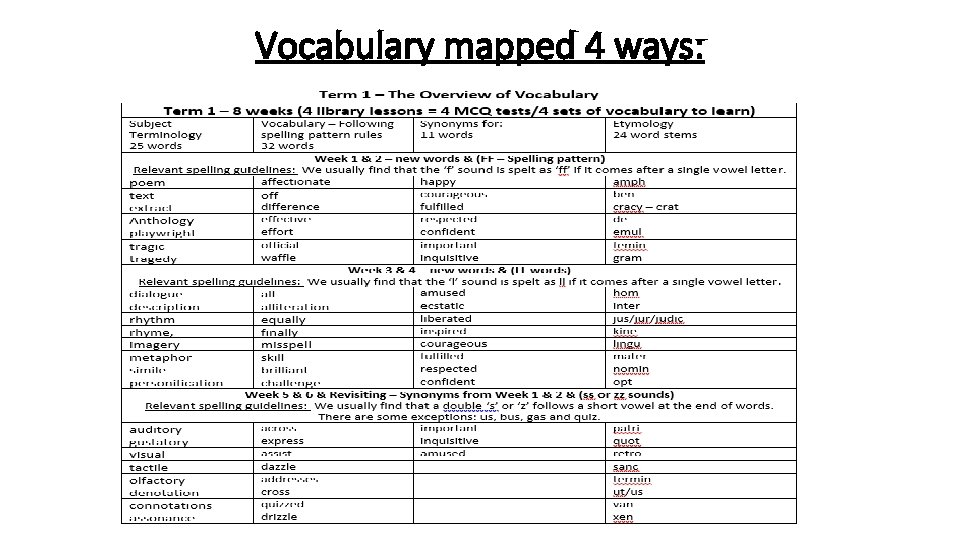
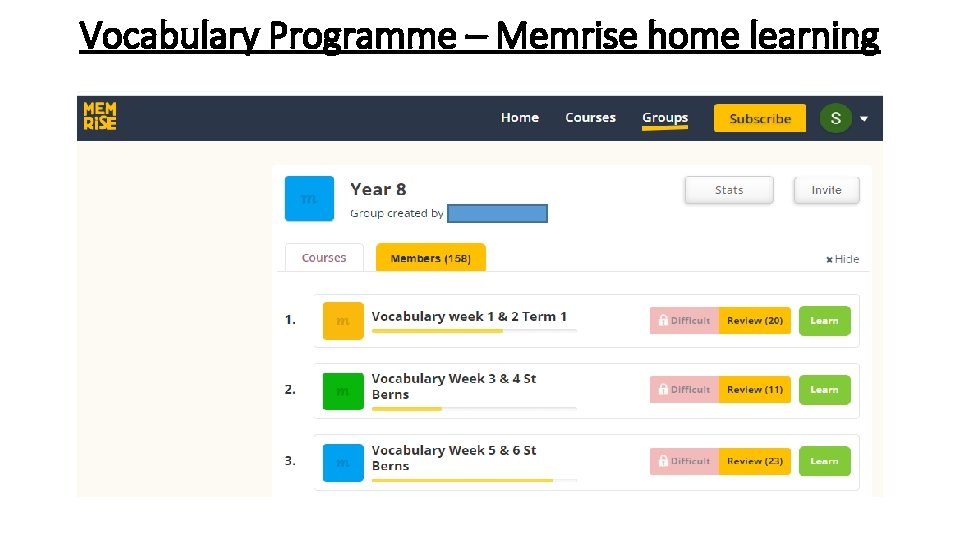
How do we approach this in English? • Inter-leaving – within current unit • Inter-leaving – prior knowledge • Spacing tasks – writing (updating in 2020 for 2021 with explicit grammar programme) • Identifying core skills • Identifying core knowledge • Metacognition embedded in units • Recognising different strands that support our aims: SMSC, home learning, grammar, the library, knowledge organisers, spelling strategy, vocabulary • Work in progress - embedding a vocabulary strand using MCQ (Google forms) as the self marking test to replace Bedrock • Mapping this for 7 – 11

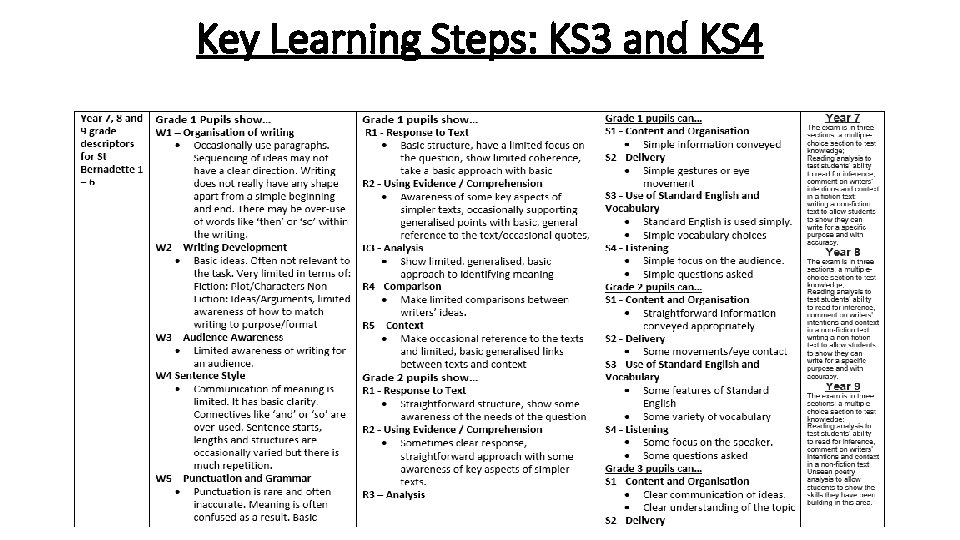
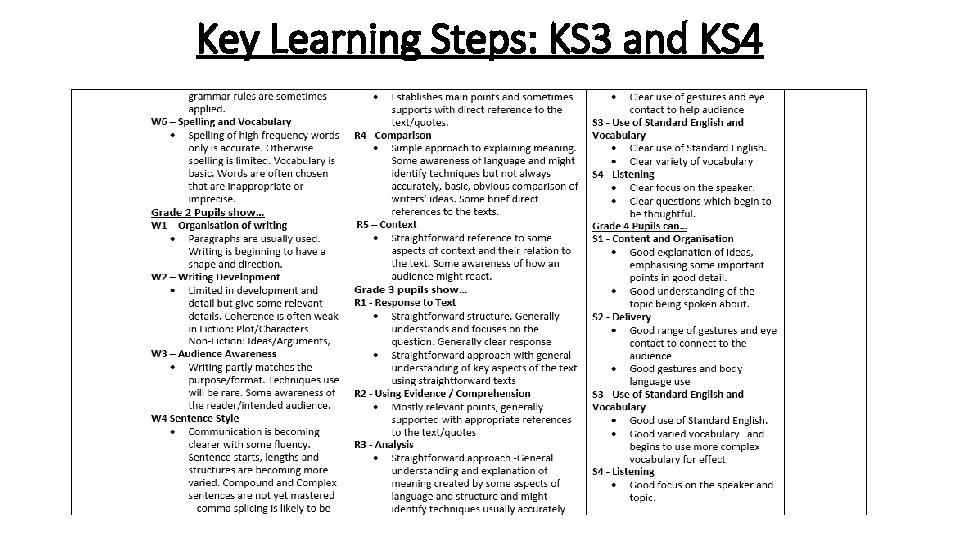
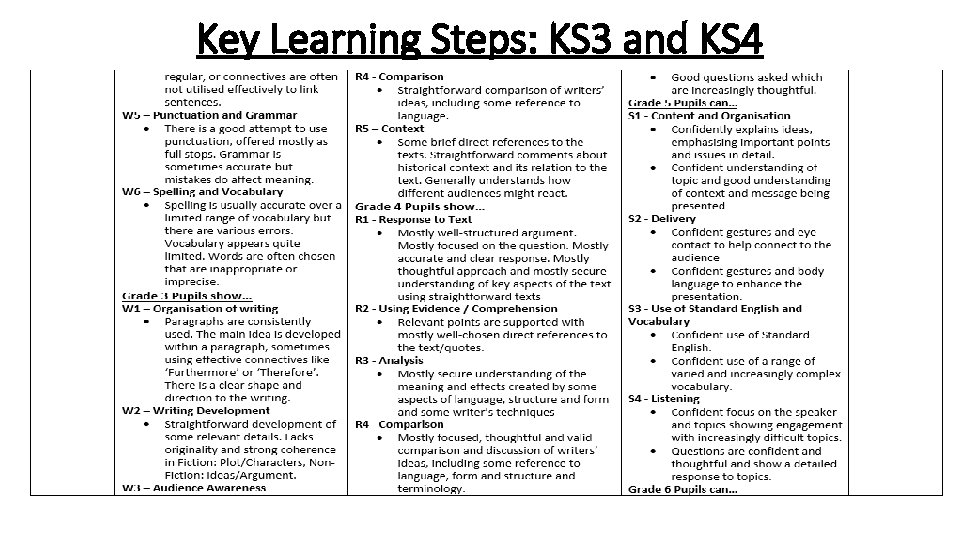
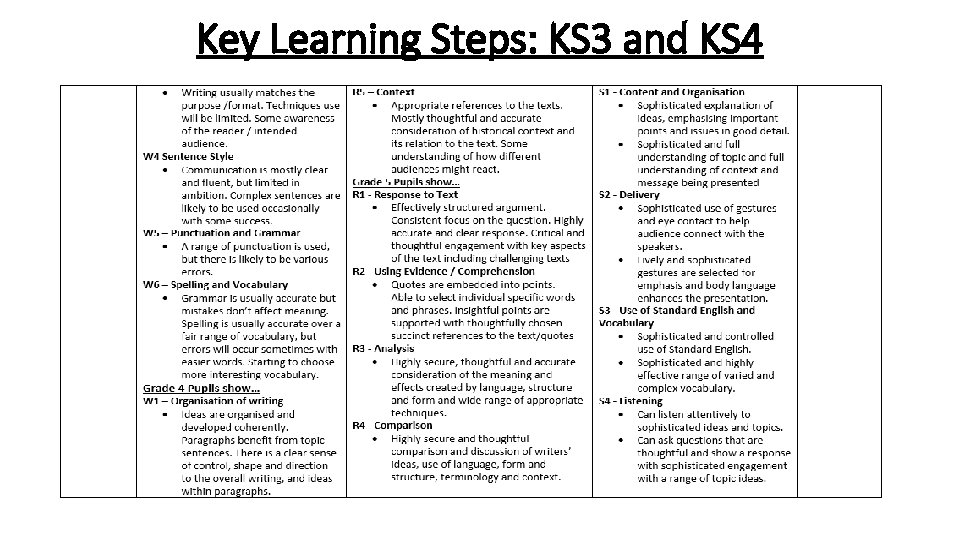
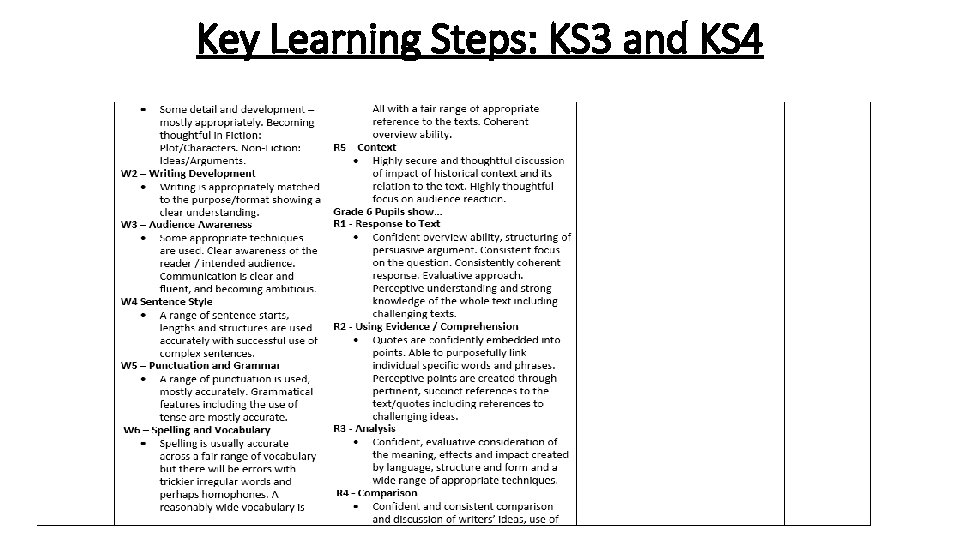
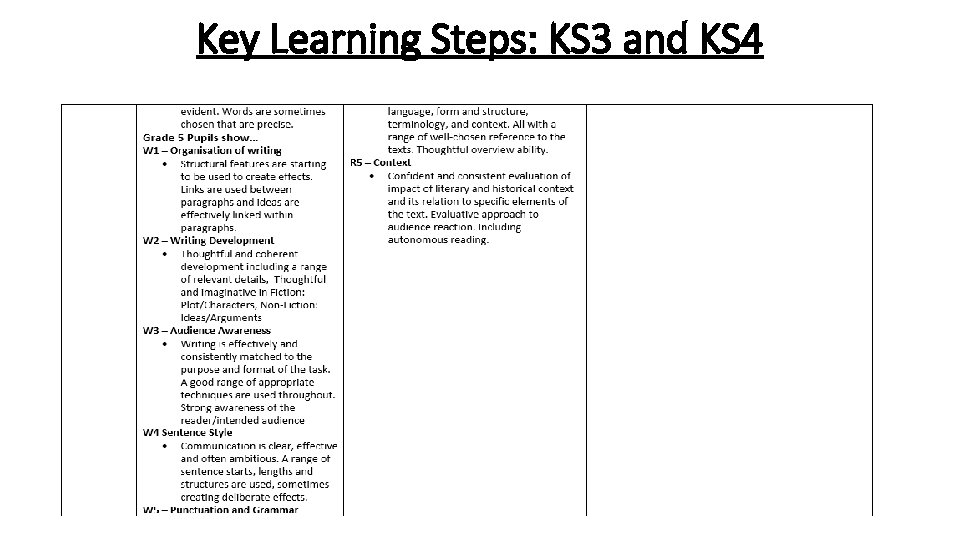
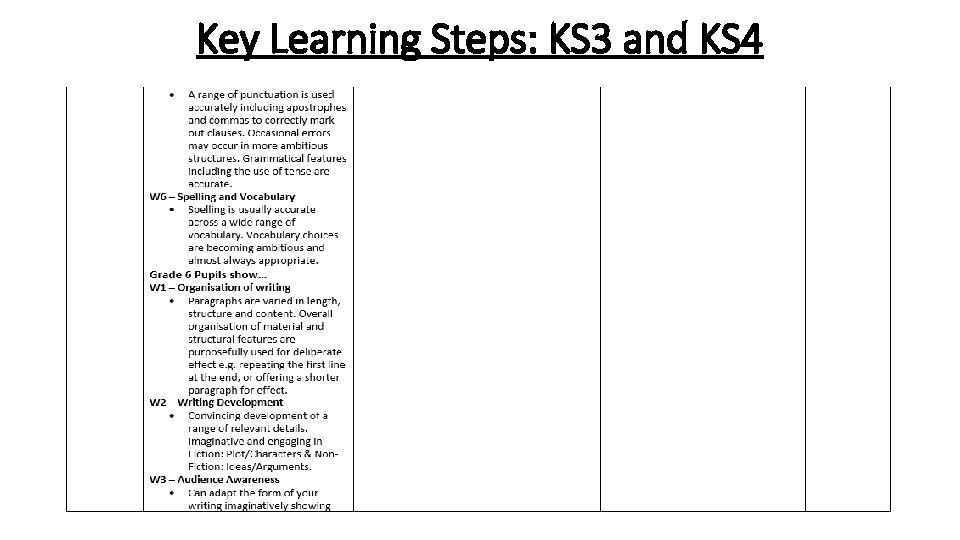
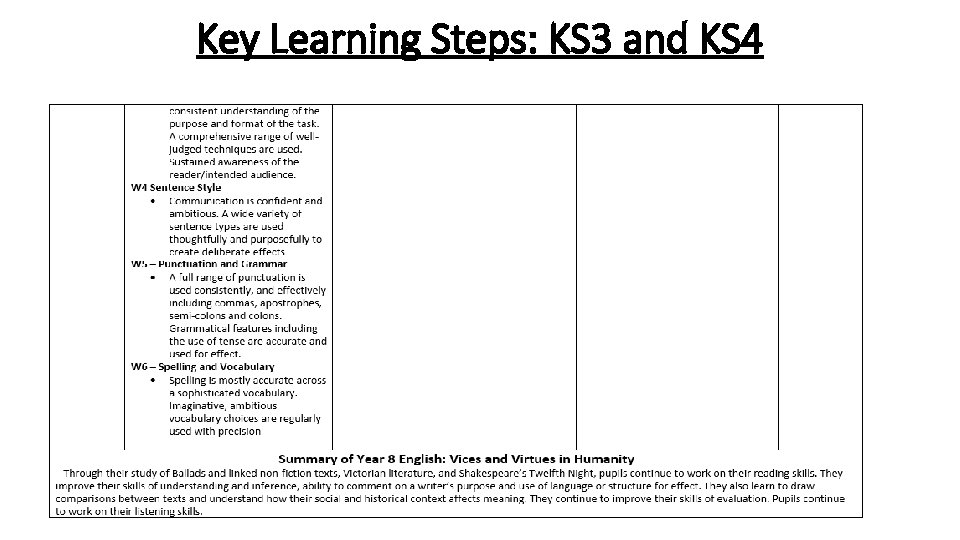
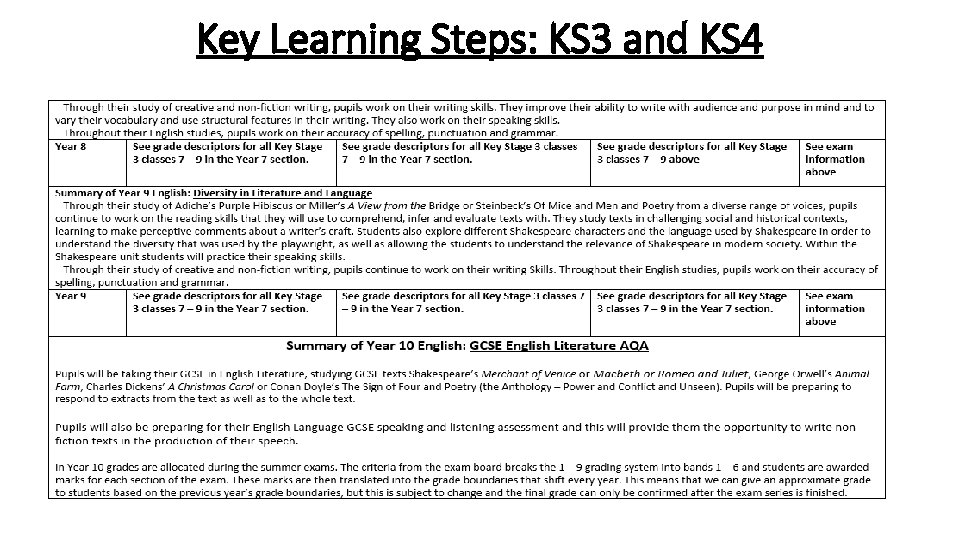
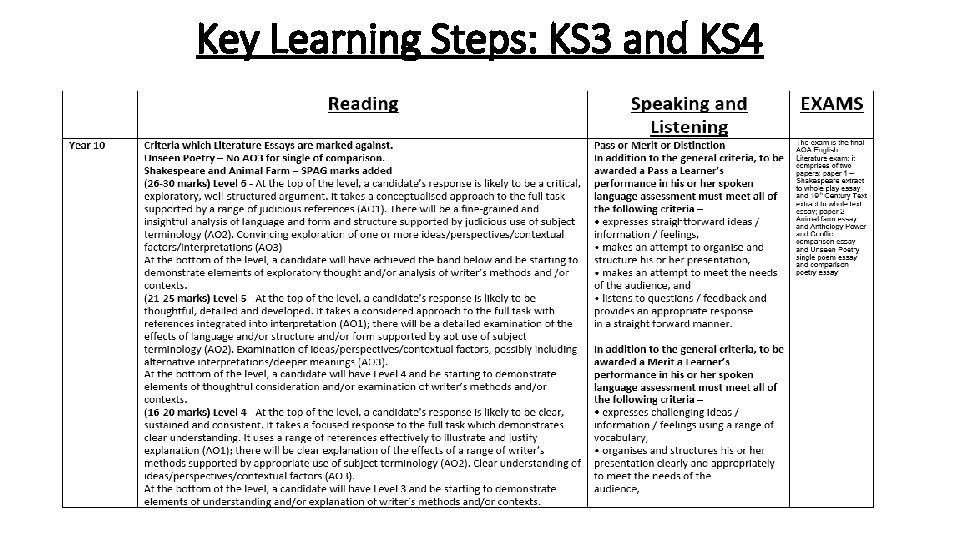
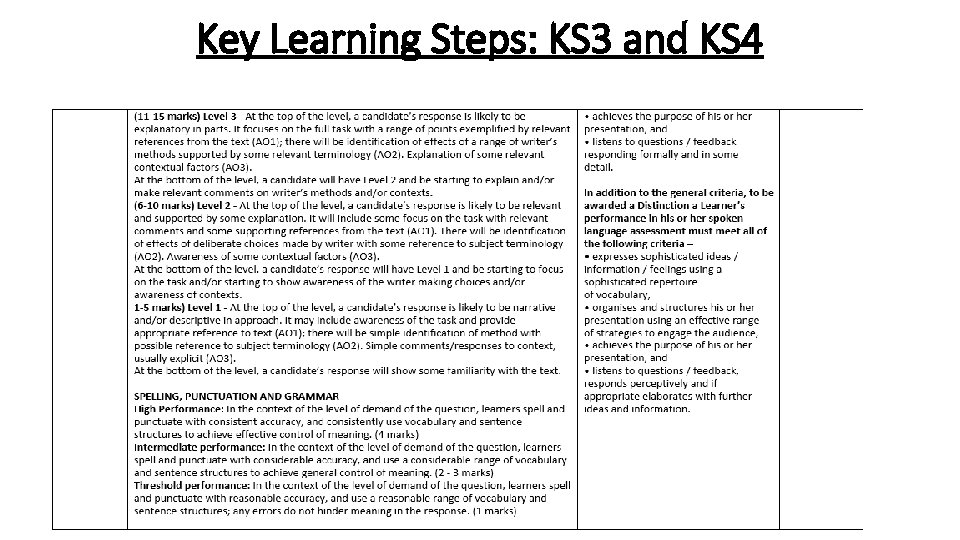
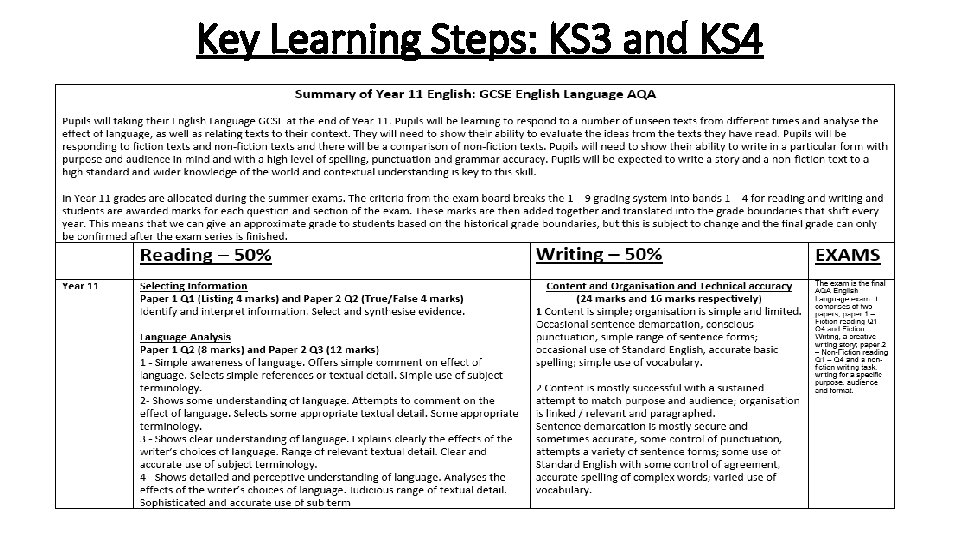
Documents that underpin the curriculum and show we implement different strategies in order to provide a coherent, focused and progressively structured curriculum • • • • Road Maps – documenting Key curriculum journey in each year group Curriculum Journey defined Overviews of KS 3 and KS 4 Interleaving Plan Subject overview linked to intent – implementation - impact Curriculum Rationales KS 3 and KS 4 Key Learning Steps KS 3 and KS 4 Grade descriptors KS 3 and KS 4 Overviews KS 3 and KS 4 SOL Documents 7 – 11 Vocabulary Strategy Spelling and Grammar strategy Knowledge Organisers Faculty Website
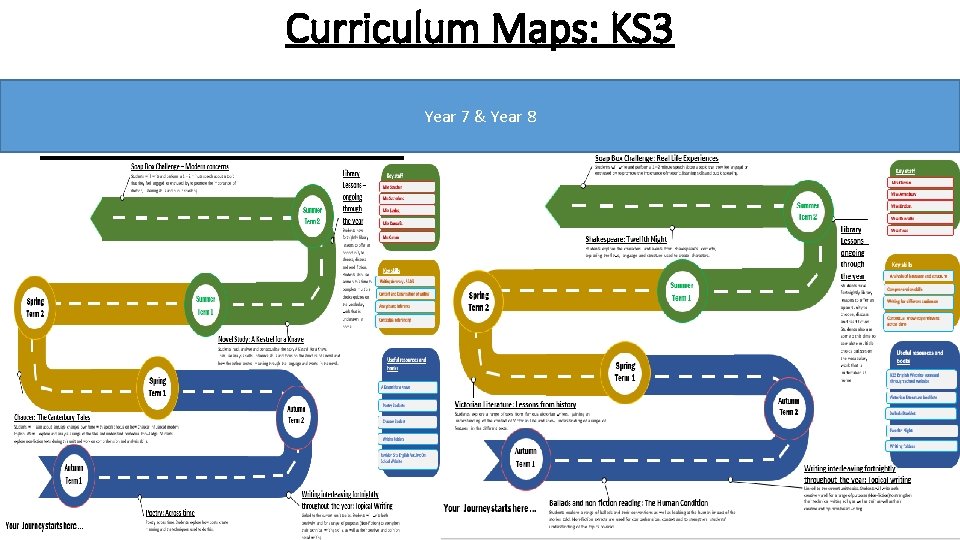
Curriculum Maps: KS 3 Year 7 & Year 8
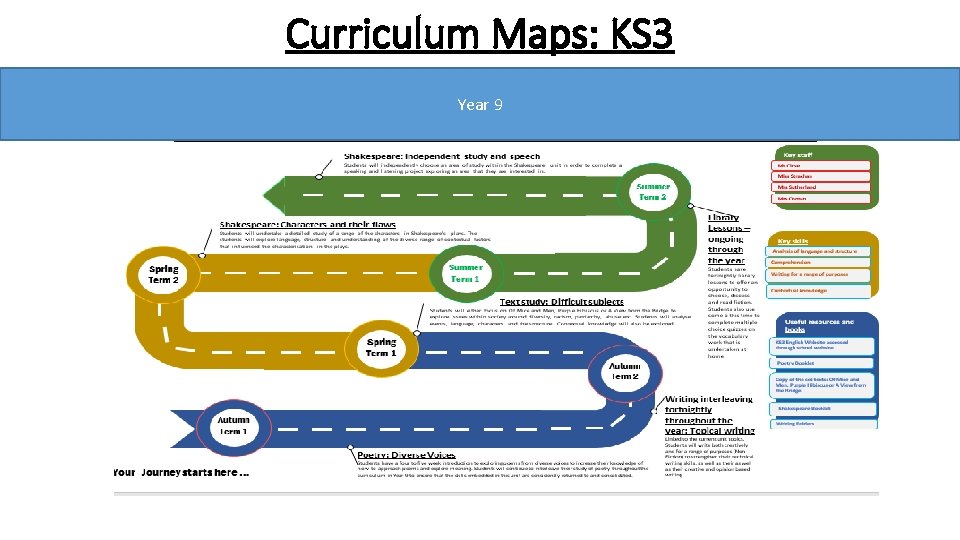
Curriculum Maps: KS 3 Year 9
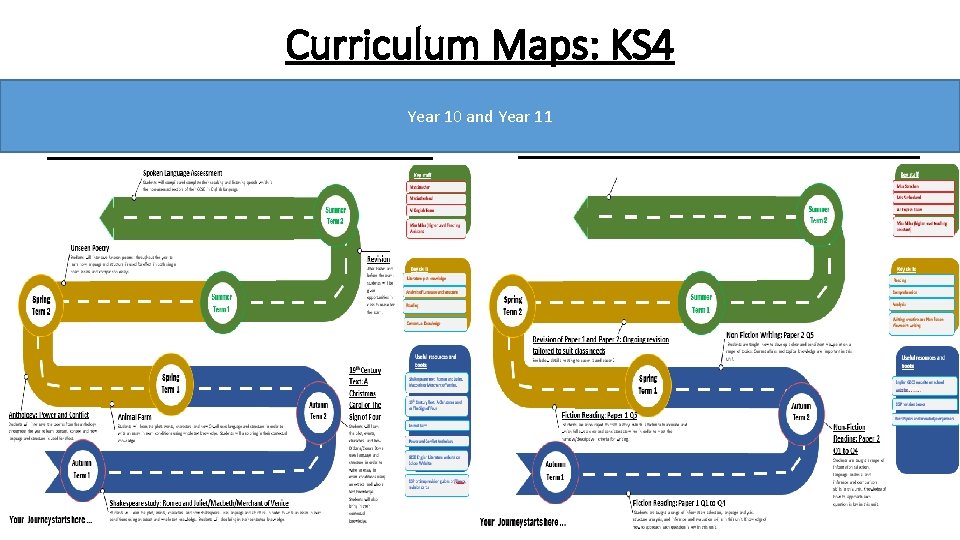
Curriculum Maps: KS 4 Year 10 and Year 11
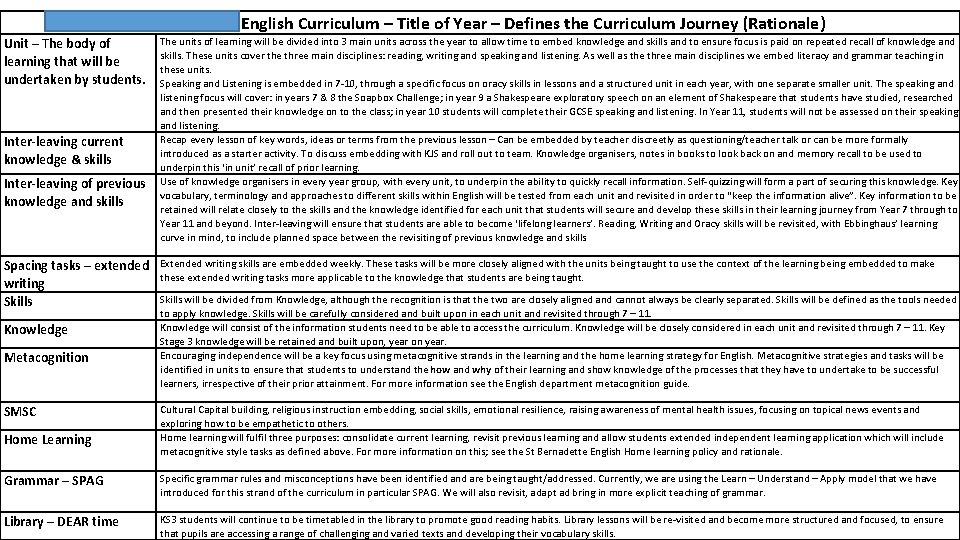
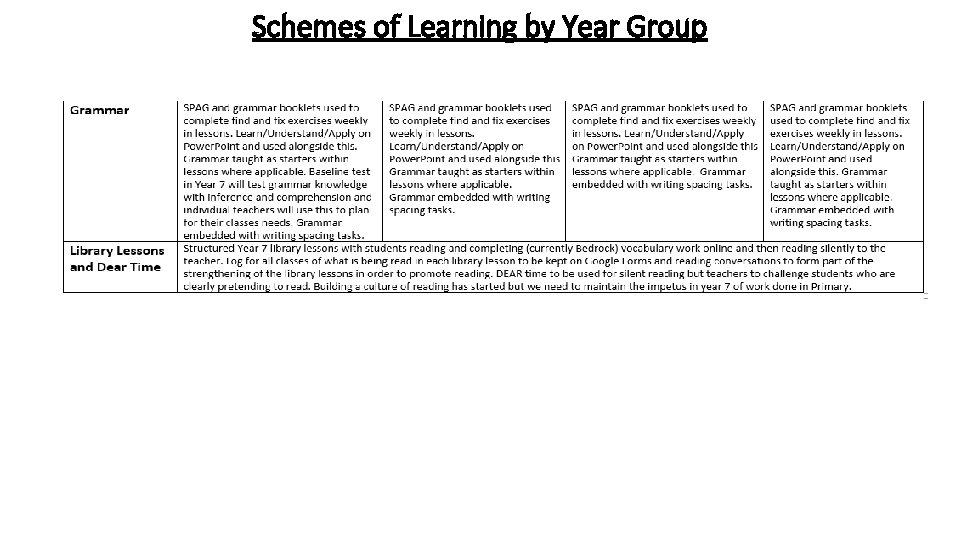
St Bernadette English Curriculum – Title of Year – Defines the Curriculum Journey (Rationale) Unit – The body of learning that will be undertaken by students. Inter-leaving current knowledge & skills Inter-leaving of previous knowledge and skills Spacing tasks – extended writing Skills Knowledge Metacognition SMSC Home Learning The units of learning will be divided into 3 main units across the year to allow time to embed knowledge and skills and to ensure focus is paid on repeated recall of knowledge and skills. These units cover the three main disciplines: reading, writing and speaking and listening. As well as the three main disciplines we embed literacy and grammar teaching in these units. Speaking and Listening is embedded in 7 -10, through a specific focus on oracy skills in lessons and a structured unit in each year, with one separate smaller unit. The speaking and listening focus will cover: in years 7 & 8 the Soapbox Challenge; in year 9 a Shakespeare exploratory speech on an element of Shakespeare that students have studied, researched and then presented their knowledge on to the class; in year 10 students will complete their GCSE speaking and listening. In Year 11, students will not be assessed on their speaking and listening. Recap every lesson of key words, ideas or terms from the previous lesson – Can be embedded by teacher discreetly as questioning/teacher talk or can be more formally introduced as a starter activity. To discuss embedding with KJS and roll out to team. Knowledge organisers, notes in books to look back on and memory recall to be used to underpin this ‘in unit’ recall of prior learning. Use of knowledge organisers in every year group, with every unit, to underpin the ability to quickly recall information. Self-quizzing will form a part of securing this knowledge. Key vocabulary, terminology and approaches to different skills within English will be tested from each unit and revisited in order to “keep the information alive”. Key information to be retained will relate closely to the skills and the knowledge identified for each unit that students will secure and develop these skills in their learning journey from Year 7 through to Year 11 and beyond. Inter-leaving will ensure that students are able to become ‘lifelong learners’. Reading, Writing and Oracy skills will be revisited, with Ebbinghaus’ learning curve in mind, to include planned space between the revisiting of previous knowledge and skills Extended writing skills are embedded weekly. These tasks will be more closely aligned with the units being taught to use the context of the learning being embedded to make these extended writing tasks more applicable to the knowledge that students are being taught. Skills will be divided from Knowledge, although the recognition is that the two are closely aligned and cannot always be clearly separated. Skills will be defined as the tools needed to apply knowledge. Skills will be carefully considered and built upon in each unit and revisited through 7 – 11. Knowledge will consist of the information students need to be able to access the curriculum. Knowledge will be closely considered in each unit and revisited through 7 – 11. Key Stage 3 knowledge will be retained and built upon, year on year. Encouraging independence will be a key focus using metacognitive strands in the learning and the home learning strategy for English. Metacognitive strategies and tasks will be identified in units to ensure that students to understand the how and why of their learning and show knowledge of the processes that they have to undertake to be successful learners, irrespective of their prior attainment. For more information see the English department metacognition guide. Cultural Capital building, religious instruction embedding, social skills, emotional resilience, raising awareness of mental health issues, focusing on topical news events and exploring how to be empathetic to others. Home learning will fulfil three purposes: consolidate current learning, revisit previous learning and allow students extended independent learning application which will include metacognitive style tasks as defined above. For more information on this; see the St Bernadette English Home learning policy and rationale. Grammar – SPAG Specific grammar rules and misconceptions have been identified and are being taught/addressed. Currently, we are using the Learn – Understand – Apply model that we have introduced for this strand of the curriculum in particular SPAG. We will also revisit, adapt ad bring in more explicit teaching of grammar. Library – DEAR time KS 3 students will continue to be timetabled in the library to promote good reading habits. Library lessons will be re-visited and become more structured and focused, to ensure that pupils are accessing a range of challenging and varied texts and developing their vocabulary skills.
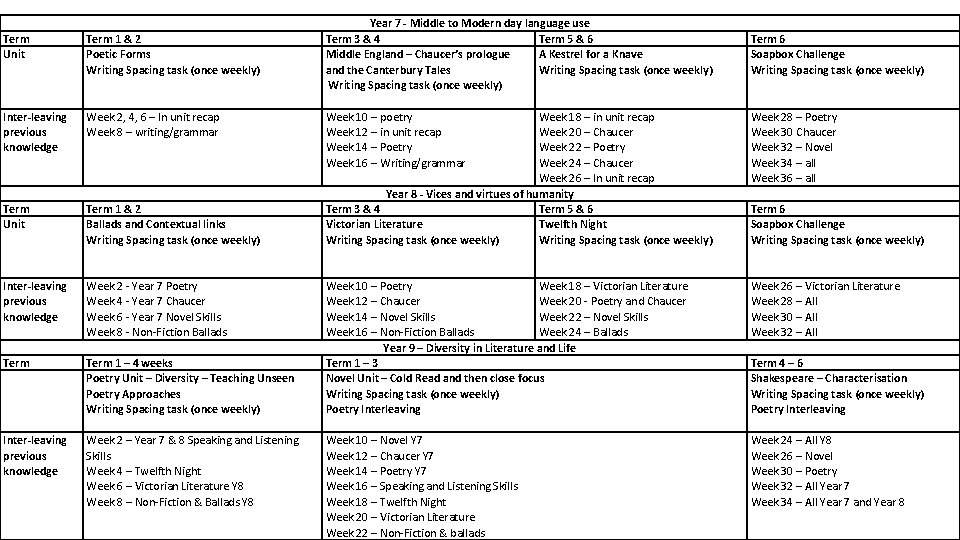
Term Unit Term 1 & 2 Poetic Forms Writing Spacing task (once weekly) Inter-leaving previous knowledge Week 2, 4, 6 – In unit recap Week 8 – writing/grammar Term Unit Term 1 & 2 Ballads and Contextual links Writing Spacing task (once weekly) Inter-leaving previous knowledge Week 2 - Year 7 Poetry Week 4 - Year 7 Chaucer Week 6 - Year 7 Novel Skills Week 8 - Non-Fiction Ballads Term 1 – 4 weeks Poetry Unit – Diversity – Teaching Unseen Poetry Approaches Writing Spacing task (once weekly) Inter-leaving previous knowledge Week 2 – Year 7 & 8 Speaking and Listening Skills Week 4 – Twelfth Night Week 6 – Victorian Literature Y 8 Week 8 – Non-Fiction & Ballads Y 8 Year 7 - Middle to Modern day language use Term 3 & 4 Term 5 & 6 Middle England – Chaucer’s prologue A Kestrel for a Knave and the Canterbury Tales Writing Spacing task (once weekly) Week 10 – poetry Week 12 – in unit recap Week 14 – Poetry Week 16 – Writing/grammar Term 6 Soapbox Challenge Writing Spacing task (once weekly) Week 18 – in unit recap Week 20 – Chaucer Week 22 – Poetry Week 24 – Chaucer Week 26 – In unit recap Year 8 - Vices and virtues of humanity Term 3 & 4 Term 5 & 6 Victorian Literature Twelfth Night Writing Spacing task (once weekly) Week 28 – Poetry Week 30 Chaucer Week 32 – Novel Week 34 – all Week 36 – all Week 10 – Poetry Week 18 – Victorian Literature Week 12 – Chaucer Week 20 - Poetry and Chaucer Week 14 – Novel Skills Week 22 – Novel Skills Week 16 – Non-Fiction Ballads Week 24 – Ballads Year 9 – Diversity in Literature and Life Term 1 – 3 Novel Unit – Cold Read and then close focus Writing Spacing task (once weekly) Poetry Interleaving Week 26 – Victorian Literature Week 28 – All Week 30 – All Week 32 – All Week 10 – Novel Y 7 Week 12 – Chaucer Y 7 Week 14 – Poetry Y 7 Week 16 – Speaking and Listening Skills Week 18 – Twelfth Night Week 20 – Victorian Literature Week 22 – Non-Fiction & ballads Week 24 – All Y 8 Week 26 – Novel Week 30 – Poetry Week 32 – All Year 7 Week 34 – All Year 7 and Year 8 Term 6 Soapbox Challenge Writing Spacing task (once weekly) Term 4 – 6 Shakespeare – Characterisation Writing Spacing task (once weekly) Poetry Interleaving
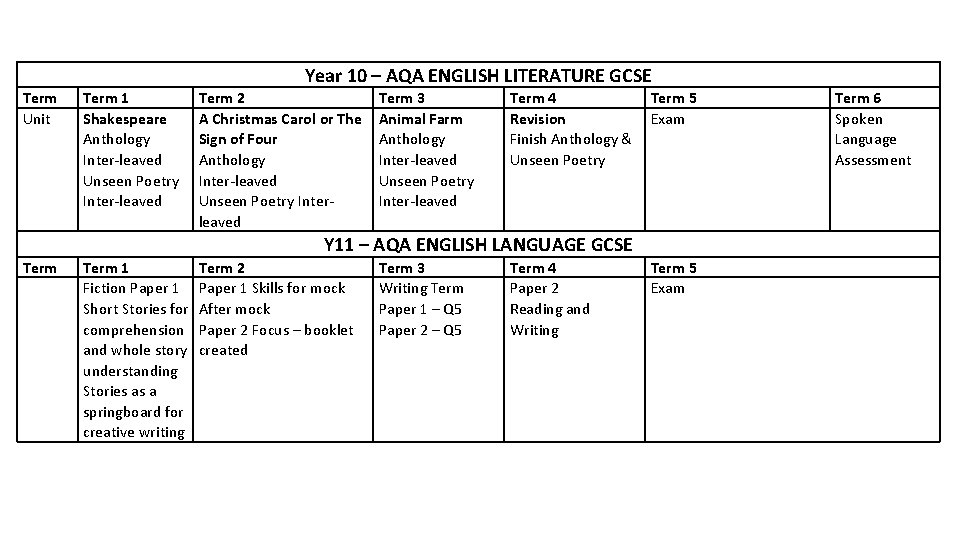
Year 10 – AQA ENGLISH LITERATURE GCSE Term Unit Term 1 Shakespeare Anthology Inter-leaved Unseen Poetry Inter-leaved Term 2 A Christmas Carol or The Sign of Four Anthology Inter-leaved Unseen Poetry Interleaved Term 3 Animal Farm Anthology Inter-leaved Unseen Poetry Inter-leaved Term 4 Revision Finish Anthology & Unseen Poetry Term 5 Exam Y 11 – AQA ENGLISH LANGUAGE GCSE Term 1 Fiction Paper 1 Short Stories for comprehension and whole story understanding Stories as a springboard for creative writing Term 2 Paper 1 Skills for mock After mock Paper 2 Focus – booklet created Term 3 Writing Term Paper 1 – Q 5 Paper 2 – Q 5 Term 4 Paper 2 Reading and Writing Term 5 Exam Term 6 Spoken Language Assessment
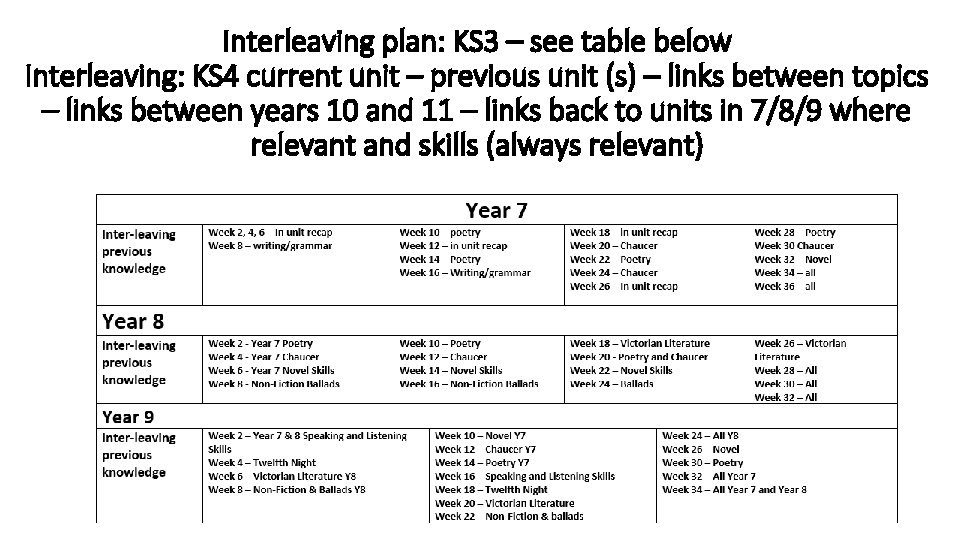
Interleaving plan: KS 3 – see table below Interleaving: KS 4 current unit – previous unit (s) – links between topics – links between years 10 and 11 – links back to units in 7/8/9 where relevant and skills (always relevant)
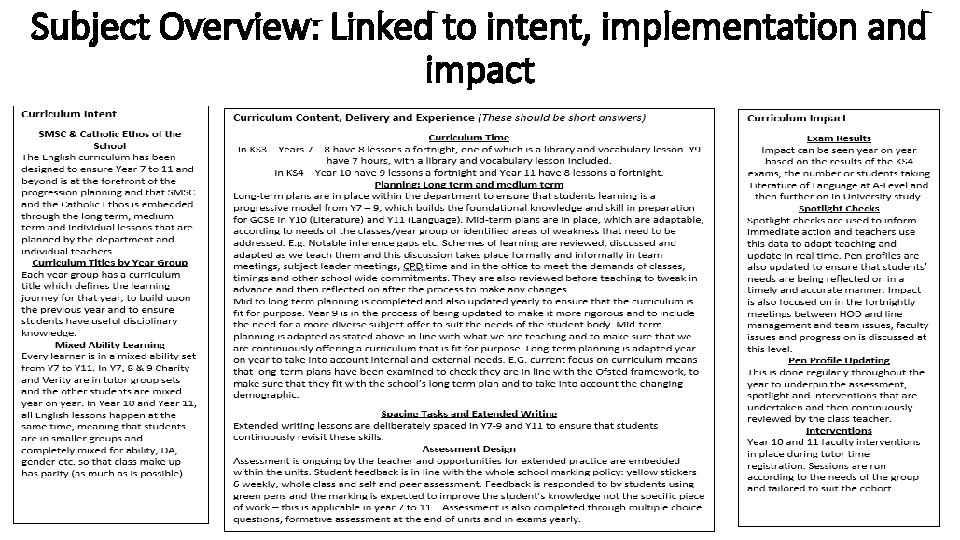
Subject Overview: Linked to intent, implementation and impact
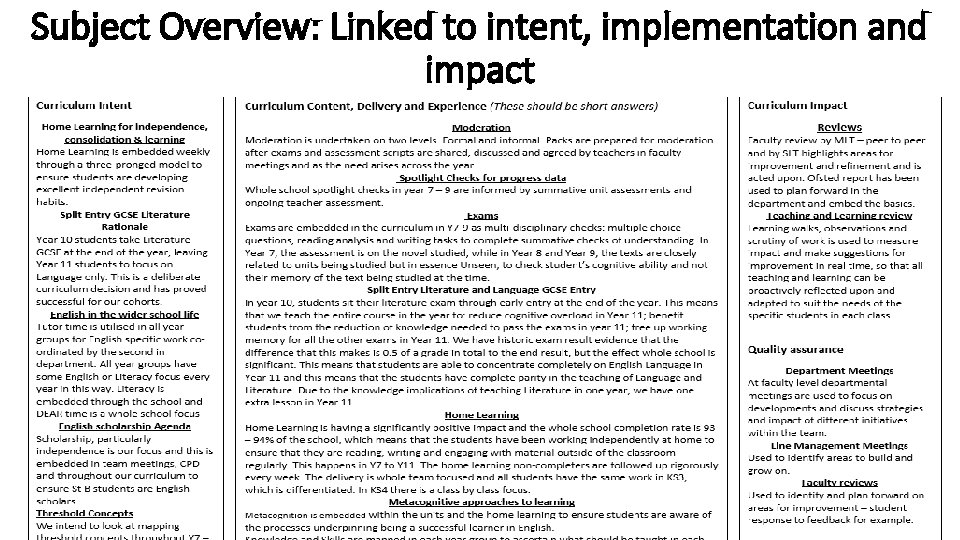
Subject Overview: Linked to intent, implementation and impact
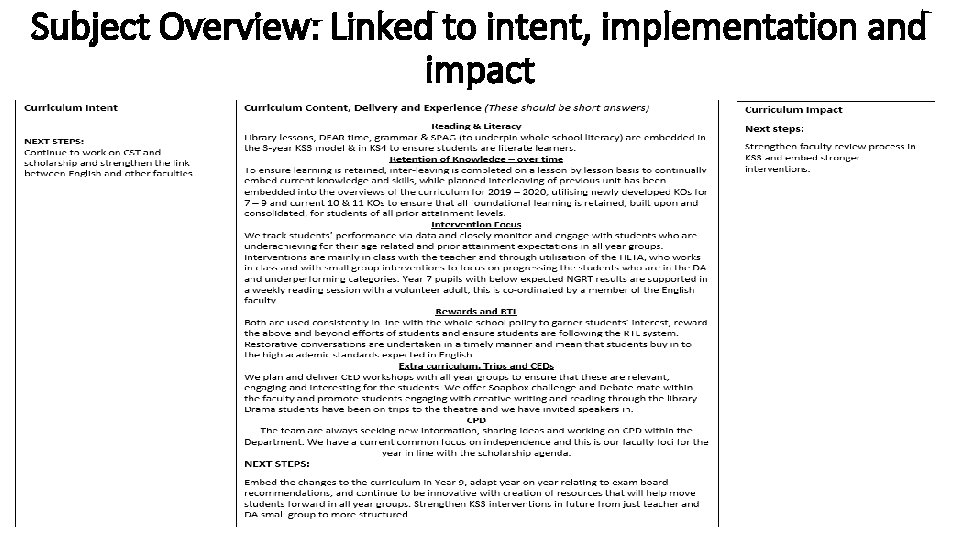
Subject Overview: Linked to intent, implementation and impact
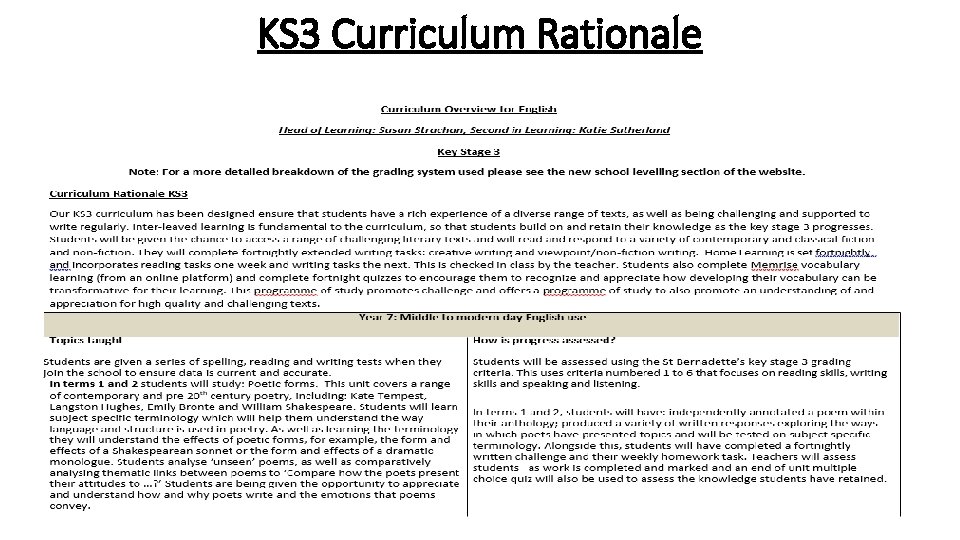
KS 3 Curriculum Rationale
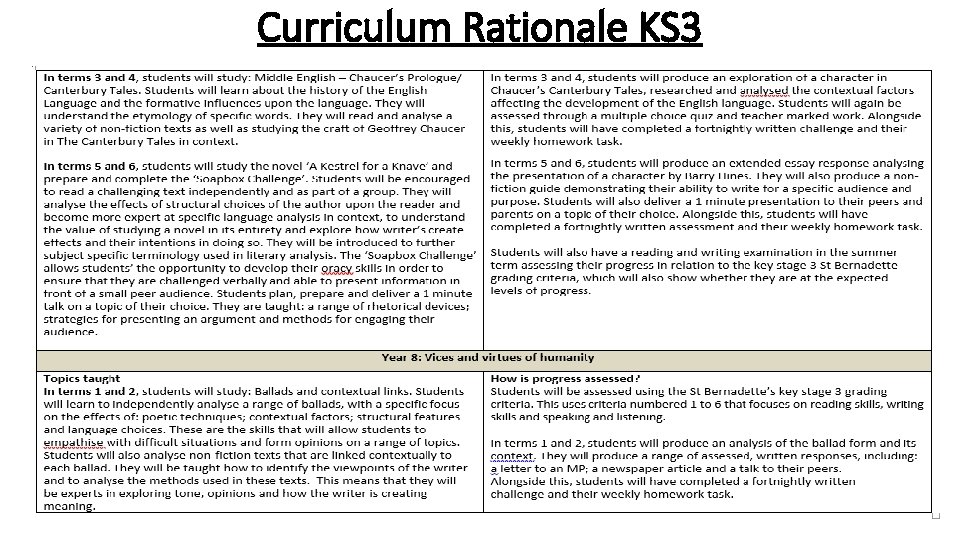
Curriculum Rationale KS 3
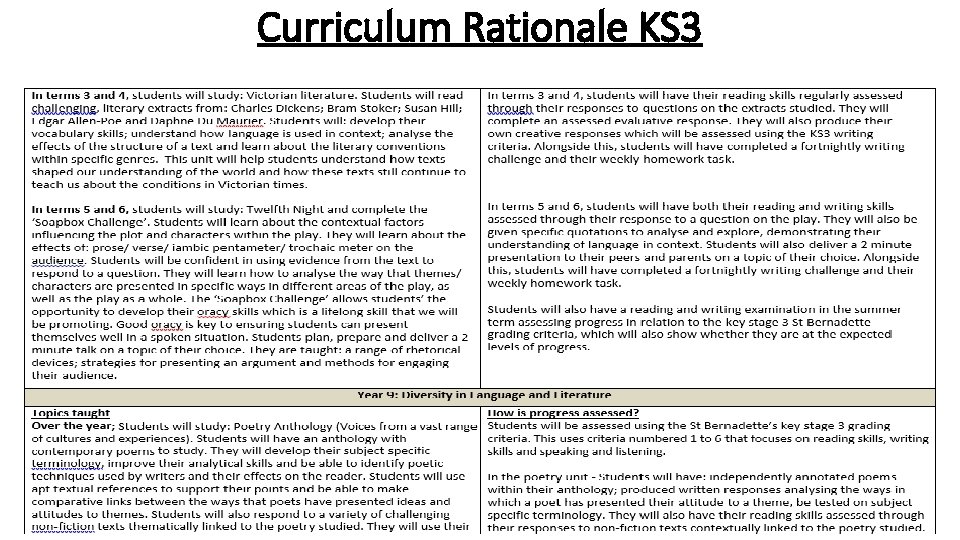
Curriculum Rationale KS 3
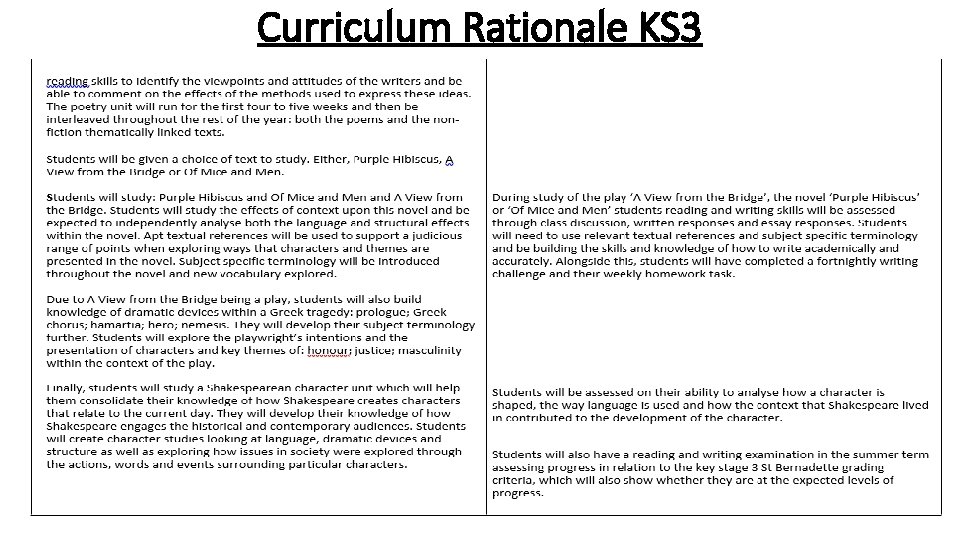
Curriculum Rationale KS 3
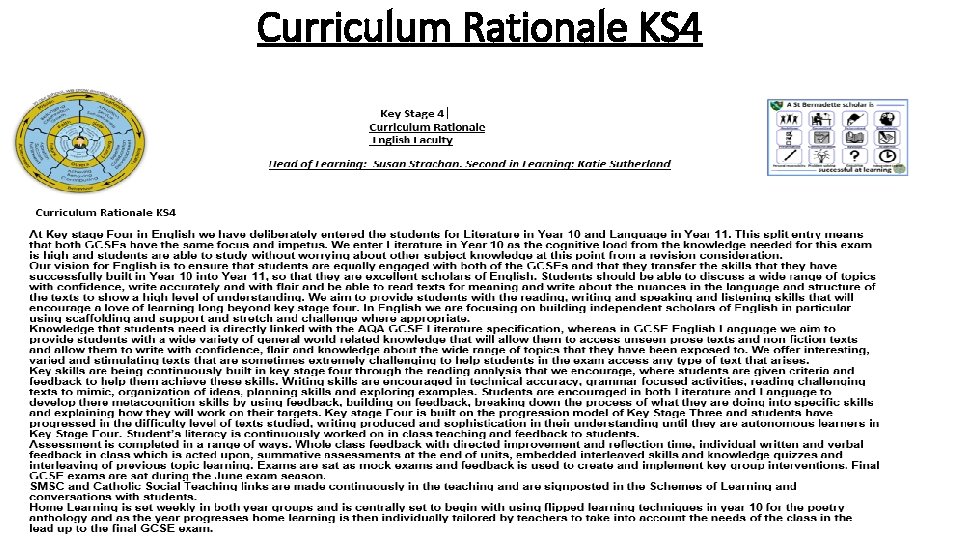
Curriculum Rationale KS 4
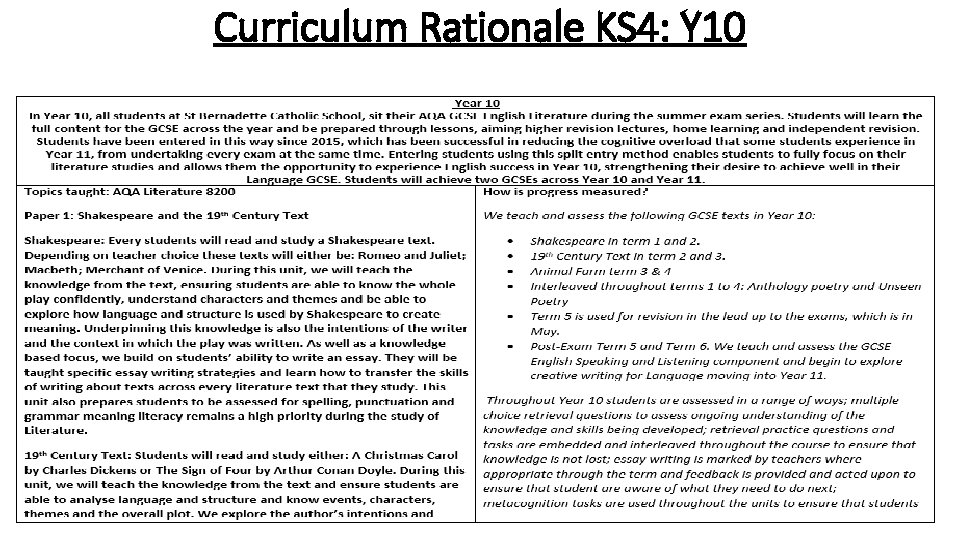
Curriculum Rationale KS 4: Y 10
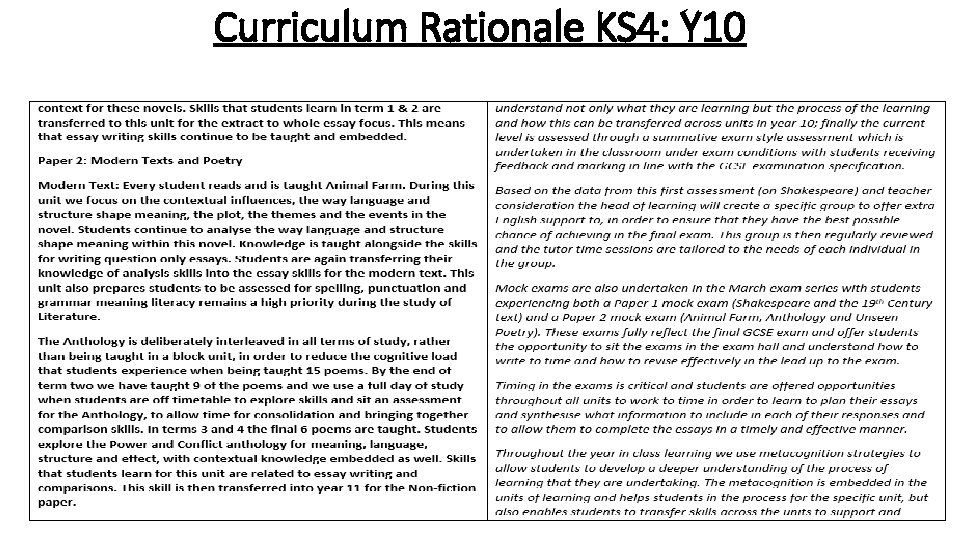
Curriculum Rationale KS 4: Y 10
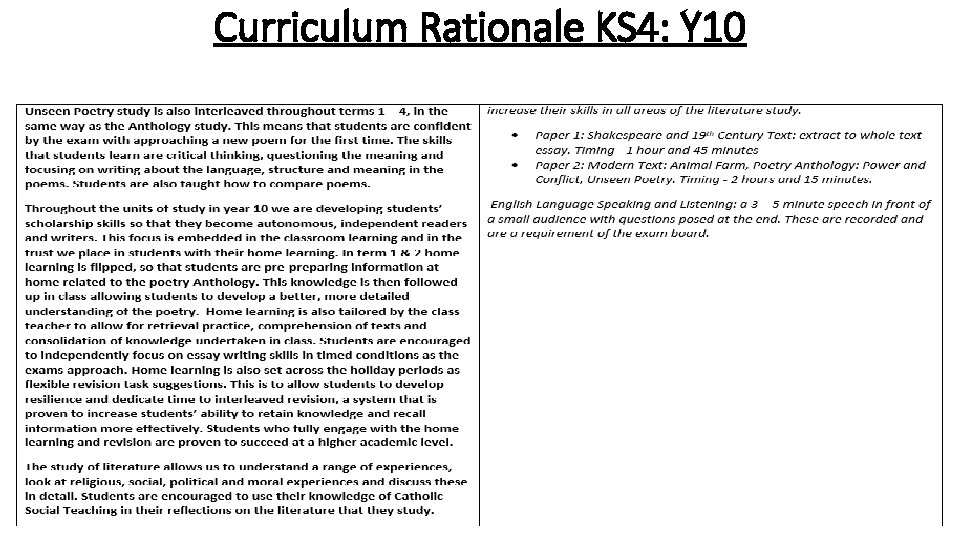
Curriculum Rationale KS 4: Y 10
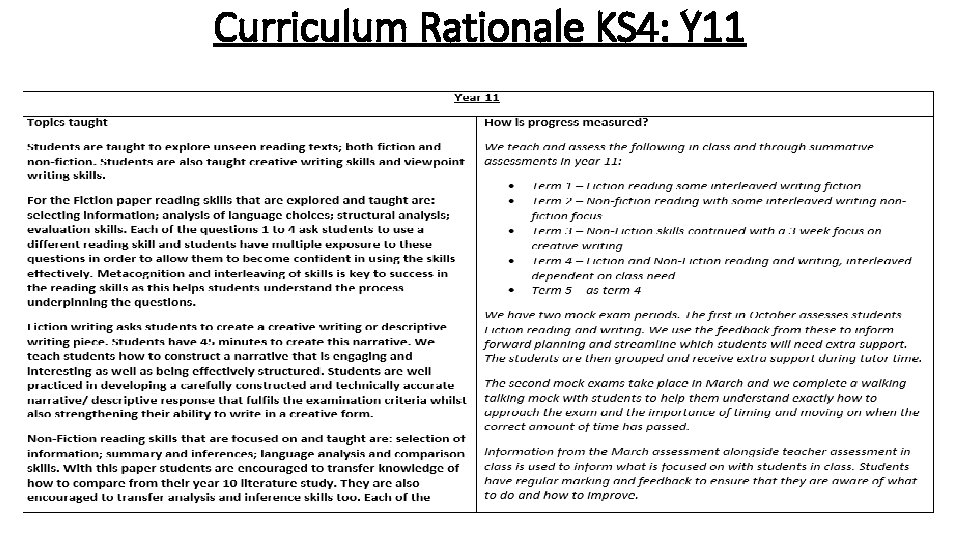
Curriculum Rationale KS 4: Y 11
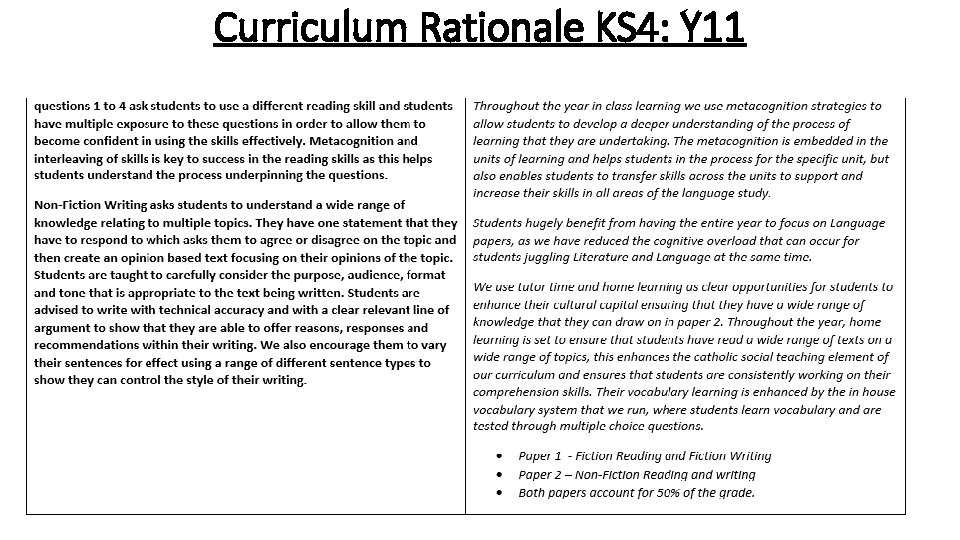
Curriculum Rationale KS 4: Y 11
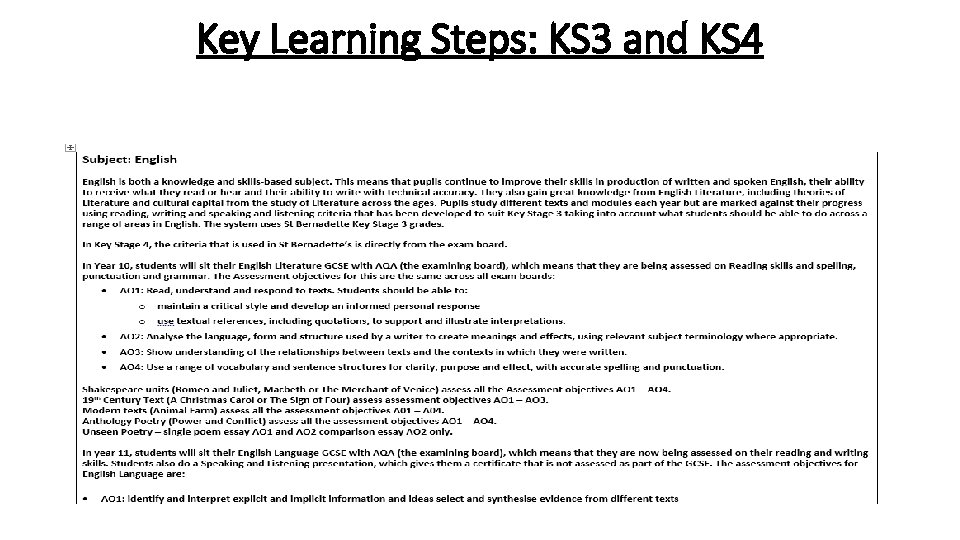
Key Learning Steps: KS 3 and KS 4
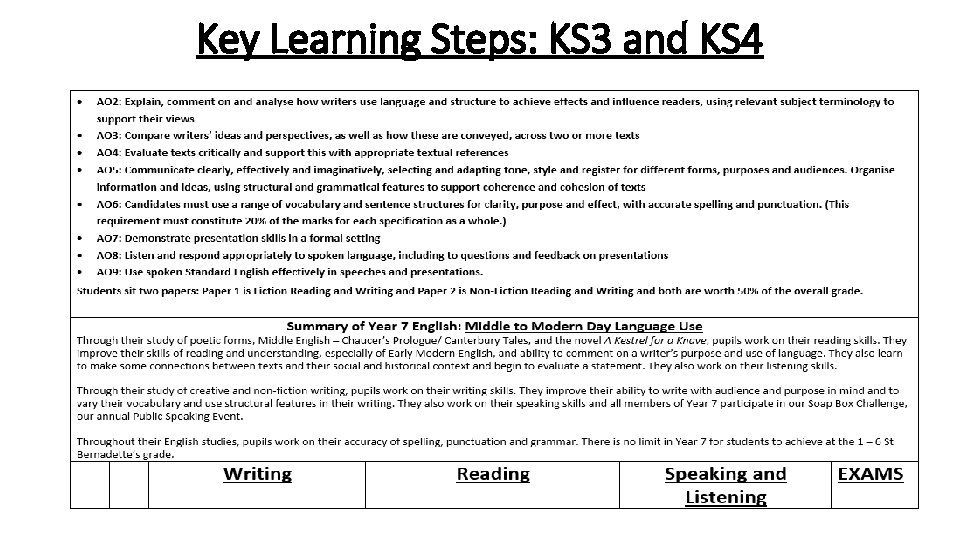
Key Learning Steps: KS 3 and KS 4
Key Learning Steps: KS 3 and KS 4
Key Learning Steps: KS 3 and KS 4
Key Learning Steps: KS 3 and KS 4
Key Learning Steps: KS 3 and KS 4
Key Learning Steps: KS 3 and KS 4
Key Learning Steps: KS 3 and KS 4
Key Learning Steps: KS 3 and KS 4
Key Learning Steps: KS 3 and KS 4
Key Learning Steps: KS 3 and KS 4
Key Learning Steps: KS 3 and KS 4
Key Learning Steps: KS 3 and KS 4
Key Learning Steps: KS 3 and KS 4
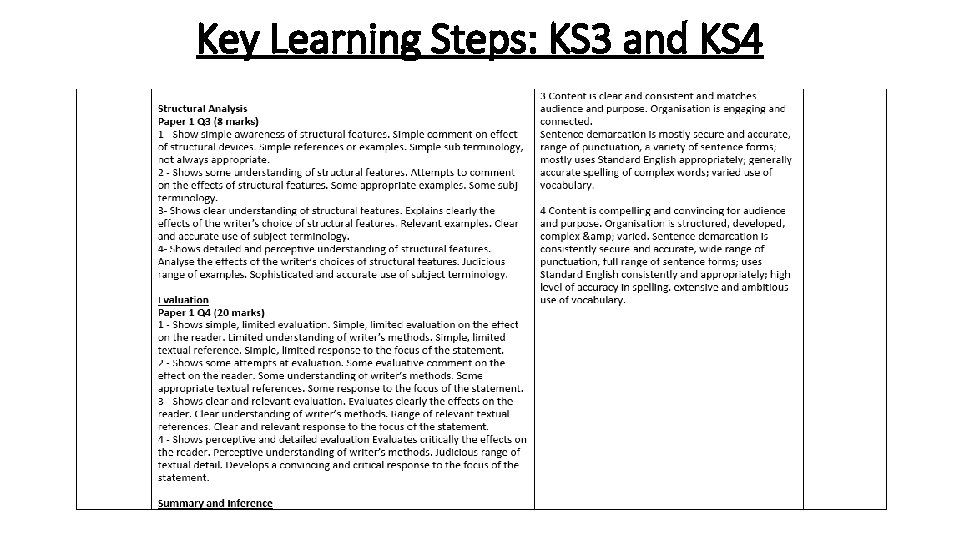
Key Learning Steps: KS 3 and KS 4
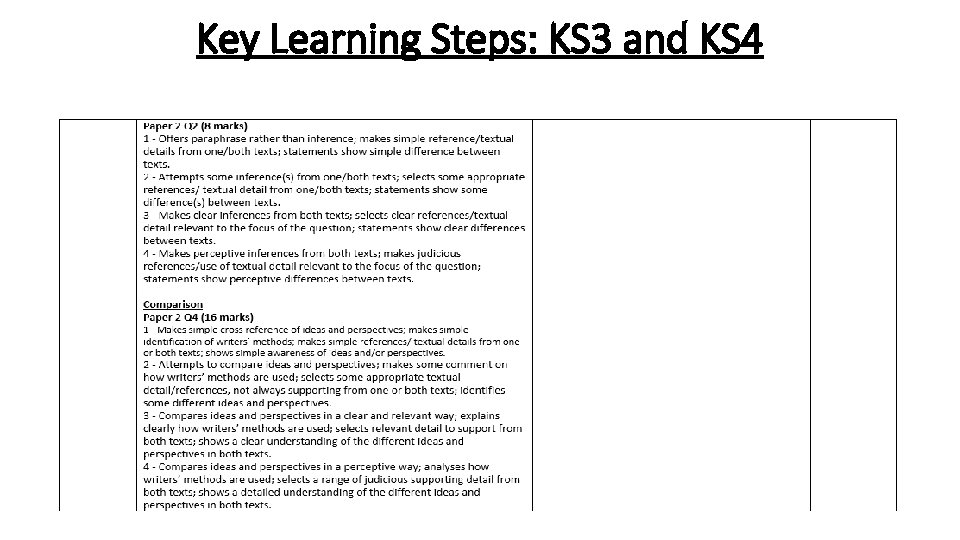
Key Learning Steps: KS 3 and KS 4
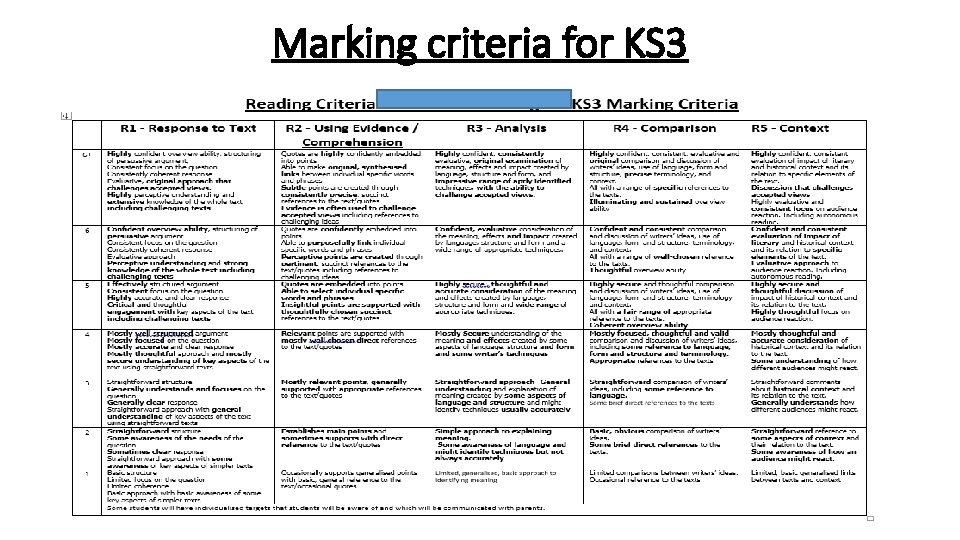
Marking criteria for KS 3
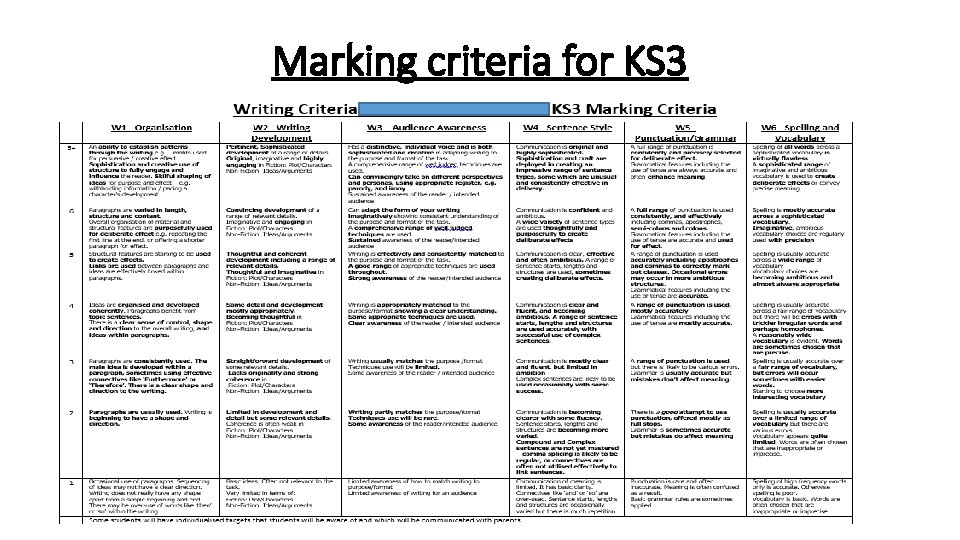
Marking criteria for KS 3
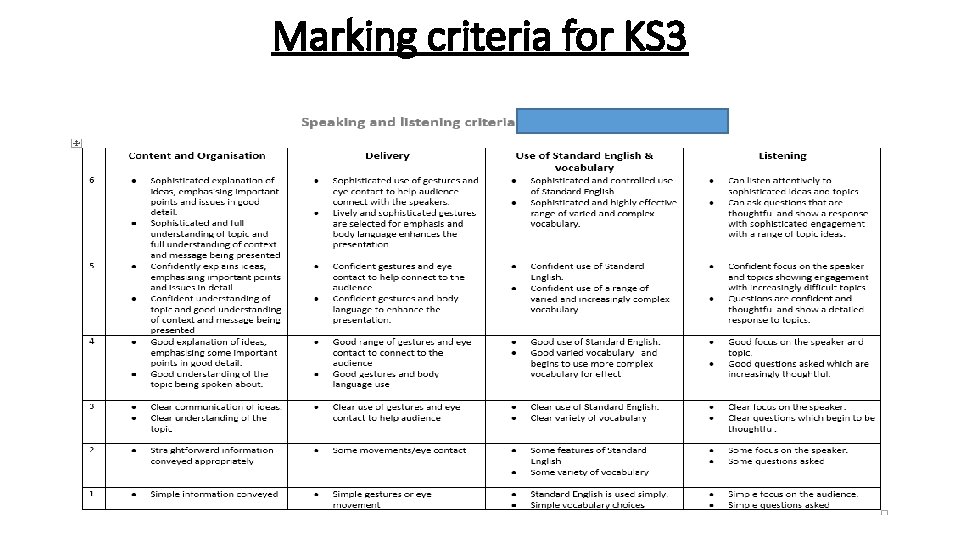
Marking criteria for KS 3
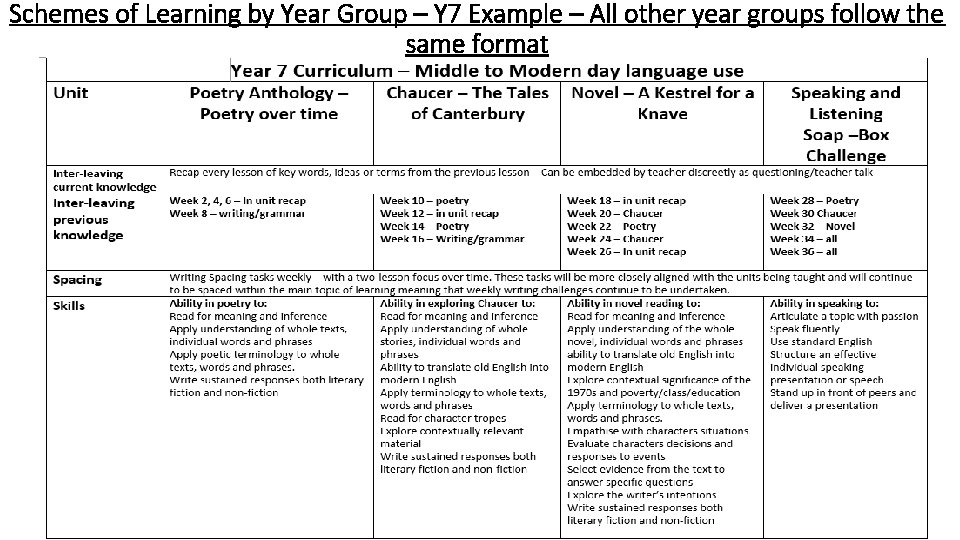
Schemes of Learning by Year Group – Y 7 Example – All other year groups follow the same format
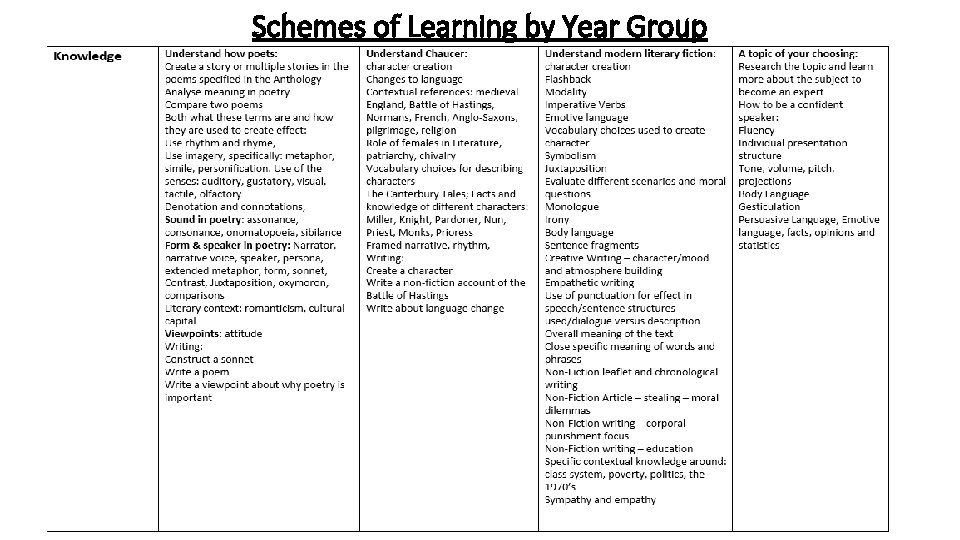
Schemes of Learning by Year Group
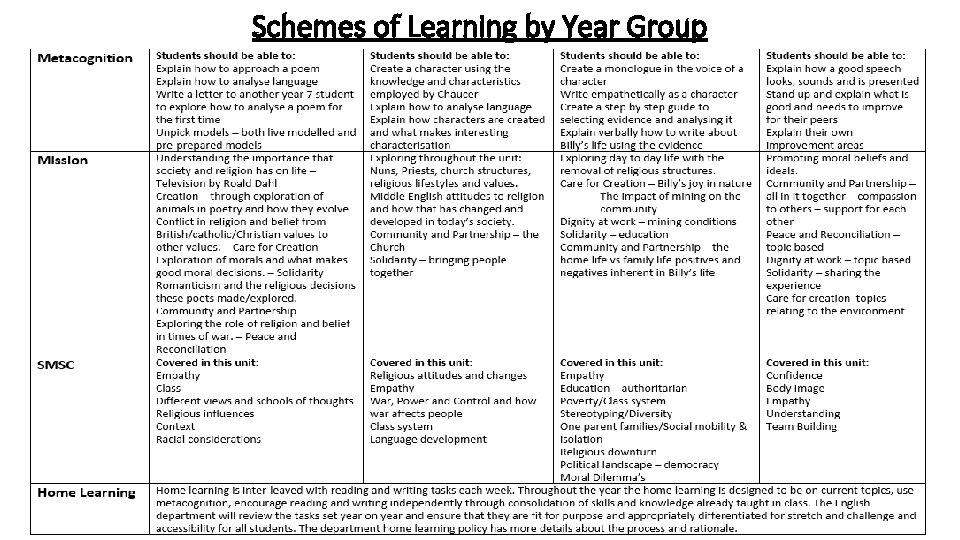
Schemes of Learning by Year Group
Schemes of Learning by Year Group
KS 3 and Year 11 Vocabulary Programme
Vocabulary mapped 4 ways:
Vocabulary Programme – Memrise home learning
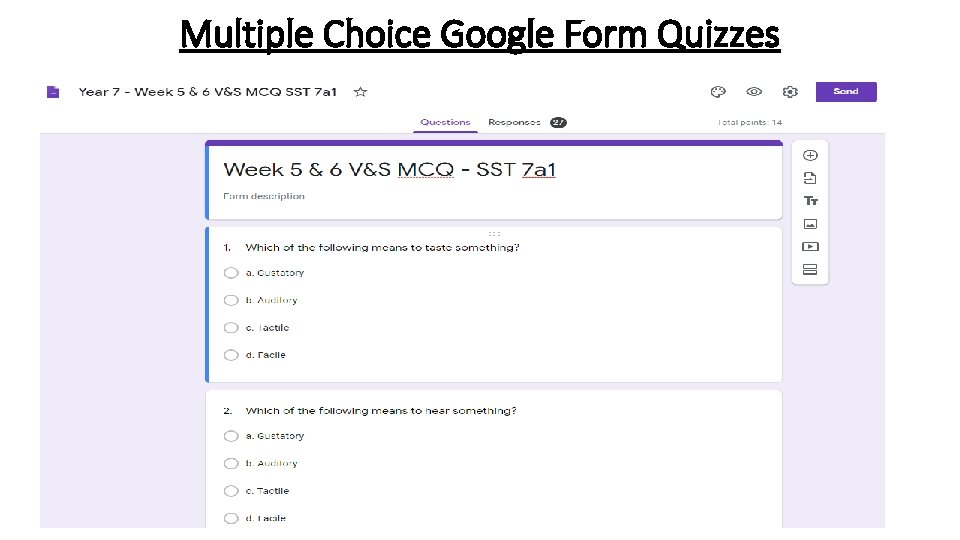
Multiple Choice Google Form Quizzes
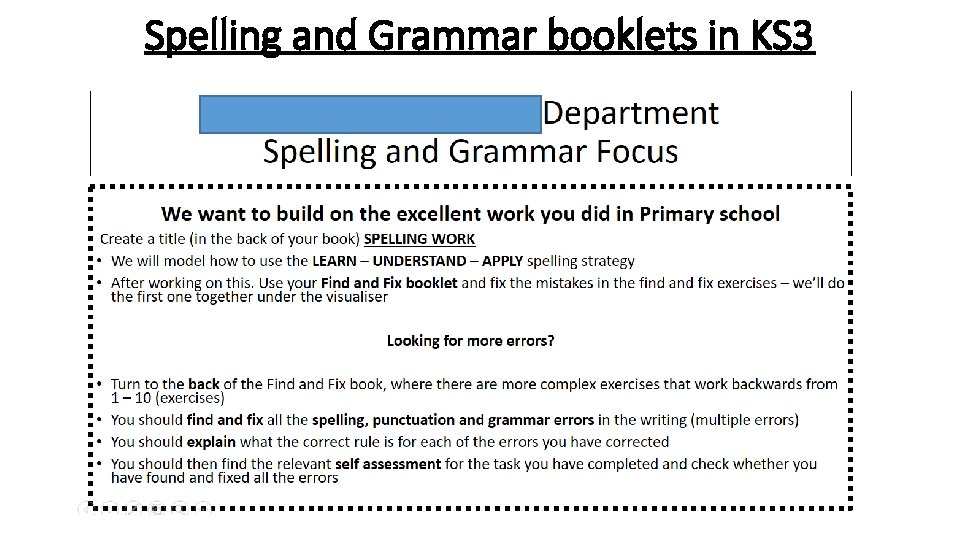
Spelling and Grammar booklets in KS 3
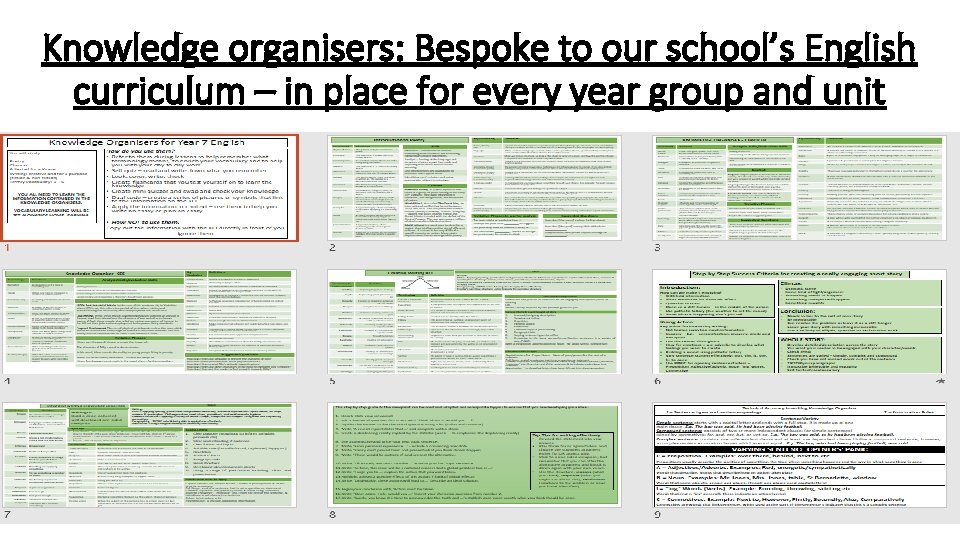
Knowledge organisers: Bespoke to our school’s English curriculum – in place for every year group and unit
Knowledge organisers: Bespoke to our school’s English curriculum – in place for every year group and unit
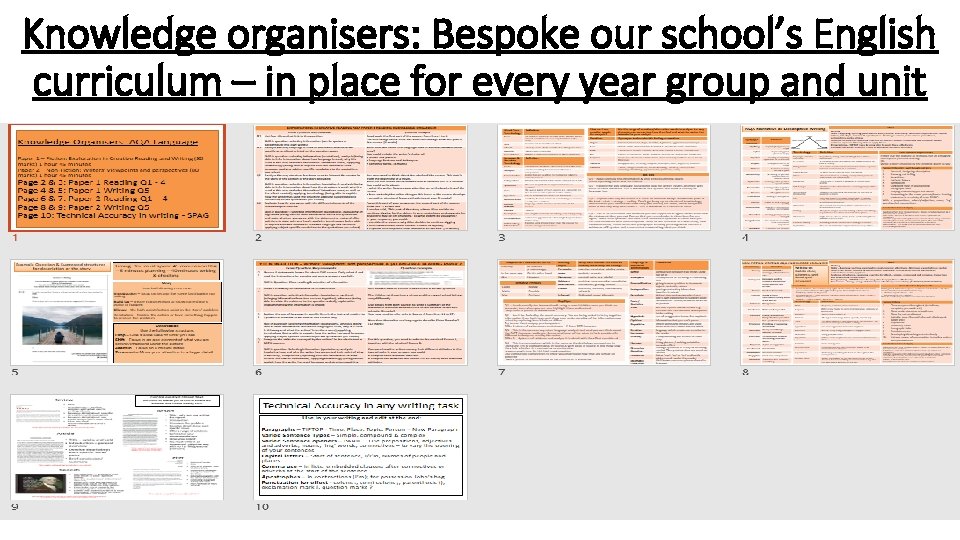
Knowledge organisers: Bespoke our school’s English curriculum – in place for every year group and unit
PLCs – In progress • Not in place at the moment • Gained time task for 2020
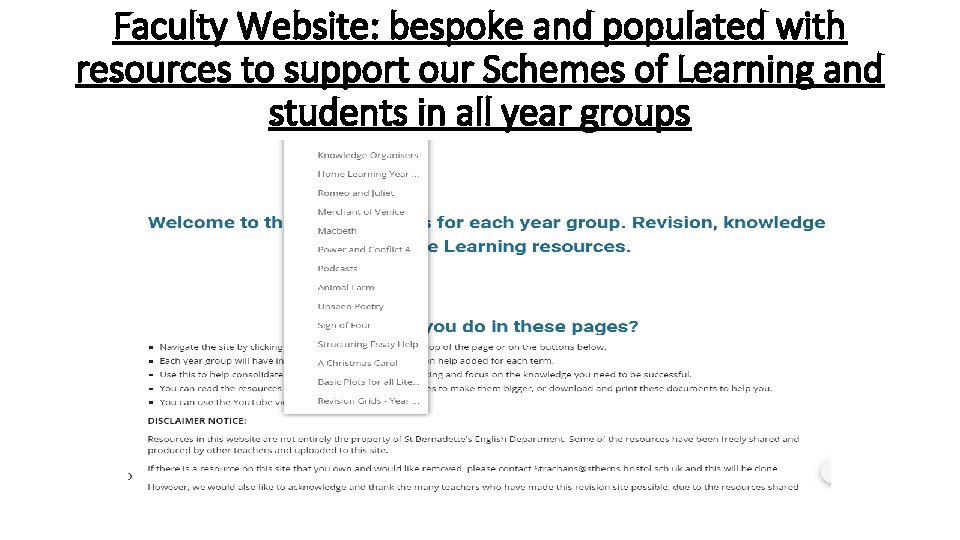
Faculty Website: bespoke and populated with resources to support our Schemes of Learning and students in all year groups
Library Lessons KS 3 – Once a fortnight • 30 – 40 minutes silent reading • 20 minutes – MCQ quiz • Reading conversations
- Slides: 57