
Curriculum Concepts Nature Purposes Traditional Point of View
- Slides: 17
Curriculum Concepts, Nature, Purposes
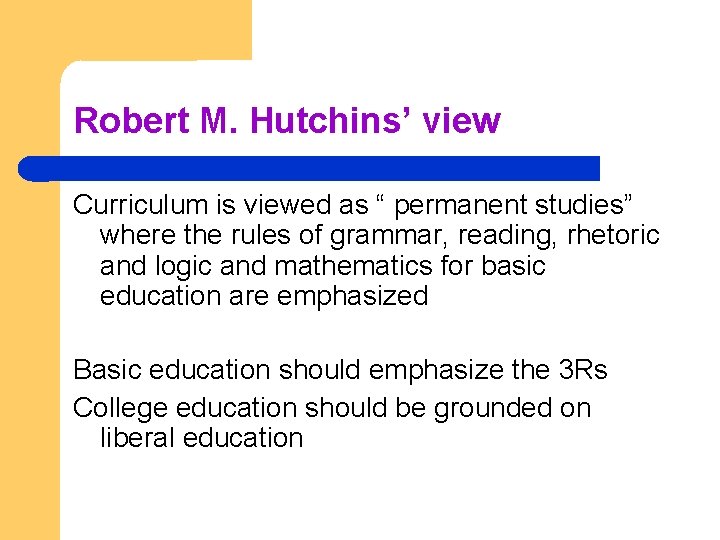
Traditional Point of View Robert M. Hutchins views curriculum as “permanent studies”, where the rules of grammar, reading, rhetoric and logic and mathematics for basic education are emphasized -Basic Education should emphasize the 3 Rs and college education should be grounded on liberal education.
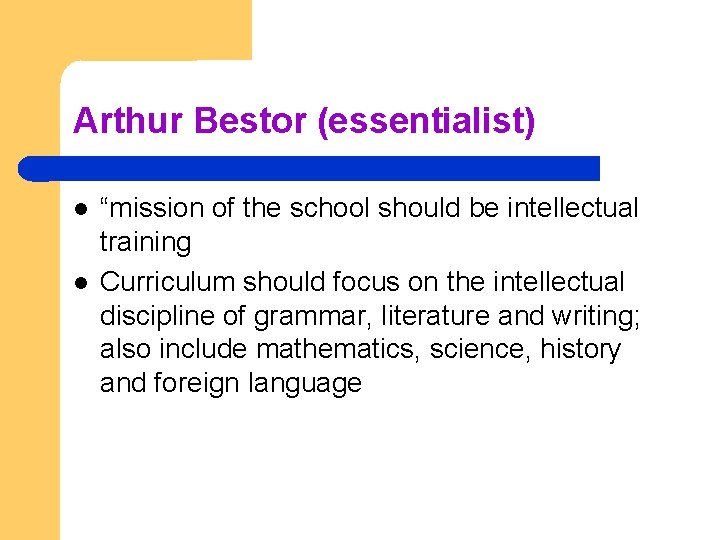
Traditional Point of View Arthur Bestor, an essentialist, believes that the mission of the school should be intellectual training; -curriculum should focus on the fundamental intellectual discipline of grammar, literature and writing. It should also include mathematics, science, history and foreign language.
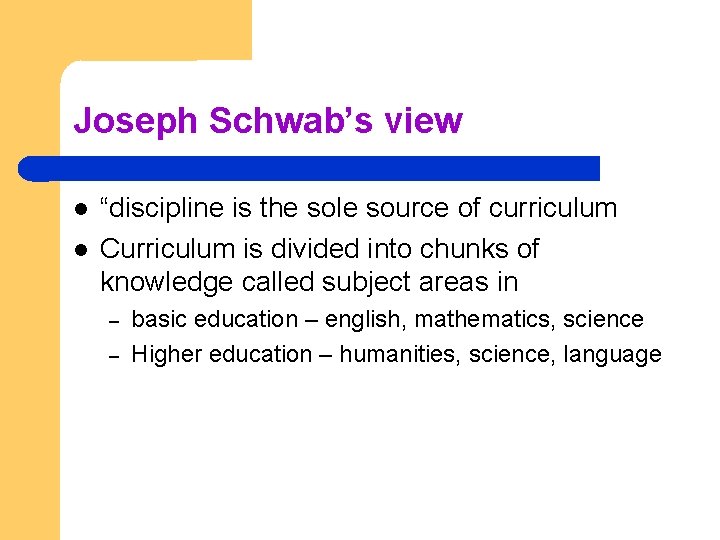
Traditional Point of View Joseph Schwab’s view of curriculum is that discipline is the sole source of curriculum. He said that curriculum should consist only of knowledge which comes from discipline which is the sole source.
Traditional Point of View Curriculum is divided into chunks of knowledge we call subject areas in the basic education such as English, Mathematics, Science, Social Studies and others. In college, discipline may include humanities, sciences, languages and many more.
Traditional Point of View written documents or a plan of action in accomplishing goals.
Progressive Point of View Curriculum is defined as the total learning experiences of the individual. This definition is anchored on John Dewey’s definition of experience and education. He believed that reflective thinking is a means that unifies curricular. Thought is not derived from action but tested by application.
Progressive Point of View Caswell and Campbell viewed curriculum as “all experiences children have under the guidance of teachers”. Marsh and Willis view curriculum as all the “experiences in the classroom which are planned and entered by the teacher, and also learned by the students. ” Smith, Stanley and Shores defined curriculum as a “ sequence of potential experiences set up in schools for the purpose of disciplining
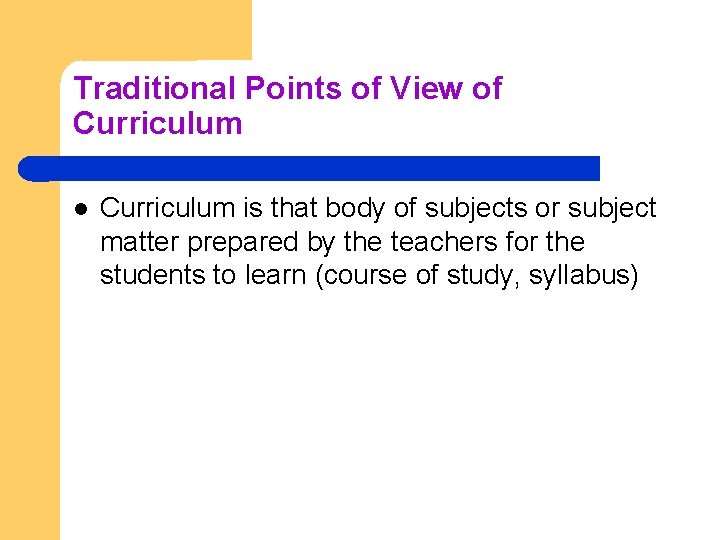
Traditional Points of View of Curriculum is that body of subjects or subject matter prepared by the teachers for the students to learn (course of study, syllabus)
Arthur Bestor (essentialist) “mission of the school should be intellectual training Curriculum should focus on the intellectual discipline of grammar, literature and writing; also include mathematics, science, history and foreign language
Robert M. Hutchins’ view Curriculum is viewed as “ permanent studies” where the rules of grammar, reading, rhetoric and logic and mathematics for basic education are emphasized Basic education should emphasize the 3 Rs College education should be grounded on liberal education
Joseph Schwab’s view “discipline is the sole source of curriculum Curriculum is divided into chunks of knowledge called subject areas in – – basic education – english, mathematics, science Higher education – humanities, science, language
Phenix Curriculum should const entirely of knowledge which comes from various discipline. – – a field of study made up of its foundations domains of knowledge as well as its research theories and principles written documents or a plan of action in accomplishing goals
Progressive Points of View of Curriculum listing of school subjects, syllabi, course of study, and list of courses or specific discipline can only be called curriculum if the written materials are actualized by the learner. Curriculum is defined as the “total leaning experiences of the individual.
John Dewey’s concept of experience and education – “reflective thinking is a means that unifies curricular elements” – Thought is not derived from action but tested by application
Currriculum Caswell and Campbell view of curriculum” “all experiences children have under the guidance of teachers”. Smith, Stanley and Shores: “curriculum as a sequence of potential experiences set up in the schools for the purpose of disciplining children and youth in group of ways of thinking and acting” Marsh and Willis: curriculum as “experiences in the classroom which are planned and enacted by the teacher, and also learned by the students. ”
Modular Activity #1 Create your own google/gmail account Use your complete name as your account name.