
Currents and Climate Earth the Biography Currents Record
Currents and Climate
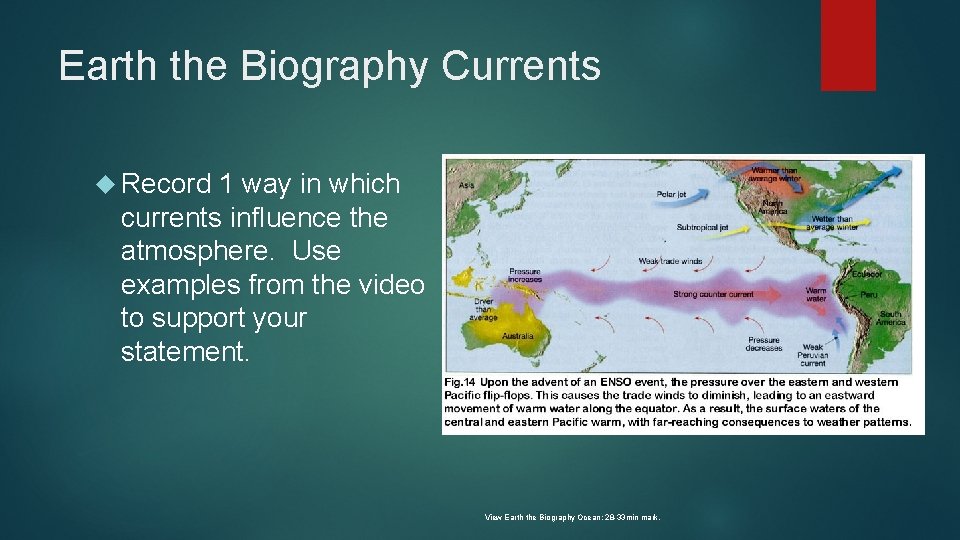
Earth the Biography Currents Record 1 way in which currents influence the atmosphere. Use examples from the video to support your statement. View Earth the Biography Ocean: 28 -33 min mark.
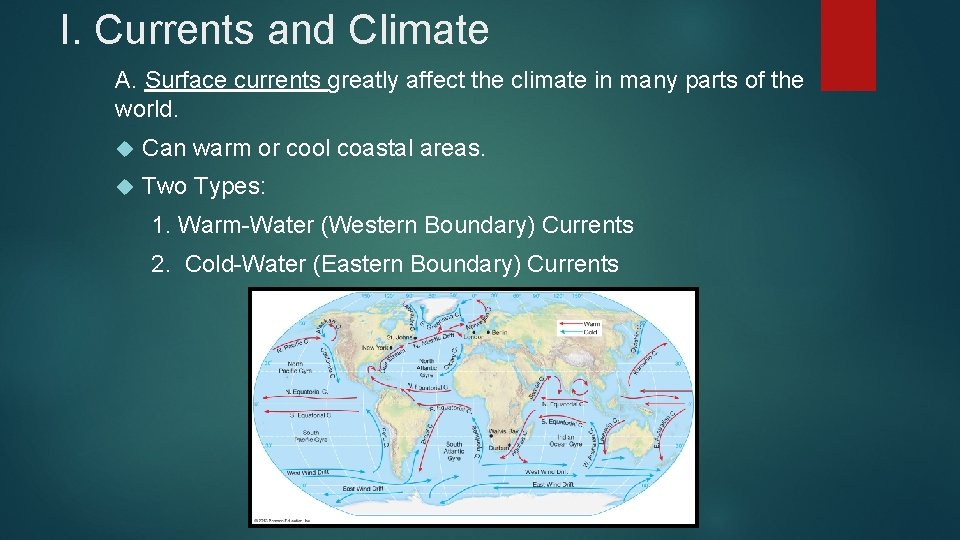
I. Currents and Climate A. Surface currents greatly affect the climate in many parts of the world. Can warm or cool coastal areas. Two Types: 1. Warm-Water (Western Boundary) Currents 2. Cold-Water (Eastern Boundary) Currents

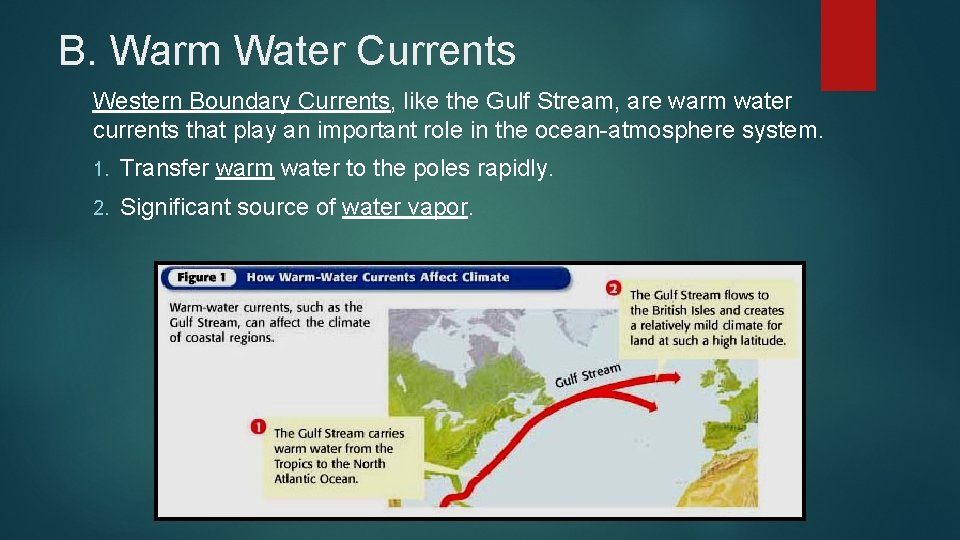
B. Warm Water Currents Western Boundary Currents, like the Gulf Stream, are warm water currents that play an important role in the ocean-atmosphere system. 1. Transfer warm water to the poles rapidly. 2. Significant source of water vapor.
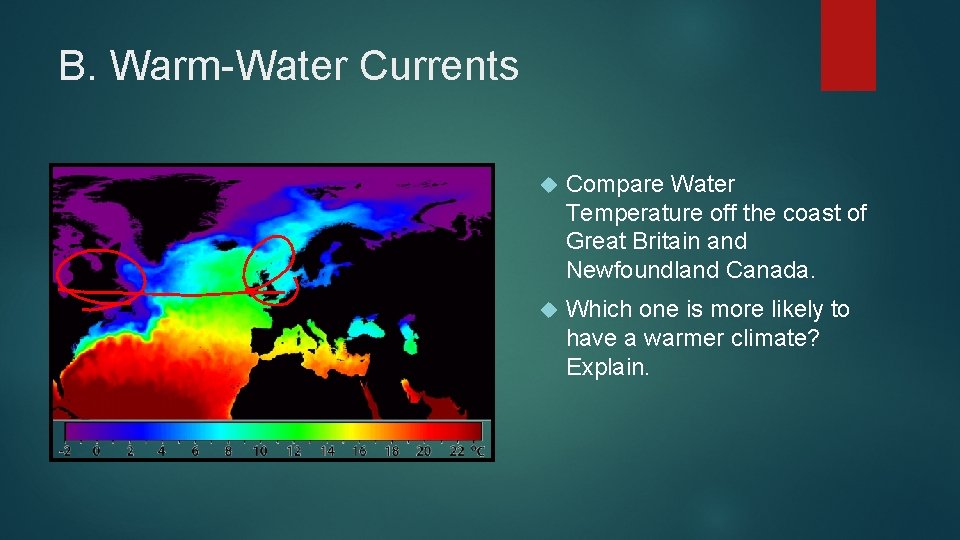
B. Warm-Water Currents Compare Water Temperature off the coast of Great Britain and Newfoundland Canada. Which one is more likely to have a warmer climate? Explain.

C. Cold-Water Currents Eastern Boundary Currents are cold water surface currents. 1. Keep coastal climates cooler than inland climates. 2. Release less water vapor into the atmosphere.
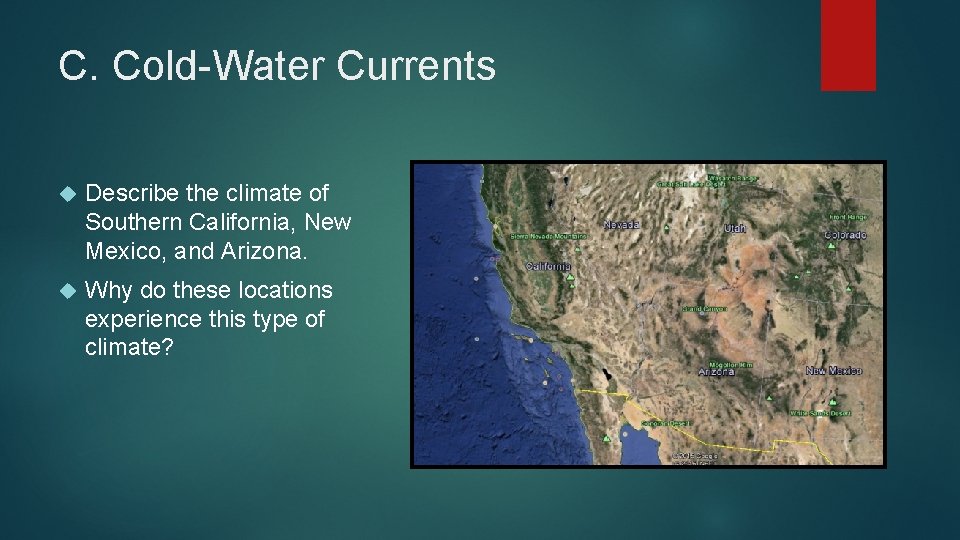
C. Cold-Water Currents Describe the climate of Southern California, New Mexico, and Arizona. Why do these locations experience this type of climate?
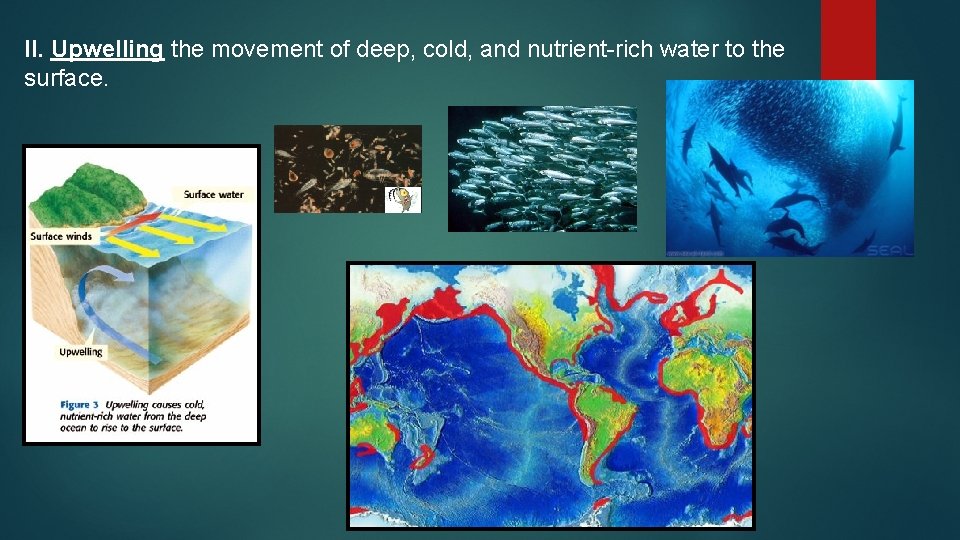
II. Upwelling the movement of deep, cold, and nutrient-rich water to the surface.
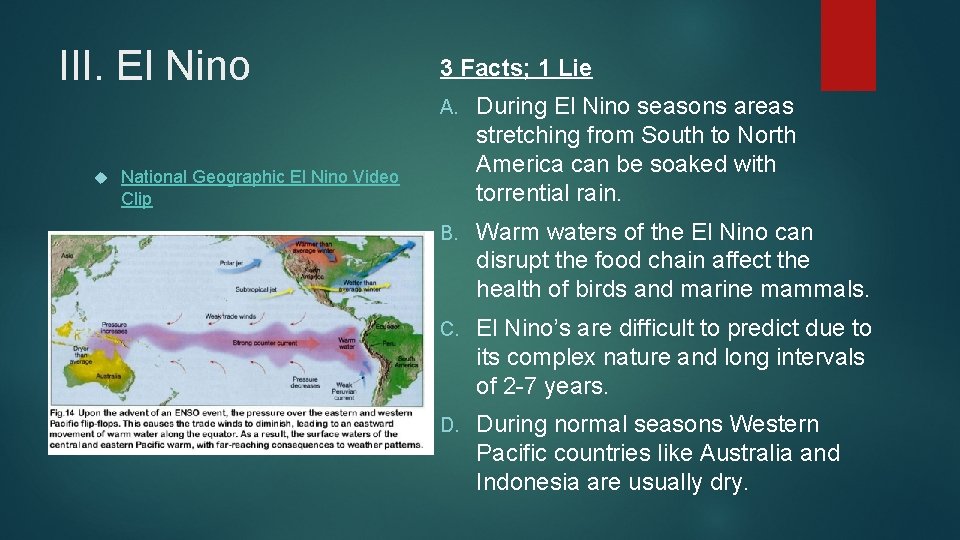
III. El Nino 3 Facts; 1 Lie A. During El Nino seasons areas stretching from South to North America can be soaked with torrential rain. B. Warm waters of the El Nino can disrupt the food chain affect the health of birds and marine mammals. C. El Nino’s are difficult to predict due to its complex nature and long intervals of 2 -7 years. During normal seasons Western Pacific countries like Australia and Indonesia are usually dry. National Geographic El Nino Video Clip
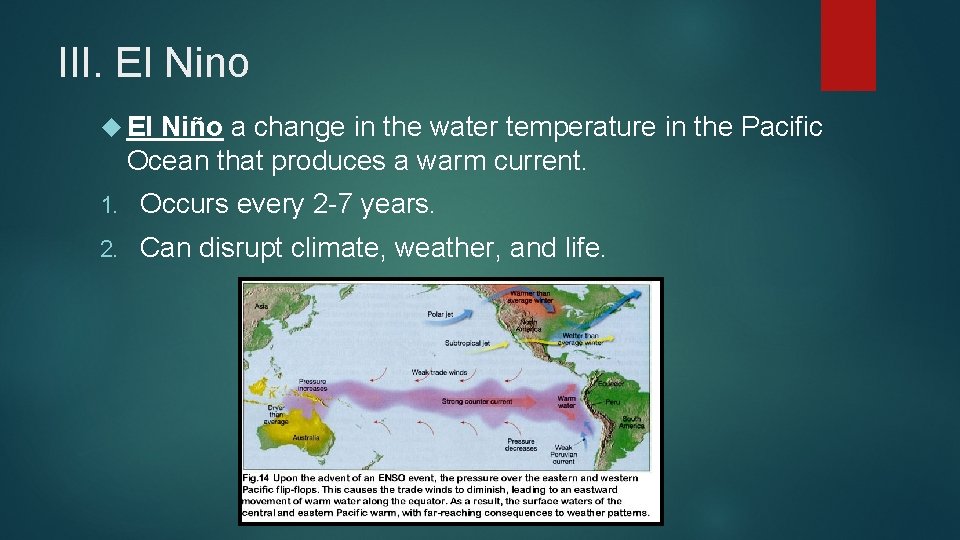
III. El Nino El Niño a change in the water temperature in the Pacific Ocean that produces a warm current. 1. Occurs every 2 -7 years. 2. Can disrupt climate, weather, and life.
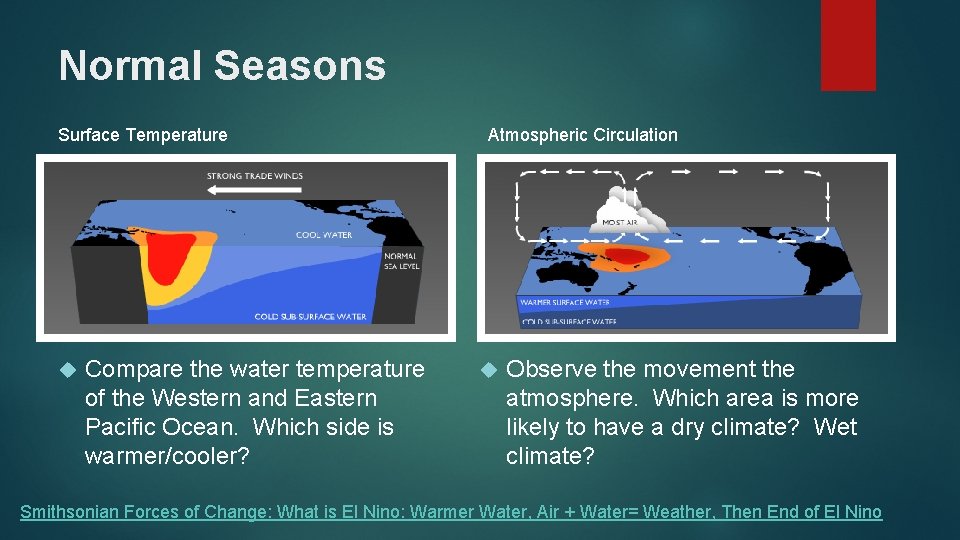
Normal Seasons Surface Temperature Compare the water temperature of the Western and Eastern Pacific Ocean. Which side is warmer/cooler? Atmospheric Circulation Observe the movement the atmosphere. Which area is more likely to have a dry climate? Wet climate? Smithsonian Forces of Change: What is El Nino: Warmer Water, Air + Water= Weather, Then End of El Nino
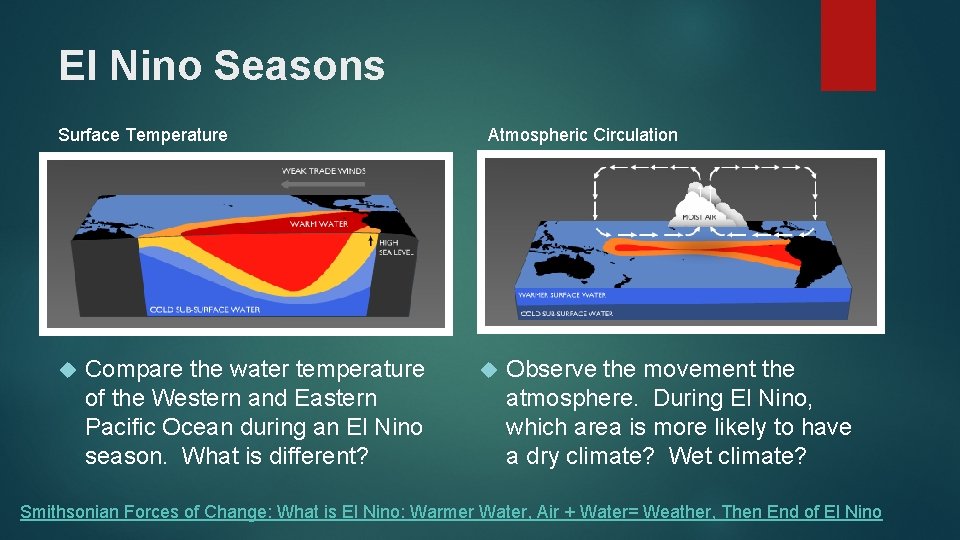
El Nino Seasons Surface Temperature Compare the water temperature of the Western and Eastern Pacific Ocean during an El Nino season. What is different? Atmospheric Circulation Observe the movement the atmosphere. During El Nino, which area is more likely to have a dry climate? Wet climate? Smithsonian Forces of Change: What is El Nino: Warmer Water, Air + Water= Weather, Then End of El Nino
- Slides: 13