
Current Voltage Resistance Ohms Law 13 2 13
- Slides: 10
Current, Voltage, Resistance & Ohm’s Law 13. 2 & 13. 3
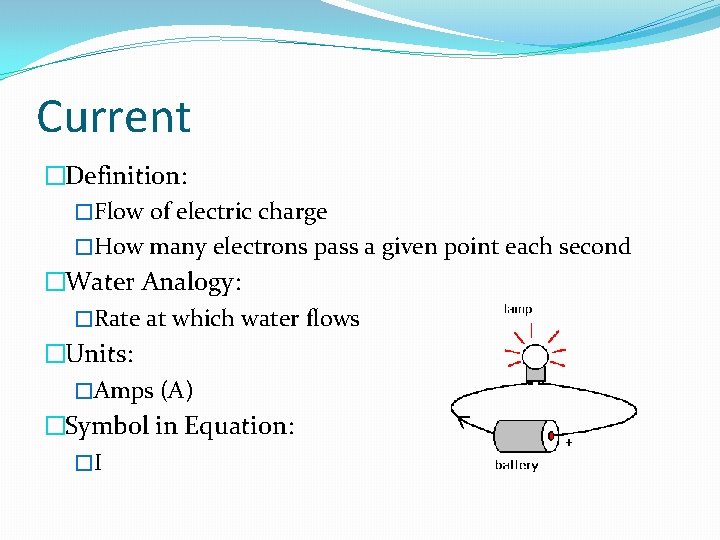
Current �Definition: �Flow of electric charge �How many electrons pass a given point each second �Water Analogy: �Rate at which water flows �Units: �Amps (A) �Symbol in Equation: �I
Voltage �Definition: �Measure of electric potential energy (force or push) �Water Analogy: �Water pressure �Tilt of water pipe �Units: �Volts (V) �Symbol in Equation: �V
Resistance �Definition: �Opposition to the flow of charge �The greater the resistance the less current will flow �Water Analogy: �Rocks in a stream �Nozzle size of water bottle �Units: �Ohms (Ω) �Symbol in Equation: �R
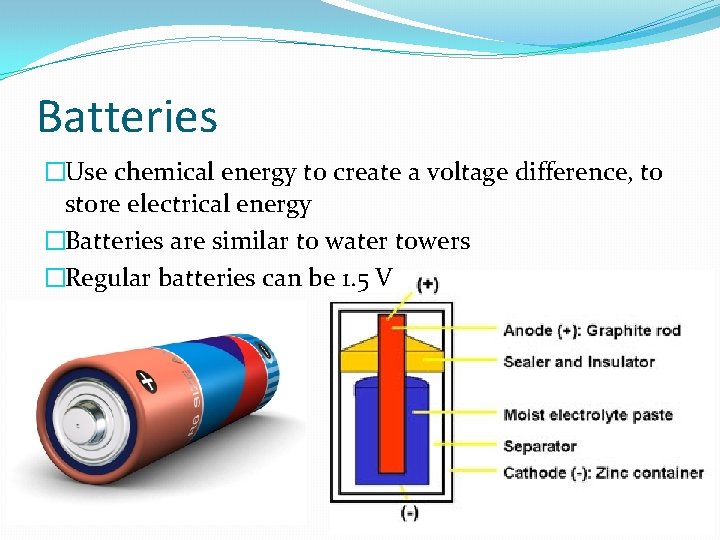
Batteries �Use chemical energy to create a voltage difference, to store electrical energy �Batteries are similar to water towers �Regular batteries can be 1. 5 V
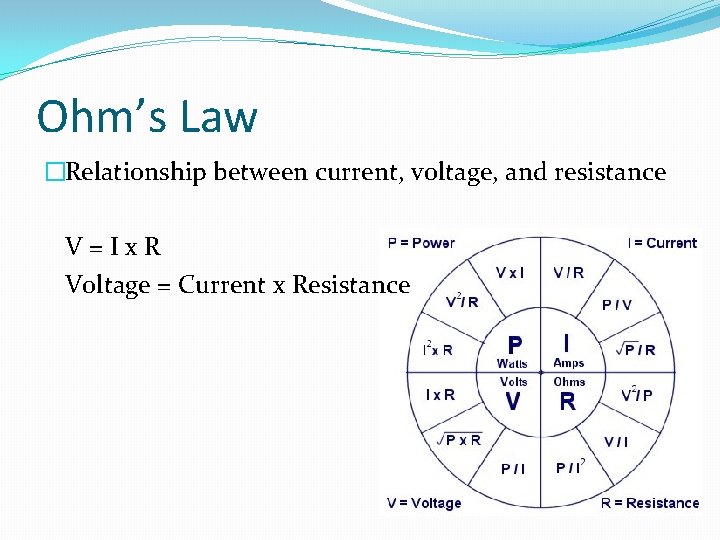
Ohm’s Law �Relationship between current, voltage, and resistance V=Ix. R Voltage = Current x Resistance
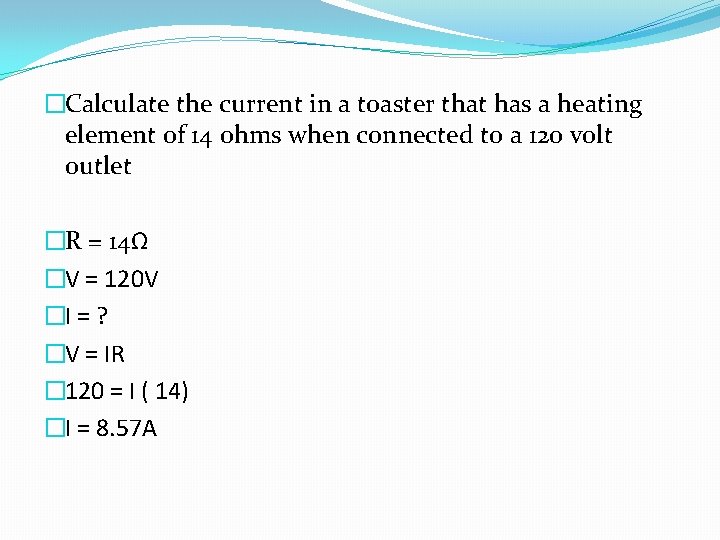
�Calculate the current in a toaster that has a heating element of 14 ohms when connected to a 120 volt outlet �R = 14Ω �V = 120 V �I = ? �V = IR � 120 = I ( 14) �I = 8. 57 A
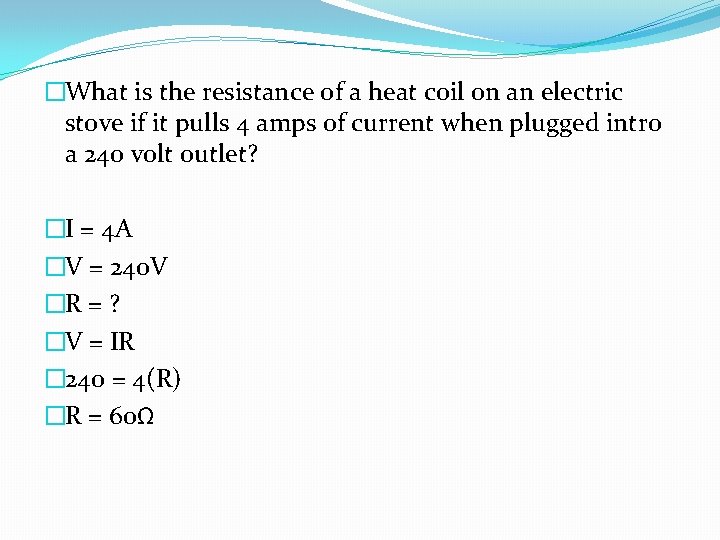
�What is the resistance of a heat coil on an electric stove if it pulls 4 amps of current when plugged intro a 240 volt outlet? �I = 4 A �V = 240 V �R = ? �V = IR � 240 = 4(R) �R = 60Ω
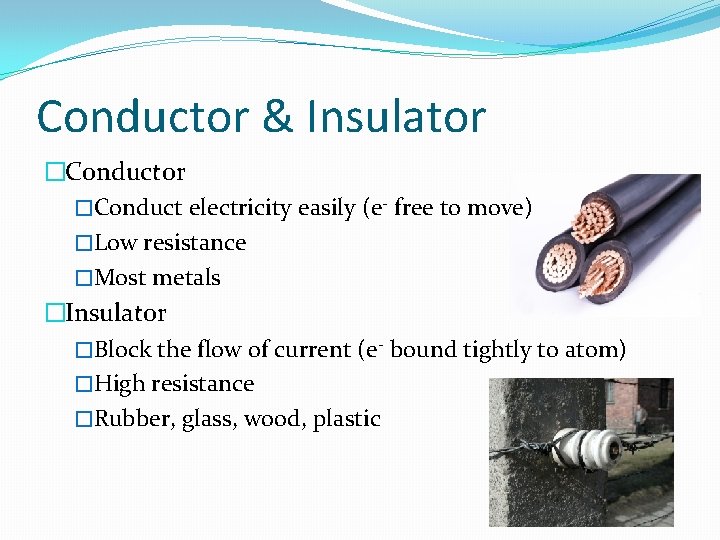
Conductor & Insulator �Conduct electricity easily (e- free to move) �Low resistance �Most metals �Insulator �Block the flow of current (e- bound tightly to atom) �High resistance �Rubber, glass, wood, plastic
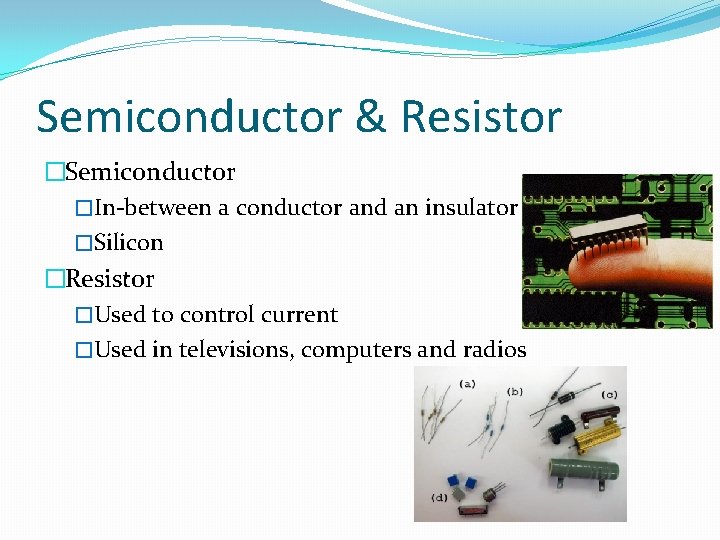
Semiconductor & Resistor �Semiconductor �In-between a conductor and an insulator �Silicon �Resistor �Used to control current �Used in televisions, computers and radios