
Current Voltage and Resistance Calculations When electrons flow

- Slides: 25
Current, Voltage and Resistance Calculations
When electrons flow through a circuit, a few things are happening with them: � Electrons carry energy, and they can have different amounts of it � Different amounts of electrons can move past a point in a circuit (if they are going faster, more can travel past a point) � Obstacles can slow electrons down
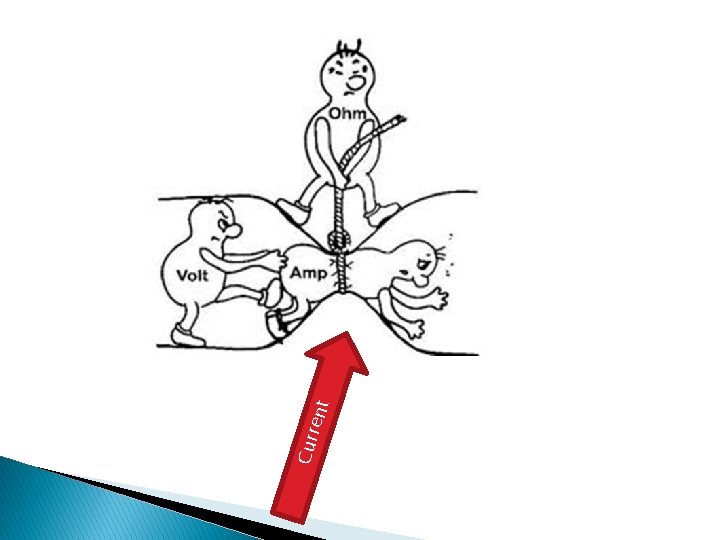
Current
rent Cur
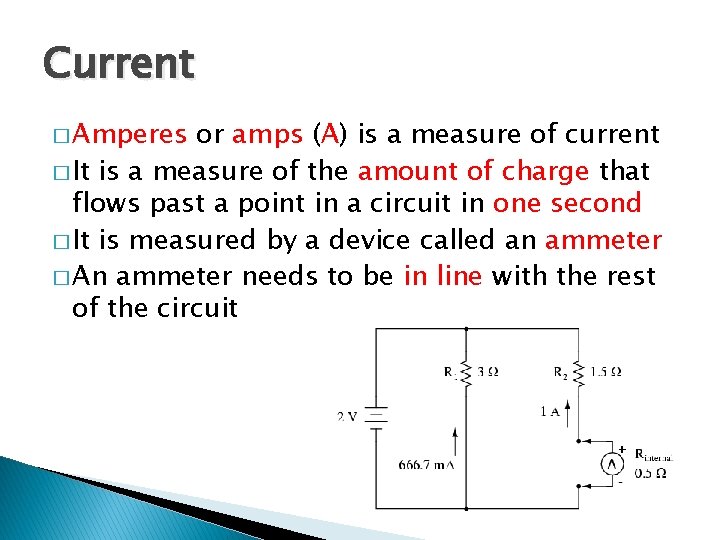
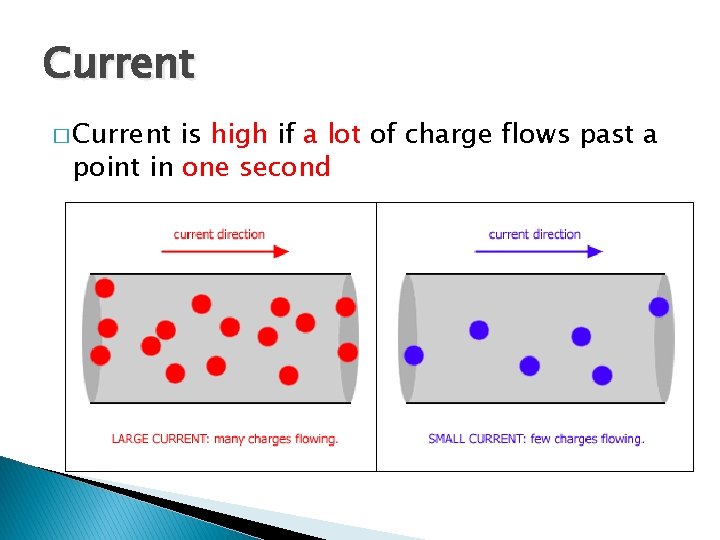
Current � Amperes or amps (A) is a measure of current � It is a measure of the amount of charge that flows past a point in a circuit in one second � It is measured by a device called an ammeter � An ammeter needs to be in line with the rest of the circuit
Current � Current is high if a lot of charge flows past a point in one second
Voltage
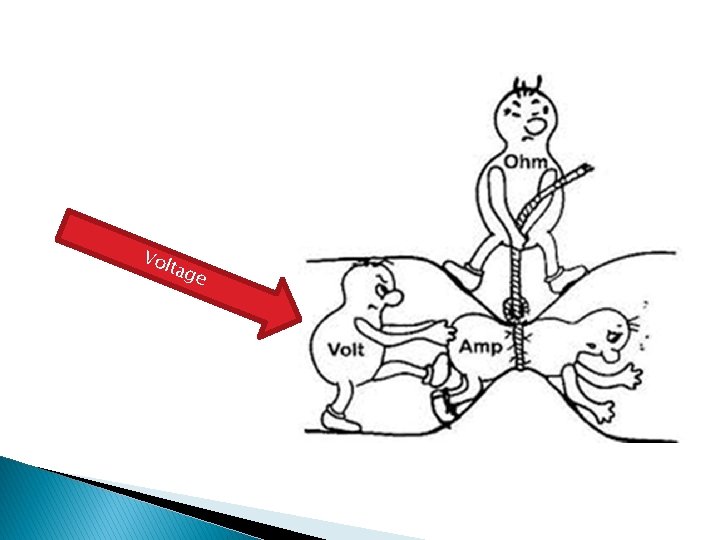
Vol tag e
Voltage � Is a measure of the amount of energy supplied to the electron source (the supply voltage) � Also a measure of the amount of energy used by the charges as they pass through a component such as a light globe
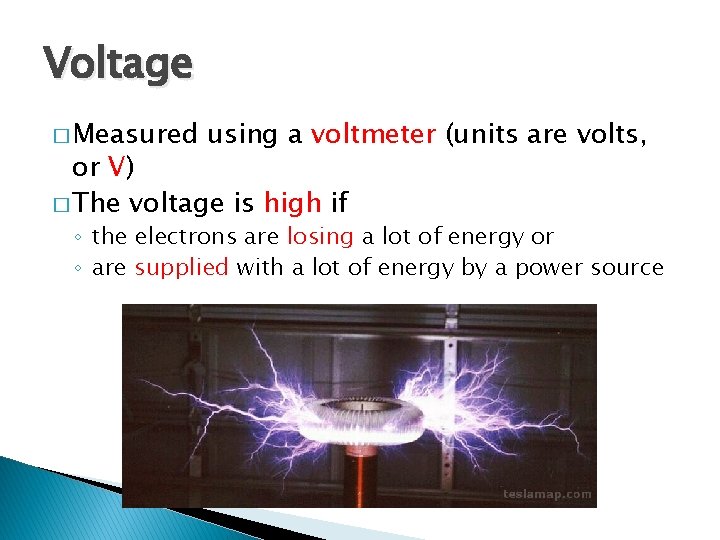
Voltage � Measured using a voltmeter (units are volts, or V) � The voltage is high if ◦ the electrons are losing a lot of energy or ◦ are supplied with a lot of energy by a power source
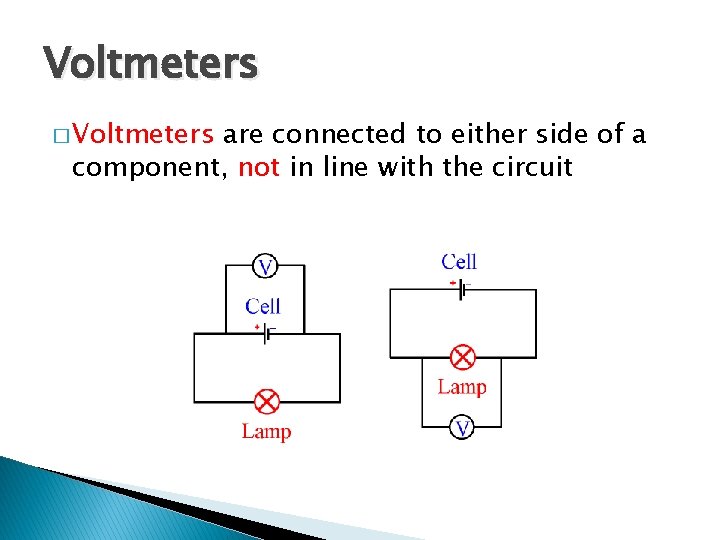
Voltmeters � Voltmeters are connected to either side of a component, not in line with the circuit
Your Turn � Complete Question 6
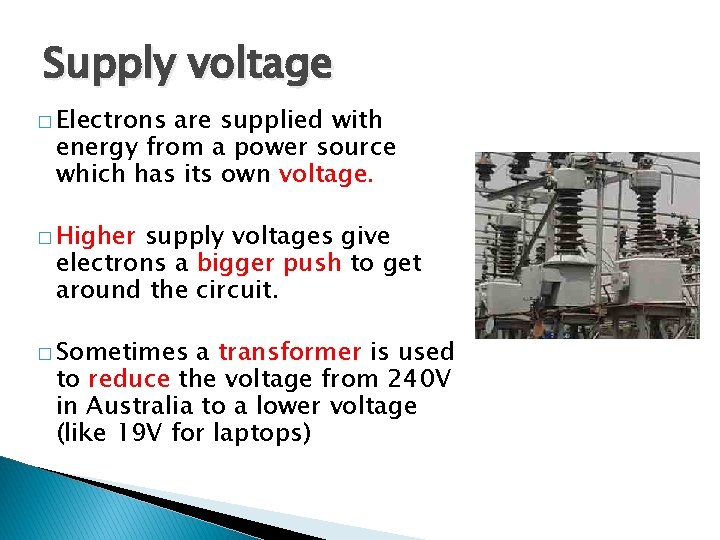
Supply voltage � Electrons are supplied with energy from a power source which has its own voltage. � Higher supply voltages give electrons a bigger push to get around the circuit. � Sometimes a transformer is used to reduce the voltage from 240 V in Australia to a lower voltage (like 19 V for laptops)
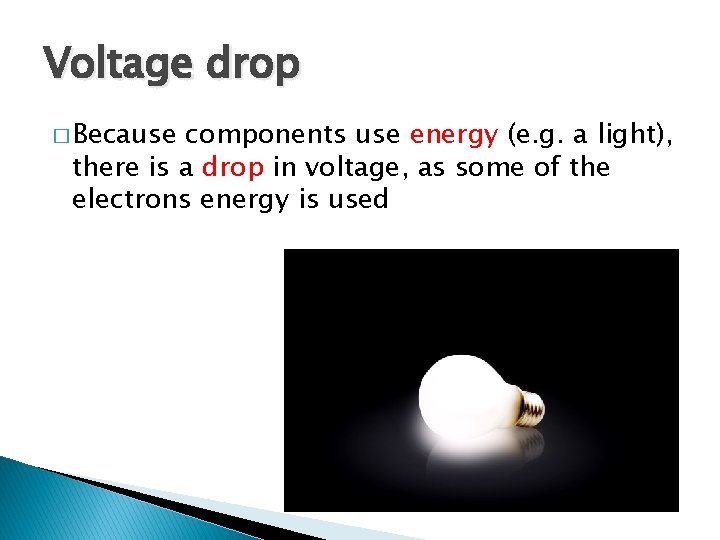
Voltage drop � Because components use energy (e. g. a light), there is a drop in voltage, as some of the electrons energy is used
Resistance
Re sis tan ce
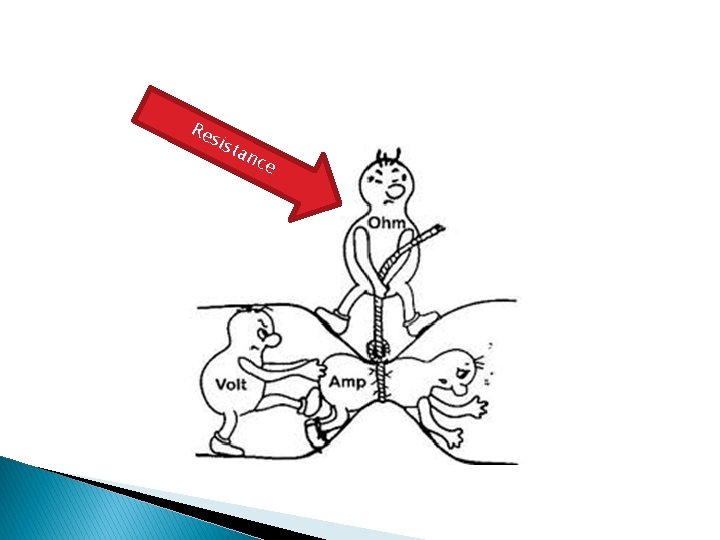
Resistance � Electrons moving around a circuit are slowed down by atoms that make up the wires � Resistance measures how difficult it is for an electric current to flow through wires � A high resistance means that electrons find it hard to pass through the material � Resistance is measured using the unit ohm (Ω)
Resistance and Voltage Rely on Each Other
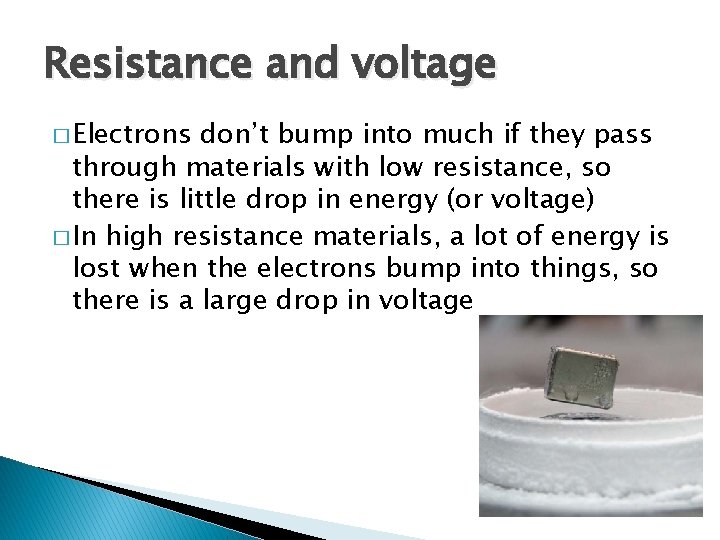
Resistance and voltage � Electrons don’t bump into much if they pass through materials with low resistance, so there is little drop in energy (or voltage) � In high resistance materials, a lot of energy is lost when the electrons bump into things, so there is a large drop in voltage
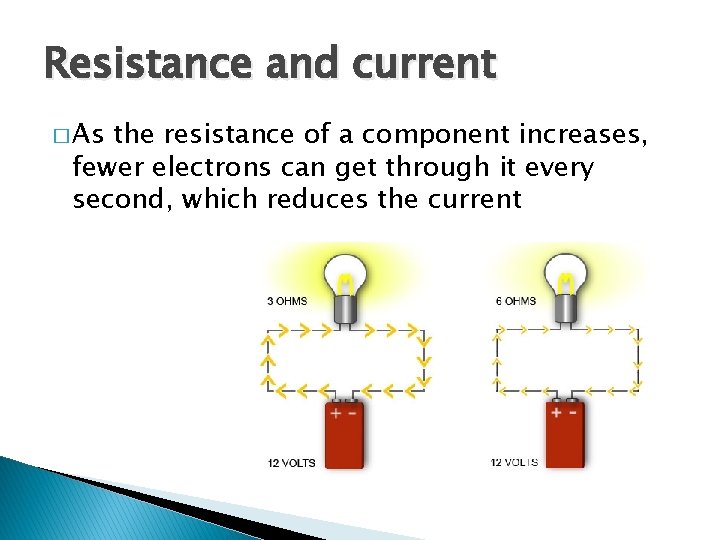
Resistance and current � As the resistance of a component increases, fewer electrons can get through it every second, which reduces the current
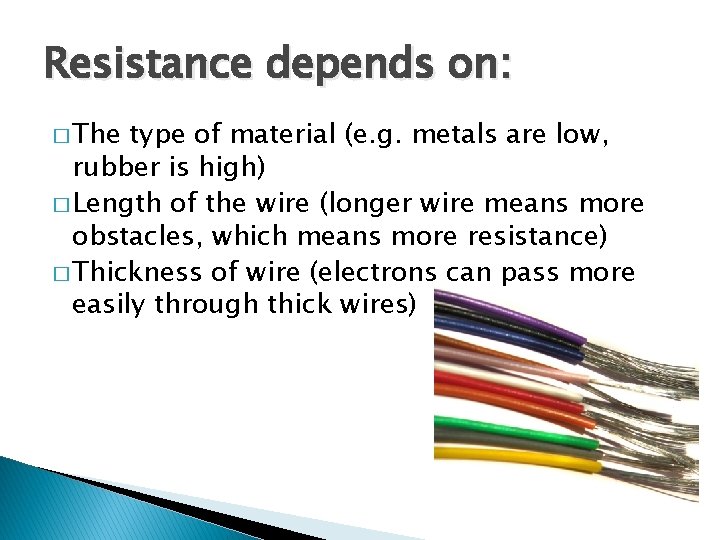
Resistance depends on: � The type of material (e. g. metals are low, rubber is high) � Length of the wire (longer wire means more obstacles, which means more resistance) � Thickness of wire (electrons can pass more easily through thick wires)
Practical uses of Resistance
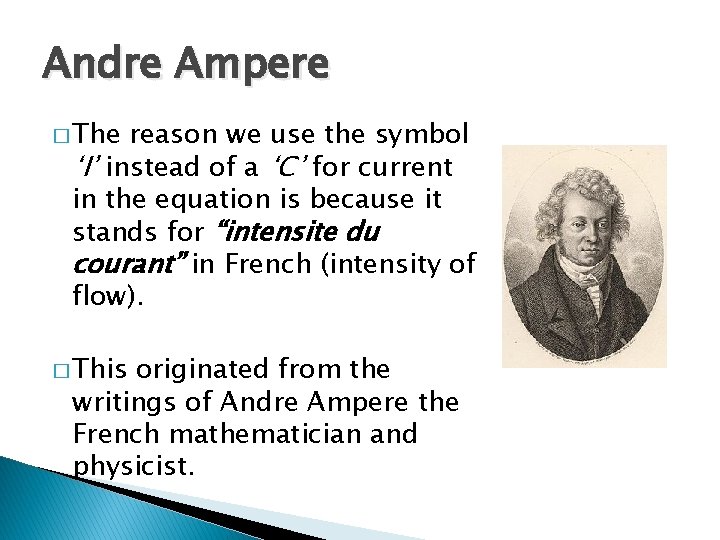
Andre Ampere � The reason we use the symbol ‘I’ instead of a ‘C’ for current in the equation is because it stands for “intensite du courant” in French (intensity of flow). � This originated from the writings of Andre Ampere the French mathematician and physicist.
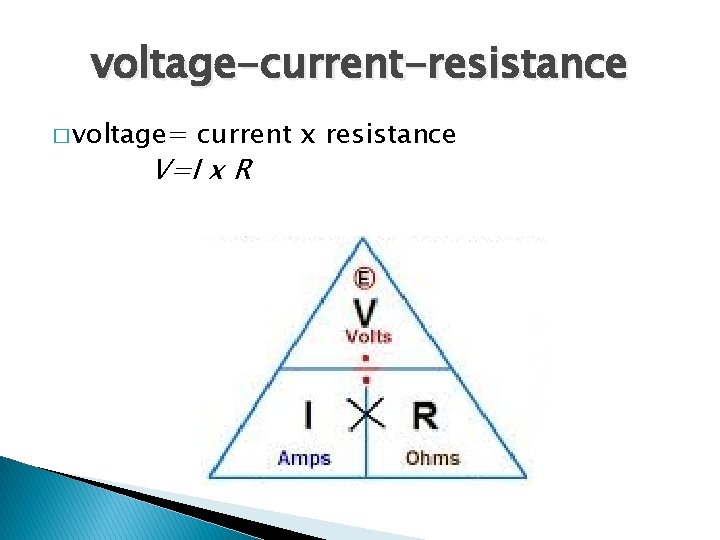
voltage-current-resistance � voltage= current x resistance V=I x R
Your turn… � Complete the Voltage equation practice problems on your worksheet.