
Current Themes in Adult Social Care 18 October
Current Themes in Adult Social Care 18 October 2017 Martin Samuels Director for Adults and Wellbeing (Co-Chair, West Midlands Branch, ADASS)
Current Themes • Quality of Care • State of the provider market • Funding and Scope • From austerity to scarcity • Integration with the NHS • Divided by a common language • Philosophy • From care to wellbeing
Quality of Care • State of Care Report • System at tipping point • Number of nursing beds reducing • 4000 fewer over past two years • Staff shortages for nursing & registered managers • 90 k vacancies in total • Up to 30% staff turnover • Most care is good • But 31% of nursing homes Requires Improvement or Inadequate • Main areas of weakness are governance & leadership • Hospitals struggling • High demand, delayed discharges, impact on planned care
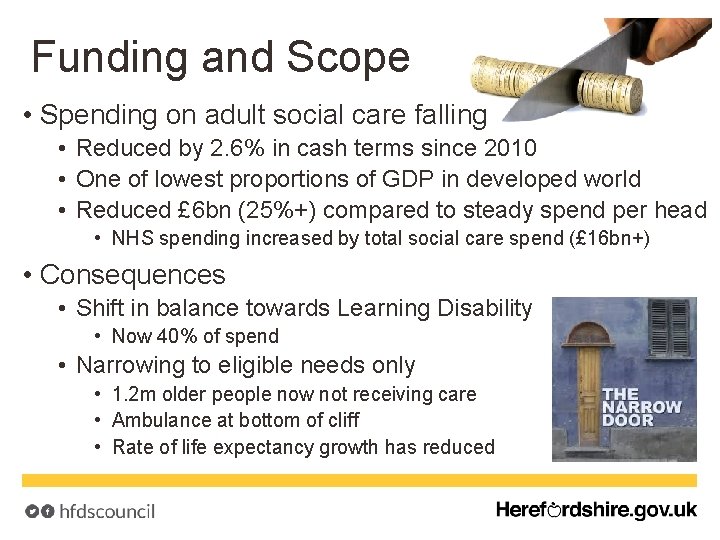
Funding and Scope • Spending on adult social care falling • Reduced by 2. 6% in cash terms since 2010 • One of lowest proportions of GDP in developed world • Reduced £ 6 bn (25%+) compared to steady spend per head • NHS spending increased by total social care spend (£ 16 bn+) • Consequences • Shift in balance towards Learning Disability • Now 40% of spend • Narrowing to eligible needs only • 1. 2 m older people now not receiving care • Ambulance at bottom of cliff • Rate of life expectancy growth has reduced
Integration with the NHS - BCF • Longstanding recognition of interdependence between NHS and social care • Aged 65+ occupy most hospital beds • Dementia main cohort of delayed hospital discharges • 2/3 of social care referrals from NHS • Better Care Fund designed to promote integration • Financial transfers from CCGs to councils • Plan at level of each HWB • 2017/18 Guidance • New target to reduce DTo. C to 3. 5% (release 3000 beds) • Funding transfer linked to performance in Sept 2017
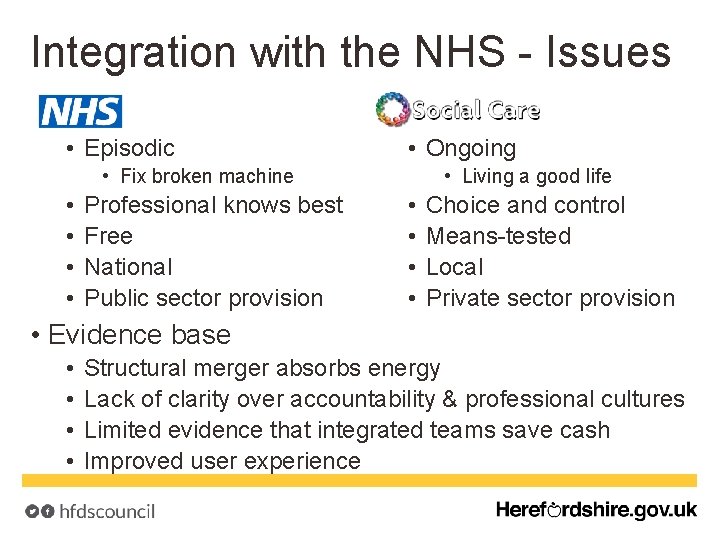
Integration with the NHS - Issues • Episodic • Ongoing • Living a good life • Fix broken machine • • Professional knows best Free National Public sector provision • • Choice and control Means-tested Local Private sector provision • Evidence base • • Structural merger absorbs energy Lack of clarity over accountability & professional cultures Limited evidence that integrated teams save cash Improved user experience
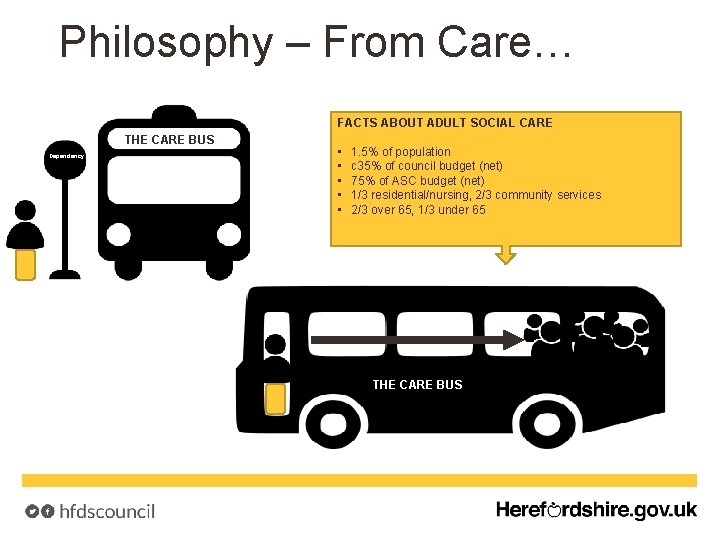
Philosophy – From Care… FACTS ABOUT ADULT SOCIAL CARE THE CARE BUS Dependency • • • 1. 5% of population c 35% of council budget (net) 75% of ASC budget (net) 1/3 residential/nursing, 2/3 community services 2/3 over 65, 1/3 under 65 THE CARE BUS
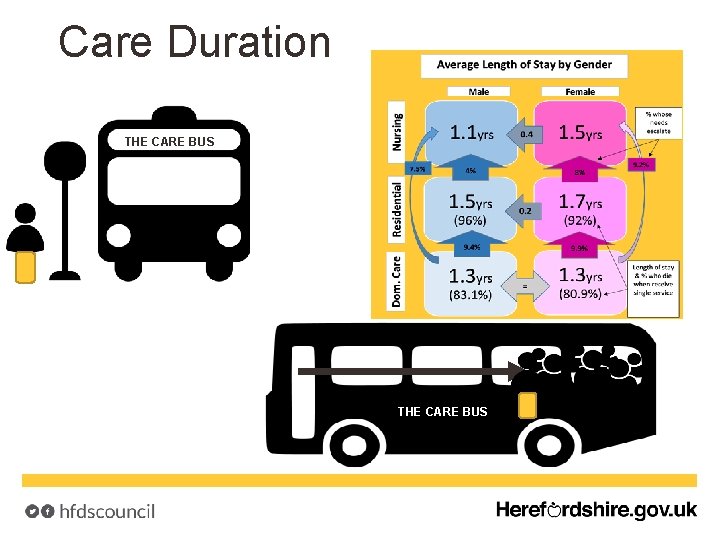
Care Duration THE CARE BUS
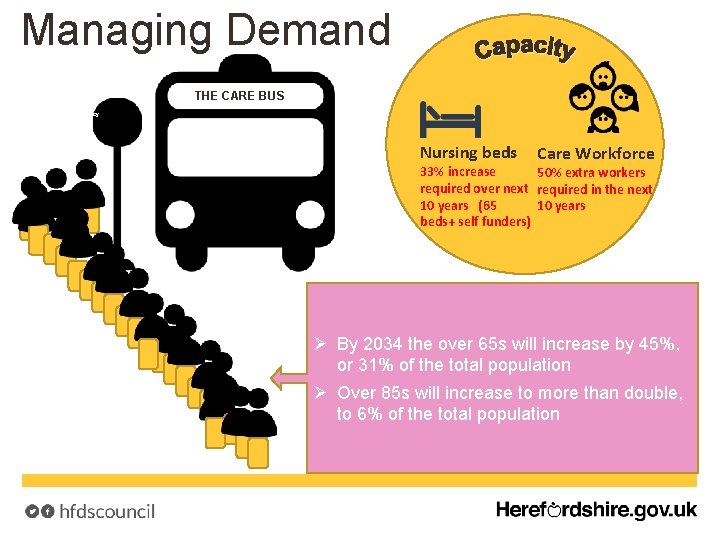
Managing Demand THE CARE BUS Dependency Nursing beds Care Workforce 33% increase 50% extra workers required over next required in the next 10 years (65 10 years beds+ self funders) Ø By 2034 the over 65 s will increase by 45%, or 31% of the total population Ø Over 85 s will increase to more than double, to 6% of the total population
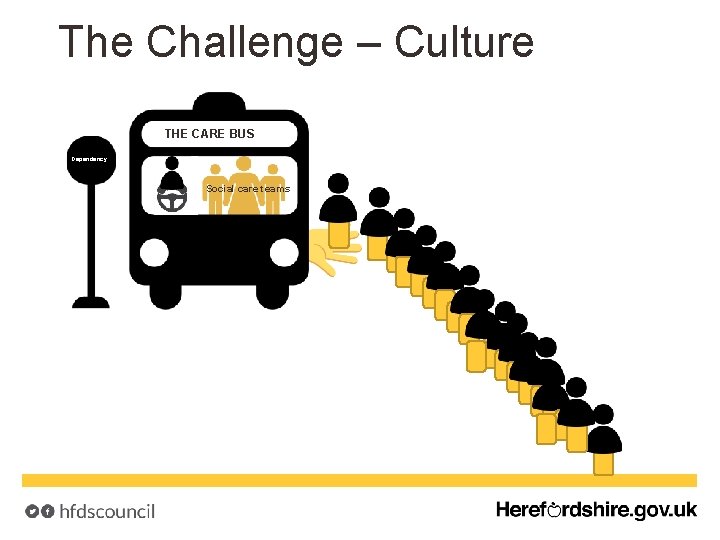
The Challenge – Culture THE CARE BUS Dependency Social care teams
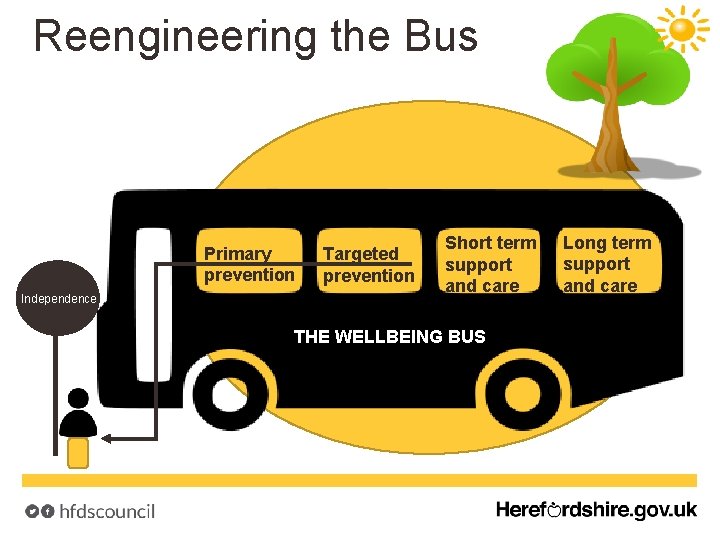
Reengineering the Bus Primary prevention Independence Targeted prevention Short term support and care THE WELLBEING BUS Long term support and care
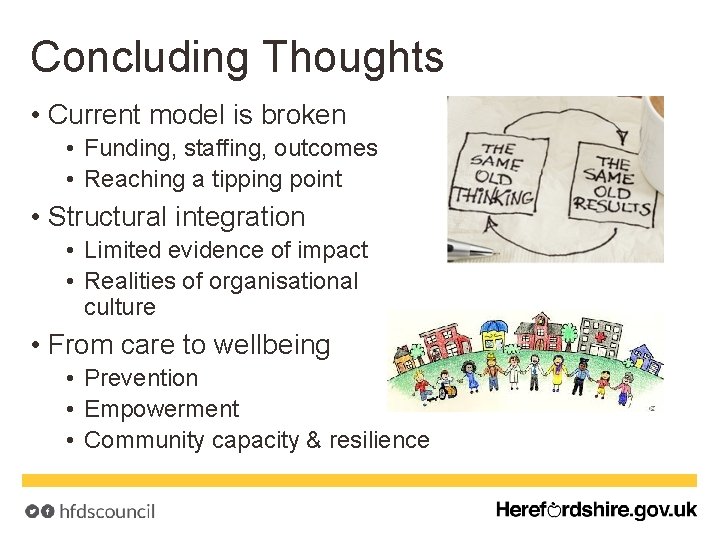
Concluding Thoughts • Current model is broken • Funding, staffing, outcomes • Reaching a tipping point • Structural integration • Limited evidence of impact • Realities of organisational culture • From care to wellbeing • Prevention • Empowerment • Community capacity & resilience
- Slides: 12