
CURRENT STATE AND PROBLEMS OF THE ELECTRICAL POWER
CURRENT STATE AND PROBLEMS OF THE ELECTRICAL POWER ENGINEERING
1. Short History of Power Engineering
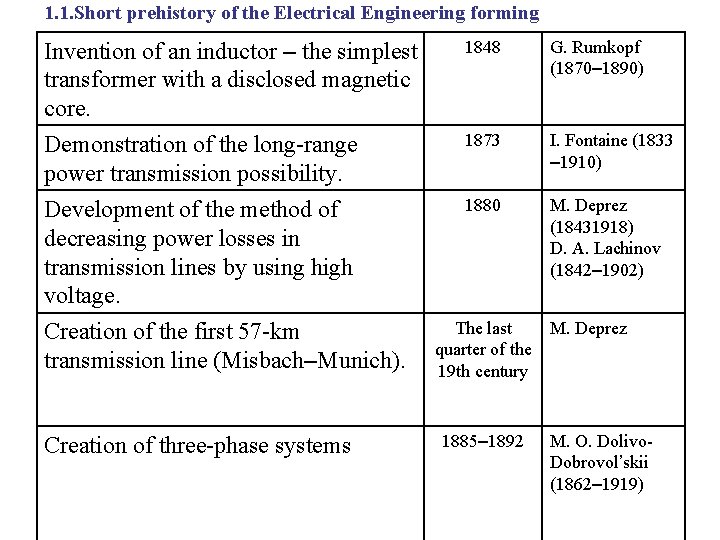
1. 1. Short prehistory of the Electrical Engineering forming Invention of an inductor – the simplest transformer with a disclosed magnetic core. Demonstration of the long-range power transmission possibility. 1848 G. Rumkopf (1870– 1890) 1873 I. Fontaine (1833 – 1910) Development of the method of decreasing power losses in transmission lines by using high voltage. 1880 M. Deprez (18431918) D. A. Lachinov (1842– 1902) Creation of the first 57 -km transmission line (Misbach–Munich). Creation of three-phase systems The last M. Deprez quarter of the 19 th century 1885– 1892 M. O. Dolivo. Dobrovol’skii (1862– 1919)
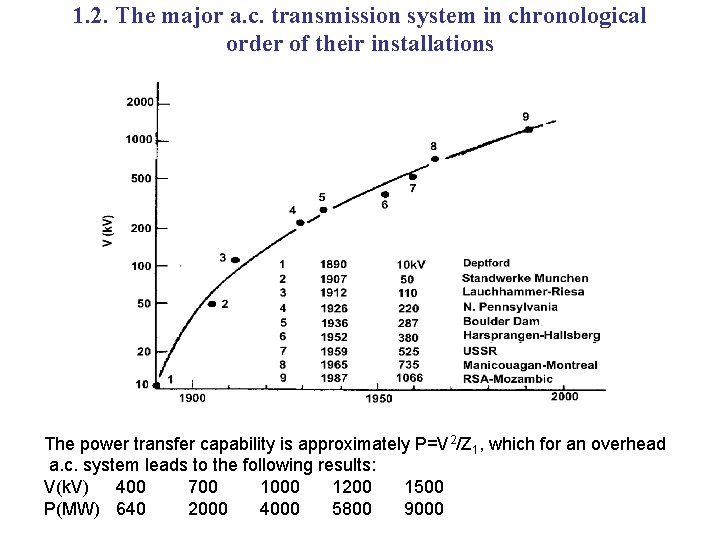
1. 2. The major a. c. transmission system in chronological order of their installations The power transfer capability is approximately P=V 2/Z 1, which for an overhead a. c. system leads to the following results: V(k. V) 400 700 1000 1200 1500 P(MW) 640 2000 4000 5800 9000
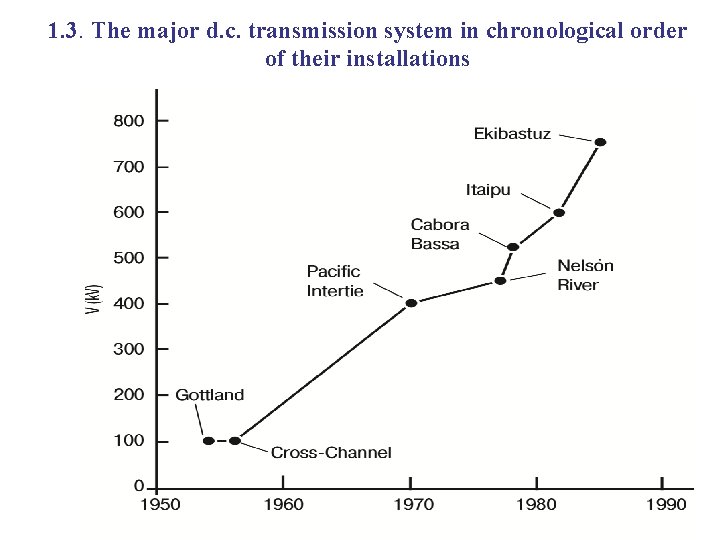
1. 3. The major d. c. transmission system in chronological order of their installations
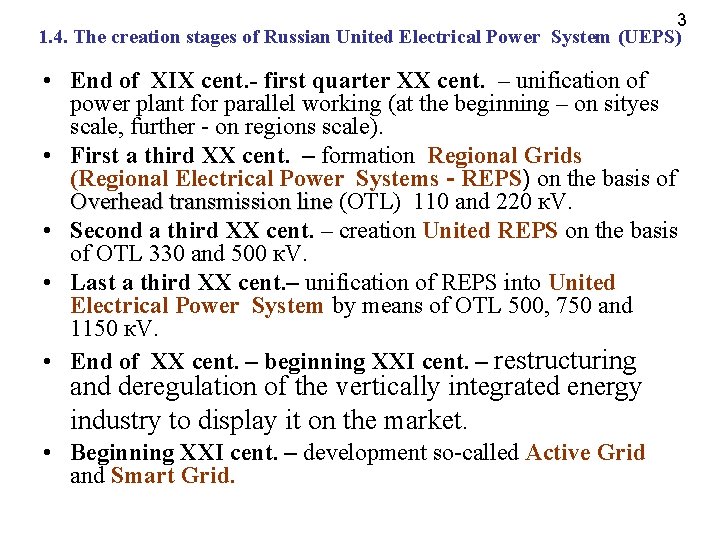
3 1. 4. The creation stages of Russian United Electrical Power System (UEPS) • End of XIX cent. - first quarter XX cent. – unification of power plant for parallel working (at the beginning – on sityes scale, further - on regions scale). • First a third XX cent. – formation Regional Grids (Regional Electrical Power Systems - REPS) on the basis of Overhead transmission line (OTL) 110 and 220 к. V. • Second a third XX cent. – creation United REPS on the basis of OTL 330 and 500 к. V. • Last a third XX cent. – unification of REPS into United Electrical Power System by means of OTL 500, 750 and 1150 к. V. • End of XX cent. – beginning XXI cent. – restructuring and deregulation of the vertically integrated energy industry to display it on the market. • Beginning XXI cent. – development so-called Active Grid and Smart Grid.
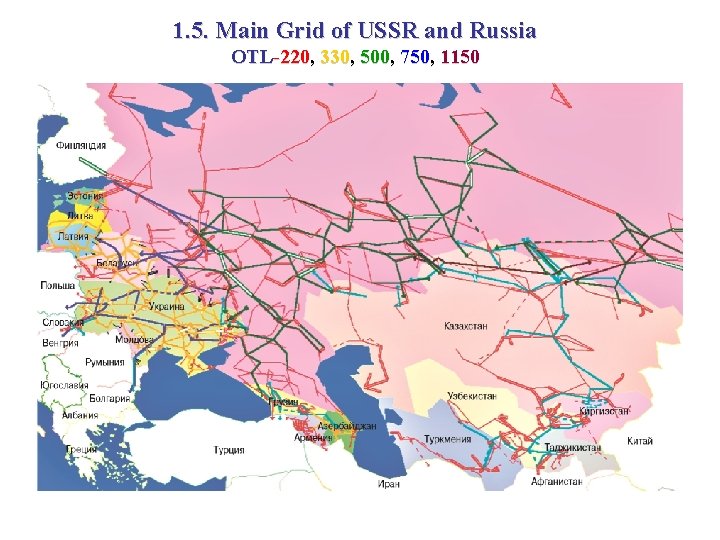
1. 5. Main Grid of USSR and Russia OTL-220, 330, 500, 750, 1150
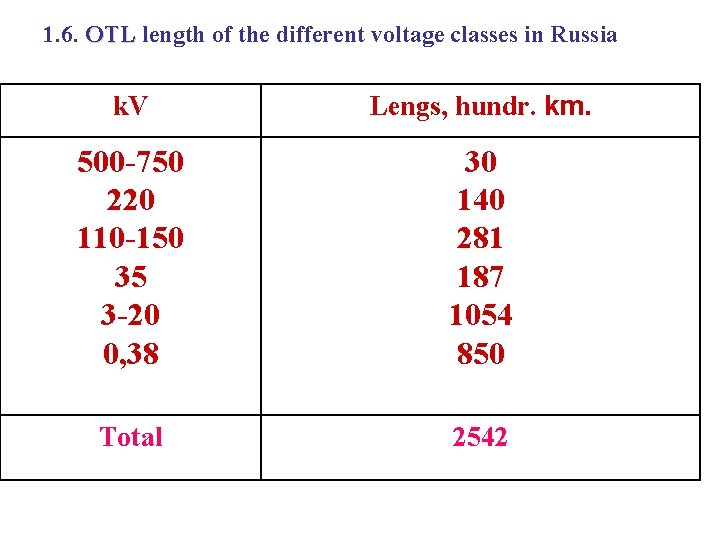
1. 6. OTL length of the different voltage classes in Russia k. V Lengs, hundr. km. 500 -750 220 110 -150 35 3 -20 0, 38 30 140 281 187 1054 850 Total 2542
1. 7. Structure of the Fuel and Power Complex of Russia (FPC) • Electricity (thermal power station, hydropower, nuclear power, renewable energy, electric grid); • Fuel industries (oil, slate, peat); • Pipeline transportation оf fuel (oil, gas, oil products); • Prospecting and exploration (oil, gas, coal, shale, uranium).
1. 8. Role of Fuel and Power Complex in economic and social life of Russia 1. Ensured: - about 33% of the gross domestic product, more than 40% of the revenue item of the budget, and about 6568% of the currency income of Russia, - significant amount of raw materials for oil-gas chemistry. 2. Ensured the survival of Russia in conditions of severe crisis 90 s. 3. Helped mitigate the impact of the global economic crisis of 2008 - 2010. 4. Decisive role played in the formation of the Reserve Fund and National Welfare Fund of Russia. (As of beginning 2013 accumulated in the first - 1. 885 trillion rubles. , in the second - 2. 72 trillion rubles).
2. Current state of the Global and Russian Power Industry
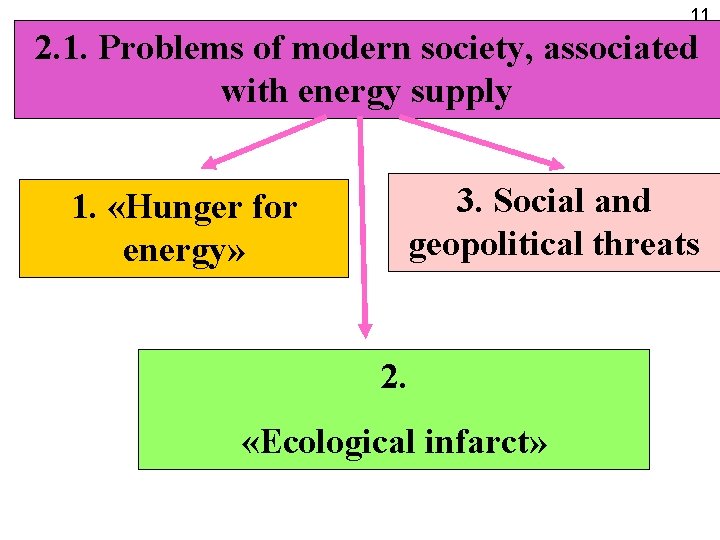
11 2. 1. Problems of modern society, associated with energy supply 3. Social and geopolitical threats 1. «Hunger for energy» 2. «Ecological infarct»
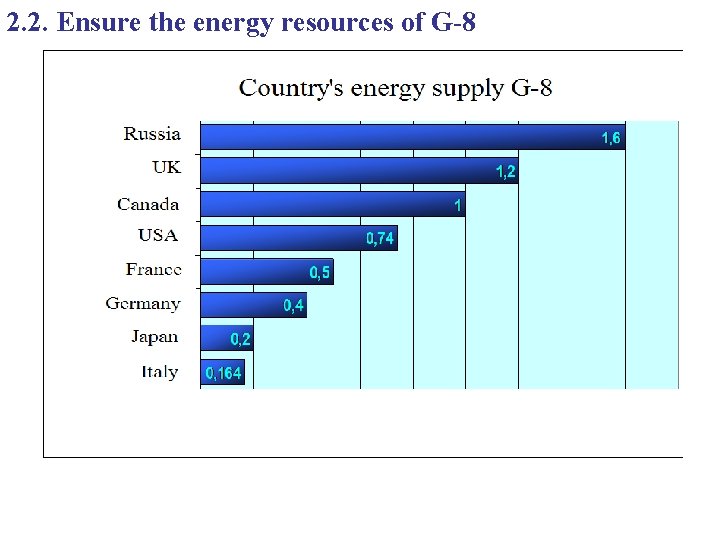
2. 2. Ensure the energy resources of G-8
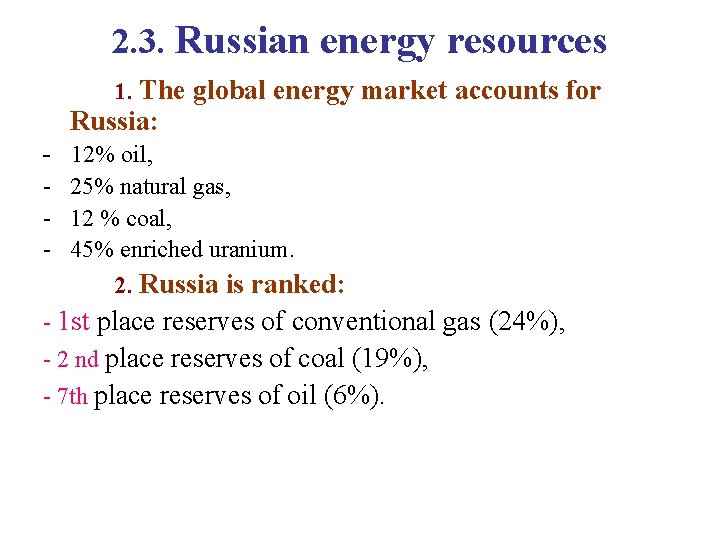
2. 3. Russian energy resources 1. The global energy market accounts for Russia: - 12% oil, 25% natural gas, 12 % coal, 45% enriched uranium. 2. Russia is ranked: - 1 st place reserves of conventional gas (24%), - 2 nd place reserves of coal (19%), - 7 th place reserves of oil (6%).
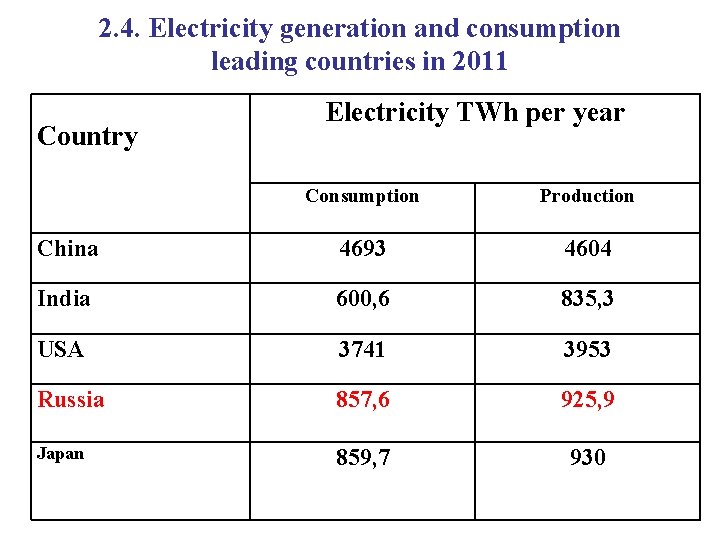
2. 4. Electricity generation and consumption leading countries in 2011 Country Electricity TWh per year Consumption Production China 4693 4604 India 600, 6 835, 3 USA 3741 3953 Russia 857, 6 925, 9 Japan 859, 7 930
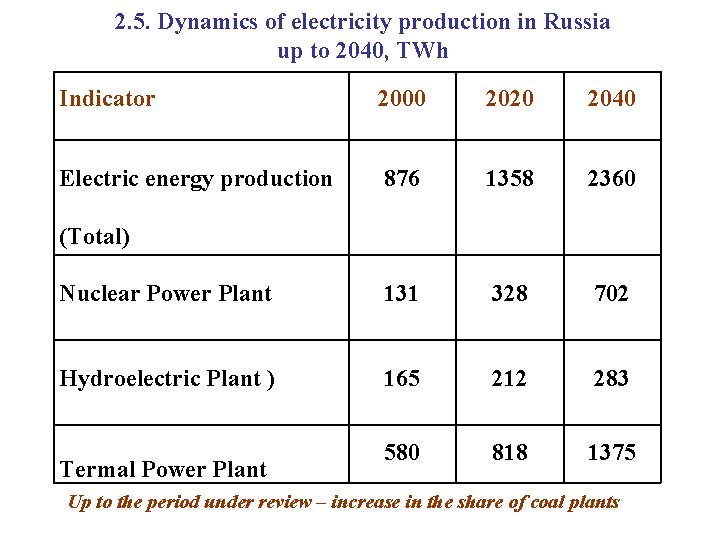
2. 5. Dynamics of electricity production in Russia up to 2040, TWh Indicator 2000 2020 2040 Electric energy production 876 1358 2360 Nuclear Power Plant 131 328 702 Hydroelectric Plant ) 165 212 283 580 818 1375 (Total) Termal Power Plant Up to the period under review – increase in the share of coal plants
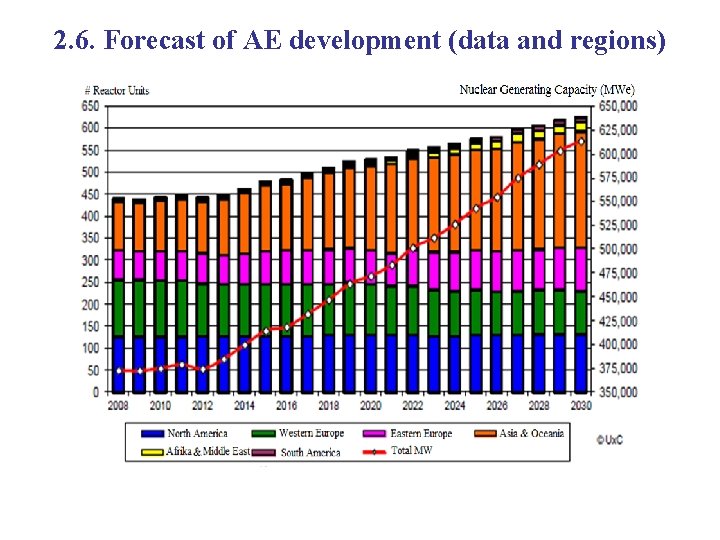
2. 6. Forecast of AE development (data and regions)
3. Main World and Russian Problems, related to the power supply
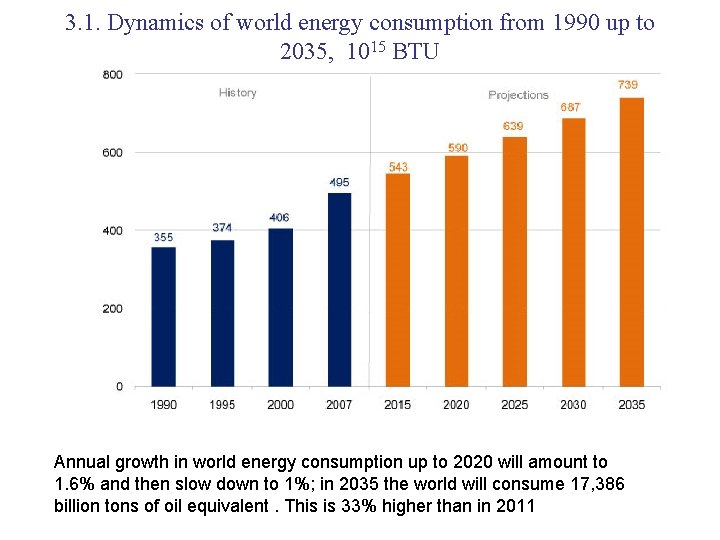
3. 1. Dynamics of world energy consumption from 1990 up to 2035, 1015 BTU Annual growth in world energy consumption up to 2020 will amount to 1. 6% and then slow down to 1%; in 2035 the world will consume 17, 386 billion tons of oil equivalent. This is 33% higher than in 2011
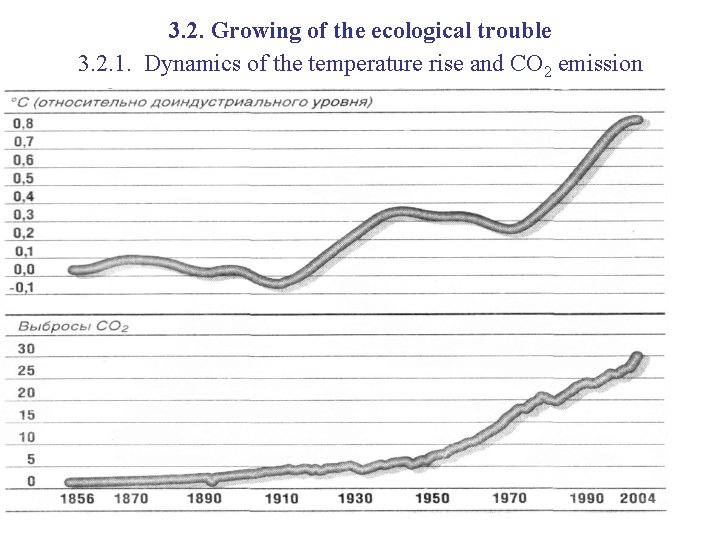
3. 2. Growing of the ecological trouble 3. 2. 1. Dynamics of the temperature rise and СО 2 emission
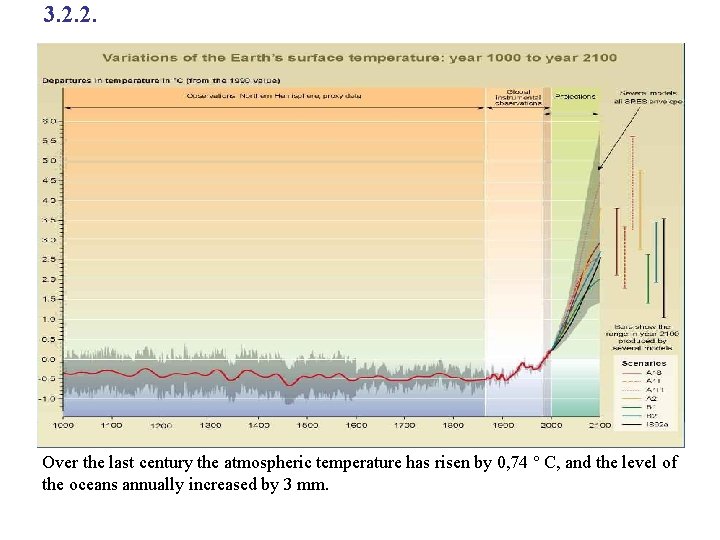
3. 2. 2. Over the last century the atmospheric temperature has risen by 0, 74 ° C, and the level of the oceans annually increased by 3 mm.
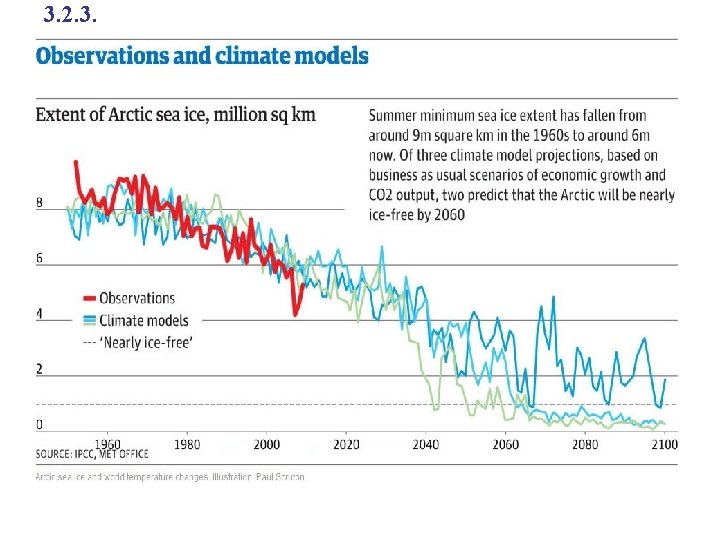
3. 2. 3.
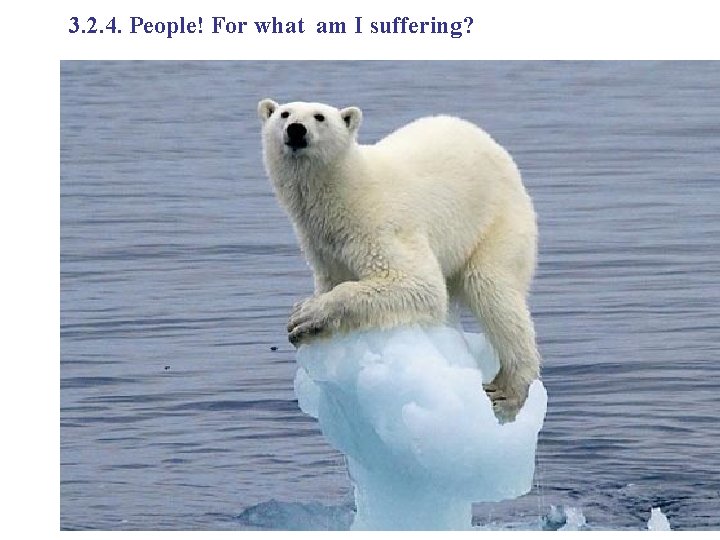
3. 2. 4. People! For what am I suffering?
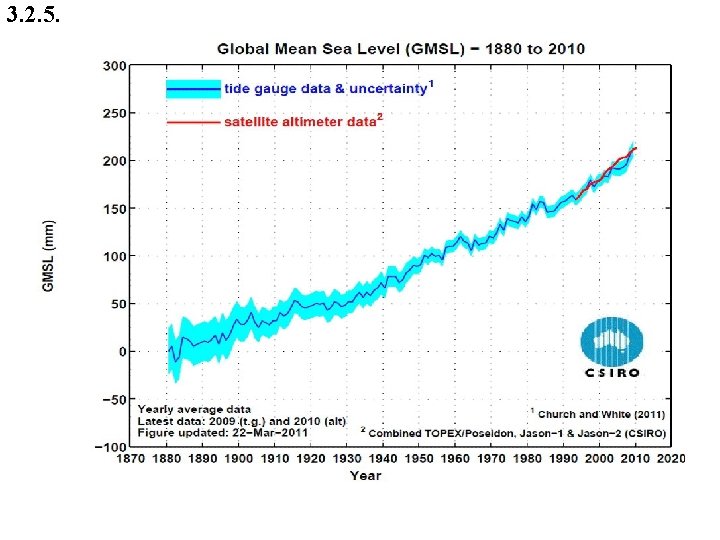
3. 2. 5.
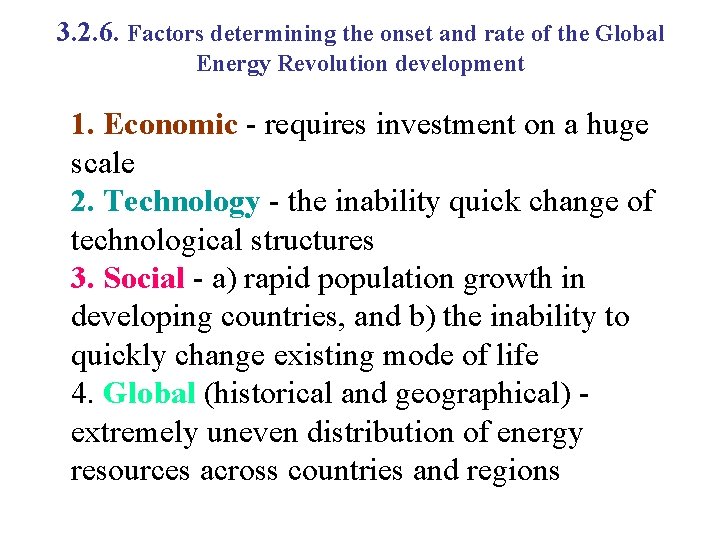
3. 2. 6. Factors determining the onset and rate of the Global Energy Revolution development 1. Economic - requires investment on a huge scale 2. Technology - the inability quick change of technological structures 3. Social - a) rapid population growth in developing countries, and b) the inability to quickly change existing mode of life 4. Global (historical and geographical) extremely uneven distribution of energy resources across countries and regions
4. Natural peculiarities and problems of the Russian Power Engineering
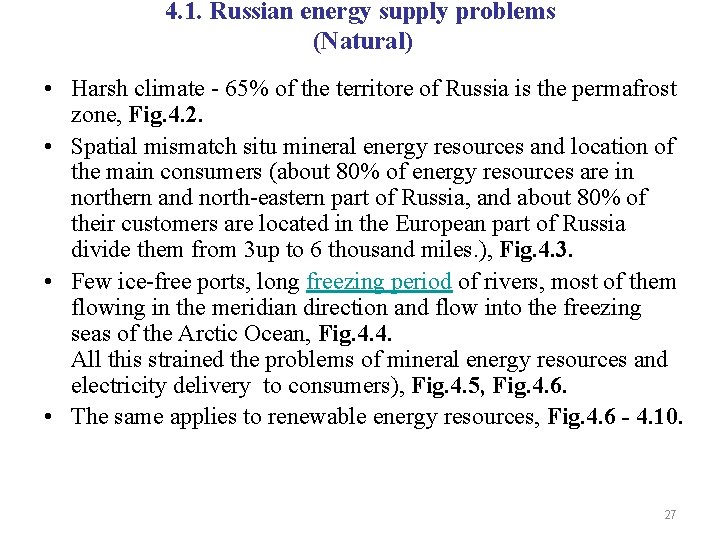
4. 1. Russian energy supply problems (Natural) • Harsh climate - 65% of the territore of Russia is the permafrost zone, Fig. 4. 2. • Spatial mismatch situ mineral energy resources and location of the main consumers (about 80% of energy resources are in northern and north-eastern part of Russia, and about 80% of their customers are located in the European part of Russia divide them from 3 up to 6 thousand miles. ), Fig. 4. 3. • Few ice-free ports, long freezing period of rivers, most of them flowing in the meridian direction and flow into the freezing seas of the Arctic Ocean, Fig. 4. 4. All this strained the problems of mineral energy resources and electricity delivery to consumers), Fig. 4. 5, Fig. 4. 6. • The same applies to renewable energy resources, Fig. 4. 6 - 4. 10. 27
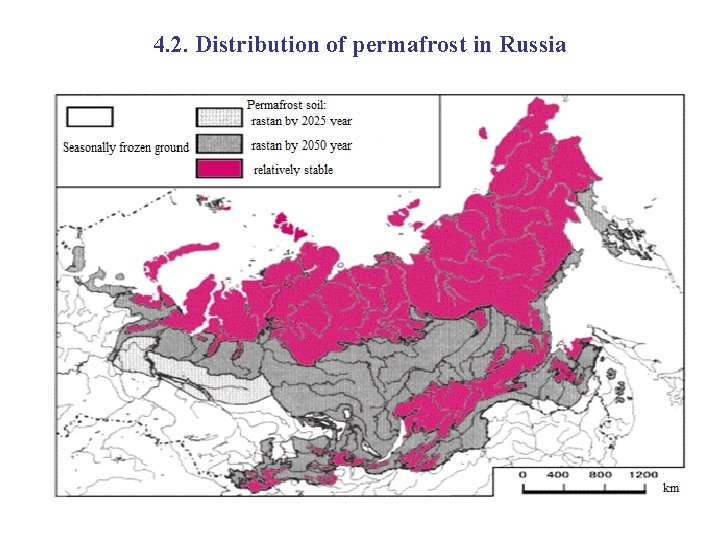
4. 2. Distribution of permafrost in Russia
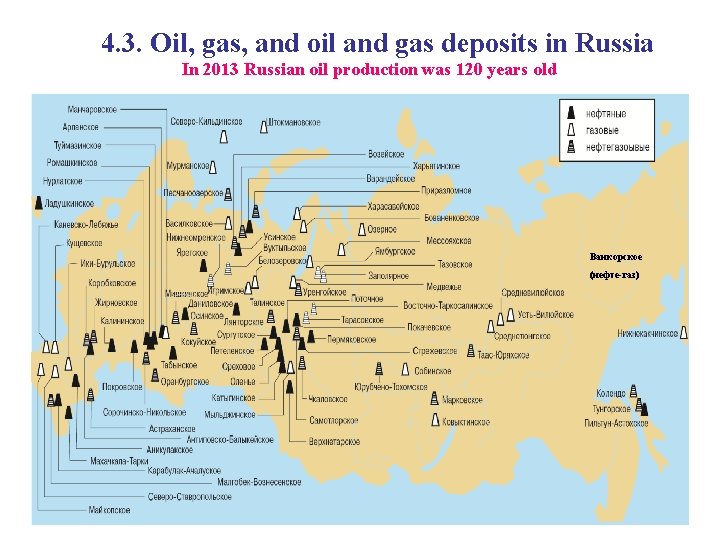
4. 3. Oil, gas, and oil and gas deposits in Russia In 2013 Russian oil production was 120 years old Ванкорское (нефте-газ)
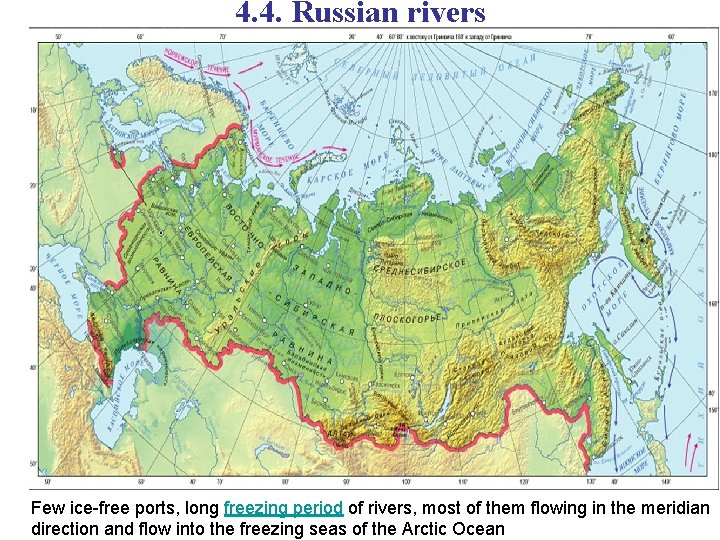
4. 4. Russian rivers Few ice-free ports, long freezing period of rivers, most of them flowing in the meridian direction and flow into the freezing seas of the Arctic Ocean
4. 5. Problems of energy and raw materials industries evidence from the Russian oil industry 1. The high cost of oil - 6 -14 usd. for 1 bbl. from old oilfield and 22 -24 usd. for 1 bbl. from new ones. (In the Middle East and Libya - 2 -6 usd. for 1 bbl. ) 2. The high cost of delivery oil from Russia to consumers because of the large distances - the average distance delivery by pipeline is 3, 000 km. (From Libya - 600 km. , from Norway - 1000 km. ) 3. To maintain the position of Russia on the world oil market is required to implement large-scale investment projects (55 -60 billion dollars by 2015. )
4. 6. The problems of Russian coal delivery to native and foreign consumers 1. By 2000 depreciation of key assets in the company "Russian Railways" was 60% 2. Du to the disintegration of the USSR, Russia lost the Baltic ice-free ports (Ventspils, Tallinn, Riga) 3. The main coal basin - Kuzbass (80% of exported coal) - set away from the main Russian consumers and sea access to foreign markets: - a distance reaches of 5, 000 km or more; - the transport component is 35 -36% in the price of coal.
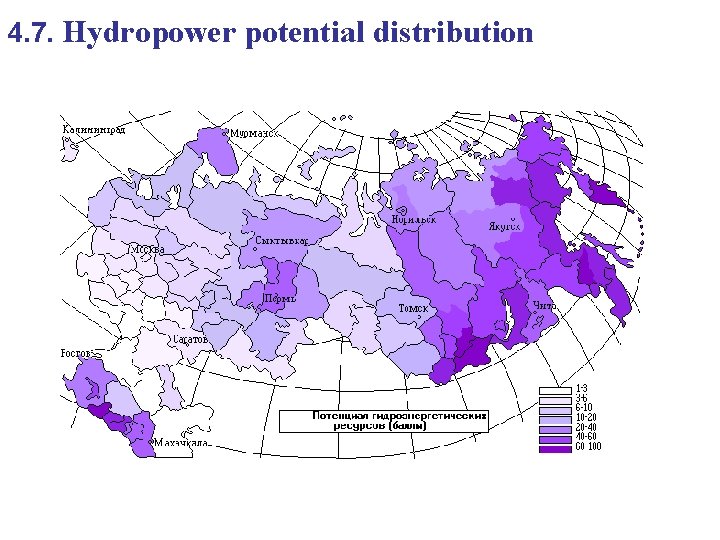
4. 7. Hydropower potential distribution
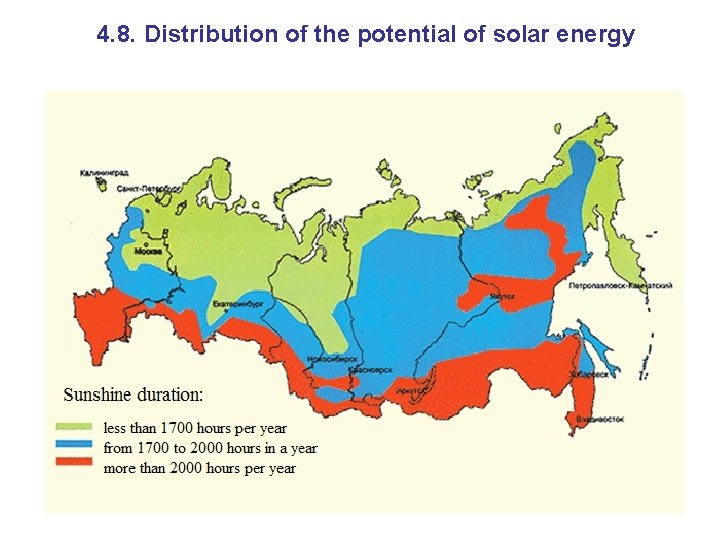
4. 8. Distribution of the potential of solar energy
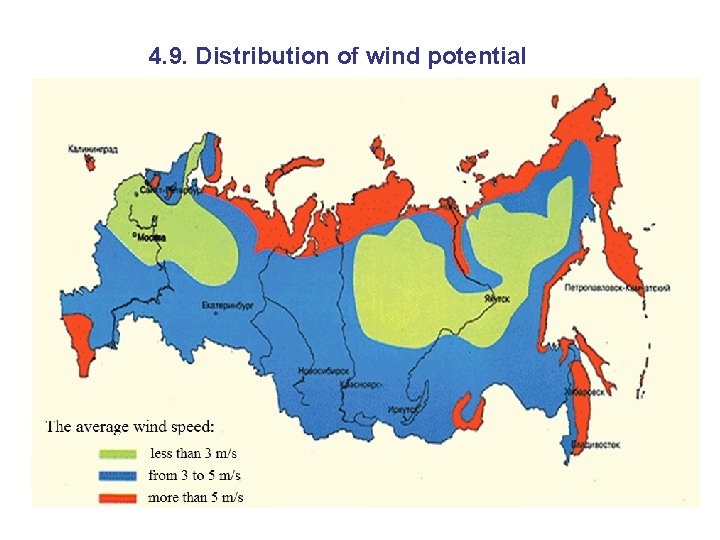
4. 9. Distribution of wind potential
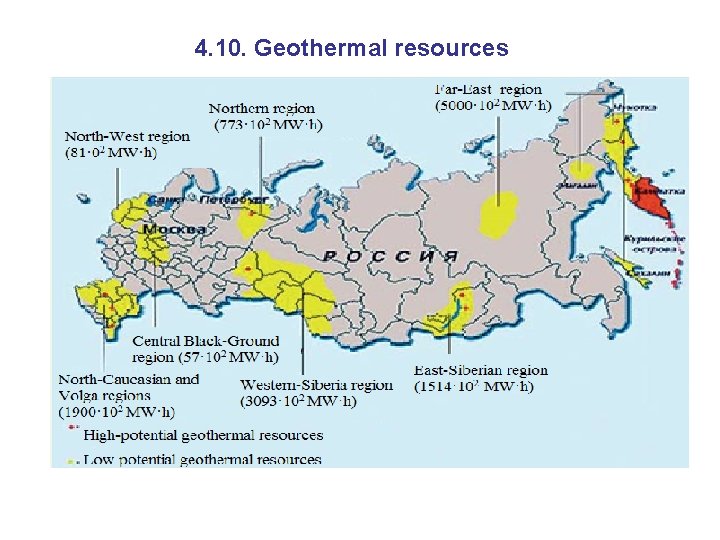
4. 10. Geothermal resources
5. “Hand maid” Peculiarities and problems of the Russian Power Engineering
5. 1. Main “Hand maid” problems of power supply in Russia 5. 1. 1. Systemic problems within the Gaverment competence 1. Low efficiency of energy cosumption: 1. 1. Operation of obselete and worn-out of key assets 1. 2. Loss of the significant part of electrotechnical and energoengineering complex in 90 th 2. Unsuccessful electricity reform during 1998 - 2008 results in severe consequences. 3. "Decumulation“ of the discovered and explored mineral reserves (during the Soviet period) as a result of underinvestment in exploration during 90 th. (Only in the last 2 -3 years, the volume of newly discovered mineral resources began to exceed the annual extracted amount. ). 4. Depletion of the energy resources fields convenient for mining.
5. 1. 2. Problems that solution depends mainly on the energy industry initiatives 1. Low efficiency of energy production 2. Slow overcome the negative effects of the electricity reform 3. Too small scale of auxiliary mineral fuel (AMF) use in the Russian energy sector 4. Small share of the distributed power generation in total Russian electricity 5. Small share of the renewable power generation in the Russian Fuel and Power Complex
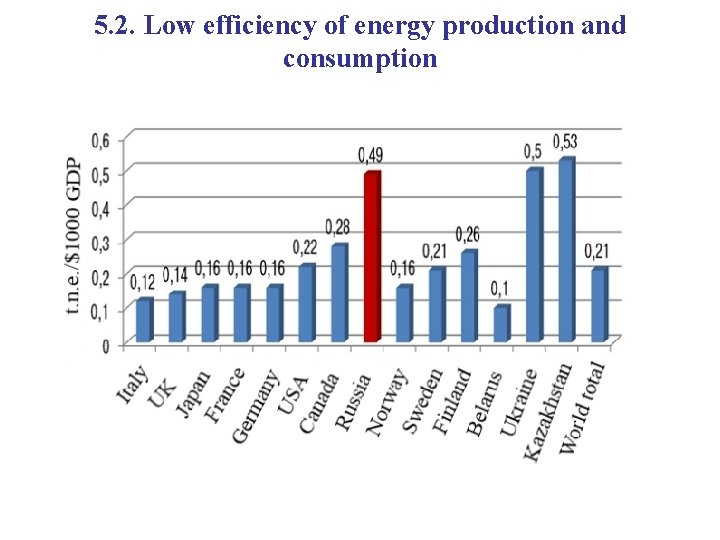
5. 2. Low efficiency of energy production and consumption
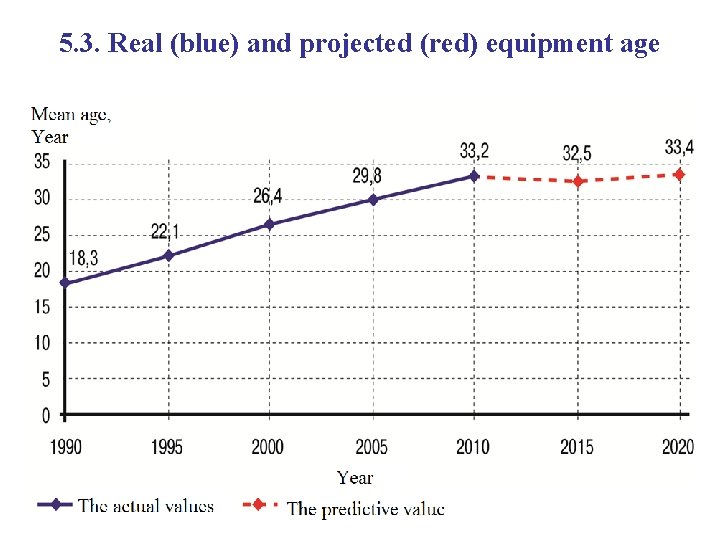
5. 3. Real (blue) and projected (red) equipment age
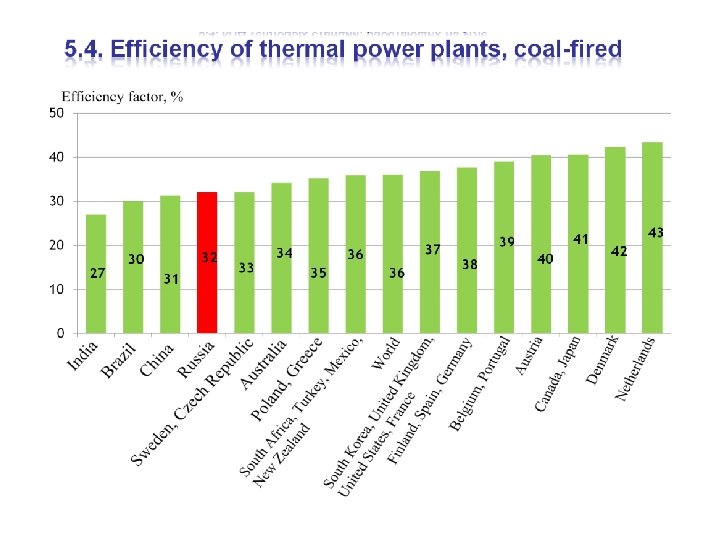
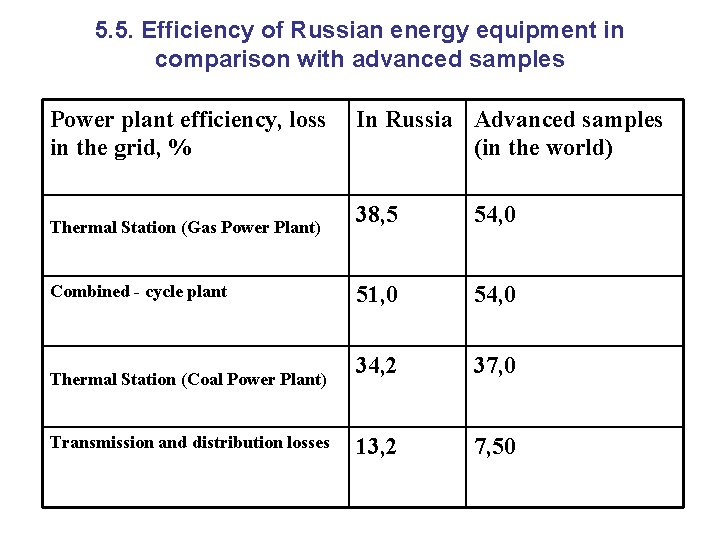
5. 5. Efficiency of Russian energy equipment in comparison with advanced samples Power plant efficiency, loss in the grid, % Thermal Station (Gas Power Plant) Сombined - cycle plant Thermal Station (Coal Power Plant) Transmission and distribution losses In Russia Advanced samples (in the world) 38, 5 54, 0 51, 0 54, 0 34, 2 37, 0 13, 2 7, 50
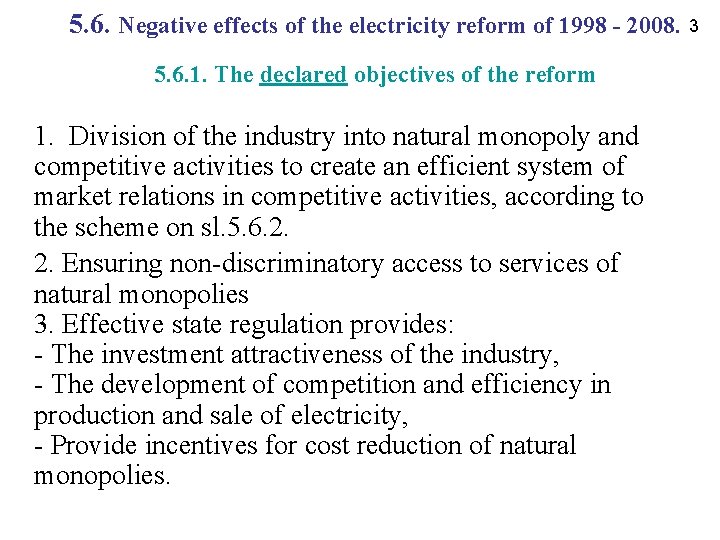
5. 6. Negative effects of the electricity reform of 1998 - 2008. 3 5. 6. 1. The declared objectives of the reform 1. Division of the industry into natural monopoly and competitive activities to create an efficient system of market relations in competitive activities, according to the scheme on sl. 5. 6. 2. 2. Ensuring non-discriminatory access to services of natural monopolies 3. Effective state regulation provides: - The investment attractiveness of the industry, - The development of competition and efficiency in production and sale of electricity, - Provide incentives for cost reduction of natural monopolies.
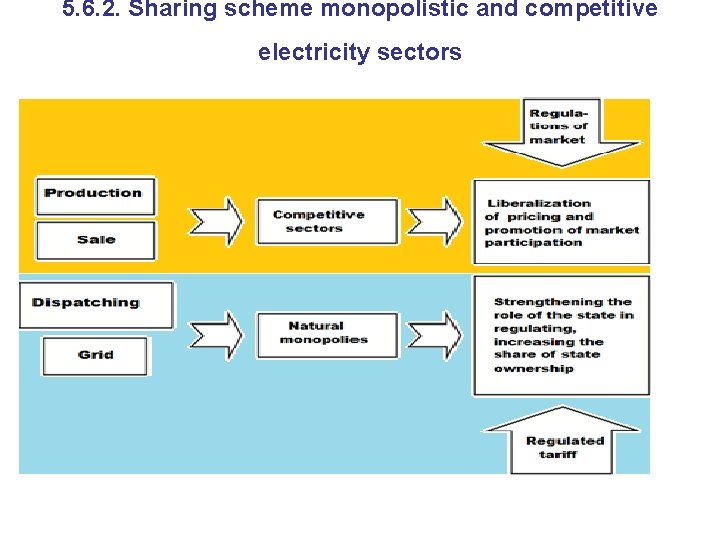
5. 6. 2. Sharing scheme monopolistic and competitive electricity sectors
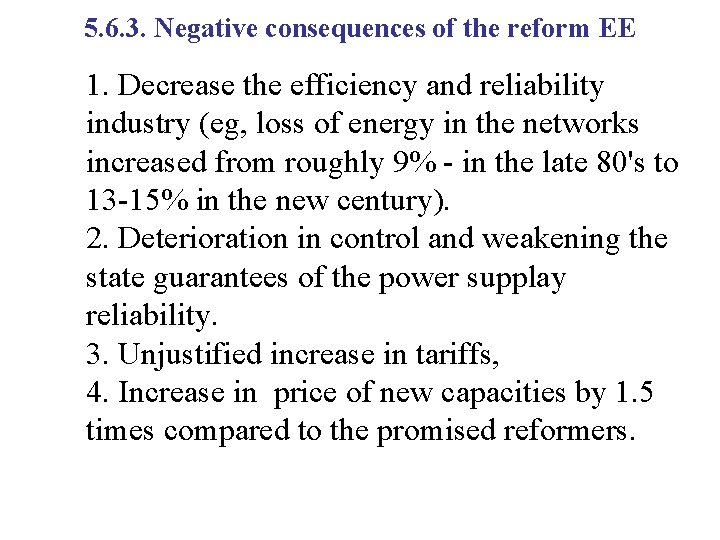
5. 6. 3. Negative consequences of the reform EE 1. Decrease the efficiency and reliability industry (eg, loss of energy in the networks increased from roughly 9% - in the late 80's to 13 -15% in the new century). 2. Deterioration in control and weakening the state guarantees of the power supplay reliability. 3. Unjustified increase in tariffs, 4. Increase in price of new capacities by 1. 5 times compared to the promised reformers.
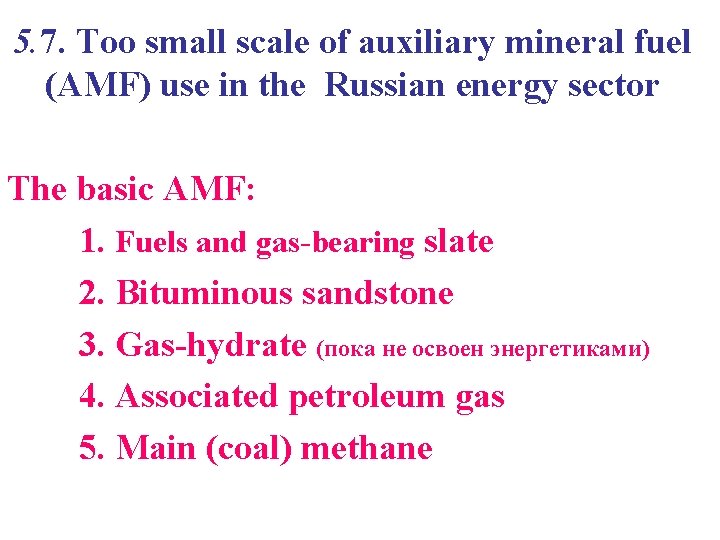
5. 7. Too small scale of auxiliary mineral fuel (AMF) use in the Russian energy sector The basic AMF: 1. Fuels and gas-bearing slate 2. Bituminous sandstone 3. Gas-hydrate (пока не освоен энергетиками) 4. Associated petroleum gas 5. Main (coal) methane
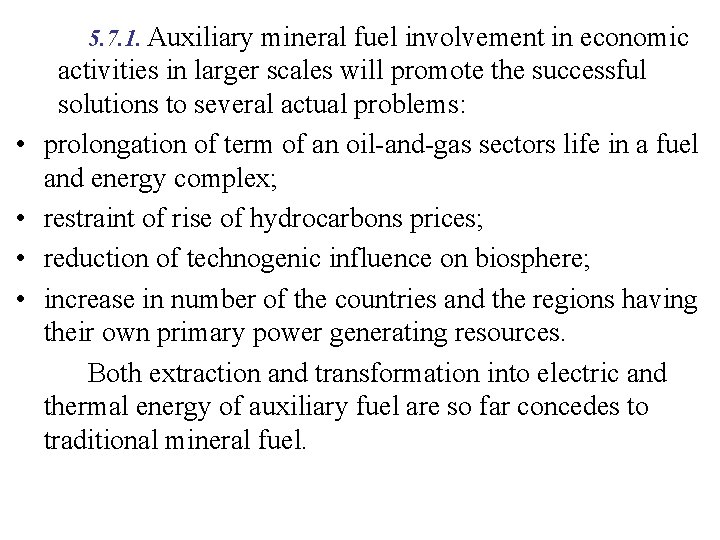
5. 7. 1. Auxiliary mineral fuel involvement in economic • • activities in larger scales will promote the successful solutions to several actual problems: prolongation of term of an oil-and-gas sectors life in a fuel and energy complex; restraint of rise of hydrocarbons prices; reduction of technogenic influence on biosphere; increase in number of the countries and the regions having their own primary power generating resources. Both extraction and transformation into electric and thermal energy of auxiliary fuel are so far concedes to traditional mineral fuel.
5. 8. Small share of the distributed power generation in total Russian electricity 5. 8. 1. The small-scale (distributed) power generation is very important for Russia. 1. About 15 -20 million Russians, populating 35 % of the territory of the Russian Federation, are not fully supplied with central power supply and consequently suffer from power and heat energy failures. 2. The second problem for the regions, not supplied with the centralized (system) power supply, is the cost of kilowatt-hour. The cost of diesel fuel which is delivered to settlements by vehicles off-the-road, river barges and helicopters exceeds 600 dollars per ton. That results in high net cost of electric power.
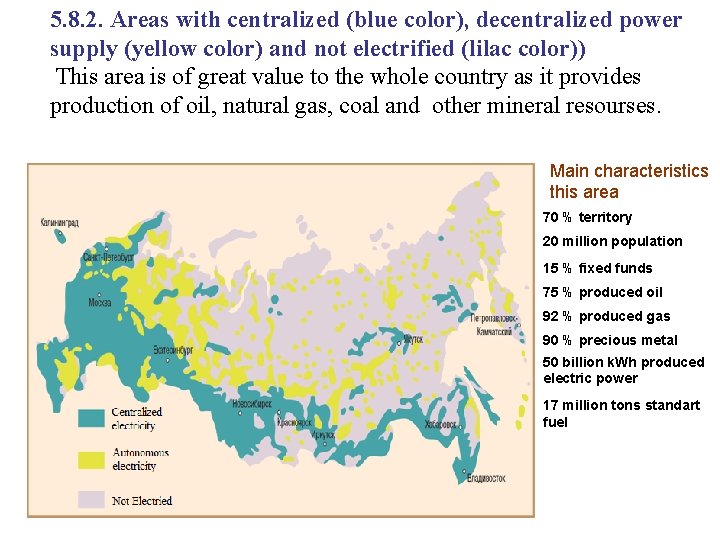
5. 8. 2. Areas with centralized (blue color), decentralized power supply (yellow color) and not electrified (lilac color)) This area is of great value to the whole country as it provides production of oil, natural gas, coal and other mineral resourses. Main characteristics this area 70 % territory 20 million population 15 % fixed funds 75 % produced oil 92 % produced gas 90 % precious metal 50 billion k. Wh produced electric power 17 million tons standart fuel
5. 8. 3. Current state of the small-scale power generation in Russia • In whole Russian minor off-system sources of power energy production (power less than 1 MW) nowadays produce only 0. 8 -1. 5 %. (For comperison, in Belgium – about 80% ). Experts believe that for Russia it would be better to decrease the centralization of 1015% in the next 10 -15 years. • This would the consumer makes the choice of a power supply source on the basis of its consumer qualities estimation. • Emergency power supply system construction for a private sector is economically proved both in areas of mass building, and outside cities.
5. 9. Small share of the renewable power generation in the Russian Fuel and Power Complex 1. Bioenergy 2. Solar Energy (Solar Power Stations ) 3. Wind Power Stations 4. Geothermal Power Stations 5. Hydroelectric Power Stations (On small rivers, oceans and sees) 7. The Low Potential Heat of the water, air and ground Utilization
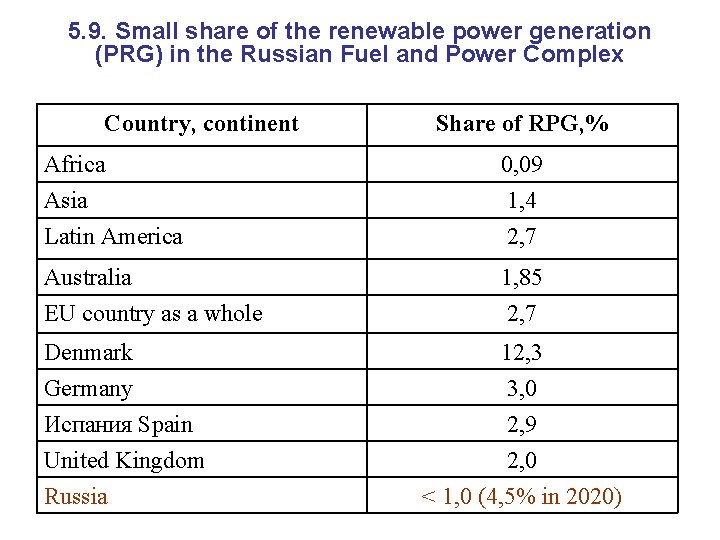
5. 9. Small share of the renewable power generation (PRG) in the Russian Fuel and Power Complex Country, continent Share of RPG, % Africa Asia Latin America 0, 09 1, 4 2, 7 Australia EU country as a whole 1, 85 2, 7 Denmark Germany Испания Spain United Kingdom Russia 12, 3 3, 0 2, 9 2, 0 < 1, 0 (4, 5% in 2020)
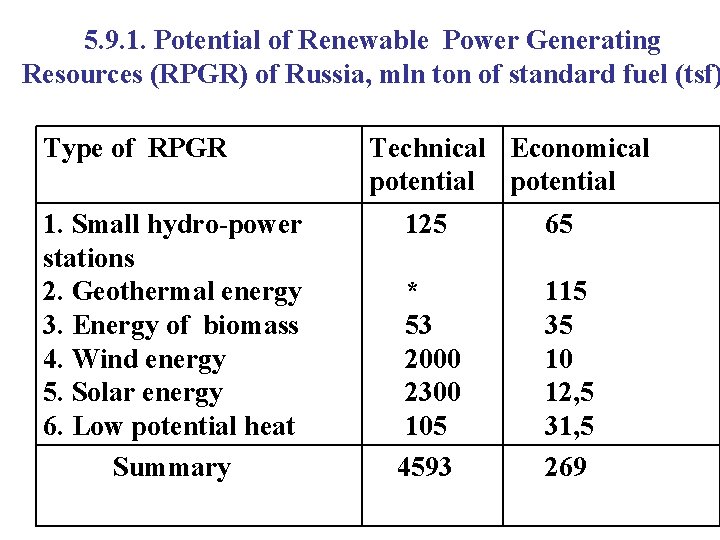
5. 9. 1. Potential of Renewable Power Generating Resources (RPGR) of Russia, mln ton of standard fuel (tsf) Type of RPGR 1. Small hydro-power stations 2. Geothermal energy 3. Energy of biomass 4. Wind energy 5. Solar energy 6. Low potential heat Summary Technical Economical potential 125 65 * 53 2000 2300 105 4593 115 35 10 12, 5 31, 5 269
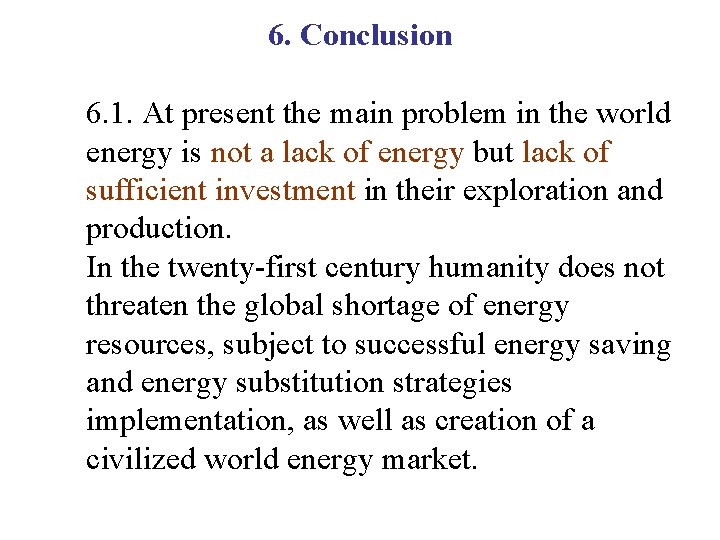
6. Conclusion 6. 1. At present the main problem in the world energy is not a lack of energy but lack of sufficient investment in their exploration and production. In the twenty-first century humanity does not threaten the global shortage of energy resources, subject to successful energy saving and energy substitution strategies implementation, as well as creation of a civilized world energy market.
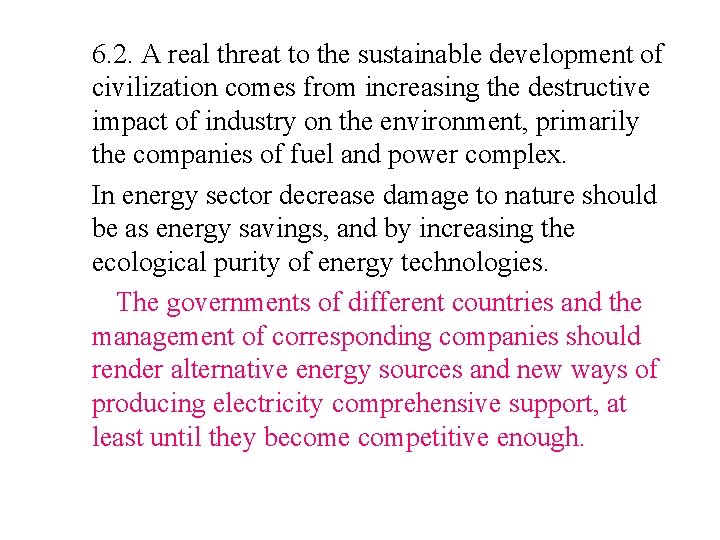
6. 2. A real threat to the sustainable development of civilization comes from increasing the destructive impact of industry on the environment, primarily the companies of fuel and power complex. In energy sector decrease damage to nature should be as energy savings, and by increasing the ecological purity of energy technologies. The governments of different countries and the management of corresponding companies should render alternative energy sources and new ways of producing electricity comprehensive support, at least until they become competitive enough.
- Slides: 56