
Current Management of Splenic Trauma No financial disclosures







- Slides: 52
Current Management of Splenic Trauma No financial disclosures
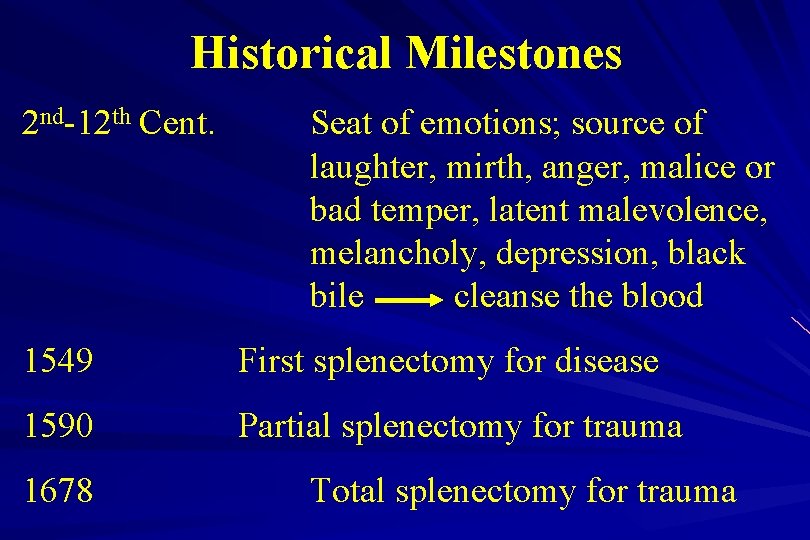
Historical Milestones 2 nd-12 th Cent. Seat of emotions; source of laughter, mirth, anger, malice or bad temper, latent malevolence, melancholy, depression, black bile cleanse the blood 1549 First splenectomy for disease 1590 Partial splenectomy for trauma 1678 Total splenectomy for trauma
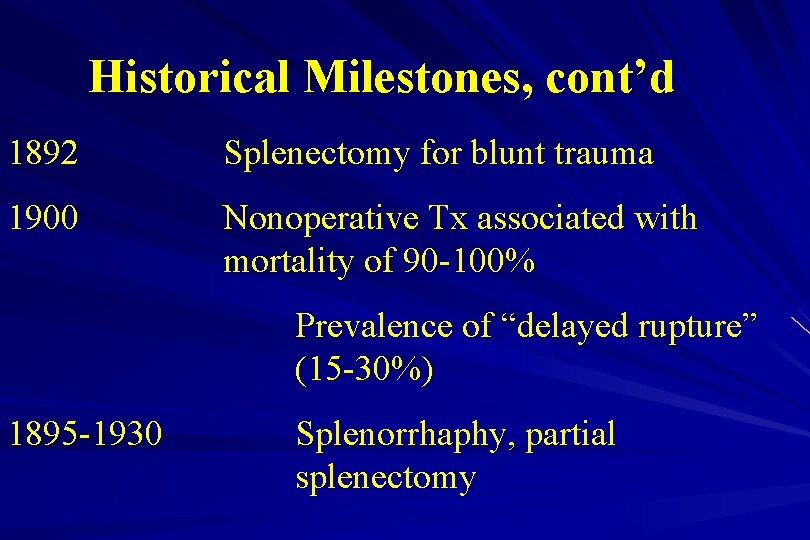
Historical Milestones, cont’d 1892 Splenectomy for blunt trauma 1900 Nonoperative Tx associated with mortality of 90 -100% Prevalence of “delayed rupture” (15 -30%) 1895 -1930 Splenorrhaphy, partial splenectomy
“Injuries of the spleen demand excision of the gland. No evil effects follow its removal, while the danger of hemorrhage is effectually stopped. ” Kocher, 1911
Historical Milestones, cont’d 1952 Increased infection in children after splenectomy 1969 Overwhelming Post Splenectomy Infection (OPSI) 1971 Nonoperative management of spleen (pediatric patients) 1990’s Nonop management in adults
Epidemiologic Facts Related to Infections after Splenectomy Pneumococcal pneumonia is a common community acquired pneumonia Post splenectomy cases often poorly documented Other risk factors for pneumonia/infection are often present Not all infections after splenectomy are OPSI
Therefore …… What is the risk of OPSI after splenectomy? Best guess is < 1% in adults after trauma (0. 020. 2%) More frequently rapidly fatal in adults (less meningitis) Impact of immunization after splenectomy
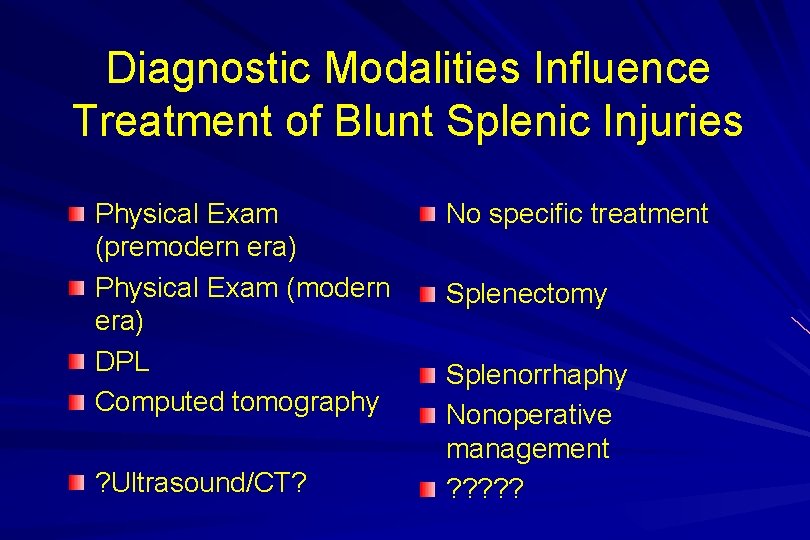
Diagnostic Modalities Influence Treatment of Blunt Splenic Injuries Physical Exam (premodern era) Physical Exam (modern era) DPL Computed tomography ? Ultrasound/CT? No specific treatment Splenectomy Splenorrhaphy Nonoperative management ? ? ?
Magnitude of Splenic Injury is changing over time
Splenic Injury Severity Trends from the National Trauma Data Bank
Mortality with Moderately Severe Splenic Injuries
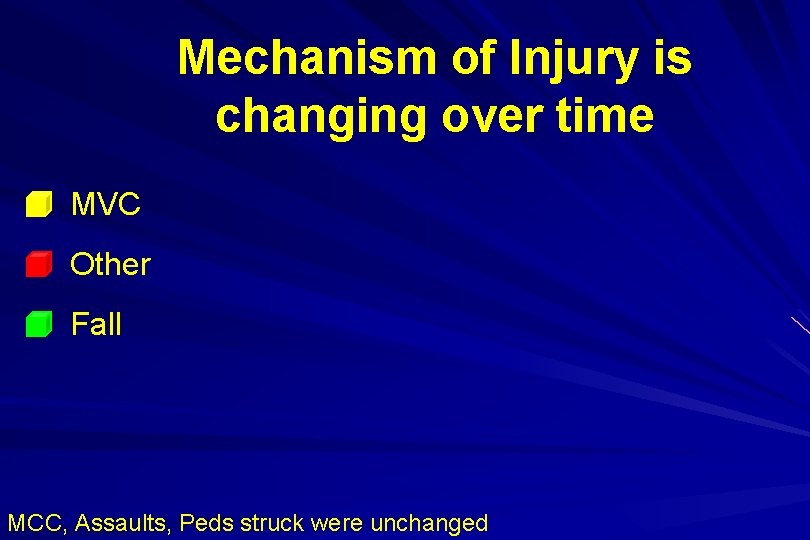
Mechanism of Injury is changing over time MVC Other Fall MCC, Assaults, Peds struck were unchanged
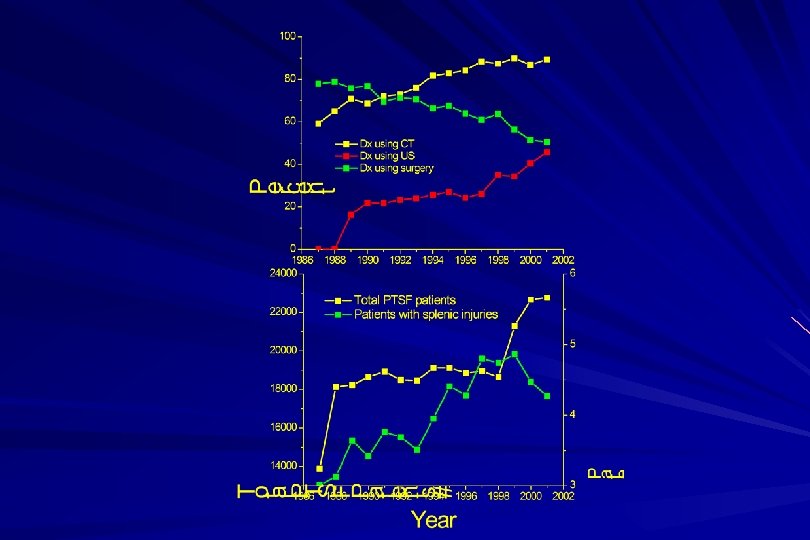
Nonoperative treatment is the most common form of management for blunt splenic injuries More frequent use of CT for diagnosis/triage More low magnitude splenic injuries Low velocity accidents Decreased overall number/severity of associated injuries
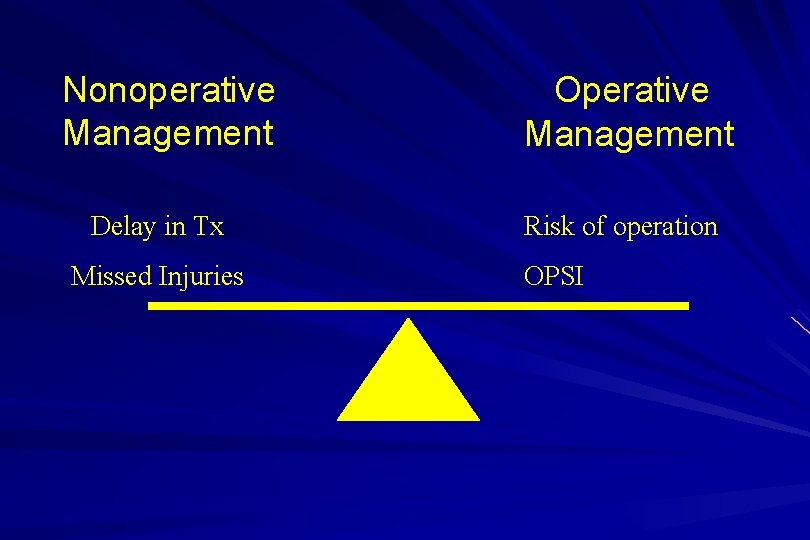
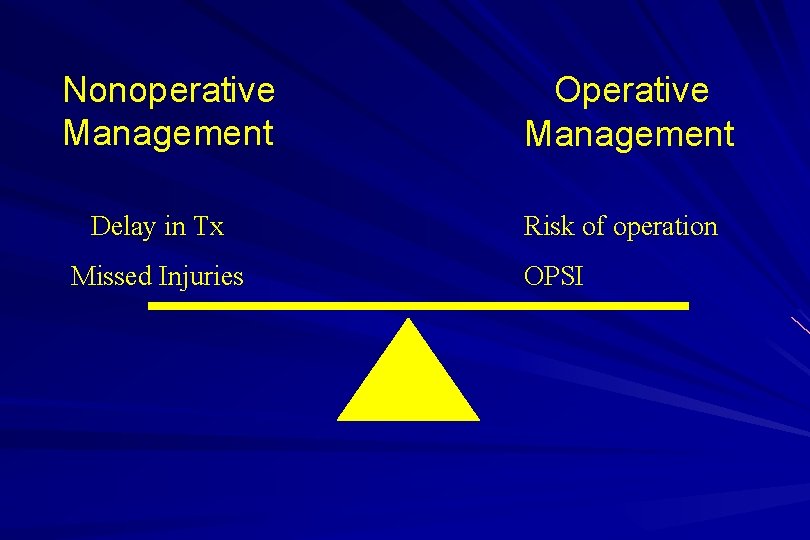
Nonoperative Management Delay in Tx Missed Injuries Operative Management Risk of operation OPSI
Operative vs Nonoperative Tx Is this splenic injury actively bleeding? (likely to bleed)?
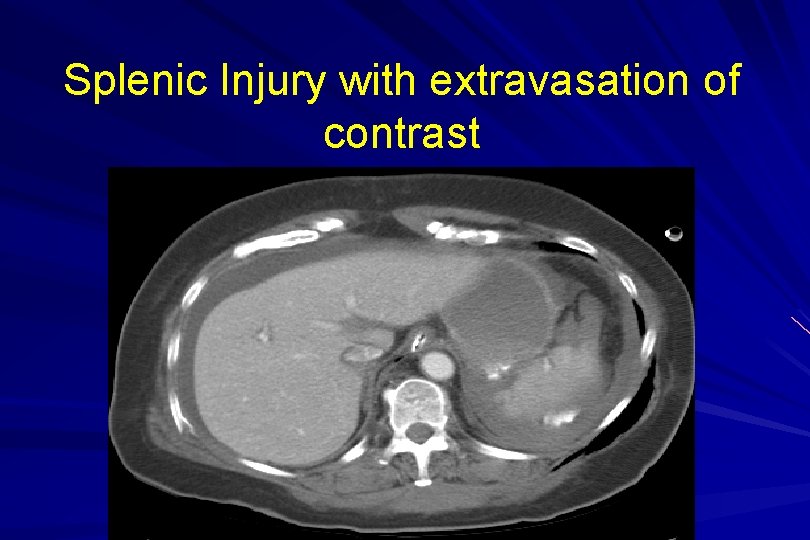
Splenic Injury with extravasation of contrast
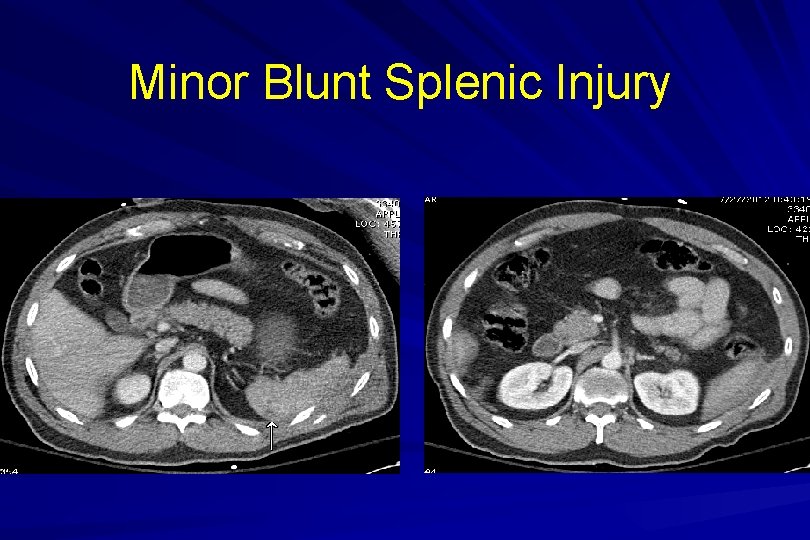
Minor Blunt Splenic Injury
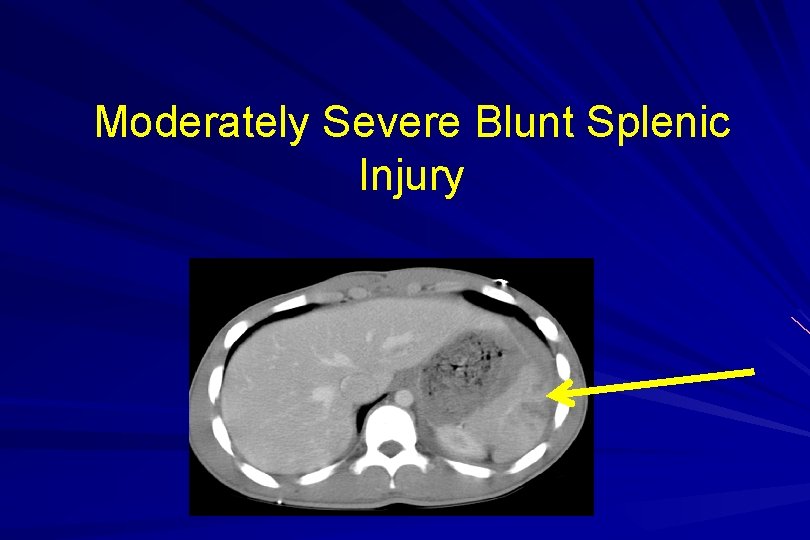
Moderately Severe Blunt Splenic Injury
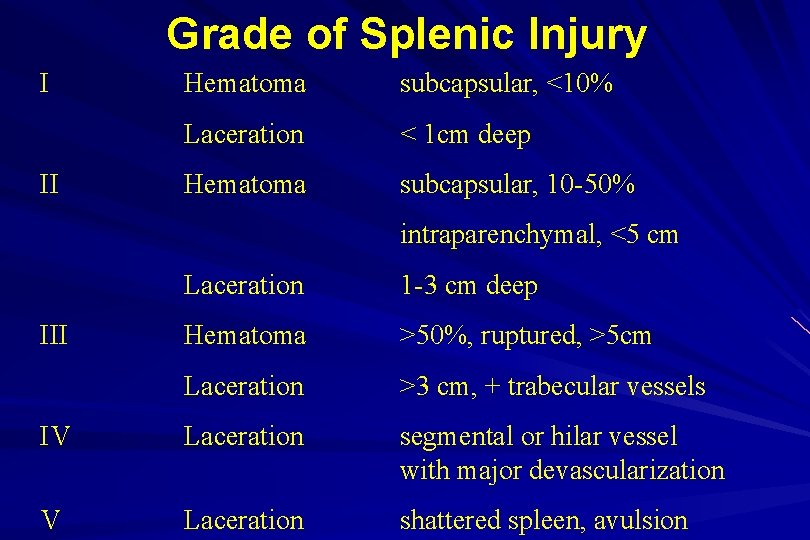
Grade of Splenic Injury I II Hematoma subcapsular, <10% Laceration < 1 cm deep Hematoma subcapsular, 10 -50% intraparenchymal, <5 cm Laceration 1 -3 cm deep Hematoma >50%, ruptured, >5 cm Laceration >3 cm, + trabecular vessels IV Laceration segmental or hilar vessel with major devascularization V Laceration shattered spleen, avulsion III
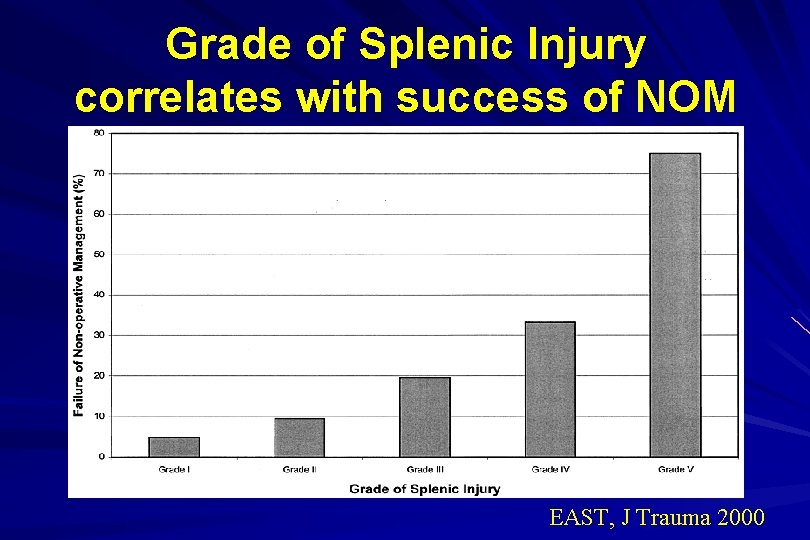
Grade of Splenic Injury correlates with success of NOM EAST, J Trauma 2000
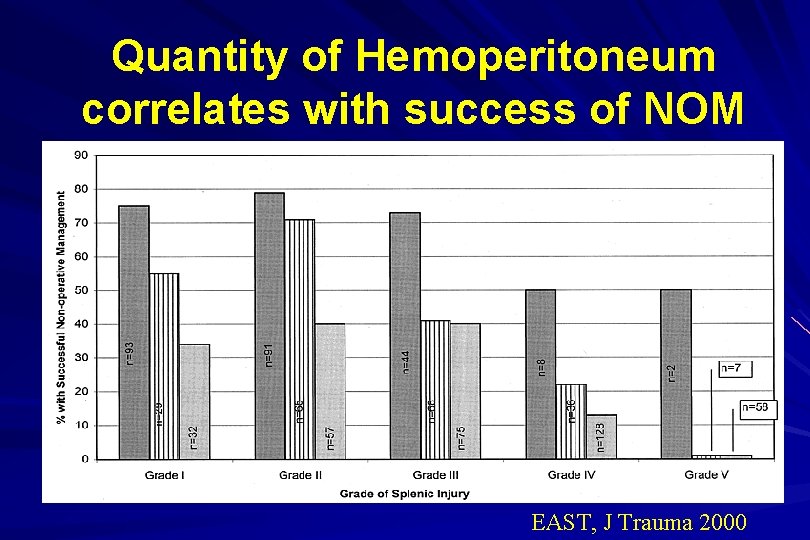
Quantity of Hemoperitoneum correlates with success of NOM EAST, J Trauma 2000
Magnitude of injury correlates with success of nonoperative management
Age impacts Nonoperative Management
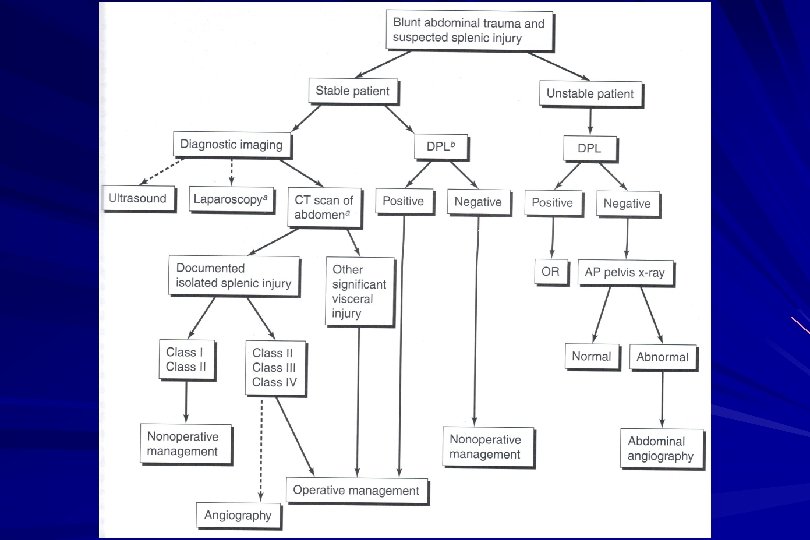
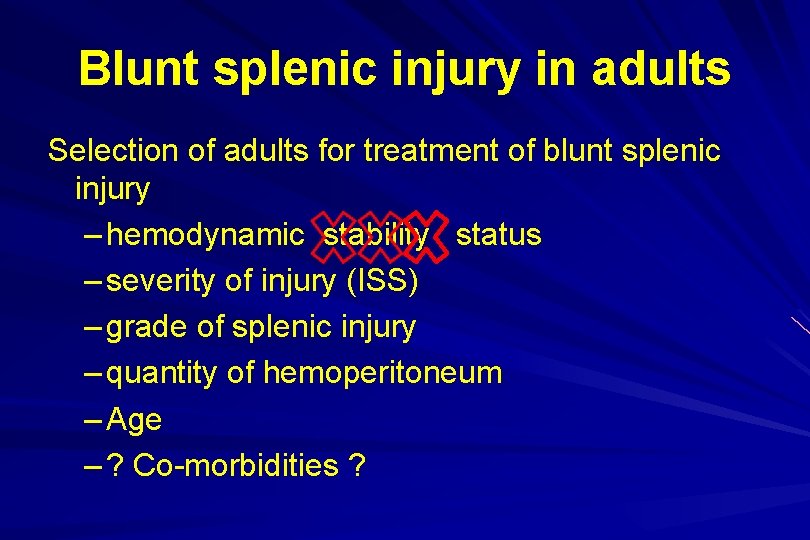
Blunt splenic injury in adults Selection of adults for treatment of blunt splenic injury – hemodynamic stability status – severity of injury (ISS) – grade of splenic injury – quantity of hemoperitoneum – Age – ? Co-morbidities ?
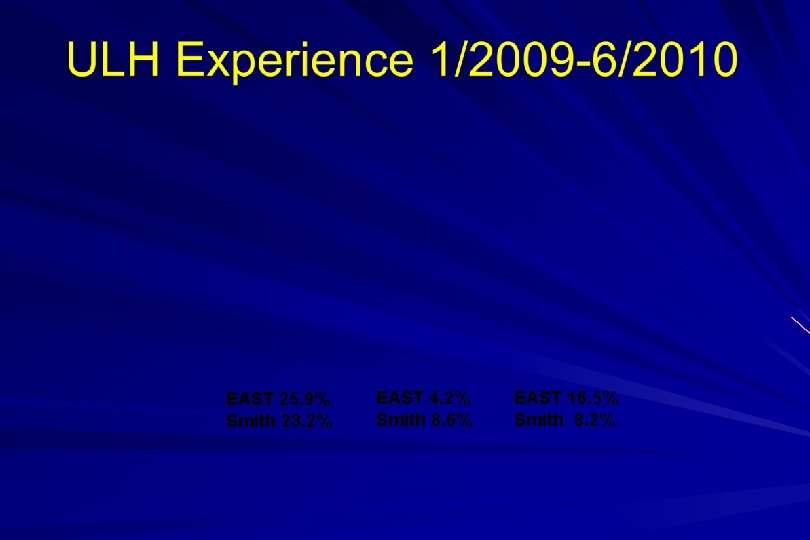
ULH Experience 1/2009 -6/2010
EAST 25. 9% Smith 23. 2% EAST 4. 2% Smith 8. 6% EAST 16. 5% Smith 8. 2%
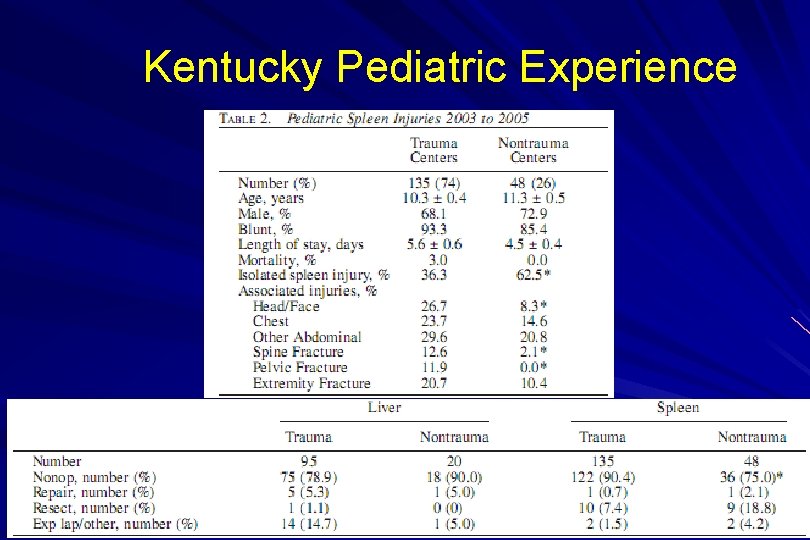
Kentucky Pediatric Experience
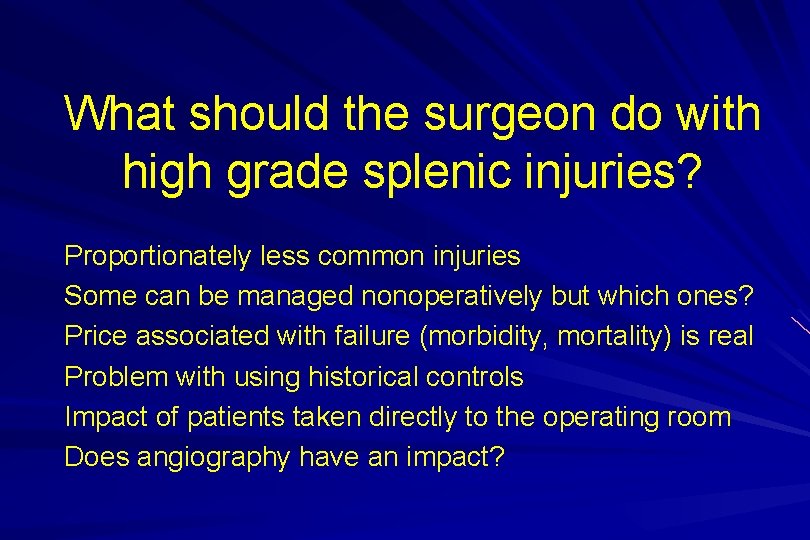
What should the surgeon do with high grade splenic injuries? Proportionately less common injuries Some can be managed nonoperatively but which ones? Price associated with failure (morbidity, mortality) is real Problem with using historical controls Impact of patients taken directly to the operating room Does angiography have an impact?
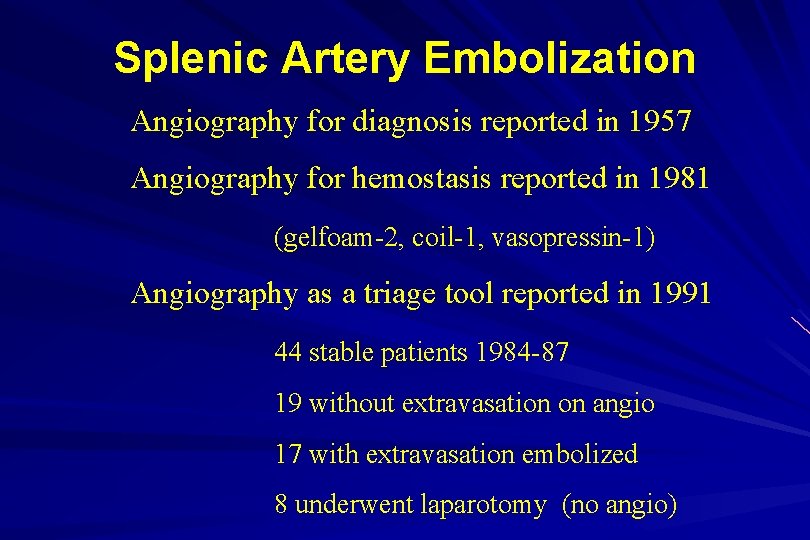
Splenic Artery Embolization Angiography for diagnosis reported in 1957 Angiography for hemostasis reported in 1981 (gelfoam-2, coil-1, vasopressin-1) Angiography as a triage tool reported in 1991 44 stable patients 1984 -87 19 without extravasation on angio 17 with extravasation embolized 8 underwent laparotomy (no angio)
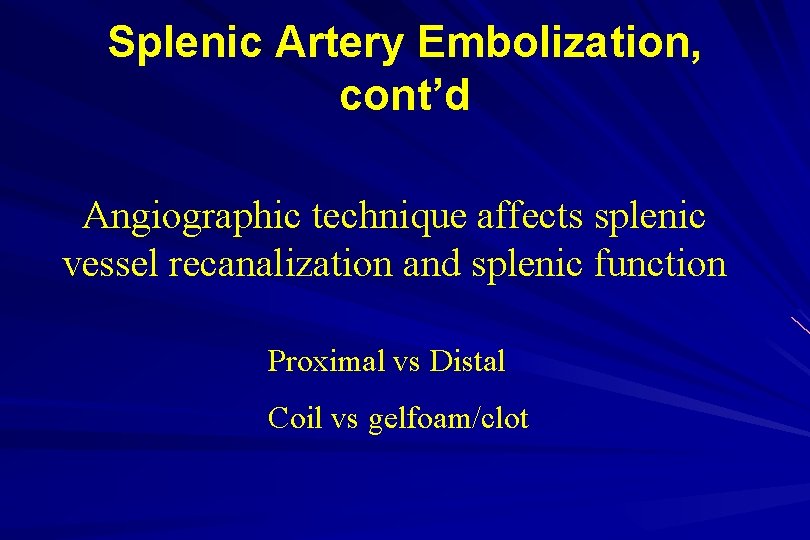
Splenic Artery Embolization, cont’d Angiographic technique affects splenic vessel recanalization and splenic function Proximal vs Distal Coil vs gelfoam/clot
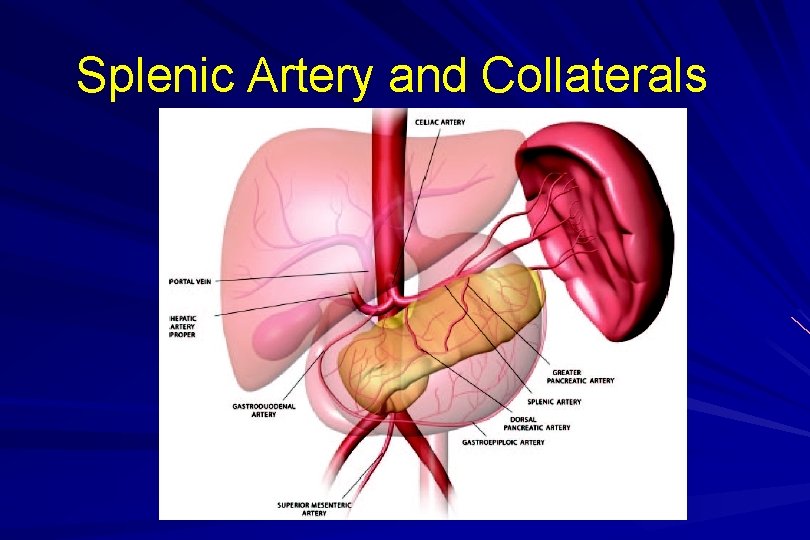
Splenic Artery and Collaterals
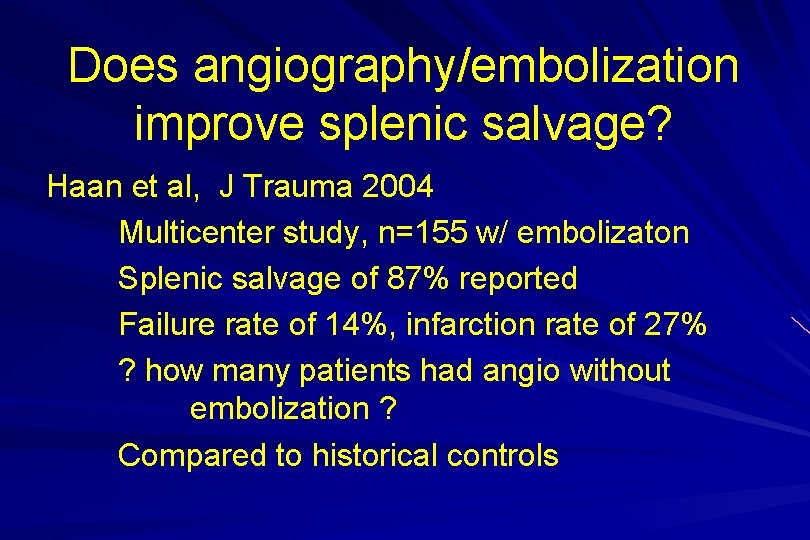
Does angiography/embolization improve splenic salvage? Haan et al, J Trauma 2004 Multicenter study, n=155 w/ embolizaton Splenic salvage of 87% reported Failure rate of 14%, infarction rate of 27% ? how many patients had angio without embolization ? Compared to historical controls
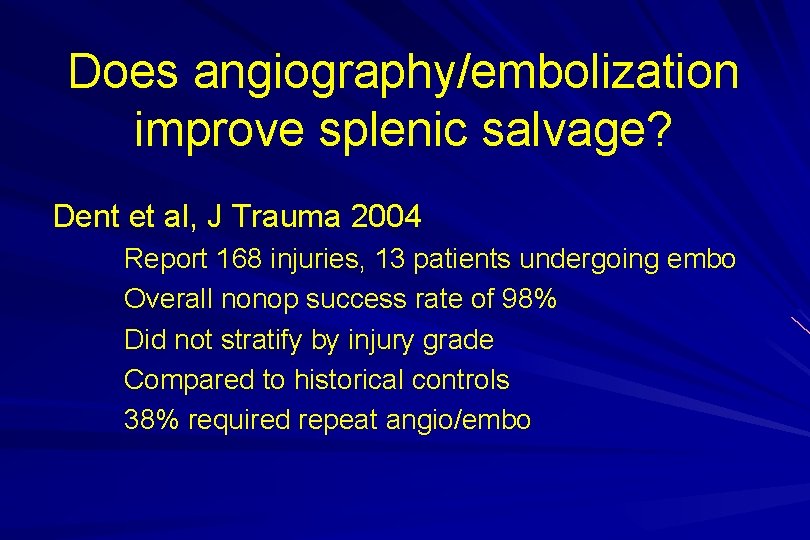
Does angiography/embolization improve splenic salvage? Dent et al, J Trauma 2004 Report 168 injuries, 13 patients undergoing embo Overall nonop success rate of 98% Did not stratify by injury grade Compared to historical controls 38% required repeat angio/embo
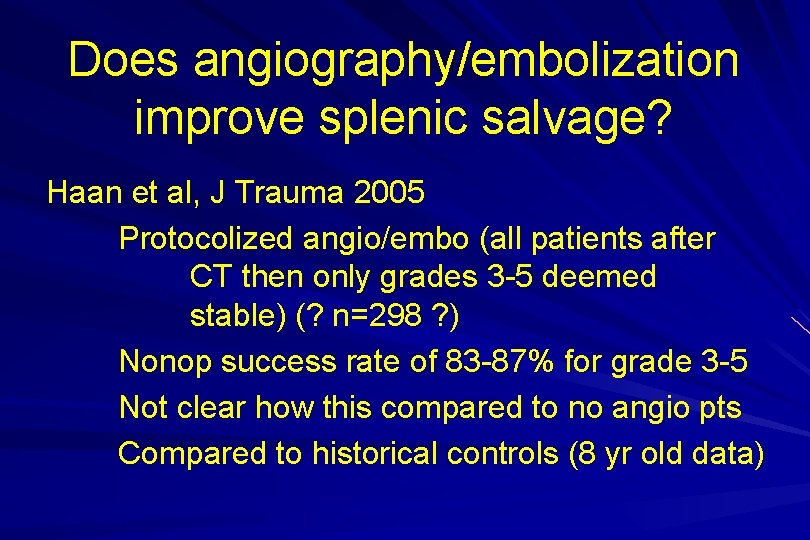
Does angiography/embolization improve splenic salvage? Haan et al, J Trauma 2005 Protocolized angio/embo (all patients after CT then only grades 3 -5 deemed stable) (? n=298 ? ) Nonop success rate of 83 -87% for grade 3 -5 Not clear how this compared to no angio pts Compared to historical controls (8 yr old data)
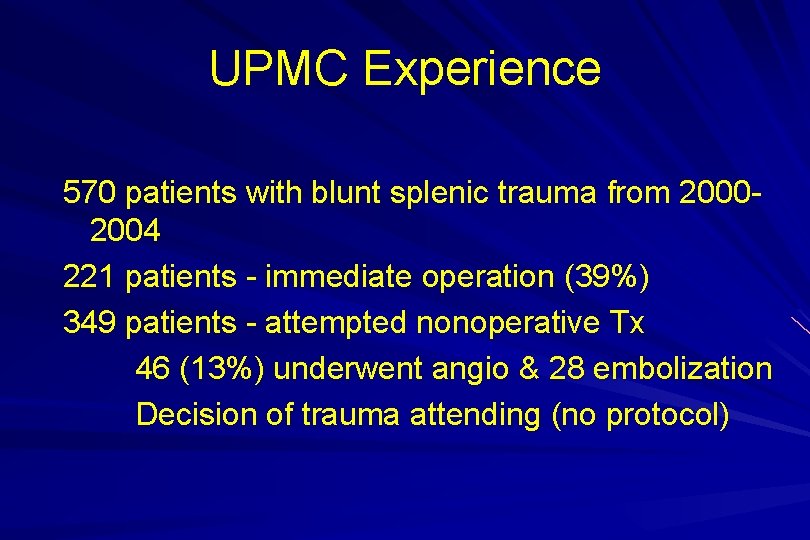
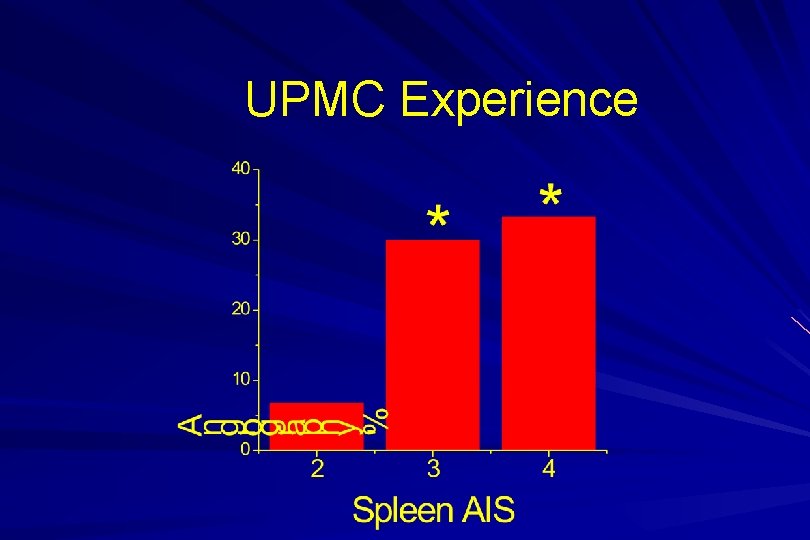
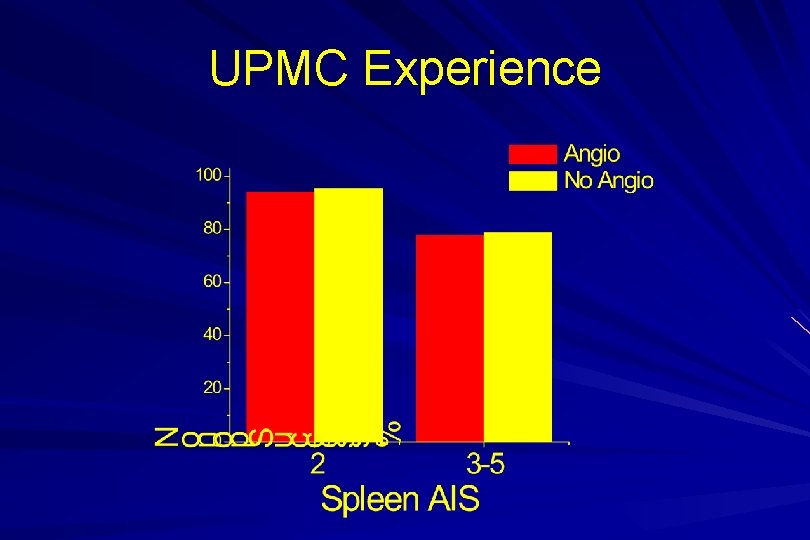
UPMC Experience 570 patients with blunt splenic trauma from 20002004 221 patients - immediate operation (39%) 349 patients - attempted nonoperative Tx 46 (13%) underwent angio & 28 embolization Decision of trauma attending (no protocol)
UPMC Experience
UPMC Experience
UPMC Experience
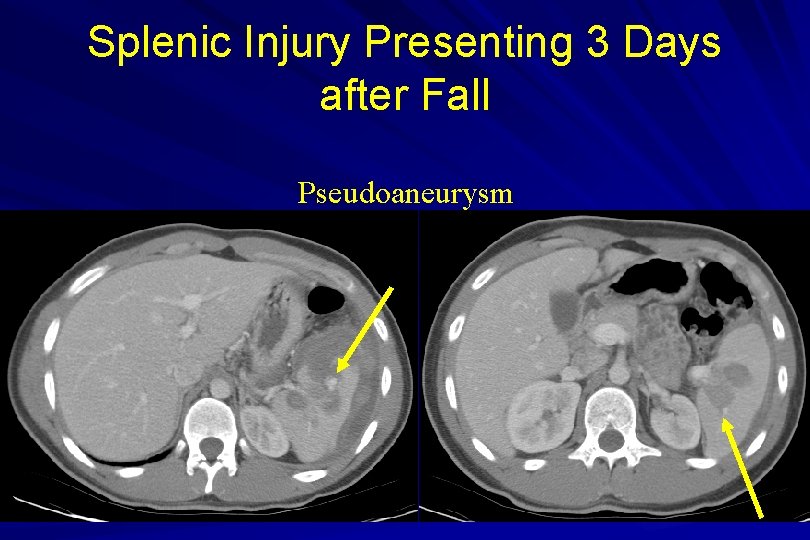
Splenic Injury Presenting 3 Days after Fall Pseudoaneurysm
Nonoperative Management Delay in Tx Missed Injuries Operative Management Risk of operation OPSI
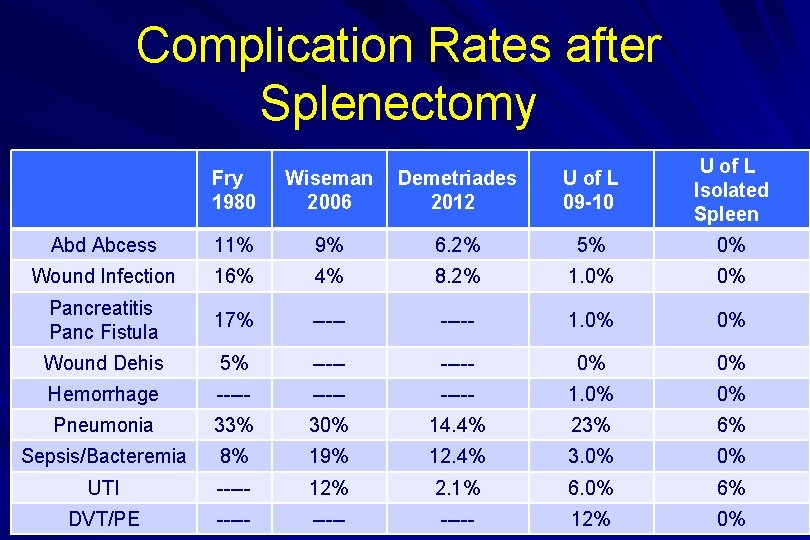
Complication Rates after Splenectomy Fry 1980 Wiseman 2006 Demetriades 2012 U of L 09 -10 U of L Isolated Spleen Abd Abcess 11% 9% 6. 2% 5% 0% Wound Infection 16% 4% 8. 2% 1. 0% 0% Pancreatitis Panc Fistula 17% ----- 1. 0% 0% Wound Dehis 5% ----- 0% 0% Hemorrhage ----- 1. 0% 0% Pneumonia 33% 30% 14. 4% 23% 6% Sepsis/Bacteremia 8% 19% 12. 4% 3. 0% 0% UTI ----- 12% 2. 1% 6. 0% 6% DVT/PE ----- 12% 0%
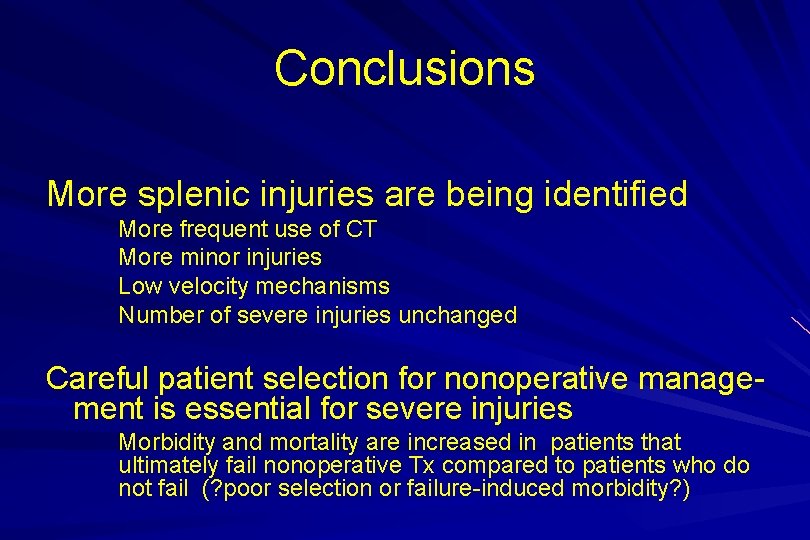
Conclusions More splenic injuries are being identified More frequent use of CT More minor injuries Low velocity mechanisms Number of severe injuries unchanged Careful patient selection for nonoperative management is essential for severe injuries Morbidity and mortality are increased in patients that ultimately fail nonoperative Tx compared to patients who do not fail (? poor selection or failure-induced morbidity? )
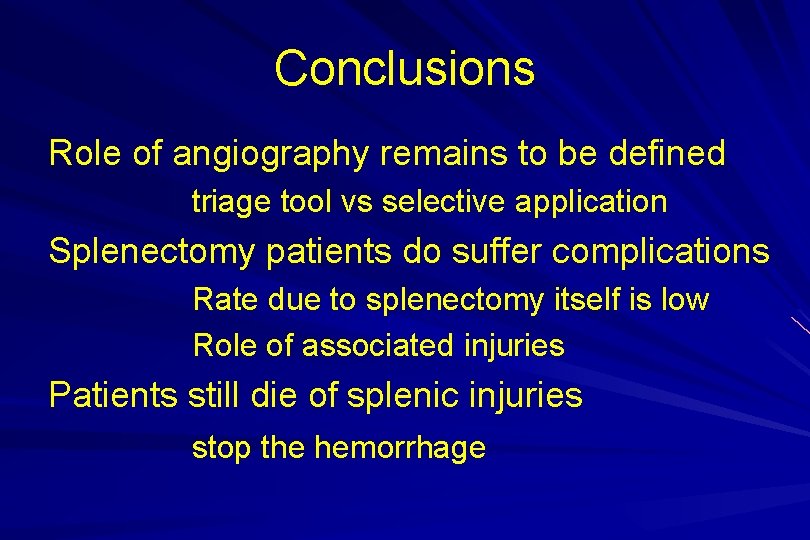
Conclusions Role of angiography remains to be defined triage tool vs selective application Splenectomy patients do suffer complications Rate due to splenectomy itself is low Role of associated injuries Patients still die of splenic injuries stop the hemorrhage
Splenic Function, cont’d Immune Surveillance White pulp (25% spleen volume)= lymphoid compartment Bind Ag & differentiate into Ab-secreting cells Initial site of Ig. M after bacterial challenge Removal of opsonized particles
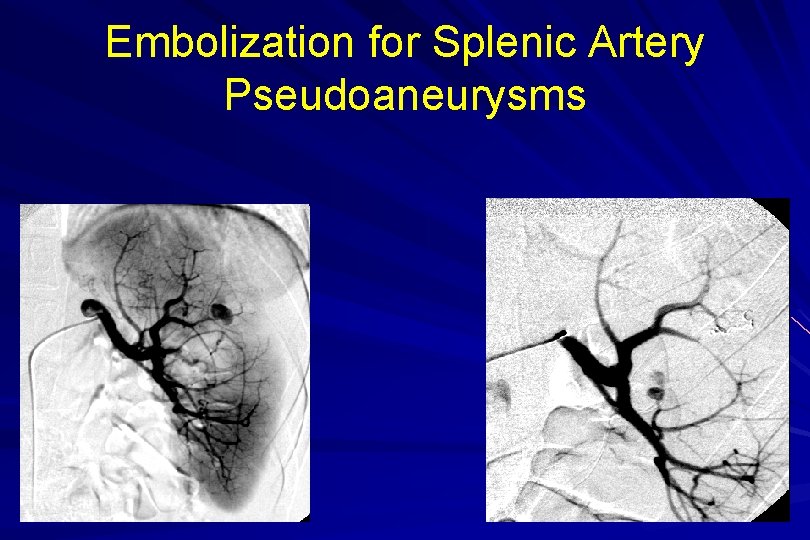
Embolization for Splenic Artery Pseudoaneurysms
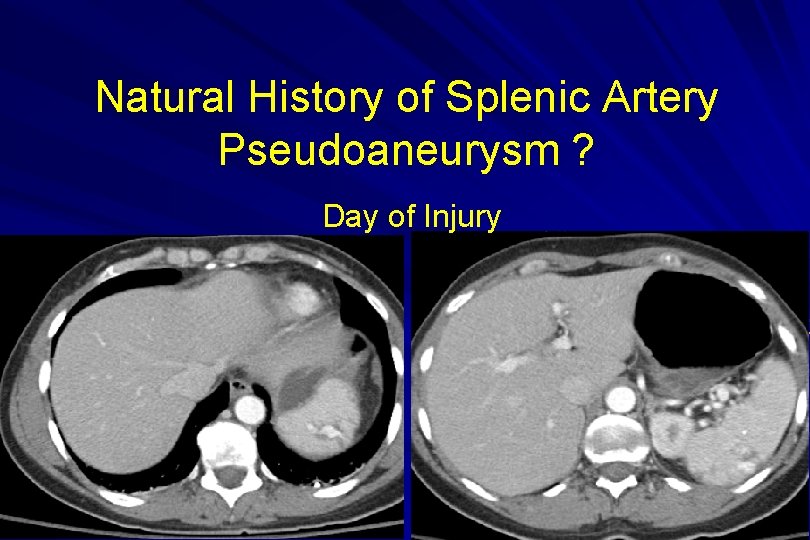
Natural History of Splenic Artery Pseudoaneurysm ? Day of Injury
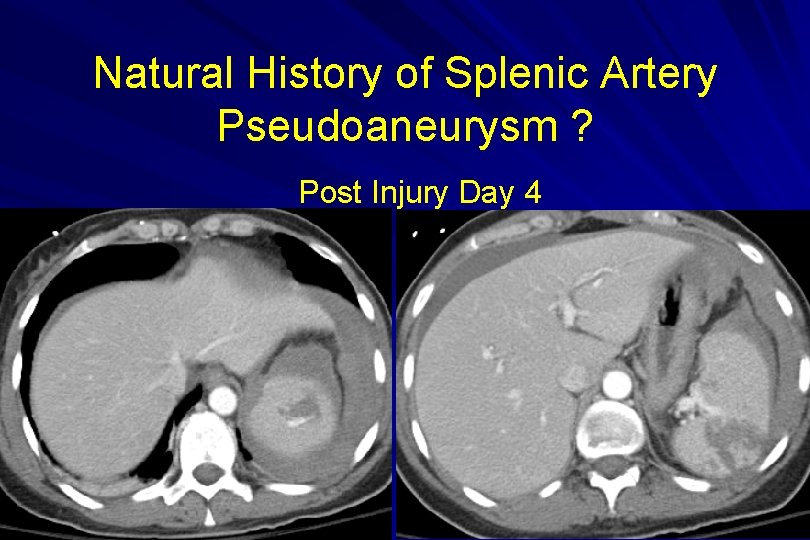
Natural History of Splenic Artery Pseudoaneurysm ? Post Injury Day 4
Splenic Artery Embolization, cont’d Does embolization impair or preserve splenic function ? ? Does embolization increase splenic salvage ? ? Does angiography/embolization improve overall outcome ? ?