
Current Management of Heart Failure GP clinical update



- Slides: 22
Current Management of Heart Failure GP clinical update 17 th June 2015 Dr Raj Bilku Consultant Cardiologist Clinical Lead Cardiology QEH
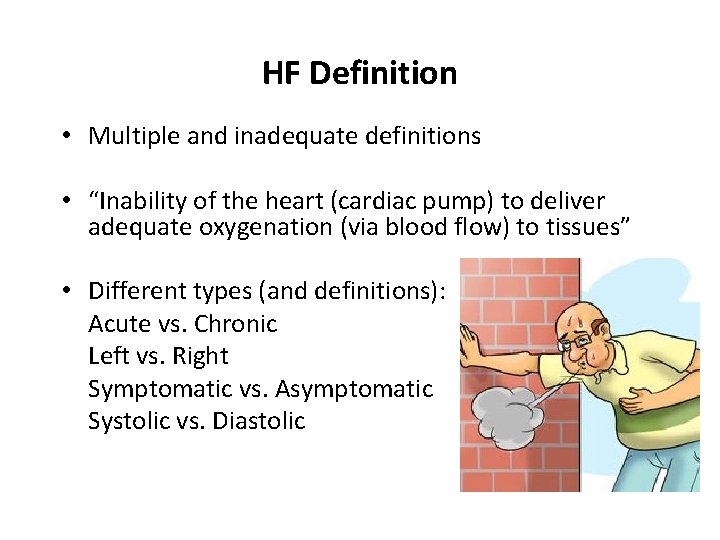
HF Definition • Multiple and inadequate definitions • “Inability of the heart (cardiac pump) to deliver adequate oxygenation (via blood flow) to tissues” • Different types (and definitions): Acute vs. Chronic Left vs. Right Symptomatic vs. Asymptomatic Systolic vs. Diastolic
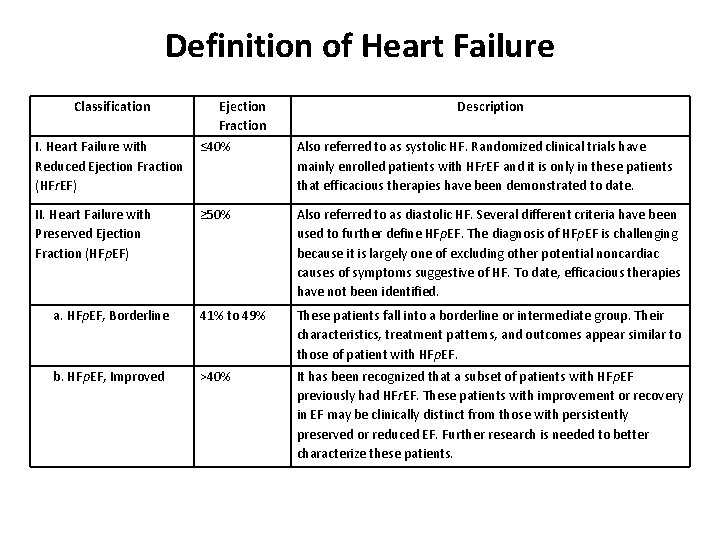
Definition of Heart Failure Classification Ejection Fraction Description I. Heart Failure with Reduced Ejection Fraction (HFr. EF) ≤ 40% Also referred to as systolic HF. Randomized clinical trials have mainly enrolled patients with HFr. EF and it is only in these patients that efficacious therapies have been demonstrated to date. II. Heart Failure with Preserved Ejection Fraction (HFp. EF) ≥ 50% Also referred to as diastolic HF. Several different criteria have been used to further define HFp. EF. The diagnosis of HFp. EF is challenging because it is largely one of excluding other potential noncardiac causes of symptoms suggestive of HF. To date, efficacious therapies have not been identified. a. HFp. EF, Borderline 41% to 49% These patients fall into a borderline or intermediate group. Their characteristics, treatment patterns, and outcomes appear similar to those of patient with HFp. EF. b. HFp. EF, Improved >40% It has been recognized that a subset of patients with HFp. EF previously had HFr. EF. These patients with improvement or recovery in EF may be clinically distinct from those with persistently preserved or reduced EF. Further research is needed to better characterize these patients.
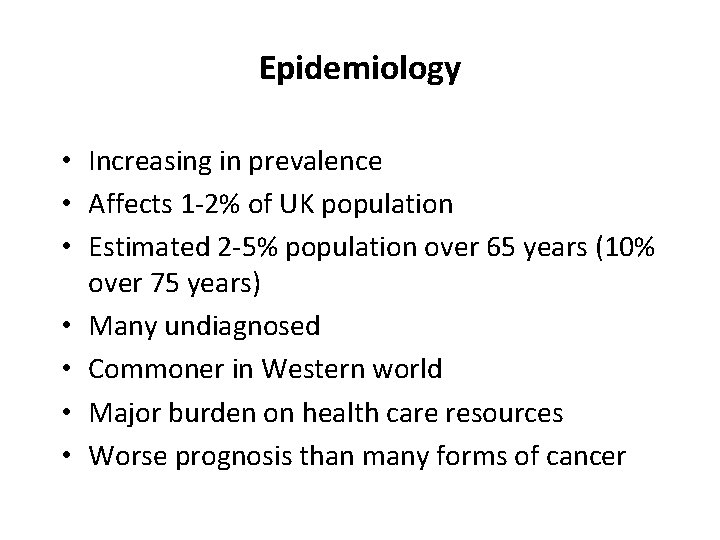
Epidemiology • Increasing in prevalence • Affects 1 -2% of UK population • Estimated 2 -5% population over 65 years (10% over 75 years) • Many undiagnosed • Commoner in Western world • Major burden on health care resources • Worse prognosis than many forms of cancer
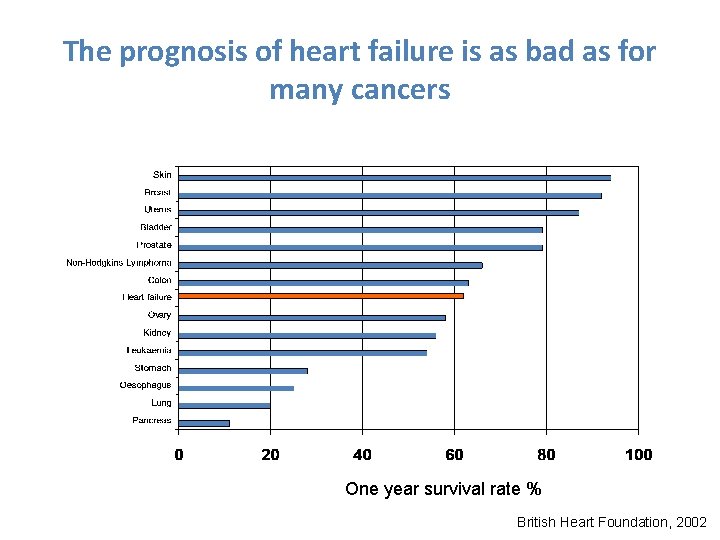
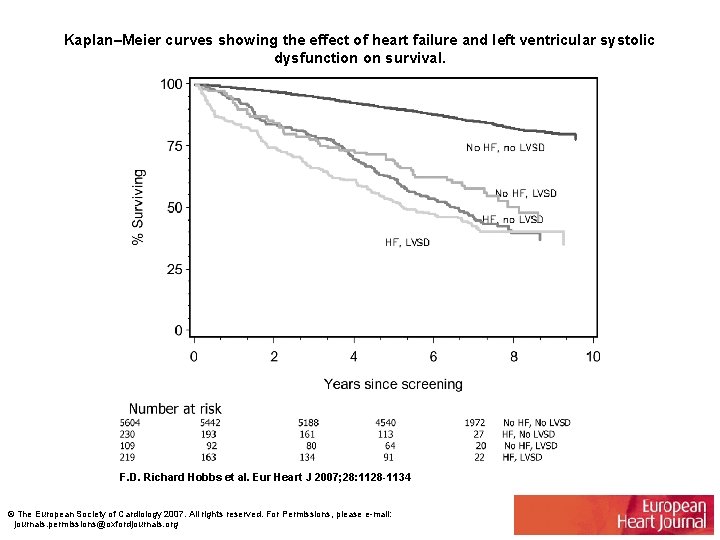
The prognosis of heart failure is as bad as for many cancers One year survival rate % British Heart Foundation, 2002
Kaplan–Meier curves showing the effect of heart failure and left ventricular systolic dysfunction on survival. F. D. Richard Hobbs et al. Eur Heart J 2007; 28: 1128 -1134 © The European Society of Cardiology 2007. All rights reserved. For Permissions, please e-mail: journals. permissions@oxfordjournals. org
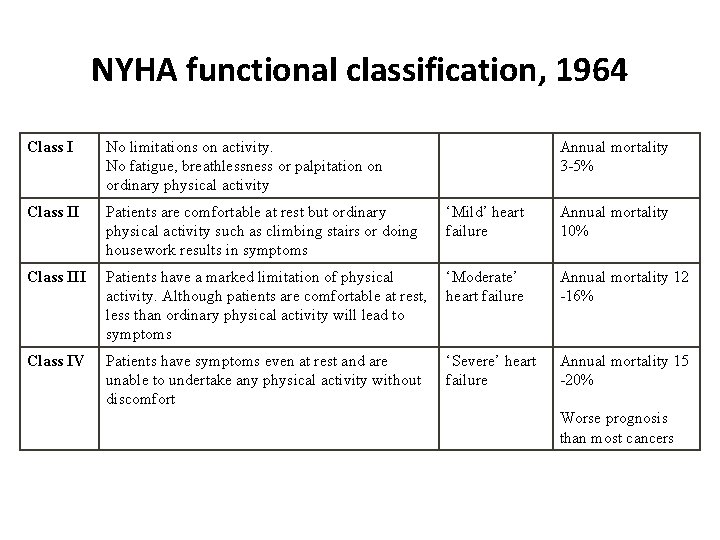
NYHA functional classification, 1964 Class I No limitations on activity. No fatigue, breathlessness or palpitation on ordinary physical activity Annual mortality 3 -5% Class II Patients are comfortable at rest but ordinary physical activity such as climbing stairs or doing housework results in symptoms ‘Mild’ heart failure Annual mortality 10% Class III Patients have a marked limitation of physical activity. Although patients are comfortable at rest, less than ordinary physical activity will lead to symptoms ‘Moderate’ heart failure Annual mortality 12 -16% Class IV Patients have symptoms even at rest and are unable to undertake any physical activity without discomfort ‘Severe’ heart failure Annual mortality 15 -20% Worse prognosis than most cancers
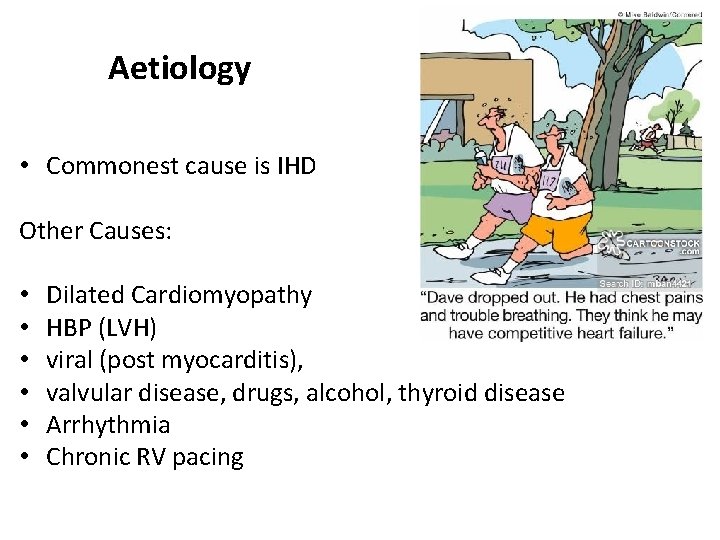
Aetiology • Commonest cause is IHD Other Causes: • • • Dilated Cardiomyopathy HBP (LVH) viral (post myocarditis), valvular disease, drugs, alcohol, thyroid disease Arrhythmia Chronic RV pacing
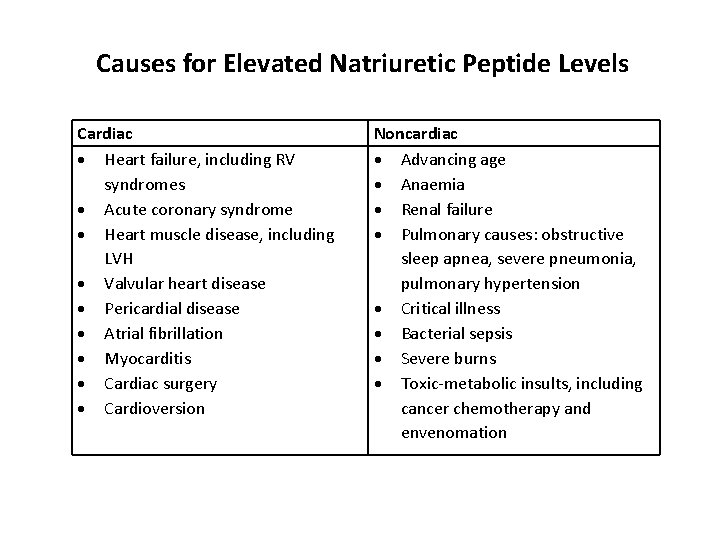
Causes for Elevated Natriuretic Peptide Levels Cardiac Heart failure, including RV syndromes Acute coronary syndrome Heart muscle disease, including LVH Valvular heart disease Pericardial disease Atrial fibrillation Myocarditis Cardiac surgery Cardioversion Noncardiac Advancing age Anaemia Renal failure Pulmonary causes: obstructive sleep apnea, severe pneumonia, pulmonary hypertension Critical illness Bacterial sepsis Severe burns Toxic-metabolic insults, including cancer chemotherapy and envenomation
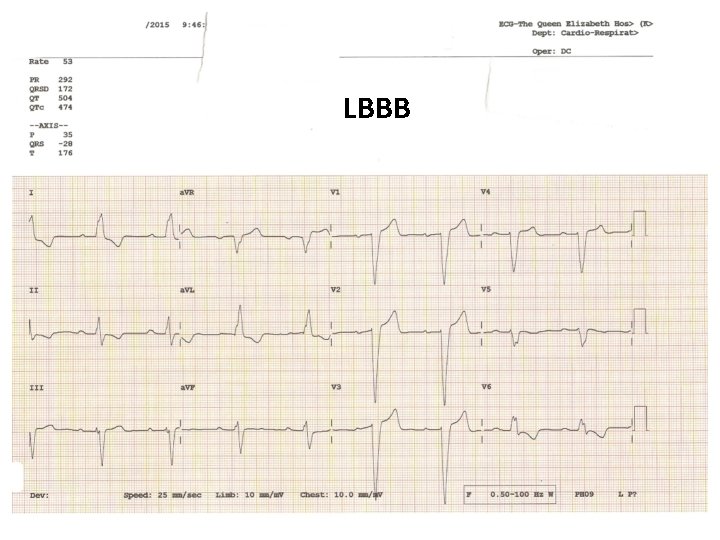
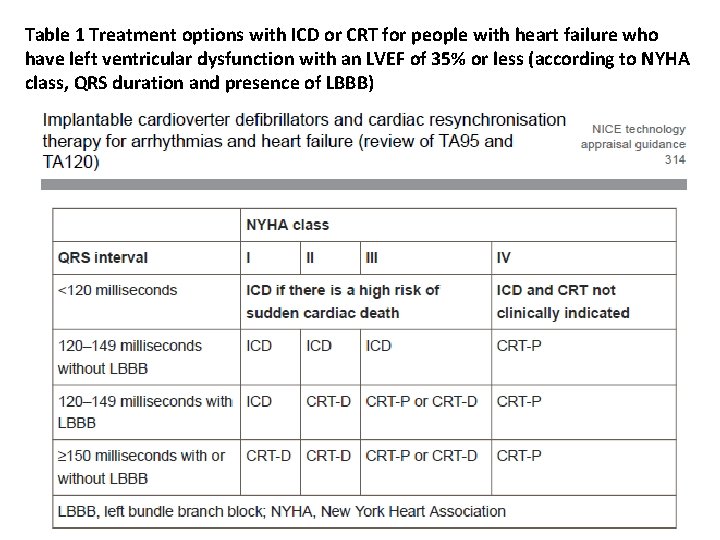
Device Therapy for Heart Failure (also known as CRT or Bi. V)
LBBB
Table 1 Treatment options with ICD or CRT for people with heart failure who have left ventricular dysfunction with an LVEF of 35% or less (according to NYHA class, QRS duration and presence of LBBB)
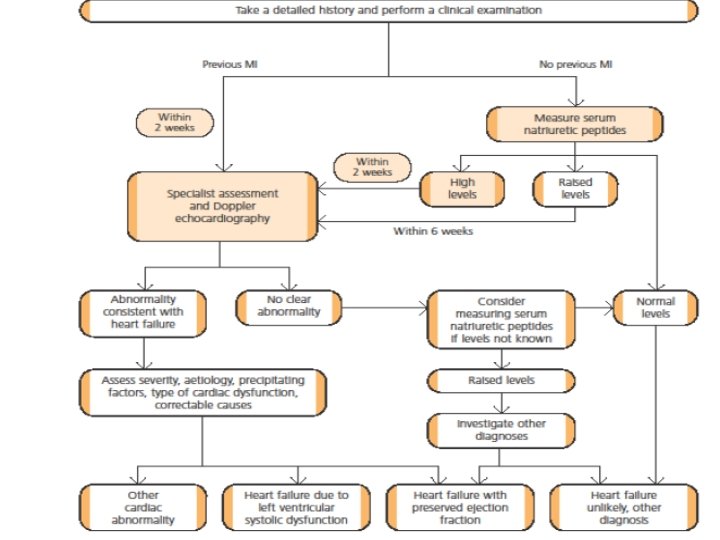
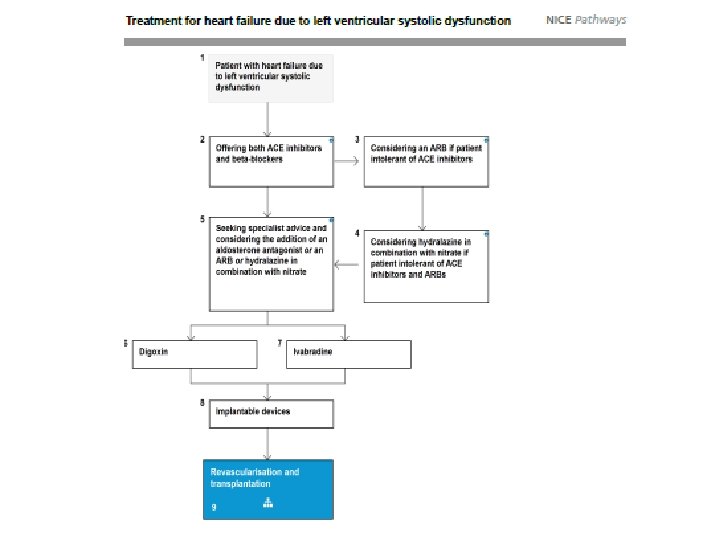
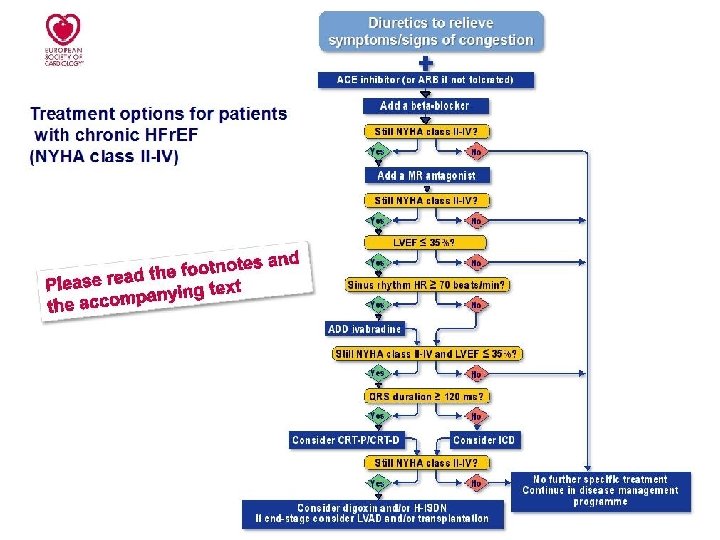
Summary • CHF is a growing problem • Diagnosis can be difficult • BNP used as a screening test – not a replacement for echocardiography • Ensure optimal medical therapy including new treatments • Perform ECG to see if there is a device option