
Current Electricity Jolyon Johnson Dartmoor School Electric Generators
- Slides: 19
Current Electricity Jolyon Johnson Dartmoor School
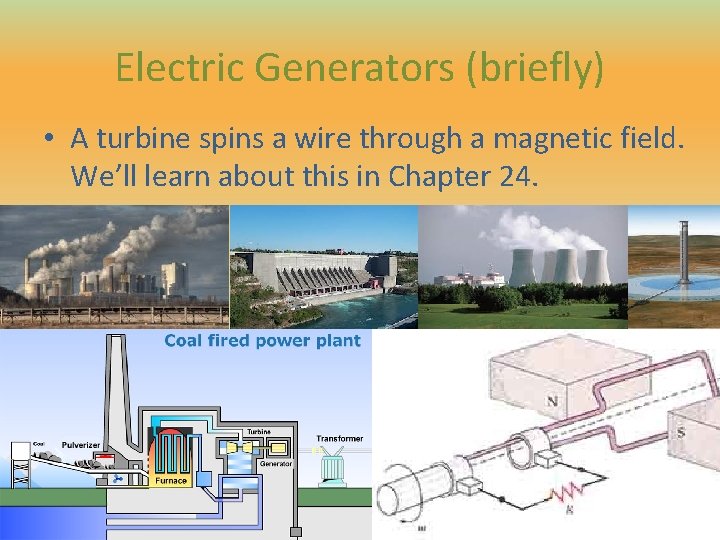
Electric Generators (briefly) • A turbine spins a wire through a magnetic field. We’ll learn about this in Chapter 24.
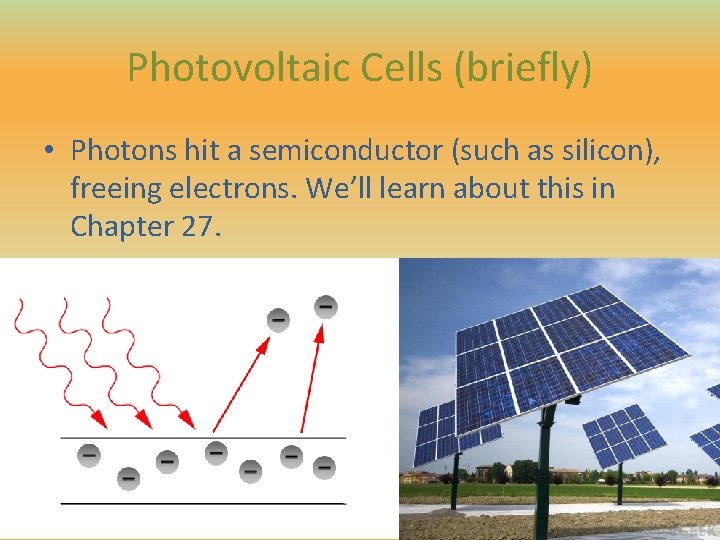
Photovoltaic Cells (briefly) • Photons hit a semiconductor (such as silicon), freeing electrons. We’ll learn about this in Chapter 27.
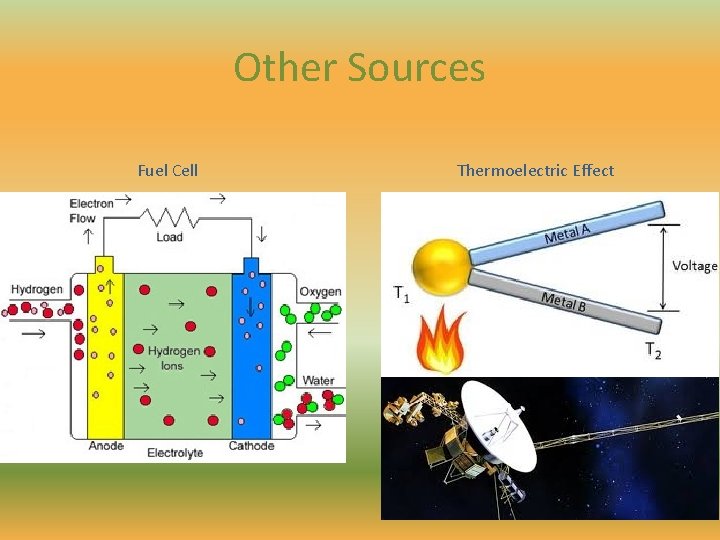
Other Sources Fuel Cell Thermoelectric Effect
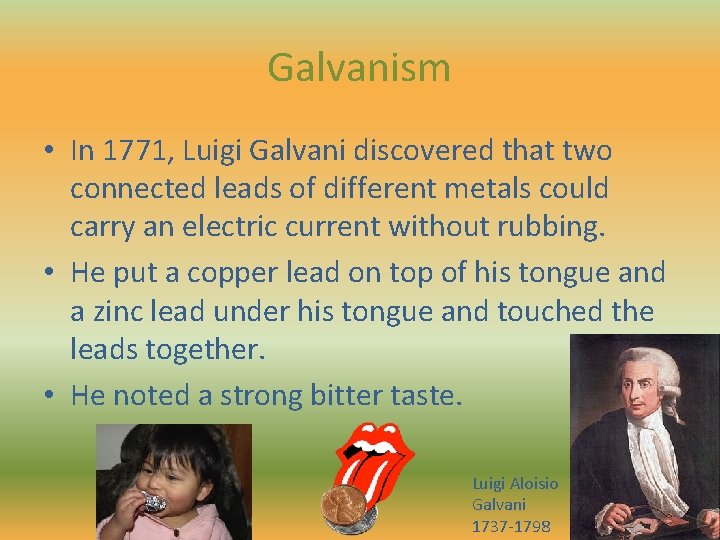
Galvanism • In 1771, Luigi Galvani discovered that two connected leads of different metals could carry an electric current without rubbing. • He put a copper lead on top of his tongue and a zinc lead under his tongue and touched the leads together. • He noted a strong bitter taste. Luigi Aloisio Galvani 1737 -1798
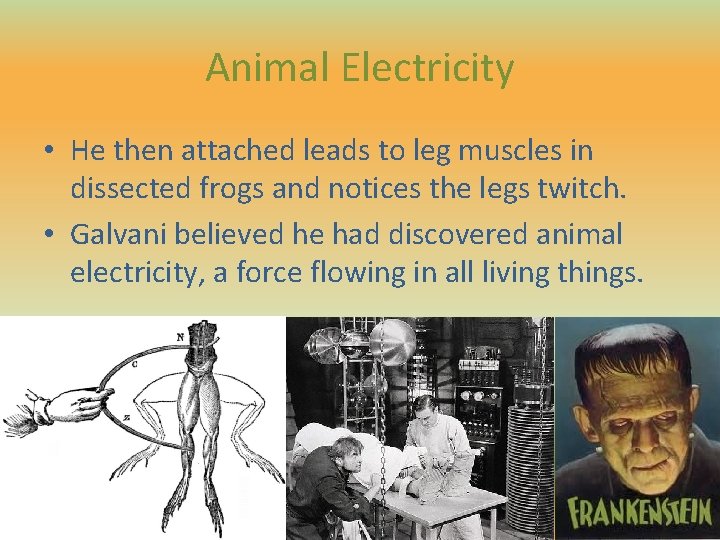
Animal Electricity • He then attached leads to leg muscles in dissected frogs and notices the legs twitch. • Galvani believed he had discovered animal electricity, a force flowing in all living things.
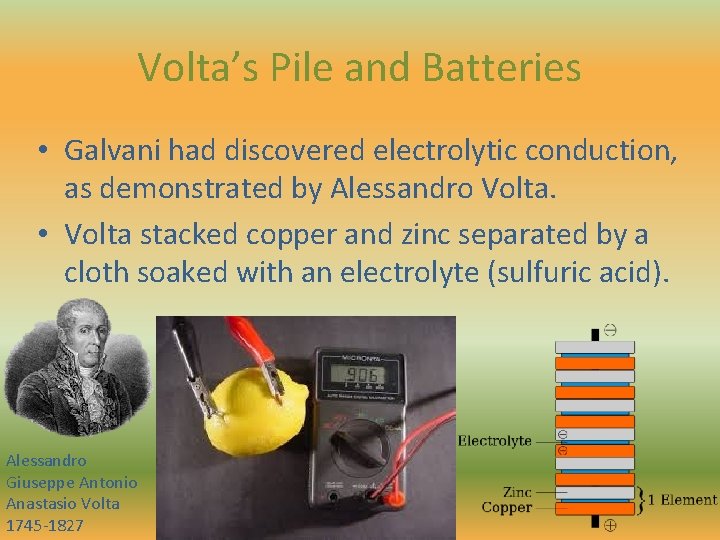
Volta’s Pile and Batteries • Galvani had discovered electrolytic conduction, as demonstrated by Alessandro Volta. • Volta stacked copper and zinc separated by a cloth soaked with an electrolyte (sulfuric acid). Alessandro Giuseppe Antonio Anastasio Volta 1745 -1827
Electric Current • André-Marie Ampère 1775 -1836
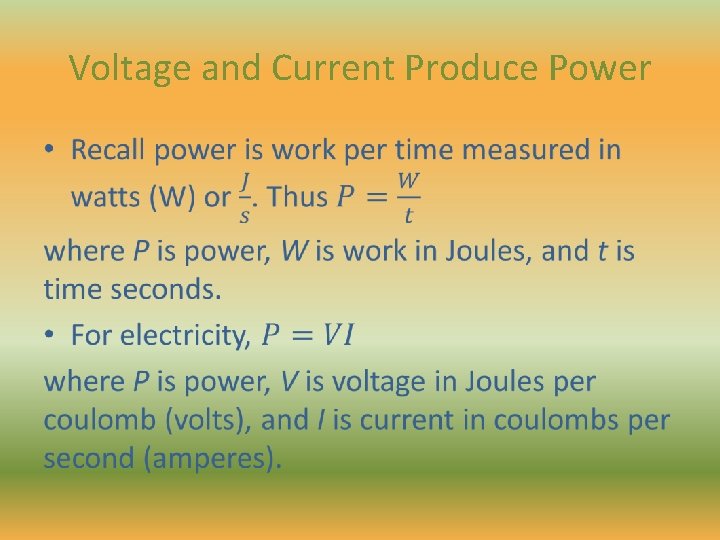
Voltage and Current Produce Power •
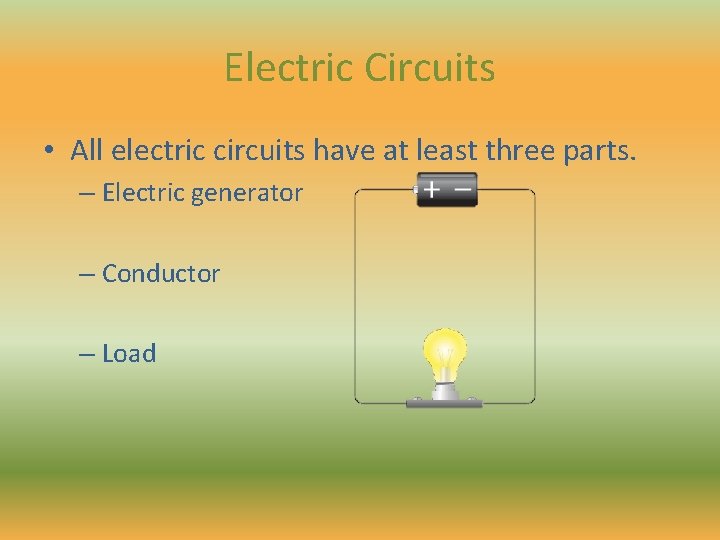
Electric Circuits • All electric circuits have at least three parts. – Electric generator – Conductor – Load
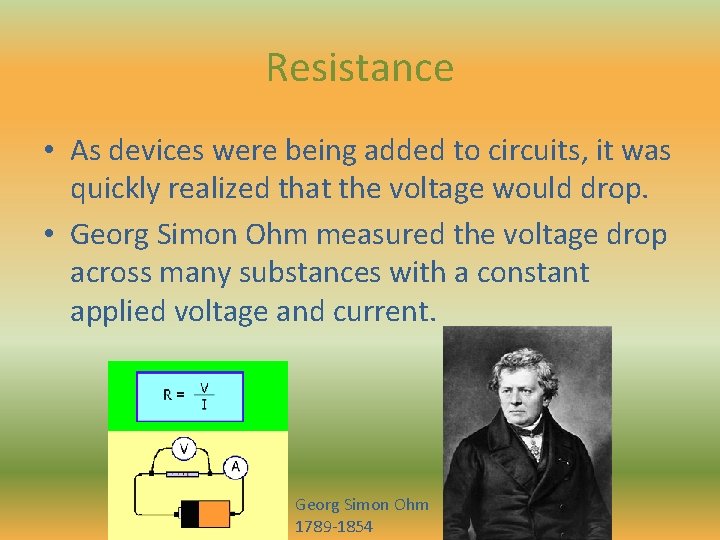
Resistance • As devices were being added to circuits, it was quickly realized that the voltage would drop. • Georg Simon Ohm measured the voltage drop across many substances with a constant applied voltage and current. Georg Simon Ohm 1789 -1854
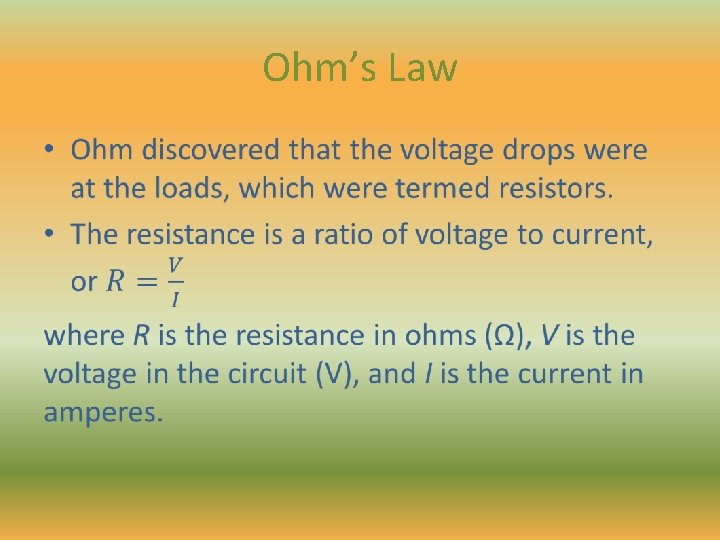
Ohm’s Law •
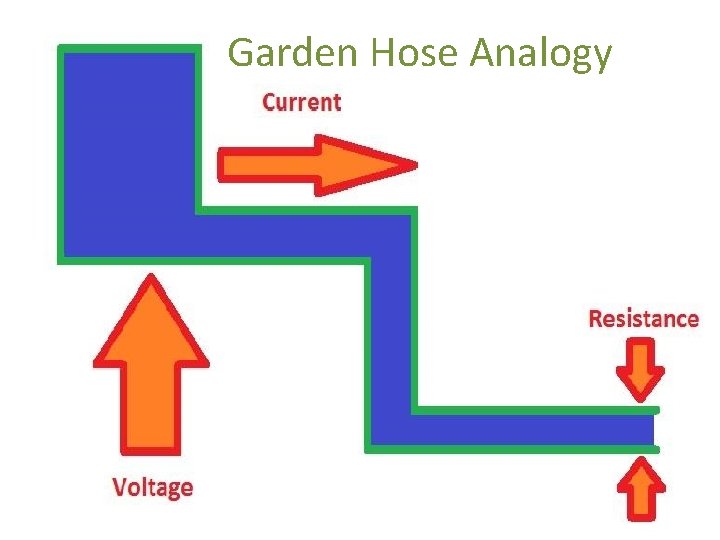
Garden Hose Analogy
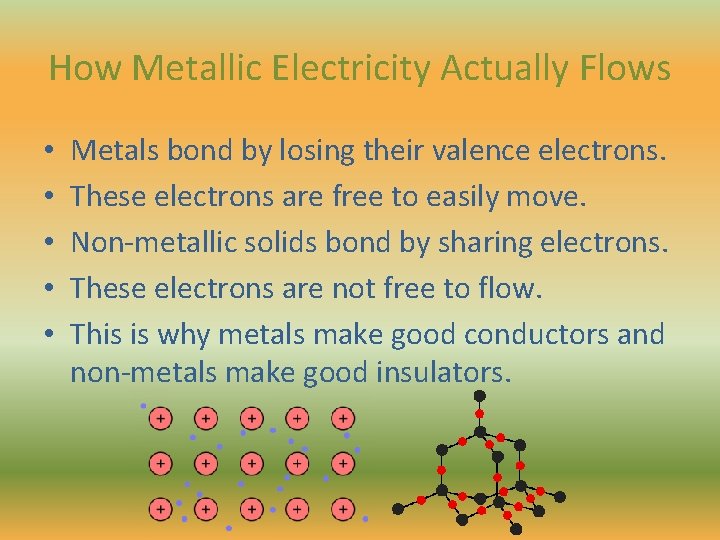
How Metallic Electricity Actually Flows • • • Metals bond by losing their valence electrons. These electrons are free to easily move. Non-metallic solids bond by sharing electrons. These electrons are not free to flow. This is why metals make good conductors and non-metals make good insulators.
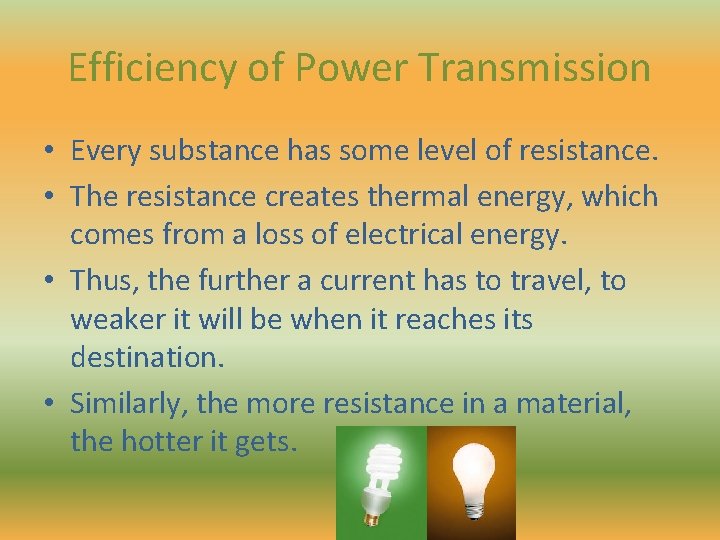
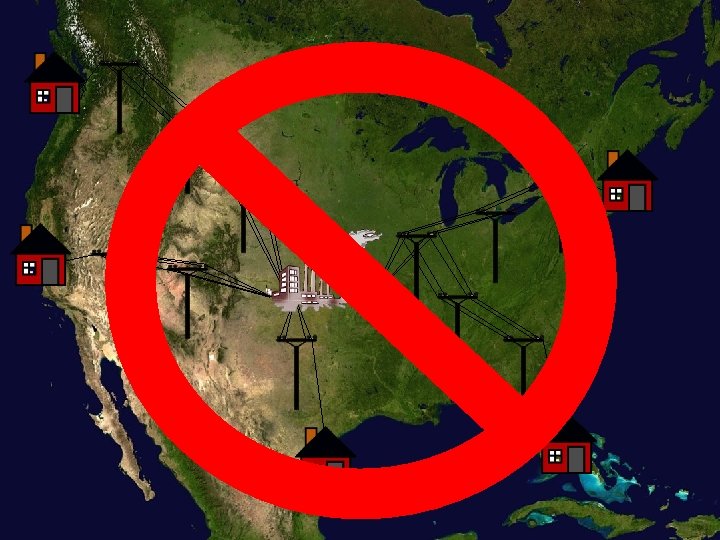
Efficiency of Power Transmission • Every substance has some level of resistance. • The resistance creates thermal energy, which comes from a loss of electrical energy. • Thus, the further a current has to travel, to weaker it will be when it reaches its destination. • Similarly, the more resistance in a material, the hotter it gets.
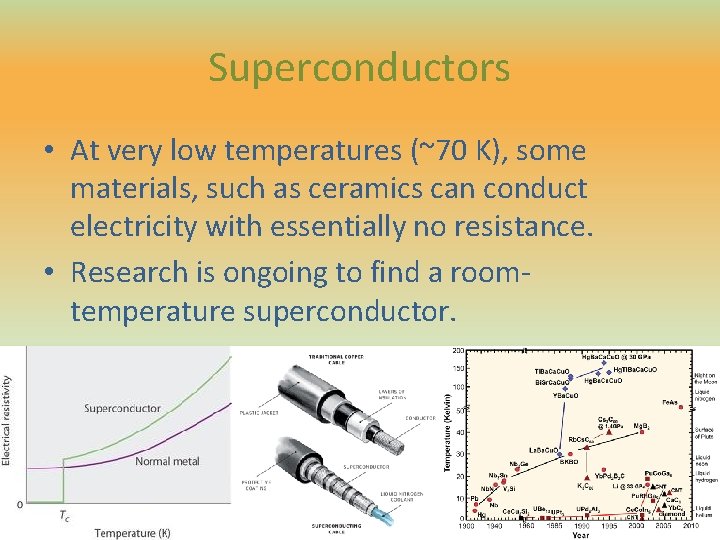
Superconductors • At very low temperatures (~70 K), some materials, such as ceramics can conduct electricity with essentially no resistance. • Research is ongoing to find a roomtemperature superconductor.
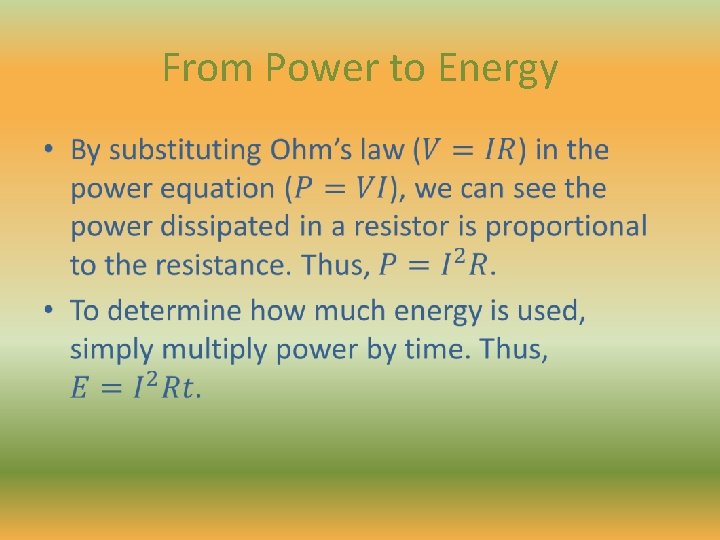
From Power to Energy •
The Kilowatt Hour • If you look at an electric bill, you will notice that your home is charged in kilowatt hours. • This is a unit of energy (power times time). • Your energy is measured in kilowatt hours because a watt and a second are too small to accurately measure. • A typical space-heater left on for one hour uses one kilowatt hour of energy.