
Current Electric Circuit An electric circuit is a

- Slides: 26
Current
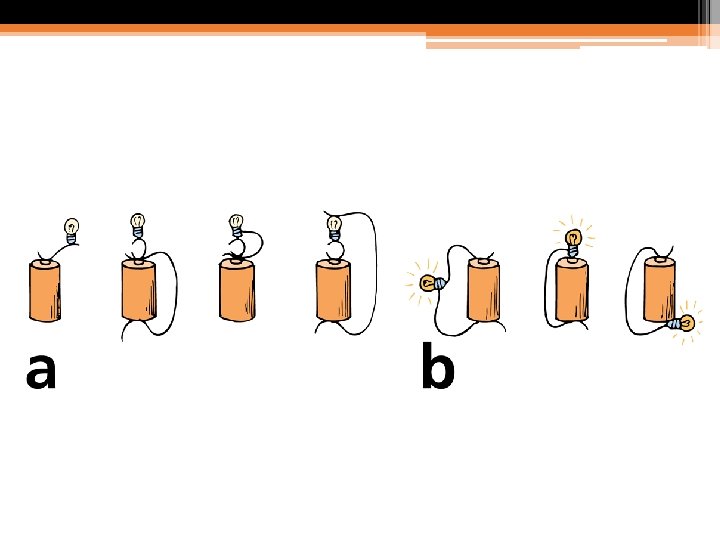
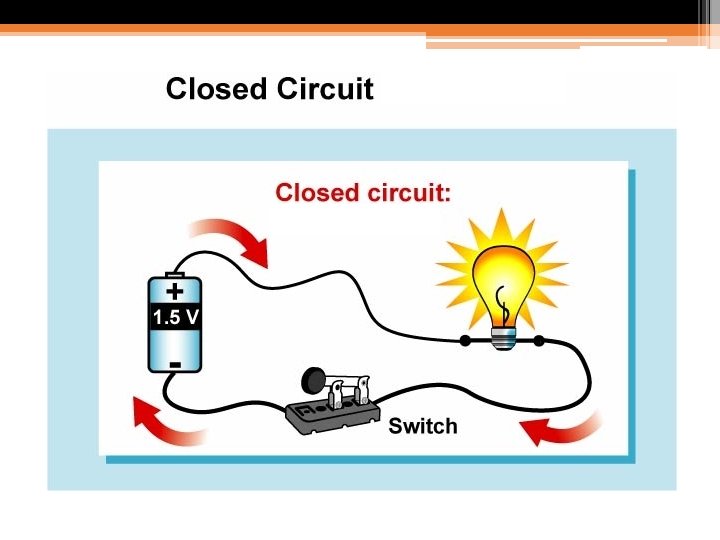
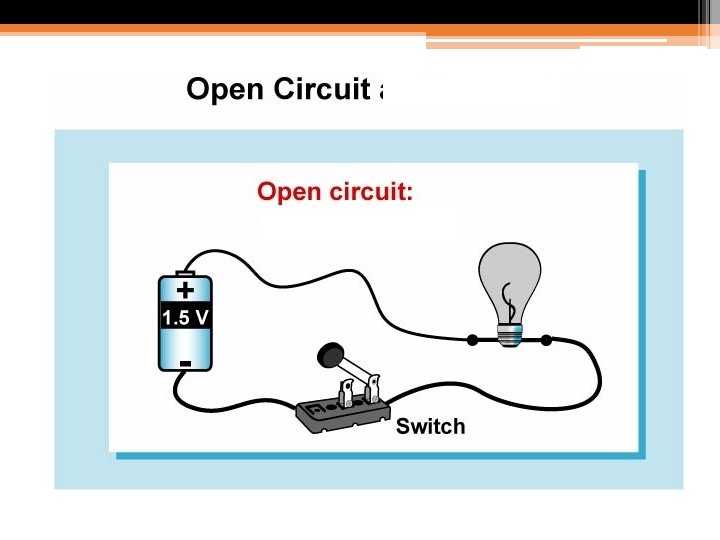
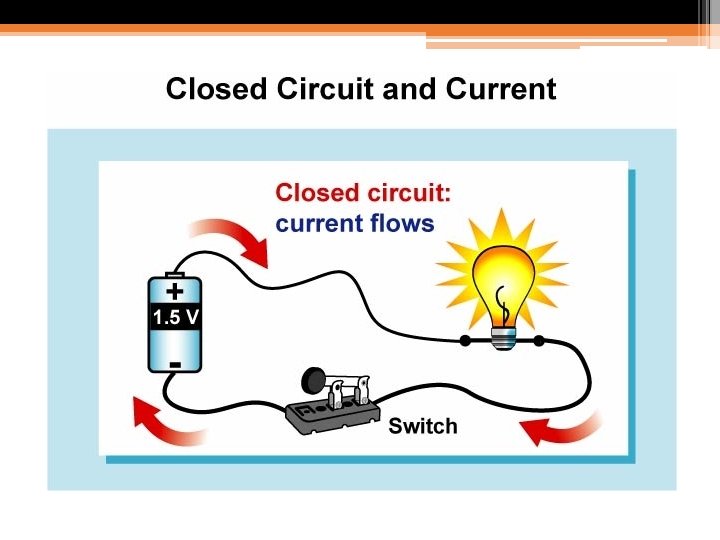
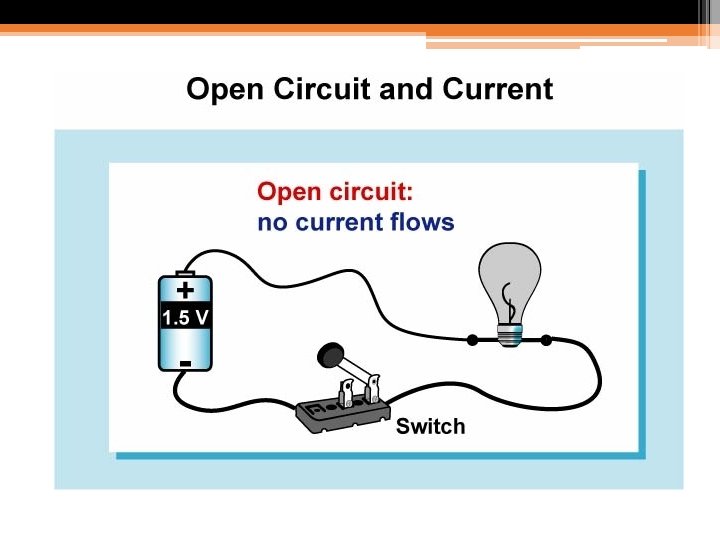
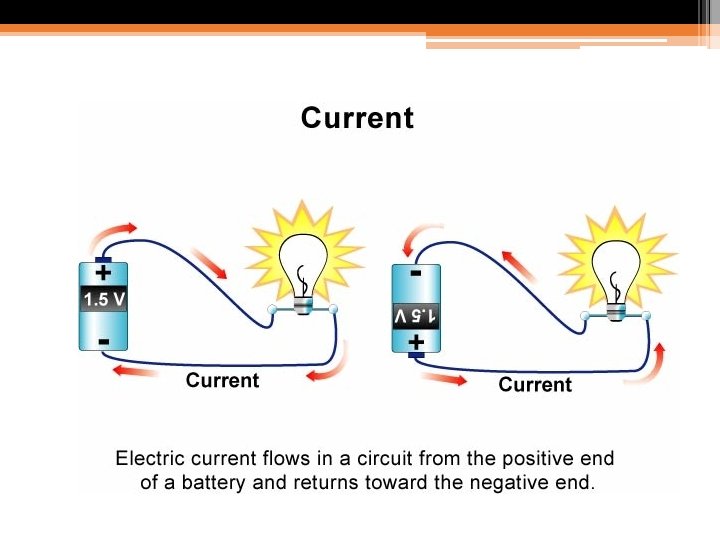
Electric Circuit • An electric circuit is a complete path through which electricity travels.
Circuits • Open Circuit: A circuit with any break in it. • Closed Circuit: A circuit with no breaks in it.
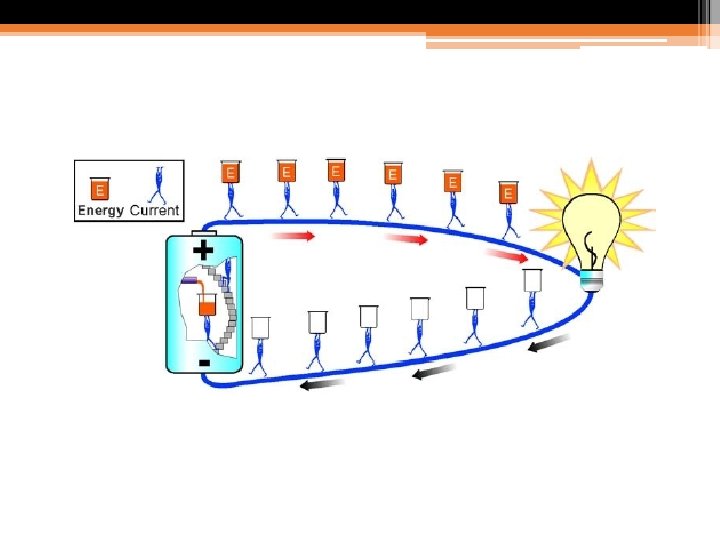
Current • Electric current (I) is rate at which charges flow through an area. • Current is what carries energy in a circuit. • SI unit: amperes (A) or coulombs/second (C/s)
Voltage
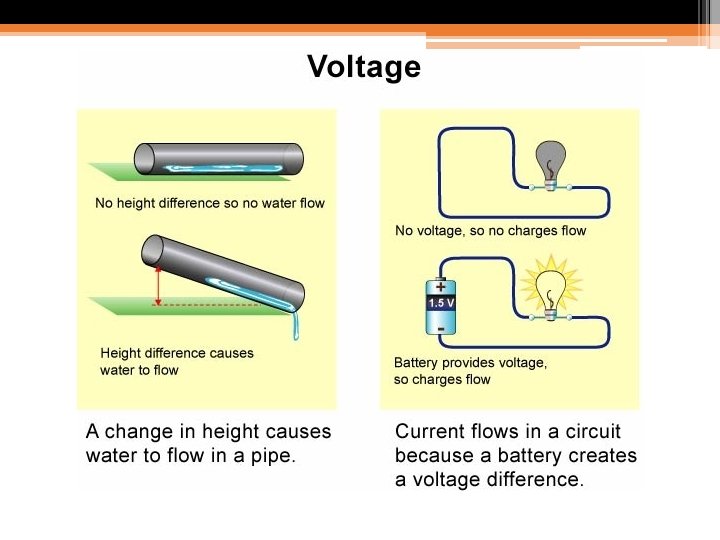
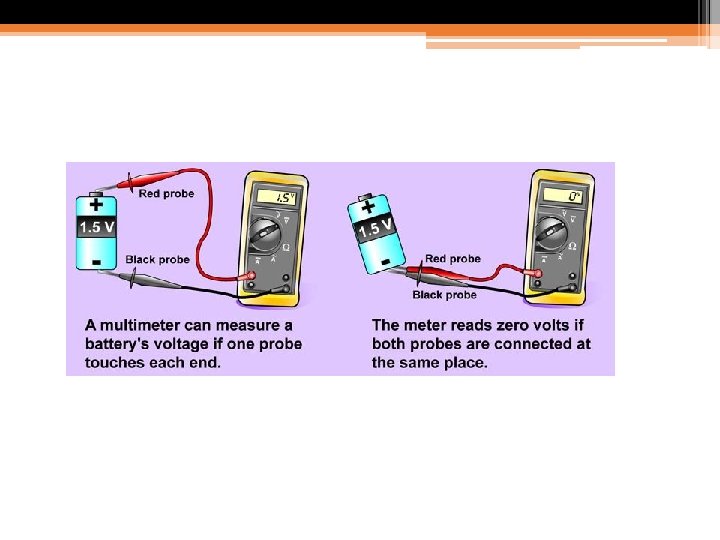
Voltage • Voltage is a measure of electric potential energy. • Voltage is measured in volts (V) • Voltage is the power per amp of current that flows
Resistance
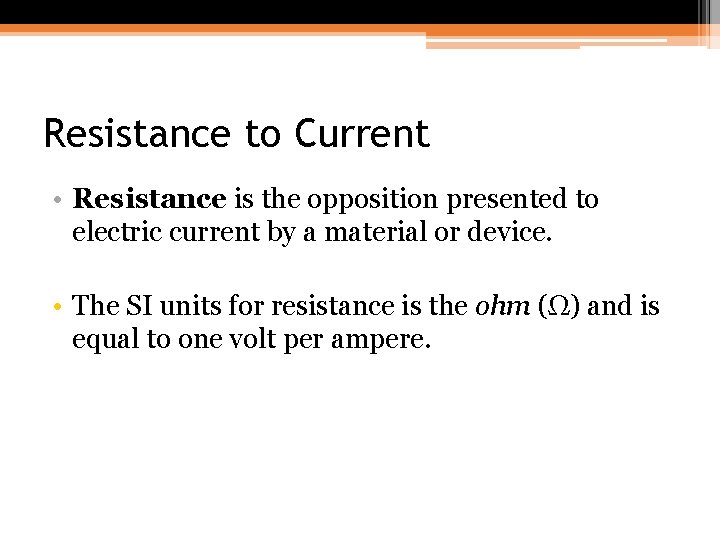
Resistance to Current • Resistance is the opposition presented to electric current by a material or device. • The SI units for resistance is the ohm (Ω) and is equal to one volt per ampere.
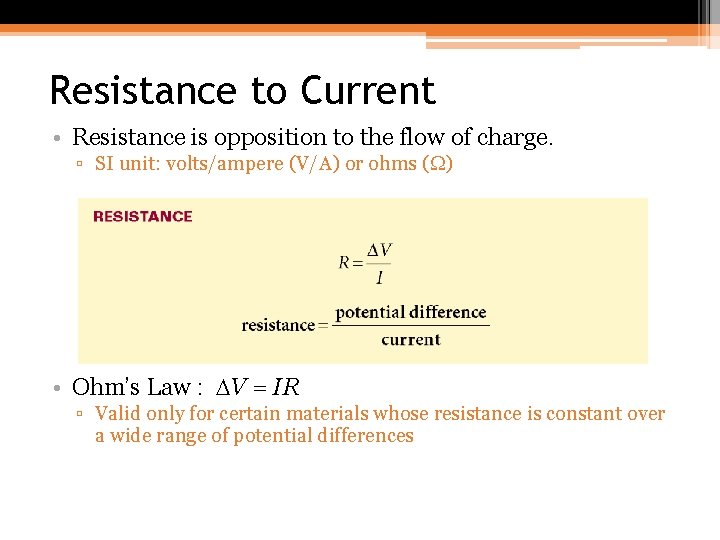
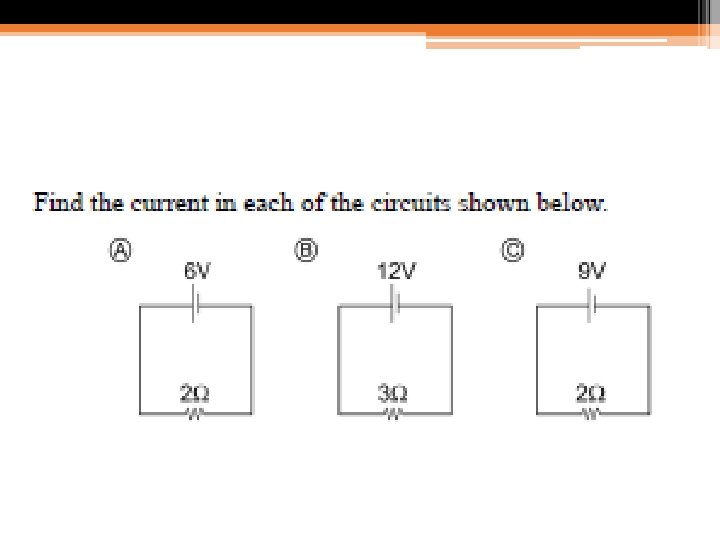
Resistance to Current • Resistance is opposition to the flow of charge. ▫ SI unit: volts/ampere (V/A) or ohms ( ) • Ohm’s Law : V = IR ▫ Valid only for certain materials whose resistance is constant over a wide range of potential differences
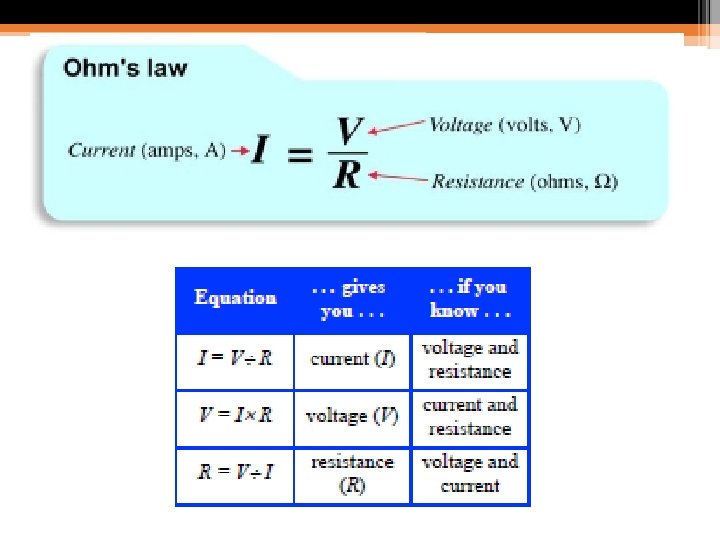
Ohm’s Law
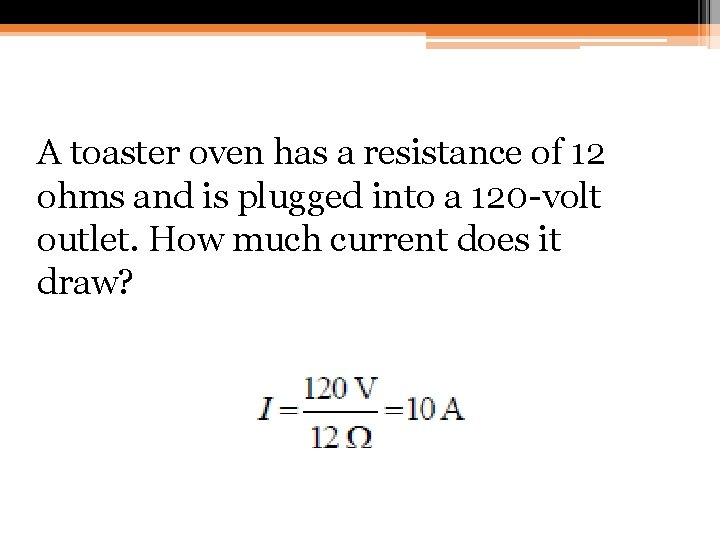
A toaster oven has a resistance of 12 ohms and is plugged into a 120 -volt outlet. How much current does it draw?
A digital camera uses one 6 V battery. The circuit that runs the flash and takes the pictures has a resistance of 3 ohms. What is the current in the circuit?
A hair dryer draws a current of 10 A when plugged into a 120 V outlet. What is the resistance of the hair dryer?
A television runs on 120 volts and has a resistance of 60 ohms. What current does it draw?