
Current Concepts and Status of GSMT Control Systems
- Slides: 26
Current Concepts and Status of GSMT Control Systems George Angeli 11 September, 2001
Introduction l How does the boot get on the dinner table? Why do we care about the control system in this early phase of design? l Feasibility of GSMT depends on its controllability - Wind effect compensation (structure correction) - Segment alignment maintenance l Whatever is designed, it must be observable and CONTROLLABLE!
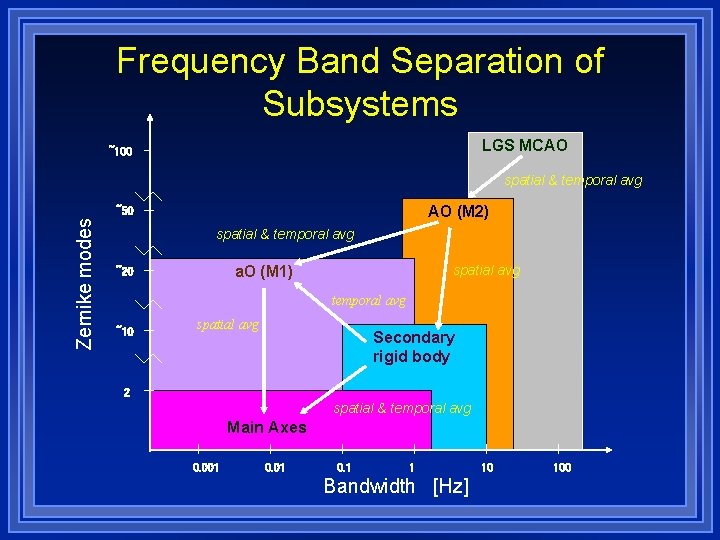
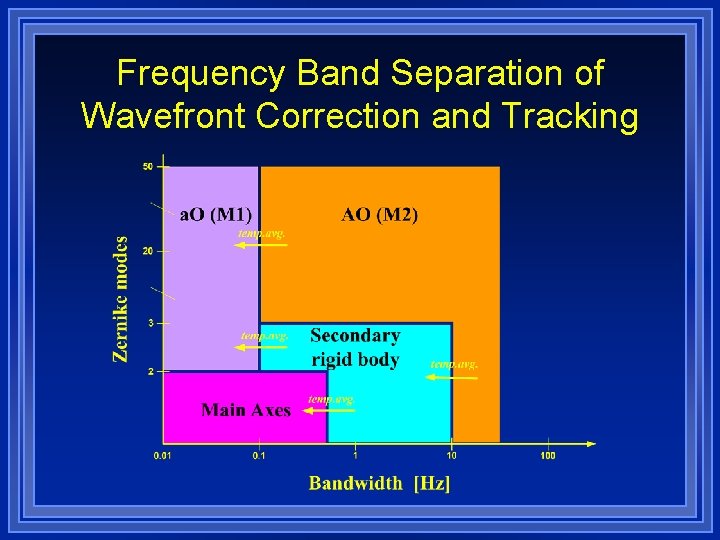
Frequency Band Separation of Subsystems LGS MCAO ~100 spatial & temporal avg AO (M 2) Zernike modes ~50 spatial & temporal avg spatial avg a. O (M 1) ~20 temporal avg ~10 spatial avg Secondary rigid body 2 spatial & temporal avg Main Axes 0. 001 0. 1 1 Bandwidth [Hz] 10 100
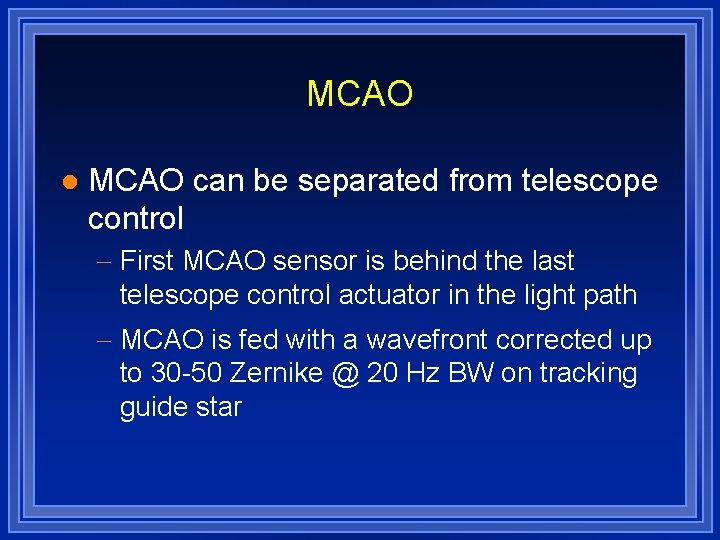
MCAO l MCAO can be separated from telescope control - First MCAO sensor is behind the last telescope control actuator in the light path - MCAO is fed with a wavefront corrected up to 30 -50 Zernike @ 20 Hz BW on tracking guide star
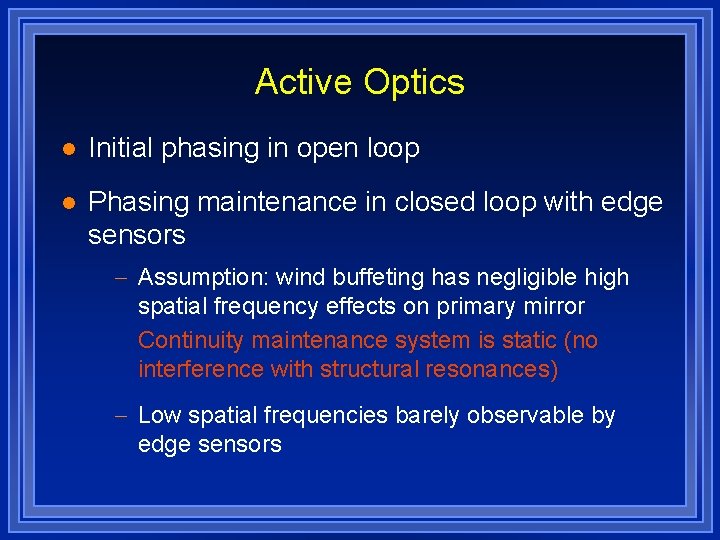
Active Optics l Initial phasing in open loop l Phasing maintenance in closed loop with edge sensors - Assumption: wind buffeting has negligible high spatial frequency effects on primary mirror Continuity maintenance system is static (no interference with structural resonances) - Low spatial frequencies barely observable by edge sensors
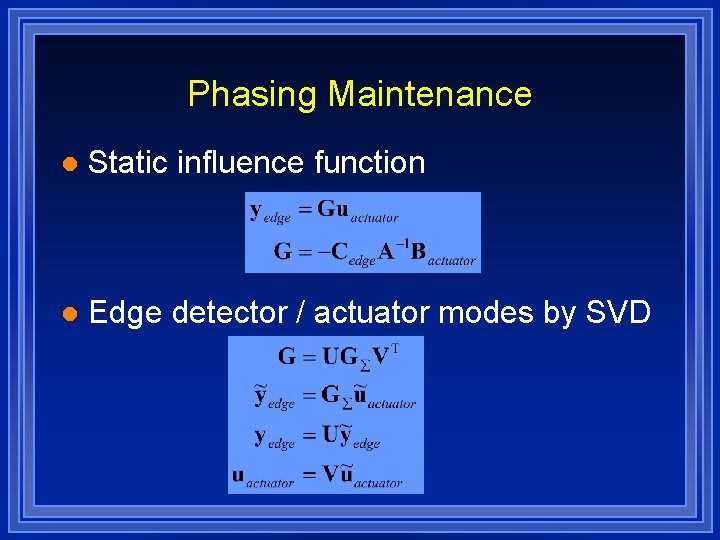
Phasing Maintenance l Static influence function l Edge detector / actuator modes by SVD
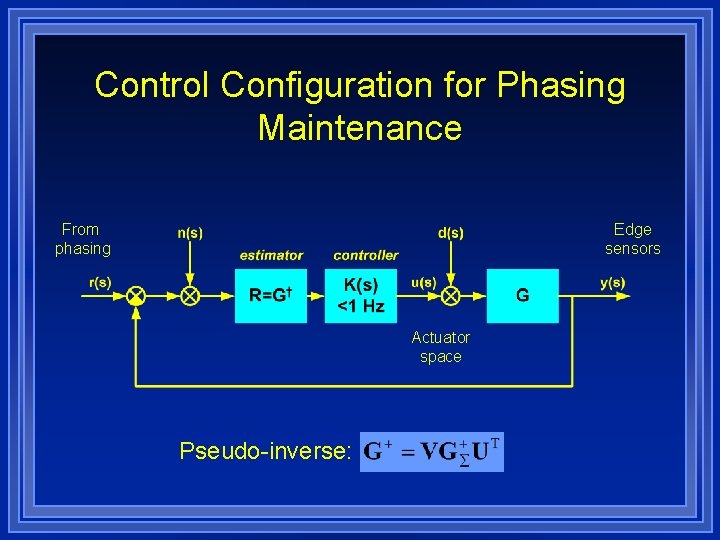
Control Configuration for Phasing Maintenance From phasing Edge sensors Actuator space Pseudo-inverse:
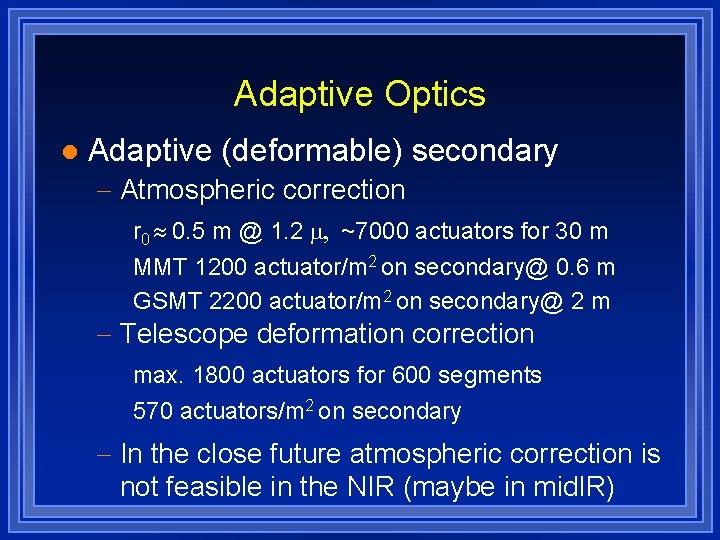
Adaptive Optics l Adaptive (deformable) secondary - Atmospheric correction r 0 0. 5 m @ 1. 2 m, ~7000 actuators for 30 m MMT 1200 actuator/m 2 on secondary@ 0. 6 m GSMT 2200 actuator/m 2 on secondary@ 2 m - Telescope deformation correction max. 1800 actuators for 600 segments 570 actuators/m 2 on secondary - In the close future atmospheric correction is not feasible in the NIR (maybe in mid. IR)
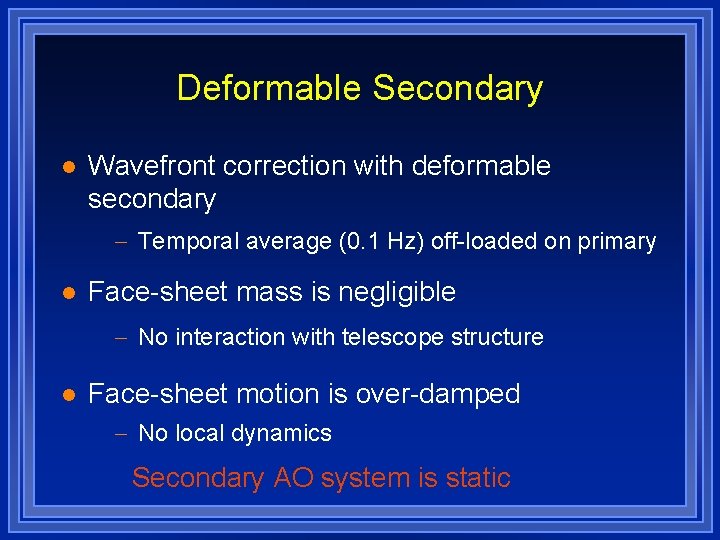
Deformable Secondary l Wavefront correction with deformable secondary - Temporal average (0. 1 Hz) off-loaded on primary l Face-sheet mass is negligible - No interaction with telescope structure l Face-sheet motion is over-damped - No local dynamics Secondary AO system is static
Frequency Band Separation of Wavefront Correction and Tracking
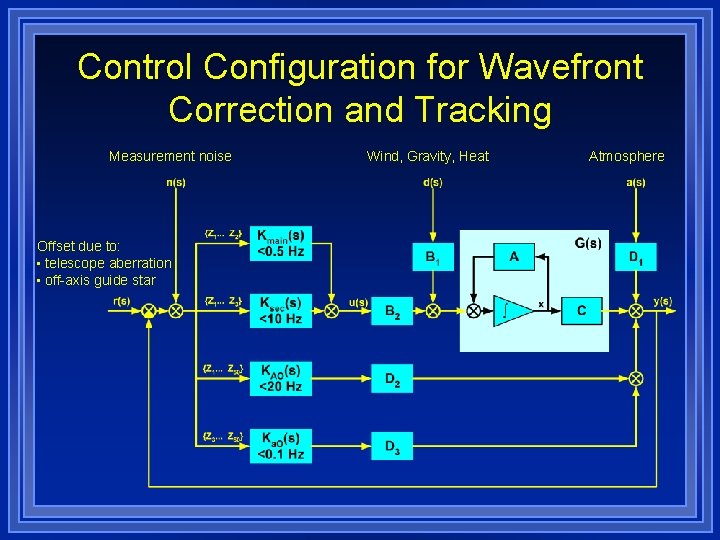
Control Configuration for Wavefront Correction and Tracking Measurement noise Offset due to: • telescope aberration • off-axis guide star Wind, Gravity, Heat Atmosphere
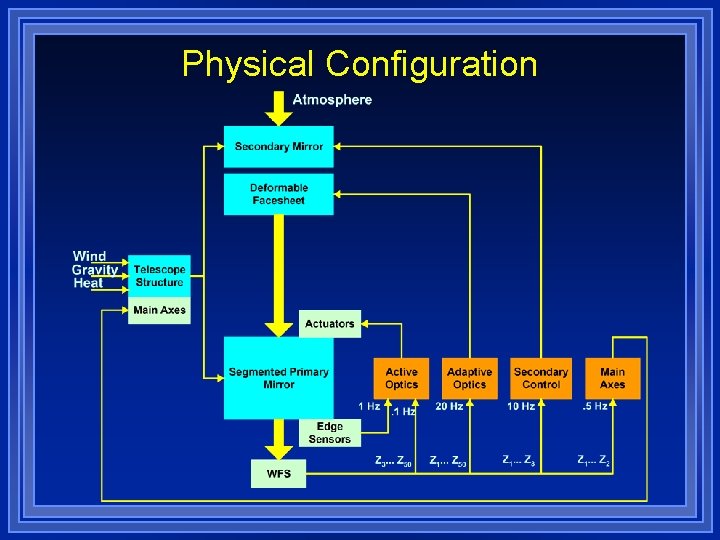
Physical Configuration
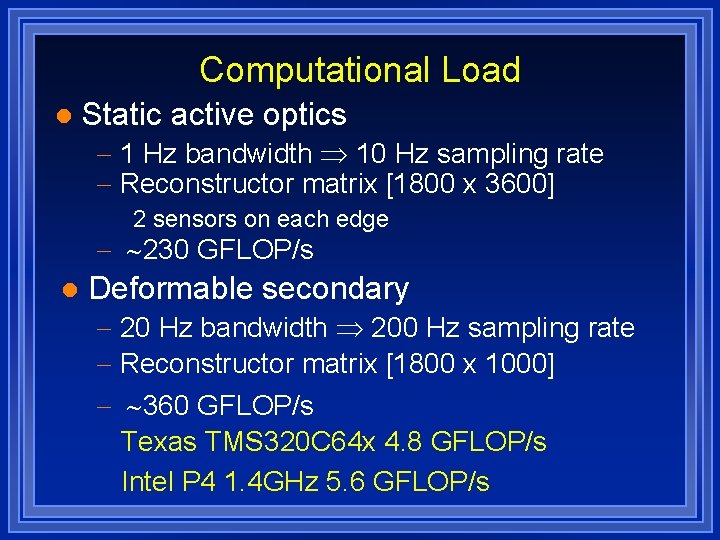
Computational Load l Static active optics - 1 Hz bandwidth 10 Hz sampling rate - Reconstructor matrix [1800 x 3600] 2 sensors on each edge - 230 GFLOP/s l Deformable secondary - 20 Hz bandwidth 200 Hz sampling rate - Reconstructor matrix [1800 x 1000] - 360 GFLOP/s Texas TMS 320 C 64 x 4. 8 GFLOP/s Intel P 4 1. 4 GHz 5. 6 GFLOP/s
System Modeling and Simulation Investigate telescope behavior - Observability (sensor choices, placement) - Controllability (actuator choices, placement) - Performance l Validate design assumptions l Allows modal-based feedback design (Linear Quadratic Gaussian, H , etc. ) l Validate model reduction for simulation and control l
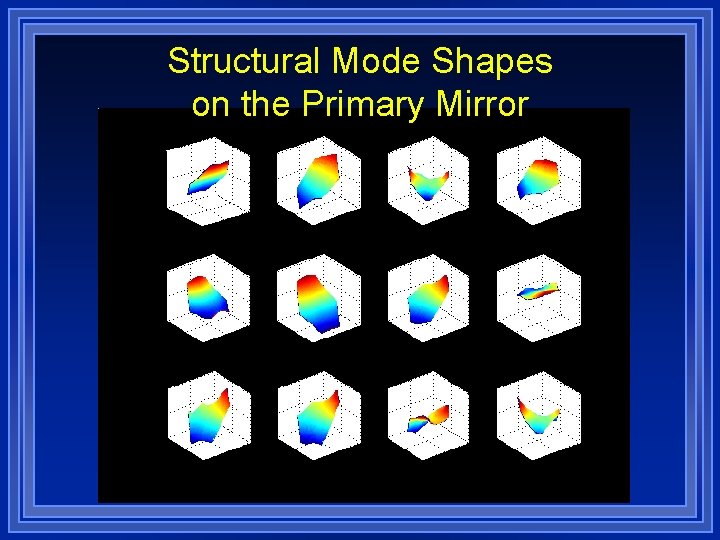
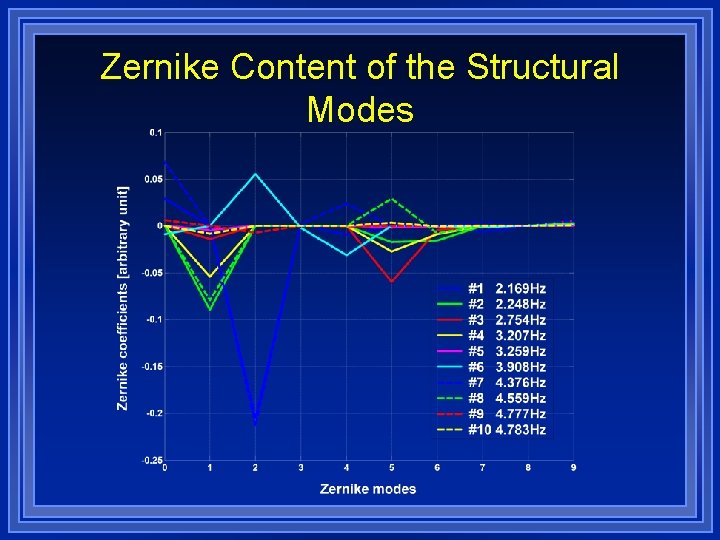
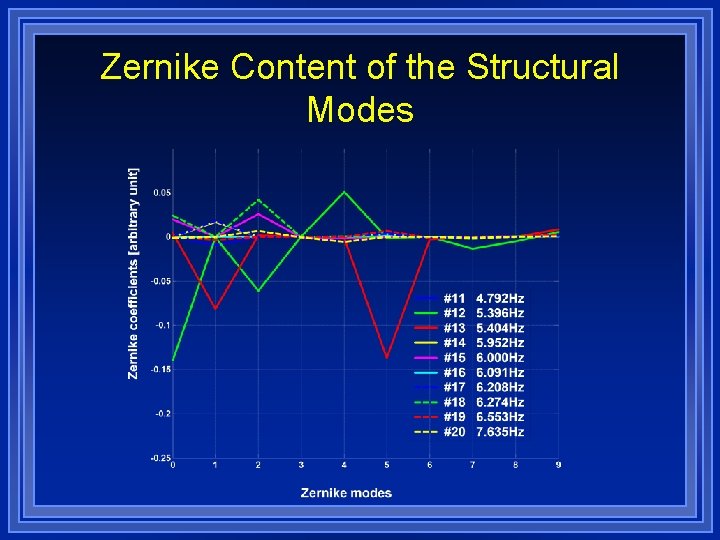
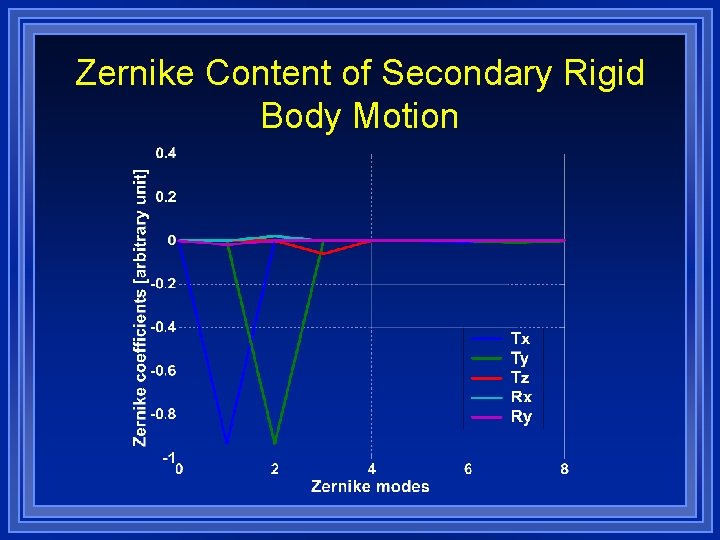
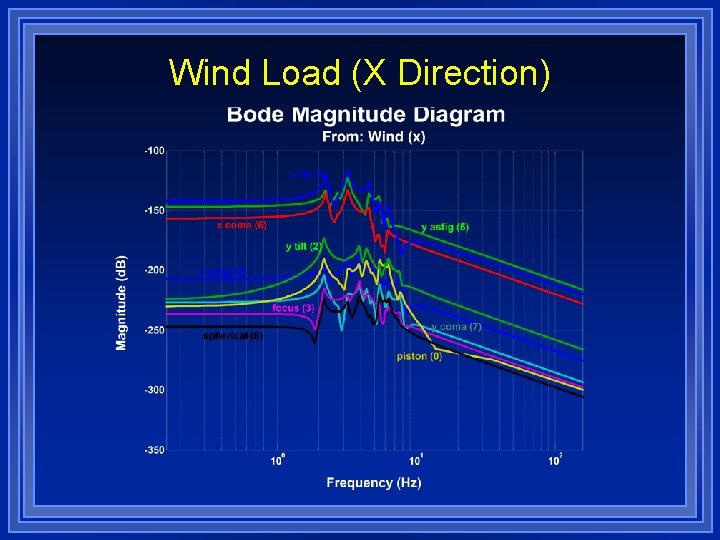
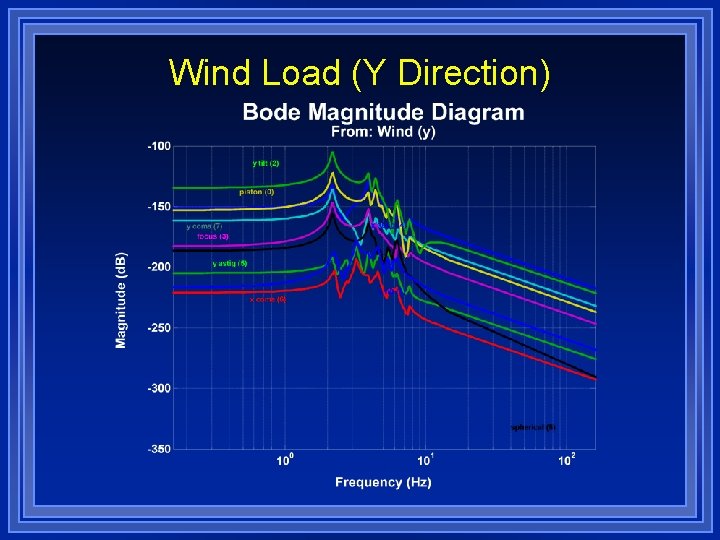
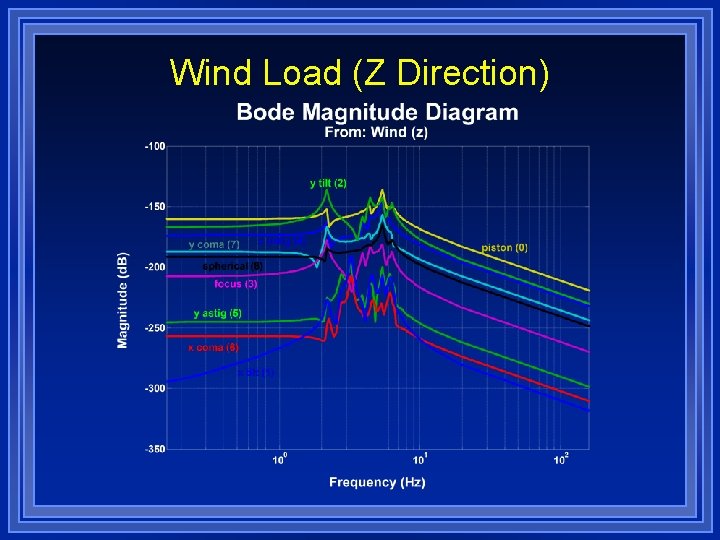
Current Model l l Modal based state space representation of the structure, based on FEA (20 modes) Zernike representation of wavefront quality - Primary mirror as a surface fit on raft support nodes - Line-of-sight equation for rigid body motion of primary and secondary - Redefined base for OPD as a linear combination of Zernikes linked to structural modes l Integrated structure FEA - Force actuators at weakened or completely opened degrees of freedom
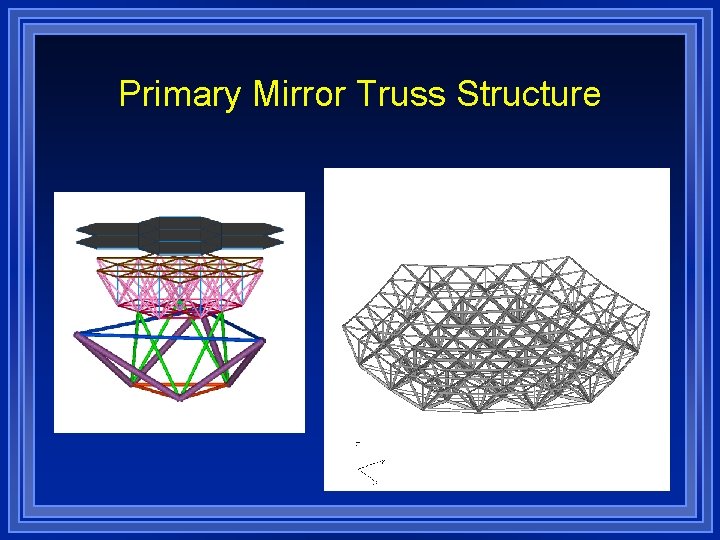
Primary Mirror Truss Structure
Structural Mode Shapes on the Primary Mirror
Zernike Content of the Structural Modes
Zernike Content of the Structural Modes
Zernike Content of Secondary Rigid Body Motion
Wind Load (X Direction)
Wind Load (Y Direction)
Wind Load (Z Direction)
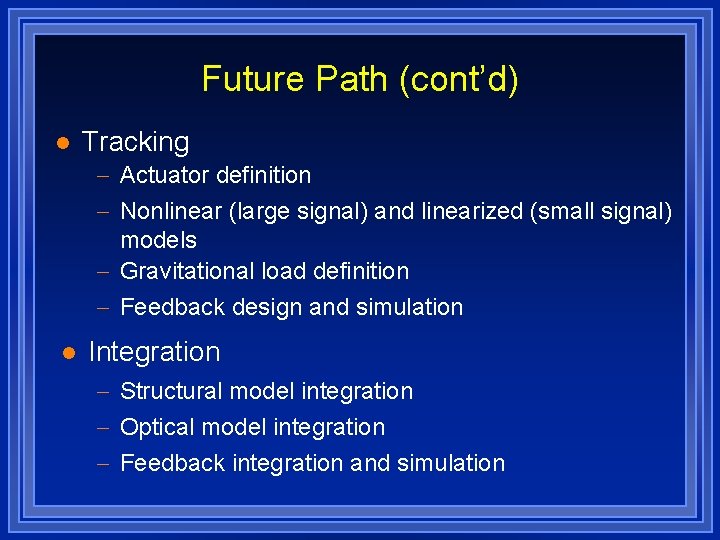
Future Path l Primary control - Segmented primary model (edge detectors, detector and actuator mode spaces) - Verification of ‘static phasing maintenance’ hypothesis - Feedback design and simulation l Wavefront control (wind buffeting) - Deformable secondary ‘surface fit’ model Primary ‘surface fit’ model on actuator nodes Wind load definition (on structure and primary) Feedback design and simulation
Future Path (cont’d) l Tracking - Actuator definition - Nonlinear (large signal) and linearized (small signal) models - Gravitational load definition - Feedback design and simulation l Integration - Structural model integration - Optical model integration - Feedback integration and simulation
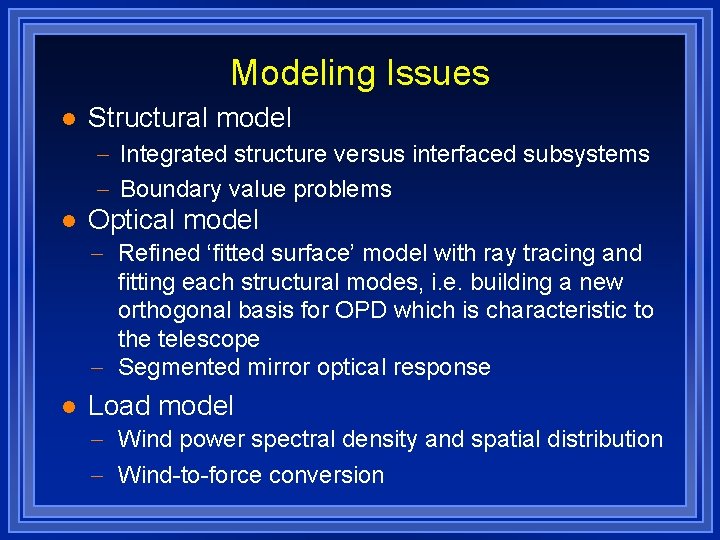
Modeling Issues l Structural model - Integrated structure versus interfaced subsystems - Boundary value problems l Optical model - Refined ‘fitted surface’ model with ray tracing and fitting each structural modes, i. e. building a new orthogonal basis for OPD which is characteristic to the telescope - Segmented mirror optical response l Load model - Wind power spectral density and spatial distribution - Wind-to-force conversion