
Current Awareness collaboration across the community Samantha Gavaghan

Current Awareness: collaboration across the community? Samantha Gavaghan Lucy Reid With Marie Hickman, Doug Knock and John Barbrook
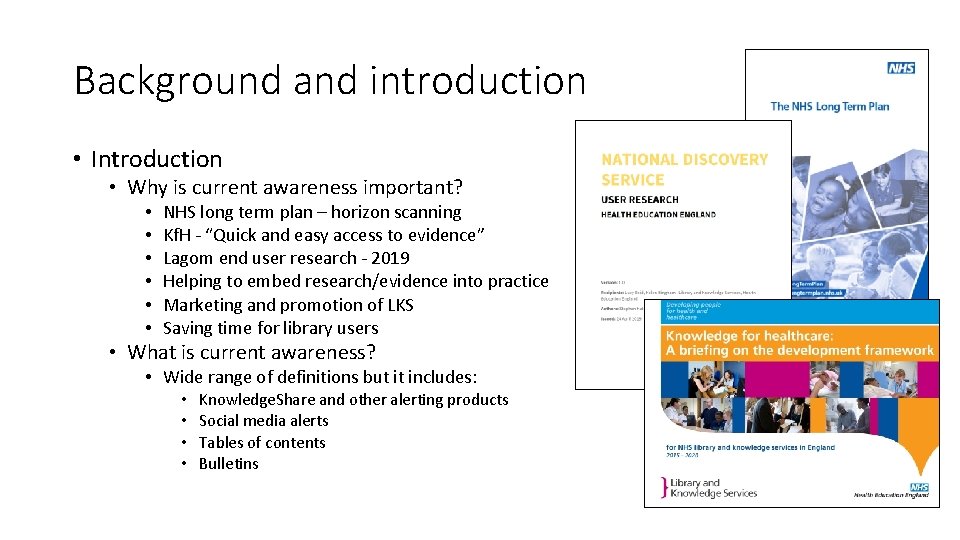
Background and introduction • Introduction • Why is current awareness important? • • • NHS long term plan – horizon scanning Kf. H - “Quick and easy access to evidence” Lagom end user research - 2019 Helping to embed research/evidence into practice Marketing and promotion of LKS Saving time for library users • What is current awareness? • Wide range of definitions but it includes: • • Knowledge. Share and other alerting products Social media alerts Tables of contents Bulletins
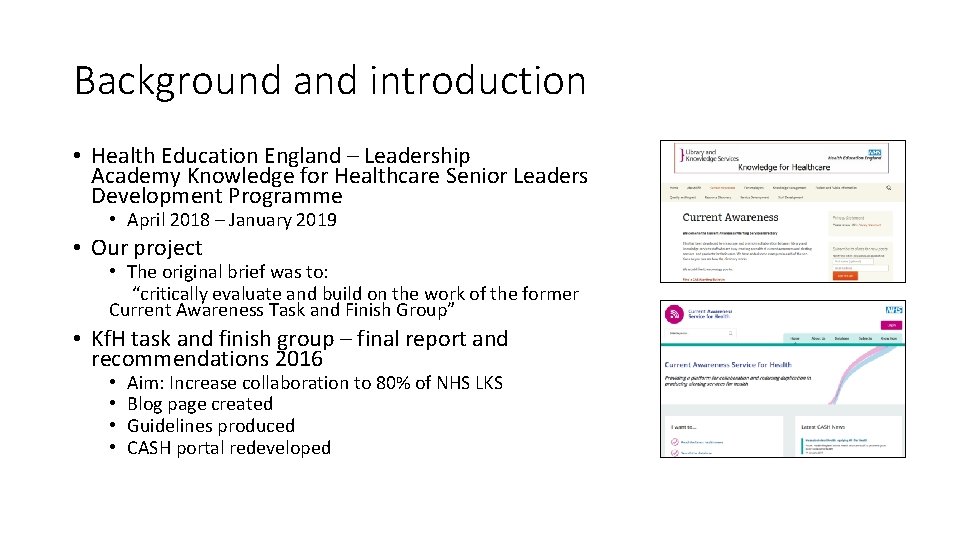
Background and introduction • Health Education England – Leadership Academy Knowledge for Healthcare Senior Leaders Development Programme • April 2018 – January 2019 • Our project • The original brief was to: “critically evaluate and build on the work of the former Current Awareness Task and Finish Group” • Kf. H task and finish group – final report and recommendations 2016 • • Aim: Increase collaboration to 80% of NHS LKS Blog page created Guidelines produced CASH portal redeveloped
What we set out to do • Focus on the production of current awareness bulletins • Aim to identify • good practice for sharing and redistributing bulletins • barriers for libraries not sharing and reusing them • In order to • suggest improvements to the knowledge for healthcare site to facilitate sharing and redistributing bulletins • review and produce more robust guidelines to enable library services to produce high quality bulletins or libraries to share them more

What we needed to find out 1. Do you produce your own current awareness bulletins, circulate bulletins produced by other services or both? 2. What characterises a high quality bulletin? Are there any that you’d recommend as exemplary? 3. How are you evaluating your current awareness bulletins? Do you look at usage, reach or impact? What are your findings? 4. How much time do you spend in an average week on your current awareness bulletins? 5. Have you used the Knowledge for Healthcare current awareness bulletin guidelines and bulletin repository? 6. The principle behind the guidelines and repository is to facilitate collaboration and reduce duplication in bulletin production. Whether you’re a creator or distributor of bulletins, what would help colleagues to “do once and share”?
Methods • Twitter Chat Tuesday 18 th September 2018 • Interviews • 13 interviews • Case Studies • 2 case studies • Reviewed technology • This work has continued since the end of the original project and new learning from the covid-19 bulletins group has been added
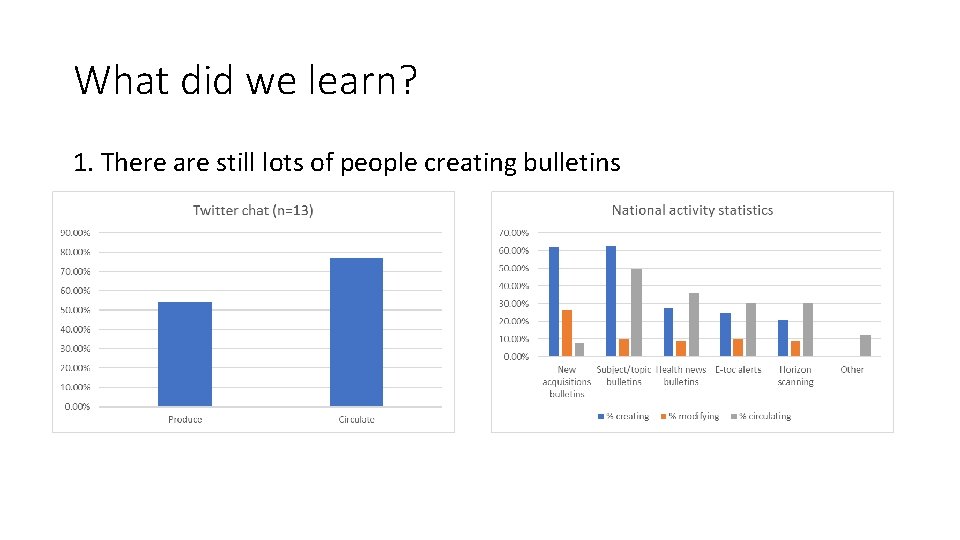
What did we learn? 1. There are still lots of people creating bulletins

2. There is wide variation in what people consider to be effective for current awareness bulletins
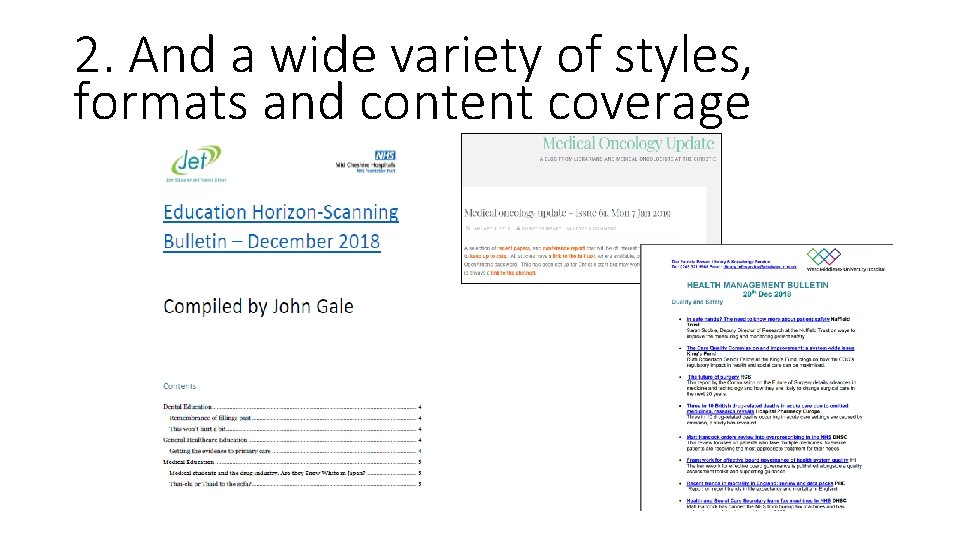
2. And a wide variety of styles, formats and content coverage
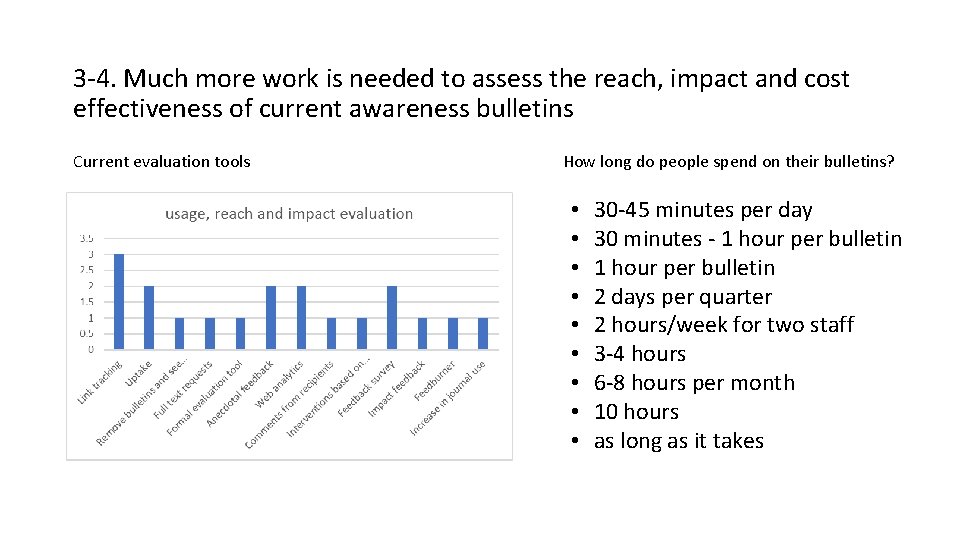
3 -4. Much more work is needed to assess the reach, impact and cost effectiveness of current awareness bulletins Current evaluation tools How long do people spend on their bulletins? • • • 30 -45 minutes per day 30 minutes - 1 hour per bulletin 2 days per quarter 2 hours/week for two staff 3 -4 hours 6 -8 hours per month 10 hours as long as it takes
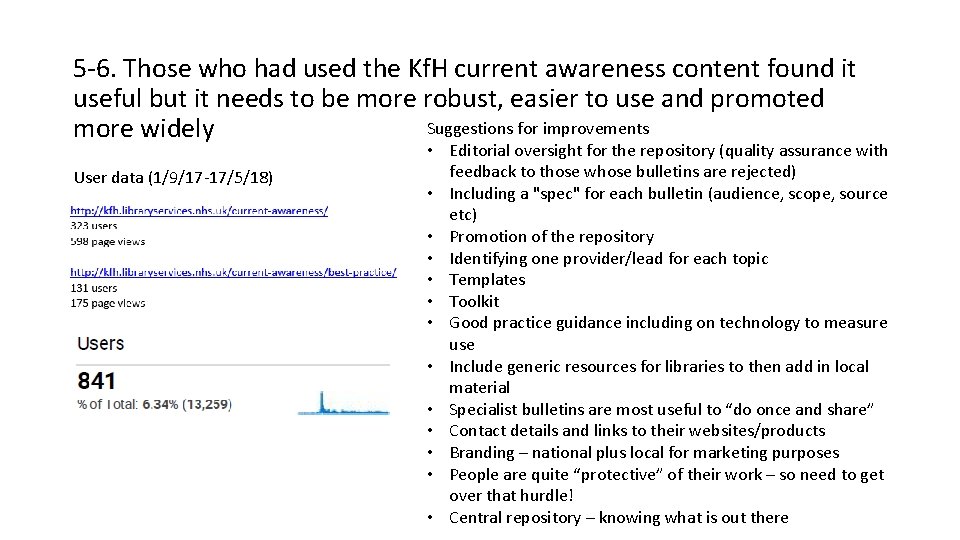
5 -6. Those who had used the Kf. H current awareness content found it useful but it needs to be more robust, easier to use and promoted Suggestions for improvements more widely User data (1/9/17 -17/5/18) • Editorial oversight for the repository (quality assurance with feedback to those whose bulletins are rejected) • Including a "spec" for each bulletin (audience, scope, source etc) • Promotion of the repository • Identifying one provider/lead for each topic • Templates • Toolkit • Good practice guidance including on technology to measure use • Include generic resources for libraries to then add in local material • Specialist bulletins are most useful to “do once and share” • Contact details and links to their websites/products • Branding – national plus local for marketing purposes • People are quite “protective” of their work – so need to get over that hurdle! • Central repository – knowing what is out there
Bottlenecks and pain-points • Acknowledgement of sources, contributions, authorship, finances • Availability of resources such as staff and time • Variation in products and in schedules • Tracking uptake, including blocking of cookies, IT infrastructure variation and localisation of click through links (e. g. Bit. ly)
Where did we get to at the end of the project? Recommendations • Review functionality of existing services – controlled study • Do any resources / services have the capacity to deliver high quality, tailored current awareness bulletins covering all subject matter? • Either • Review the business model for existing service providers • Collaborate to achieve sustainable product development to meet end-users’ needs • Or • Enhance editorial guidance, quality assurance and technical infrastructure of HEE LKS current awareness web presence to support “do once and share” delivery of bulletins • Produce guidelines and recommendations for evaluating bulletins and capturing impact • In all cases: • Promote use of all current awareness resources through HEE LKS web presence • Establish mechanisms for monitoring and evaluation to demonstrate reach and impact
Community of Practice • Kick-off event – November 2019 • Presentations from bulletin producers: PHE, Kings Fund, RCSEng, Oxford Health, CASH, Knowledge. Share, NHSES • Workshop sessions: defining good quality bulletins, measuring value and impact, priorities for the group • • Map who’s doing what Awareness and use of the repository “Be more Scotland” Return on investment (value and impact)
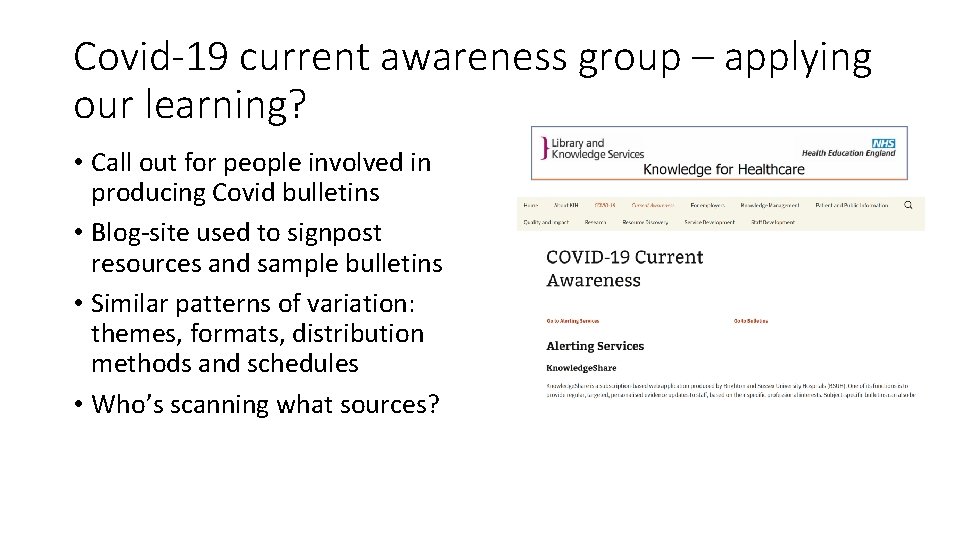
Covid-19 current awareness group – applying our learning? • Call out for people involved in producing Covid bulletins • Blog-site used to signpost resources and sample bulletins • Similar patterns of variation: themes, formats, distribution methods and schedules • Who’s scanning what sources?

Current Awareness Service for Health http: //cash. libraryservices. nhs. uk/
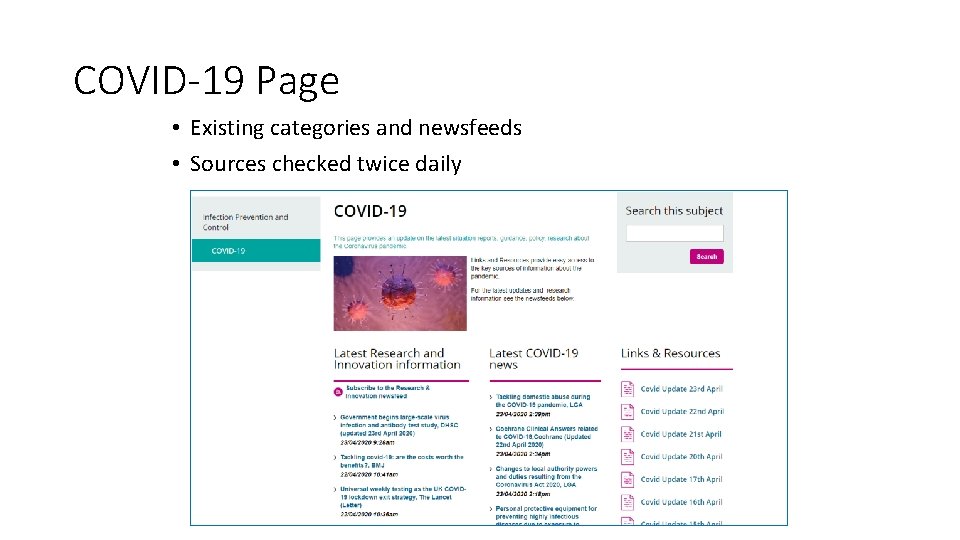
COVID-19 Page • Existing categories and newsfeeds • Sources checked twice daily
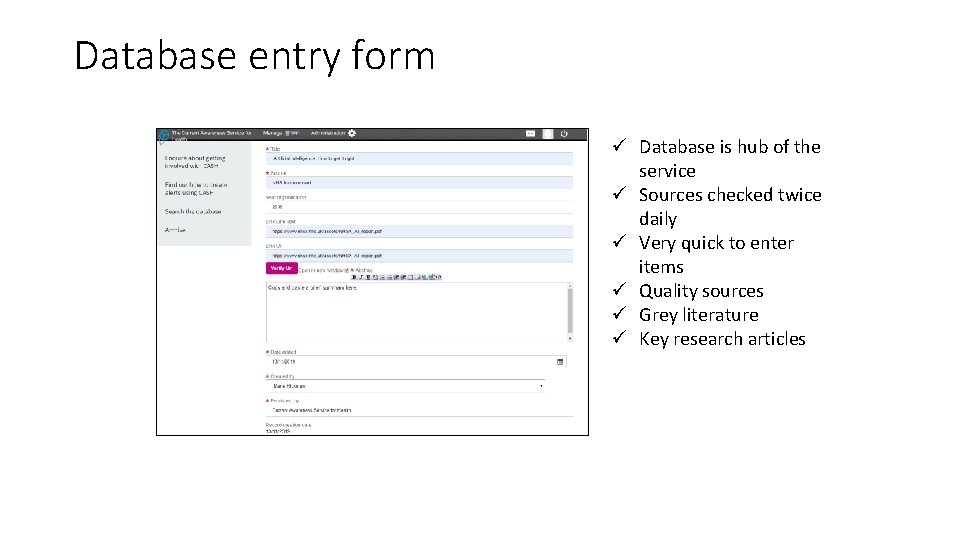
Database entry form ü Database is hub of the service ü Sources checked twice daily ü Very quick to enter items ü Quality sources ü Grey literature ü Key research articles
Output formats ü Know How pages to share best practice ü Customisable bulletins containing news and other information direct from CASH e. g. Mail. Chimp ü Newsfeeds o End-users o Easy to embed on webpages e. g. Trust internet o Facebook page o Other internet services e. g. Proto. Page, Net. Vibes
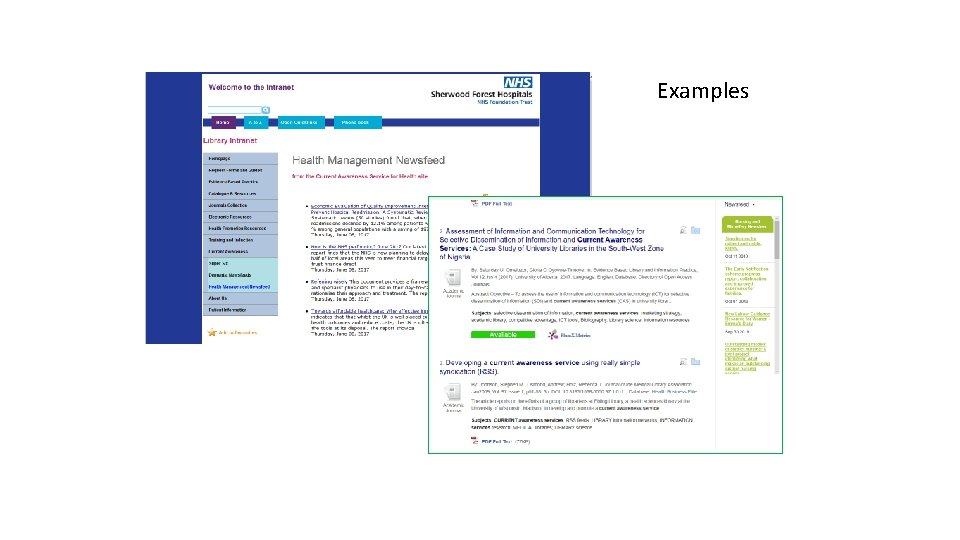
Examples
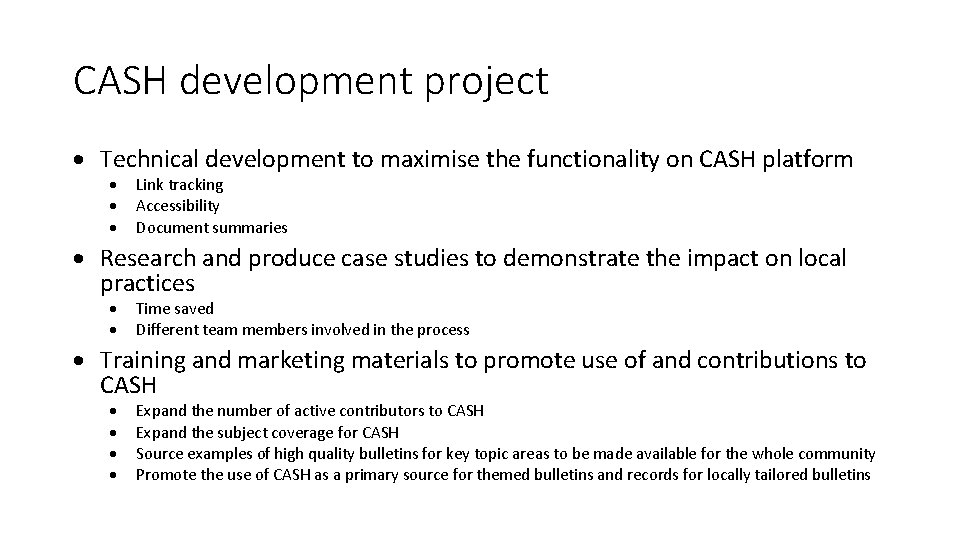
CASH development project Technical development to maximise the functionality on CASH platform Link tracking Accessibility Document summaries Research and produce case studies to demonstrate the impact on local practices Time saved Different team members involved in the process Training and marketing materials to promote use of and contributions to CASH Expand the number of active contributors to CASH Expand the subject coverage for CASH Source examples of high quality bulletins for key topic areas to be made available for the whole community Promote the use of CASH as a primary source for themed bulletins and records for locally tailored bulletins

What role do bulletins play in your service offer?
What barriers are there to collaboration?
What needs to change to facilitate collaboration?
Thank you! Lucy Reid: lucy. reid@hee. nhs. uk Samantha Gavaghan: samantha. gavaghan@nhs. net
- Slides: 26