
Current approach to the concept of logistics Economic
- Slides: 24
Current approach to the concept of logistics
Economic development worldwide • Population explosion. • Predominance of the market mechanism. • Globalization: 1. Concentration of capital, production capacities and companies 2. Standardization • Change in the nature of competition: 1. From a competition of a large number of individual producers to a competition of a limited number of multinational companies. 2
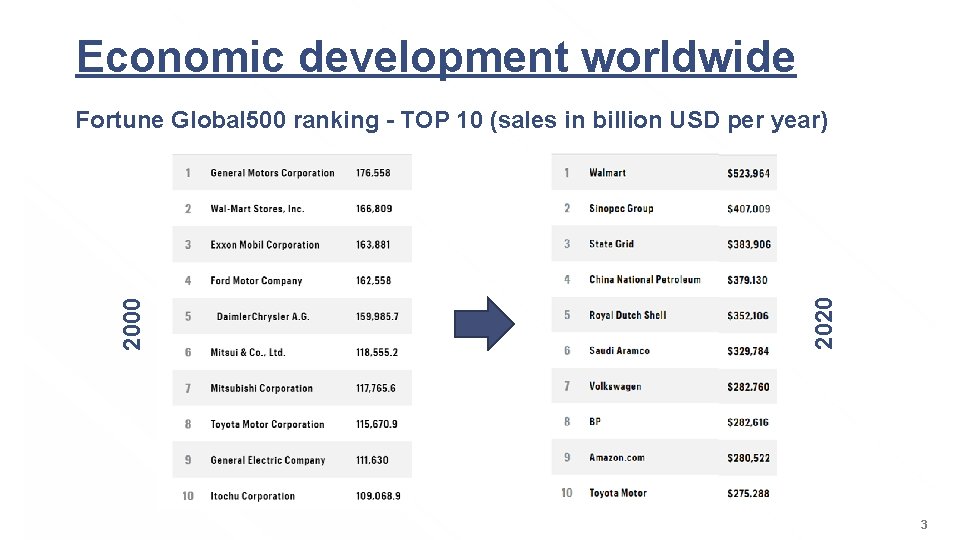
Economic development worldwide 2020 2000 Fortune Global 500 ranking - TOP 10 (sales in billion USD per year) 3
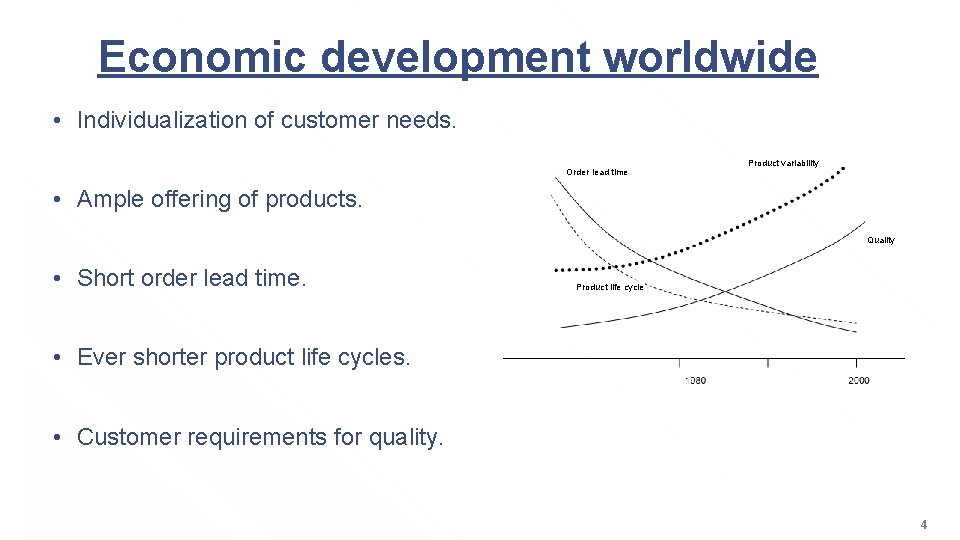
Economic development worldwide • Individualization of customer needs. Order lead time Product variability • Ample offering of products. Quality • Short order lead time. Product life cycle • Ever shorter product life cycles. • Customer requirements for quality. 4
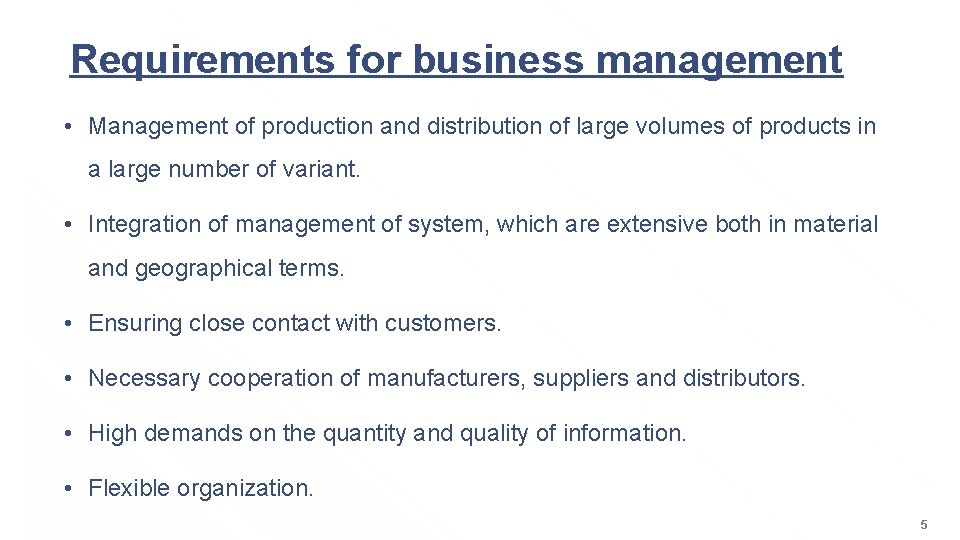
Requirements for business management • Management of production and distribution of large volumes of products in a large number of variant. • Integration of management of system, which are extensive both in material and geographical terms. • Ensuring close contact with customers. • Necessary cooperation of manufacturers, suppliers and distributors. • High demands on the quantity and quality of information. • Flexible organization. 5
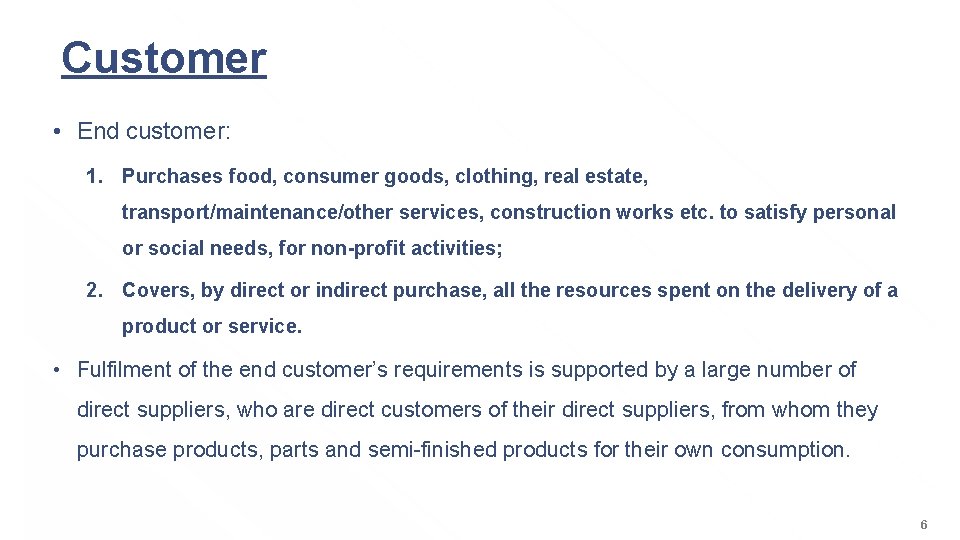
Customer • End customer: 1. Purchases food, consumer goods, clothing, real estate, transport/maintenance/other services, construction works etc. to satisfy personal or social needs, for non-profit activities; 2. Covers, by direct or indirect purchase, all the resources spent on the delivery of a product or service. • Fulfilment of the end customer’s requirements is supported by a large number of direct suppliers, who are direct customers of their direct suppliers, from whom they purchase products, parts and semi-finished products for their own consumption. 6
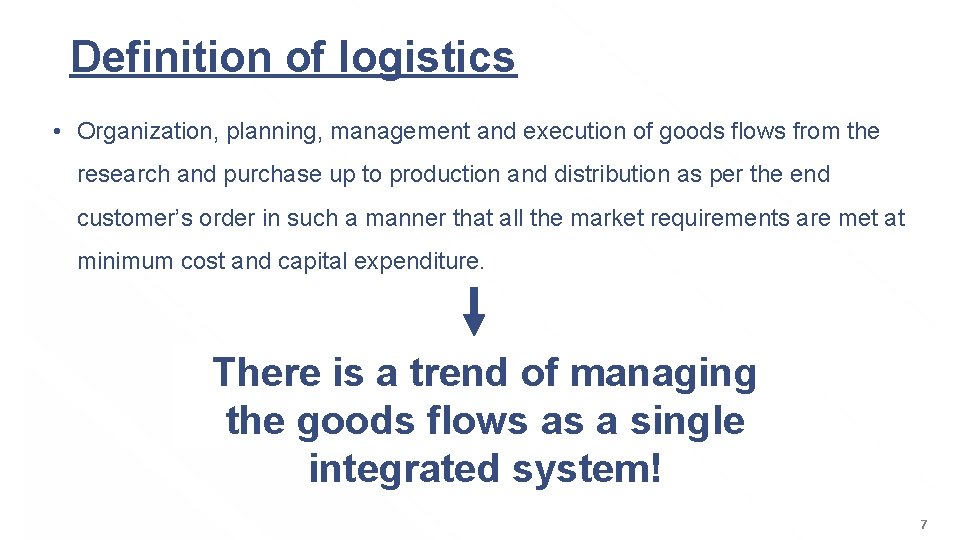
Definition of logistics • Organization, planning, management and execution of goods flows from the research and purchase up to production and distribution as per the end customer’s order in such a manner that all the market requirements are met at minimum cost and capital expenditure. There is a trend of managing the goods flows as a single integrated system! 7
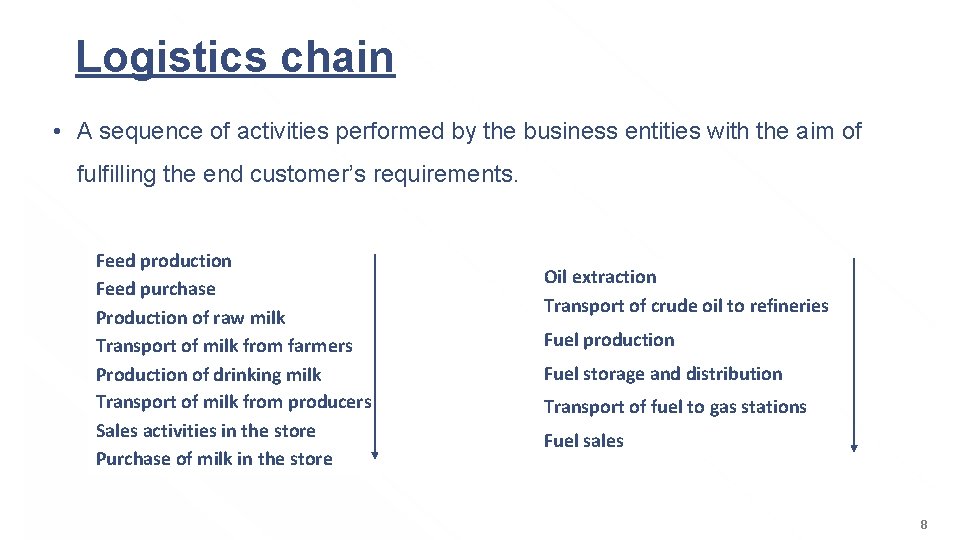
Logistics chain • A sequence of activities performed by the business entities with the aim of fulfilling the end customer’s requirements. Feed production Feed purchase Production of raw milk Transport of milk from farmers Production of drinking milk Transport of milk from producers Sales activities in the store Purchase of milk in the store Oil extraction Transport of crude oil to refineries Fuel production Fuel storage and distribution Transport of fuel to gas stations Fuel sales 8
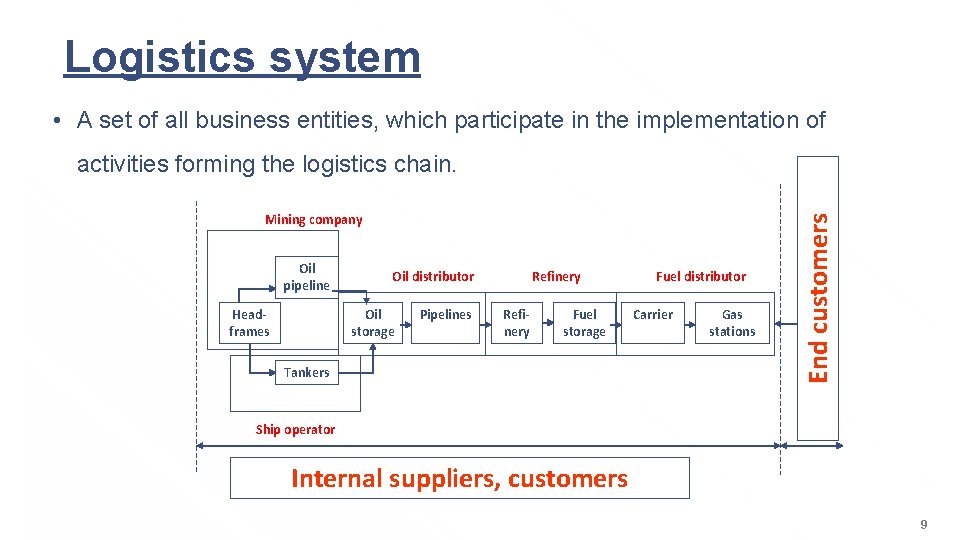
Logistics system • A set of all business entities, which participate in the implementation of Mining company Oil pipeline Headframes Oil distributor Oil storage Pipelines Refinery Fuel storage Tankers Fuel distributor Carrier Gas stations End customers activities forming the logistics chain. Ship operator Internal suppliers, customers 9
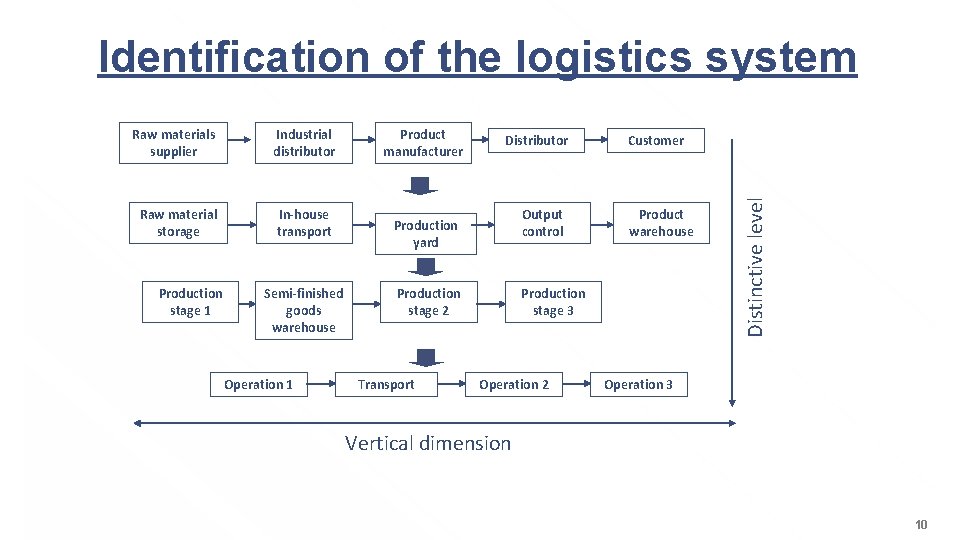
Identification of the logistics system Industrial distributor Raw material storage In-house transport Production stage 1 Semi-finished goods warehouse Operation 1 Product manufacturer Distributor Output control Production yard Production stage 2 Transport Customer Product warehouse Production stage 3 Operation 2 Distinctive level Raw materials supplier Operation 3 Vertical dimension 10
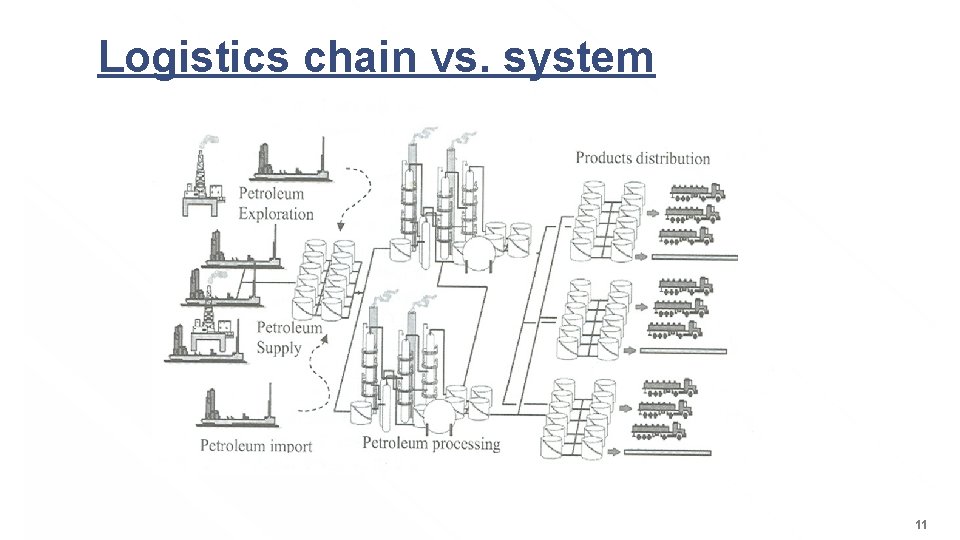
Logistics chain vs. system 11
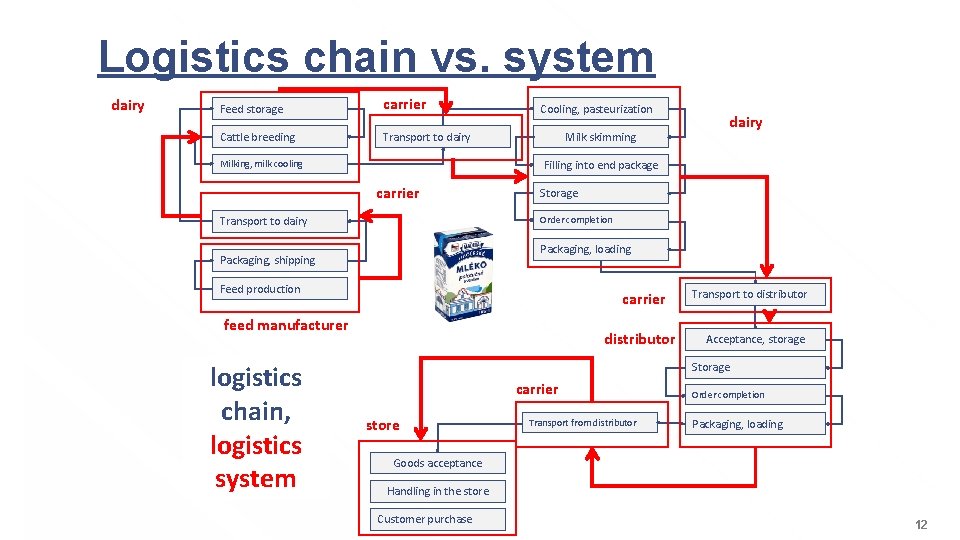
Logistics chain vs. system dairy Feed storage carrier Cattle breeding Transport to dairy Cooling, pasteurization Milk skimming Filling into end package Milking, milk cooling carrier Transport to dairy Storage Order completion Packaging, loading Packaging, shipping Feed production carrier feed manufacturer logistics chain, logistics system dairy distributor Transport to distributor Acceptance, storage Storage carrier store Transport from distributor Order completion Packaging, loading Goods acceptance Handling in the store Customer purchase 12
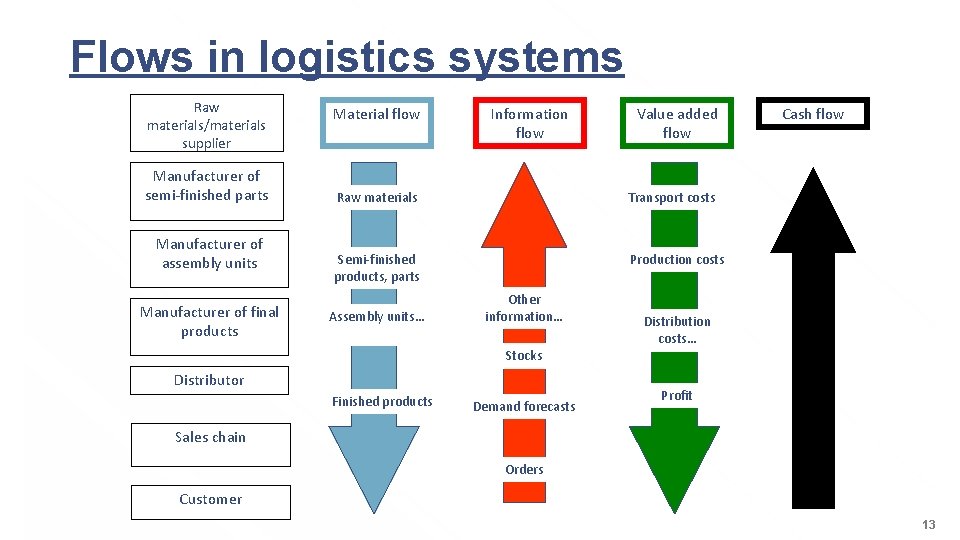
Flows in logistics systems Raw materials/materials supplier Manufacturer of semi-finished parts Manufacturer of assembly units Manufacturer of final products Material flow Information flow Value added flow Raw materials Transport costs Semi-finished products, parts Production costs Assembly units… Other information… Cash flow Distribution costs… Stocks Distributor Finished products Demand forecasts Profit Sales chain Orders Customer 13
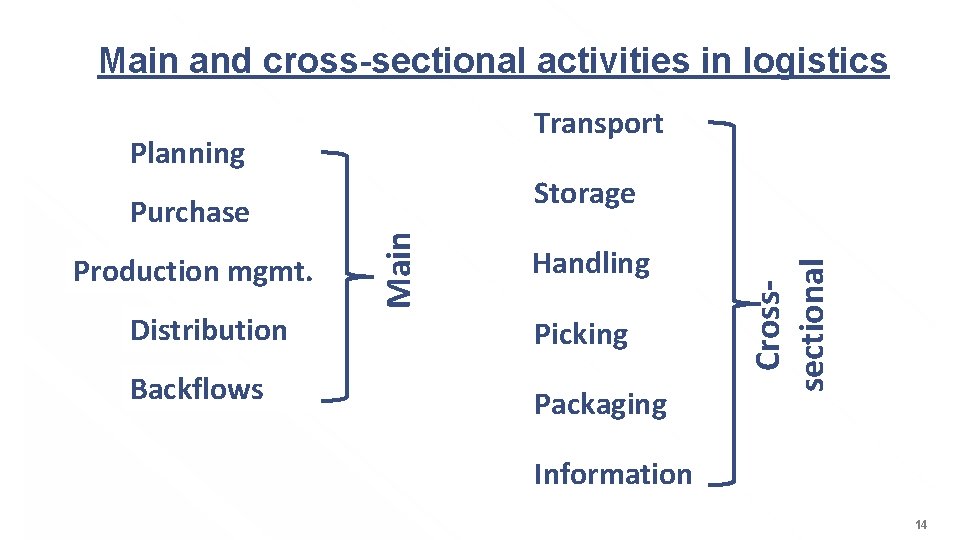
Main and cross-sectional activities in logistics Transport Planning Production mgmt. Main Purchase Handling Distribution Picking Backflows Packaging Crosssectional Storage Information 14
Customer services as a global logistics goal • Satisfying customer requirements at a competitive level: 1. The customer does not care what efforts the supplier has made to provide services. 2. The customer does not care what it cost the supplier. 3. The customer is only interested in the final effect. • Customer services are a basic strategic concept of material flow management in logistics systems. • Customer services reflect the efficiency of the company's logistics management. 15
Customer service concept • A means of increasing the utility value of goods for the customer as a source of added value and significant competitive factor. • The company's principle of identification with the customers’ requirements. • A set of activities, which need to be planned and managed and which require creating an organizational framework. • Measure of logistics performance, which must be quantified using appropriate indicators. 16
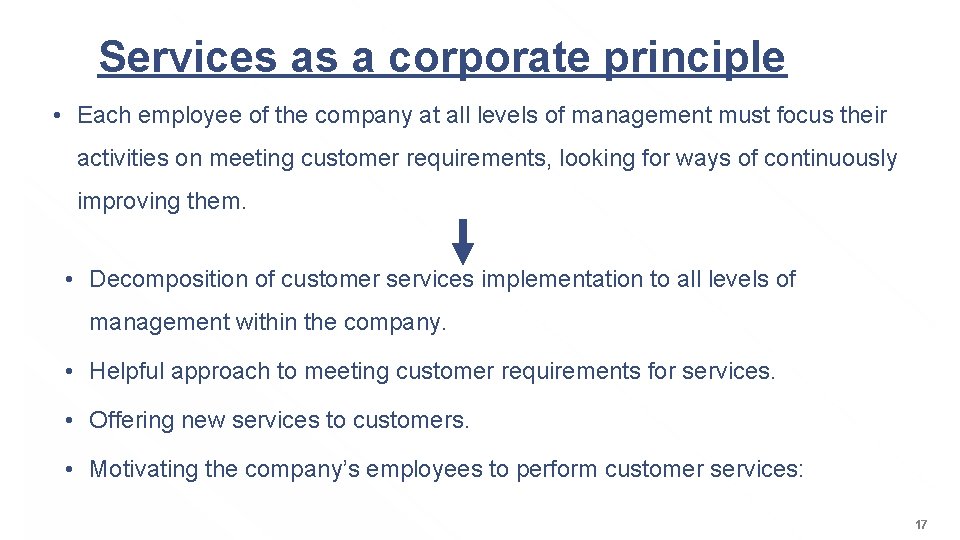
Services as a corporate principle • Each employee of the company at all levels of management must focus their activities on meeting customer requirements, looking for ways of continuously improving them. • Decomposition of customer services implementation to all levels of management within the company. • Helpful approach to meeting customer requirements for services. • Offering new services to customers. • Motivating the company’s employees to perform customer services: 17
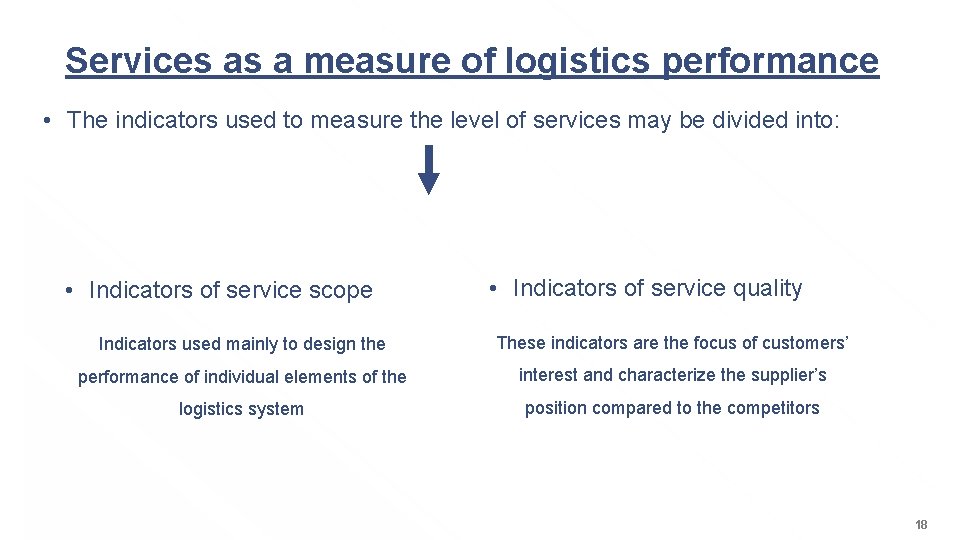
Services as a measure of logistics performance • The indicators used to measure the level of services may be divided into: • Indicators of service scope • Indicators of service quality Indicators used mainly to design the These indicators are the focus of customers’ performance of individual elements of the interest and characterize the supplier’s logistics system position compared to the competitors 18
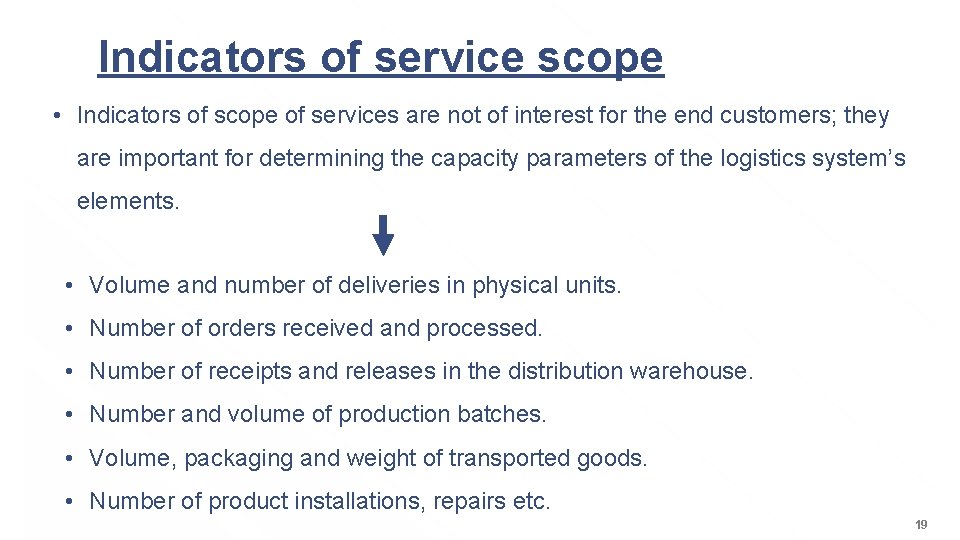
Indicators of service scope • Indicators of scope of services are not of interest for the end customers; they are important for determining the capacity parameters of the logistics system’s elements. • Volume and number of deliveries in physical units. • Number of orders received and processed. • Number of receipts and releases in the distribution warehouse. • Number and volume of production batches. • Volume, packaging and weight of transported goods. • Number of product installations, repairs etc. 19
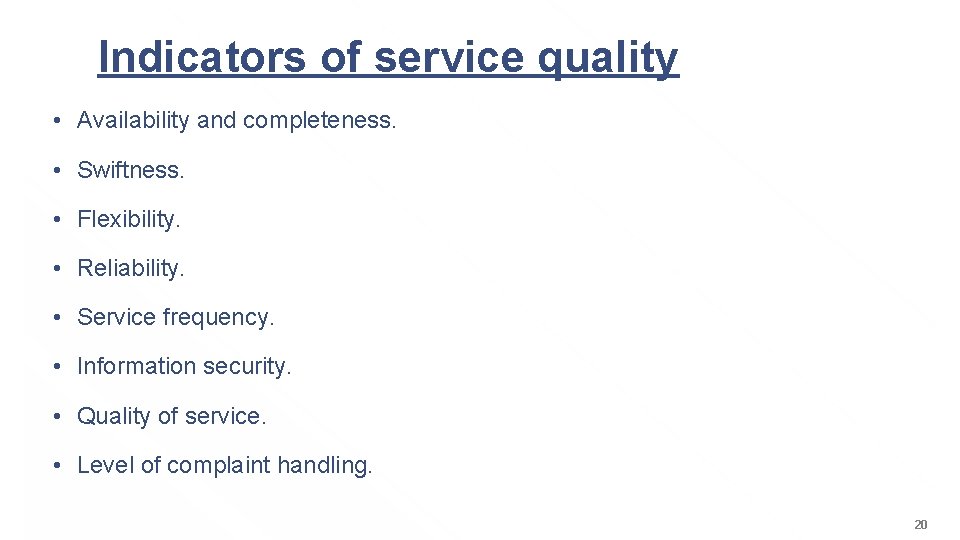
Indicators of service quality • Availability and completeness. • Swiftness. • Flexibility. • Reliability. • Service frequency. • Information security. • Quality of service. • Level of complaint handling. 20
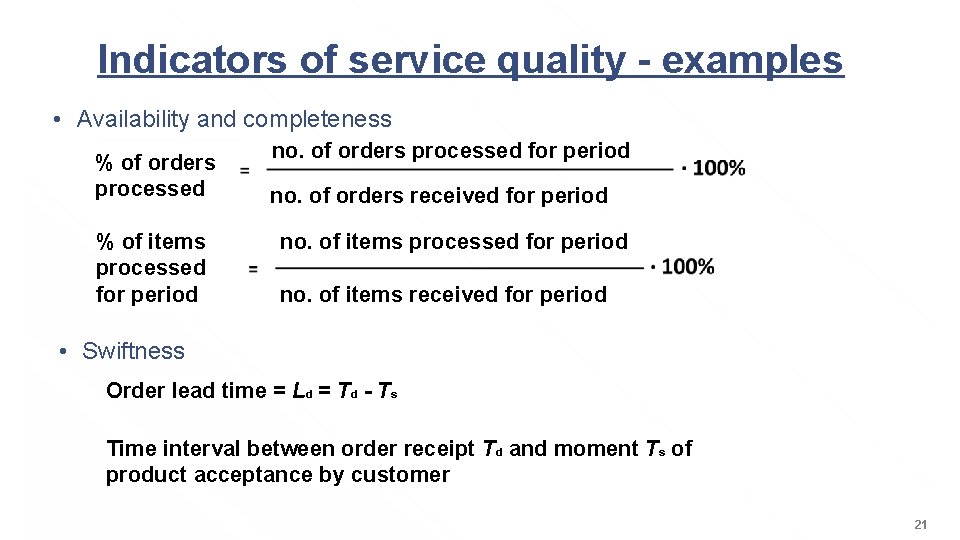
Indicators of service quality - examples • Availability and completeness % of orders processed % of items processed for period no. of orders received for period no. of items processed for period no. of items received for period • Swiftness Order lead time = Ld = Td - Ts Time interval between order receipt Td and moment Ts of product acceptance by customer 21
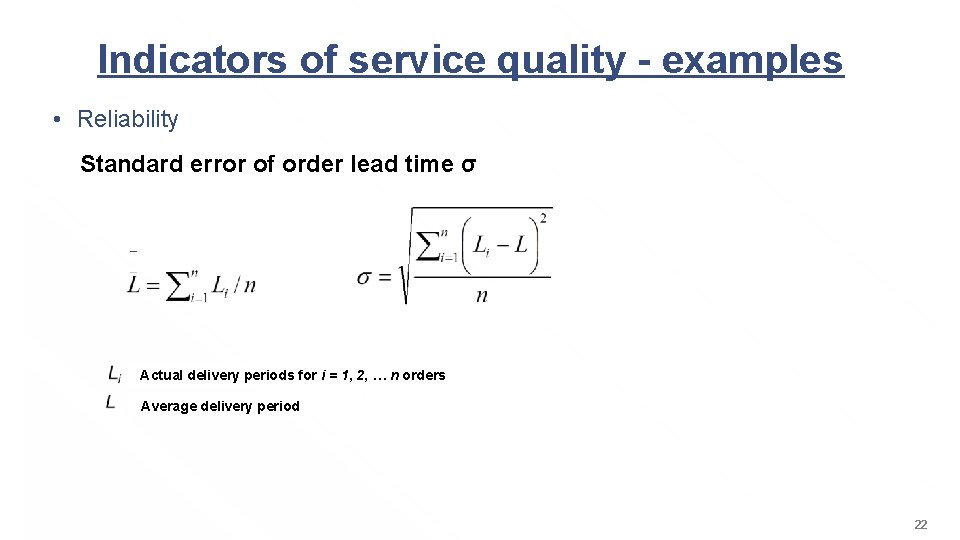
Indicators of service quality - examples • Reliability Standard error of order lead time σ Actual delivery periods for i = 1, 2, … n orders Average delivery period 22
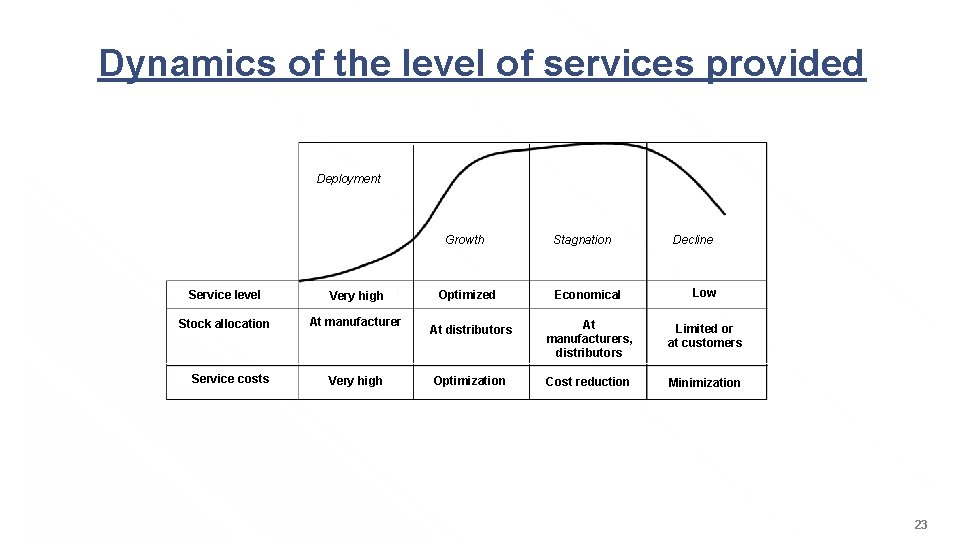
Dynamics of the level of services provided Deployment Growth Service level Very high Stock allocation At manufacturer Service costs Very high Stagnation Decline Optimized Economical Low At distributors At manufacturers, distributors Limited or at customers Optimization Cost reduction Minimization 23
Current approach to the concept of logistics Jakub Dyntar jakub. dyntar@tul. cz