
Current and Future Management of Newly Diagnosed Extensive
- Slides: 17
Current and Future Management of Newly Diagnosed Extensive. Stage Small-Cell Lung Cancer (ES-SCLC) David R. Spigel, M. D. Sarah Cannon Research Institute
Disclosures • • Leadership – Centennial Medical Center (BOT) Consulting or Advisory Role (payments to institution) – Genentech/Roche, Novartis, Celgene, Bristol-Myers Squibb, Astra. Zeneca, Pfizer, Boehringer Ingelheim, Abb. Vie, Foundation Medicine, Glaxo. Smith. Kline, Lilly, Merck, Moderna Therapeutics, Nektar, Takeda, Amgen, TRM Oncology, Precision Oncology, Evelo, Illumina, Pharma. Mar Research Funding (payments to institution) – Genentech/Roche, Novartis, Celgene, Bristol-Myers Squibb, Astra. Zeneca, Pfizer, Boehringer Ingelheim, Abb. Vie, Foundation Medicine, Glaxo. Smith. Kline, Lilly, University of Texas-Southwestern, G 1 Therapeutics, Neon Therapeutics, Takeda, Nektar, Celldex, Clovis Oncology, Daiichi Sankyo, EMD Serono, Acerta Pharma, Oncogenex, Astellas Pharma, GRAIL, Transgene, Aeglea Biotherapeutics, Tesaro, Ipsen, ARMO Biosciences (Lilly), Amgen, Millennium Travel, Accommodations, Expenses – Astra. Zeneca, Boehringer Ingelheim, Celgene, Lilly, EMD Serono, Bristol-Myers Squibb, Genentech, Genzyme, Intuitive Surgical, Merck, Pfizer, Purdue Pharma, Spectrum Pharmaceuticals, Sysmex
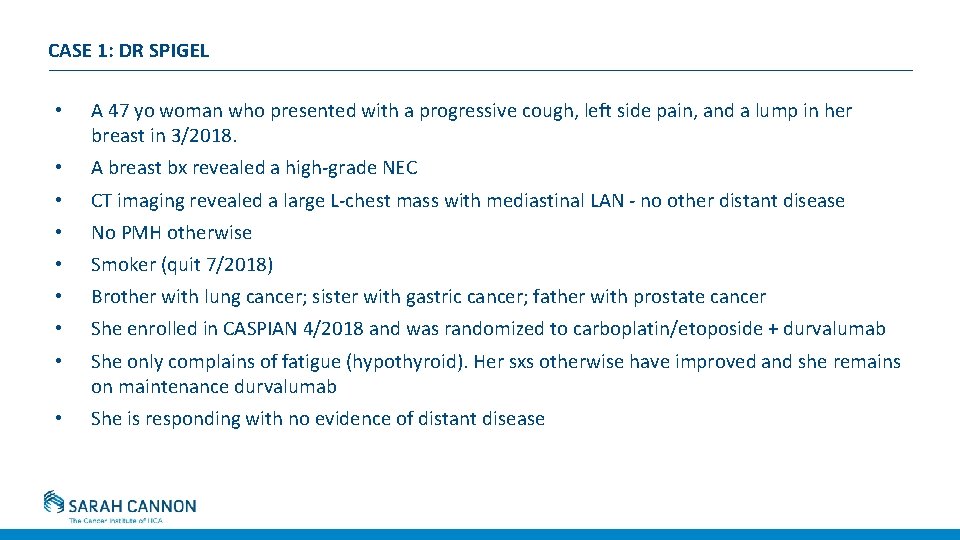
CASE 1: DR SPIGEL • A 47 yo woman who presented with a progressive cough, left side pain, and a lump in her breast in 3/2018. • • A breast bx revealed a high-grade NEC • She is responding with no evidence of distant disease CT imaging revealed a large L-chest mass with mediastinal LAN - no other distant disease No PMH otherwise Smoker (quit 7/2018) Brother with lung cancer; sister with gastric cancer; father with prostate cancer She enrolled in CASPIAN 4/2018 and was randomized to carboplatin/etoposide + durvalumab She only complains of fatigue (hypothyroid). Her sxs otherwise have improved and she remains on maintenance durvalumab
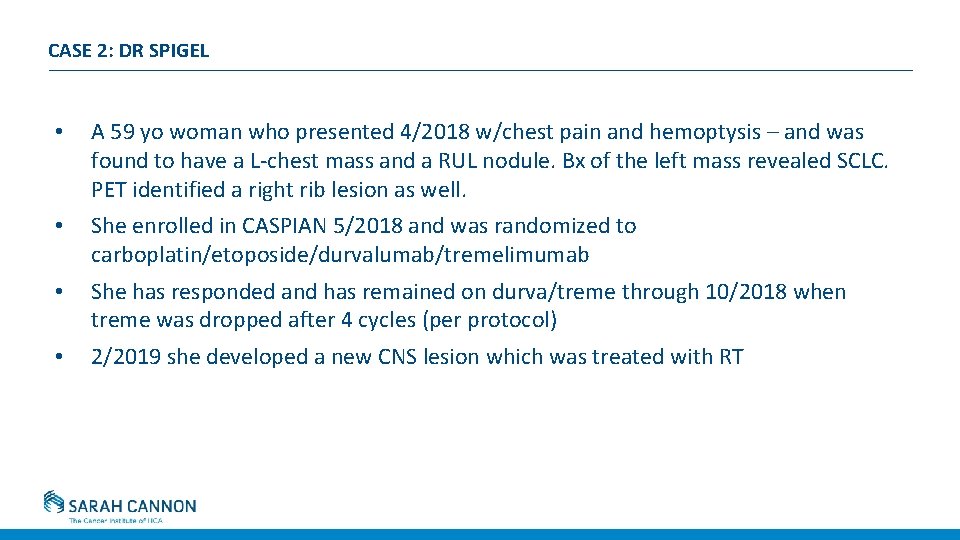
CASE 2: DR SPIGEL • A 59 yo woman who presented 4/2018 w/chest pain and hemoptysis – and was found to have a L-chest mass and a RUL nodule. Bx of the left mass revealed SCLC. PET identified a right rib lesion as well. • She enrolled in CASPIAN 5/2018 and was randomized to carboplatin/etoposide/durvalumab/tremelimumab • She has responded and has remained on durva/treme through 10/2018 when treme was dropped after 4 cycles (per protocol) • 2/2019 she developed a new CNS lesion which was treated with RT
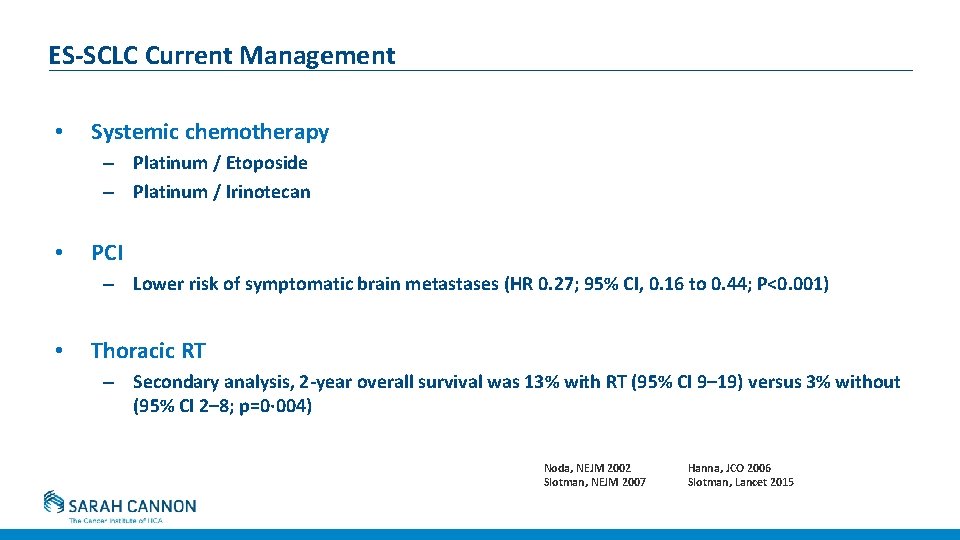
ES-SCLC Current Management • Systemic chemotherapy – Platinum / Etoposide – Platinum / Irinotecan • PCI – Lower risk of symptomatic brain metastases (HR 0. 27; 95% CI, 0. 16 to 0. 44; P<0. 001) • Thoracic RT – Secondary analysis, 2 -year overall survival was 13% with RT (95% CI 9– 19) versus 3% without (95% CI 2– 8; p=0· 004) Noda, NEJM 2002 Slotman, NEJM 2007 Hanna, JCO 2006 Slotman, Lancet 2015
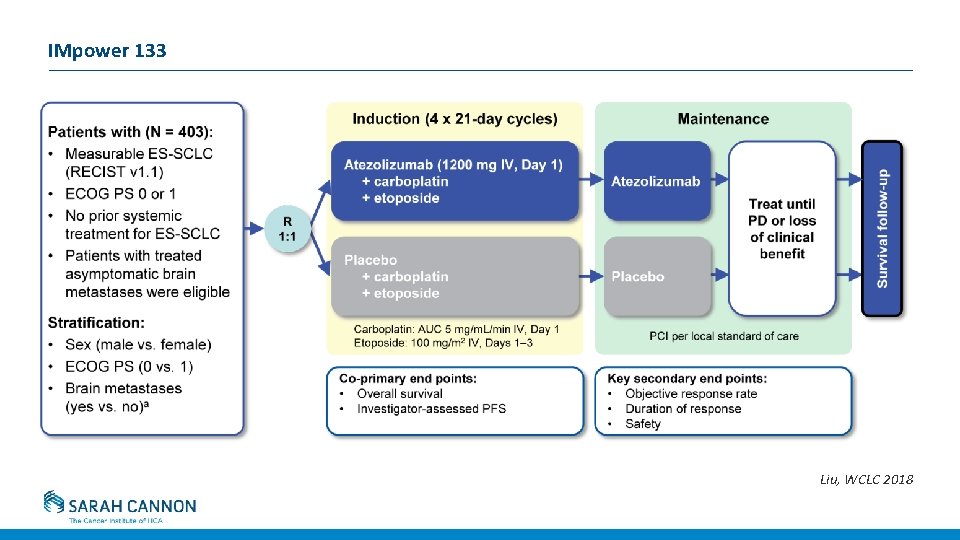
IMpower 133 Liu, WCLC 2018
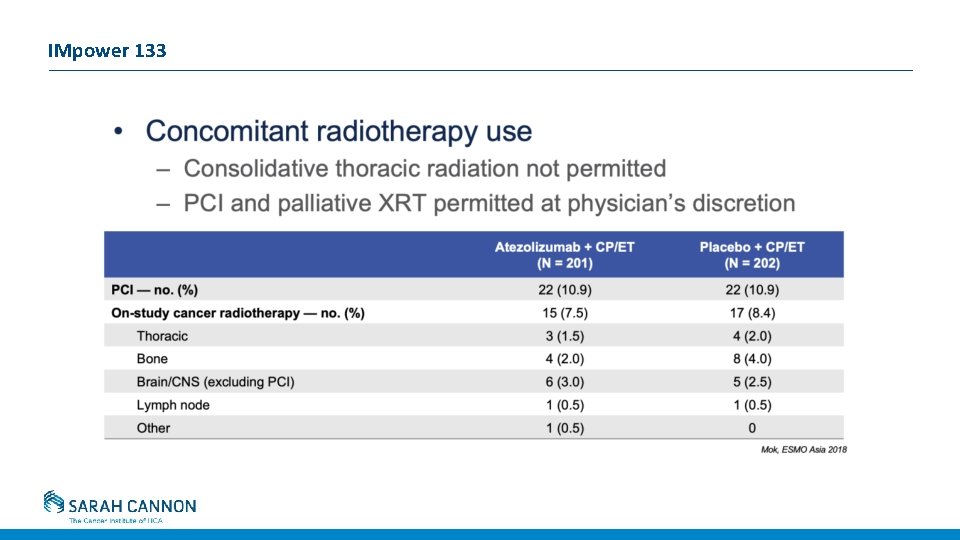
IMpower 133
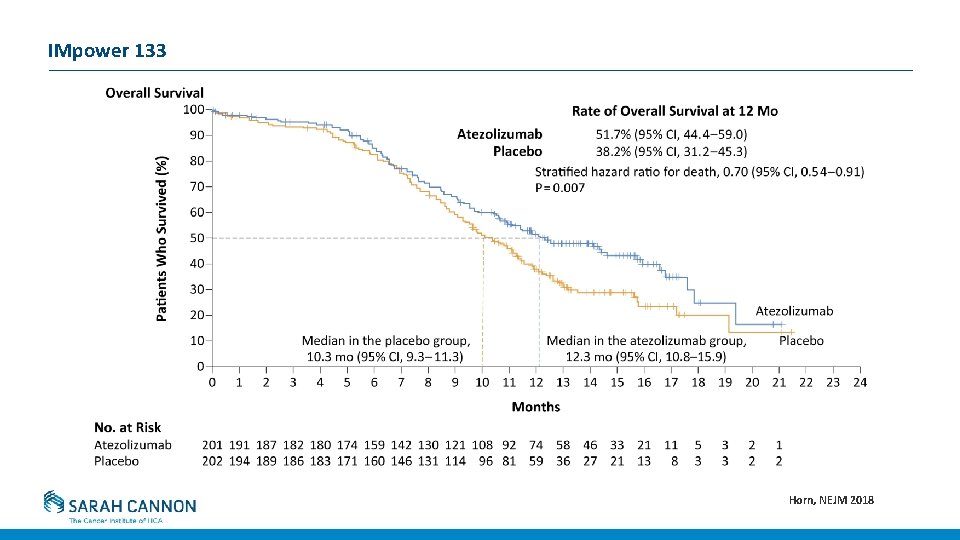
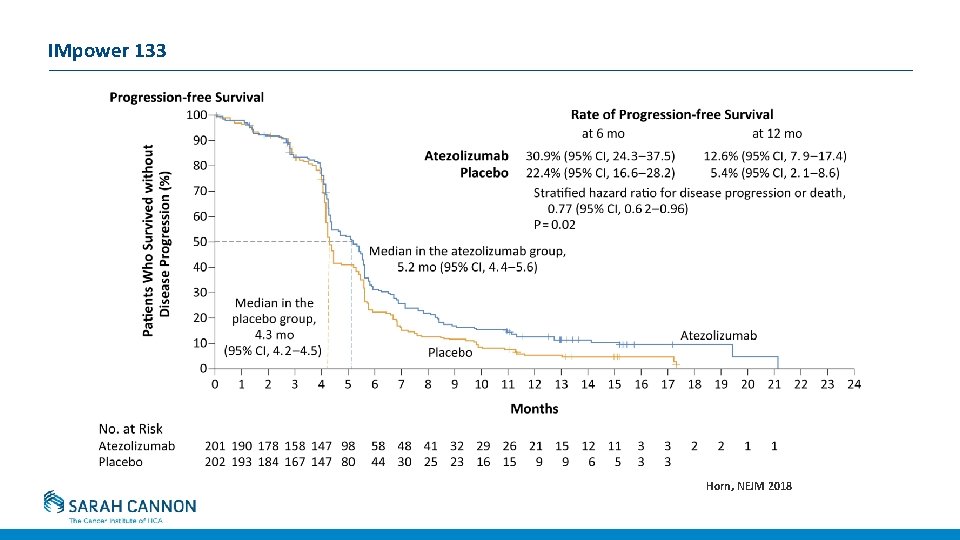
IMpower 133 Horn, NEJM 2018
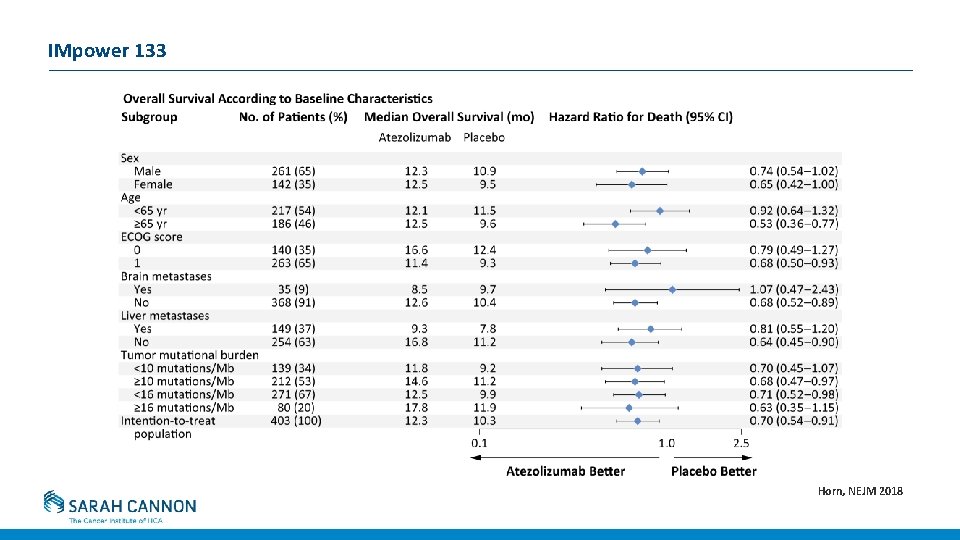
IMpower 133 Horn, NEJM 2018
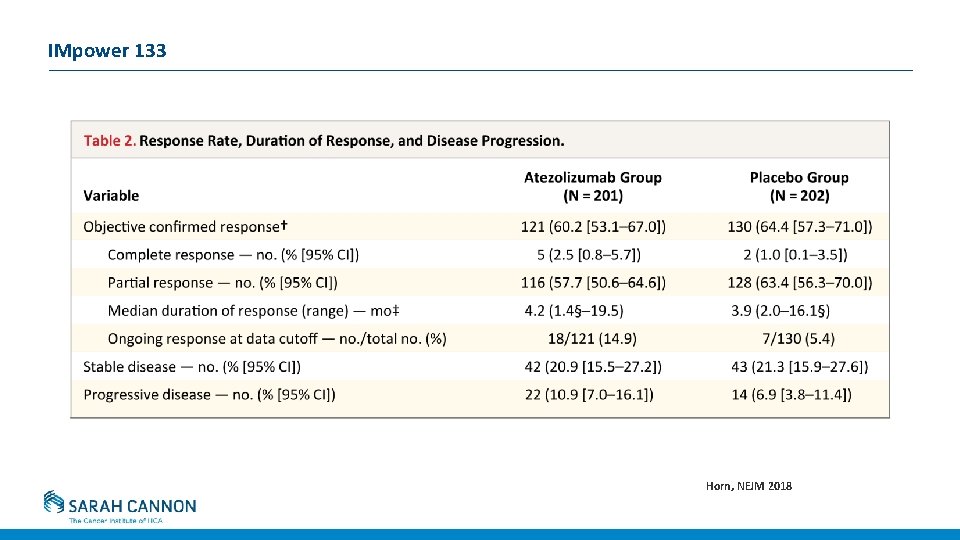
IMpower 133 Horn, NEJM 2018
IMpower 133 Horn, NEJM 2018
PL 02. 11: Overall survival with durvalumab plus platinum-etoposide in first-line extensive-stage SCLC: Results from the CASPIAN study Luis Paz-Ares, 1 Yuanbin Chen, 2 Niels Reinmuth, 3 Katsuyuki Hotta, 4 Dmytro Trukhin, 5 Galina Statsenko, 6 Maximilian J. Hochmair, 7 Mustafa Özgüroğlu, 8 Jun Ho Ji, 9 Oleksandr Voitko, 10 Artem Poltoratskiy, 11 Santiago Ponce, 1 Francesco Verderame, 12 Libor Havel, 13 Igor Bondarenko, 14 Andrzej Kazarnowicz, 15 György Losonczy, 16 Nikolay V. Conev, 17 Jon Armstrong, 18 Natalie Byrne, 18 Norah Shire, 19 Haiyi Jiang, 19 Jonathan W. Goldman 20 1 Hospital Universitario 12 de Octubre, H 120 -CNIO Lung Cancer Unit, Universidad Complutense and Ciberonc, Madrid, Spain; 2 Cancer & Hematology Centers of Western Michigan, Grand Rapids, MI, USA; 3 Asklepios Lung Clinic, Munich-Gauting, Germany; 4 Okayama University Hospital, Okayama, Japan; 5 Odesa National Medical University, Odesa, Ukraine; 6 Omsk Regional Cancer Center, Omsk, Russian Federation; 7 Karl Landsteiner Institute of Lung Research and Pulmonary Oncology, Krankenhaus Nord, Vienna, Austria; 8 Istanbul University−Cerrahpaşa, Cerrahpaşa School of Medicine, Istanbul, Turkey; 9 Samsung Changwon Hospital, Sungkyunkwan University School of Medicine, Changwon, South Korea; 10 Kyiv City Clinical Oncological Centre, Kiev, Ukraine; 11 Petrov Research Institute of Oncology, St Petersburg, Russian Federation; 12 AO Ospedali Riuniti PO Vincenzo Cervello, Palermo, Italy; 13 Thomayer Hospital, First Faculty of Medicine, Charles University, Prague, Czech Republic; 14 Dnipropetrovsk Medical Academy, Dnipro, Ukraine; 15 Tuberculosis and Lung Disease Hospital, Olsztyn, Poland; 16 Semmelweis University, Budapest, Hungary; 17 Clinic of Medical Oncology, UMHAT St Marina, Varna, Bulgaria; 18 Astra. Zeneca, Cambridge, UK; 19 Astra. Zeneca, Gaithersburg, MD, USA; 20 David Geffen School of Medicine at UCLA, Los Angeles, CA, USA Luis-Paz Ares, Hospital Universitario 12 de Octubre, Spain
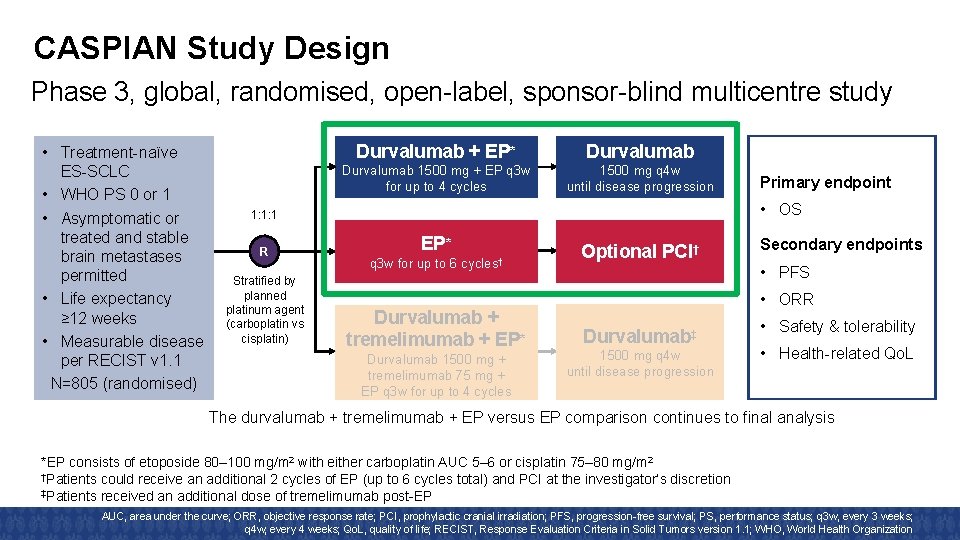
CASPIAN Study Design Phase 3, global, randomised, open-label, sponsor-blind multicentre study • Treatment-naïve ES-SCLC • WHO PS 0 or 1 • Asymptomatic or treated and stable brain metastases permitted • Life expectancy ≥ 12 weeks • Measurable disease per RECIST v 1. 1 N=805 (randomised) Durvalumab + EP* Durvalumab 1500 mg + EP q 3 w for up to 4 cycles 1500 mg q 4 w until disease progression • OS 1: 1: 1 R Stratified by planned platinum agent (carboplatin vs cisplatin) Primary endpoint EP* q 3 w for up to 6 cycles† Durvalumab + tremelimumab + EP* Durvalumab 1500 mg + tremelimumab 75 mg + EP q 3 w for up to 4 cycles Optional PCI† Secondary endpoints • PFS • ORR Durvalumab‡ 1500 mg q 4 w until disease progression • Safety & tolerability • Health-related Qo. L The durvalumab + tremelimumab + EP versus EP comparison continues to final analysis *EP consists of etoposide 80– 100 mg/m 2 with either carboplatin AUC 5– 6 or cisplatin 75– 80 mg/m 2 †Patients could receive an additional 2 cycles of EP (up to 6 cycles total) and PCI at the investigator’s discretion ‡Patients received an additional dose of tremelimumab post-EP AUC, area under the curve; ORR, objective response rate; PCI, prophylactic cranial irradiation; PFS, progression-free survival; PS, performance status; q 3 w, every 3 weeks; q 4 w, every 4 weeks; Qo. L, quality of life; RECIST, Response Evaluation Criteria in Solid Tumors version 1. 1; WHO, World Health Organization
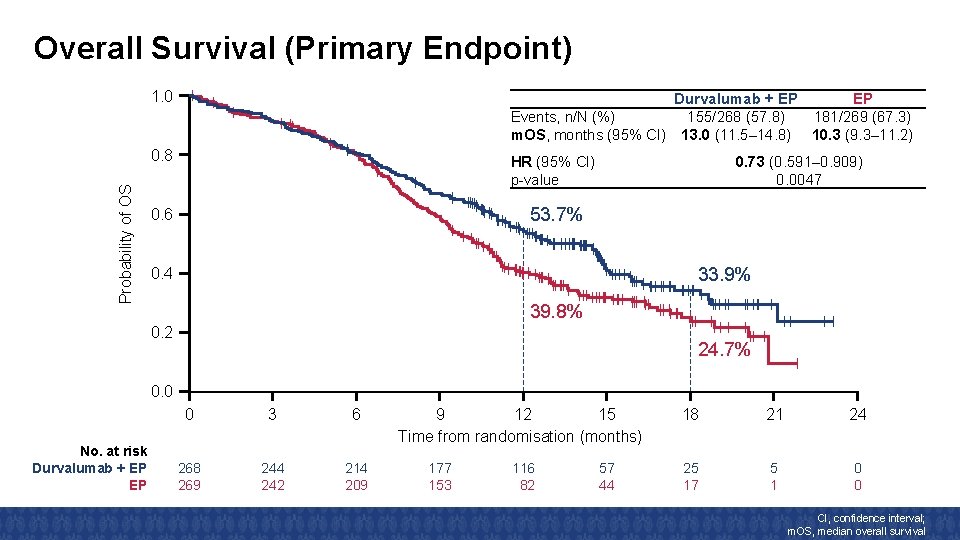
Probability of OS Overall Survival (Primary Endpoint) 1. 0 Durvalumab + EP EP Events, n/N (%) 155/268 (57. 8) 181/269 (67. 3) m. OS, months (95% CI) 13. 0 (11. 5– 14. 8) 10. 3 (9. 3– 11. 2) 0. 8 HR (95% CI) p-value 0. 6 53. 7% 0. 73 (0. 591– 0. 909) 0. 0047 33. 9% 0. 4 39. 8% 0. 2 24. 7% 0. 0 No. at risk Durvalumab + EP EP 0 3 6 268 269 244 242 214 209 9 12 15 Time from randomisation (months) 177 153 116 82 57 44 18 21 24 25 17 5 1 0 0 CI, confidence interval; m. OS, median overall survival
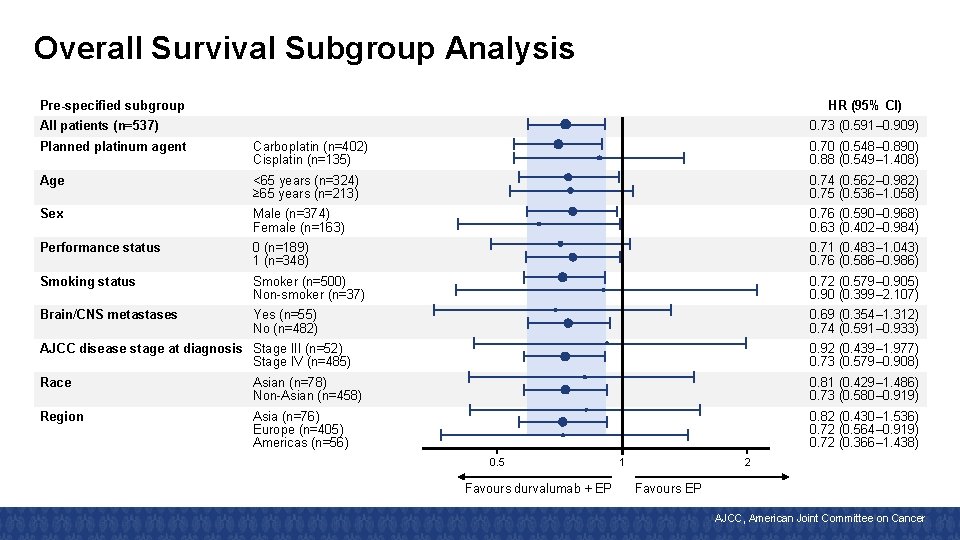
Overall Survival Subgroup Analysis Pre-specified subgroup HR (95% CI) All patients (n=537) 0. 73 (0. 591– 0. 909) Planned platinum agent Carboplatin (n=402) Cisplatin (n=135) 0. 70 (0. 548– 0. 890) 0. 88 (0. 549– 1. 408) Age <65 years (n=324) ≥ 65 years (n=213) 0. 74 (0. 562– 0. 982) 0. 75 (0. 536– 1. 058) Sex Male (n=374) Female (n=163) 0. 76 (0. 590– 0. 968) 0. 63 (0. 402– 0. 984) Performance status 0 (n=189) 1 (n=348) 0. 71 (0. 483– 1. 043) 0. 76 (0. 586– 0. 986) Smoking status Smoker (n=500) Non-smoker (n=37) 0. 72 (0. 579– 0. 905) 0. 90 (0. 399– 2. 107) Brain/CNS metastases Yes (n=55) No (n=482) 0. 69 (0. 354– 1. 312) 0. 74 (0. 591– 0. 933) AJCC disease stage at diagnosis Stage III (n=52) Stage IV (n=485) 0. 92 (0. 439– 1. 977) 0. 73 (0. 579– 0. 908) Race Asian (n=78) Non-Asian (n=458) 0. 81 (0. 429– 1. 486) 0. 73 (0. 580– 0. 919) Region Asia (n=76) Europe (n=405) Americas (n=56) 0. 82 (0. 430– 1. 536) 0. 72 (0. 564– 0. 919) 0. 72 (0. 366– 1. 438) 0. 5 Favours durvalumab + EP 1 2 Favours EP AJCC, American Joint Committee on Cancer
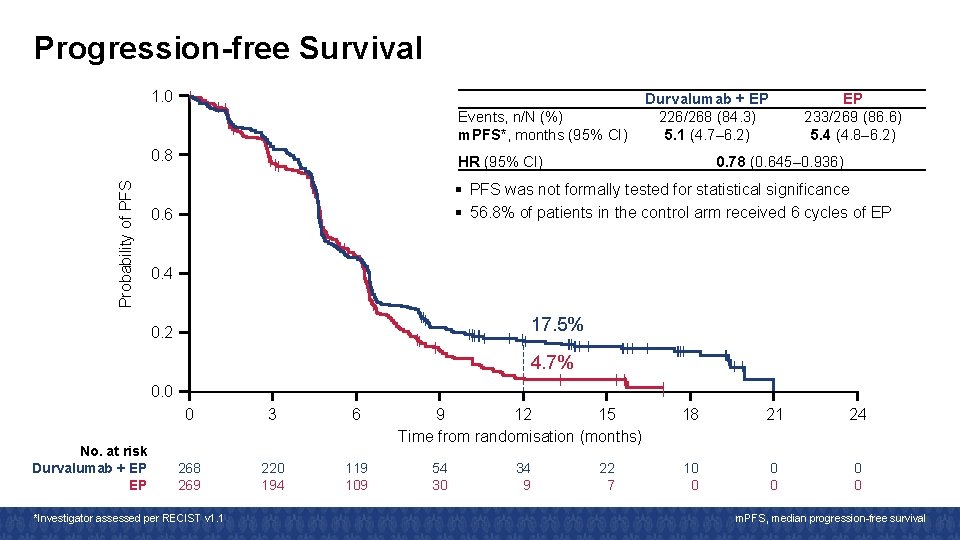
Progression-free Survival 1. 0 Probability of PFS Events, n/N (%) m. PFS*, months (95% CI) Durvalumab + EP 226/268 (84. 3) 5. 1 (4. 7– 6. 2) EP 233/269 (86. 6) 5. 4 (4. 8– 6. 2) 0. 8 HR (95% CI) 0. 6 § PFS was not formally tested for statistical significance § 56. 8% of patients in the control arm received 6 cycles of EP 0. 78 (0. 645– 0. 936) 0. 4 17. 5% 0. 2 4. 7% 0. 0 No. at risk Durvalumab + EP EP 0 3 6 268 269 220 194 119 109 *Investigator assessed per RECIST v 1. 1 9 12 15 Time from randomisation (months) 54 30 34 9 22 7 18 21 24 10 0 0 m. PFS, median progression-free survival
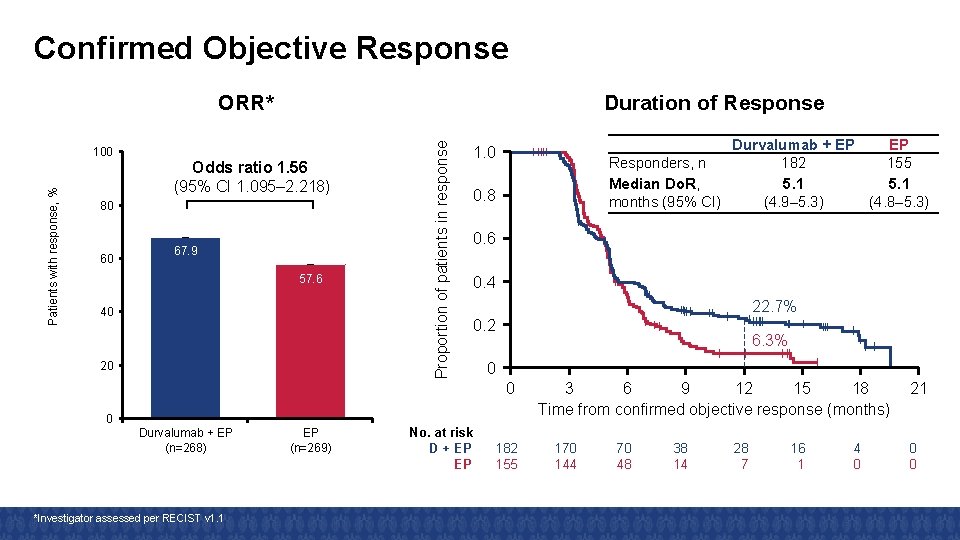
Confirmed Objective Response Patients with response, % 100 Duration of Response Odds ratio 1. 56 (95% CI 1. 095– 2. 218) 80 60 67. 9 57. 6 40 20 Proportion of patients in response ORR* Durvalumab + EP EP Responders, n 182 155 Median Do. R, 5. 1 months (95% CI) (4. 9– 5. 3) (4. 8– 5. 3) 1. 0 0. 8 0. 6 0. 4 22. 7% 0. 2 6. 3% 0 0 0 Durvalumab + EP (n=268) *Investigator assessed per RECIST v 1. 1 EP (n=269) No. at risk D + EP EP 182 155 3 6 9 12 15 18 Time from confirmed objective response (months) 170 144 70 48 38 14 28 7 16 1 4 0 21 0 0