
Cuneiform Tracing the Development Objectives Define and identify
Cuneiform Tracing the Development
Objectives • Define and identify examples of – Pictograph – Ideograph – phonogram • Create written examples to represent objects, ideas, and sounds • Explain how the development of cuneiform affected Sumerian culture
Create a Nameplate • Your nameplate will be a way of displaying who you are, without words. • You will still explain it with words. • Check out my examples.
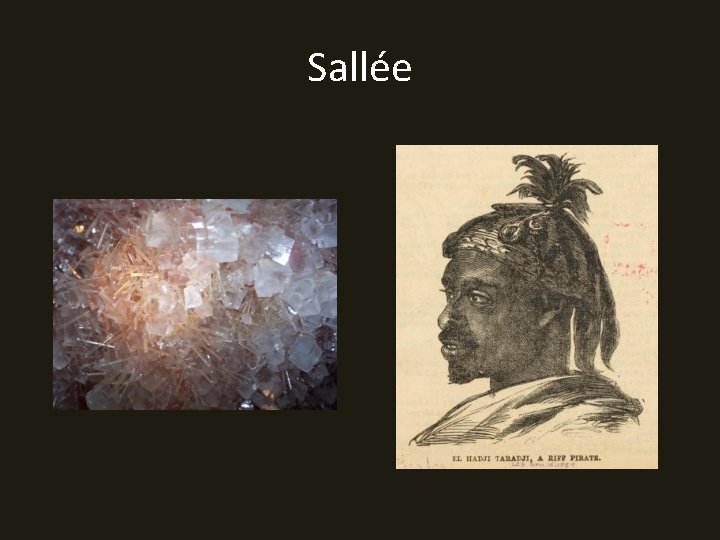
Sallée
Sallée • Sallee is a French word meaning “one who sells salt. ” • A “sallee-man” is Moorish pirate (from the city Sallee-Rabat in Morocco).
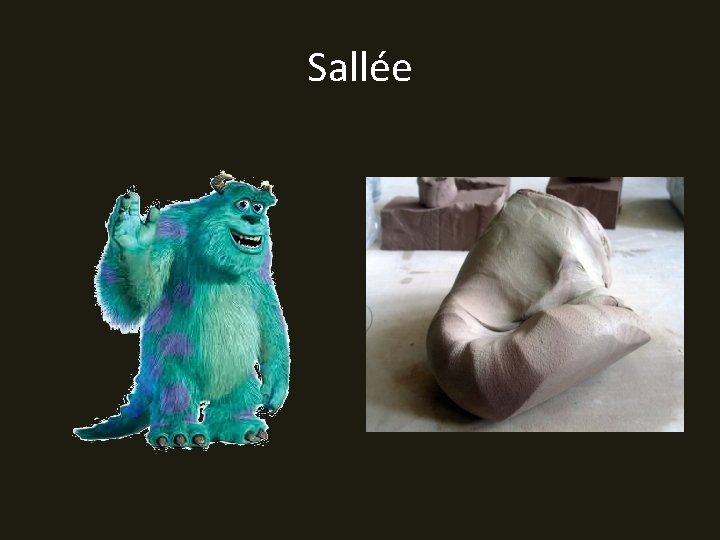
Sallée
Sallée • The first syllable of my name sounds like the beginning of the name of the monster from Monsters, Inc. • The end of my name rhymes with “clay. ”
Create a Nameplate • Draw a nameplate for yourself without using letters or numbers. – Draw two or three simple illustrations. – Your illustrations could represent: • Your name’s pronunciation or meaning, or • Things that are important to you. • Write an explanation describing how you represented your name.
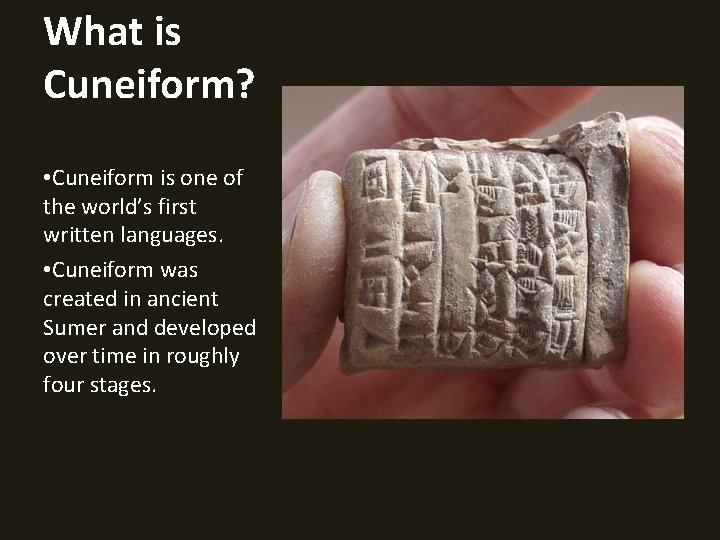
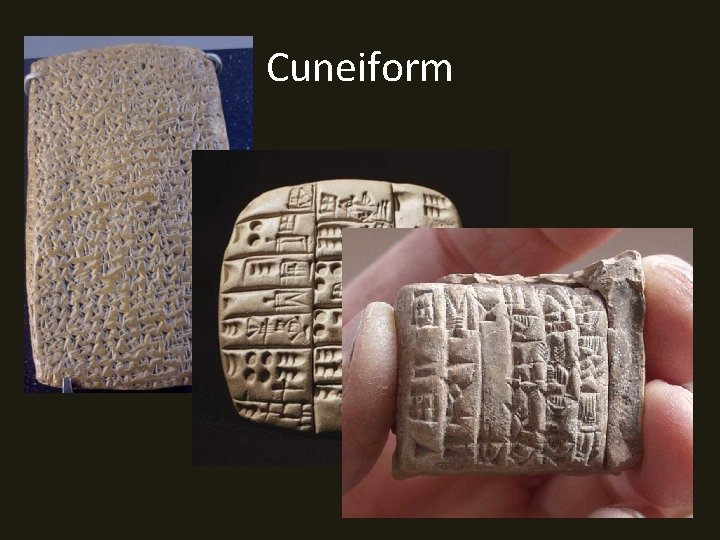
What is Cuneiform? • Cuneiform is one of the world’s first written languages. • Cuneiform was created in ancient Sumer and developed over time in roughly four stages.

Some Examples of Cuneiform

Pictographs • Pictographs are written symbols that represent real objects. They are not exact representations of the objects but are close enough that people can immediately recognize them.
Pictographs • The first stage in the development of cuneiform used pictographs. Some of the earliest records, dated to about 3100 BCE appear to be lists that combine letters and numbers, such as “ 12 cows. ”
Pictographs • Scribes used sharpened reeds to scratch these symbols into wet clay. When dried, the hardened tablets became permanent written records.
Pictographs • Create a new section on your paper titled “Pictographs” and create a 3 x 3 table. The boxes should be big enough to write one word inside.
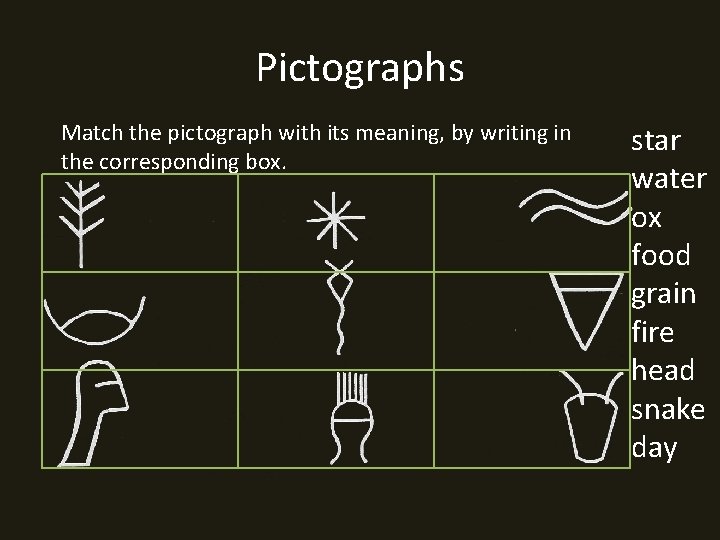
Pictographs Match the pictograph with its meaning, by writing in the corresponding box. star water ox food grain fire head snake day
Pictograph Questions Below your table, answer the following questions 1. What is a pictograph? 2. What were the earliest pictographs likely used to record?
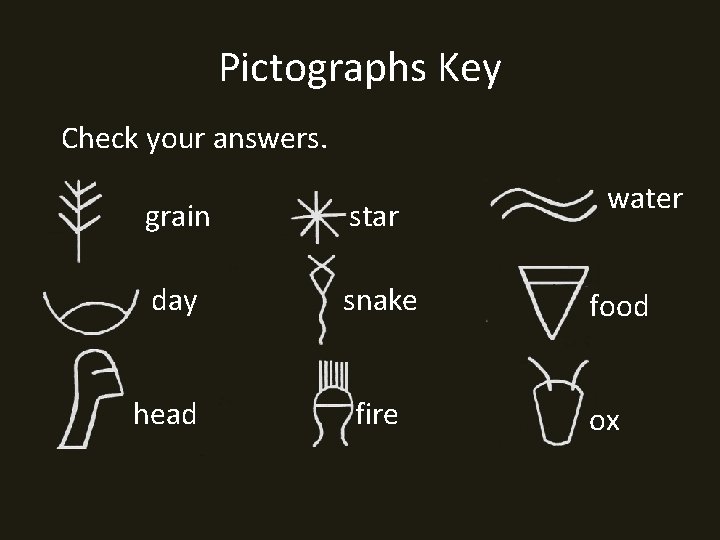
Pictographs Key Check your answers. grain star day snake head fire water food ox
Pictograph Answers 1. What is a pictograph? A written symbol that represents a real object. 2. What were the earliest pictographs likely used to record? The number of animals someone owned.
Ideographs • Scribes discovered pictographs were too limiting because they could not represent complex concepts. • The second stage in the development of cuneiform involved ideographs.
Ideographs • Ideographs are pictographs which represent ideas, instead of just things.
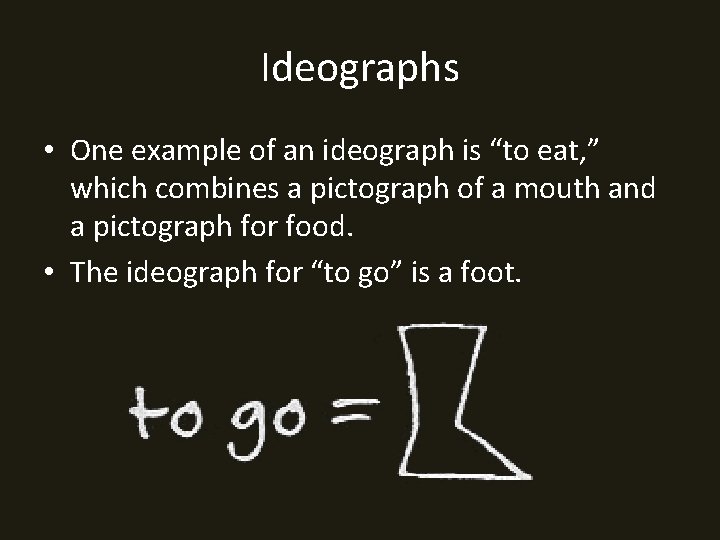
Ideographs • One example of an ideograph is “to eat, ” which combines a pictograph of a mouth and a pictograph for food. • The ideograph for “to go” is a foot.
Ideographs • Create a new section on your paper titled “Ideographs” and create a 3 x 3 table. The boxes should be big enough to write one word inside.

Ideographs Match the ideograph with its meaning by writing it in the corresponding box. prayer angry garden love eat long large meal month
Ideograph Question Beneath your table, answer this question. What is an ideograph?
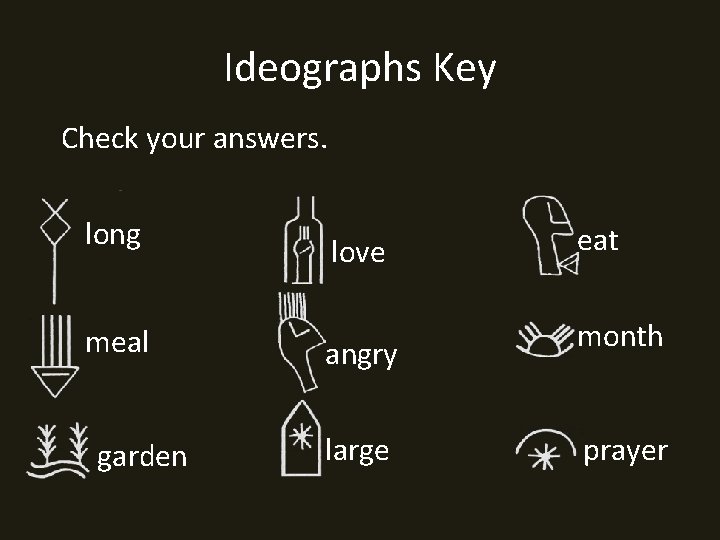
Ideographs Key Check your answers. long meal garden love angry large eat month prayer
Ideograph Answers What is an ideograph? A pictograph that represents an idea instead of a thing.
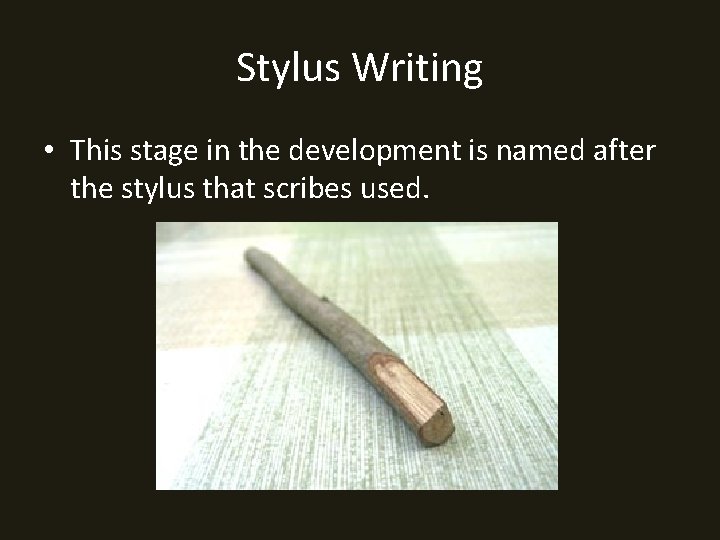
Stylus Writing • This stage in the development is named after the stylus that scribes used.
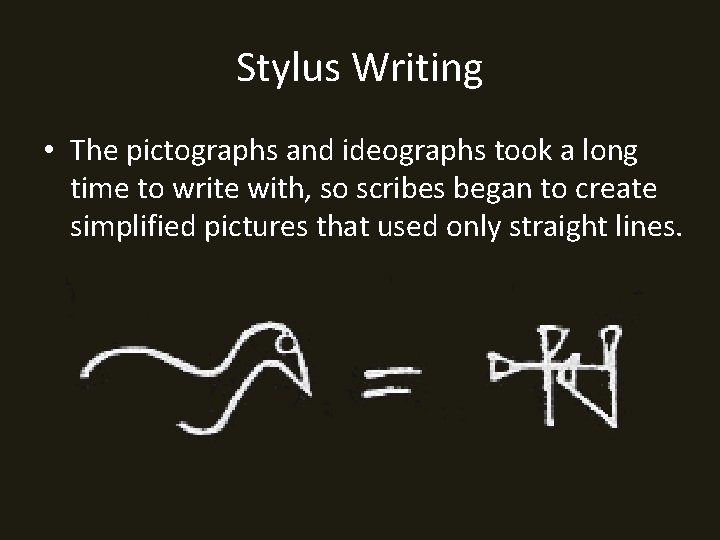
Stylus Writing • The pictographs and ideographs took a long time to write with, so scribes began to create simplified pictures that used only straight lines.
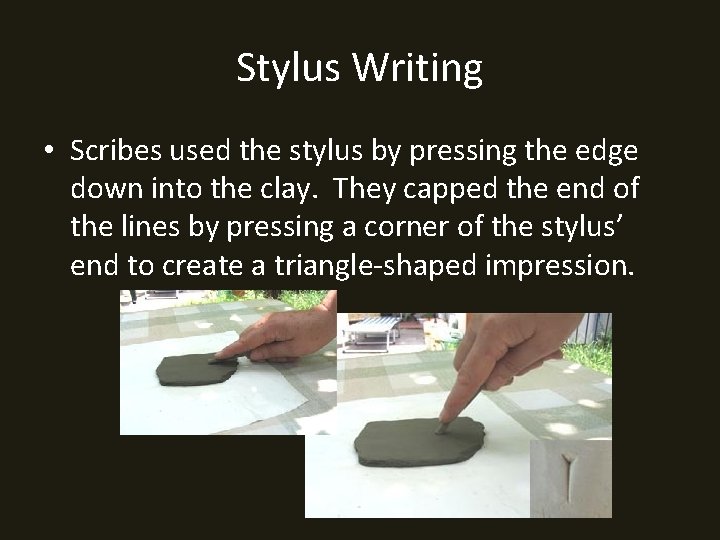
Stylus Writing • Scribes used the stylus by pressing the edge down into the clay. They capped the end of the lines by pressing a corner of the stylus’ end to create a triangle-shaped impression.
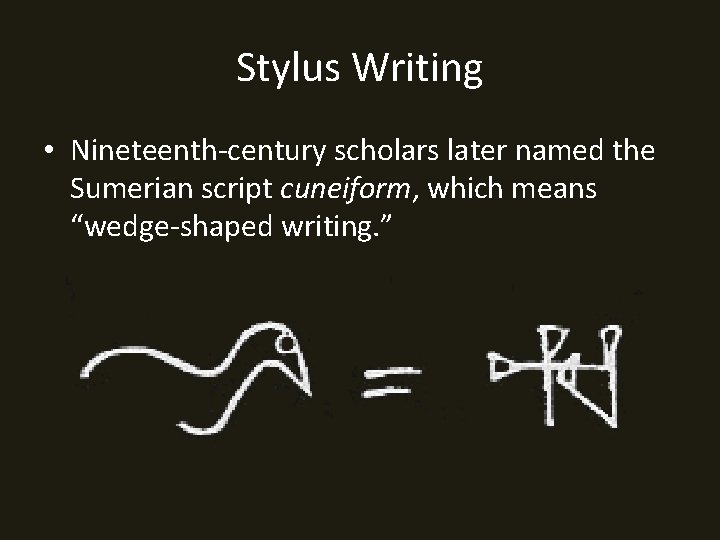
Stylus Writing • Nineteenth-century scholars later named the Sumerian script cuneiform, which means “wedge-shaped writing. ”
Stylus Writing • Create a new section on your paper titled “Stylus Writing” and create a 3 x 3 table. The boxes should be big enough to draw a small picture inside.

Stylus Writing Match the stylus writing with its cuneiform by drawing the stylus drawing in the corresponding box.
Stylus Writing Questions Below your table, answer the following questions. 1. What makes the triangles in cuneiform? 2. What does “cuneiform” mean?
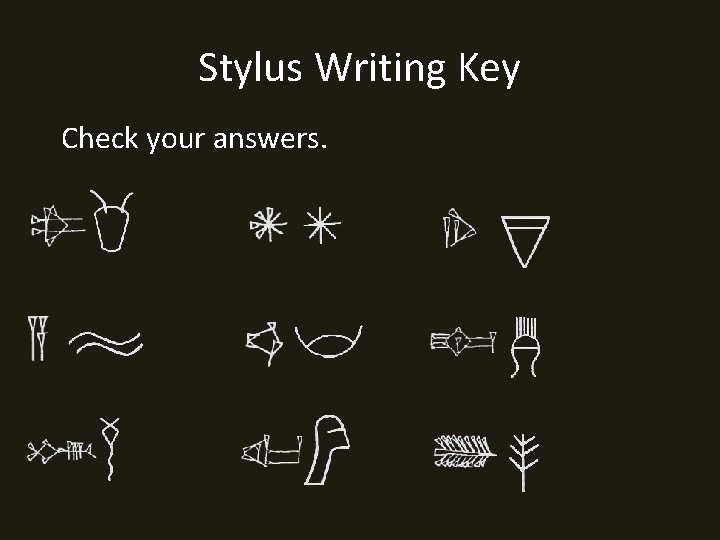
Stylus Writing Key Check your answers.
Stylus Writing Answers 1. What makes the triangles in cuneiform? The scribes pushed the end of the stylus into the clay 2. What does “cuneiform” mean? Wedge-shaped writing
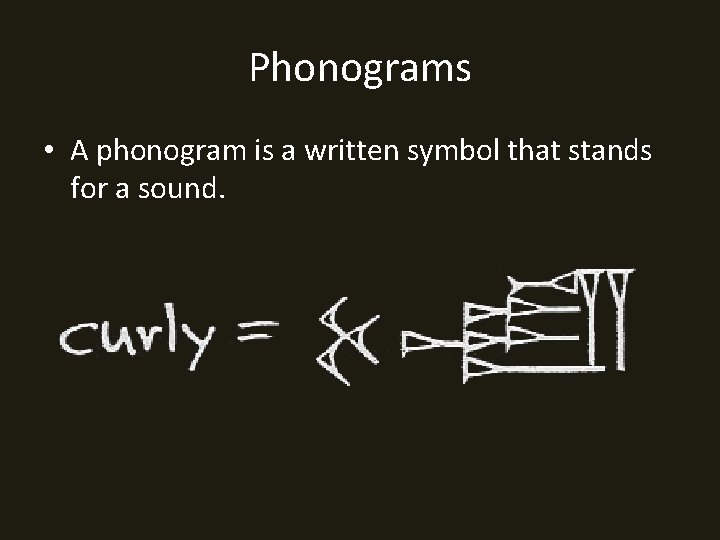
Phonograms • A phonogram is a written symbol that stands for a sound.
Phonograms • This stage of the development of cuneiform was the most important. It allowed Sumerians to greatly increase the number of words in their written vocabulary. • The symbols were now tied to sounds instead of ideas.
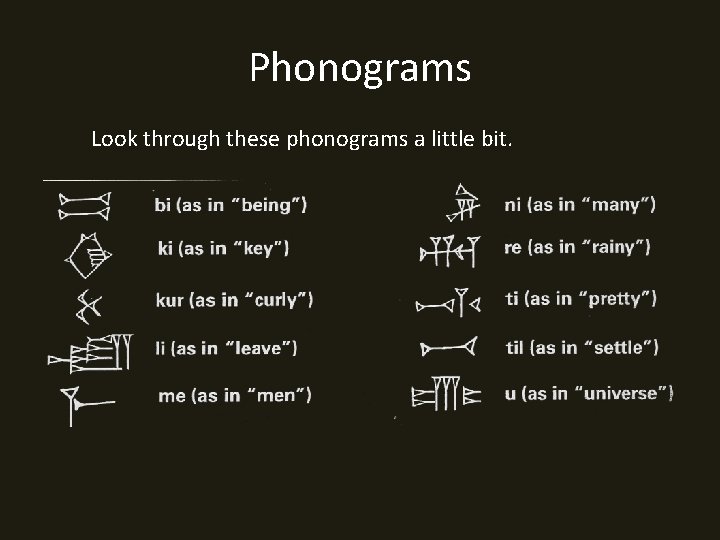
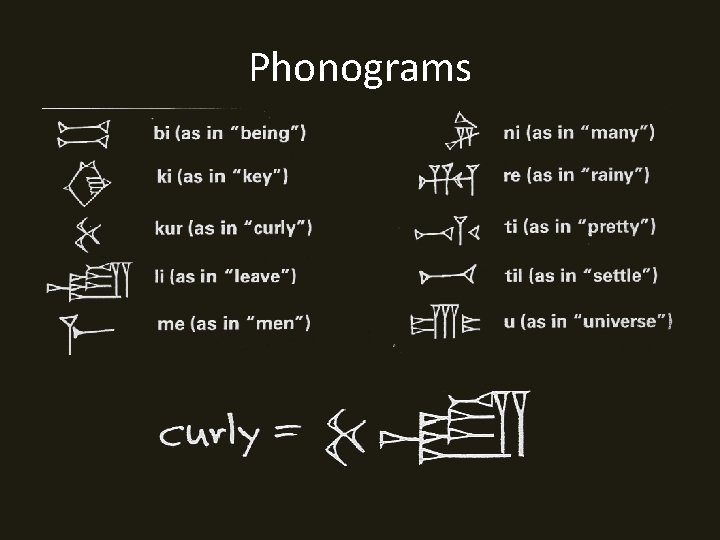
Phonograms Look through these phonograms a little bit.
Phonograms
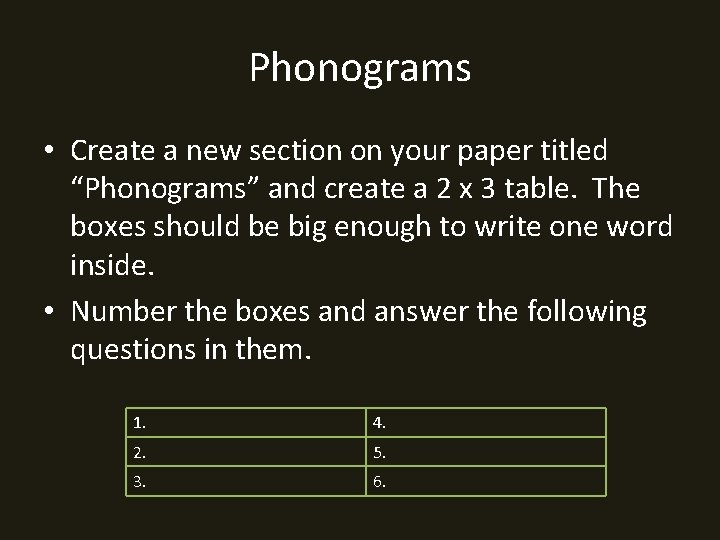
Phonograms • Create a new section on your paper titled “Phonograms” and create a 2 x 3 table. The boxes should be big enough to write one word inside. • Number the boxes and answer the following questions in them. 1. 4. 2. 5. 3. 6.
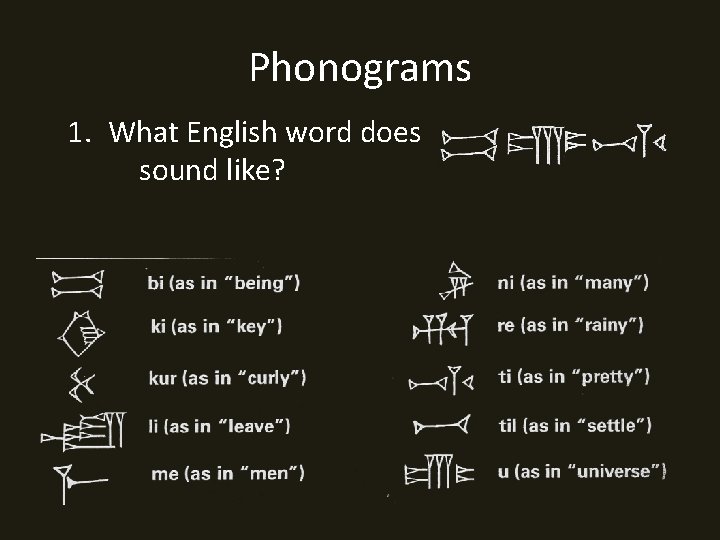
Phonograms 1. What English word does sound like?
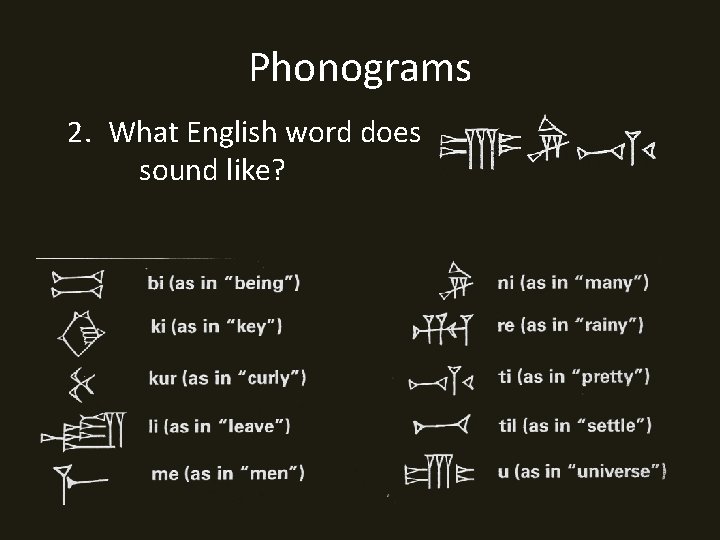
Phonograms 2. What English word does sound like?
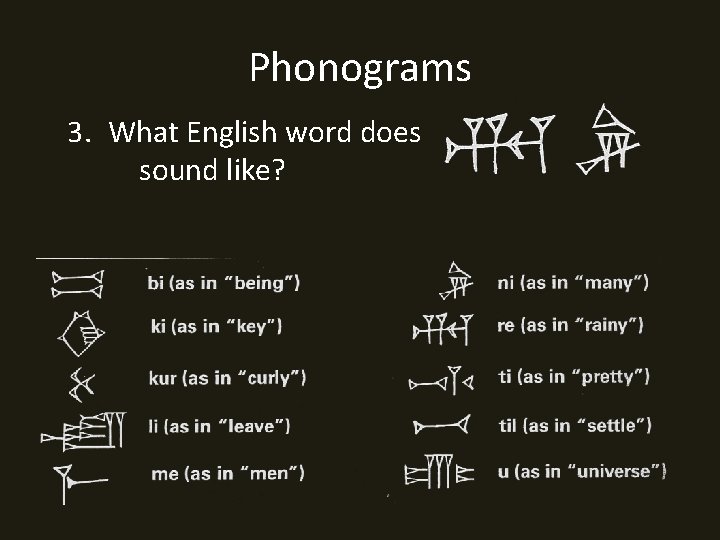
Phonograms 3. What English word does sound like?
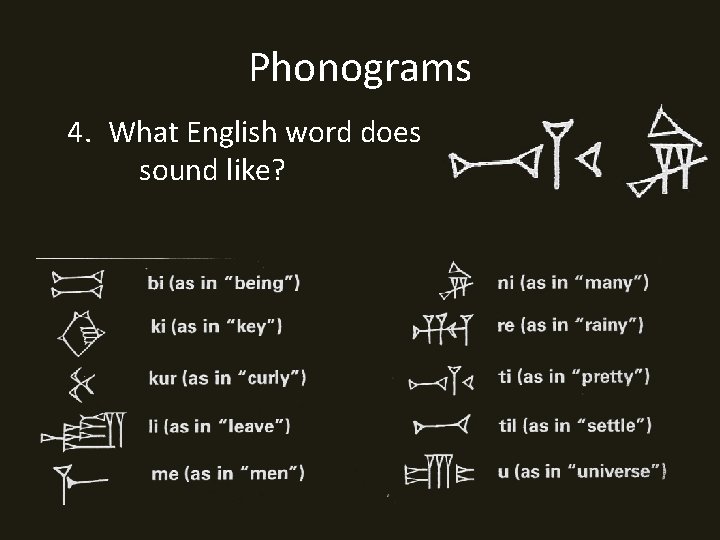
Phonograms 4. What English word does sound like?
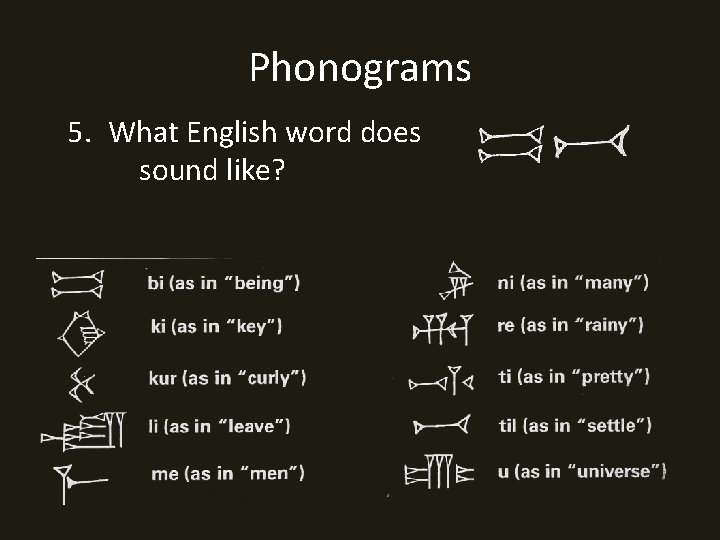
Phonograms 5. What English word does sound like?
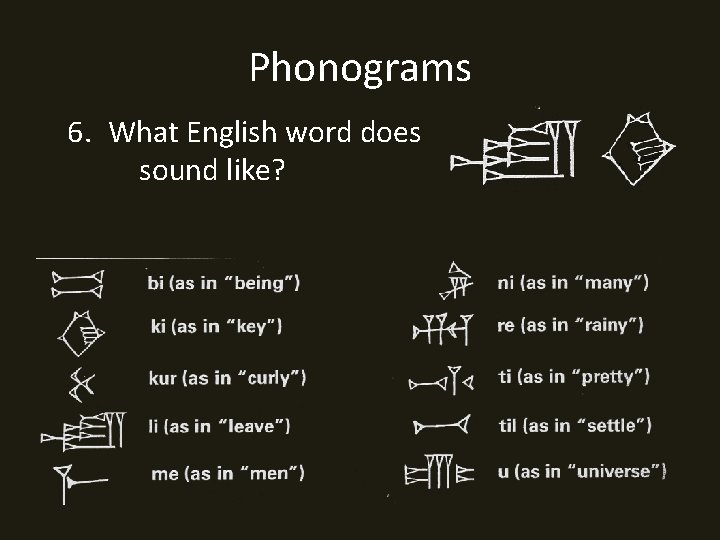
Phonograms 6. What English word does sound like?
Phonogram Questions Underneath your boxes, answer the following questions. 1. What is a phonogram? 2. Why are they important?
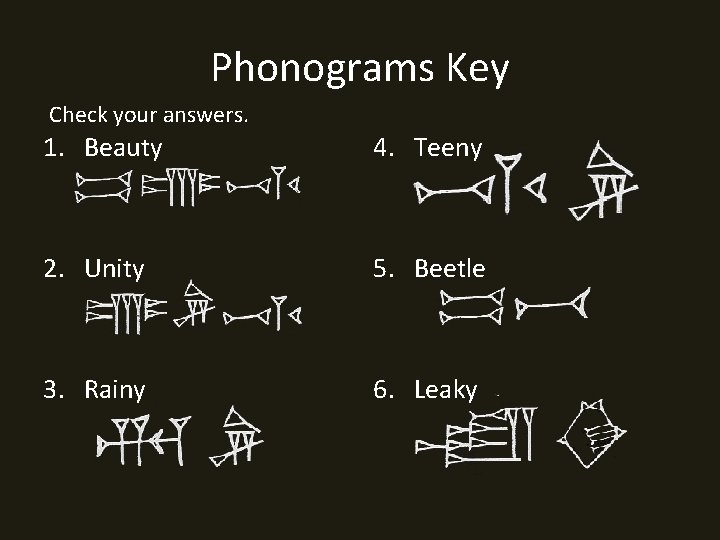
Phonograms Key Check your answers. 1. Beauty 4. Teeny 2. Unity 5. Beetle 3. Rainy 6. Leaky
Phonogram Questions 1. What is a phonogram? A written symbol that represents a sound. 2. Why are they important? It is possible to write more words than with any of the three previous stages of development
Cuneiform
- Slides: 51