
CUNA Current Expected Credit Loss CECL e School

- Slides: 26
CUNA Current Expected Credit Loss (CECL) e. School An Overview Dan Price, CPA, CFA President Twenty Analytics dprice@ttadata. com (Rev. ) In collaboration with
Agenda What? Why? How? When? 2
What is CECL? New Credit Loss Methodology Life of Loan Losses Leverages Existing Credit Management Practices Forward Looking Information 3
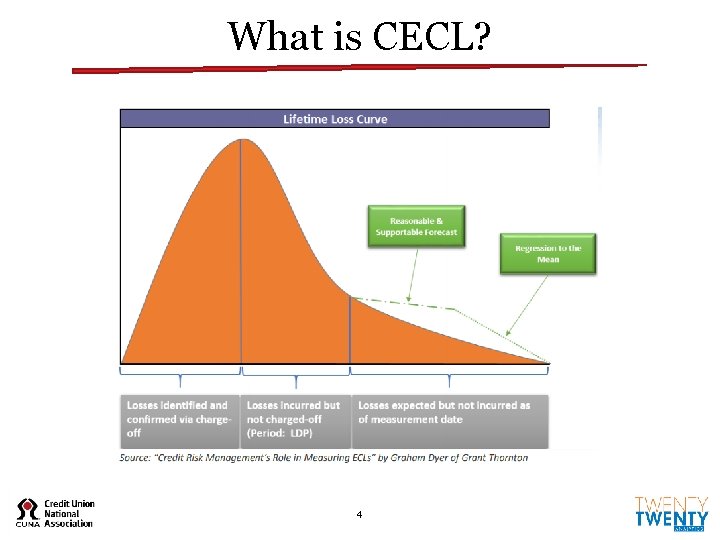
What is CECL? 4
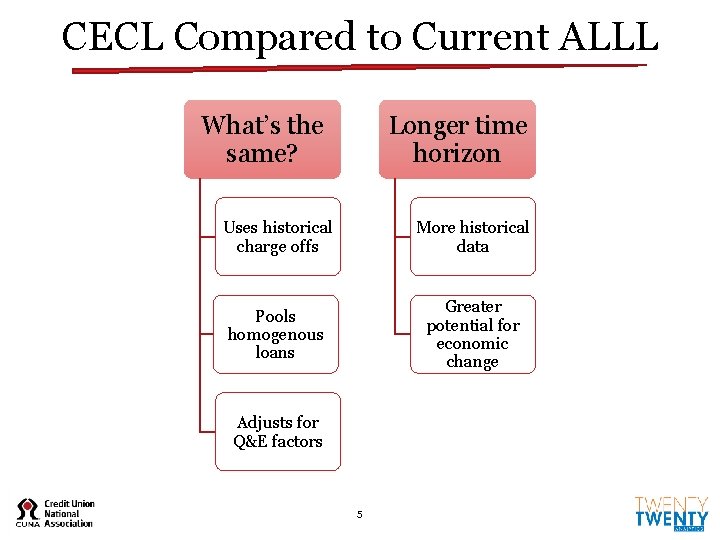
CECL Compared to Current ALLL What’s the same? Longer time horizon Uses historical charge offs More historical data Pools homogenous loans Greater potential for economic change Adjusts for Q&E factors 5
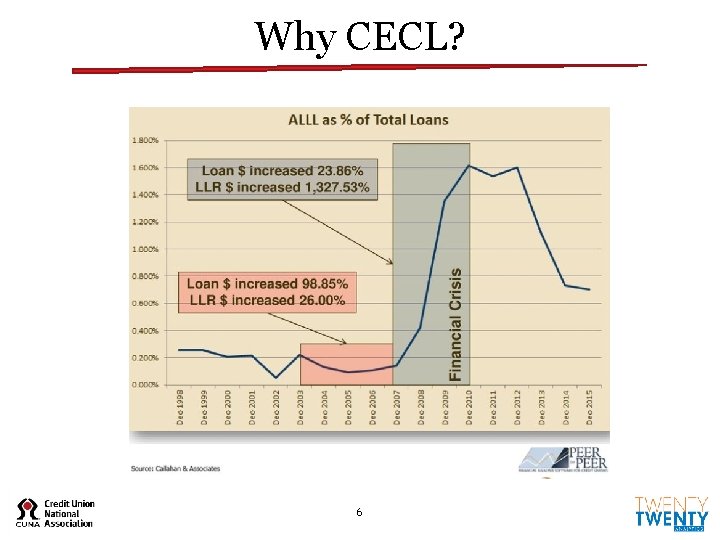
Why CECL? 6
Why NOT CECL? 7
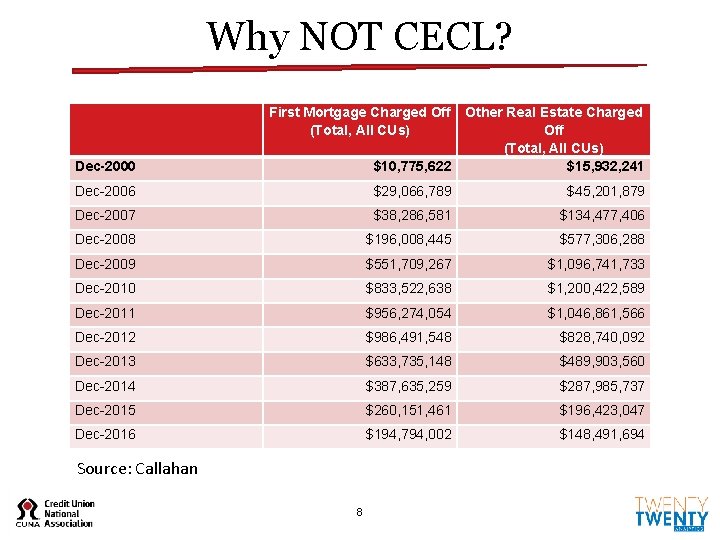
Why NOT CECL? Dec-2000 First Mortgage Charged Off Other Real Estate Charged (Total, All CUs) Off (Total, All CUs) $10, 775, 622 $15, 932, 241 Dec-2006 $29, 066, 789 $45, 201, 879 Dec-2007 $38, 286, 581 $134, 477, 406 Dec-2008 $196, 008, 445 $577, 306, 288 Dec-2009 $551, 709, 267 $1, 096, 741, 733 Dec-2010 $833, 522, 638 $1, 200, 422, 589 Dec-2011 $956, 274, 054 $1, 046, 861, 566 Dec-2012 $986, 491, 548 $828, 740, 092 Dec-2013 $633, 735, 148 $489, 903, 560 Dec-2014 $387, 635, 259 $287, 985, 737 Dec-2015 $260, 151, 461 $196, 423, 047 Dec-2016 $194, 794, 002 $148, 491, 694 Source: Callahan 8
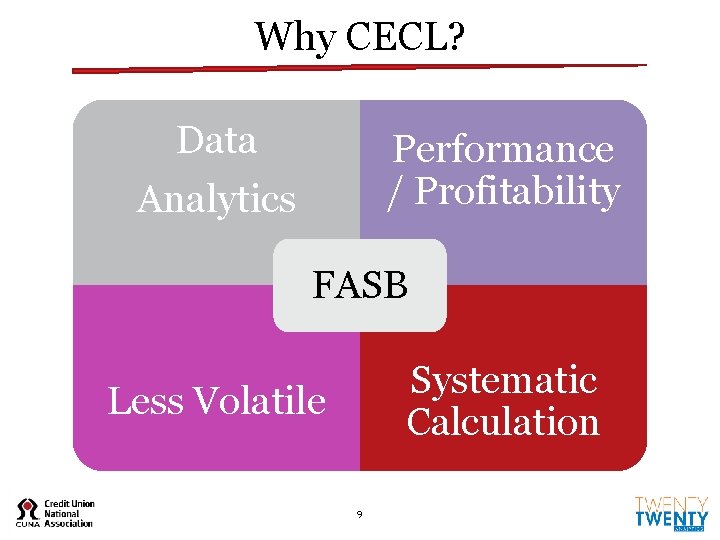
Why CECL? Data Analytics Performance / Profitability FASB Systematic Calculation Less Volatile 9
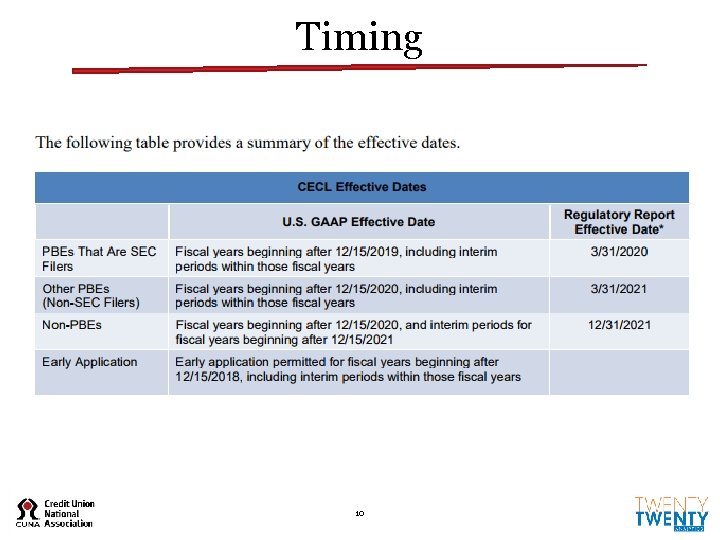
Timing 10
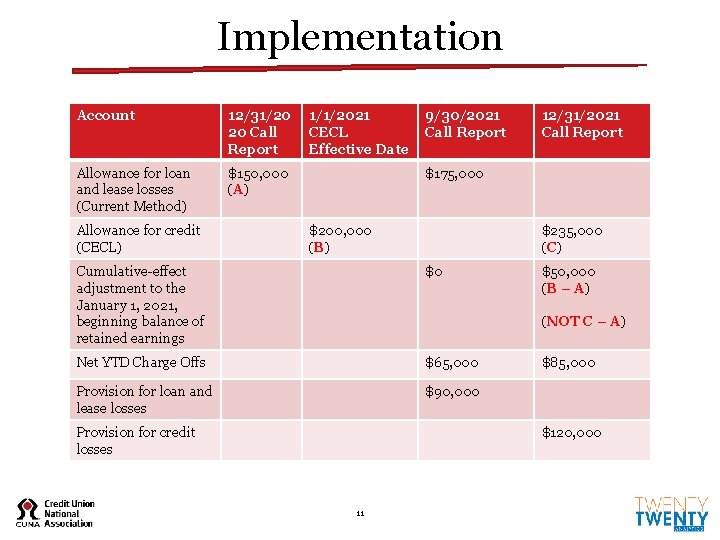
Implementation Account 12/31/20 20 Call Report Allowance for loan and lease losses (Current Method) $150, 000 (A) Allowance for credit (CECL) 1/1/2021 CECL Effective Date 9/30/2021 Call Report 12/31/2021 Call Report $175, 000 $200, 000 (B) $235, 000 (C) Cumulative-effect adjustment to the January 1, 2021, beginning balance of retained earnings $0 Net YTD Charge Offs $65, 000 Provision for loan and lease losses $90, 000 $50, 000 (B – A) (NOT C – A) Provision for credit losses $85, 000 $120, 000 11
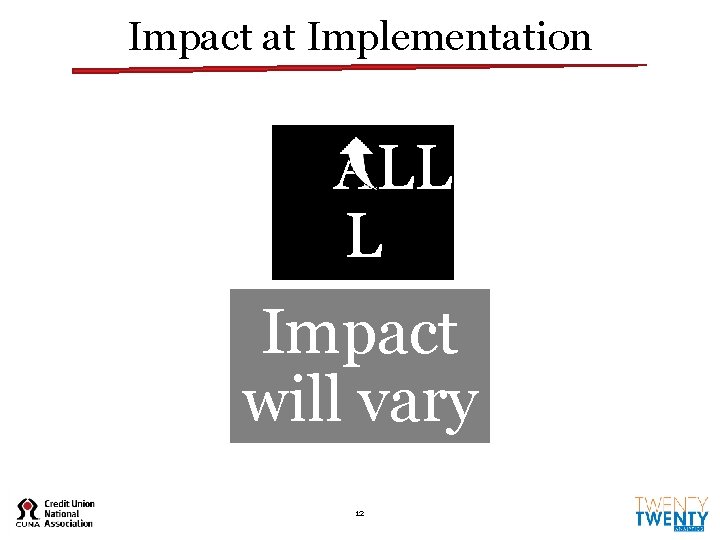
Impact at Implementation ALL L Impact will vary 12
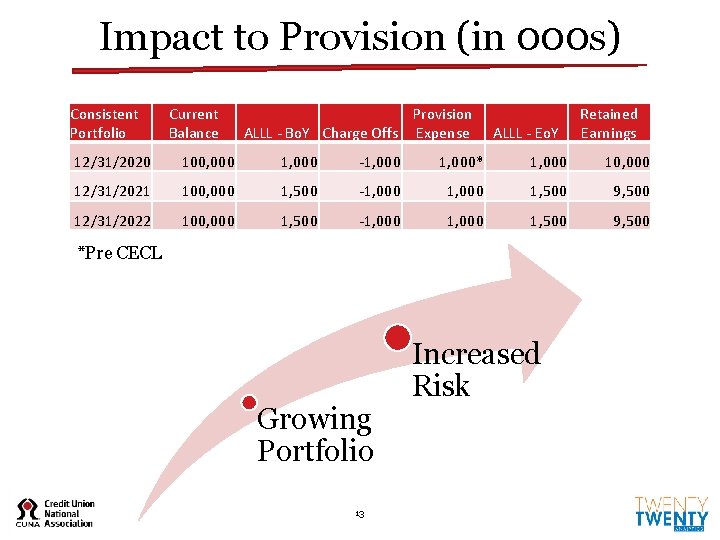
Impact to Provision (in 000 s) Consistent Portfolio Current Balance Provision ALLL - Bo. Y Charge Offs Expense ALLL - Eo. Y Retained Earnings 12/31/2020 100, 000 1, 000 -1, 000* 1, 000 10, 000 12/31/2021 100, 000 1, 500 -1, 000 1, 500 9, 500 12/31/2022 100, 000 1, 500 -1, 000 1, 500 9, 500 *Pre CECL Growing Portfolio 13 Increased Risk
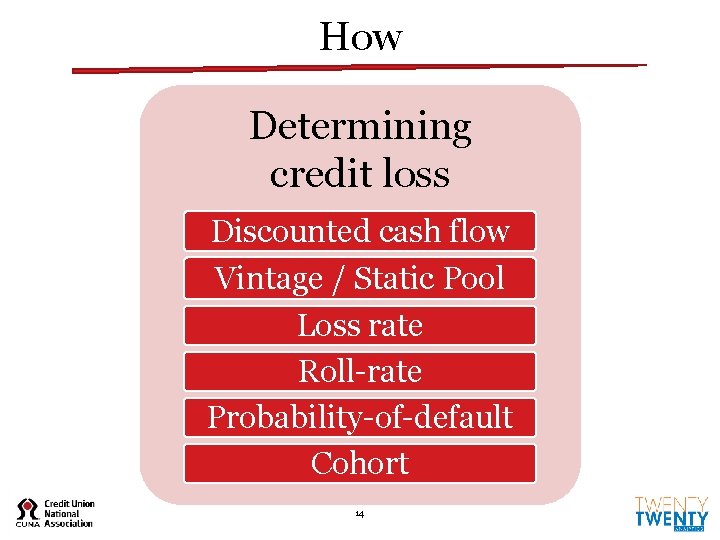
How Determining credit loss Discounted cash flow Vintage / Static Pool Loss rate Roll-rate Probability-of-default Cohort 14
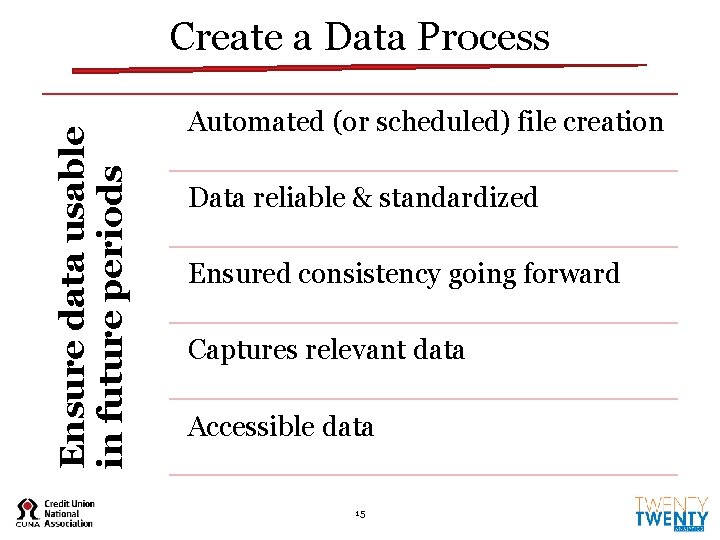
Ensure data usable in future periods Create a Data Process Automated (or scheduled) file creation Data reliable & standardized Ensured consistency going forward Captures relevant data Accessible data 15
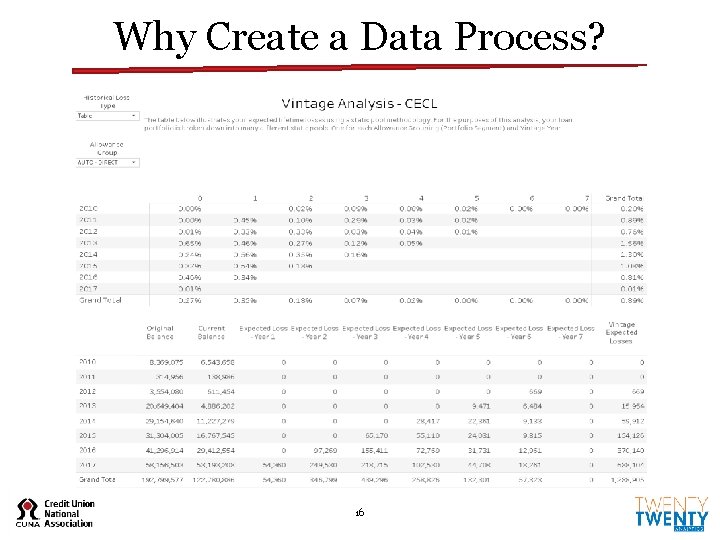
Why Create a Data Process? 16
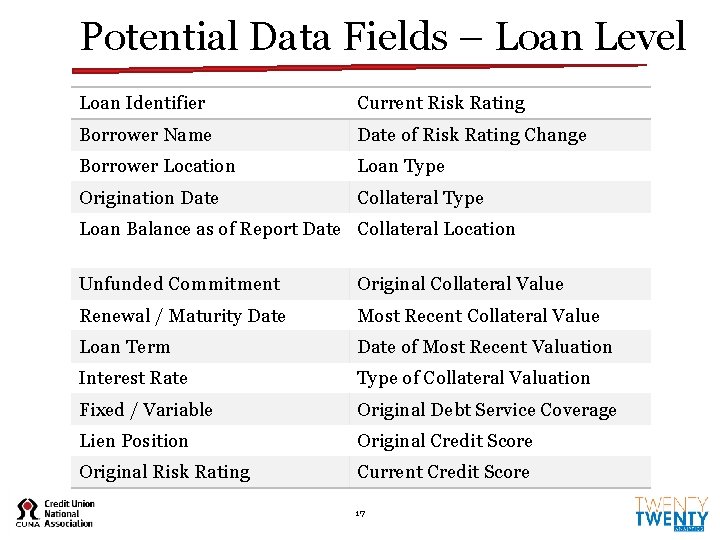
Potential Data Fields – Loan Level Loan Identifier Current Risk Rating Borrower Name Date of Risk Rating Change Borrower Location Loan Type Origination Date Collateral Type Loan Balance as of Report Date Collateral Location Unfunded Commitment Original Collateral Value Renewal / Maturity Date Most Recent Collateral Value Loan Term Date of Most Recent Valuation Interest Rate Type of Collateral Valuation Fixed / Variable Original Debt Service Coverage Lien Position Original Credit Score Original Risk Rating Current Credit Score 17
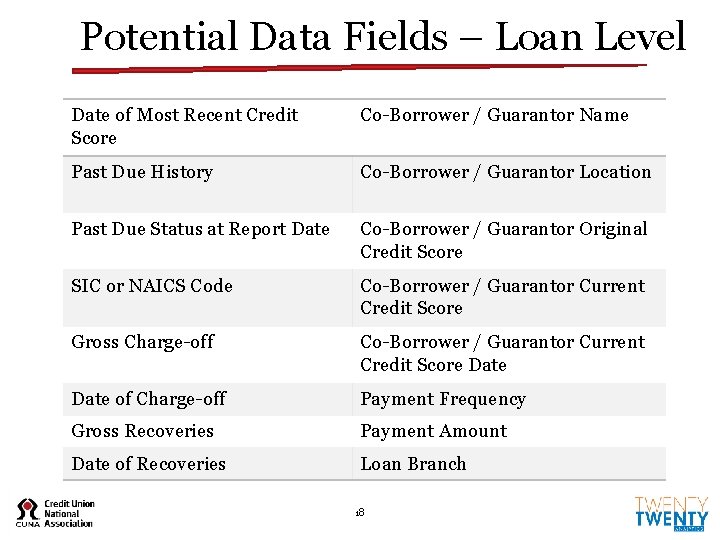
Potential Data Fields – Loan Level Date of Most Recent Credit Score Co-Borrower / Guarantor Name Past Due History Co-Borrower / Guarantor Location Past Due Status at Report Date Co-Borrower / Guarantor Original Credit Score SIC or NAICS Code Co-Borrower / Guarantor Current Credit Score Gross Charge-off Co-Borrower / Guarantor Current Credit Score Date of Charge-off Payment Frequency Gross Recoveries Payment Amount Date of Recoveries Loan Branch 18
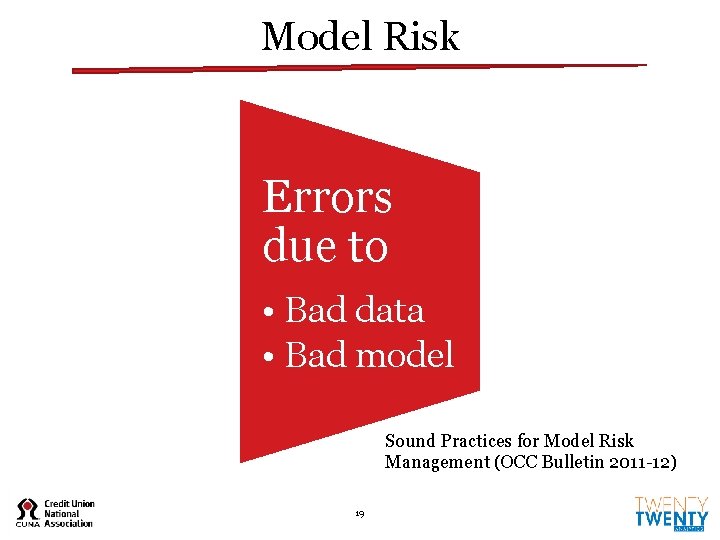
Model Risk Errors due to • Bad data • Bad model Sound Practices for Model Risk Management (OCC Bulletin 2011 -12) 19
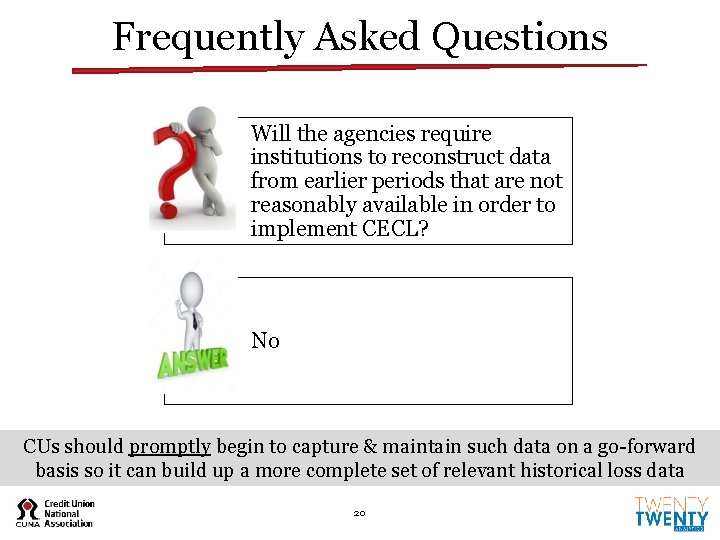
Frequently Asked Questions Will the agencies require institutions to reconstruct data from earlier periods that are not reasonably available in order to implement CECL? No CUs should promptly begin to capture & maintain such data on a go-forward basis so it can build up a more complete set of relevant historical loss data 20
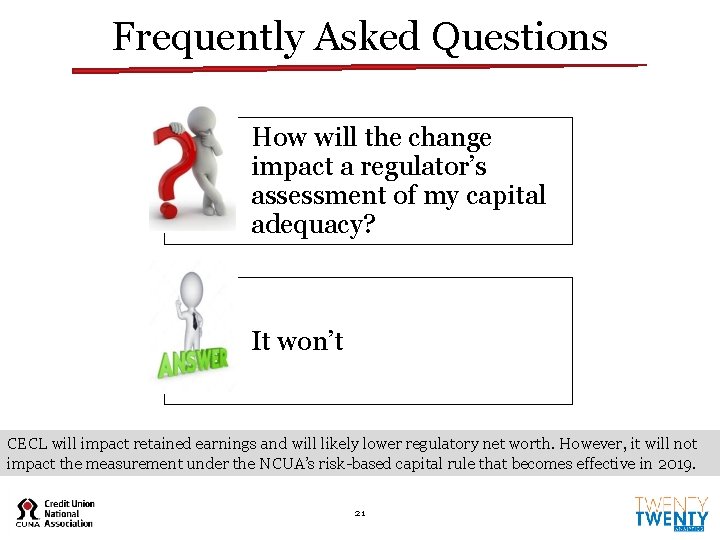
Frequently Asked Questions How will the change impact a regulator’s assessment of my capital adequacy? It won’t CECL will impact retained earnings and will likely lower regulatory net worth. However, it will not impact the measurement under the NCUA’s risk-based capital rule that becomes effective in 2019. 21
Facts, Timing, & Implementation Liability for Unfunded Commitments Under CECL, a liability for estimated losses on unfunded commitments should be calculated unless they are cancellable. Generally this does not include unfunded credit cards or lines of credit because they have the ability to unconditionally cancel. 22
Frequently Asked Questions Should institutions use third -party vendors to assist in measuring expected credit losses under CECL? Not required – If done, follow agencies’ guidance on third-party service providers. Ultimately CU is responsible for maintaining data, all supporting info & calculation of expected losses. 23
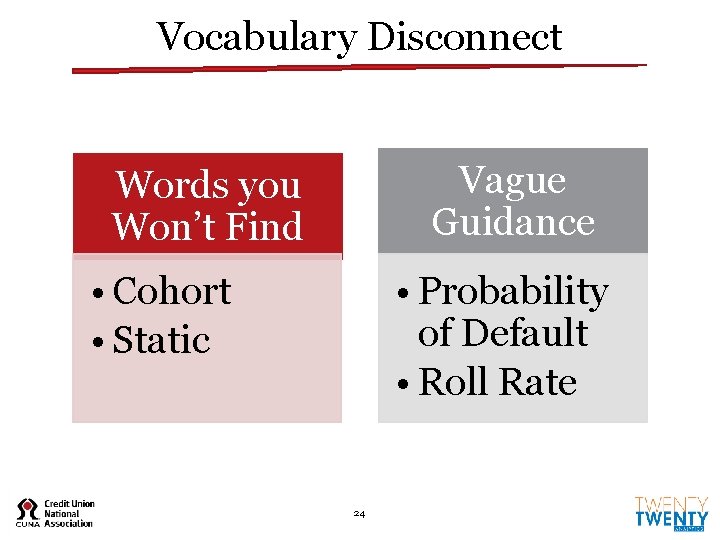
Vocabulary Disconnect Vague Guidance Words you Won’t Find • Cohort • Static • Probability of Default • Roll Rate 24
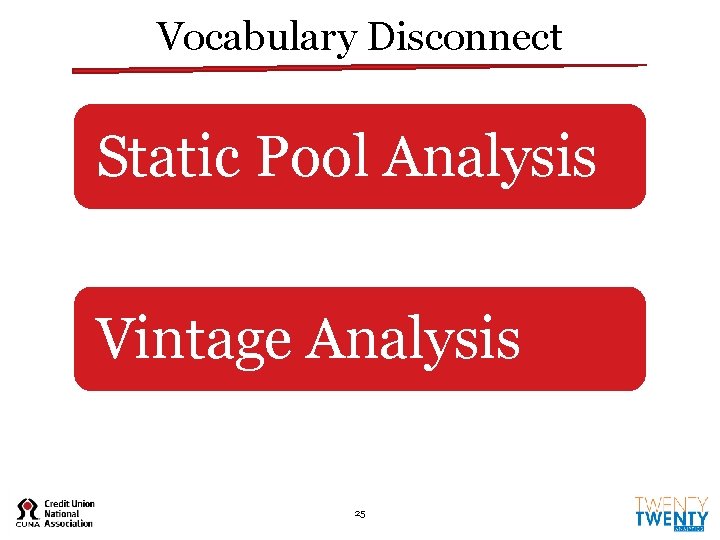
Vocabulary Disconnect Static Pool Analysis Vintage Analysis 25
Resources Interagency FAQ Transition Resource Group Landing Page IFRS 9 Implementation Guidance Deloitte Insights Landing Page Dan Price, CPA, CFA President Twenty Analytics dprice@ttadata. com (352) 634 -0042 26