
Cumulative Trauma Disorder Ideal Ergonomics Dr Osama Neyaz


- Slides: 28
Cumulative Trauma Disorder & Ideal Ergonomics Dr. Osama Neyaz Assistant Professor Department of PMR
Synonyms Cumulative trauma disorder Repetitive motion syndrome Repetitive strain injury Work related disorder Myofascial pain
Overview § Introduction § Definition § Patho-mechanics § Stages § Clinical feature § Clinical Evaluation § Treatment § Ergonomics
Introduction A. Cumulative: developed gradually over periods of weeks, months, or even years. cumulative concept: each repetition of an activity produces some trauma or wear and tear on the tissues and joints of the body. B. Trauma: bodily injury from mechanical stresses. C. Disorders: physical ailments or abnormal conditions.
Definition CTD are work-related musculoskeletal injuries that affect the musculoskeletal, peripheral nervous, and neurovascular systems that are caused or aggravated by occupational exposure to ergonomic hazards.
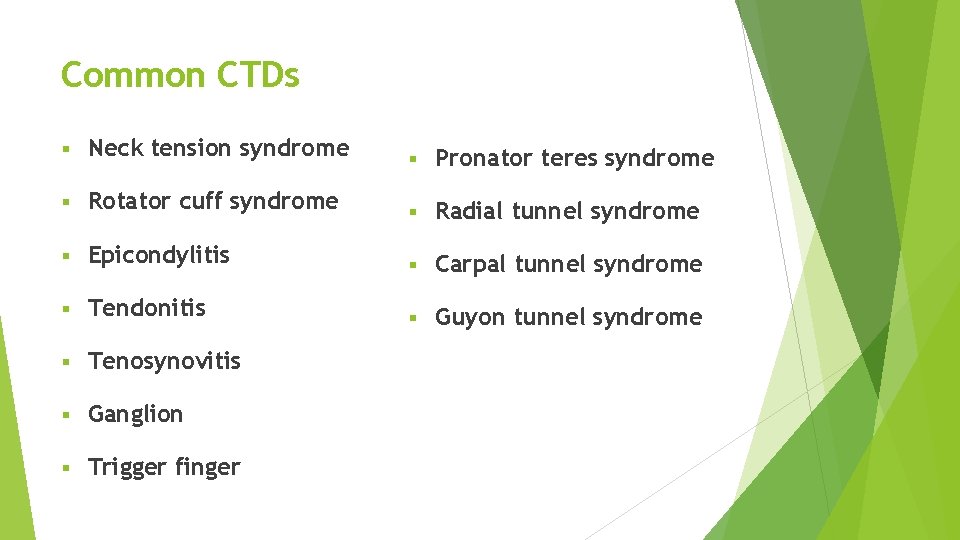
Common CTDs § Neck tension syndrome § Pronator teres syndrome § Rotator cuff syndrome § Radial tunnel syndrome § Epicondylitis § Carpal tunnel syndrome § Tendonitis § Guyon tunnel syndrome § Tenosynovitis § Ganglion § Trigger finger
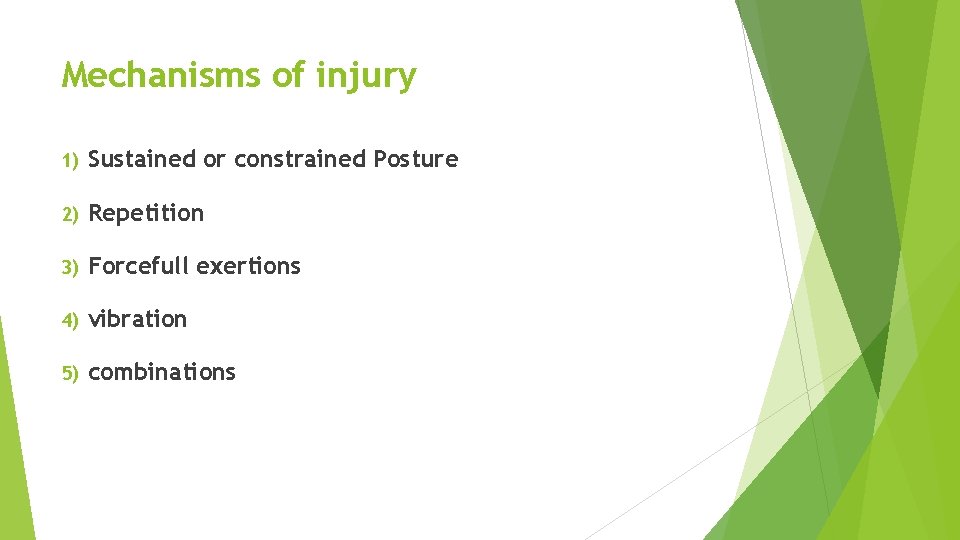
Mechanisms of injury 1) Sustained or constrained Posture 2) Repetition 3) Forcefull exertions 4) vibration 5) combinations
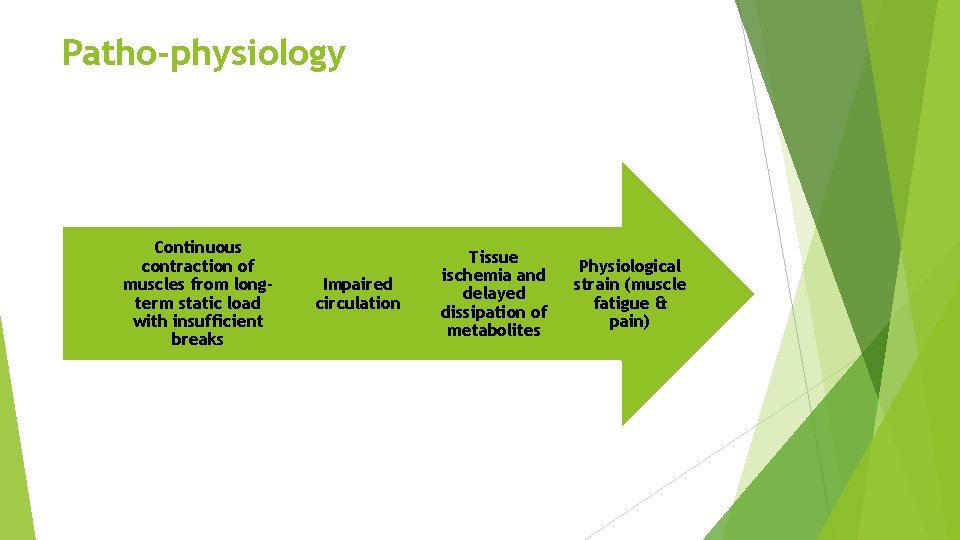
Patho-physiology Continuous contraction of muscles from longterm static load with insufficient breaks Impaired circulation Tissue ischemia and delayed dissipation of metabolites Physiological strain (muscle fatigue & pain)
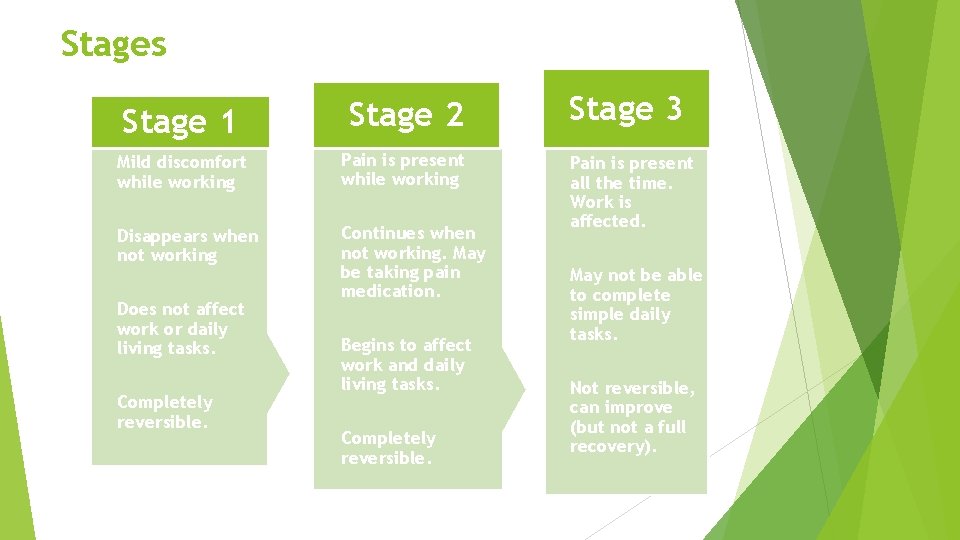
Stages Stage 1 Stage 2 Mild discomfort while working Pain is present while working Disappears when not working Continues when not working. May be taking pain medication. Does not affect work or daily living tasks. Completely reversible. Begins to affect work and daily living tasks. Completely reversible. Stage 3 Pain is present all the time. Work is affected. May not be able to complete simple daily tasks. Not reversible, can improve (but not a full recovery).
Signs and symptoms § Pain § Tenderness § Swelling § Unreasonable fatigue § Disturbed sleep § Tingling & Numbness § Difficulty performing tasks or moving specific parts of the body
Clinical Evaluation q Identifying the specific injury q Determine the degree to which the disorder is work related ‘Each disorder has different cause, treatment & prognosis’
History § Elicit the onset, location, duration, frequency, intensity of the symptoms § Whether symptoms started before or after employment § If symptoms exacerbated by the job § Previous injuries or fracture to that area § If any medical condition known to be associated with symptoms
Physical examination § Inspection for sign of inflammation, ganglia cysts or deformity § Palpation - warmth § Passive, active & resisted ROM § Special tests e. g. Phalen’s test, Finkelstein’s test
Medical conditions associated with CTD I. II. Amyloidosis Arthropathies & connective tissue disorders e. g. RA, SLE, gout, OA and Sp. A III. Cancer IV. Diabetes mellitus V. Hypothyroidism VI. Obesity VII. Pregnancy
LABORATORY TESTING § CBC § ESR and CRP § Serum RF, Antinuclear antigen (ANA), HLA-B 27 § Diabetic screening § S. TSH § S. calcium, phosphorus, uric acid, alkaline and acid phosphatase for metabolic, endocrine and neo-plastic conditions § Serum protein electrophoresis
Treatment Rehabilitation programme q Application of Heat and Cold q NSAIDs q Exercises q Splints q Surgical intervention if conservative trail fails.
Ergonomics “The science of studying people at work and then designing tasks, jobs, information, tools, equipment, facilities and the working environment so people can be safe and healthy, effective, productive and comfortable”* ‘Fitting the job to the worker’ *Ergonomic Design Guidelines, Auburn Engineering, Inc. , 1998.
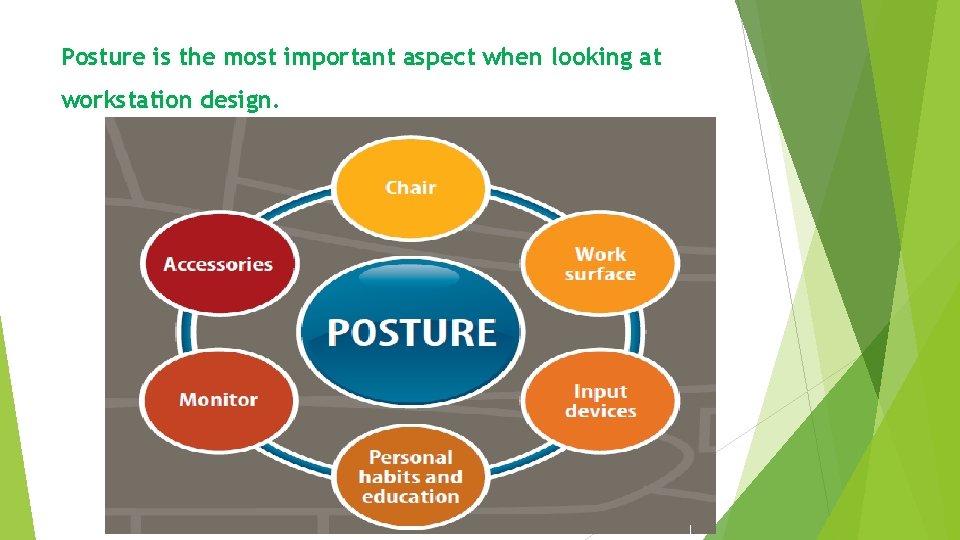
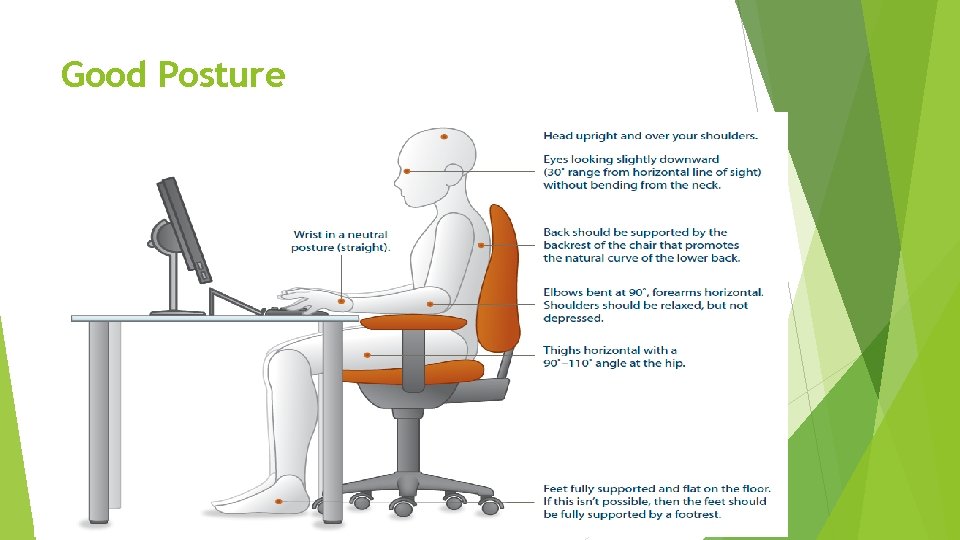
Posture is the most important aspect when looking at workstation design.
Chairs q Height q Back support q Seat tilt q Depth q Width q Armrests
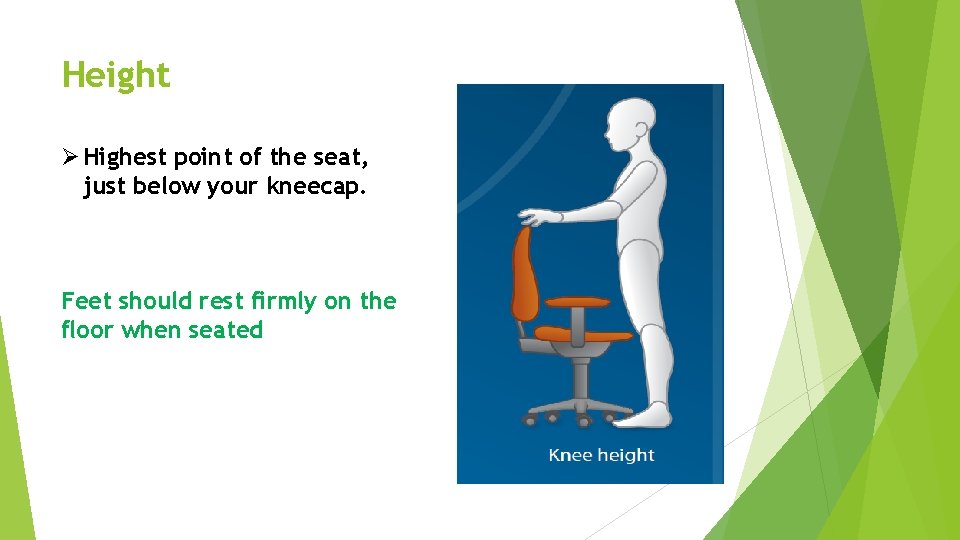
Height Ø Highest point of the seat, just below your kneecap. Feet should rest firmly on the floor when seated
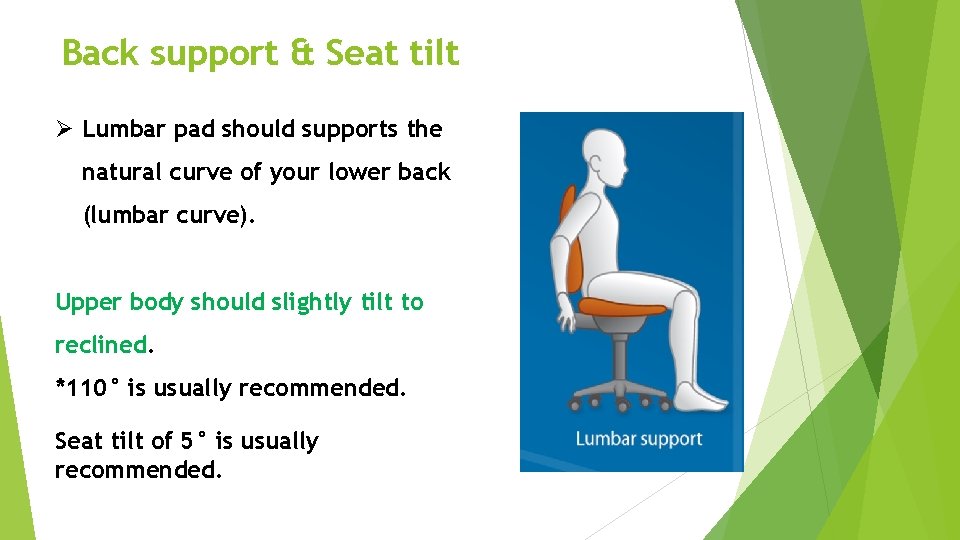
Back support & Seat tilt Ø Lumbar pad should supports the natural curve of your lower back (lumbar curve). Upper body should slightly tilt to reclined. *110° is usually recommended. Seat tilt of 5° is usually recommended.
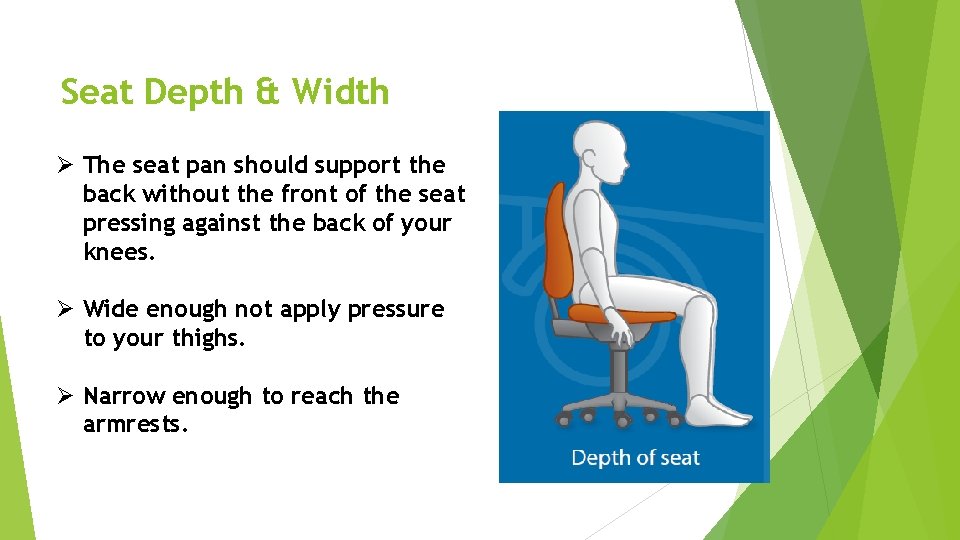
Seat Depth & Width Ø The seat pan should support the back without the front of the seat pressing against the back of your knees. Ø Wide enough not apply pressure to your thighs. Ø Narrow enough to reach the armrests.
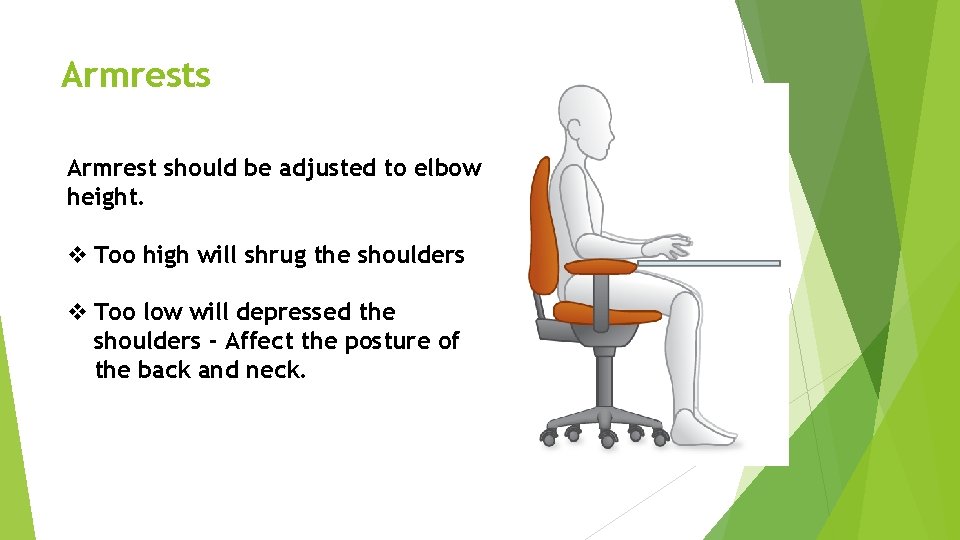
Armrests Armrest should be adjusted to elbow height. v Too high will shrug the shoulders v Too low will depressed the shoulders - Affect the posture of the back and neck.
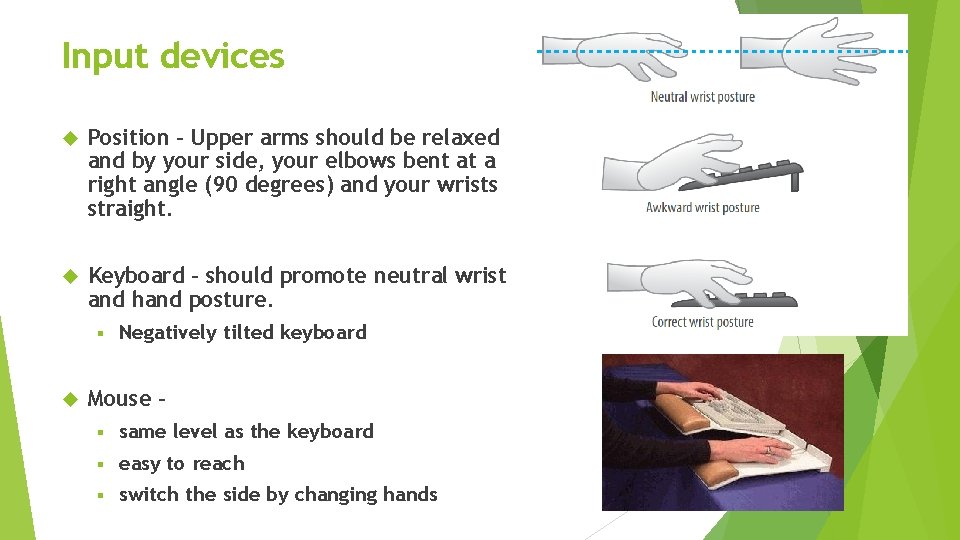
Input devices Position - Upper arms should be relaxed and by your side, your elbows bent at a right angle (90 degrees) and your wrists straight. Keyboard – should promote neutral wrist and hand posture. § Negatively tilted keyboard Mouse – § same level as the keyboard § easy to reach § switch the side by changing hands
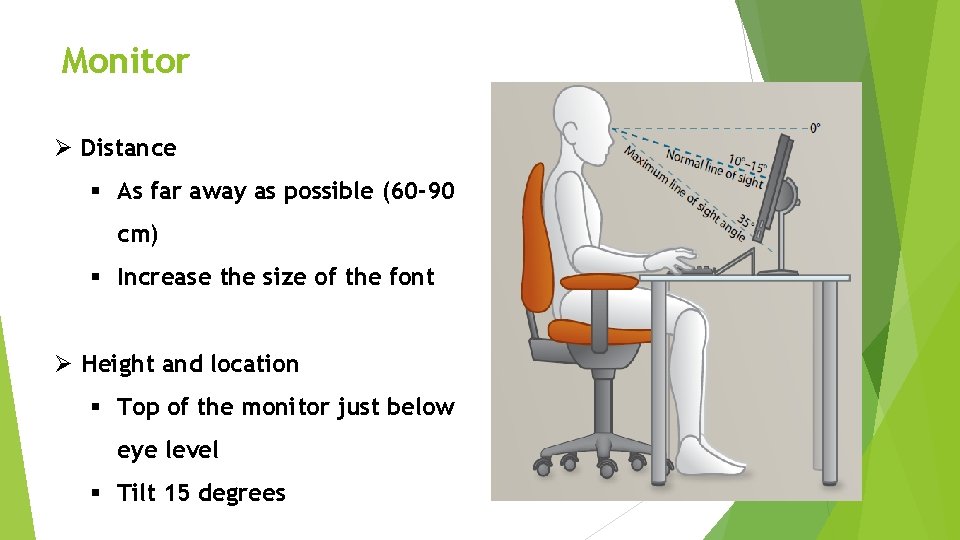
Monitor Ø Distance § As far away as possible (60 -90 cm) § Increase the size of the font Ø Height and location § Top of the monitor just below eye level § Tilt 15 degrees
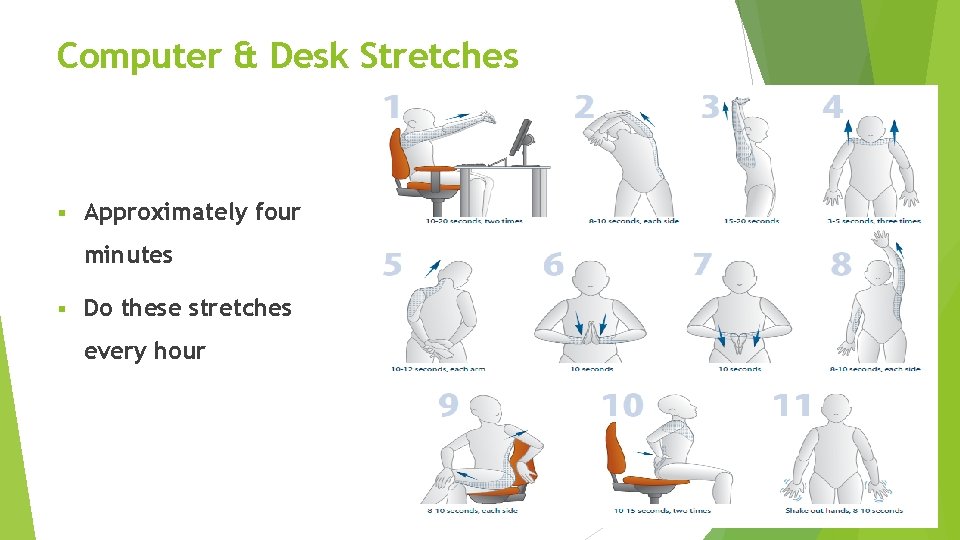
Computer & Desk Stretches § Approximately four minutes § Do these stretches every hour
Good Posture
Thank you