
Culvert and cross drainage design v Design parameters


- Slides: 22
Culvert and cross drainage design v Design parameters: climate, terrain, demographics and traffic v Road alignment and impact on erosion and water flows v Side drainage design and erosion problems v Culvert design and erosion problems v Problems into opportunities
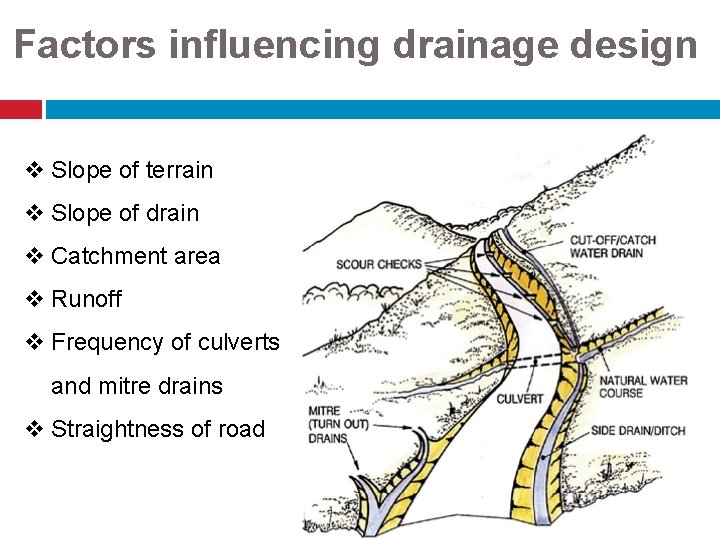
Factors influencing drainage design v Slope of terrain v Slope of drain v Catchment area v Runoff v Frequency of culverts and mitre drains v Straightness of road
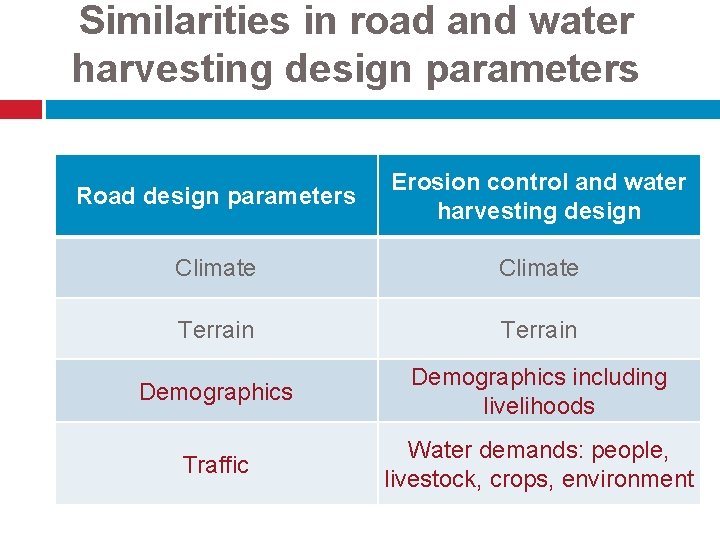
Similarities in road and water harvesting design parameters Road design parameters Erosion control and water harvesting design Climate Terrain Demographics including livelihoods Traffic Water demands: people, livestock, crops, environment
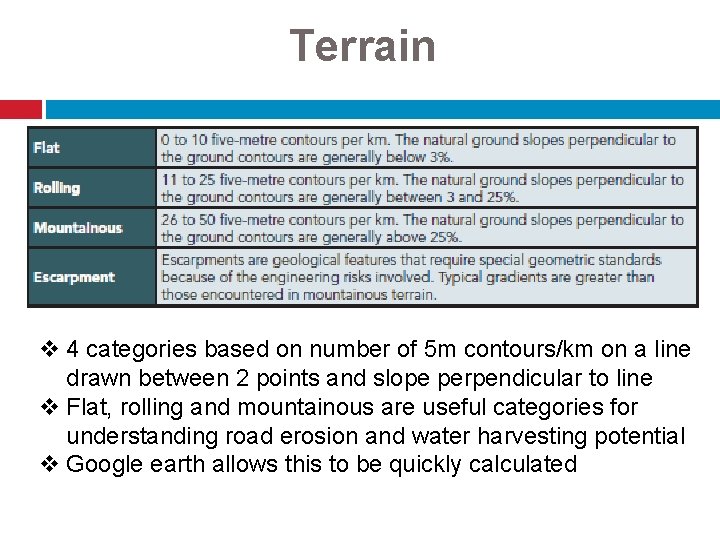
Terrain v 4 categories based on number of 5 m contours/km on a line drawn between 2 points and slope perpendicular to line v Flat, rolling and mountainous are useful categories for understanding road erosion and water harvesting potential v Google earth allows this to be quickly calculated
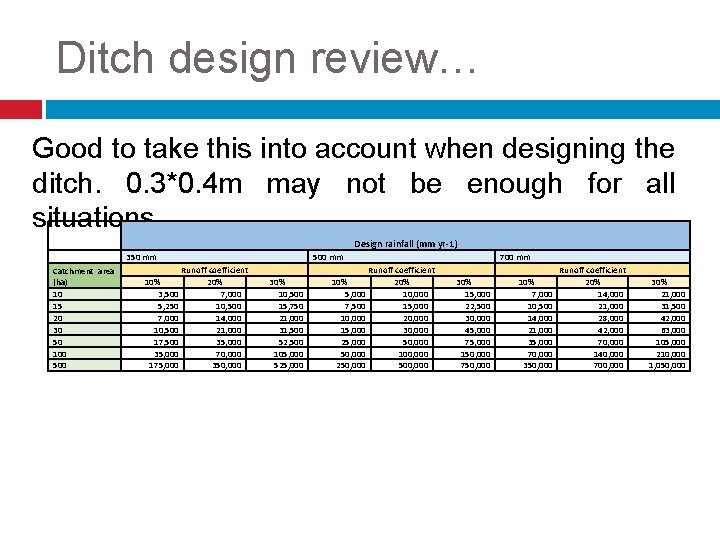
Ditch design review… § Good to take this into account when designing the ditch. 0. 3*0. 4 m may not be enough for all situations. Design rainfall (mm yr-1) 350 mm Catchment area (ha) 10 15 20 30 50 100 500 Runoff coefficient 10% 20% 3, 500 7, 000 5, 250 10, 500 7, 000 14, 000 10, 500 21, 000 17, 500 35, 000 70, 000 175, 000 350, 000 500 mm 30% 10, 500 15, 750 21, 000 31, 500 52, 500 105, 000 525, 000 Runoff coefficient 10% 20% 5, 000 10, 000 7, 500 15, 000 10, 000 20, 000 15, 000 30, 000 25, 000 50, 000 100, 000 250, 000 500, 000 700 mm 30% 15, 000 22, 500 30, 000 45, 000 75, 000 150, 000 750, 000 10% 7, 000 10, 500 14, 000 21, 000 35, 000 70, 000 350, 000 Runoff coefficient 20% 14, 000 21, 000 28, 000 42, 000 70, 000 140, 000 700, 000 30% 21, 000 31, 500 42, 000 63, 000 105, 000 210, 000 1, 050, 000
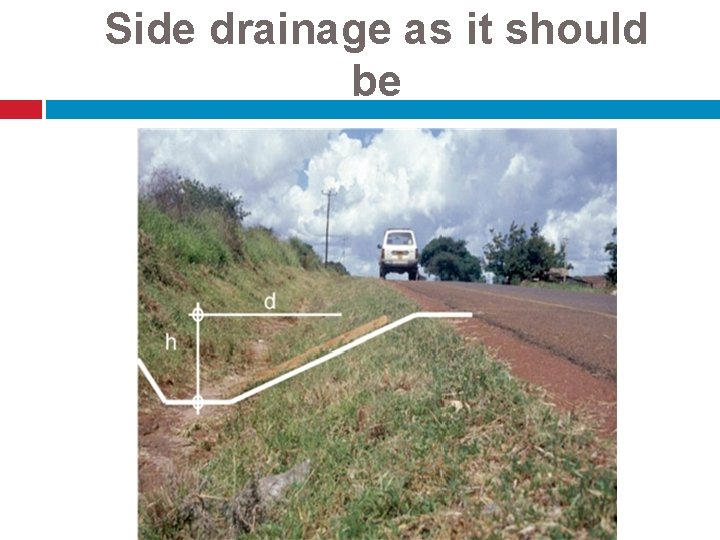
Side drainage as it should be
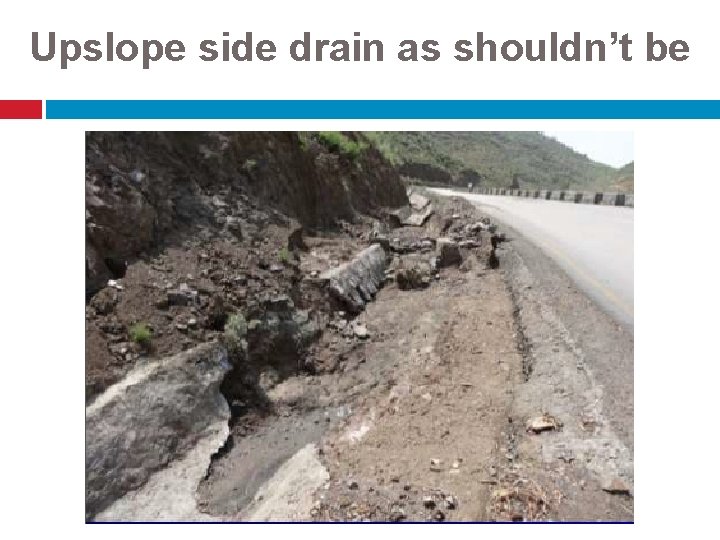
Upslope side drain as shouldn’t be
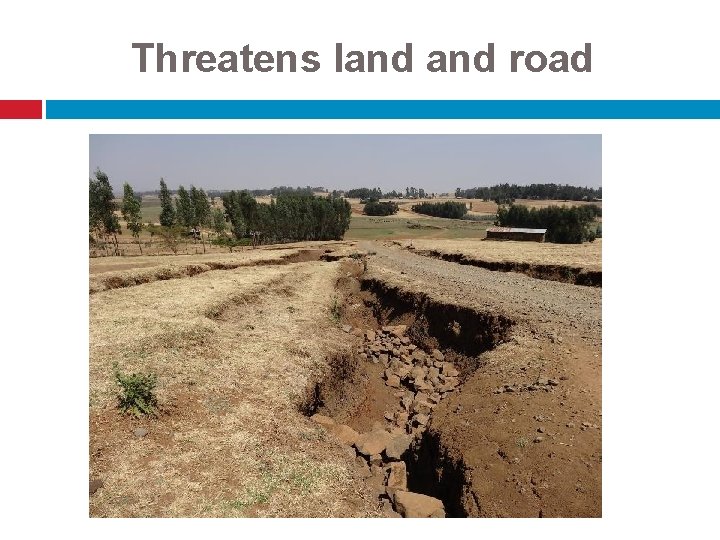
Threatens land road
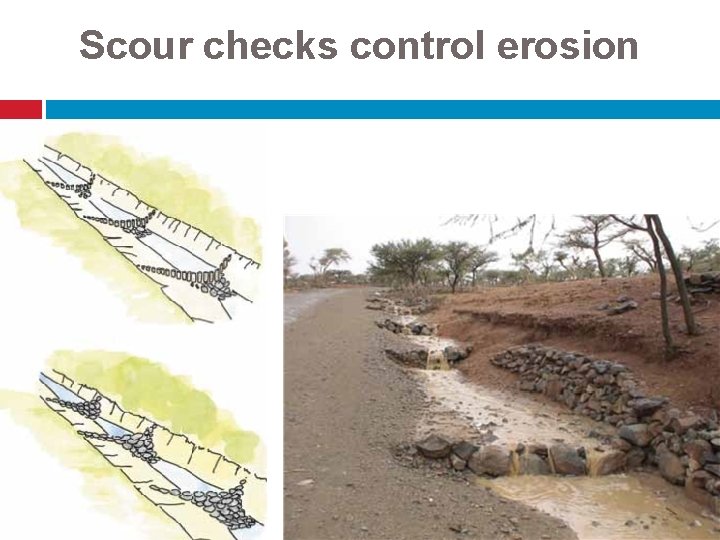
Scour checks control erosion
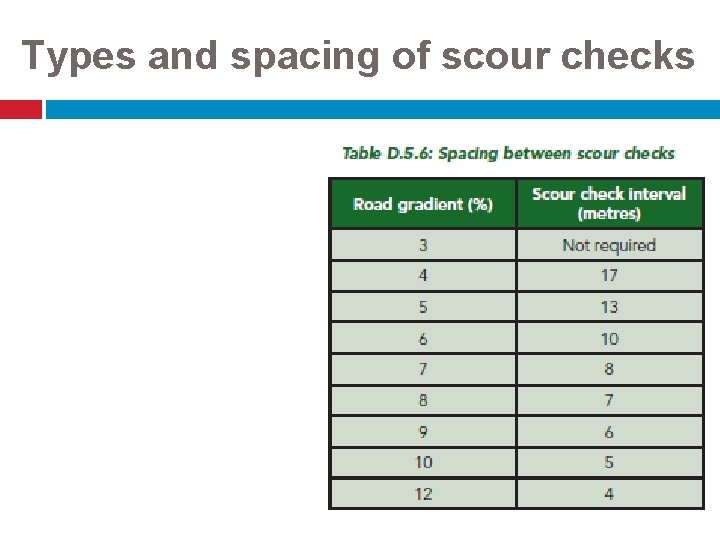
Types and spacing of scour checks
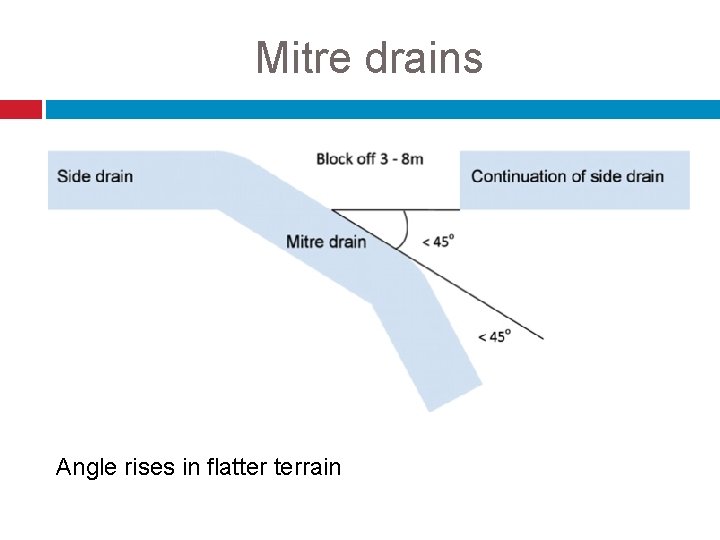
Mitre drains
Mitre drains Angle rises in flatter terrain
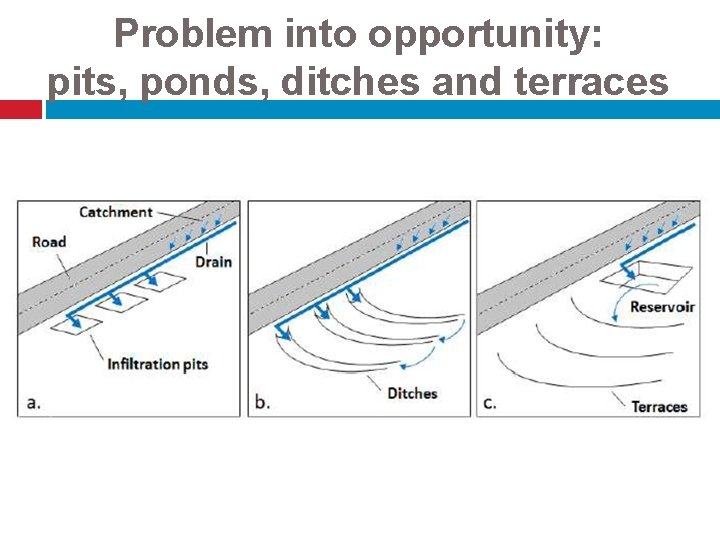
Problem into opportunity: pits, ponds, ditches and terraces
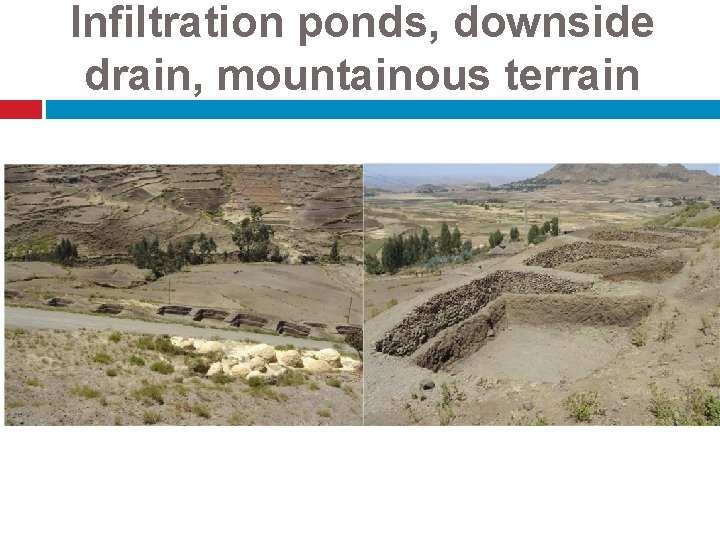
Infiltration ponds, downside drain, mountainous terrain
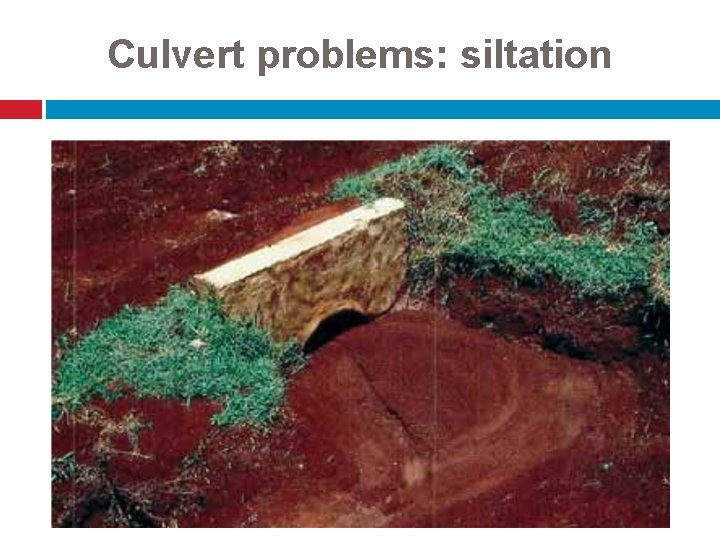
Culvert problems: siltation
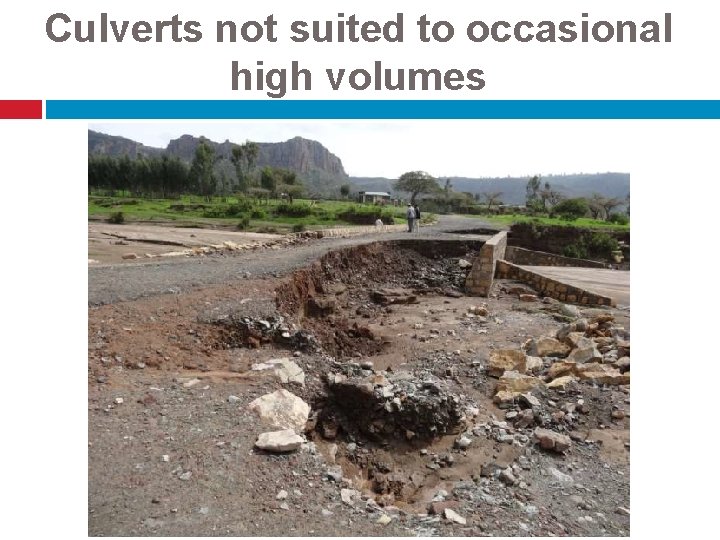
Culverts not suited to occasional high volumes
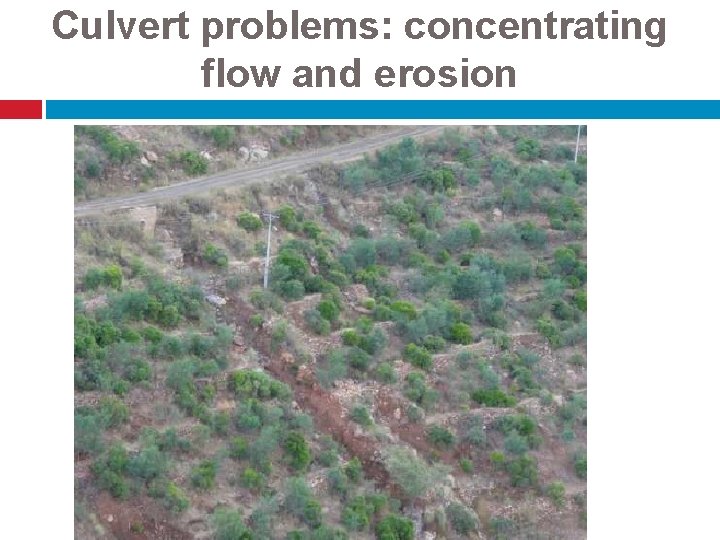
Culvert problems: concentrating flow and erosion
Problem into an opportunity
Water bars/rolling dips
Problem into an opportunity fanja juu terracing Terracing land above upside drain boosts yields and reduces erosion It also reduces flows into upside drain and so cuts the capacity and cost of side drains and culverts required
Sedimentation and erosion control: gabions, check dams, gulley reclamation v Screens to prevent blockage v Use drifts on river crossings unless significant flow v Scour checks reduce and harvest sediment v Correct inlet, gradient and outlet design to be self scouring v Gabions, rip-rap, masonry protection on outlets v Check dams and environmental protection measures
Supported by: