
CULTURE The knowledge language values customs material objects
CULTURE The knowledge, language, values, customs, & material objects that are passed from person to person and from generation to generation in a human group or society

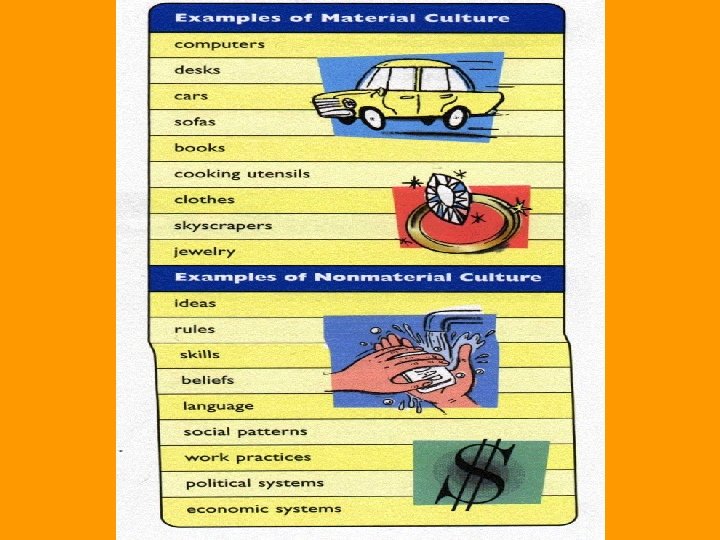
2 components of culture material culture = physical creations that members of the society make, use, and share nonmaterial culture = abstract creations of society that influence people’s behavior

Culture Material • Things that are created by humans • Buildings • Autos • Computers Non-material • Behaviours • Symbols • Attitudes • Values of the culture
Shaping Culture • Climate, resources, • Discoveries and geography limit or inventions can provide opportunities advantages. for food, clothing and physical well being. • Isolation or integration can help or hinder acquiring from other countries.

SYMBOLS • Anything that meaningfully and nonverbally represents something else • For example, for most Canadians, a Nazi swastika represents hate
VALUES A collective idea about what is right or wrong, good or bad, and desirable or undesirable in a particular culture An example of a core Canadian value is tolerance

How can material/nonmaterial examples represent a culture?
GROUP ACTIVITY • Brainstorm a list of items that you think are the most valuable or praiseworthy aspects of Canada, its people, and its culture at present. • One group member should write down all suggestions; do not discuss or argue about the item. • An “item” can be anything—perhaps an object (the flag), something living (an animal or person), an idea (peace), or a mixture of any of these.
Activity Continued… • When you have a long list, decide which ten items you as a group would select to store in a time capsule, to be opened in 50 years by a student of your age. • The items you select should be those that you think this young person would be most grateful were preserved and passed on. • When finished justify the reasoning behind each of your choices.
- Slides: 10