
Culture The 7 Elements What is Culture Definition
- Slides: 14
Culture The 7 Elements
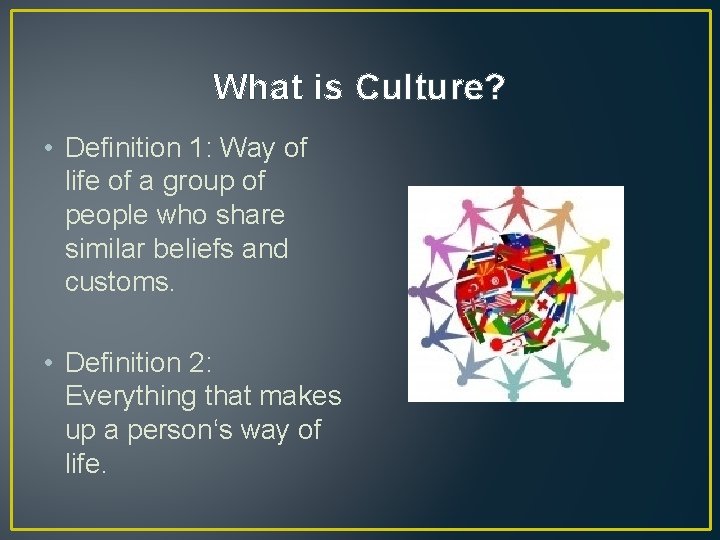
What is Culture? • Definition 1: Way of life of a group of people who share similar beliefs and customs. • Definition 2: Everything that makes up a person‘s way of life.
7 Elements of Culture 1. 2. 3. 4. 5. 6. 7. Social Organization Customs and Traditions Language Arts and Literature Religion Government Economic Systems
1. Social Organization -When a culture organizes its members into smaller groups. q. What might some smaller groups be in a culture? • • • Families Friends Religious Groups Occupation Social Classes ØFamily: the most important unit of social organization Ø Nuclear Family Ø Extended Family
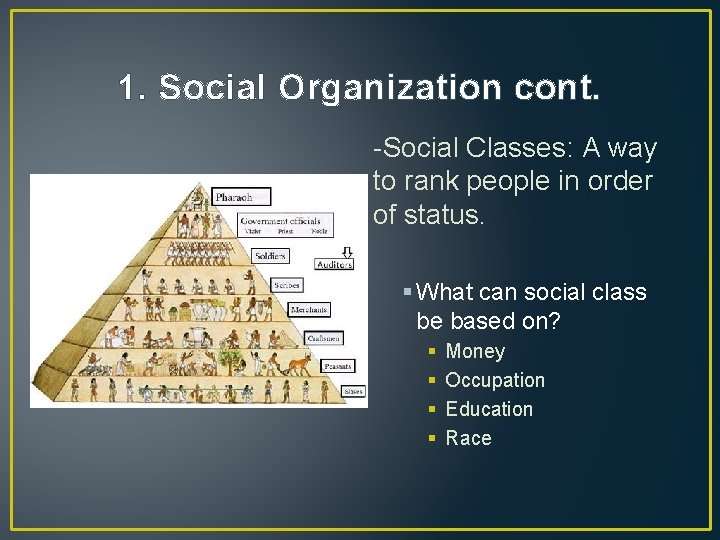
1. Social Organization cont. -Social Classes: A way to rank people in order of status. § What can social class be based on? § § Money Occupation Education Race
2. Customs and Traditions -Rules of behavior (written and unwritten) § What are some customs and traditions in your family?
3. Language § Important for communication and passing on traditions and beliefs. § Means with which different cultures interact with each other and with others.
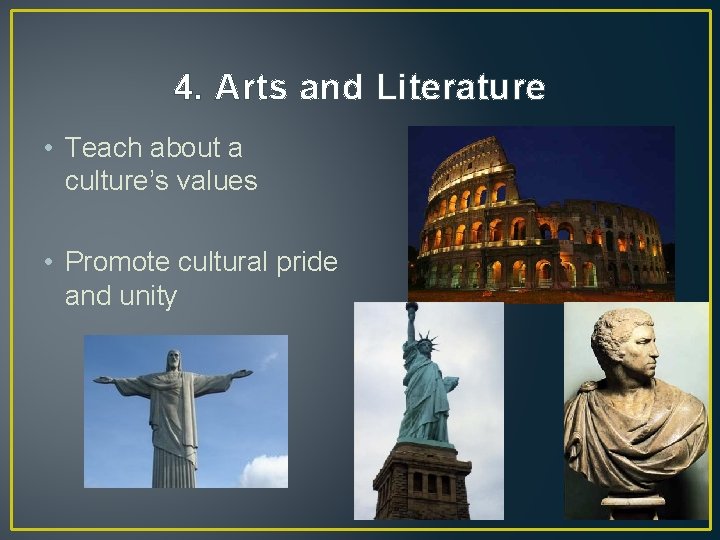
4. Arts and Literature • Teach about a culture’s values • Promote cultural pride and unity
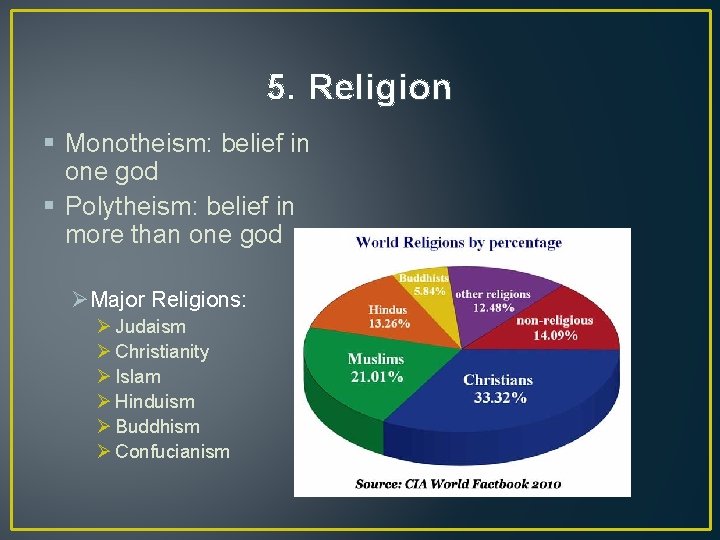
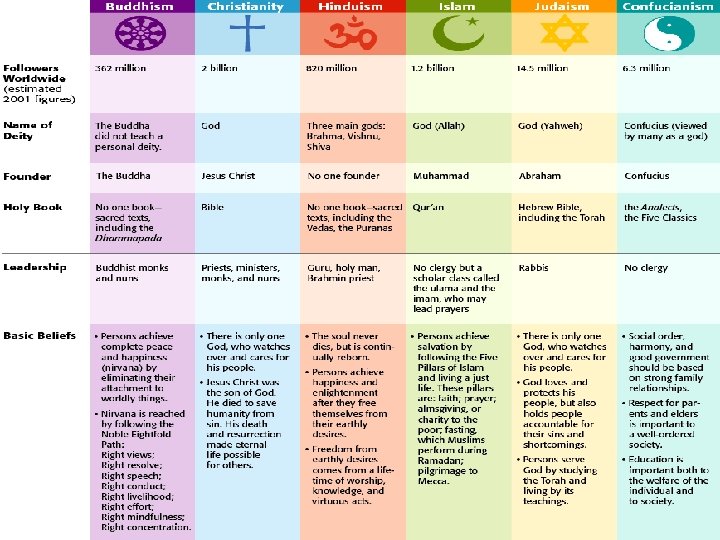
5. Religion § Monotheism: belief in one god § Polytheism: belief in more than one god ØMajor Religions: Ø Judaism Ø Christianity Ø Islam Ø Hinduism Ø Buddhism Ø Confucianism
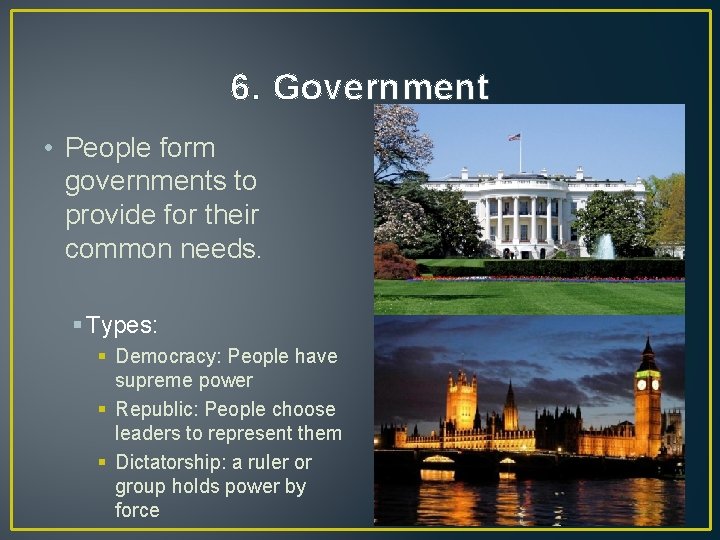
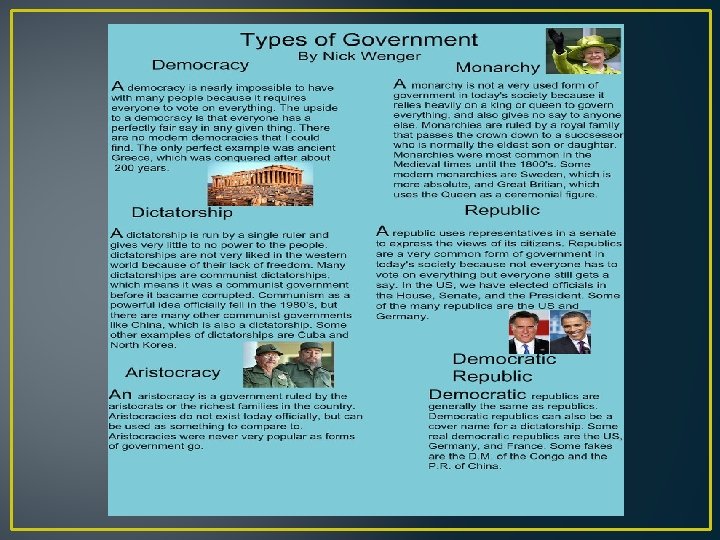
6. Government • People form governments to provide for their common needs. § Types: § Democracy: People have supreme power § Republic: People choose leaders to represent them § Dictatorship: a ruler or group holds power by force
7. Economic Systems § 4 Types: 1. Traditional: people produce most of what they need to survive 2. Market: basic economic questions are answered by buying/selling goods and services 3. Command: government controls answers to economic questions 4. Mixed: individuals make some economic decisions, the government makes others.
Ways Culture Changes 1. Technology (cars, telephones, computers) 2. Environment Changes 3. New Ideas (like recycling) 4. Cultural Diffusion and Borrowing