
Culture Shared system of beliefs values and behavioral
Culture Shared system of beliefs, values, and behavioral expectations Provides social structure for daily living Defines roles and interactions with others and in families and communities
Subculture Large group of people who are members of a larger cultural group Have certain ethnic, occupational, or physical characteristics not common to the larger culture
Question: Tell whether the following statement is true or false. The health care system is a culture of its own, with nursing being its largest subculture. A. True B. False
What is Cultural Diversity? Varying cultures Racial and ethnic origin Religion Physical size, age, and gender Sexual orientation Disability Socioeconomic and occupational status Geographical location
Cultural Humility An openness to another’s culture and a willingness to engage and learn about that culture
Groups in Society Dominant group (usually largest group) Group has the most authority to control values and sanctions of society Minority group (smaller group) A physical or cultural characteristic identifies the people as different than dominant group
Cultural Definitions Cultural assimilation (acculturation) Minorities living within a dominant group lose the characteristics that made them different Values replaced by those of dominant culture Culture shock The feelings a person experiences when placed in a different culture May result in psychological discomfort or disturbances
Race Typically based on specific characteristics Skin pigmentation, body stature, facial features, hair texture Five major categories (but limited to): Native American or Alaska Native Asian Black or African American Native Hawaiian or Other Pacific Islander White
Ethnicity Sense of identification with a collective cultural group Largely based on group’s common heritage
Bias Prejudice Stereotyping May be held by an individual, group or institution Think or acts in favor of or against a person, or group An unfair act or policy stemming from prejudice Conscious (explicit) or unconscious (implicit)
Unconscious Bias • Social stereotypes about groups of people that individuals form outside their own conscious awareness • All of us hold unconscious beliefs about various social and identity groups • Stems from our cognitive tendency to organize social worlds by categorizing • Often incompatible with our conscious values
Unconscious Bias • Unconscious bias is far more prevalent than conscious prejudice • Compelling body of scientific evidence shows unconscious bias pervasively influences daily interactions-patient care • Dominates when we are: • Busy with other tasks • Distracted • Tired • Under time pressure • When people are anxious
What is the First Step to Eliminating Prejudices? Identifying and being aware of it!
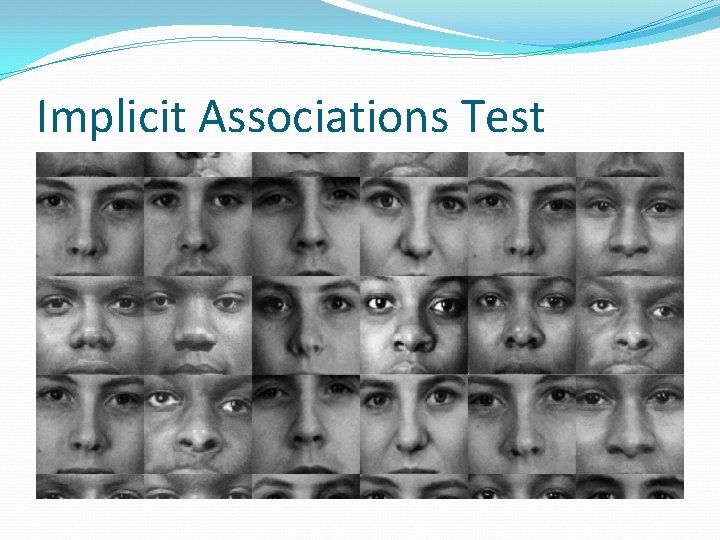
Implicit Associations Test
What Works? • Recognize your own unconscious bias through active self-reflection • Normalize unconscious bias – it is a normal aspect of human cognition • Recognize that stress and negative emotions increase stereotyping • Build partnerships with others • Enhance empathy
Cultural Terminology Ethnocentrism Belief that one’s ideas, beliefs, and practice are the best or superior or are most preferred to those of others Cultural imposition Belief that everyone should conform to the majority belief system Cultural blindness Ignores differences and proceeds as if they did not exist Cultural conflict People become aware of differences and feel threatened
Question: Tell whether the following statement is true or false. Stereotyping occurs when people ignore differences in the cultures in which they live and proceed as if they do not exist. A. True B. False
Cultural Influences on Healthcare Physiologic variations Reactions to pain Mental health Gender roles Language and communication Orientation to space and time Food and nutrition Family support Socioeconomic factors
Culturally Sensitive Nursing Care— Patient in Pain �Recognize each person holds various beliefs about pain. �Respect the patient’s right to respond to pain in his own fashion. �Never stereotype a patient’s responses to pain based on his culture. �Be sensitive to nonverbal signals of discomfort, such as holding or applying pressure to the painful area or avoiding activities that intensify the pain.
The Culture of Poverty �Feelings of despair �Day-to-day attitude toward life �Unemployment and need for financial or government aid �Unstable family structure �Decline in self-respect and retreat from community involvement
Elements of Cultural Competence Developing self-awareness Demonstrating knowledge and understanding of a patient’s culture Accepting and respecting cultural differences Not assuming that the health care provider’s beliefs and values are the same as the client’s
Elements of Cultural Competence Resisting judgmental attitudes Being open to and comfortable with cultural encounters Accepting responsibility for one’s own cultural competency
- Slides: 23