
Culture media Pure culture techniques Bacterial colony Cultivation
Culture media Pure culture techniques & Bacterial colony

Cultivation of bacteria The process of growing microorganisms in culture by: Taking bacteria from an infection site by specimen collection - in vivo. Growing bacteria in the artificial environment of the laboratory - in vitro. Why cultivate bacteria? *Obtain definitive identification and characterization *Grow and isolate all bacteria present in an infection *Determine which bacteria is most likely causing infection *Determine which bacteria is likely a contaminant or colonizer

* Obtain sufficient growth of clinically relevant bacteria to: 1. Test antimicrobial susceptibility 2. Measure response to treatment 3. Characterize the agent 4. Bank strain for future use including vaccine development
• Growth requirements * Physical • Temperature: **Most pathogenic bacteria are mesophiles and grow optimally at 37 0 C (human body temperature). • p. H: - Most medically important bacteria grow at neutral or slightly alkaline p. H (7. 2 to 7. 6). • Osmotic pressure: - High osmotic pressure (hypertonic) removes water causing plasmolysis – inhibits growth i. e. salt as preservative. • - Low osmotic pressures (hypotonic) cause water to enter and can cause lysis. • - Bacteria are more tolerant to osmotic variations because of the mechanical strength of the cell wall.
• Moisture & desiccation: - Moisture is essential - 80% body weight is water. - Bacterial spores survive several years. - Lyophilization Freeze dry process that protects bacteria. * Chemical - Carbon source - Nitrogen, sulfur phosphorus - Oxygen * Microbiological culture media The survival and growth of microorganisms depend on a available nutrients and favorable growth environment. In the laboratory, the nutrient preparations that are used for culturing microorganisms are called media.

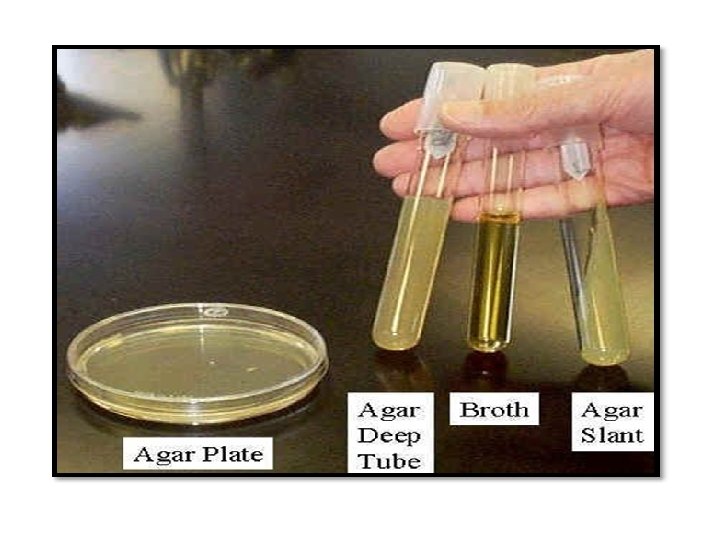
Three physical forms are used Liquid media ( broth ) Semi solid media Solid media
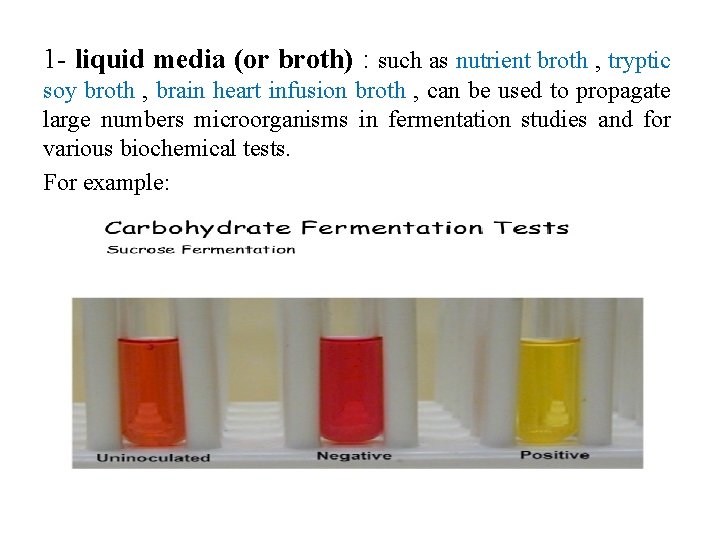
1 - liquid media (or broth) : such as nutrient broth , tryptic soy broth , brain heart infusion broth , can be used to propagate large numbers microorganisms in fermentation studies and for various biochemical tests. For example:
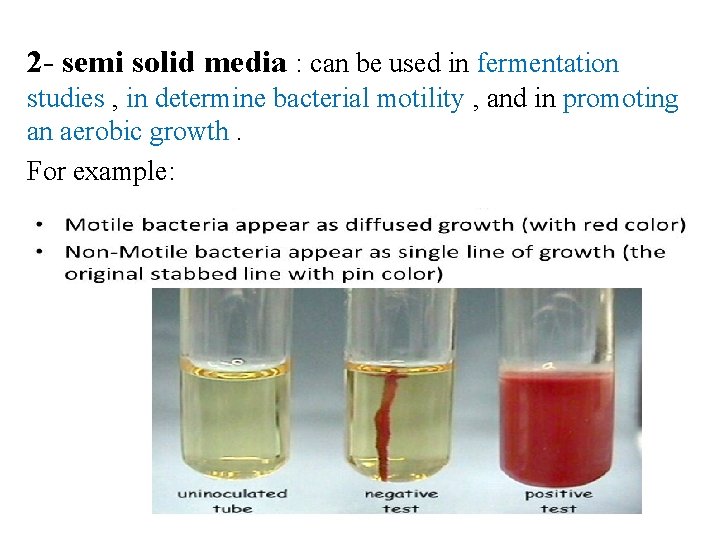
2 - semi solid media : can be used in fermentation studies , in determine bacterial motility , and in promoting an aerobic growth. For example:
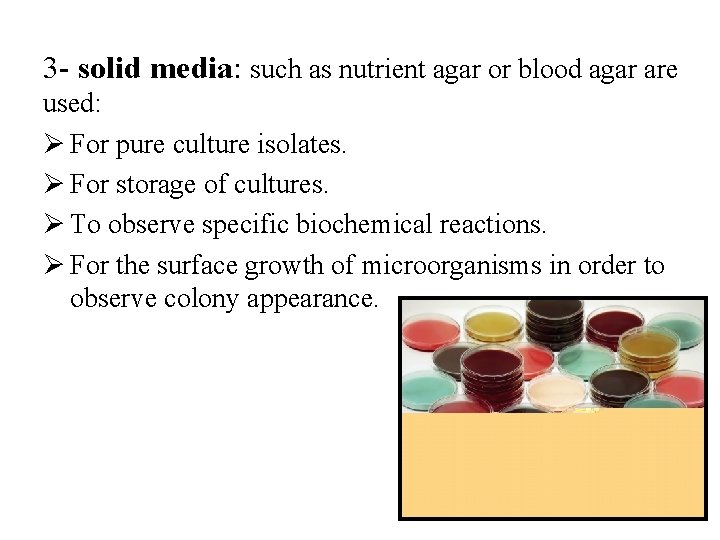
3 - solid media: such as nutrient agar or blood agar are used: Ø For pure culture isolates. Ø For storage of cultures. Ø To observe specific biochemical reactions. Ø For the surface growth of microorganisms in order to observe colony appearance.
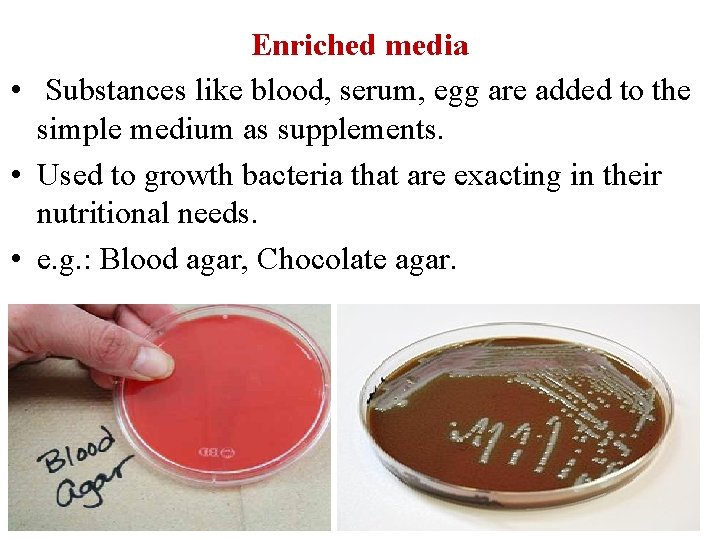
Enriched media • Substances like blood, serum, egg are added to the simple medium as supplements. • Used to growth bacteria that are exacting in their nutritional needs. • e. g. : Blood agar, Chocolate agar.
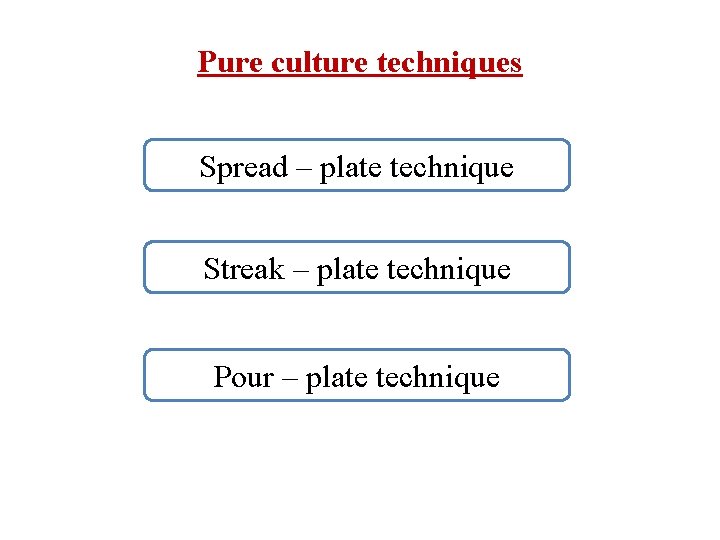
Pure culture techniques Spread – plate technique Streak – plate technique Pour – plate technique
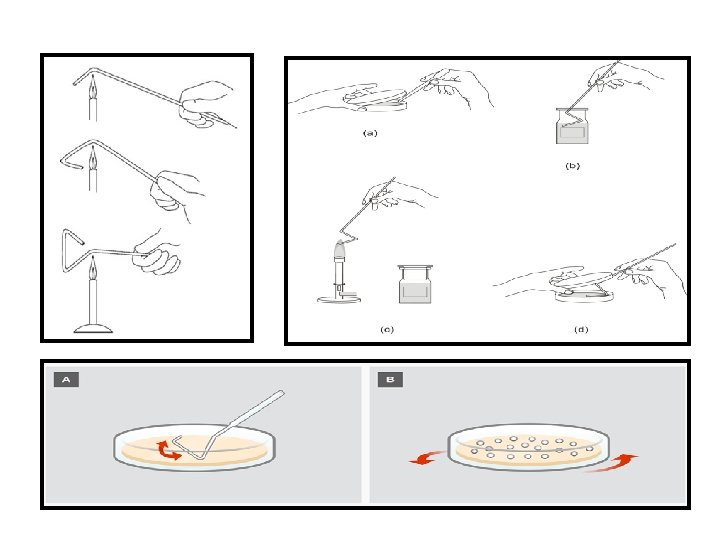
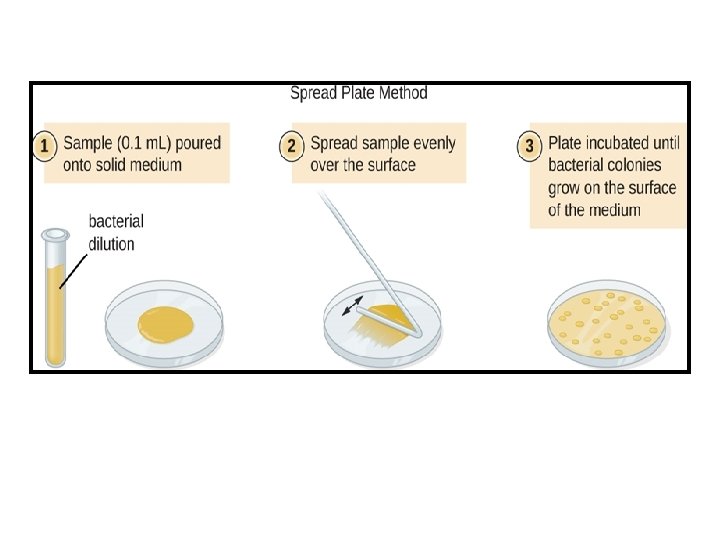
q. Spread – plate technique Is an easy , direct way of achieving a pure culture. In this technique a small volume of dilute bacterial mixture is transferred to the center of an agar plate and is spread evenly over the surface with sterile , L-shaped glass rod. The glass rod is normally sterilized by dipping in alcohol and flamed to burn off the alcohol. After incubation some of the dispersed cells developed in to isolated colonies.

Spread plate technique
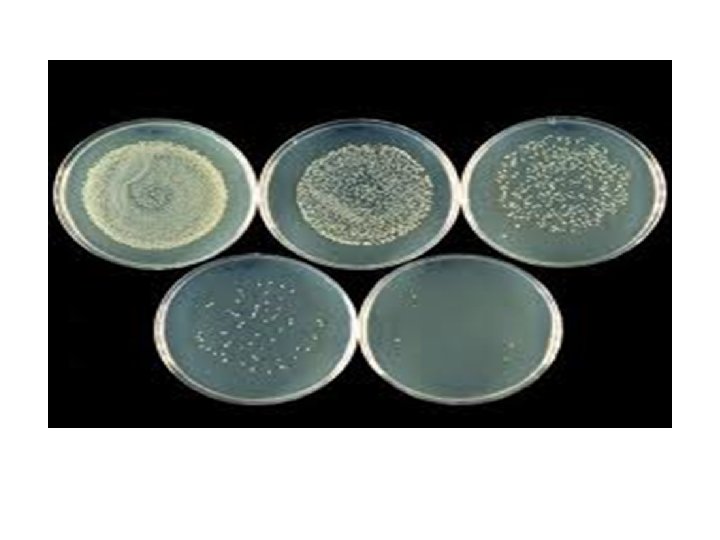
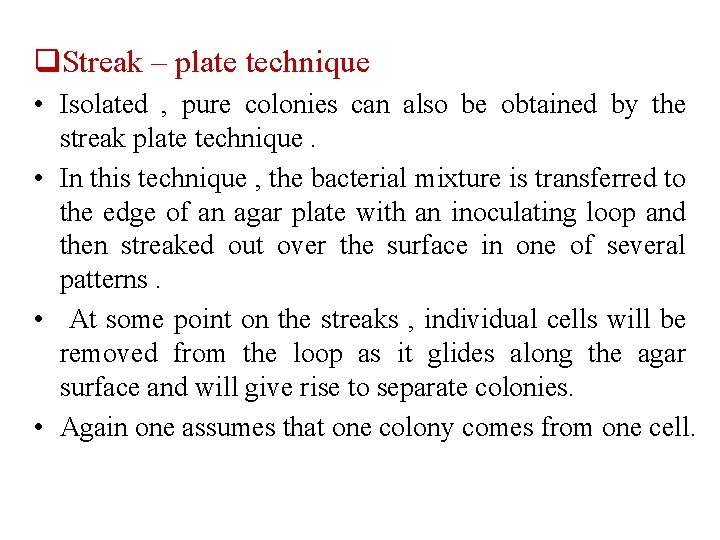
q. Streak – plate technique • Isolated , pure colonies can also be obtained by the streak plate technique. • In this technique , the bacterial mixture is transferred to the edge of an agar plate with an inoculating loop and then streaked out over the surface in one of several patterns. • At some point on the streaks , individual cells will be removed from the loop as it glides along the agar surface and will give rise to separate colonies. • Again one assumes that one colony comes from one cell.
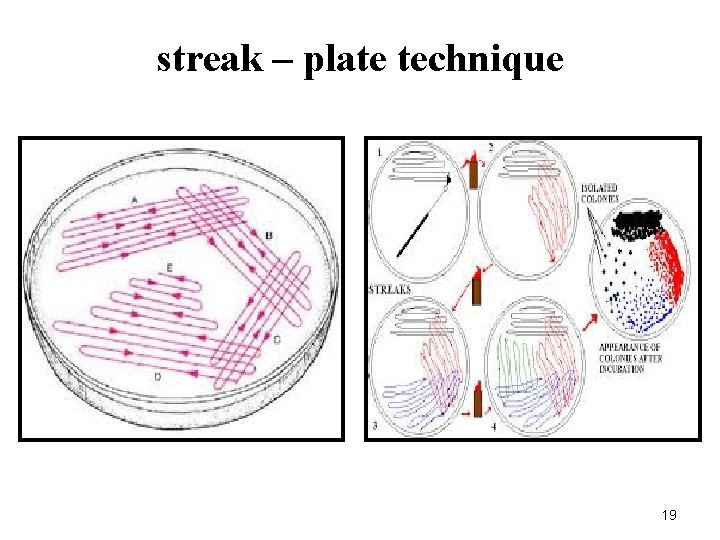
streak – plate technique 19
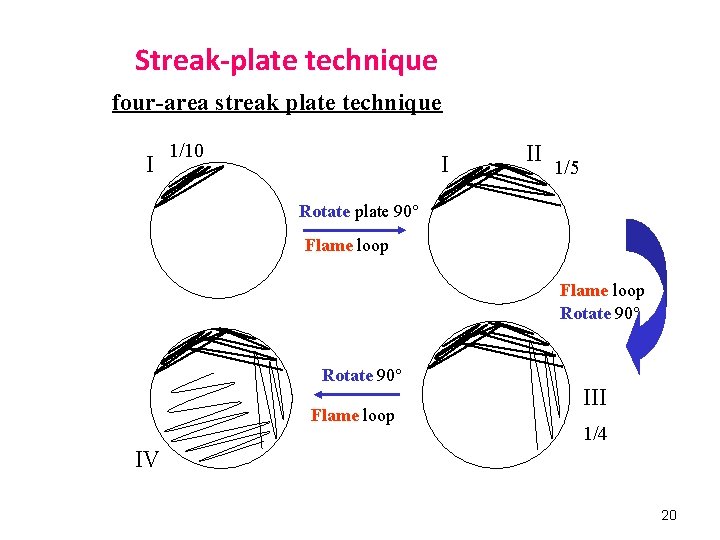
Streak-plate technique four-area streak plate technique I 1/10 I II 1/5 Rotate plate 90 Flame loop Rotate 90 Flame loop III 1/4 IV 20
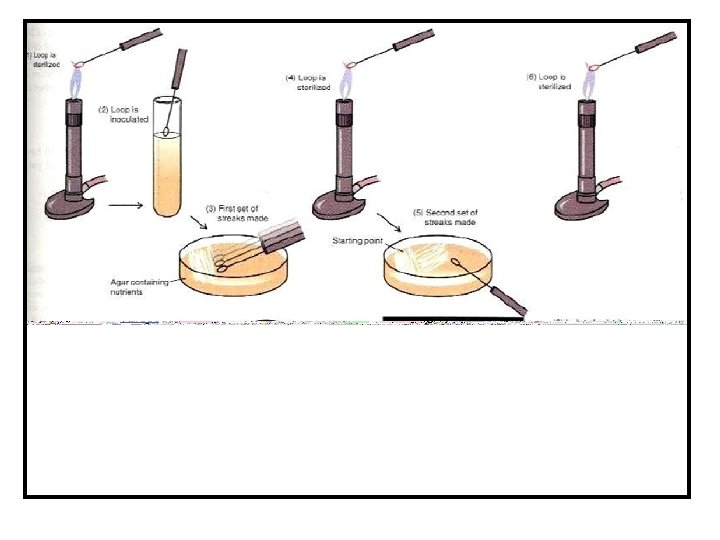
q. Pour – plate technique • The original sample is diluted several time to reduce the microbial population sufficiently to obtain separated colonies upon plating. • The small volume of several diluted samples are added to sterile petridishes and mixed with liquid tryptic soy agar that has been cooled to about 48 -50 C˚ • After agar has hardened each cell is fixed in place and will form an individual colony if the sample is dilute enough • To prepare pure culture , colonies growing on the surface or sub-surface can be inoculated in to fresh medium.

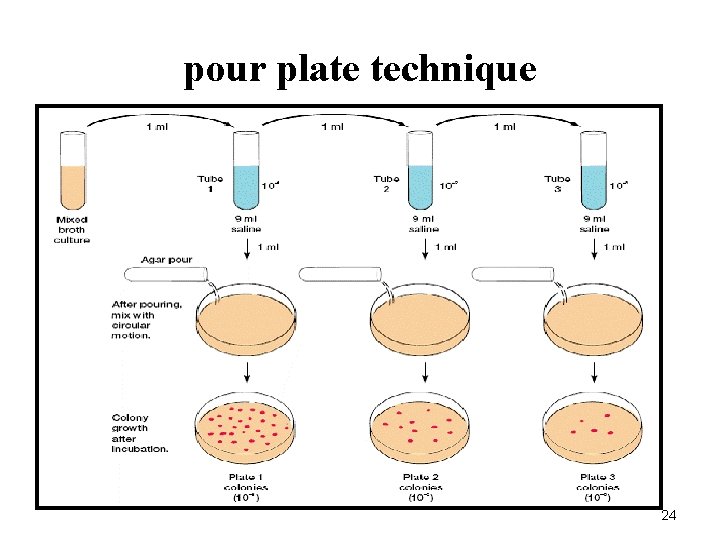
pour plate technique 24

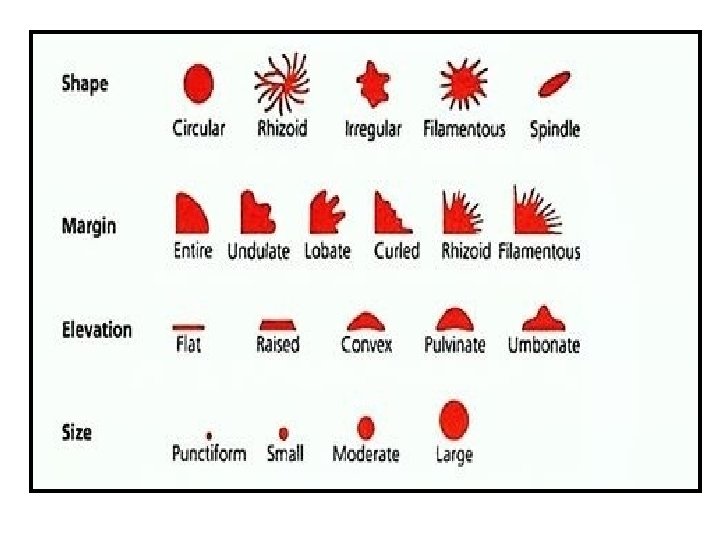
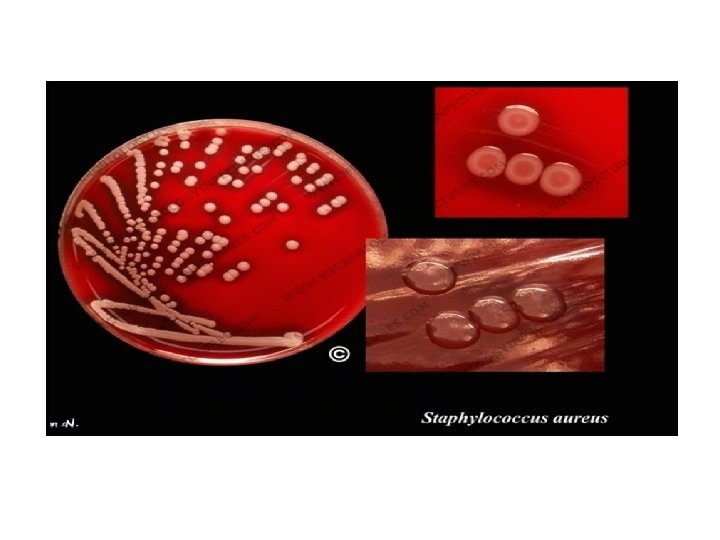
Bacterial Colony • Is a large number of bacterial cells on solid medium , which is visible to the naked eye as a discrete entity. • After incubation , the general form of the colony and the shape of the edge or margin can be determined by looking down at the top of the colony , the nature of the colony elevation is apparent when viewed from the side as the plate is held at eye level.


- Slides: 29