
Culture and Religion in EurasiaN Africa Greece Development
- Slides: 48
Culture and Religion in Eurasia/N Africa – Greece: Development of rational humanism-the idea that humans can understand the world through their own senses and minds (Socrates, Plato, Aristotle, and others) – All of the above sought a means of forgoing ritual and sacrifice to placate the gods, an alternative to polytheistic beliefs – Looked for order and meaning in the universe – To guide humans to a personal moral or spiritual transformation (particularly in the development of compassion – Many of the questions raised 2500 years ago by all of these folks still move and trouble the human race – Each also defined its own distinctive culture; distinctions still visible and viable today.
Culture and Religion in Eurasia/N Africa – Around 500 BCE many durable cultural traditions emerged that have shaped the world since. – China: Confucius and Laozi – India: the Upanishads defined Hinduism and Siddhartha Gautama set Buddhism into motion – Middle East: Monotheism in the air – A. Persian: Zoroastrianism (prophet Zarathustra) – B. Israel: Judaism (various prophets such Isaiah)
Concurrence: the historical idea that ideas may develop in parallel with little or no contact – Why did these traditions develop at essentially the same time in different areas? – a. some historians believe major social changes occurred – b. iron age tech led to deadlier war and higher economic productivity – c. new states and empires emerged and consolidated – d. new contact between emerging and emergent civilizations What is unknown is why particular societies developed particular answers in such particular ways
CHINA: THE SEARCH FOR ORDER – China has a tradition of state/empire going back to 2000 BCE. – Mandate of Heaven: established in Chinese culture by 1122 BCE(foundation of Zhou dynasty) – China fell apart and into the period of the “warring states” from 500 -200 BCE, although the Zhou had fallen earlier. – China found 3 principal philosophic and cultural responses to this period of disorder. – Legalism, Confucianism, Daoism
LEGALISM – Legalism: a response to chaos – Han Fei was a leading Legalist Philosopher – Legalist Principles: strict rules, clearly defined and strictly enforced are the answer to disorder – A pessimistic view of human nature: men are bad and only act for themselves. Only the state can force men to act in their own long term interest. – Felt that only farmers and soldiers performed essential functions in society. Elevated military at expense of nobility and peasants at the expense of landlords and merchants. – Legalist views inspired the Qin dynasty reunification of China
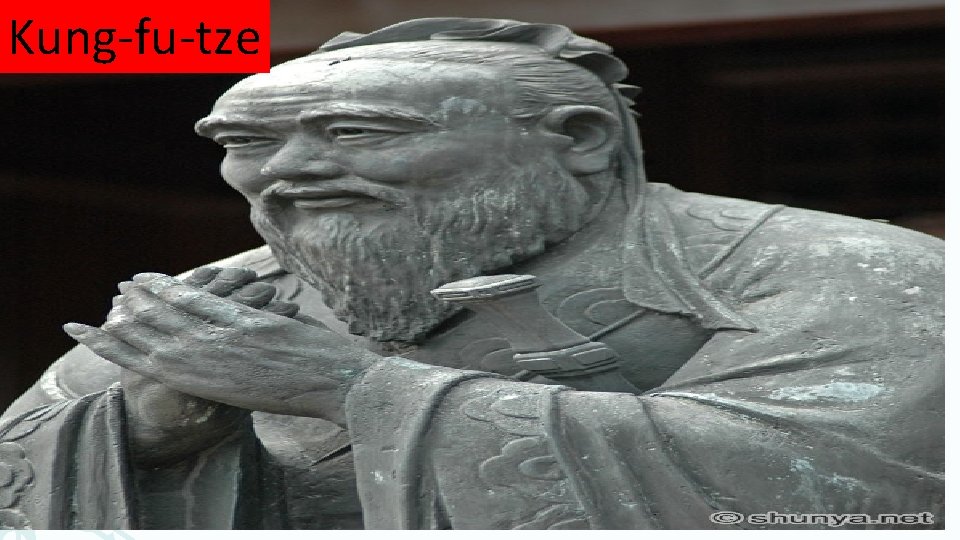
Kung-fu-tze
CONFUCIANISM – Confucius (551 -479 BCE) educated and ambitious aristocrat – Spent much of his life looking for a political position from which to put his ideas into practice. This did not occur during his life. – Confucius’ ideas had enormous impact on China and the rest of East Asia – His teachings were collected by his students as the “Analects” – Elaborations and commentary were added by later scholars, enriching and developing Confucianism as a total philosophy
Confucianism continued – Principles of Confucian thought: – The moral example of superiors is the answer to disorder – a. society consists of unequal relationships – b. duty of the superior member to be sincere and benevolent – c. this will inspire deference and obedience from the inferior member
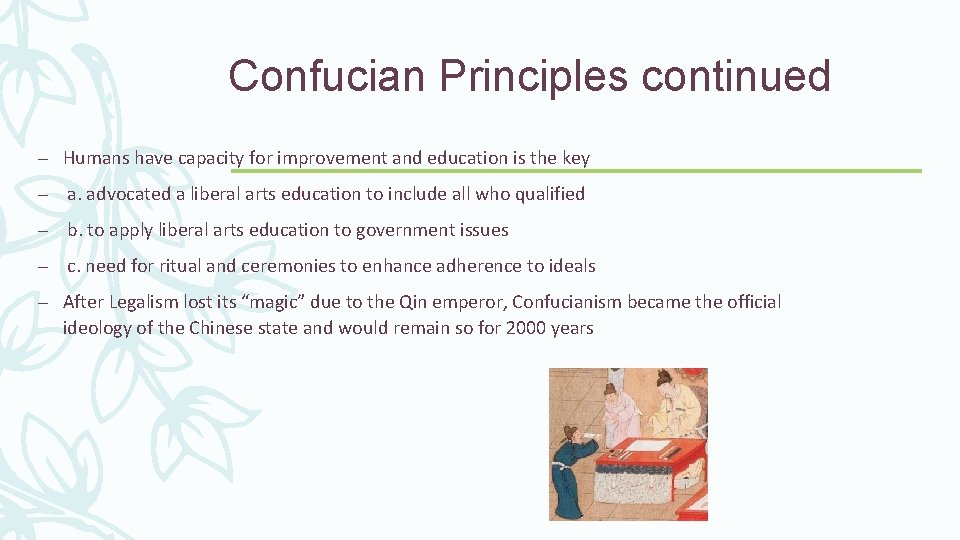
Confucian Principles continued – Humans have capacity for improvement and education is the key – a. advocated a liberal arts education to include all who qualified – b. to apply liberal arts education to government issues – c. need for ritual and ceremonies to enhance adherence to ideals – After Legalism lost its “magic” due to the Qin emperor, Confucianism became the official ideology of the Chinese state and would remain so for 2000 years
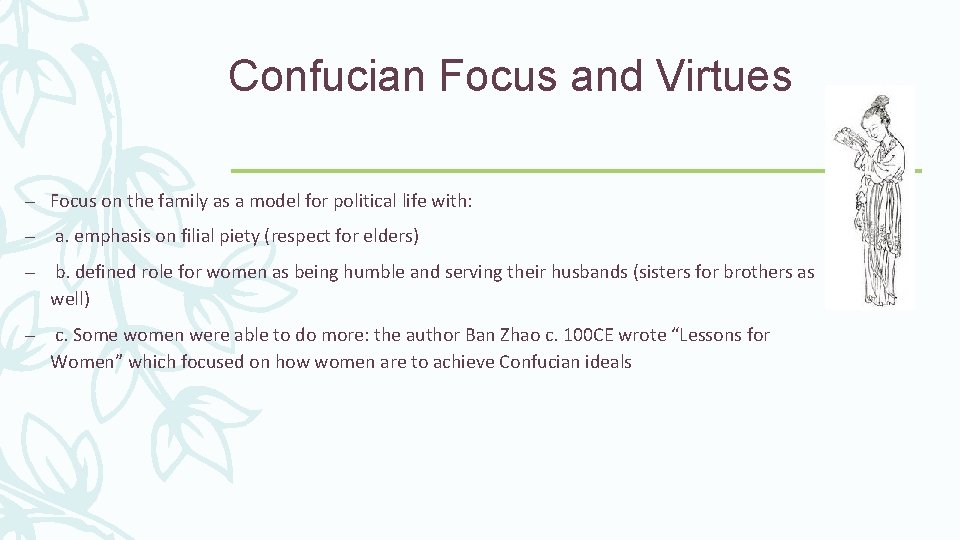
Confucian Focus and Virtues – Focus on the family as a model for political life with: – a. emphasis on filial piety (respect for elders) – b. defined role for women as being humble and serving their husbands (sisters for brothers as well) – c. Some women were able to do more: the author Ban Zhao c. 100 CE wrote “Lessons for Women” which focused on how women are to achieve Confucian ideals
Confucian Focus and Ideals – Virtues and Ideals for Men – Focused on the paired concepts of wen and wu – a. wen- refined qualities of rational behavior, scholarship, and literary and artistic abilities – b. wu- physical and martial arts achievements – Confucians considered “wen” superior to “wu”
Confucian Focus and Ideals – Emphasized the great importance of history – a. the past was a “golden age” and the ideal good society took its lessons from this – b. “superior men” had outstanding moral character and intellect; they were not born superior – c. good government would keep taxes low, give justice, and provide for the people’s material needs through the Emperor
Non Religious – Confucianism was a secular (non religious) philosophy – Emphasis was practical and to be used to better this world – While it did not deny the existence of the gods and spirits, educated people would not center life around them – Like Daoism, Confucianism would later take on some characteristics of a religion. However, Confucius was never taken to be a god nor did he ever express any desire to found a religion.
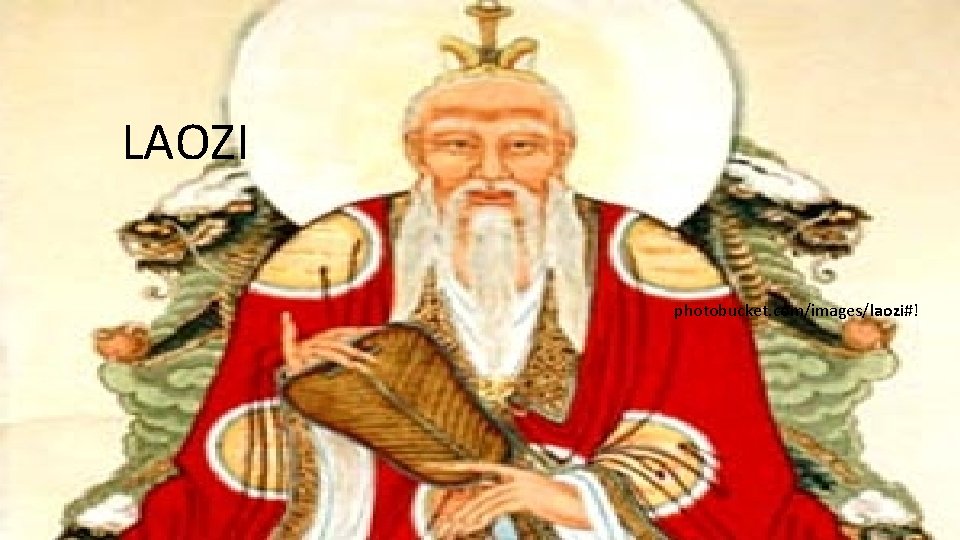
LAOZI photobucket. com/images/laozi#!
The Daoist Answer – Associated with Laozi c. 550 BCE (who may not be real) who supposedly was the author of its main thoughts collected in the “Daodejing” or “The Way and its Power” – Daoism was in many ways the opposite of Confucianism – a. education and improvement of self was artificial and useless – b. urged withdrawal from involvement with everyday world into one of contemplation of nature
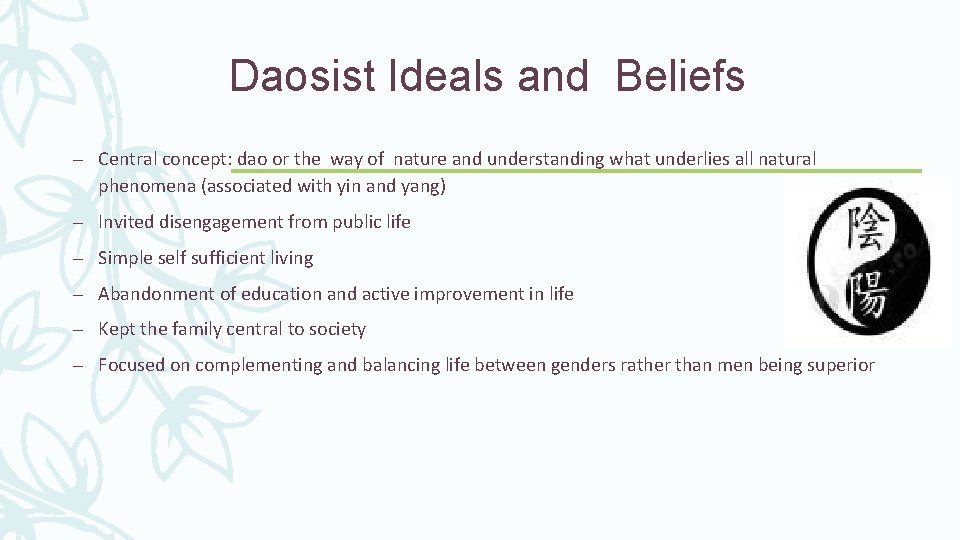
Daosist Ideals and Beliefs – Central concept: dao or the way of nature and understanding what underlies all natural phenomena (associated with yin and yang) – Invited disengagement from public life – Simple self sufficient living – Abandonment of education and active improvement in life – Kept the family central to society – Focused on complementing and balancing life between genders rather than men being superior
Daoism – Many elite Chinese practiced both Confucianism and Daoism as complementary disciplines – Daoism also entered into popular Chinese folk religions when people sought to use the power of the way for practical purposes such as magic and eternal life – Daoist religion provided the incentive for the “Yellow Turban” revolt in the late second century CE.
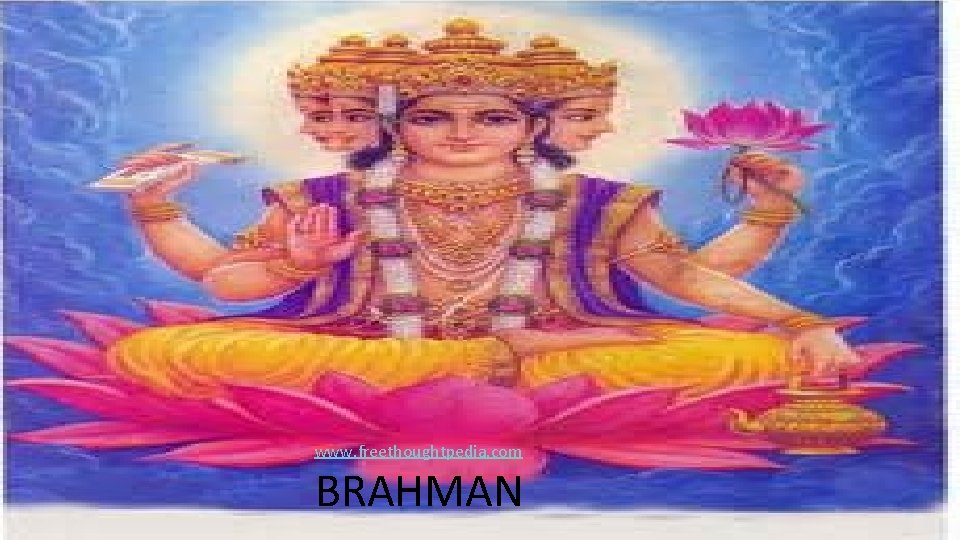
www. freethoughtpedia. com BRAHMAN
Indian Cultural Development – Different from China – Upper classes very involved with the divine and spiritual matters – Hinduism (India’s religious tradition) had no historical founder – Developed with India’s civilization – Spread into South. East Asia but remained associated with India – There is no single Hindu tradition- Hinduism is a term created by outsiders to explain a large range of ideas
Indian Religious Roots, Beliefs, and Practice – Used widely recognized sacred books that provided some common features to the diverse Indian culture and religion – Vedas-books of prayer, poems, rituals compiled by the Brahmins (priests’ caste) usually oral. Not written down until 600 BCE – Brahmins played a large ritual role which gave them power and wealth – Patriarchal but less strict in matters of class than later
Indian Beliefs – The development of the Upanishads: – Around 600 BCE- looked into inner meaning of Vedas and rituals – Created the idea of BRAHMAN (the World Soul) as the ultimate truth and reality – The following ideas were developed as well: humans have souls (atmans) that are part of BRAHMAN; the goal of life is to have moksha or union with BRAHMAN; and it takes many life times to achieve this so there is reincarnation (samsara) on the wheel of life; the idea of karma (fate) governed reincarnation
Social effects of Indian Religious Tenets – Hinduism legitimated (gave value to) India’s gender and social system – Women were forbidden to learn the sacred books and to participate in rituals in public – Law of Manu-defined women as subordinate to men in every phase of life – Many Hindu deities (gods) were female despite the lower status of women – Hinduism acknowledge several paths to achieving moksha with BRAHMAN. – These ideas were spread by wandering priests and holy men
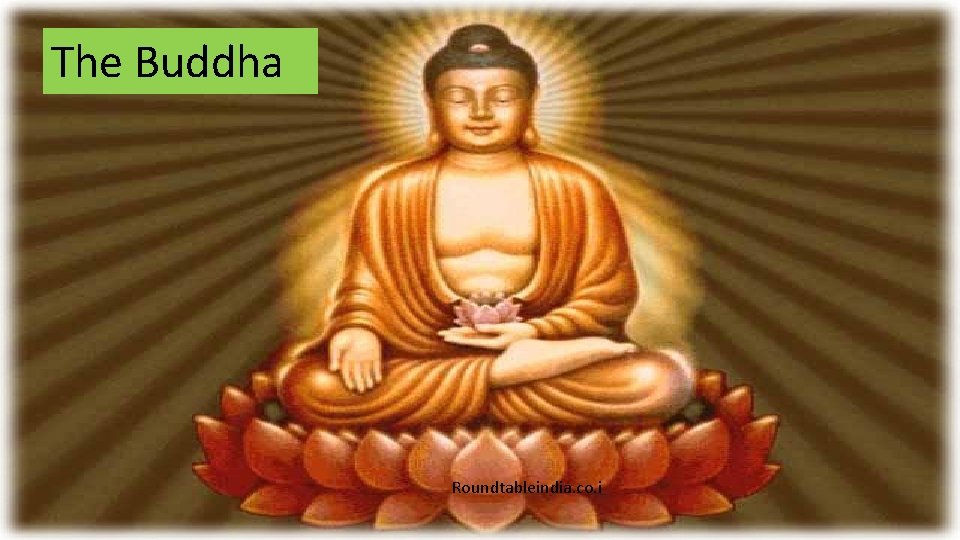
The Buddha Roundtableindia. co. i
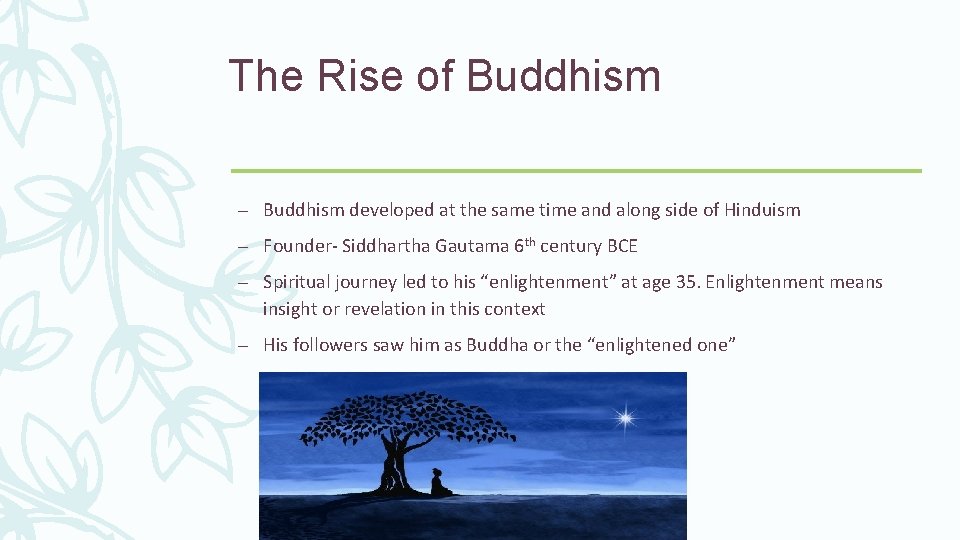
The Rise of Buddhism – Buddhism developed at the same time and along side of Hinduism – Founder- Siddhartha Gautama 6 th century BCE – Spiritual journey led to his “enlightenment” at age 35. Enlightenment means insight or revelation in this context – His followers saw him as Buddha or the “enlightened one”
Buddhist Teachings – Central to Buddhism is that life is suffering – Sorrow and suffering are caused by our craving life and individual happiness – The cure for suffering is to live a modest and moral life and to meditate – The goal is to achieve enlightenment and nirvana (the extinguishing of the individual and dispersal into the universe)
Buddhist Teachings – Many Hindu principles and practices are present in Buddhism such as – Life is an illusion – Karma and samsara – Elimination of individual desire and existence – Meditation – Desire for release from the cycle of rebirth
Buddhist Teachings – But many Buddhist beliefs challenged Hinduism – Rejected the religious authority of the Brahmins – Did not put much reliance on abstract speculation about things – Buddhism believed individuals need to take responsibility for their own spiritual development – Challenged the caste system
Buddhist Practice – Both men and women could become teachers of Buddhism – Groups of monks and nuns developed – Nuns were subordinate to monks as women were viewed as an obstacle to male enlightenment – Appealed to lower caste members and women throughout India – Taught beliefs in local languages not the religious language of Hinduism – Linked itself to local traditions and places. Built stupas or monuments to the Buddha in many locales
Buddhism – Early Buddhism received support from one of the few Indian emperors-Ashoka – Sponsored missionary work to spread Buddhism – Buddhism eventually split into two sects: Theravada-early Buddhism in which Buddha is not a god, and Mahayana in which Buddha is a god. The Mahayana became the most popular form of Buddhism and essentially was the one that became spread over much of Asia
Consolidation of Religious Belief in India – By 1000 CE Buddhism had essentially been re-incorporated into Hinduism in India (though not elsewhere) – As Buddhism spread through Asia it became less Indian whereas Buddhists in India found common ground with Hindus – More popular type of Hinduism developed; one which was less concerned with castes and status and more focused on rituals and actions to provide an end to samsara. The BHAKTI worship movement began c 1000 CE
Towards Monotheism: The search for the one god The idea of only one supreme god was a radical one that developed during the classic period in the Middle East. This idea matured within the Zoroastrian and Jewish communities in these areas becoming (with much addition) the basis for Christianity and Islam Some of the ideas presented here may not fit with what you have been told or believe. Just be open to the idea that people seldom agree on these matters and this is normal. Remember we are studying religion in history not the history of religion. Nor are we going to debate the truths of any religions. That is not what historians do.
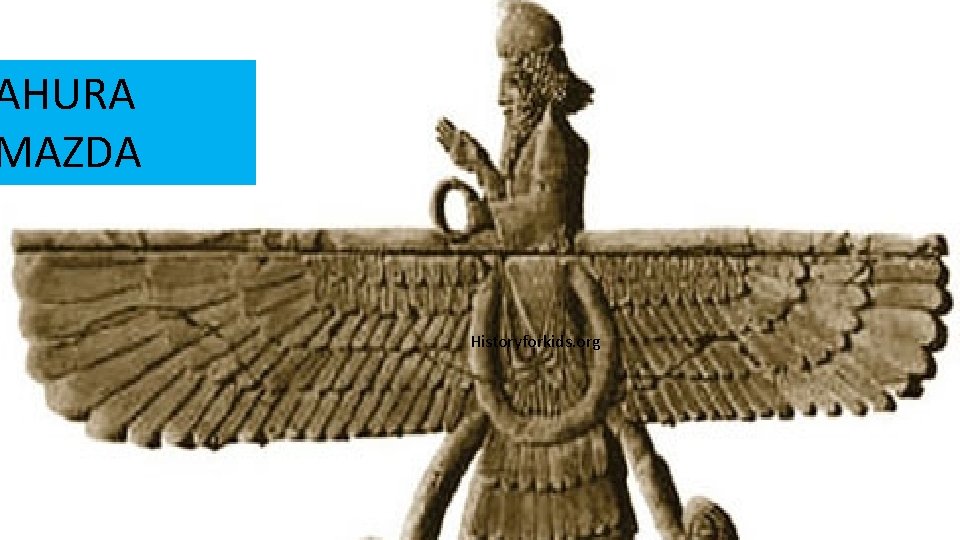
AHURA MAZDA Historyforkids. org
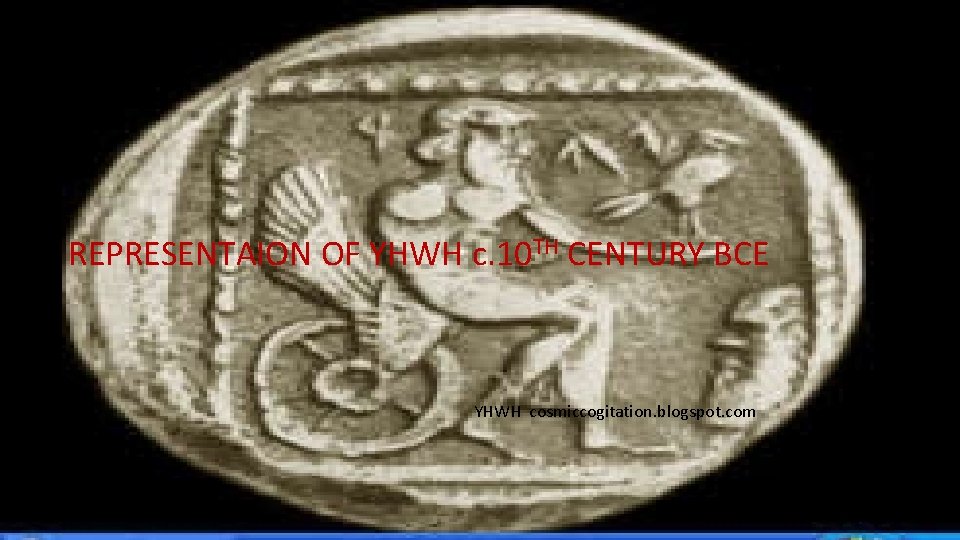
REPRESENTAION OF YHWH c. 10 TH CENTURY BCE YHWH cosmiccogitation. blogspot. com
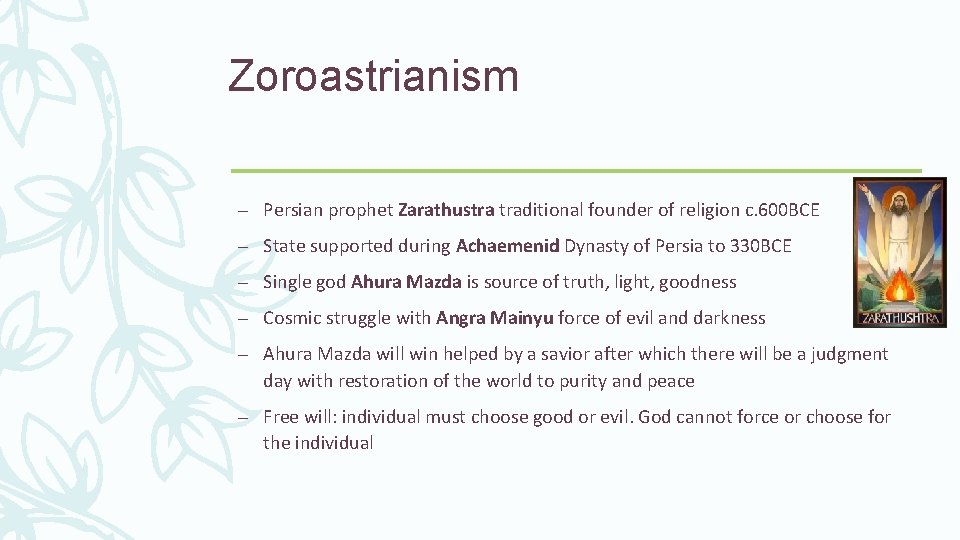
Zoroastrianism – Persian prophet Zarathustra traditional founder of religion c. 600 BCE – State supported during Achaemenid Dynasty of Persia to 330 BCE – Single god Ahura Mazda is source of truth, light, goodness – Cosmic struggle with Angra Mainyu force of evil and darkness – Ahura Mazda will win helped by a savior after which there will be a judgment day with restoration of the world to purity and peace – Free will: individual must choose good or evil. God cannot force or choose for the individual
Zoroastrianism – Did not spread much outside of Persia – Alexander and the Greek Kingdoms that followed condemned it as foolish – Later 250 BCE to 651 CE flourished in the Parthian and Sassanian Empires where Persia had been – Islam essentially replace it in Persia although a few fled to India establishing a community known as Parsis (Persians) which exists to our time
Influences on Judaism (and Christianity and Islam) – Jews in the Persian Empire were influenced by some Zoroastrian ideas and incorporated some into rituals as well as religious books – Idea of God v. Satan – Idea of a last judgment and bodily resurrection (only in specific Jewish sects such as Pharisees) – Belief in the final defeat of evil with the help of a messiah – Remaking of the world at the end of time (again only some specific Jewish sects of the classic era)
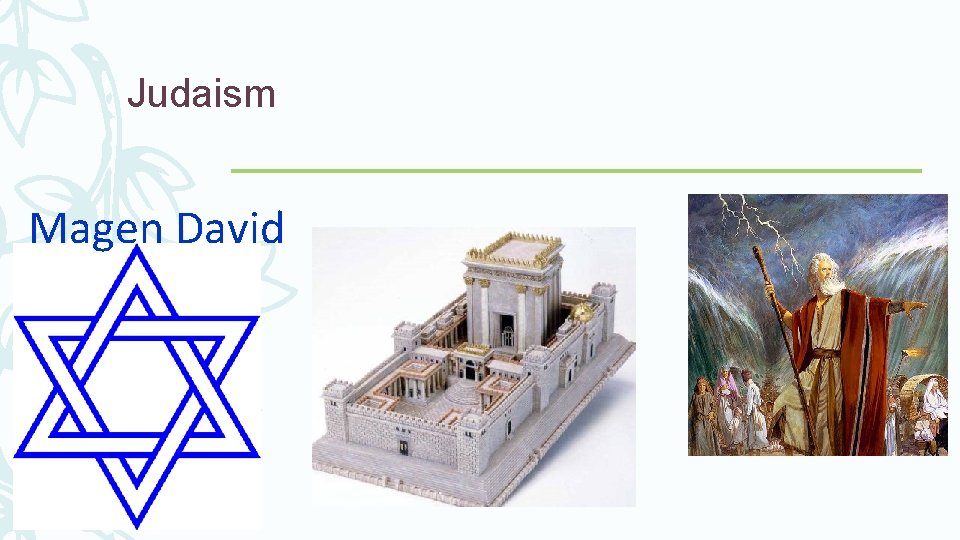
Judaism Magen David
Development of Judaism – From and among “Hebrews” Semitic Tribes of the Arabian Peninsula – Early tradition of migration to Palestine by Abraham – Early tradition of enslavement in Egypt and escape to Israel with Moses – Establishment of state of Israel c. 1000 BCE – Overthrown by Babylon c 587 BCE many elites taken into exile to Babylon itself. Israelites retained identity in Mesopotamia. Some returned to Judah and restored religion (Became known as Jews from Judah son of Israel)
Y*hw*h Over time – A distinctive conception of god and god’s powers and character – Yhwh demanded exclusive loyalty- there are no other gods – Relationship with the Jewish people is in the style of a contract(covenant) – Though Yhwh is transcendent and majestic-he does speak with humans, in fact, wants nothing more than to do so – Throughout Jewish holy texts Yhwh transitions from a god of war to a god of compassion and social justice – Foundation for Christian and Islamic concepts of the one god – The name YHWH was never spoken: Adonai and Elohim are used as names for god.
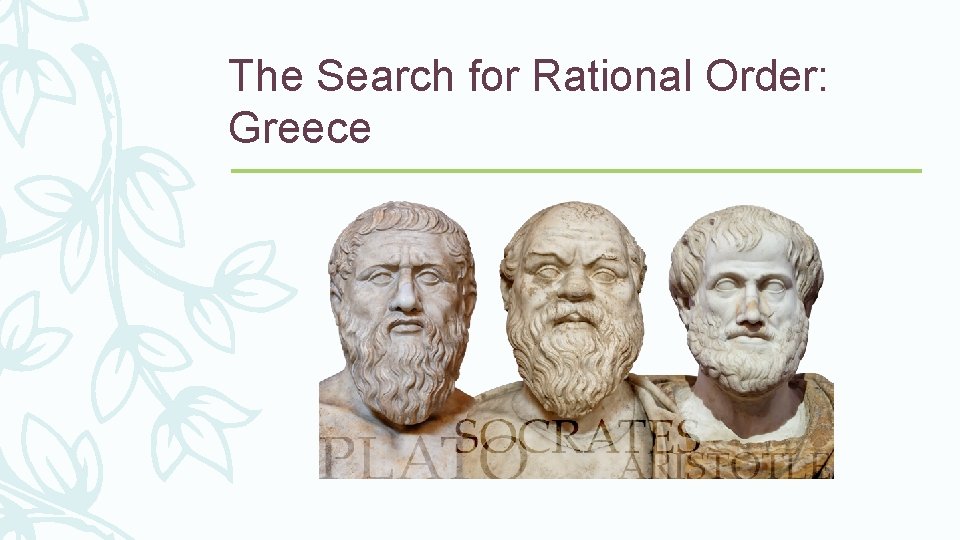
The Search for Rational Order: Greece
Classical Greek Philosophic Understandings – Classical Greece did not create an enduring religious tradition. – Polytheism, cults, and ritual remained until the Christian Era – Greek intellectuals began to question and abandon this mythological framework. Asked “Can humans understand the world by reason? ” – Greek science and philosophy was to develop from this simple questioning of received wisdom. – Received wisdom-that which everyone knows to be true without ever asking why it is true.
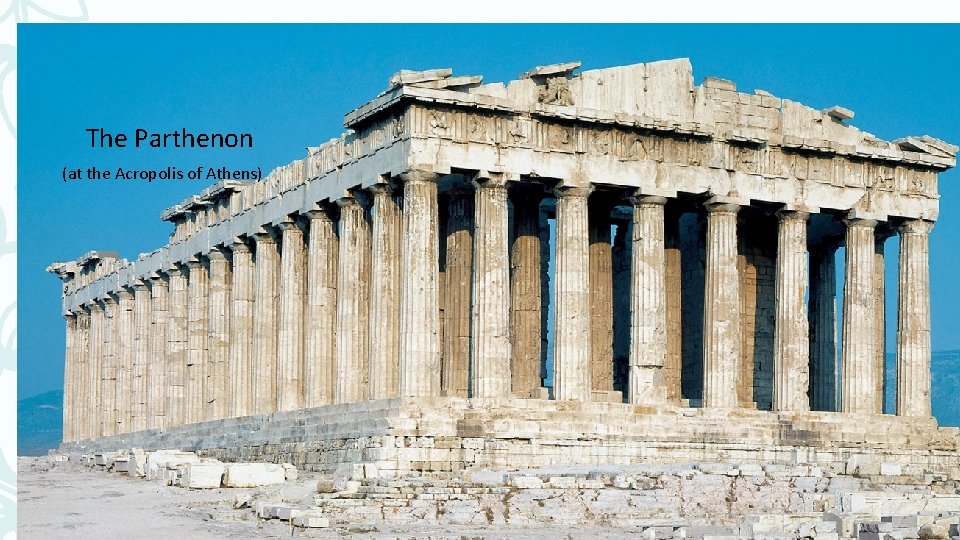
The Parthenon (at the Acropolis of Athens)
Greek “New” Reasoning – The world is a physically real place governed by natural laws – Humans can work out and understand those laws using reason – Humans can work out an ethical system for living life using natural laws – Greek questioning may have been due to the incoherence of their religious myths and the diversity of them. In addition, as civilizations become older and more secure, people have more time to think. Another possible cause would be the role that the development of law in Greece played
Greek Philosophy: When, Where, Why? – Was most active from 600 -300 BCE during the city state period in Greece – One key element was how questions were asked using argument, logic, and questioning of “known” facts – Socrates (469 -399 BCE) of Athens – Constantly questioned the assumption of others – Really irritated a lot of people with this – Condemned to death for teaching young men to think
Greek Philosophy: When, Where, Why? – The application of questioning and reason resulted in many “new” ideas such as: – Creating medicine as a science and not a ritual – The development of “History” as a means to understand the actions of people in the past. Two men really created history as we know it: – Herodotus- History of the Persian Wars – Thucydides-History of the Peloponesian War and a History of Athens
Greek Philosophy: Who? – Plato- considered one of the primary thinkers in the history of western culture. Outlined the use of logic and rhetoric in the pursuit of knowledge. Has the idea that a perfect reality exists outside of our ability to see it or understand except dimly. Also wrote “The Republic” a dialogue about how to achieve the best government possible. – Aristotle-teacher of Alexander the Great. Considered the first scientist because he told his students to examine evidence before coming to a conclusion. While not an experimentalist, Aristotle became the symbol of scientific thinking until the Scientific Revolution. – Plato’s and Aristotle’s ideas were not in sympathy. Plato dominated philosophy in the West until the 1200’s. CE when Aristotle gained the upper hand. Today most philosophers lean towards Plato and most scientists lean towards Aristotle.
Greek Science: – Euclid developed several forms of Geometry – Ptolemy developed astronomy and created a model of the universe that remained the standard until Copernicus and Galileo – Erastosthenes measured the circumference of the Earth and figured out the latitude and longitude of many places around the Mediterranean. – Other Greeks developed steam engines, levers, cranes, and tools that were new technology for their times. While some became commonplace, others, such as the steam engine, failed to take off.
The Spread of Greek Knowledge – While many people (in fact most people) continued to follow traditional ways of thinking and doing things (as is true today), the new Greek Rationalism did spread throughout the known Western world. – Aided by the advance of Alexander’s empire and the Roman Empire – Many Platonic concepts were worked into Christianity as it spread in the early centuries of this era. – Classic Greek books on these subjects were preserved in out of the way places and resurfaced in Europe in the period 1200 -1500.