
Culture and Counterculture Chapter 30 Section 3 A
- Slides: 16
Culture and Counterculture Chapter 30 Section 3 A Time of Social Change Riddlebarger
Rise of the Counterculture • 1960’s counterculture was a rebellion of teens & young adults against mainstream American society. – Counterculture = hippies • Believed society’s values were misplaced • Reject work ethic & materialism of older generation. – Mainstream America = the Establishment • They turned their backs on the Establishment. • Hippies wanted to create a society based upon peace & love.
The Youth Culture • Huge increase in the number of teens and young adults in 1960’s – 50% increase in 1960’s – A result of the baby boom • They grow up in turbulent times – Blame their parent’s generation for world’s problems • Threat of nuclear war, racial problems, Vietnam, environmental pollution. • This generation vows to do things different.
Life in the Counterculture • Throughout 1960’s, thousands of youth abandon school, jobs & traditional home life in search of more freewheeling life. – They desire to live a simpler life and “do your own thing” • Some form their own communities in rundown urban neighborhoods or create rural communities.
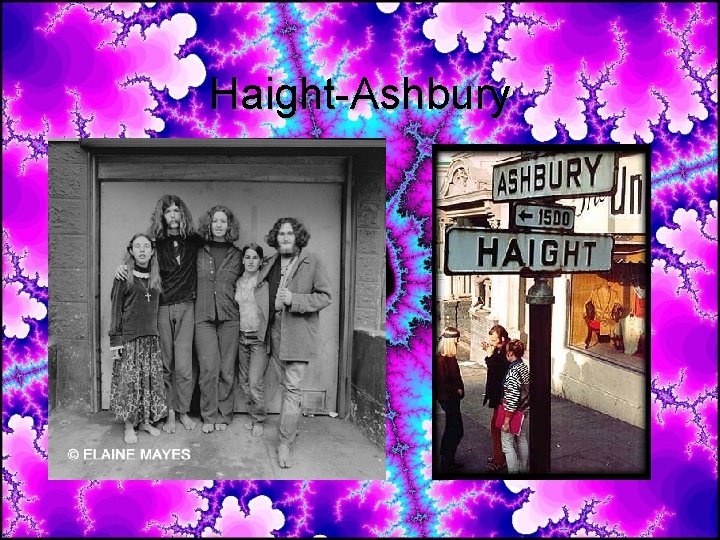
Hippie Communities • Rural Areas – Often “drop out” society & live in communes • Collectively run – Attempt to live in harmony with nature – Often avoid many of our modern conveniences. • Grow own food; share property • Urban Areas – Haight-Ashbury in San Francisco is most famous • Became famous as the center of counterculture • Young flock there for cheap rent & flourishing hippie culture.
Haight-Ashbury
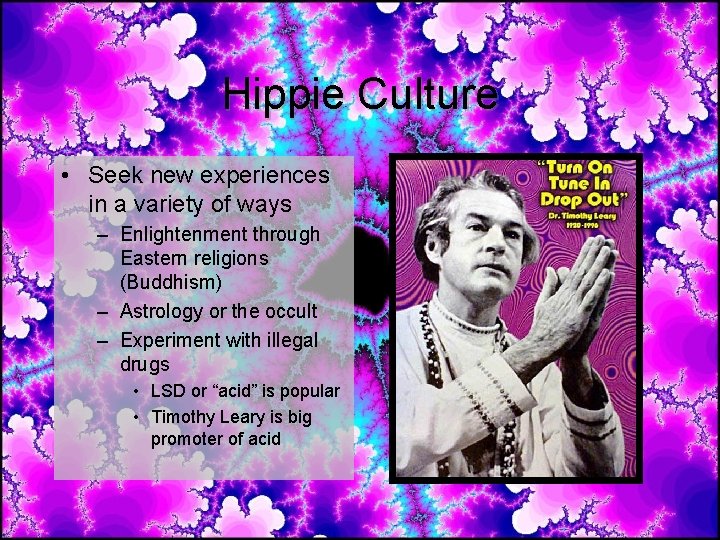
Hippie Culture • Seek new experiences in a variety of ways – Enlightenment through Eastern religions (Buddhism) – Astrology or the occult – Experiment with illegal drugs • LSD or “acid” is popular • Timothy Leary is big promoter of acid
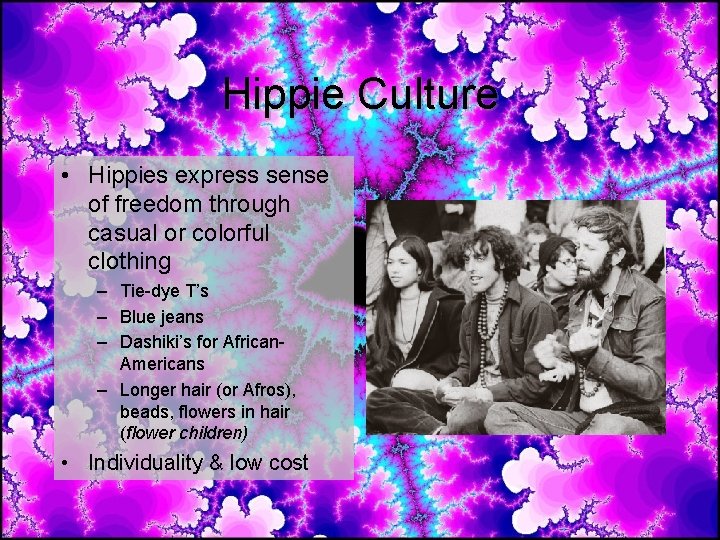
Hippie Culture • Hippies express sense of freedom through casual or colorful clothing – Tie-dye T’s – Blue jeans – Dashiki’s for African. Americans – Longer hair (or Afros), beads, flowers in hair (flower children) • Individuality & low cost
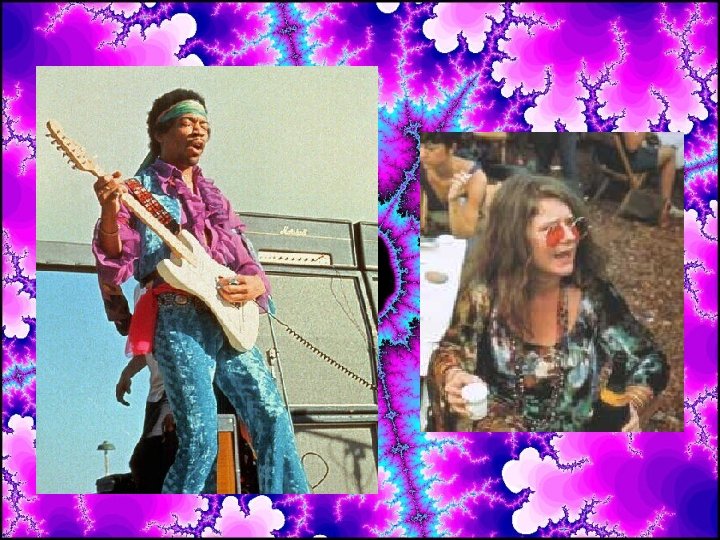
Decline of the Counterculture • Height of the Hippie movement was in 1967. – Known as the “Summer of Love” in San Francisco – Hippies profess peace, love & harmony despite problems ripping through country. • Ideals are difficult to achieve – Drug-related deaths of Joplin, Hendrix, others – How to support themselves living in communes? – Attracted questionable characters • Charles Manson
Reaction of Mainstream America • Many Americans object to values of counterculture – Many see them as disrespectful, uncivilized and threatening. – Some worry society is losing sense of right & wrong – All in the Family is TV show that portrays older generation’s distrust of youth & their desire to change society.
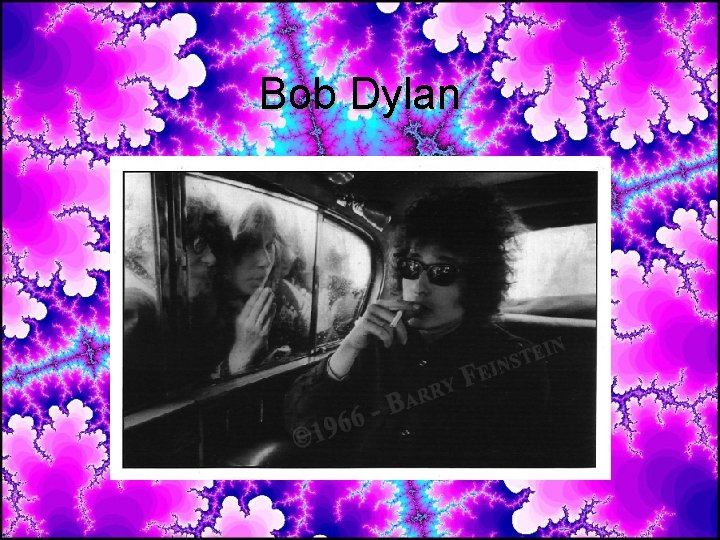
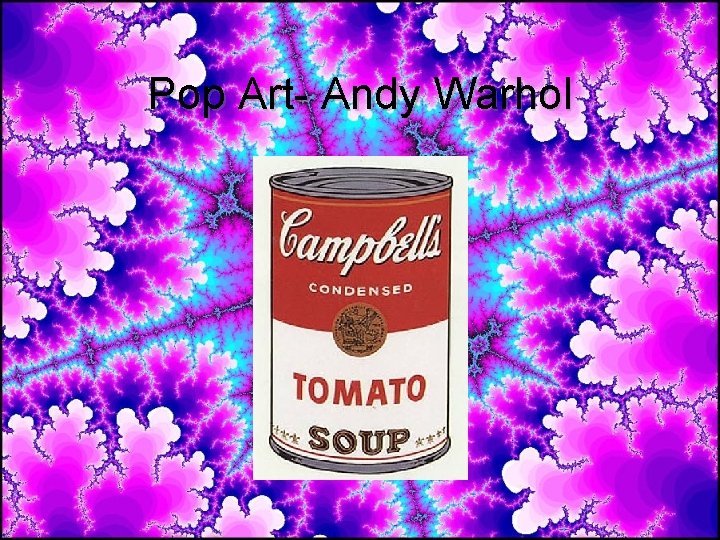
Legacy of Counterculture • Short period of history has lasting impact upon attitudes, art & music – More casual dress & open-mindedness about lifestyles & social behaviors – Pop art and Andy Warhol – Rating system adopted for films – Rock and Roll became outlet for young to express discontent & desire for change. • The Beatles & Bob Dylan
Bob Dylan
Pop Art- Andy Warhol
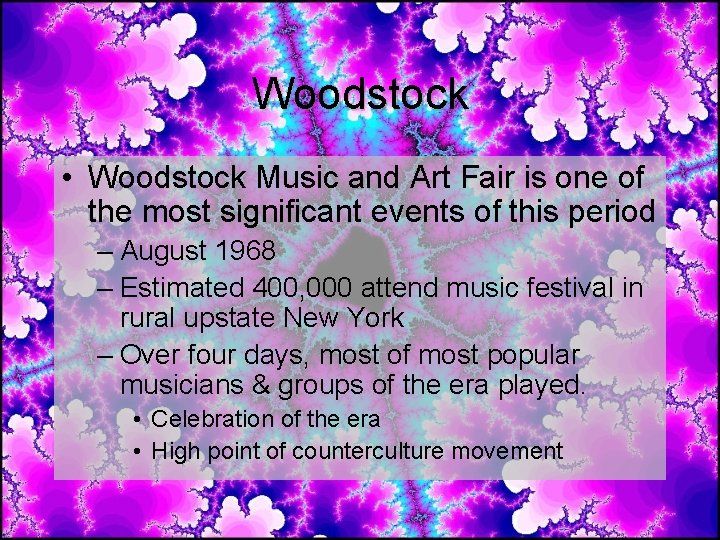
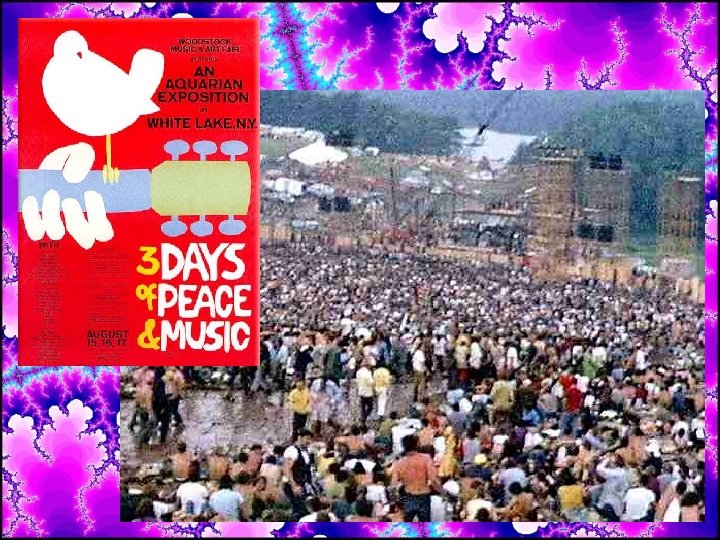
Woodstock • Woodstock Music and Art Fair is one of the most significant events of this period – August 1968 – Estimated 400, 000 attend music festival in rural upstate New York – Over four days, most of most popular musicians & groups of the era played. • Celebration of the era • High point of counterculture movement