
Culture 5 Themes of Geography Place What is
- Slides: 13
Culture 5 Themes of Geography: Place
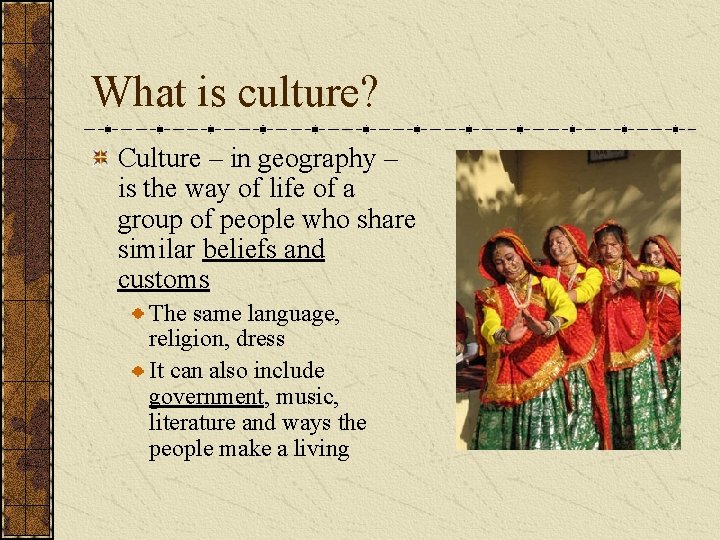
What is culture? Culture – in geography – is the way of life of a group of people who share similar beliefs and customs The same language, religion, dress It can also include government, music, literature and ways the people make a living
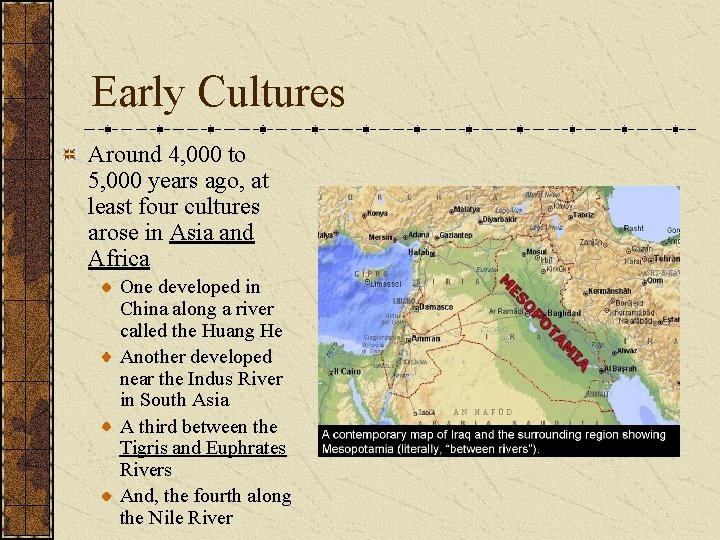
Early Cultures Around 4, 000 to 5, 000 years ago, at least four cultures arose in Asia and Africa One developed in China along a river called the Huang He Another developed near the Indus River in South Asia A third between the Tigris and Euphrates Rivers And, the fourth along the Nile River
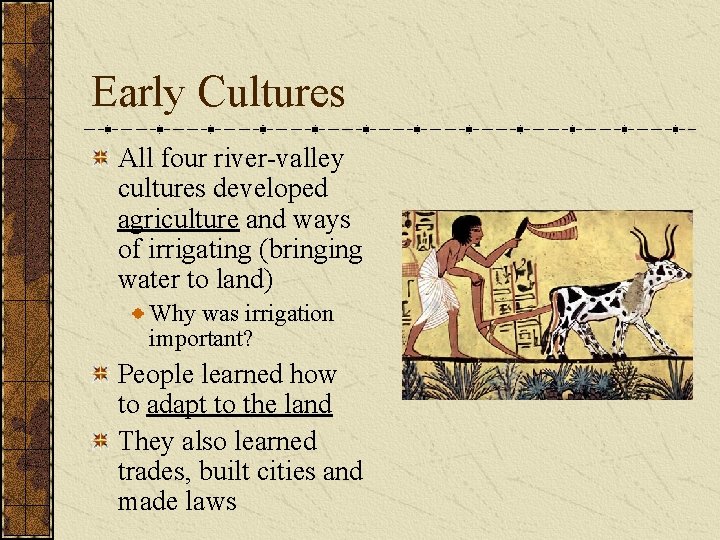
Early Cultures All four river-valley cultures developed agriculture and ways of irrigating (bringing water to land) Why was irrigation important? People learned how to adapt to the land They also learned trades, built cities and made laws
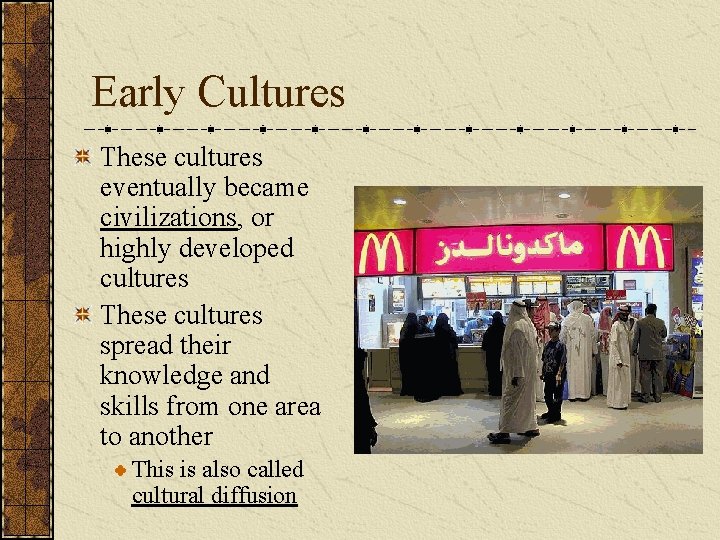
Early Cultures These cultures eventually became civilizations, or highly developed cultures These cultures spread their knowledge and skills from one area to another This is also called cultural diffusion
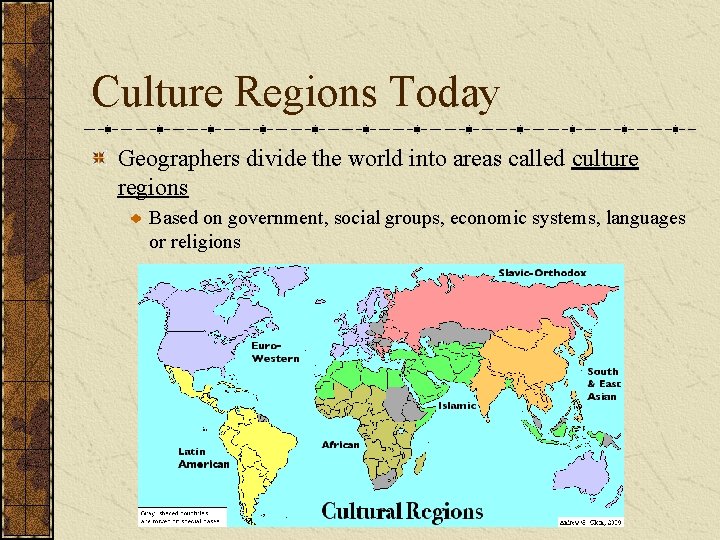
Culture Regions Today Geographers divide the world into areas called culture regions Based on government, social groups, economic systems, languages or religions
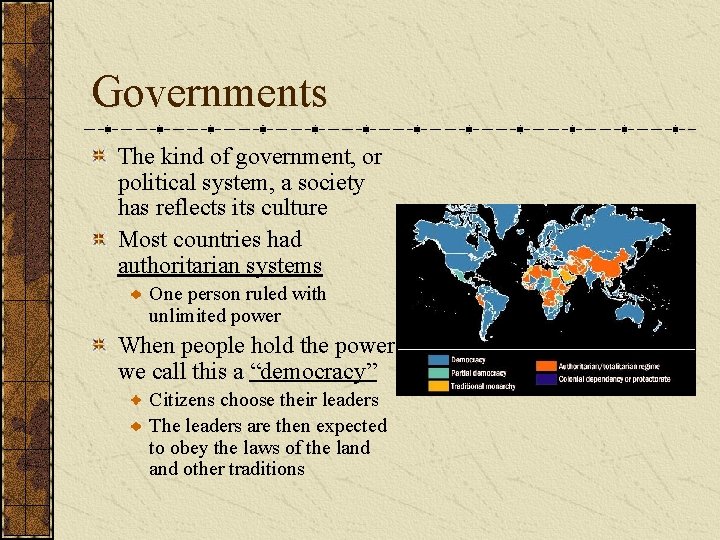
Governments The kind of government, or political system, a society has reflects its culture Most countries had authoritarian systems One person ruled with unlimited power When people hold the power, we call this a “democracy” Citizens choose their leaders The leaders are then expected to obey the laws of the land other traditions
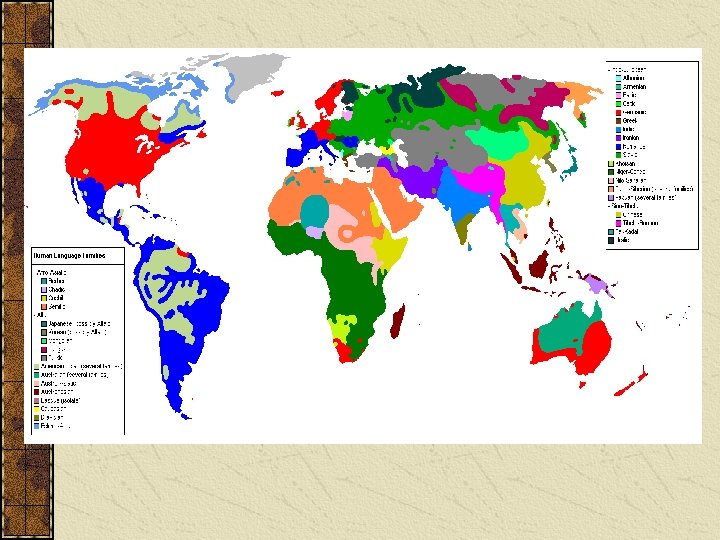
Language allows people to share ideas One of the strongest unifying forces for culture Languages spoken in a culture region often belong to the same language family Language family = languages start the same way Example: Romance languages came from Latin – Spanish, Portuguese, French, Italian and Romanian
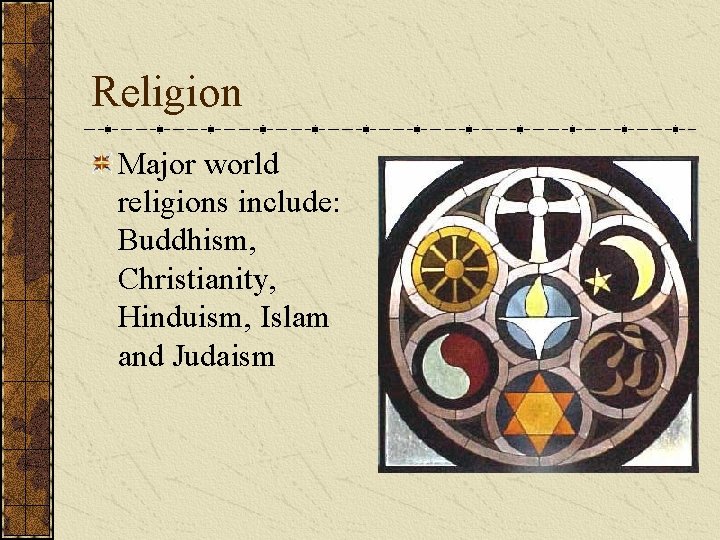
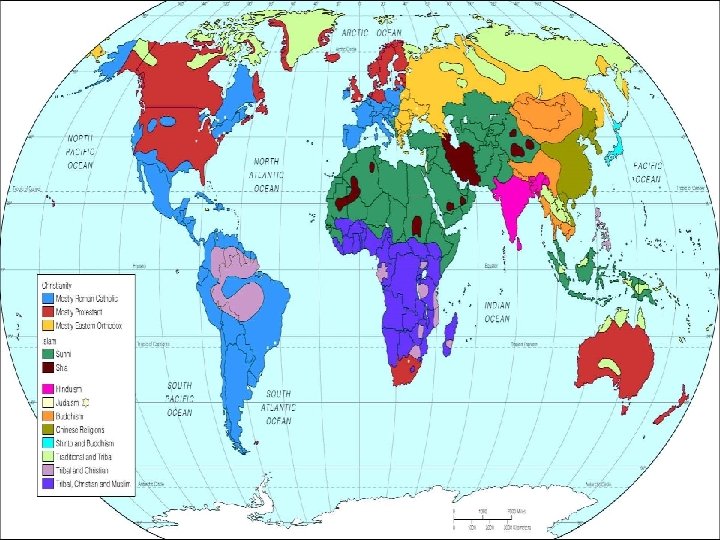
Religion Major world religions include: Buddhism, Christianity, Hinduism, Islam and Judaism
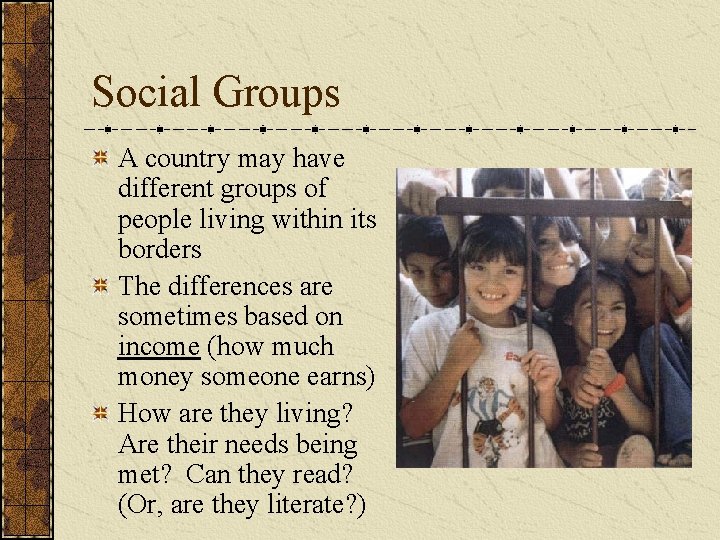
Social Groups A country may have different groups of people living within its borders The differences are sometimes based on income (how much money someone earns) How are they living? Are their needs being met? Can they read? (Or, are they literate? )
Economies All societies have economic systems How do people produce goods? What goods do they produce? How are the goods bought and sold? In most democratic societies, a market economy prevails = private businesses with very little interference from the government Another economic system is socialism = the government sets goals, run some businesses and has a central role in the government