
CULTURAL VALUES AND HOW WE SEE THEM A



- Slides: 25
CULTURAL VALUES AND HOW WE SEE THEM 跨文化交流研究
A DISCLAIMER “We”= westerner (i. e. American, Canadian, Europeans) since we see the world through a “certain lens” , it is important to note the author is writing this with a westerner’s point of view.
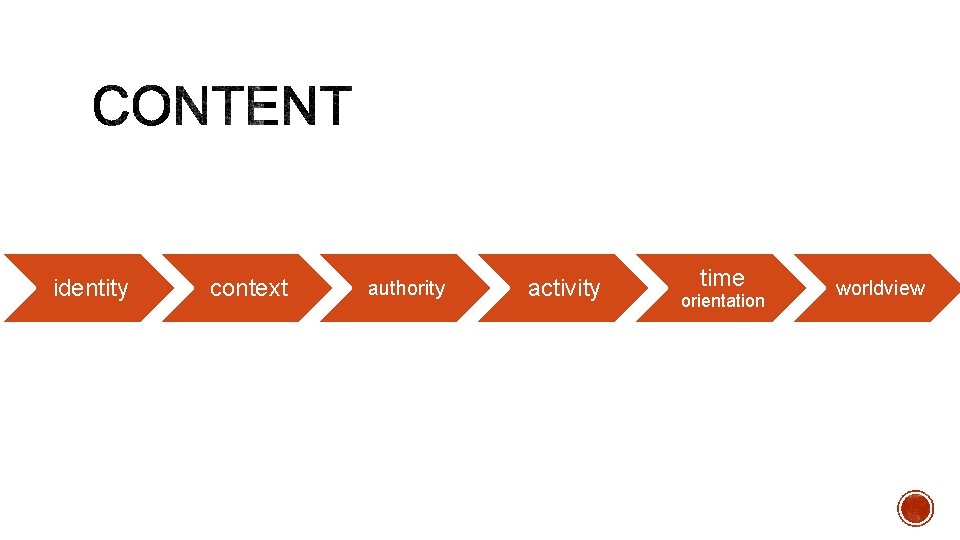
identity context authority activity time orientation worldview
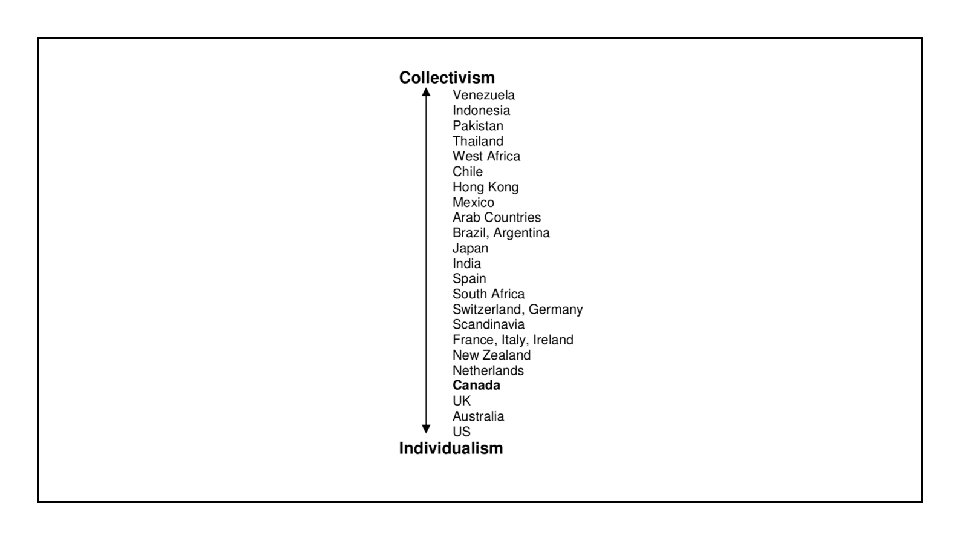
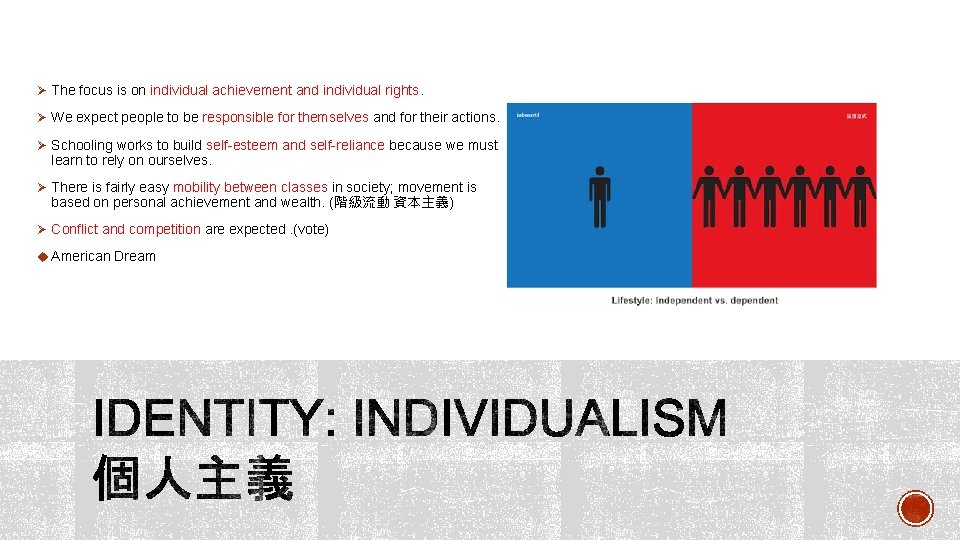
Ø The focus is on individual achievement and individual rights. Ø We expect people to be responsible for themselves and for their actions. Ø Schooling works to build self-esteem and self-reliance because we must learn to rely on ourselves. Ø There is fairly easy mobility between classes in society; movement is based on personal achievement and wealth. (階級流動 資本主義) Ø Conflict and competition are expected. (vote) u American Dream
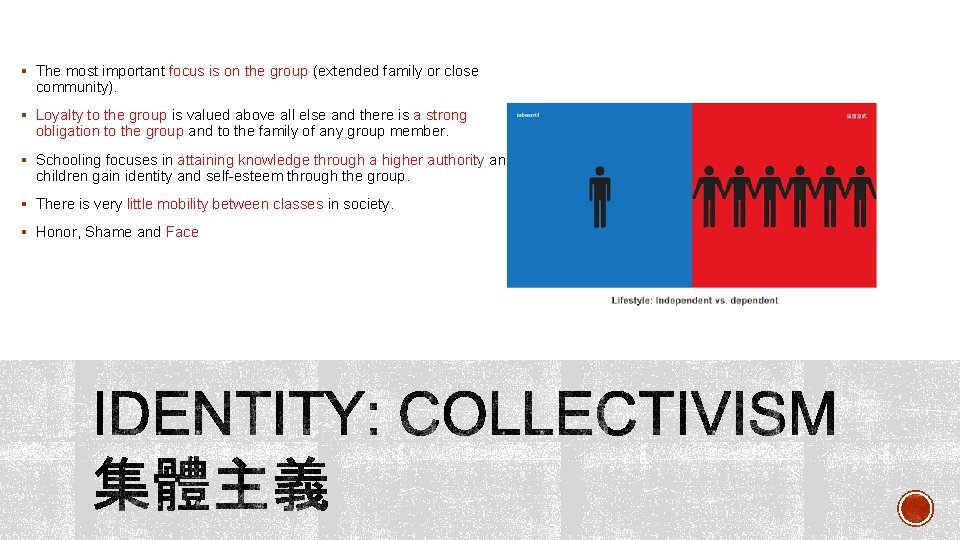
§ The most important focus is on the group (extended family or close community). § Loyalty to the group is valued above all else and there is a strong obligation to the group and to the family of any group member. § Schooling focuses in attaining knowledge through a higher authority and children gain identity and self-esteem through the group. § There is very little mobility between classes in society. § Honor, Shame and Face
語境 How we read an event or conversation
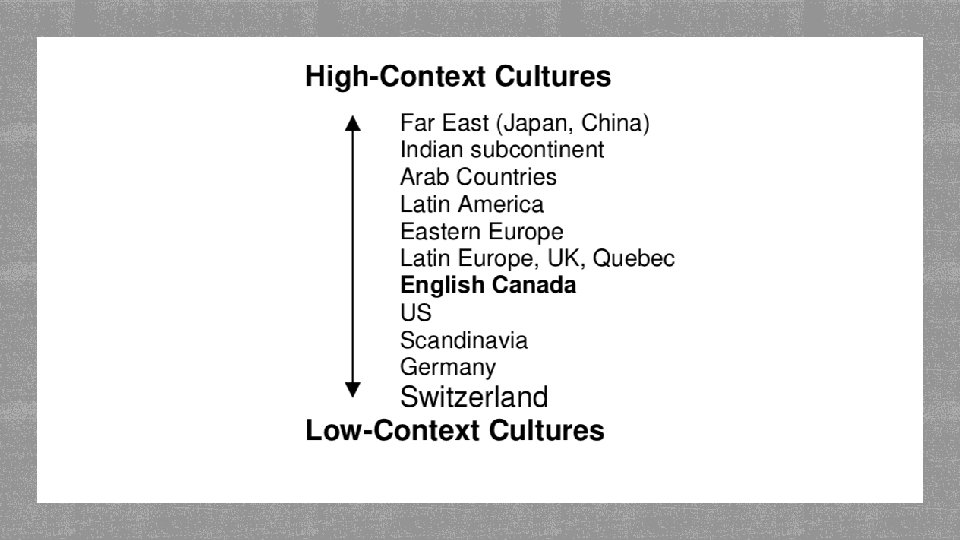
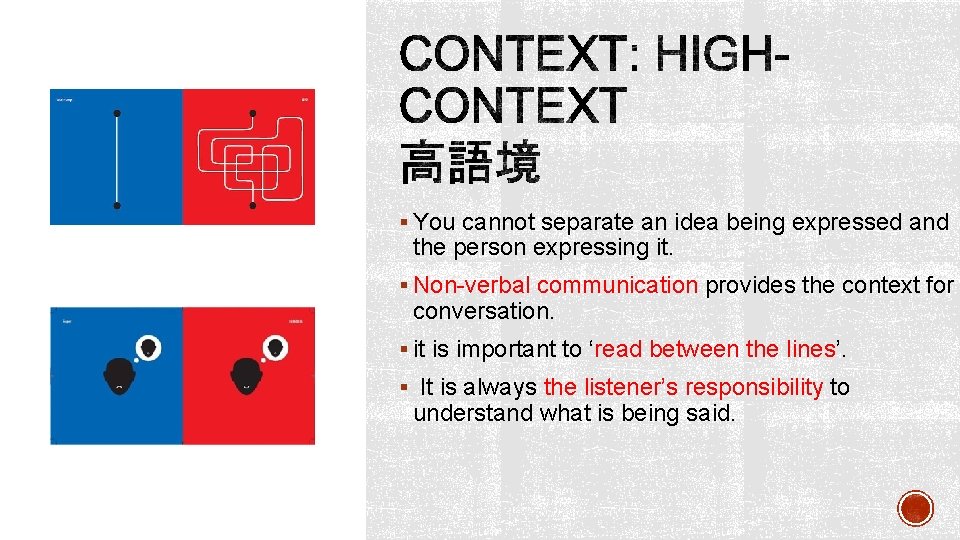
§ You cannot separate an idea being expressed and the person expressing it. § Non-verbal communication provides the context for conversation. § it is important to ‘read between the lines’. § It is always the listener’s responsibility to understand what is being said.
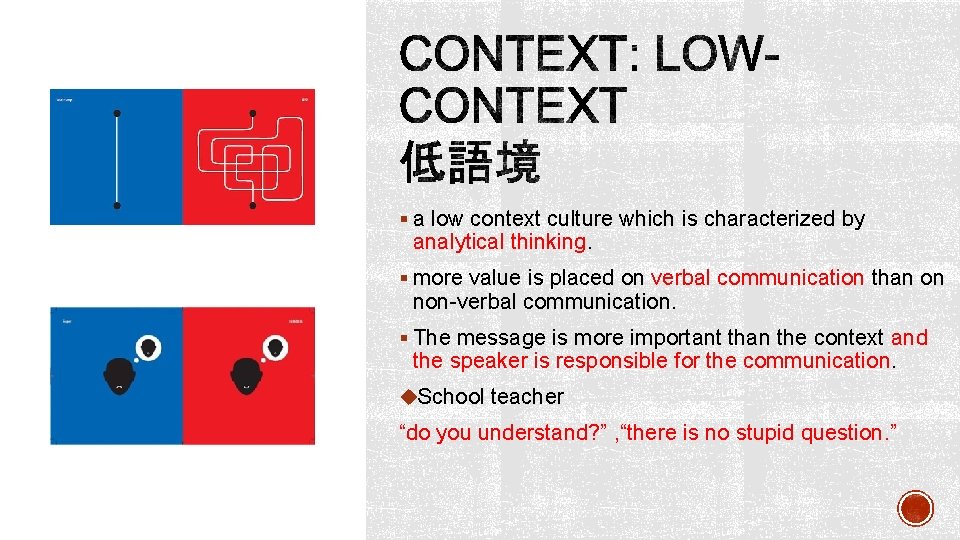
§ a low context culture which is characterized by analytical thinking. § more value is placed on verbal communication than on non-verbal communication. § The message is more important than the context and the speaker is responsible for the communication. u. School teacher “do you understand? ” , “there is no stupid question. ”
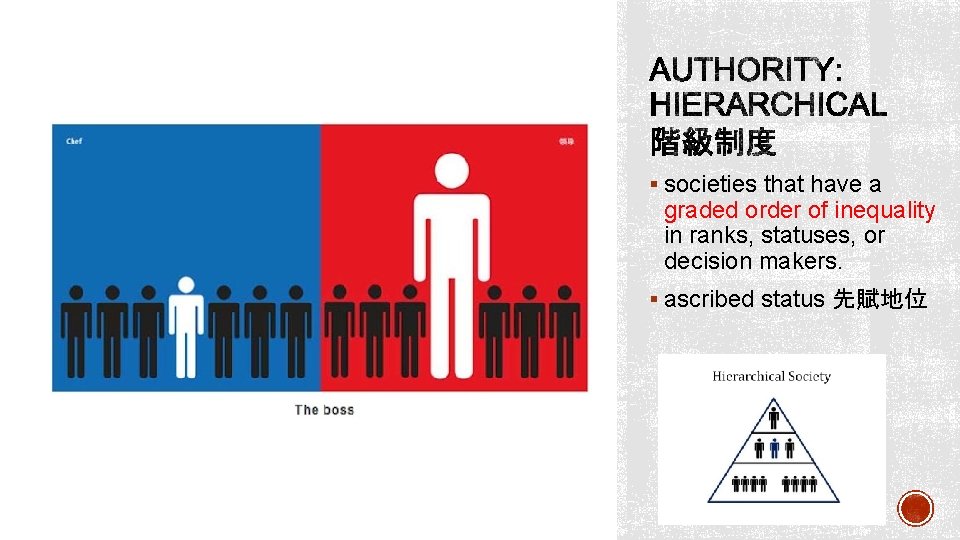
§ societies that have a graded order of inequality in ranks, statuses, or decision makers. § ascribed status 先賦地位
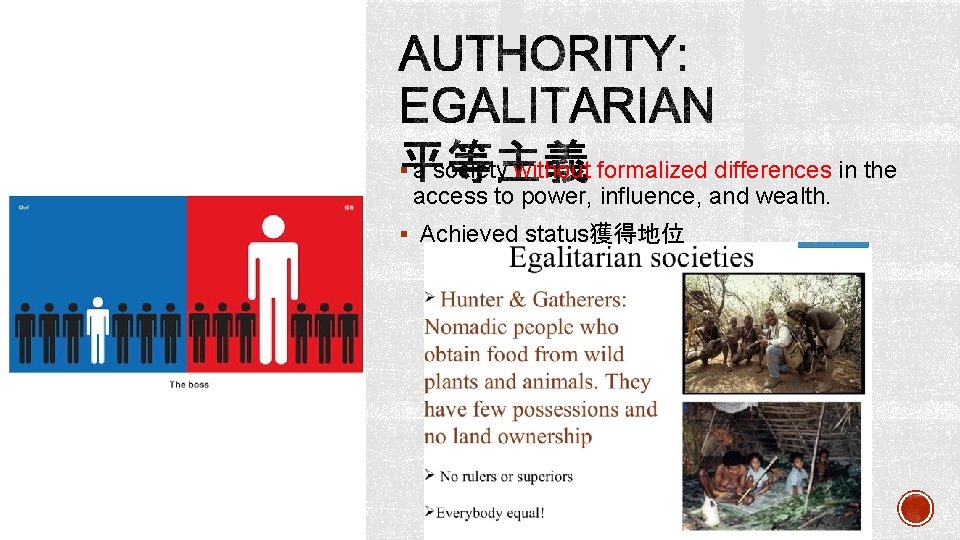
§ a society without formalized differences in the access to power, influence, and wealth. § Achieved status獲得地位
人際互動 the motivation of a culture or what drives behavior
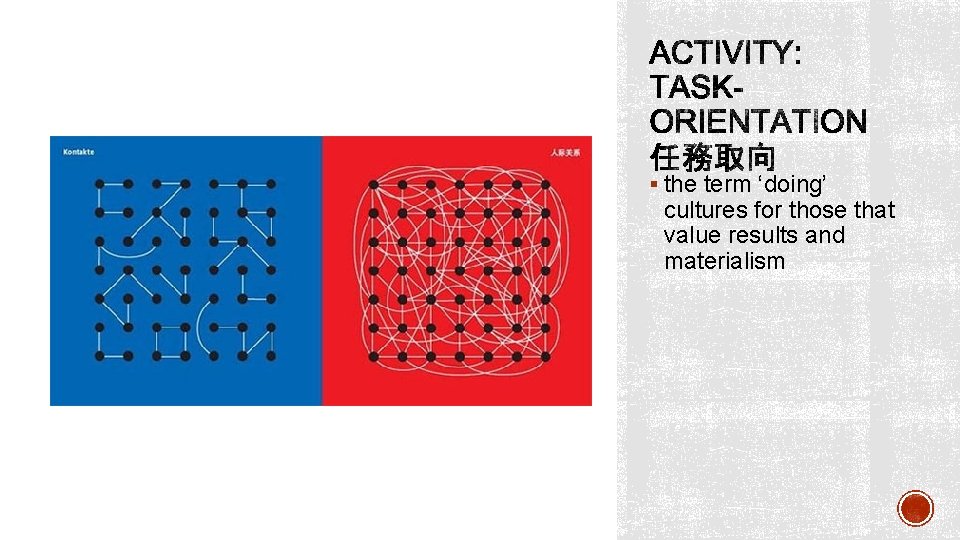
§ the term ‘doing’ cultures for those that value results and materialism
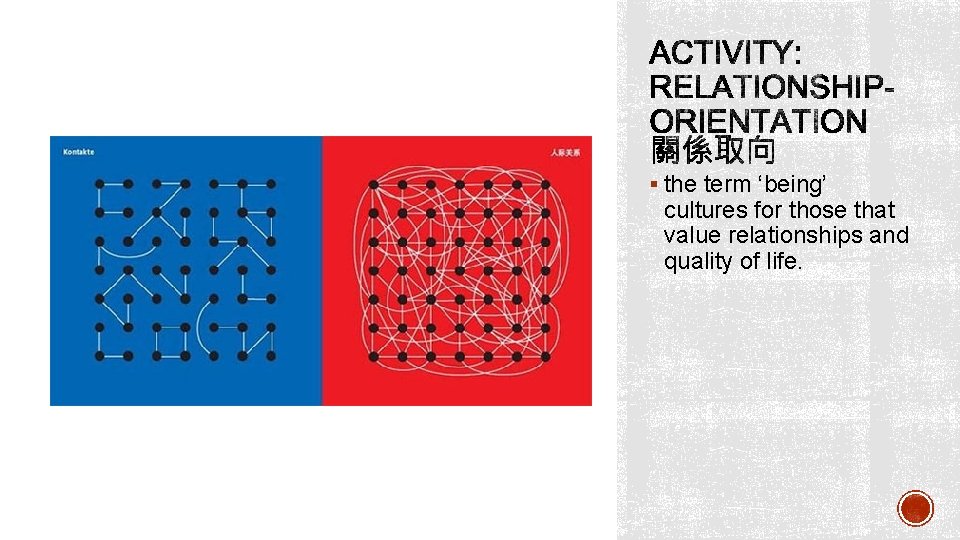
§ the term ‘being’ cultures for those that value relationships and quality of life.
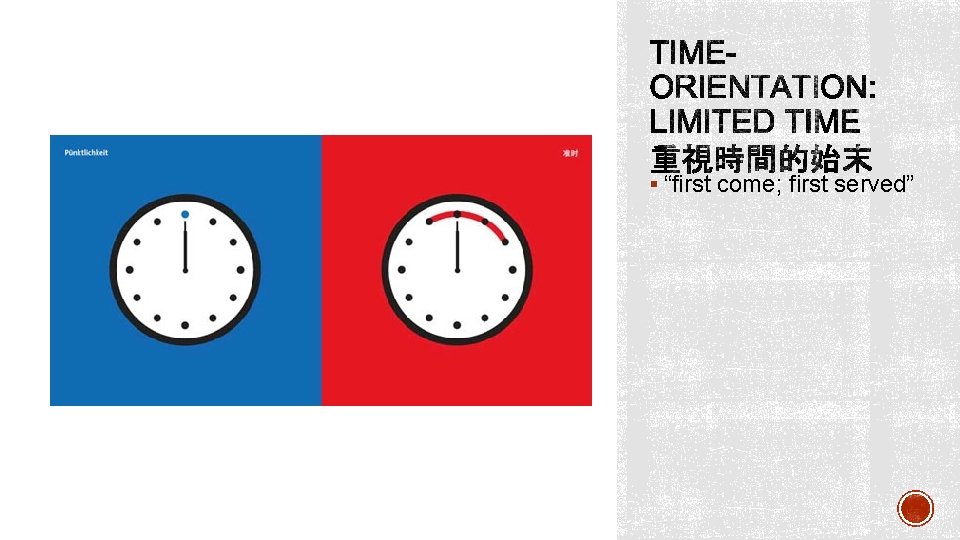
§ “first come; first served”
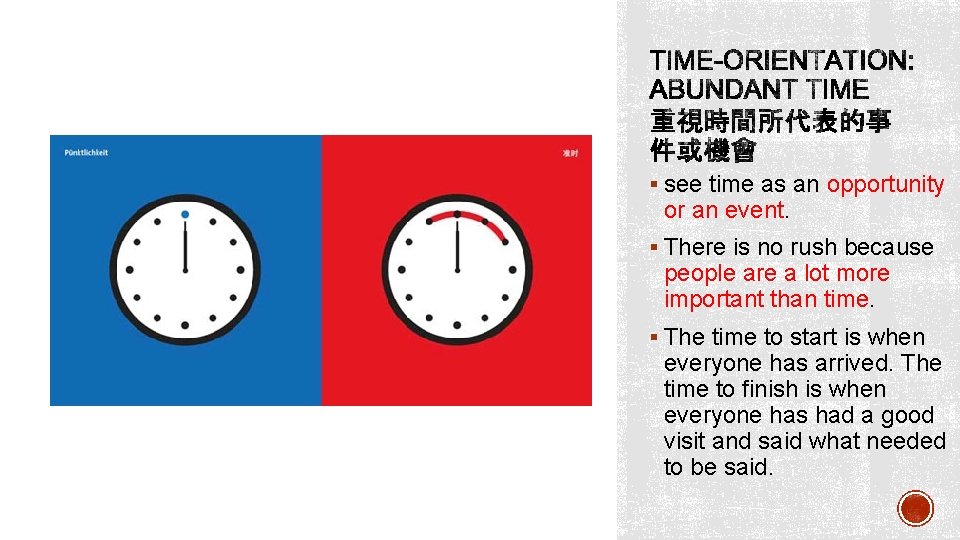
§ see time as an opportunity or an event. § There is no rush because people are a lot more important than time. § The time to start is when everyone has arrived. The time to finish is when everyone has had a good visit and said what needed to be said.
§ Older cultures such (eg. Chinese, Indians, Ethiopians, and Europeans) tend to have longer time horizons. § Their focus is the past and they tend to look back over a much longer period of history and the traditional or historical way of doing things has an important influence in decision making.
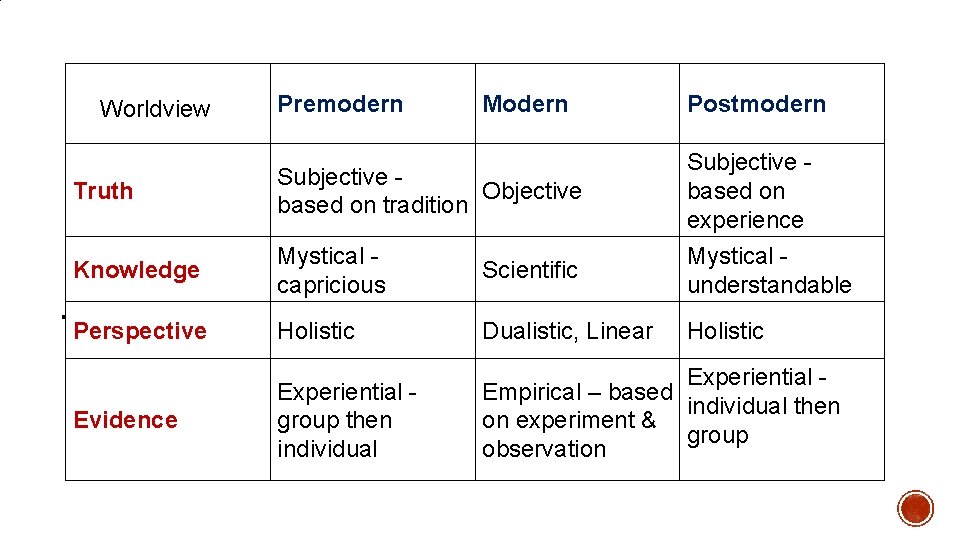
Worldview Premodern Modern Postmodern Truth Subjective Objective based on tradition Subjective based on experience Knowledge Mystical capricious Scientific Mystical understandable Perspective Holistic Dualistic, Linear Holistic Evidence Experiential group then individual Experiential Empirical – based individual then on experiment & group observation
CONCLUSI ON § Code switching (種族、性別、文化之間) § 同理心 empathy
§ http: //bsix 12. com/east-meets-west/ § https: //www. dailymotion. com/video/x 4 bn 77 k § https: //www. youtube. com/watch? v=nop. WOC 4 SRm 4&feature=youtu. be