
Cultural understanding through comparative studies A Sample of
- Slides: 15
Cultural understanding through comparative studies A Sample of Comparative Analysis of Fairy-tales
Why fairy-tales? 1. A fairy tale is a fantastic narrative as old as the nation. 2. A fairy-tale reflects values and beliefs of a nation. 3. A fairy-tale as a text causes our interest and desire to share opinions.
Think and answer! 1. Does a fairy-tale present a specific genre of text? 2. Can it form human conscience? Why? 3. Can it influence one’s outlook or widen it? How? 4. What concepts are usually reflected in a fairy-tale?
Oppositions most often presented in fairy-tales Good and evil Truth and lie
The concept of native wit in Chinese-Russian-English Do you think it is equally strong in the three nations?
Take your handouts! 1. Chinese fairy-tale: Fox Basked in Tiger’s Reflected Glory. 2. Russian fairy-tale: Three Kalatches and One Baranka. 3. British fairy-tale: The Lion-Hearted Kitten.
Answer the questions! 1) In what CSF are fairy-tales written? 2) What does the plot usually center around? 3) What difficulties do the characters have to overcome? 4) Are they a success? What stages do they go through? 5) Does wit play an important role in the final victory of good over evil?
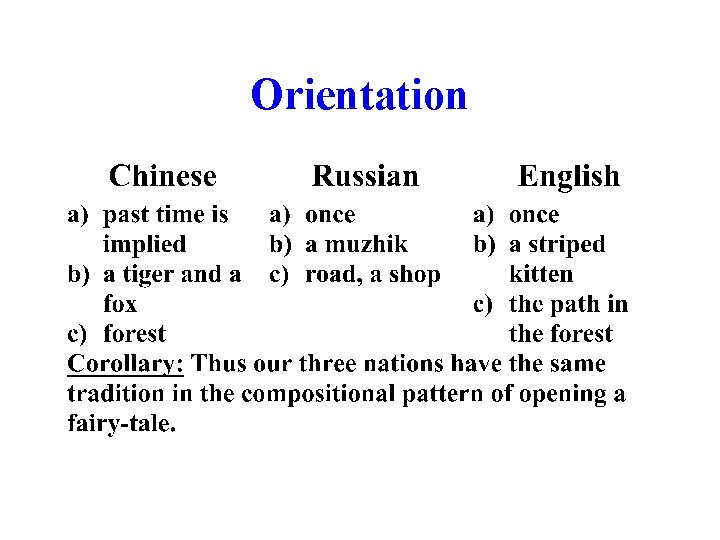
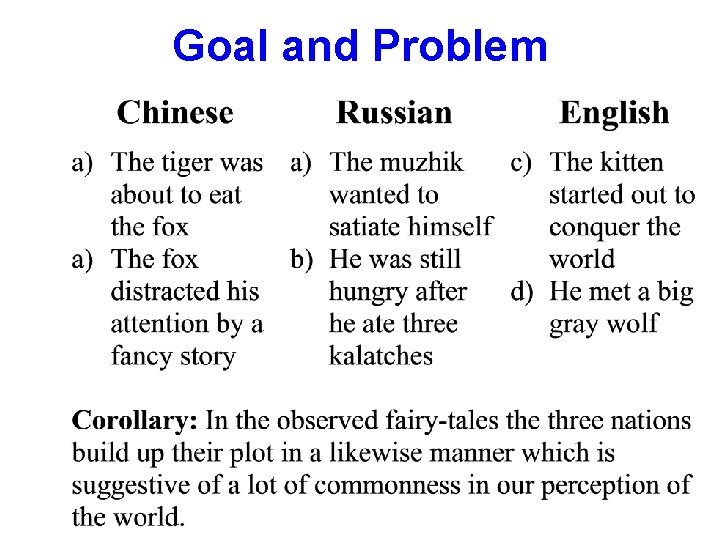
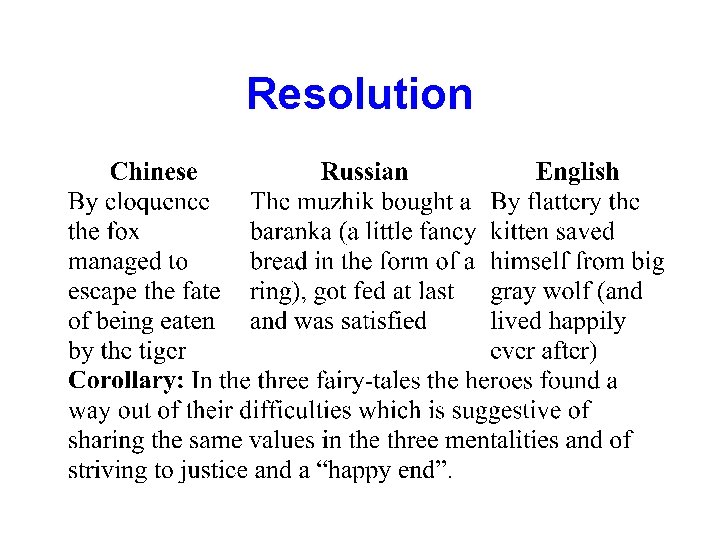
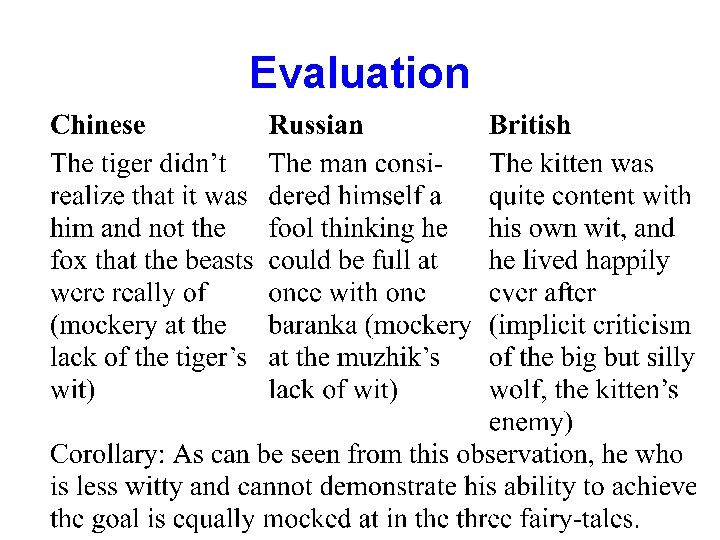
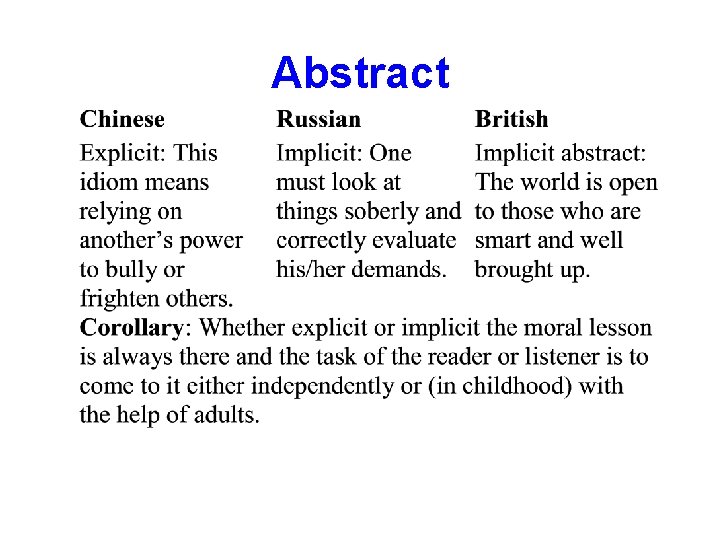
NARRATION: plan for comparative analysis 1. Orientation (Chronotop) 2. Goal and problem 3. Resolution 4. Evaluation 5. Abstract Comment on each point of the plan with the view to cultural differences between the three nations.
Orientation
Goal and Problem
Resolution
Evaluation
Abstract
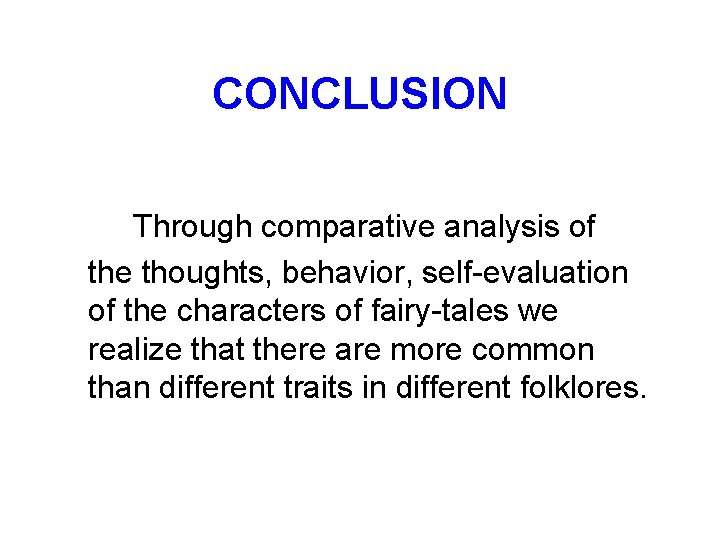
CONCLUSION Through comparative analysis of the thoughts, behavior, self-evaluation of the characters of fairy-tales we realize that there are more common than different traits in different folklores.
LITERATURE 1. Merriam-Webster’s Encyclopedia of Literature. - USA: Merriam Webster Inc. , 1995. 2. Hatch E. Discourse and Language Education. - N. Y. : CUP, 1972.