
CULTURAL DIVERSITY TCOLE Course 3939 Generational Diversity AND





- Slides: 32
CULTURAL DIVERSITY TCOLE Course # 3939 Generational Diversity AND BCCO PCT #4 Power. Point UNIT THREE
Learning Objectives Learning Objective Learning Objective
Gener ationa l Diver sity UNIT T HREE s a n Tex sion O is m m Co Law ent em c r o Enf OLE) (TC
Unit Goal 3. 0. To identify generational differences and the positive outcome for the communication of those differences
Every generation is influenced by their respective eras; economic, political, and social events. From the Great Depression to the Civil Rights movement; from the inception of the television to advanced computer technologies, all have affected the way we work, play, and live.
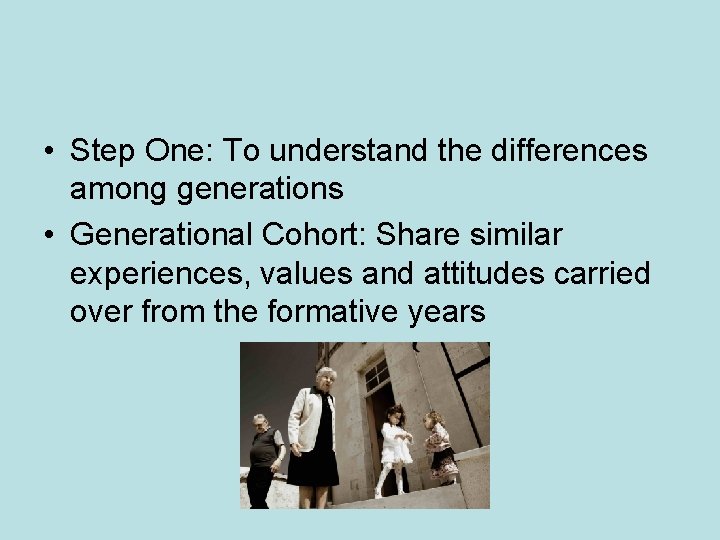
• Step One: To understand the differences among generations • Generational Cohort: Share similar experiences, values and attitudes carried over from the formative years
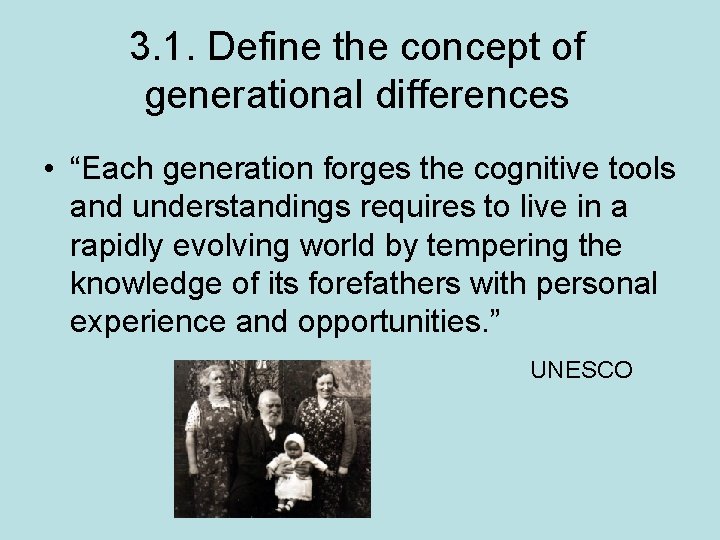
3. 1. Define the concept of generational differences • “Each generation forges the cognitive tools and understandings requires to live in a rapidly evolving world by tempering the knowledge of its forefathers with personal experience and opportunities. ” UNESCO
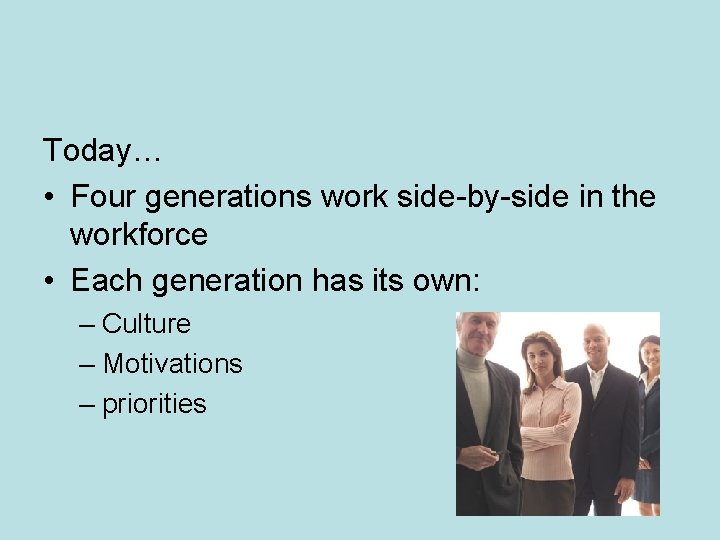
Today… • Four generations work side-by-side in the workforce • Each generation has its own: – Culture – Motivations – priorities
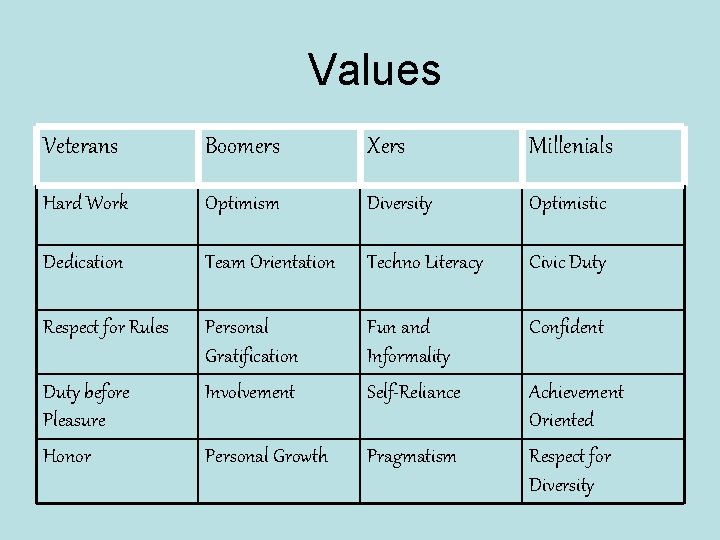
Values Veterans Boomers Xers Millenials Hard Work Optimism Diversity Optimistic Dedication Team Orientation Techno Literacy Civic Duty Respect for Rules Personal Gratification Fun and Informality Confident Duty before Pleasure Involvement Self-Reliance Achievement Oriented Honor Personal Growth Pragmatism Respect for Diversity
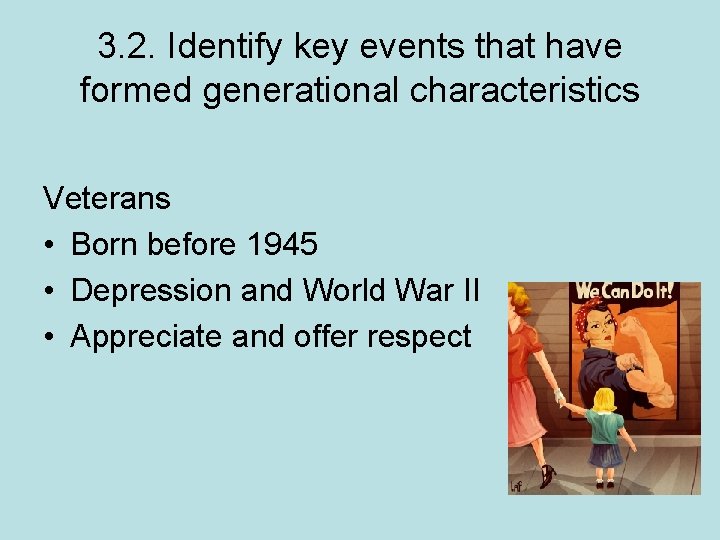
3. 2. Identify key events that have formed generational characteristics Veterans • Born before 1945 • Depression and World War II • Appreciate and offer respect
Baby Boomers • Born between 1946 -1966 • “Anything goes…” • Competitive • Prosperous • Passionate
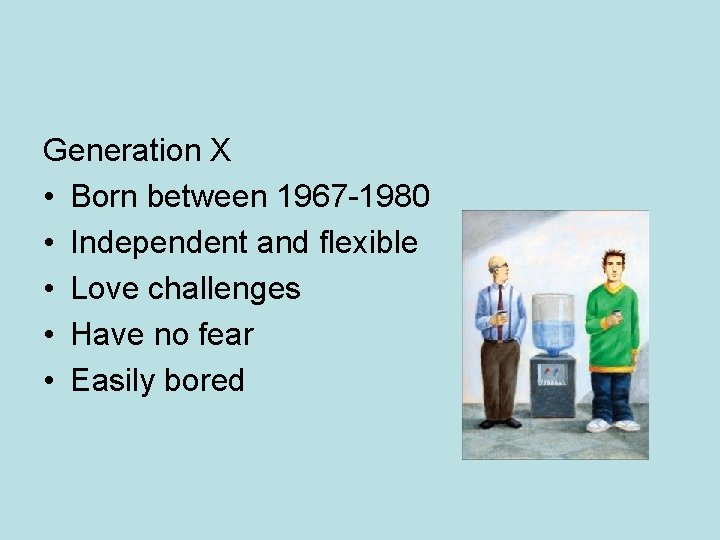
Generation X • Born between 1967 -1980 • Independent and flexible • Love challenges • Have no fear • Easily bored
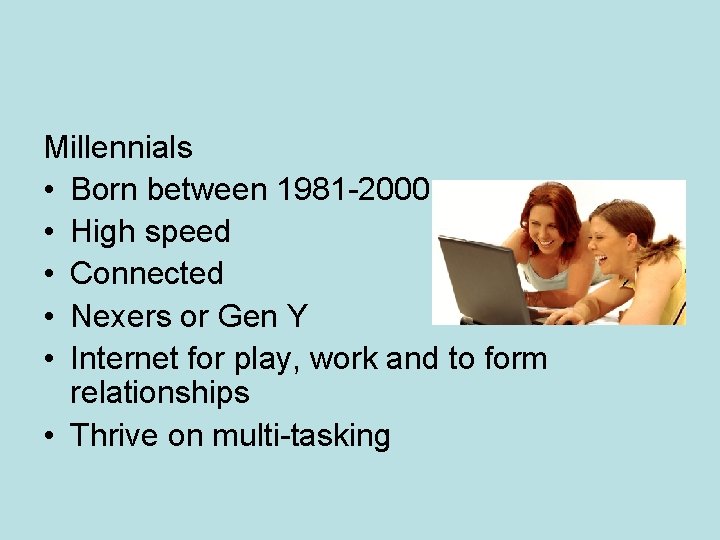
Millennials • Born between 1981 -2000 • High speed • Connected • Nexers or Gen Y • Internet for play, work and to form relationships • Thrive on multi-tasking
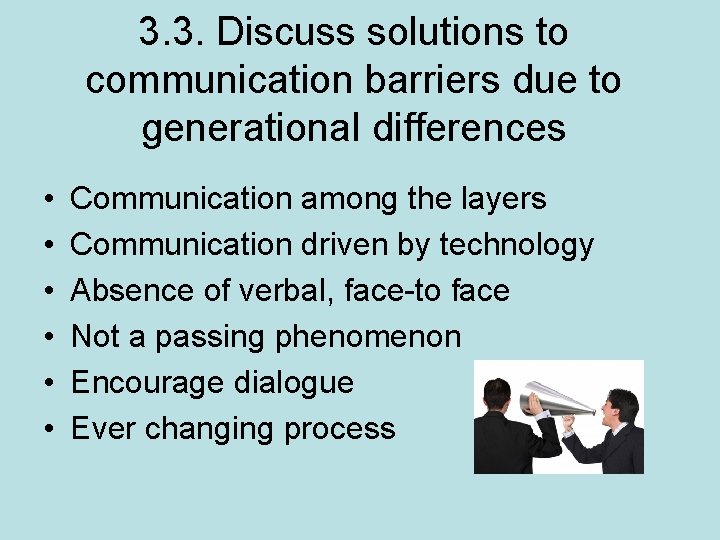
3. 3. Discuss solutions to communication barriers due to generational differences • • • Communication among the layers Communication driven by technology Absence of verbal, face-to face Not a passing phenomenon Encourage dialogue Ever changing process
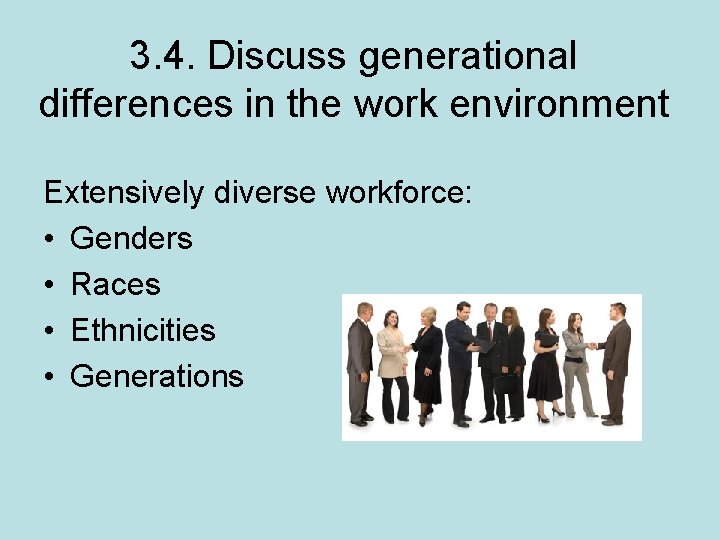
3. 4. Discuss generational differences in the work environment Extensively diverse workforce: • Genders • Races • Ethnicities • Generations
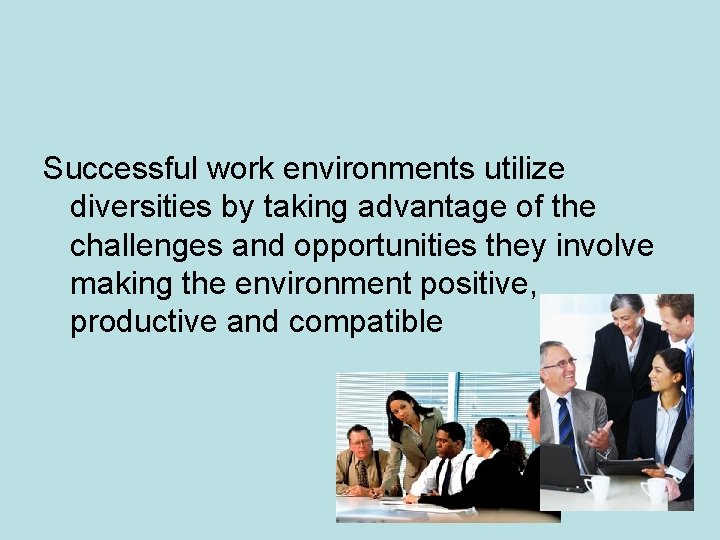
Successful work environments utilize diversities by taking advantage of the challenges and opportunities they involve making the environment positive, productive and compatible
Motivating Statements Veterans: • “Your experience is respected here. ” • Its valuable to hear what has and has not worked in the past. ” • “Your perseverance is valued and will be rewarded. ”
Baby Boomers: • “You’re important to our success. ” • “Your contribution is unique and important. ” • “We need you. ”
Generation X: • “We’ve got the newest hardware and software. ” • “There aren’t a lot of rules here. ” • “We’re not very corporate. ”
Millenials: • “You’ll be working with other bright creative people. ” • “Your boss is in his/her sixties. ” • “You and your group will help turn this unit around. ”
3. 5. Define “synergism” Term popularized by Buckminster Fuller: • The world will include divergent perspectives • People are from various backgrounds with varied perspectives • Varied perspectives make a team more effective
3. 6. Discuss factors other than technology that have led to generational change Secondary factors: • Fear of strangers • Increased pace of life • Diversity of culture
These factors among others have led to a change of societal behavior: • • Progressive isolation Avoidance of eye contact Cautious among strangers Guard privacy
Discussion: Issues today shaping our youth and communities?
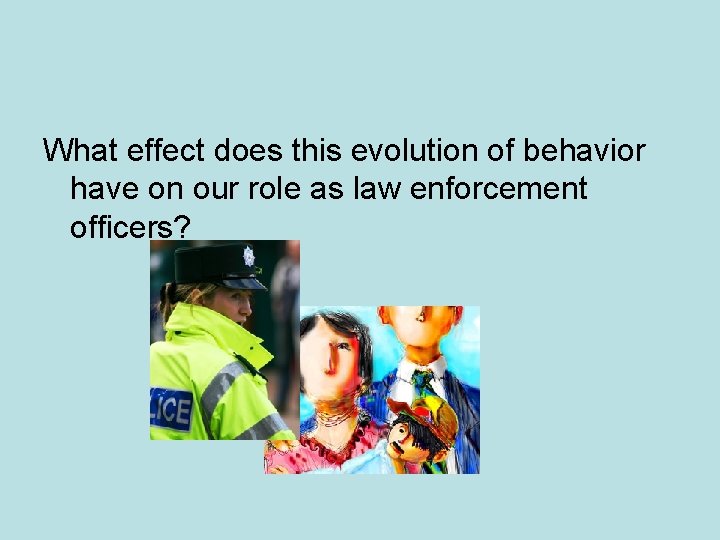
What effect does this evolution of behavior have on our role as law enforcement officers?
Questions? ? ?
FORWARD
SOURCES All Course Sources and/or Resources are listed in your Participant Handout
Questions?
COURSE & INSTRUCTOR EVALUATION Form • Please complete a course and instructor evaluation form. • If you rate 2 or below you must justify on reverse side. • Constructive Criticism helps all, being negative helps no one.
• Exam • Graduation THANK YOU & STAY SAFE