
CULTURAL DIVERSITY Bell ringer CULTURE All the shared
CULTURAL DIVERSITY

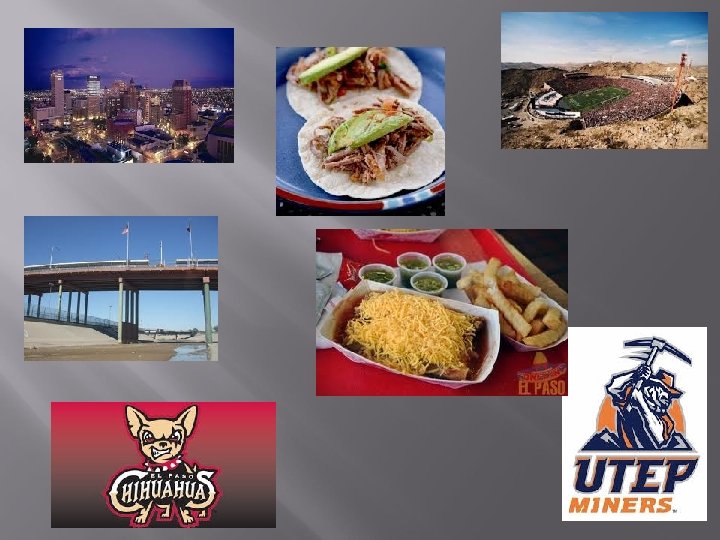
Bell ringer CULTURE: All the shared products Of human groups MATERIAL CULTURE: Physical objects that People create and use EXAMPLES: NONMATERIAL CULTURE: Abstract human creations EXAMPLES:
Culture and Society Culture is the totality of learned, socially transmitted customs, knowledge, material objects, and behavior. Culture includes the ideas, values, customs, and artifacts of groups of people. Material vs Non-Material Culture
Meaning of Culture Material culture: refers to the physical or technological aspects of our daily lives food, houses, factories, raw materials, tools Non-Material culture: refers to the ways of using material objects as well as to… Customs, beliefs, government, patterns of communication, philosophies, laws

5 Components of Culture Technology Symbols Language Values Norms

Components of Culture Technology: involves the objects AND the acceptable usage.
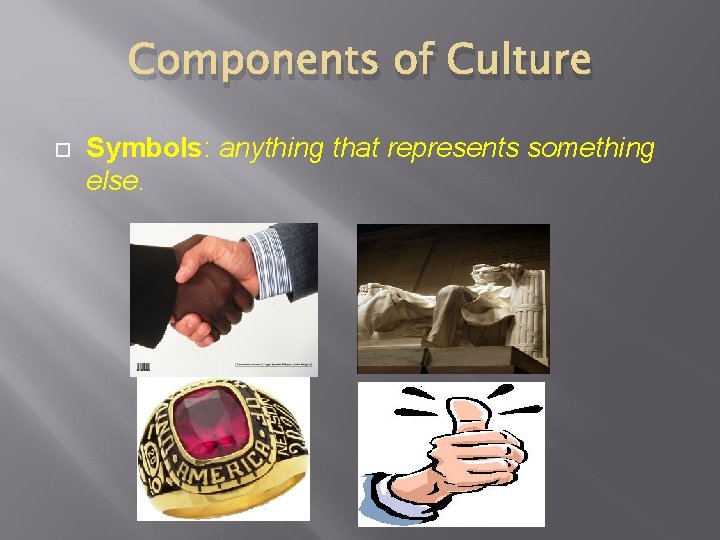
Components of Culture Symbols: anything that represents something else.
Components of Culture Language: the organization of written or spoken symbols into a standardized system. It includes speech, written characters, numerals, symbols, and gestures and expressions of nonverbal communication. Language is learned (critical period)
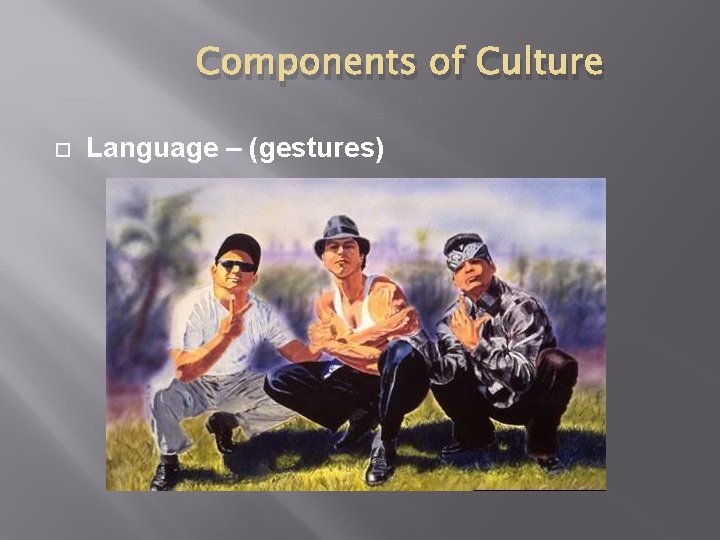
Components of Culture Language – (gestures)
Components of Culture Values: our collective conceptions of what is good, desirable, and proper–or bad, undesirable, and improper–in a culture. Values influence people’s behavior. Values are criteria for evaluating actions of others.
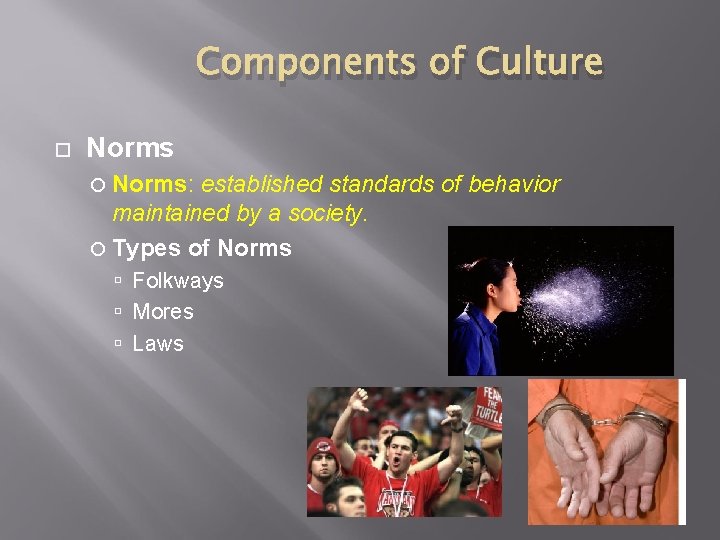
Components of Culture Norms: established standards of behavior maintained by a society. Types of Norms Folkways Mores Laws
A society with no culture Imagine what American society would be like if there were no shared culture and the 5 components of culture didn’t exist. Create a comic strip that illustrates what society would be like without a shared culture. Describe a society without the 5 components of culture.
CULTURAL VARIATIONS
Sec. 2: Cultural Variations Cultural Universals: Common practices and beliefs that are seen in all societies around the globe. Cultural universals change over time and from one society to another. Continued. . .

Cultural Variations Cultural Universals, some examples… George Murdoch (1945) Athletic Sports Cooking Funeral Ceremonies Medicine Dancing among others. . .
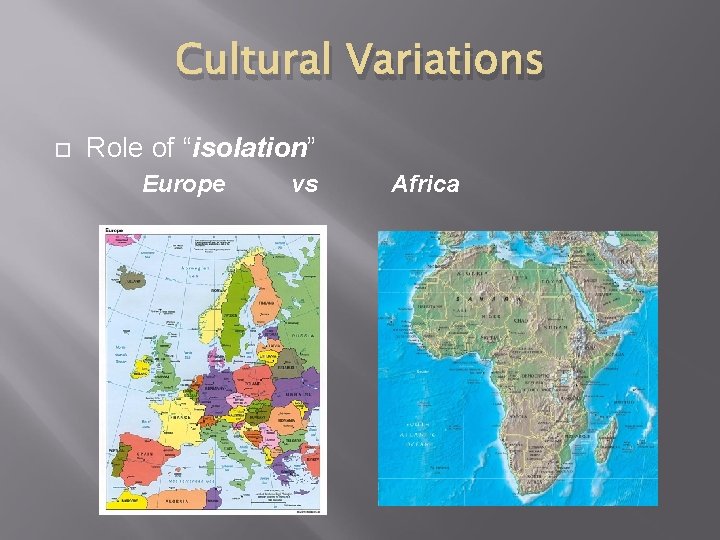
Cultural Variations Role of “isolation” Europe vs Africa
Other examples: (macro & micro) Early explorers vs Native populations Shy people vs outgoing people Poor family vs Wealthier family Early Japan vs Early China History of Irish Americans US “Achievement Gap”
Cultural Variation Attitudes Toward Cultural Variation Ethnocentrism refers to the assumption that one’s own culture represents the norm or is superior to all others. Cultural relativism views people’s behaviors from the perspective of their own culture. Xenocentrism opposite of ethnocentrism; it is the belief that the products, styles, or ideas of another society are better than those from your own society.
Cultural Variation Aspects of Cultural Variation Subculture: is a segment of society that shares a distinctive pattern of mores, folkways, and values that differs from the larger society. A subculture is a culture existing within a larger, dominant culture.
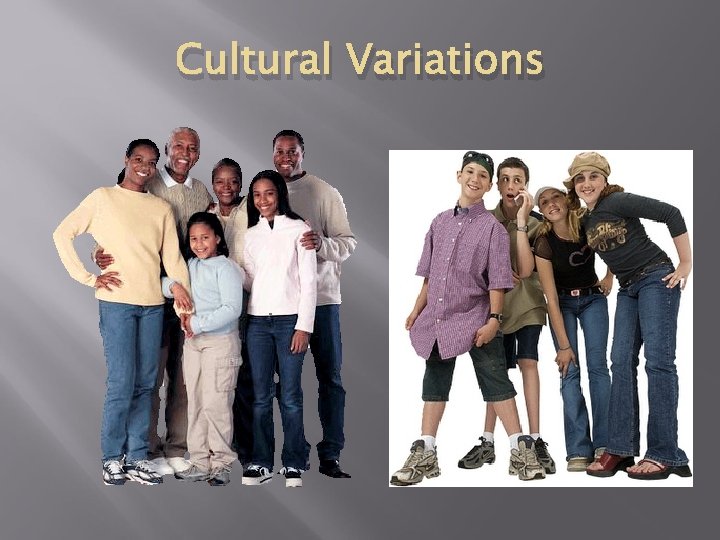
Cultural Variations
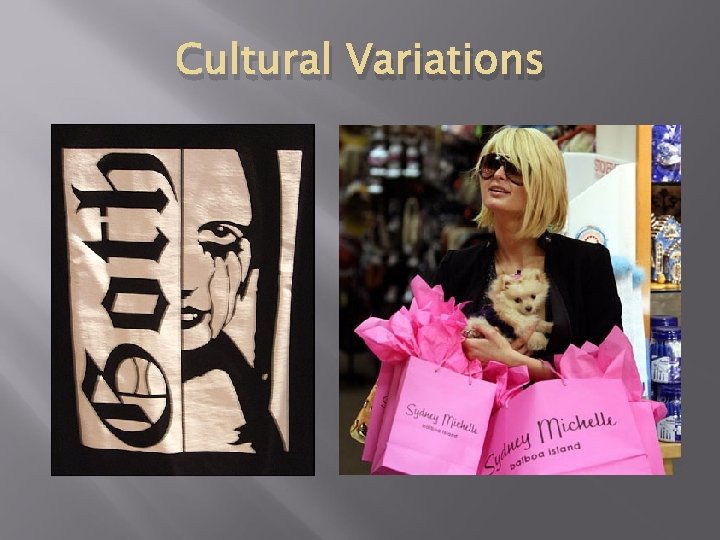
Cultural Variations
Cultural Variation Aspects of Cultural Variation Counterculture: created when a subculture conspicuously (obviously) and deliberately opposes many or all aspects of the larger culture.
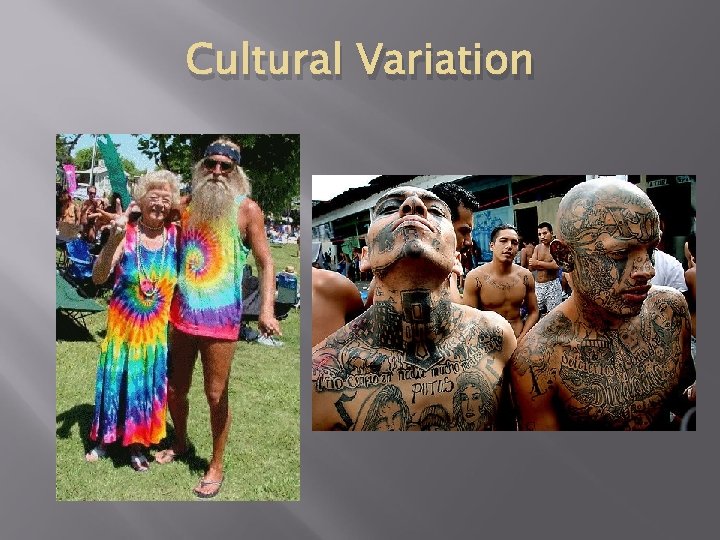
Cultural Variation
Cultural Variation in Pop Culture In your groups, identify examples of the following items that you have seen in popular culture (e. g. tv shows, movies, music, You. Tube, etc. ): Cultural universals Ethnocentrism Xenocentrism Subculture Counterculture Provide a justification for each example. Be prepared to share your examples with the class!
- Slides: 25